
Anyone who has visited Italy in the last 10 years has probably been overwhelmed by the sheer number of tourists in the major cities. What I call the Italian trifecta, meaning the cities of Rome, Florence and Venice, see more than 45 million visitors combined every year, to the point where it’s sometimes difficult to even meet a local there! But there are so many other places in Italy to explore if you have the time and the desire to take a road less travelled and explore Italy off the beaten path. The region of Friuli-Veneto Giulia is just one of these places. It’s a region just north and east of Venice, known for its wines (hello prosecco!), Italy’s best prosciutto, and charming villages that are a stone’s throw from Italy’s beautiful Dolomite mountains. Here are 4 places to discover within 90 minutes of Venice where the locals outnumber the visitors, and where ‘slow travel’ may yield a few unexpected discoveries.
Poffabro
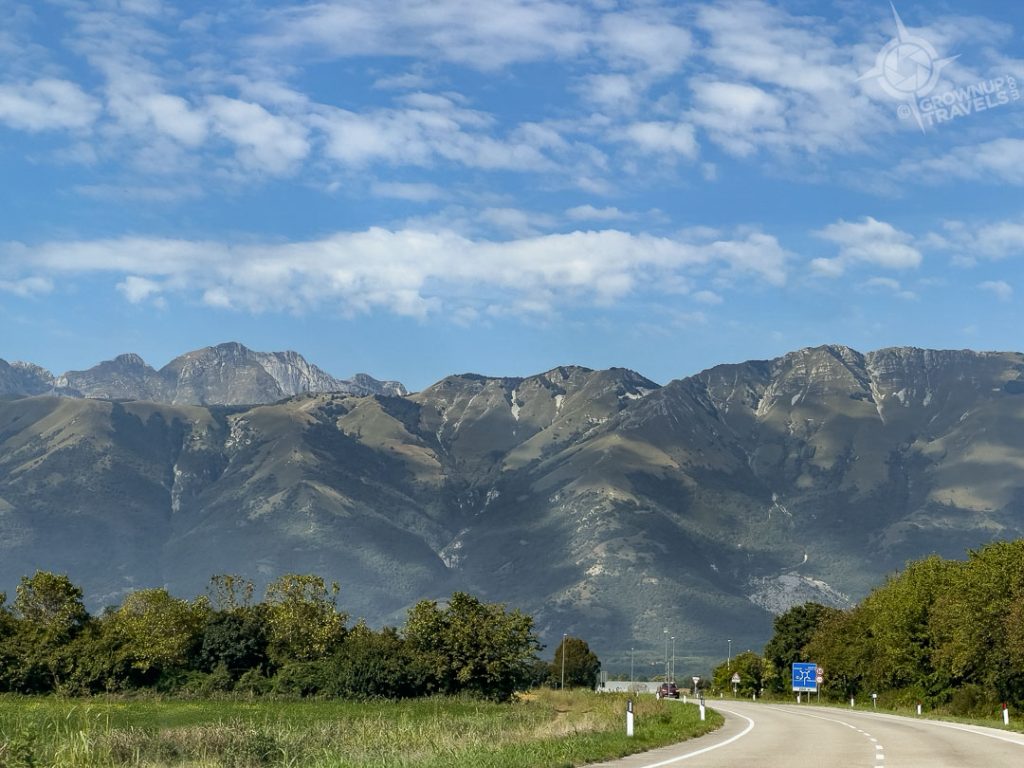
Listed as one of the ‘borghi più belli d’italia’ (most beautiful villages in Italy), Henk and I chose to visit Poffabro as much for its name as its location, tucked up as it is against the Dolomite mountains.
TIP: This list of ‘prettiest villages in Italy’ began as an initiative to help promote travel to lesser known places in Italy that could benefit from more tourism, and to offset the overtourism happening in places like Rome, Florence and Venice. Henk and I love this idea, and every time we go to a different region in Italy, we consult the list to see if any of these characteristic villages are anywhere near us. (They do often require a car to get to, however, so that is something to keep in mind if you are planning your own exploring.)

As tiny rural villages go, it doesn’t get much smaller than Poffabro, with only about 200 full-time residents in the actual village, one bar, one restaurant and one central piazza with the Church of San Nicolò. But this is, after all, part of the beauty of Poffabro.

A visit to Poffabro is all about embracing slow travel, in this case by exploring the characteristic streets and buildings that make up the town, many of which date back to the 16th and 17th centuries. Henk and I let the village lead the way and just followed wherever the little streets took us, under archways, up cobblestoned streets and between houses with wooden balconies that had a distinctly alpine look to them.

Every now and then, the view would open up and showcase the beautiful mountain backdrop, with plenty of opportunities to take photos since the entire place was very photogenic.


The main piazza is of course the heart of Poffabro and this is where you’ll find a pretty fountain and the church of San Nicolò Vescovo, a modest church by Italian standards to be sure, but not without its own charm. This is also where you are likely to meet some of the residents, or other intrepid visitors who, like you, have somehow found their way to Poffabro.

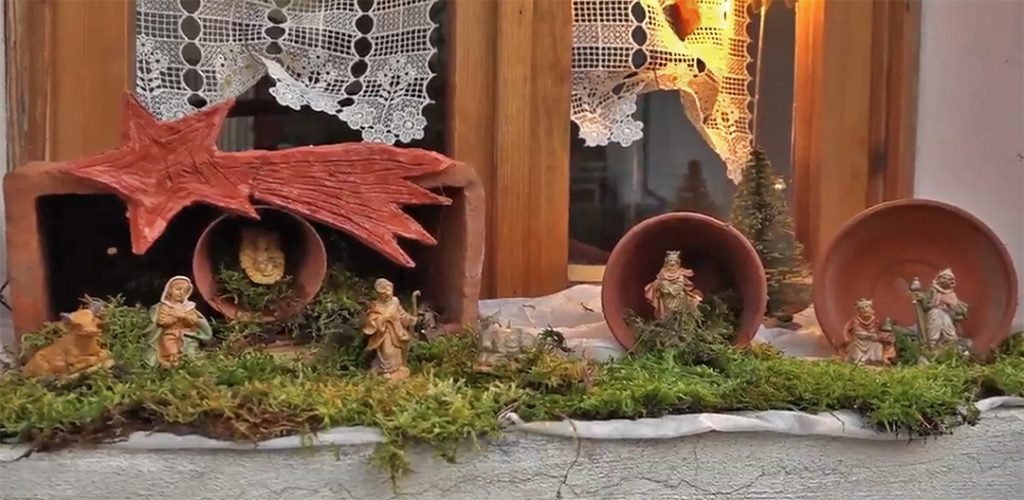
Just off the piazza is a small bar (the only one we found in town) where I decided to pair the view with a glass of prosecco, while Henk did more exploring with his camera. It was at the bar where I began chatting with an Italian couple from Udine, that I learned about one of Poffabro’s special celebrations: their Christmas presepio tradition. Presepio is Italian for ‘crib’, or Nativity scene, and Poffabro’s residents are known for really embracing this tradition by exhibiting these religious scenes using all different sizes and styles of vignettes that represent the baby Jesus, Mary, Joseph and the whole Bethlehem entourage.

You might see these scenes depicted in chocolate, or using wine bottles that are ‘dressed up’ in costumes, or more traditional versions displaying figures that are hand carved from wood. These unique tableaux are displayed everywhere in windows, street corners, nooks and crannies throughout the village. It’s a tradition that started in 1997 and has made Poffabro a Christmas destination for many visitors, with decorations throughout the village and seasonal stalls offering local treats and specialties, including frico, a fried cheese that is a local Friulano favourite.
We were a few months too early to take advantage of this celebration, but the beautiful September weather and the mountain views we did find here were well worth the visit. Learning about this unique village tradition by meeting other visiting Italians was a bonus and just one of the things that makes exploring Italy off the beaten path that much more rewarding.
TIP: The bar just off the main piazza only serves a few snacks and drinks, so if you are looking for a meal, Trattoria La Pignata is the place to go for simple, local fare. But be sure to check that they are open when you are visiting, as their hours can be ‘fluid’!
San Daniele, Friuli’s Mecca for Prosciutto Lovers
At one point while chatting with the couple from Udine at Poffabro’s bar, our conversation had turned to the topic of prosciutto (which comes up often in this part of Italy), and of course their preference was for the version made locally in San Daniele, a town famous in Friuli-Veneto Giulia for this particular product.
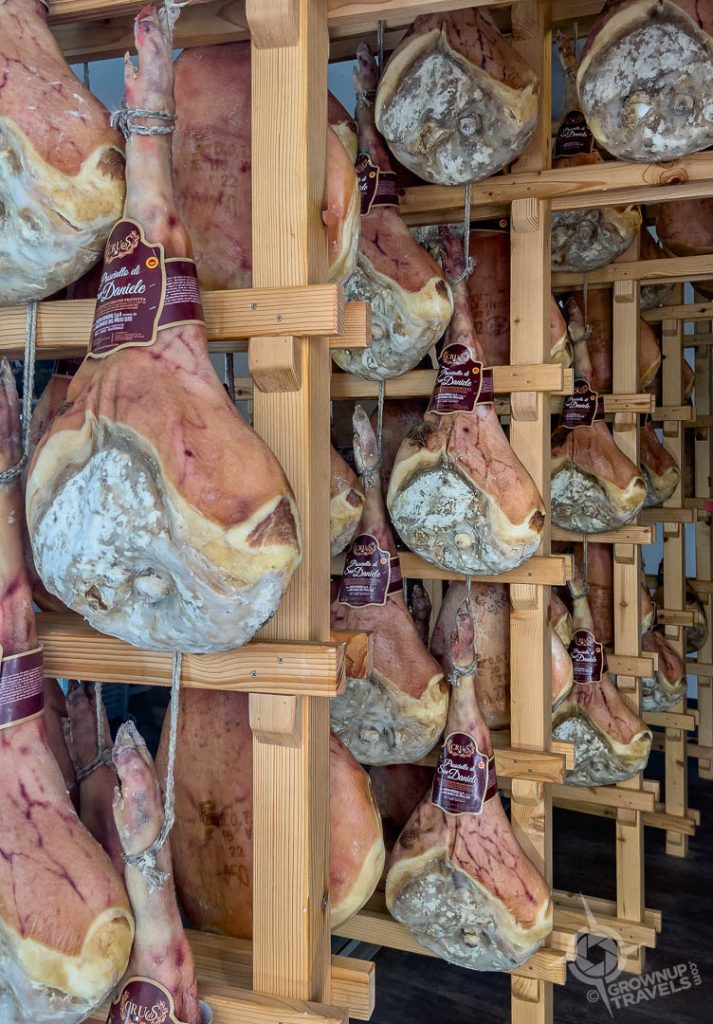
They insisted that even though San Daniele prosciutto was readily available to them in their own city of Udine, it tastes even better when eaten in the actual town itself. “There’s something about the air” they insisted, and they aren’t just speaking out of loyalty to a fellow Friulano town: it turns out that the prosciutto cured in San Daniele has slightly different characteristics than the prosciutto di Parma, (the other rival for the title of ‘best prosciutto in Italy’). And that difference may in fact BE related to the location: apparently the microclimate in San Daniele is unique, the air coming off the Dolomites is drier than the air near Parma, and the Tagliamento river near the town contributes just the right level of humidity for optimal curing. Due to these environmental factors, many believe that the result is a more aromatic, sweeter prosciutto. Henk and I decided to put this theory to the taste test by travelling to the source: San Daniele.
Immediately upon arriving in San Daniele, we could see that this town takes its prosciutto production extremely seriously. With 31 prosciuttifici in a town of only about 8000 residents, everywhere we turned there seemed to be a prosciutto store, a prosciutto production facility, or a prosciutto hanging in a restaurant window. There are of course, tours offered at many of these prosciutto facilities where visitors can learn about the process of curing this Italian delicacy.
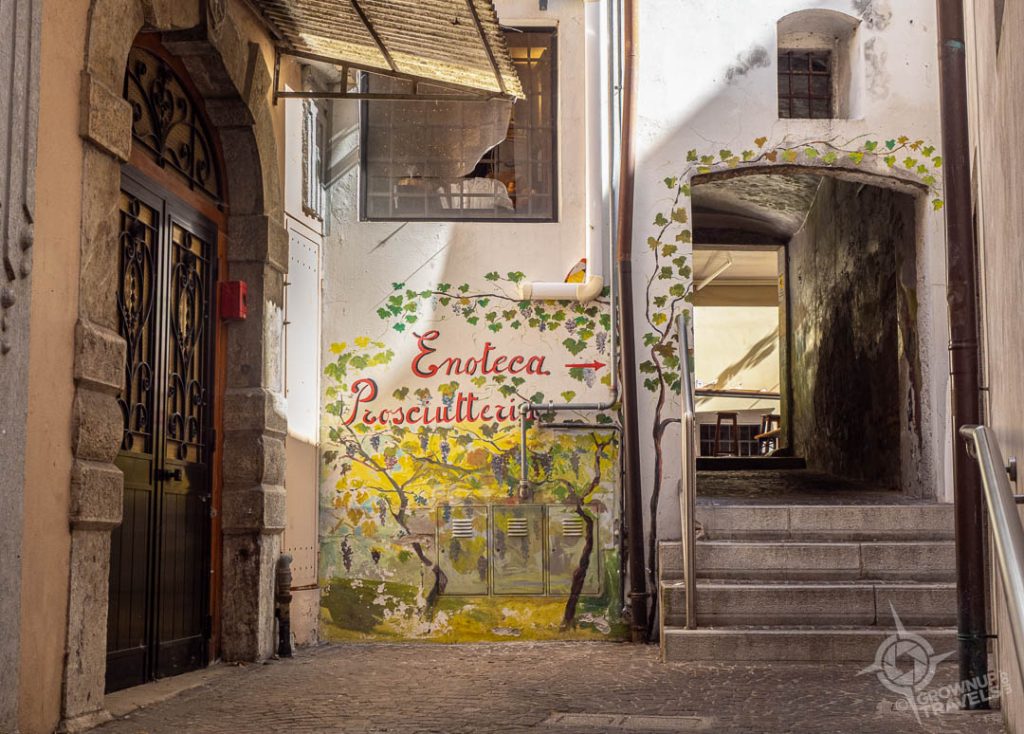
But San Daniele has more to offer than just its cured ham and is worth visiting for its other attractions as well, including two of its most important churches: the sparkling white Duomo di San Michele Arcangelo and the Church of Sant’Antonio Abate.
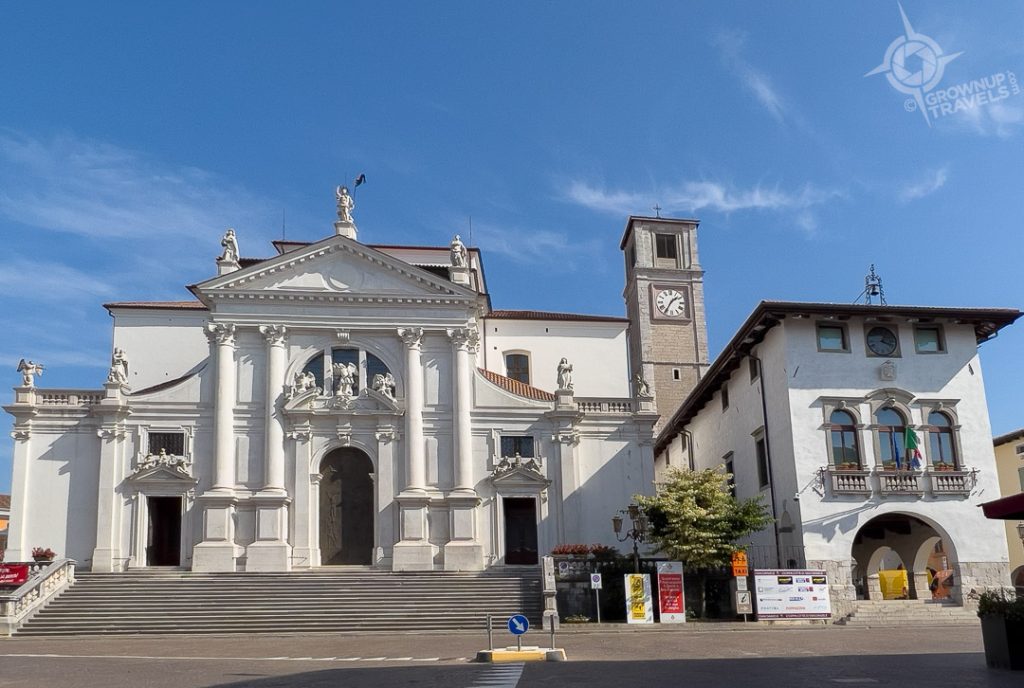
The Duomo is of course at the centre of San Daniele, dominating the square with its Baroque facade and large staircase, and is the most impressive church in the town with a few relics (bits and pieces of saints’ bones usually) that give it some additional credibility.
Still, it seems there’s no escaping prosciutto even when it comes to places of worship, because the other significant [now-former] church in San Daniele is the Church of Sant’Antonio Abate, dedicated to the patron saint of butchers.
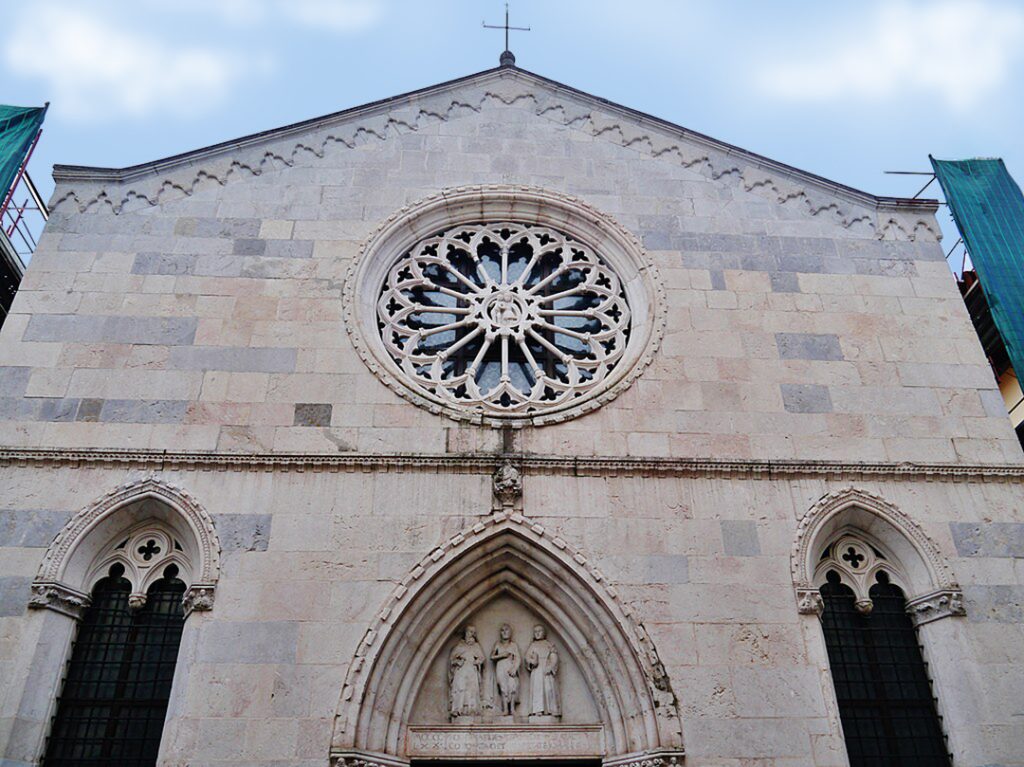
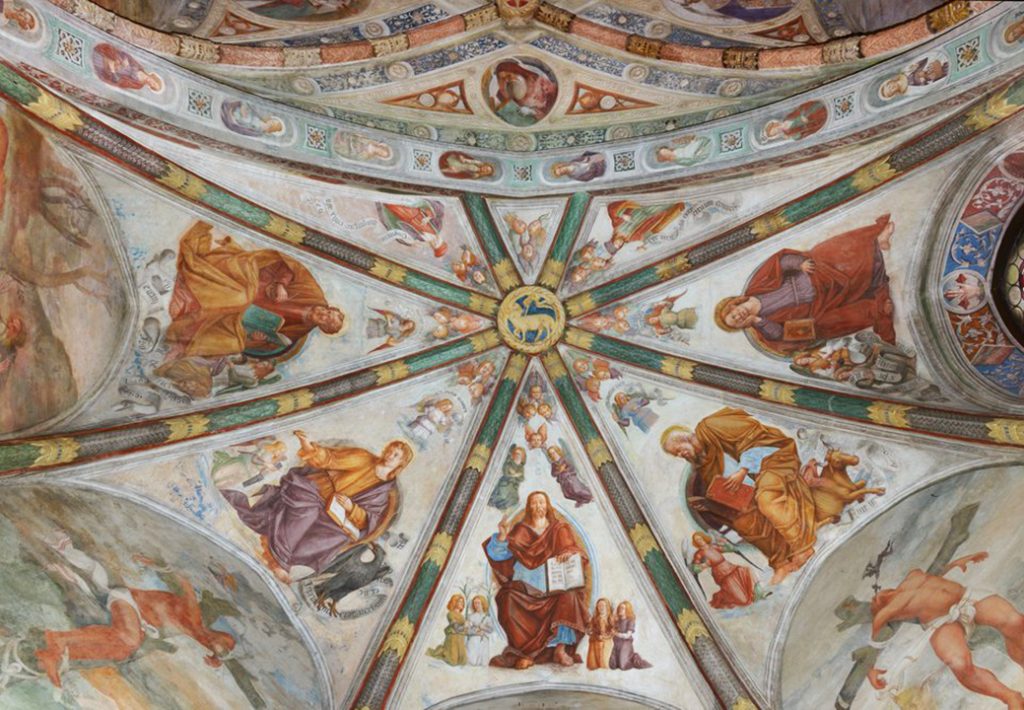
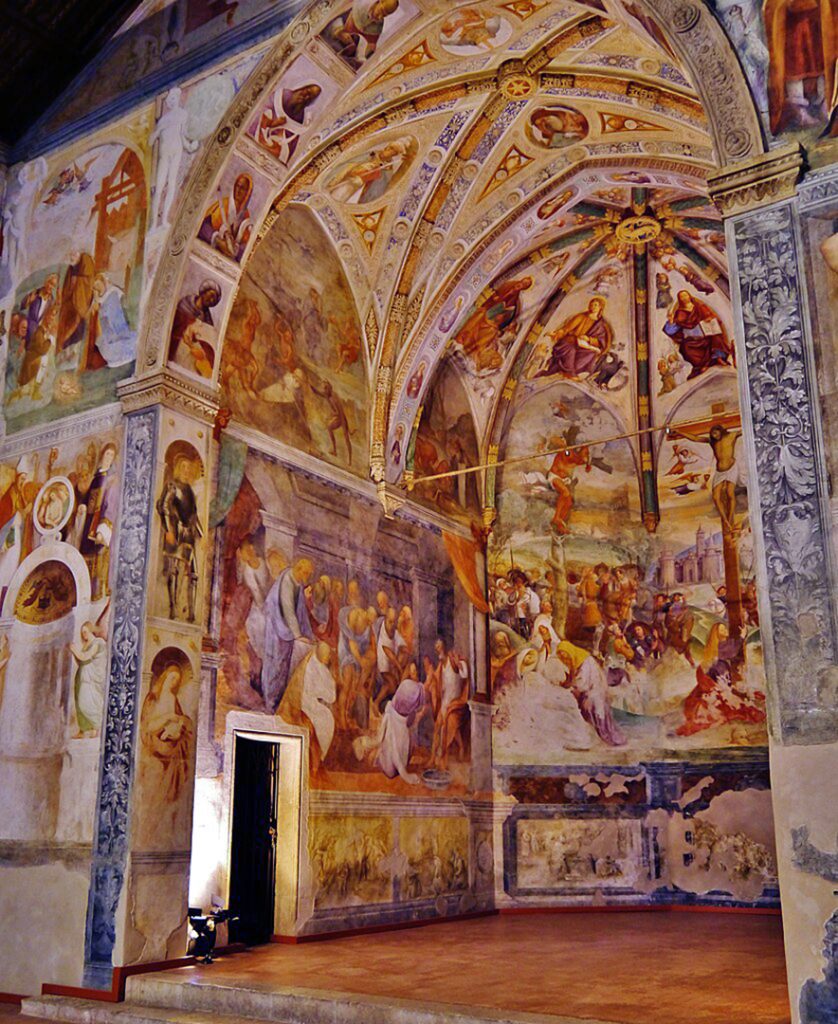
More than just its saintly support of the local prosciutto trade, this church is known for its elaborately frescoed interior, earning it the nickname the ‘Sistine Chapel of Friuli’. Painted over several decades from 1497-1522 by Martino da Udine (known as Pellegrino), the frescoes cover the interior of the church and are considered to be one of San Daniele’s hidden gems.
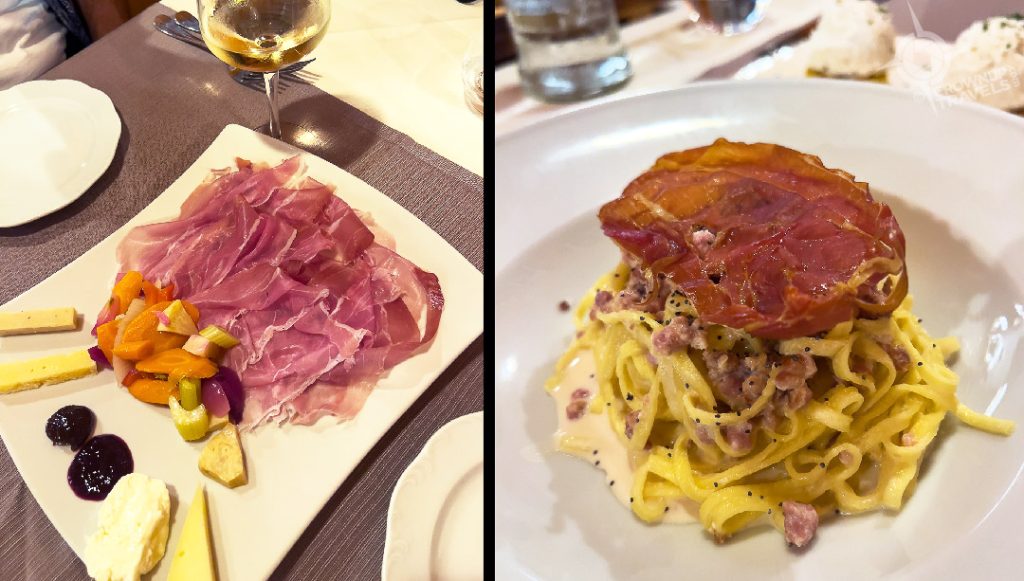
Of course Henk and I had come to San Daniele for the not-so-hidden gem, the prosciutto, and after tasting some of its fabled product in every possible way we could at lunch, we can definitely attest to the fact that it is absolutely delicious whether eaten on its own as an appetizer or incorporated into other dishes. Basically, there is no wrong way to enjoy San Daniele’s prosciutto, but perhaps the best way to do so IS while visiting this Friulano town. It’s like tasting champagne IN Champagne. What could be better?
Udine
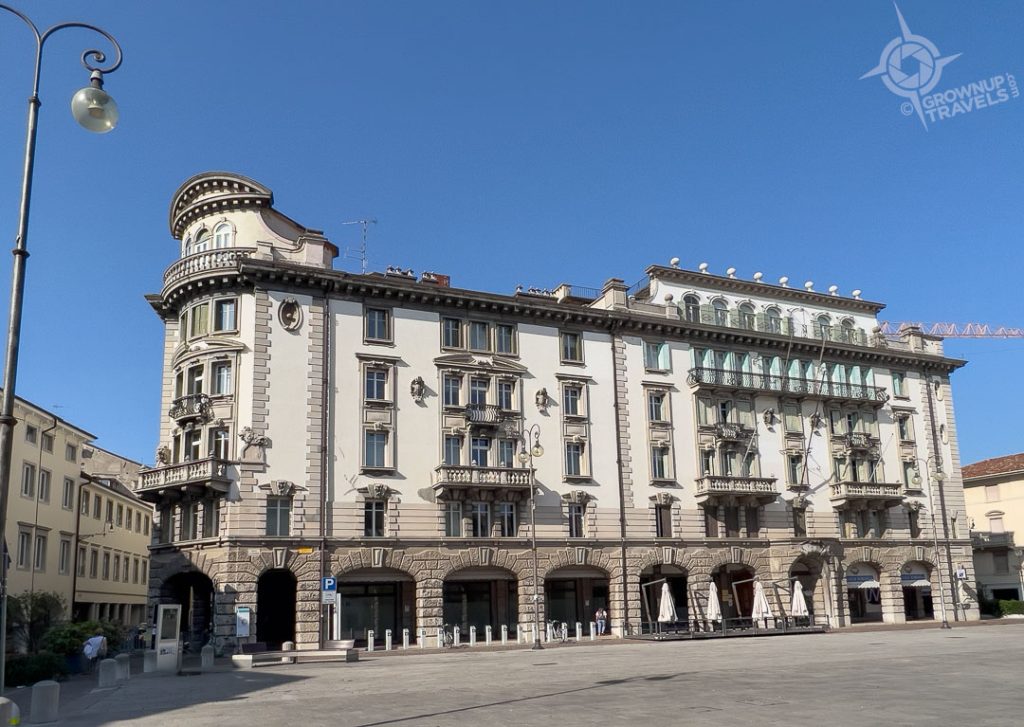
With family connections to this part of Italy, I had always heard about the town of Udine from my relatives, but I hadn’t really made it a priority to visit on any previous trip to Italy. But given that Henk and I were in the Friuli-Veneto Giulia region on this visit, and Udine was only a half hour or so from San Daniele, it seemed like the perfect opportunity to check out the city. I had no expectations whatsoever, and I certainly wasn’t prepared for how impressive its architecture was.
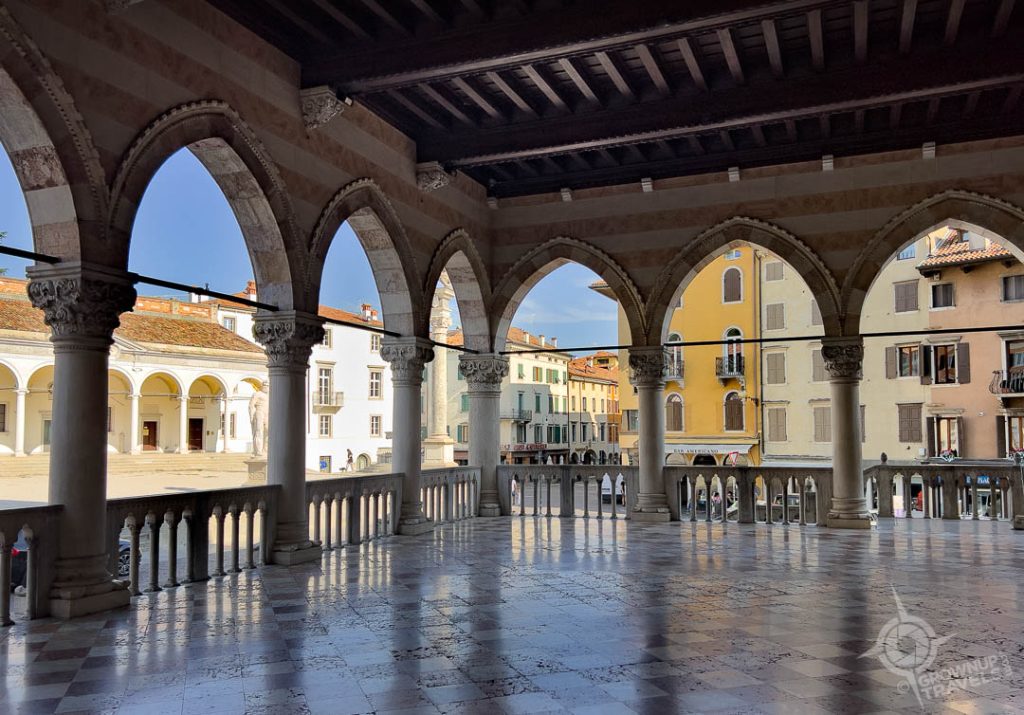
Udine’s historic centre is where you find the Piazza della Libertà, a Renaissance square that is considered to be the most beautiful Venetian piazza on the mainland, and it’s easy to see why. The influence of Venice is everywhere in the design of the square.
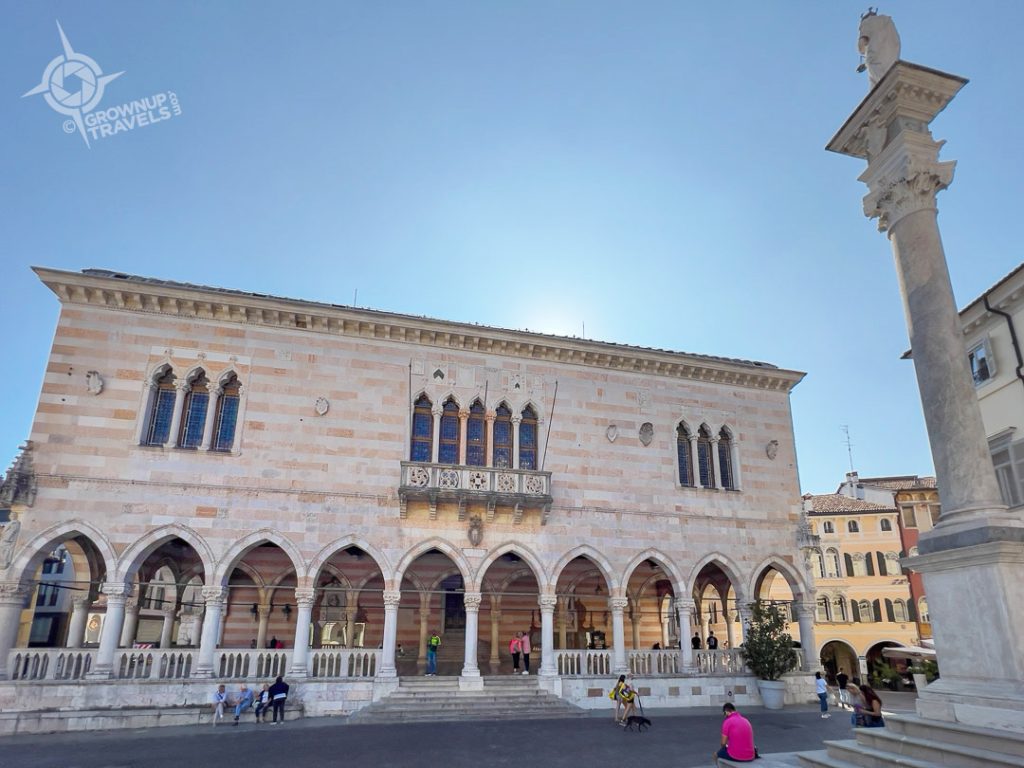
The Palazzo del Comune (Town Hall) with its Loggia del Lionello could have been lifted right out of Venice’s San Marco Square with its elegant arches, graceful pillars and pink and white striped marble exterior. That building alone would have been enough to take centre stage in any piazza, but there was more to admire in this Piazza.
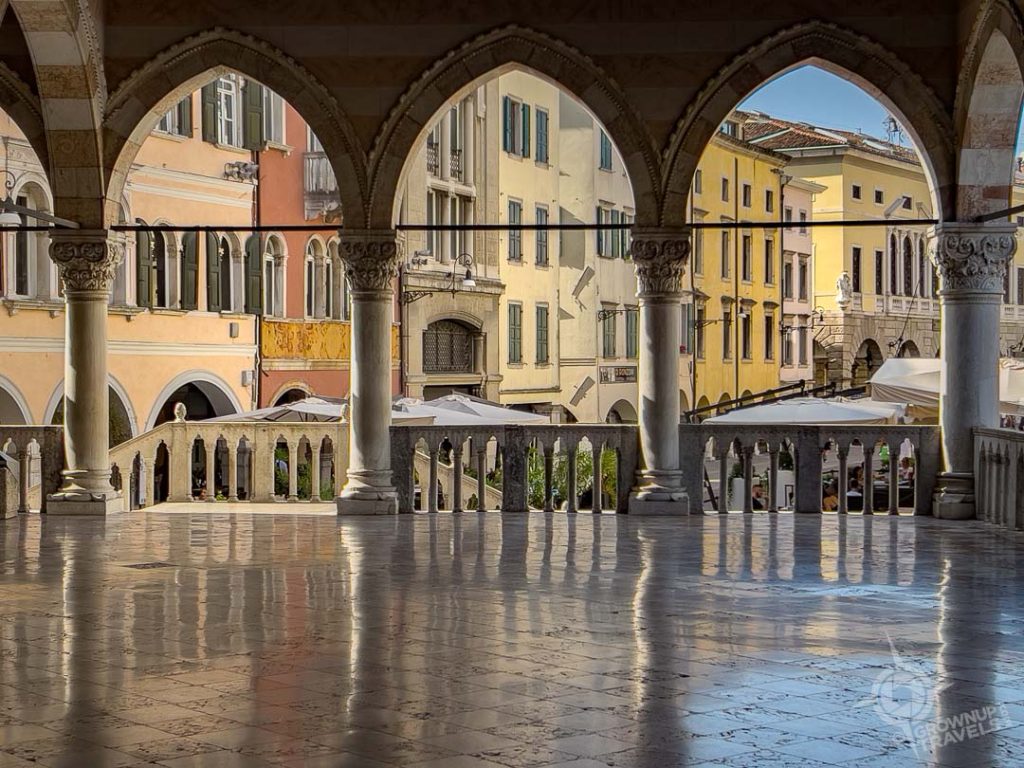
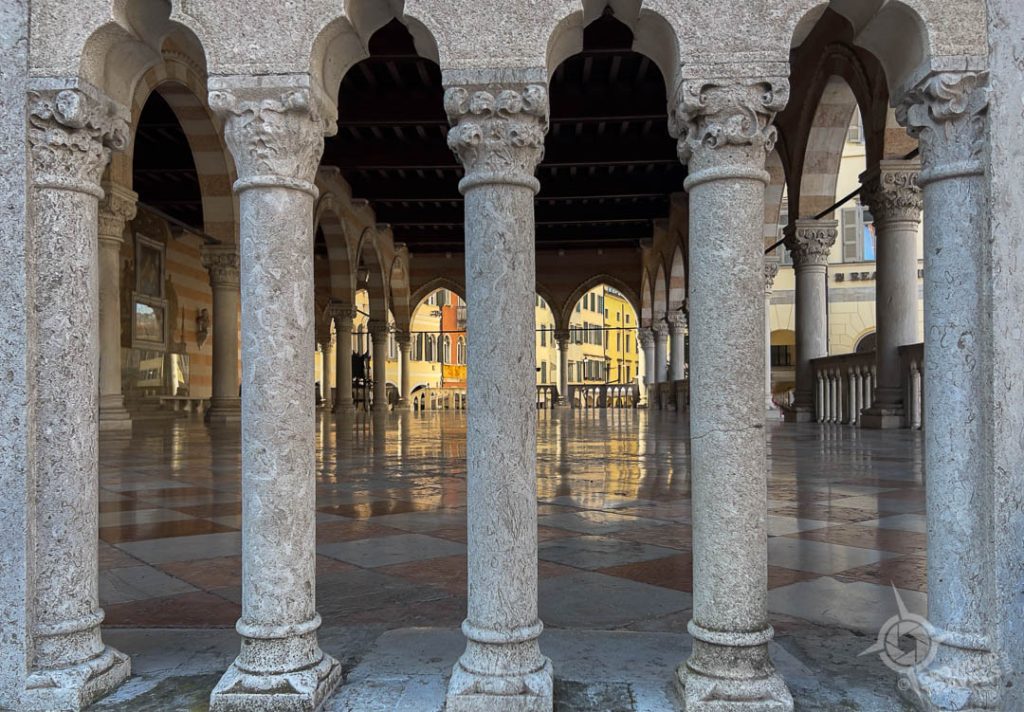
Directly opposite the Palazzo del Comune is the Loggia di San Giovanni, an equally impressive building with its beautiful arched portico running the length of the Piazza, and a triumphal arch at the centre supporting a clock tower that was inspired by the one in Venice’s Piazza San Marco. It’s no wonder this piazza in Udine has garnered such praise.
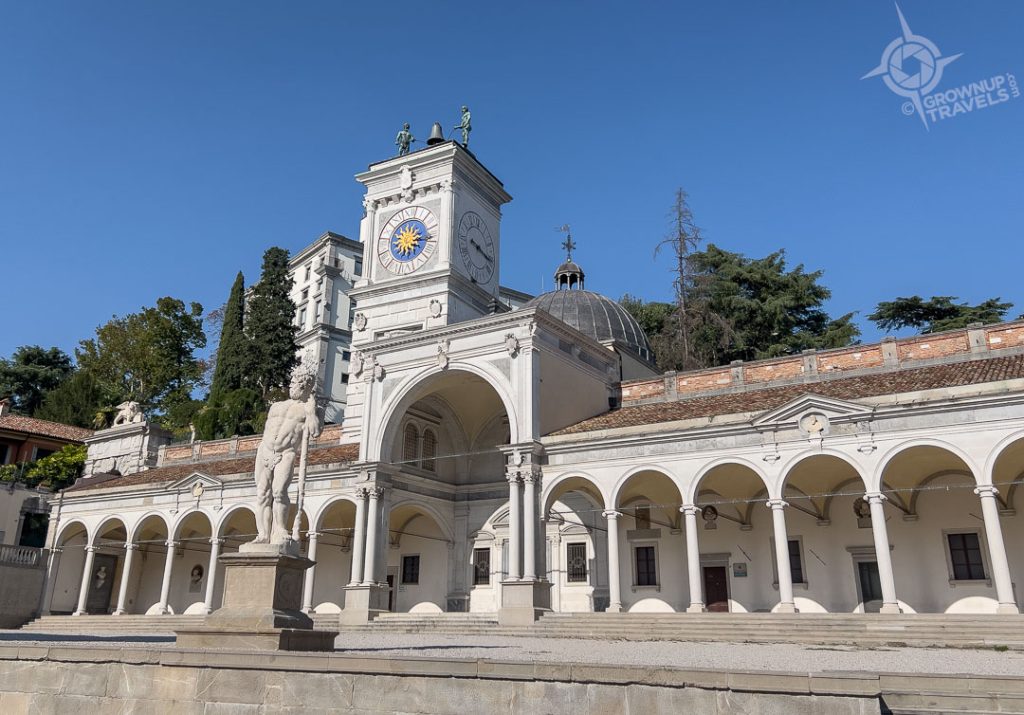
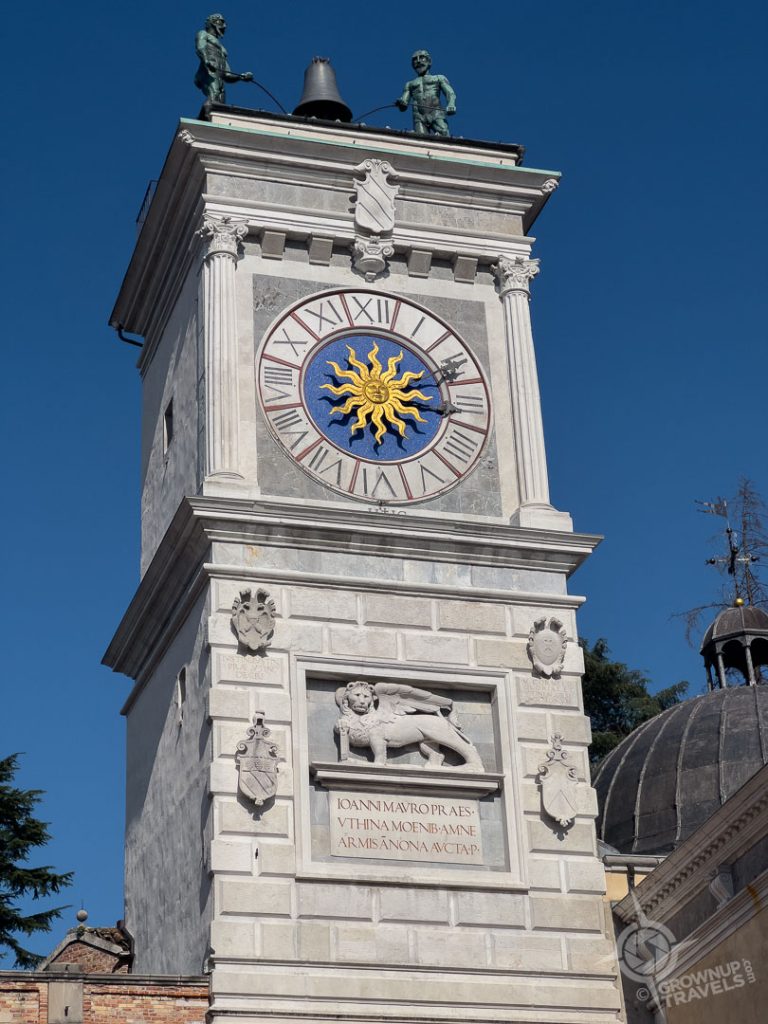
The final touch to this collection of structures is the Arco Bollani to the left of the Loggia di San Giovanni: this archway was designed by famed 16th century architect Andrea Palladio, whose classical style influenced many later architects and architecture lovers (including Thomas Jefferson who incorporated this style into his home at Monticello in Virginia).
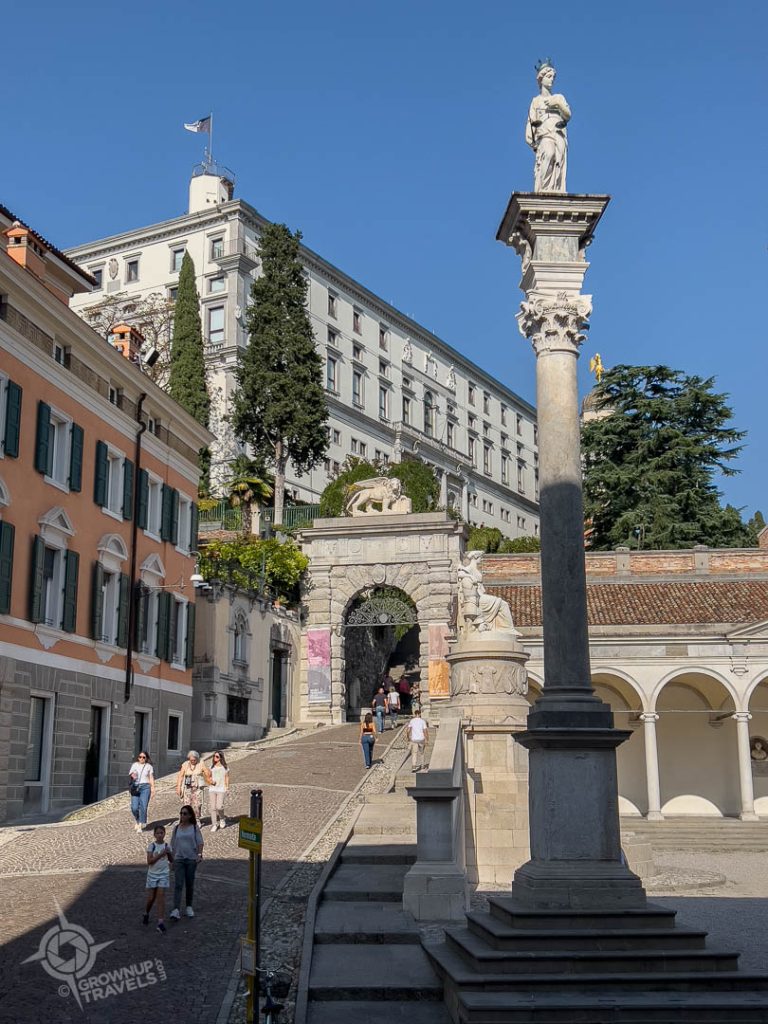
All three of these architectural gems combine to form a truly beautiful piazza in the heart of this unassuming city, and one that came as a completely unexpected surprise. Already impressed, Henk and I decided to explore what lay beyond the Arco Bollani, and found ourselves climbing a winding cobblestoned street that led to another Udinese landmark: the 16th century Castelo di Udine that sits atop a hill overlooking the city.
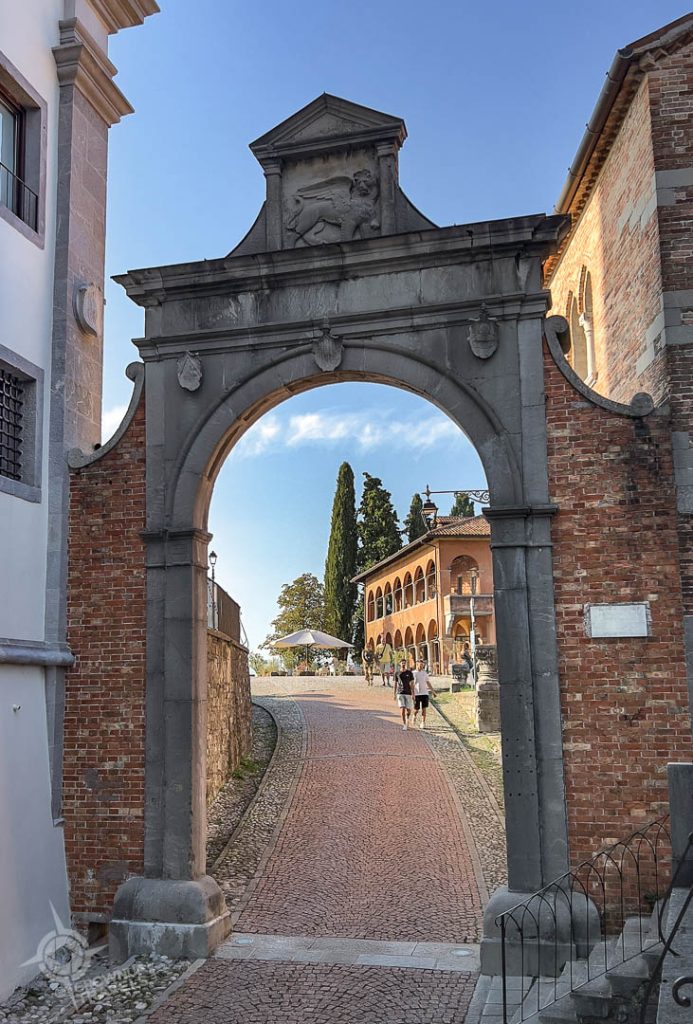
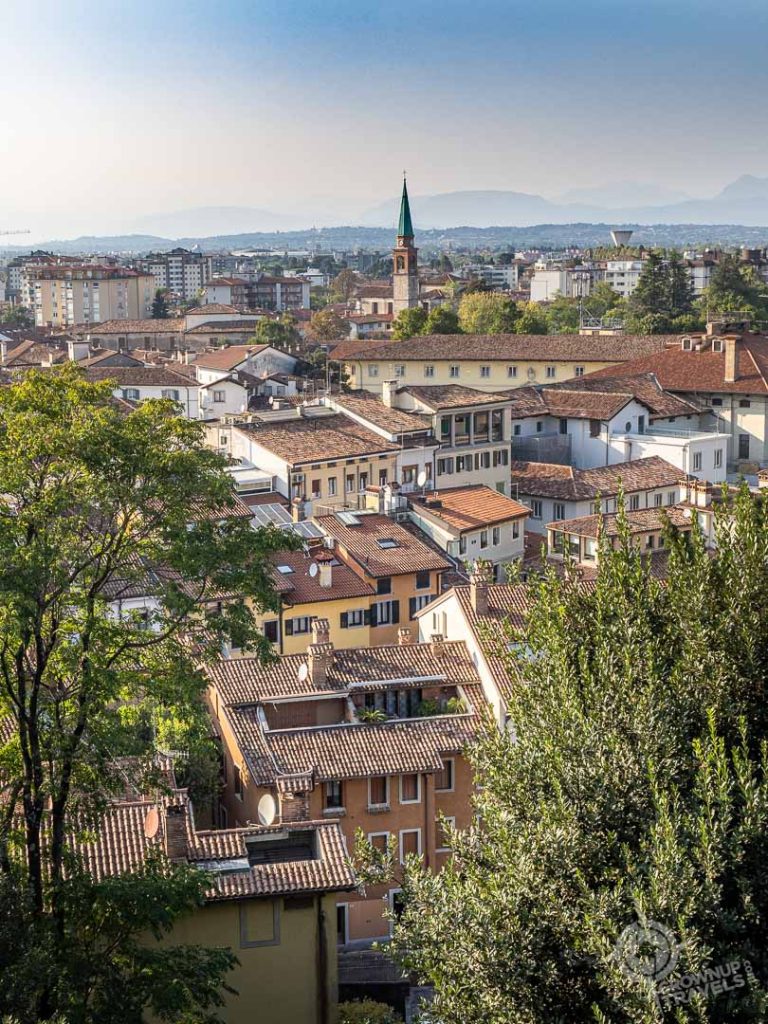
Once the home to Venetian governors, today the palazzo houses several of Udine’s civic museums including an Archaeological Museum and an Art Gallery with works by Caravaggio, Carpaccio and Tiepolo. The grounds around the museum also seemed to be a popular place for local families to stroll, kick a soccer ball around, or just take in the views of the town from the elevated position of the hill. There were lots of local families doing all of the above when we visited, so we felt like we fit right into a typical Udinese Sunday afternoon.

FUN FACT: The 30-metre high hill where the Castle sits is actually an artificial construction dating back to the Bronze Age, and is the largest prehistoric mound of its type in Europe! Legend had it that it was built by Attila the Hun’s soldiers who filled their helmets with dirt and built the mound so Attila could watch the ancient town of Aquileia burn in 452 AD. This has since been proven to be just creative storytelling, but it was yet another story we never would have guessed that Udine had to tell.
After visiting the Castle hilltop, Henk and I headed back down to the main piazza for an aperitivo. Perpendicular to the Palazzo del Comune is the street known as Via Vecchiamercato (Udine’s historic and most beautiful main street) and even on a Sunday, this place was clearly THE place to hang out in the centro storico.
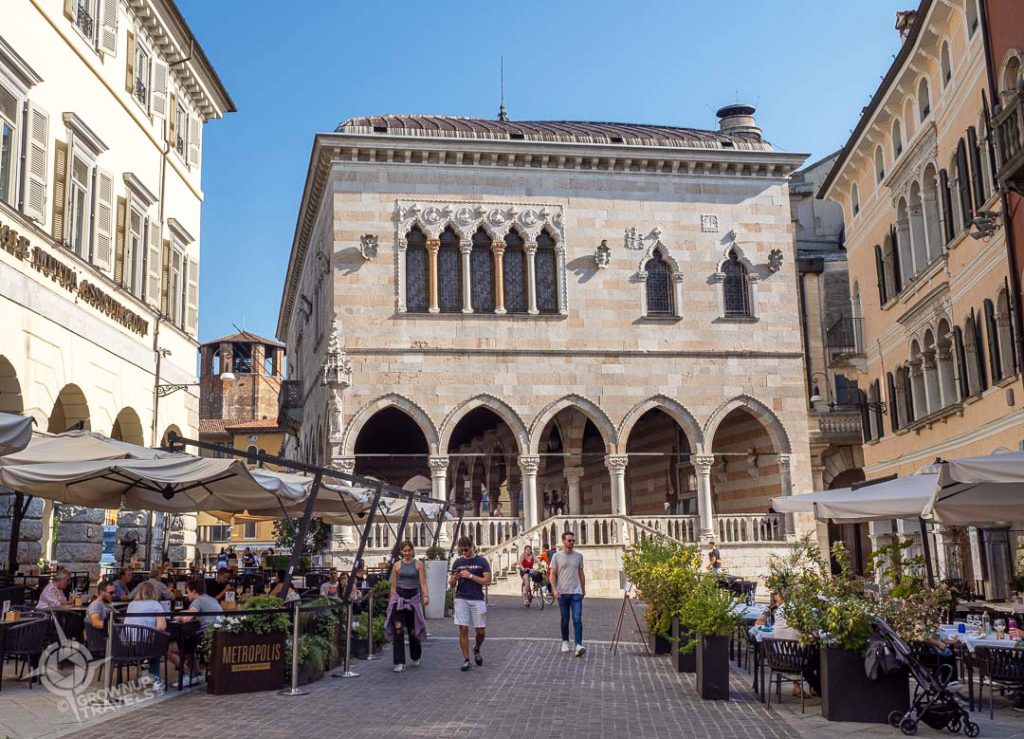
The street was lined with cafes and restaurants, with tables and comfortable lounge areas spilling out onto the pedestrian-only street. It was the perfect place to end our visit with a drink and a snack, while admiring the buildings that flanked the street and reflecting on what a pleasant surprise Udine had turned out to be.
TIP: If you are planning to stay longer and are looking for more things to do in Udine, check out the city’s official tourism website for more information.
Lake Barcis
For a completely different kind of hidden gem nestled in the heart of the Fruili-Veneto Giulia interior, head to Lake Barcis in the province of Pordenone. Lake Barcis is actually a manmade reservoir that was created in 1954 as the result of a hydroelectric project, but today this turquoise-coloured alpine lake is a destination for many locals who come here to hike, enjoy water sports on the lake, or just take in the natural beauty of this location set against a stunning backdrop of the Dolomite mountains.

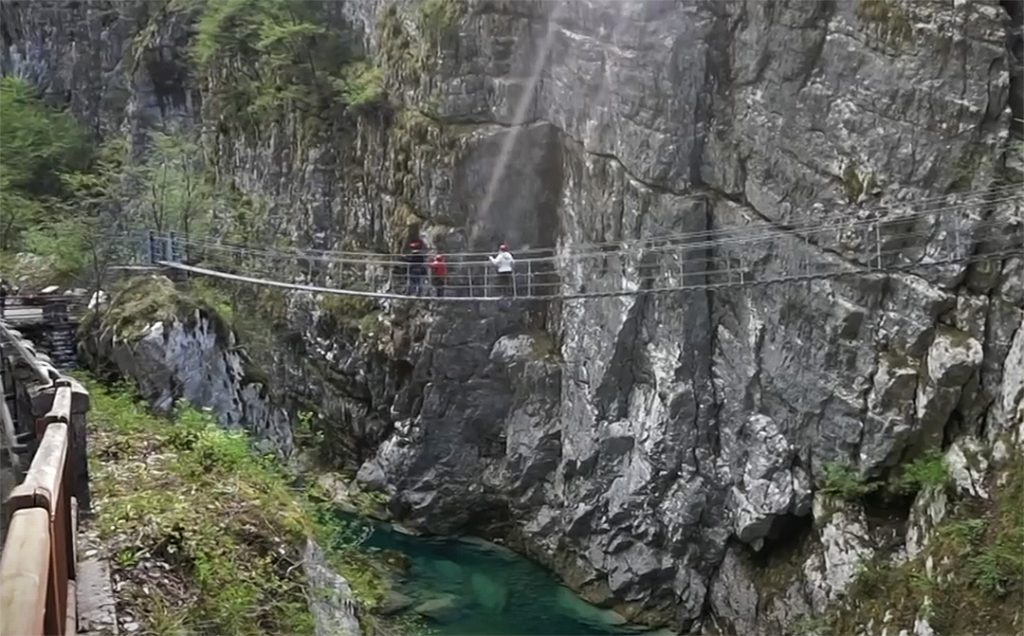
The small village of Barcis is on the eastern shore of the lake, and visitors looking for a place to grab a bite can find several restaurants there. On the opposite side of the lake is the Visitor Centre near the Ponte Antoi bridge, which provides visitors with information on this area and the Forra del Cellina Nature Reserve in which it is located. There are several trail networks that run around the lake, and others that offer views of the Cellina gorge, including a short piece of the old Valcellina Road very close to the Ponte Antoi bridge that is popular with visitors of all ages and abilities.
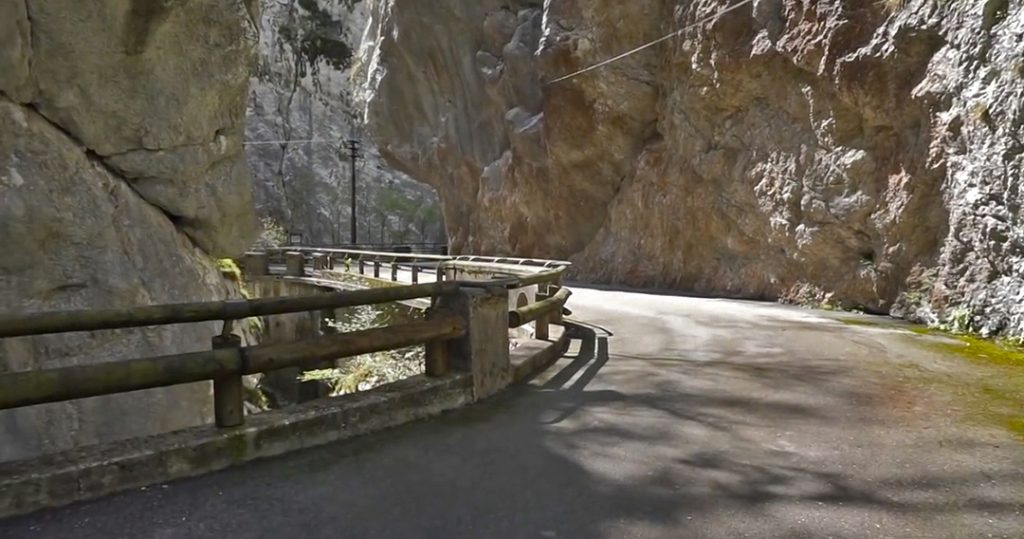
This is an easy paved path but it also includes an optional metal suspension bridge, the so-called ‘Tibetan bridge’, that you can pay a few euros to cross if you want a more adventurous experience.
If you want to just do a short hike to get a great view of the Barcis dam and the lake, look for a place to park just west of the Nuovo Ponte di Barcis. There is a trailhead here that has signs for a ‘belvedere‘ (lookout). This trail actually connects to 3 lookouts but the closest one gives you a great view of the dam, the gorge below it, and the jewel-coloured lake with the mountains disappearing in the distance.
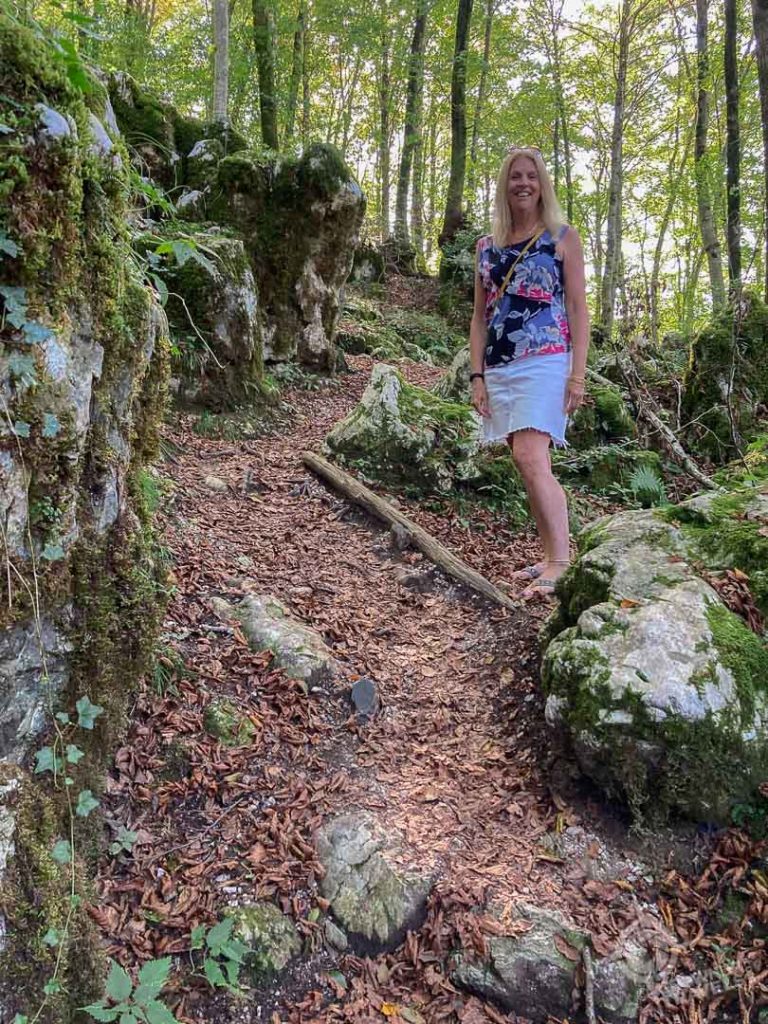
Henk and I had heard about Lake Barcis from friends but it wasn’t until we saw the location of this lake and its stunning colour that we really began to appreciate what a hidden gem this place is. Relaxing and surrounded by nature, Lake Barcis is about as far from the crowds of the big cities as we could imagine, and one of the jewels you can find in the Friuli-Veneto Giulia region of Italy.

Why Explore Italy Off the Beaten Path?
For first time visitors to Italy, it’s completely understandable that they will want to see some of the country’s most famous sights. There is after all, only one Vatican, one Ponte Vecchio in Florence, and one Colosseum (although you may be surprised to learn that Verona has its own smaller version!). But if you have already checked those boxes, and want to explore more of Italy than its Top 10 attractions, visiting small towns and lesser-known regions can be even more rewarding. Not only are you more likely to be surprised by some of the attractions, food and experiences that can be found in these parts of the country, you are more likely to meet locals, have the chance to practice your Italian – and their English – and get a taste of a more relaxed way of life that this kind of ‘slow travel’ offers. After all, isn’t that what La Dolce Vita is all about?



Jane is an award-winning travel writer and photographer and an accredited member of the Travel Media Association of Canada (TMAC). In their annual awards competition, TMAC named GrownupTravels.com as the Best Self-Published Travel Blog in 2025 .
She is also a member of the North American Travel Journalists Association, and a freelance travel writer contributing to both print and online publications.




Subscribe and you'll never miss an update!
Join our mailing list to receive the latest news and updates from Grownup Travels. (We keep your email STRICTLY private)
Thank you for subscribing to Grownup Travels!