
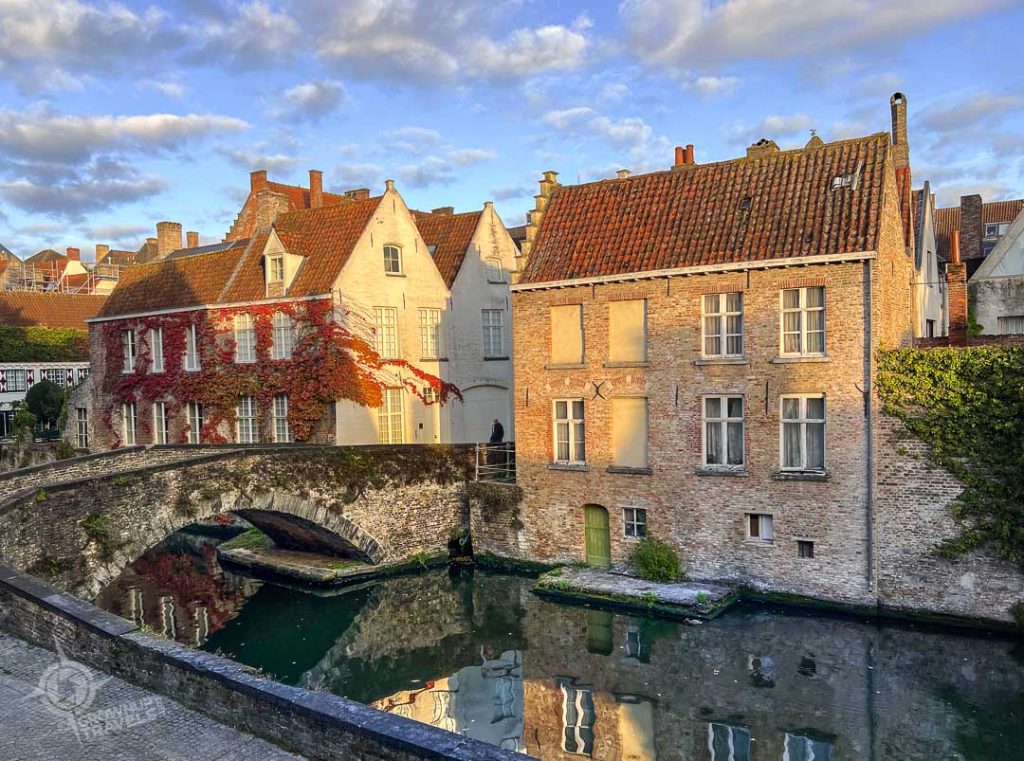
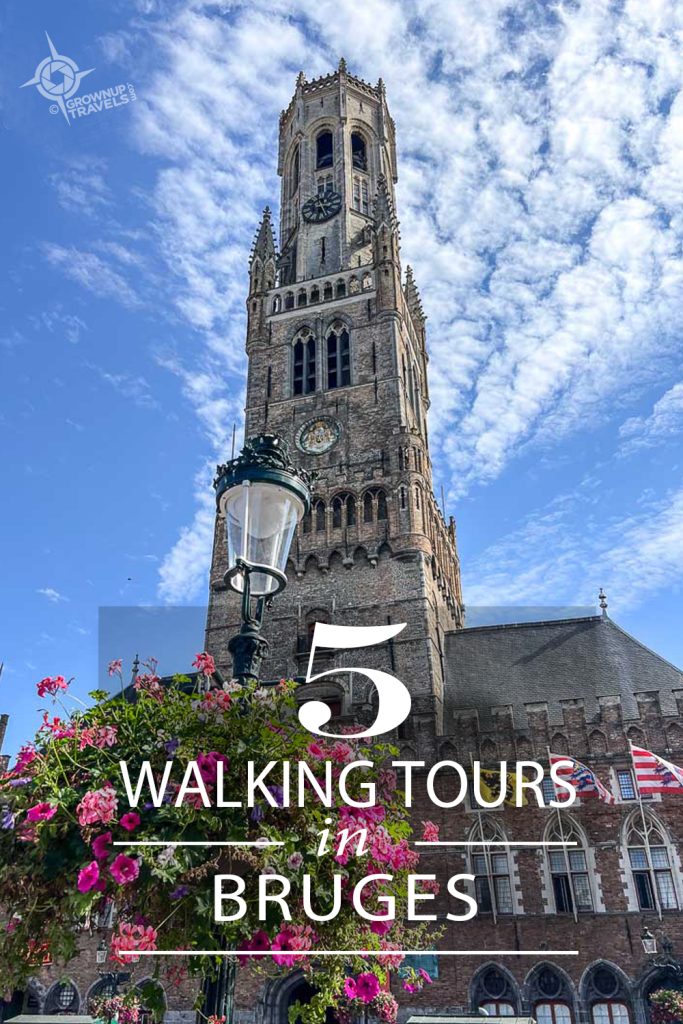
Anyone who has ever been to Bruges, Belgium, knows that this charming town makes for a perfect weekend getaway. Its photogenic cobbled streets and romantic canals cover a relatively small footprint making it easy, even for first time visitors, to check off some of the most noteworthy landmarks and attractions in the UNESCO-designated historic centre. But there is much more to discover in Bruges than its historic Belfry if you have – or make – more time to go deeper into what makes this medieval city so special.
Henk and I had the luxury of time to do just that, thanks to a house-swapping exchange, and one of the best ways we found to explore Bruges at a more leisurely pace was on foot with the thoughtfully curated Bruges walking tours that the city offers. Having done them all, we can honestly say, there is something here for everyone.
The Bruges From the Heart Guided Walking Tour
If you are the kind of traveller who prefers guided tours, or if you would like to get a great overview of a destination, a guided walking tour is a great way to go. And while there are many private companies and individual guides who offer Bruges walking tours, only one tour has been organized by the actual tourism office of the city, the Bruges From the Heart walking tour, and this one is special for several reasons.

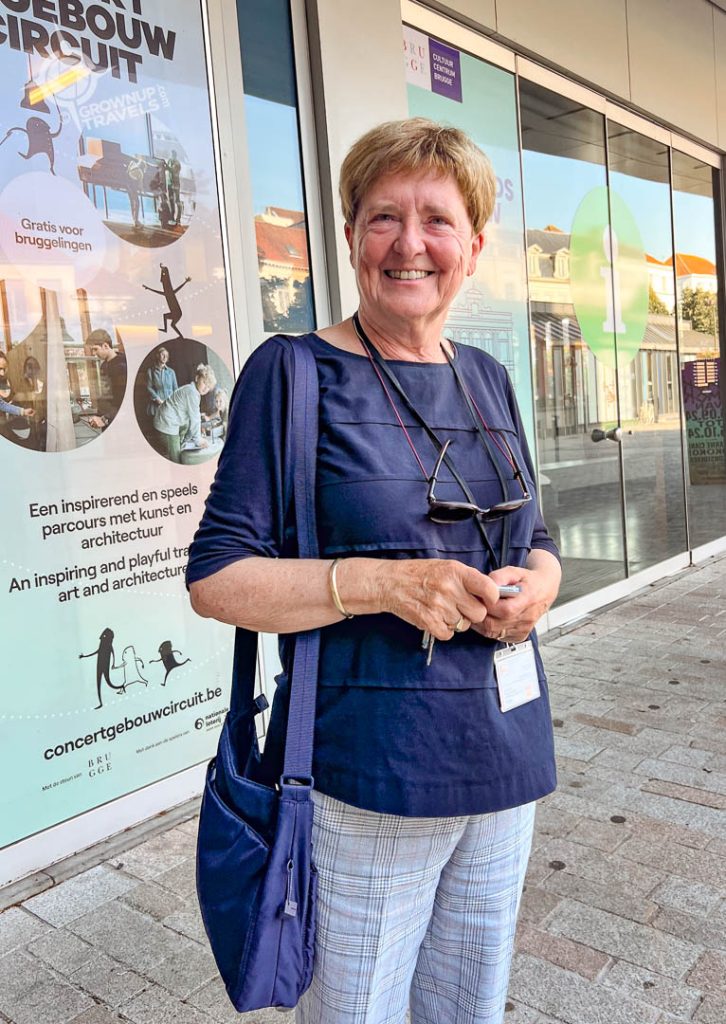
For starters, since it is the tourism office that actually puts together these tours, you know that the information is both accurate and up-to-date, and that the guides chosen to lead them have been carefully selected. As we learned from personal experience, these guides are extremely passionate locals, dedicated to sharing knowledge about their city beyond just the top ten highlights. Our guide, Christine, was a perfect example, a former teacher-turned-guide who for decades now has been providing visitors with interesting tidbits of local lore and history to supplement the most relevant information about the city’s major attractions.
Secondly, the Visit Bruges From the Heart tour is the only Bruges walking tour that gives visitors exclusive access to the 24-metre-high rooftop of the Concertgebouw, Bruges’ concert hall, which offers spectacular views over the entire city.
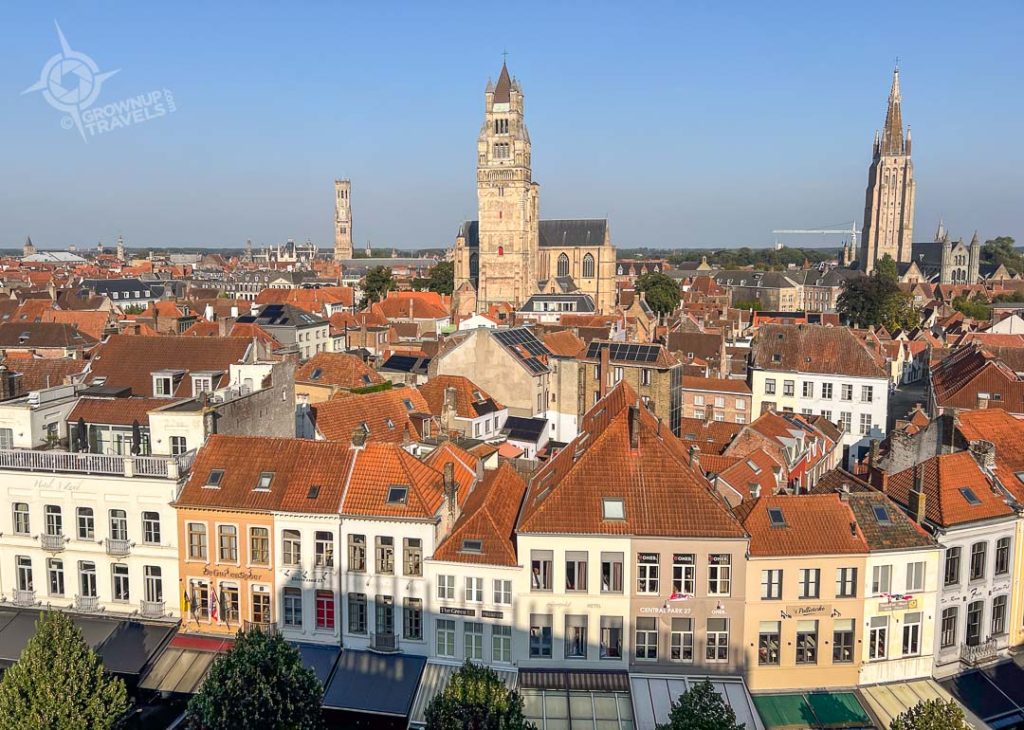
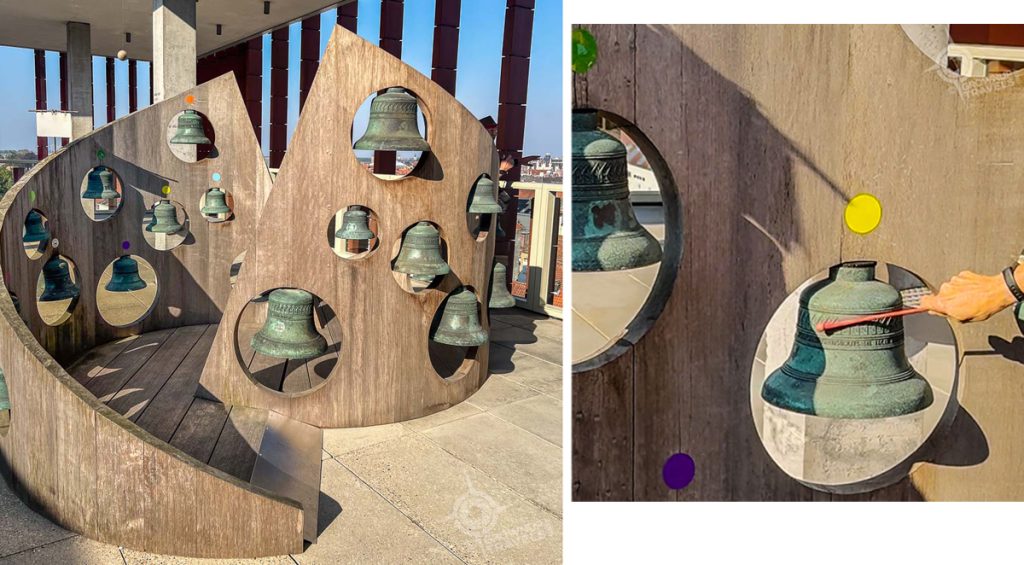
Yes, you could climb the 366 steps up the Belfry tower in Market Square to peer through a grated window opening, but the concert hall roof gives you a spectacular vantage point to see the city from above, and unlike the Belfry, this view comes with elevator access! That rooftop access and the view alone is worth the price of the tour (€12.5 euros). Plus there’s a carillon that visitors can play if they want to.
And lastly, on our Visit Bruges-organized itinerary, there were none of those unnecessary stops at ‘sponsored’ shops or stores so common on many commercial tours, which basically are thinly-disguised opportunities to encourage shopping.
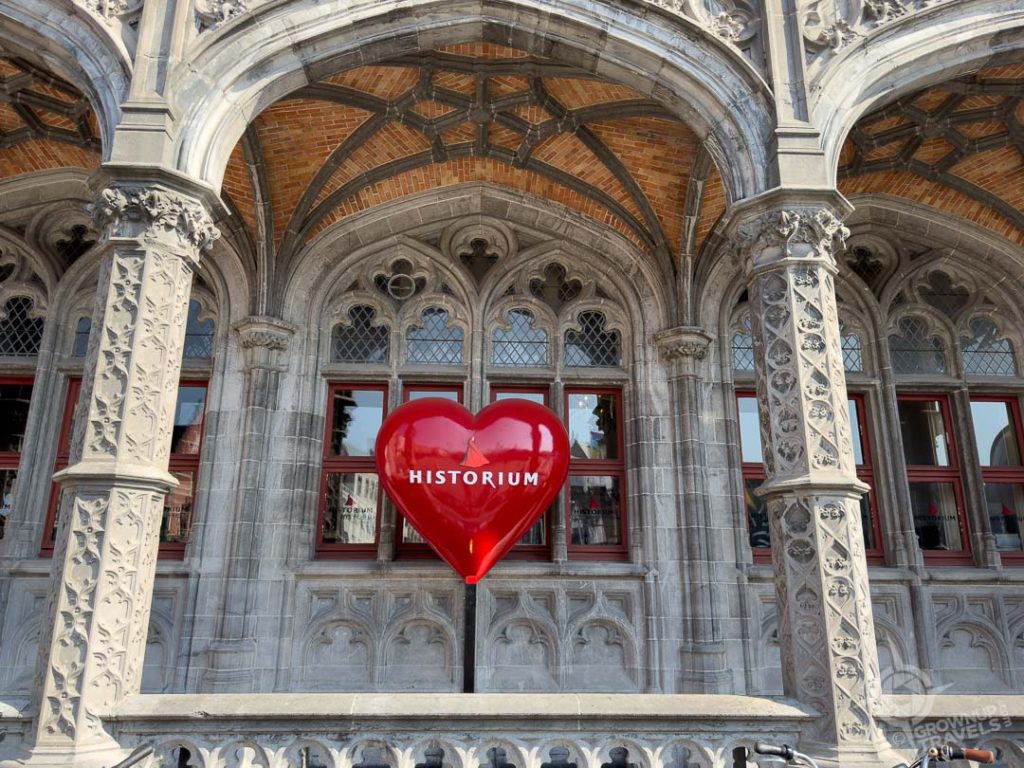
TIP: Tickets for Bruges from the Heart can be purchased online or at the main tourism offices in the Historium in Bruges’ Market Square and at the train station. Tours start at the Historium in Market Square and are limited to a maximum of 16 people. Note that depending on the day, the rooftop may be unavailable due to other scheduled events, so ask if it is included when you want to book your tour.
Oooh! Bruges Self-Guided Bruges Walking Tours
For travellers who like to strike out on their own, set their own pace, or pick and choose what they want to see and when they want to see it, Bruges has done a stellar job of creating 4 self-guided walking tours. They cover a collection of the city’s most interesting sights and attractions, each tour focusing on a different theme. The routes are available as a printed, pocket-sized Bruges Walking Guide that is available at the tourism offices for €3.5 euros, or better still, you can download the totally free Visit Bruges app and follow along on your phone.
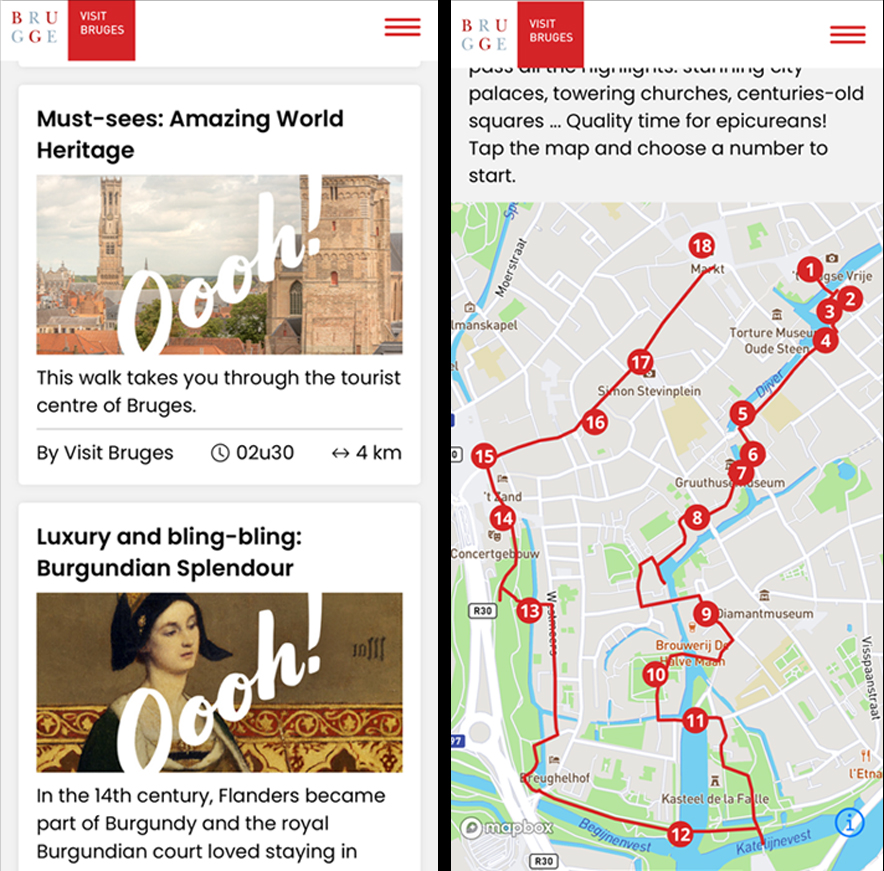
The Walking Tours outlined on this Visit Bruges app are comprehensive and engaging, offering information on all the major attractions along each map route, with drop-down descriptions and even interactive elements including 360-degree tours of many interior and exterior spaces.
Here are some of the highlights we found on each of these Bruges Walking Tours:
1. Amazing World Heritage Bruges Walking Tour
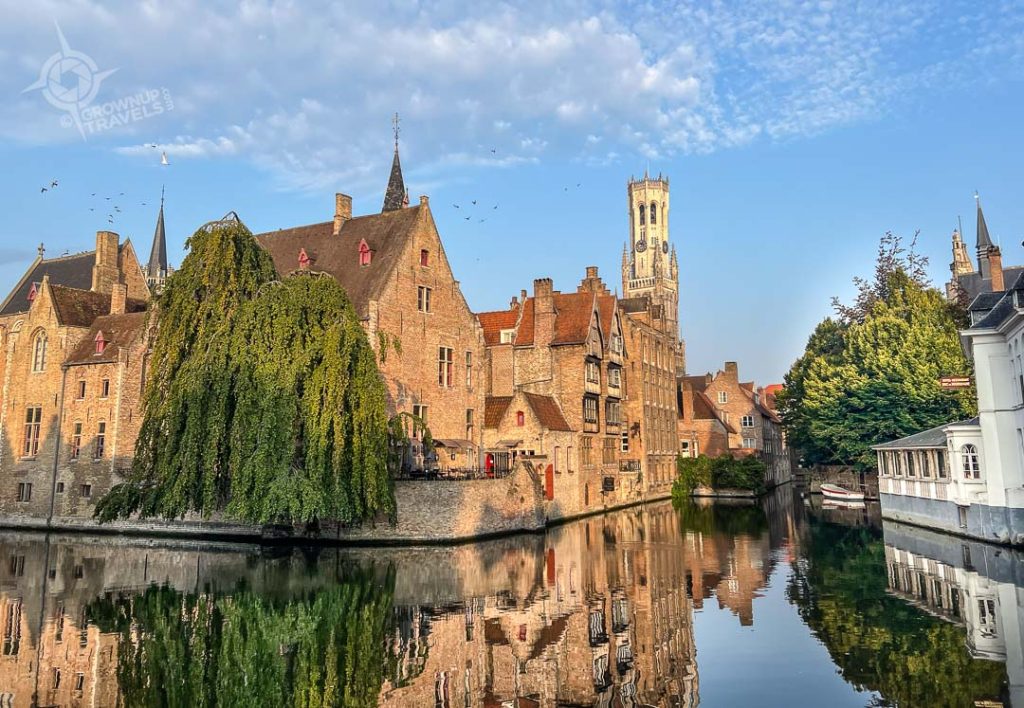
The entire centre of Bruges has been designated a UNESCO World Heritage Site, thanks to the fact that so much of its medieval architecture has remained intact for centuries. This Heritage walking route covers all of the most important and photogenic locations, including the Belfry and Market Square and the Burg Square, both of which are famous for their beautiful Gothic buildings.
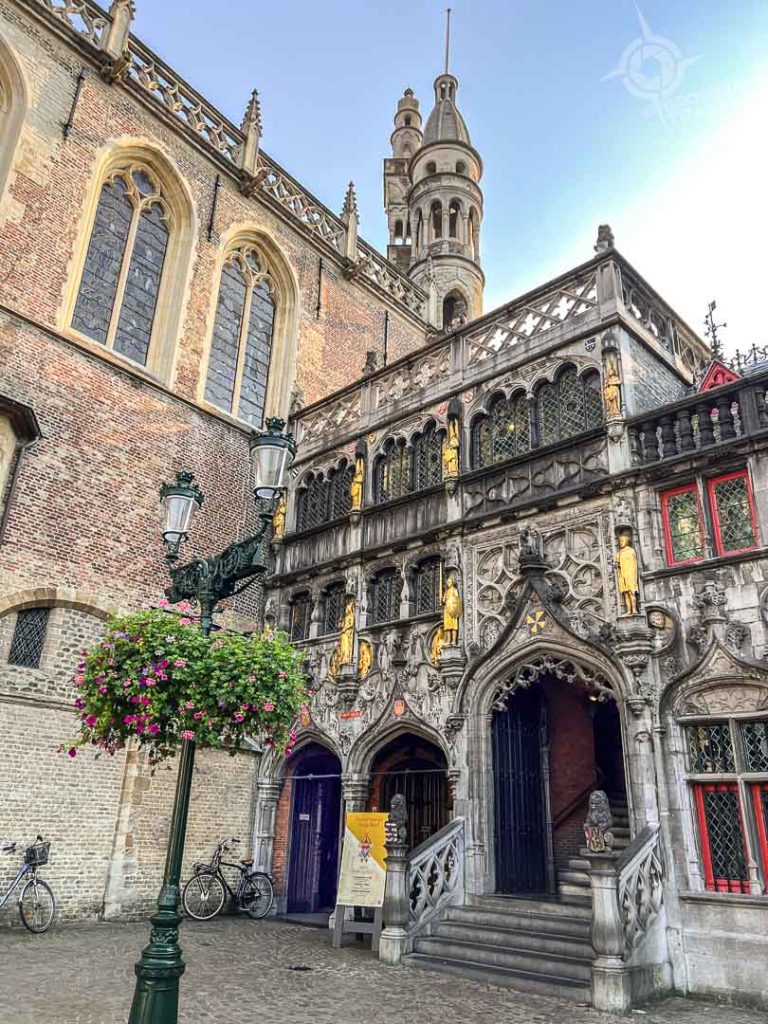
For us, one of the highlights in Burg Square is the Basilica of the Holy Blood, a Gothic church whose beautifully-decorated interior is reason enough to visit.
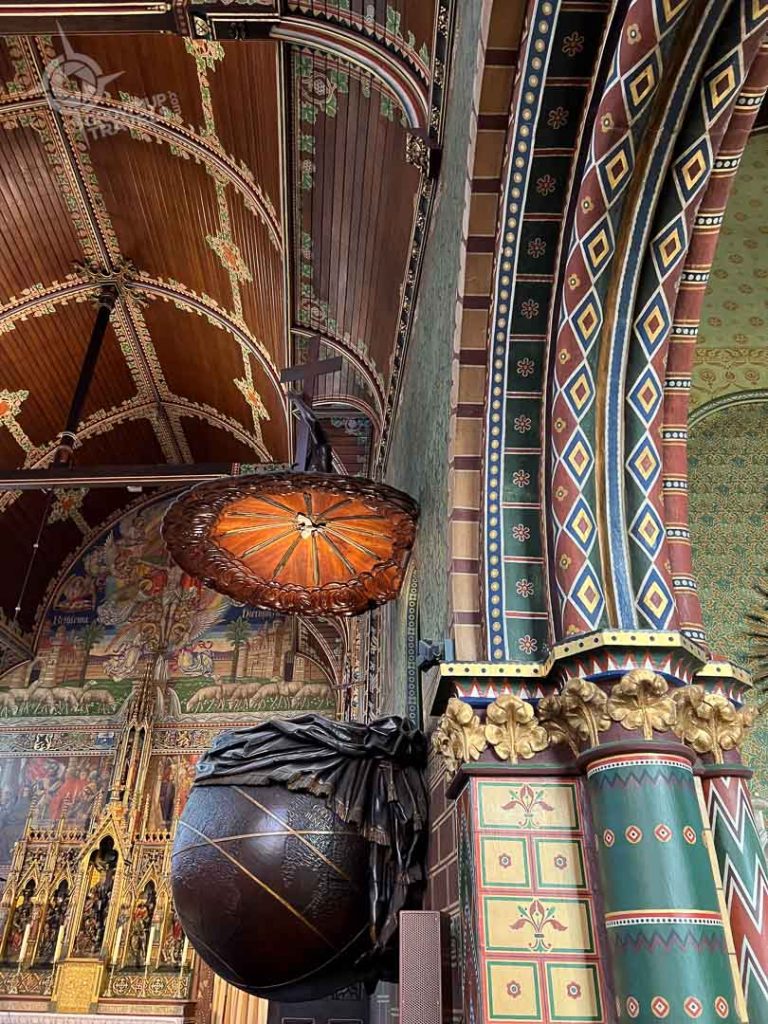
But it also houses a sacred relic that elevated this church to its status as a Basilica: a vial that contains a piece of cloth soaked in what is believed to be the blood of Jesus Christ. This relic is brought out daily from 2-4 pm for visitors and pilgrims to view (you can walk by and view the vial but no photos are allowed) and on Ascension Day, the relic becomes the centrepiece of the historic and colourful Procession of the Holy Blood that goes through the centre of Bruges (another UNESCO-designated event of Bruges’ cultural heritage).
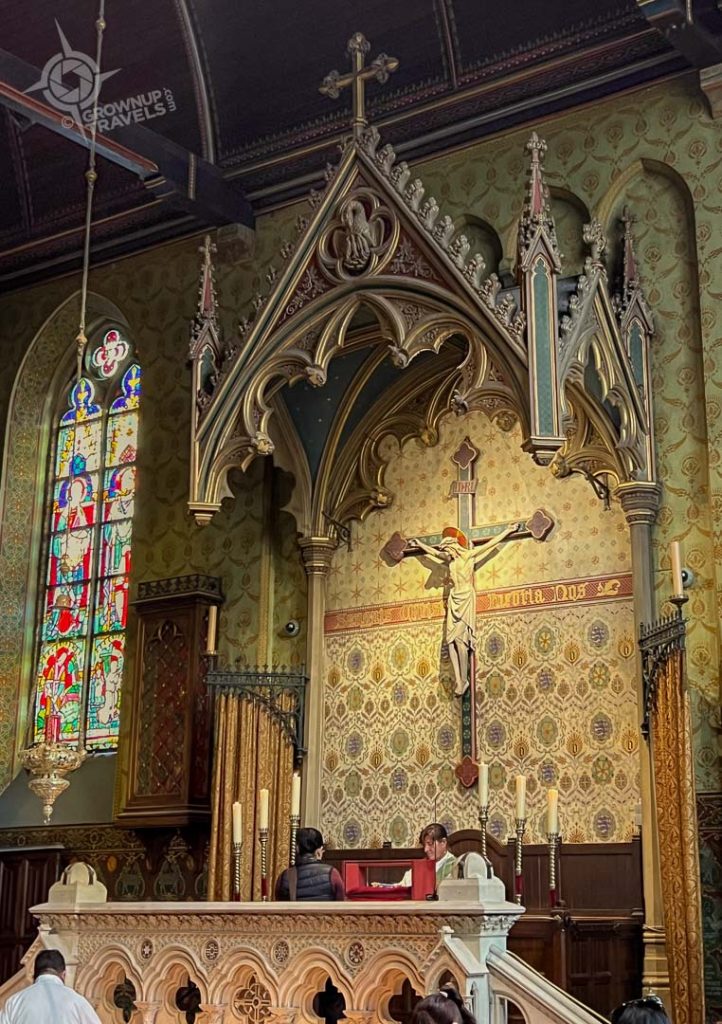
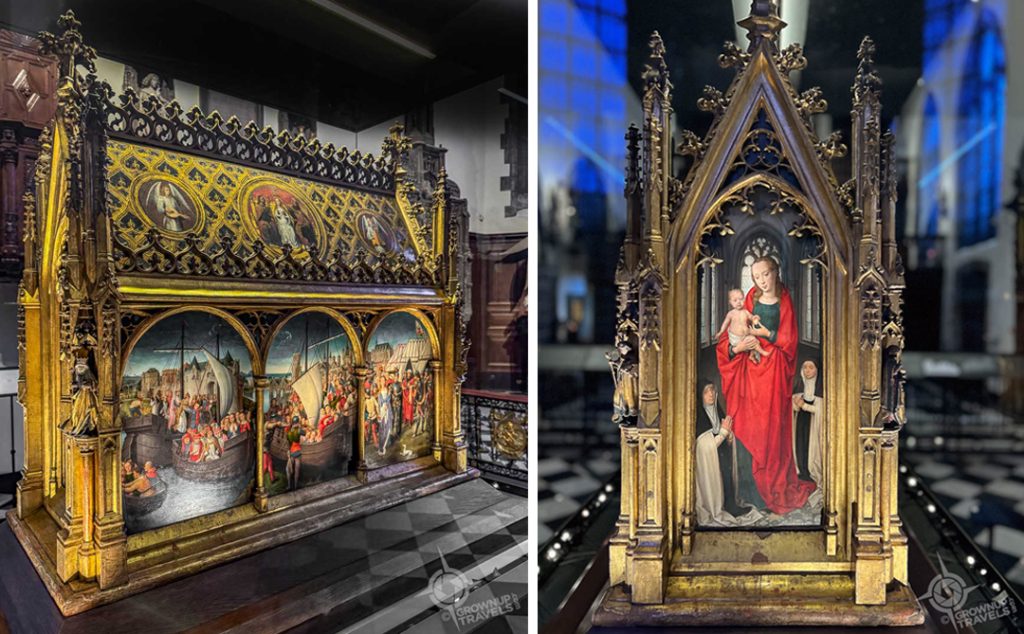
Another location that impressed us on this Heritage route was the St. John’s Hospital/Museum. This 12th-century respite for travellers, the poor and the sick has an interesting history all its own, and is well worth visiting. Don’t miss the St. Ursula Shrine contained within it, one of the Hospital’s most beautiful treasures. This gilt reliquary masterpiece, commissioned by the Hospital and crafted by Hans Memling, resembles a chapel, and tells the story of the martyrdom of St. Ursula in vibrantly painted oil panels that are as vibrant today as when they were first painted in the 15th century.
2. Burgundian Splendour Bruges Walking Tour
Bruges was THE place to be for the rich and famous in the 14th and 15th centuries, and the Dukes of Burgundy, their court, and prominent merchants made this city both their place of business and their home. What they left behind was a rich legacy of palaces, churches and artwork that form the theme for this Burgundian Splendour walking tour.
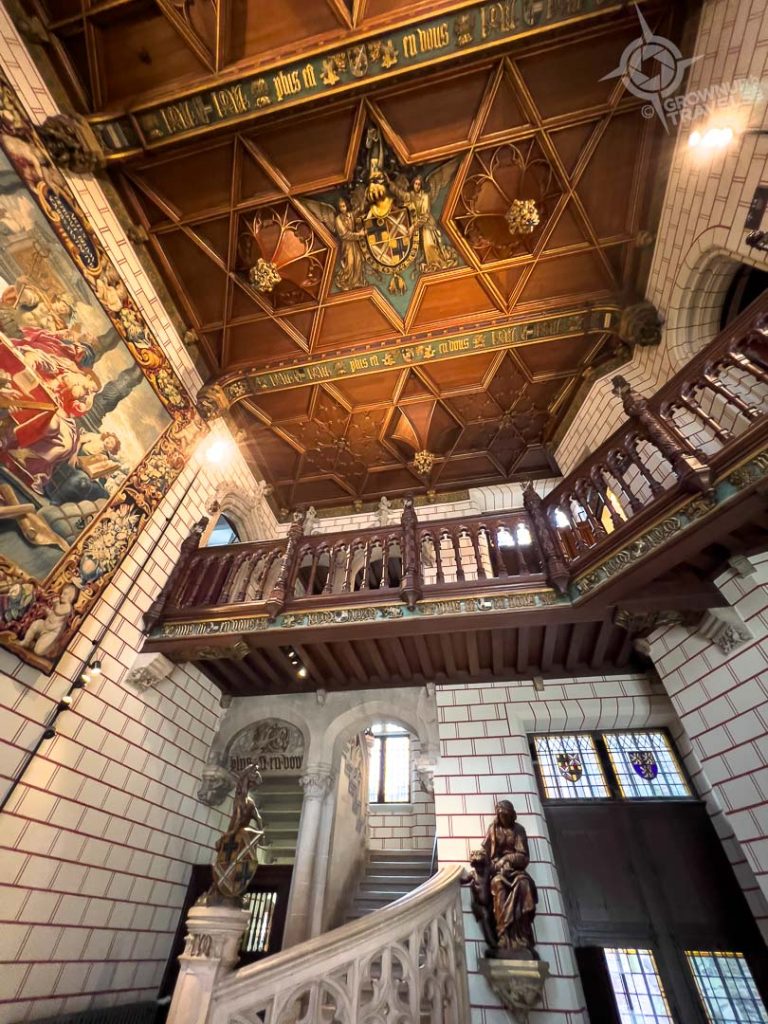
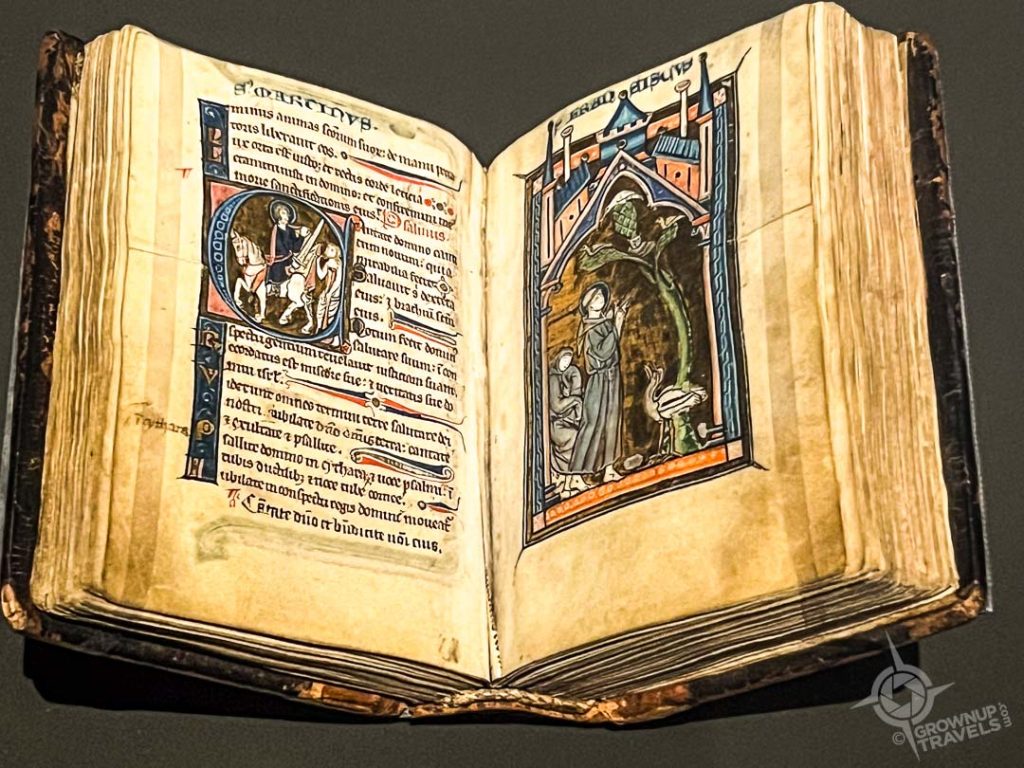
The Gruuthuse Museum is part of this legacy, and was once home to Louis de Gruuthuse, a rich merchant who made his fortune as the exclusive distributor of ‘gruut’, a flavour enhancer for beer. This museum was one of our favourites in Bruges, as it displayed all kinds of luxurious trappings that showcased the elevated lifestyle of the upper echelon. From the finest china and brocade tapestries to a library of illuminated manuscripts, there was clearly money to be made in Bruges from beer in the 1400s. (as there still is today!)
So influential and well-connected was Gruuthuse, that he was allowed to construct a private viewing oratory that connected the upper level of his house to the adjacent Church of Our Lady, giving his family private and exclusive access to observe church services without having to mingle with the masses.
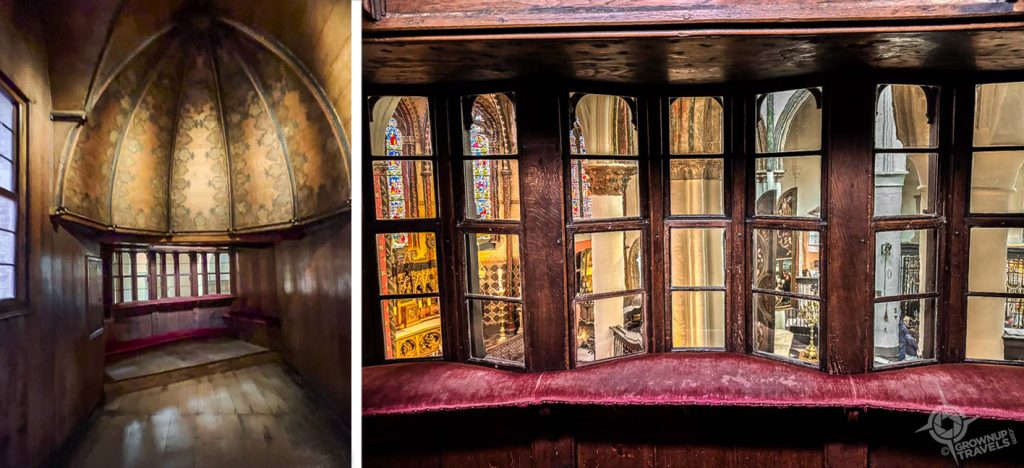
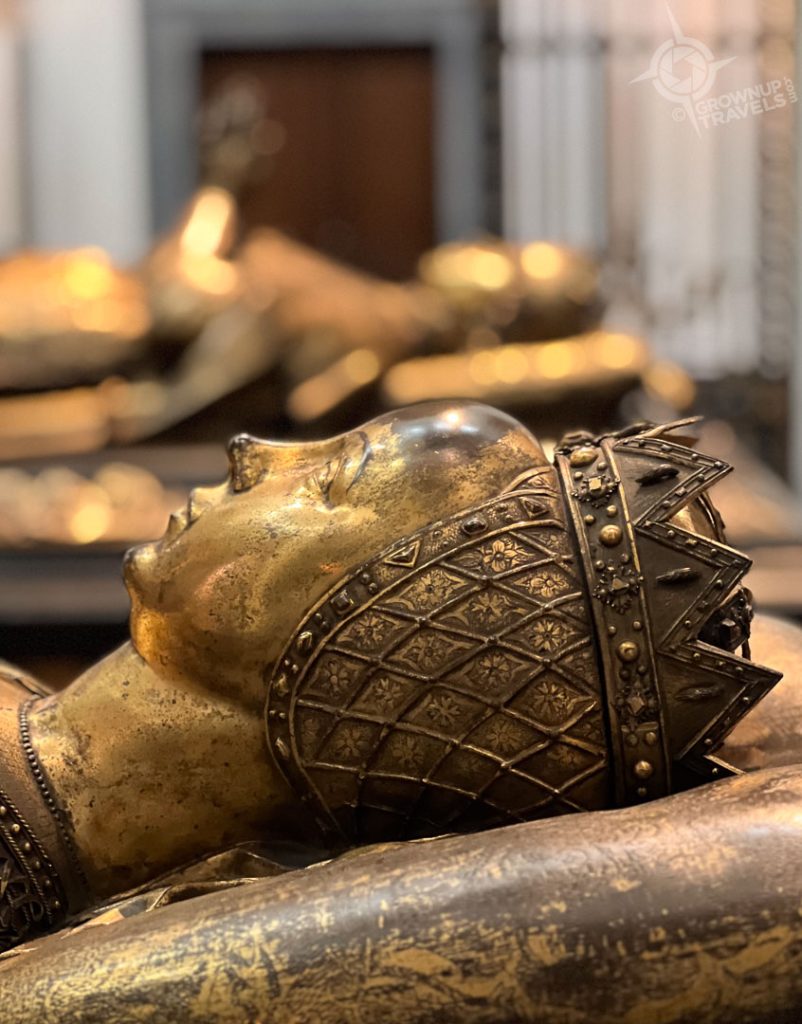
The Church of our Lady is where you will also find the tombs of some of Bruges’ famous Burgundian royals, including the last great Duke, Charles the Bold, and his daughter, Mary of Burgundy who tragically died at the age of 25 following a riding accident.
But perhaps the most famous treasure in the Church of Our Lady is Michelangelo’s Madonna and Child sculpture. This sculpture is the only one that was commissioned and exported outside of Italy during the artist’s lifetime, executed at the request of a wealthy cloth merchant from Bruges named Jan Mouscron.
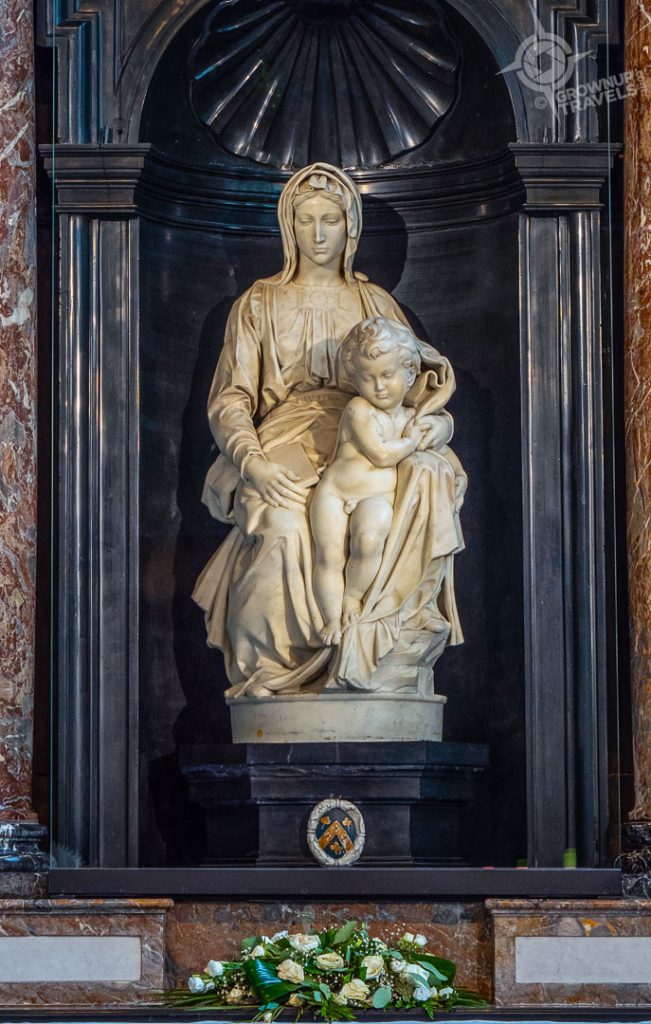
Carved six years after Michelangelo completed the Pietà in the Vatican, you can see similarities in Mary’s face and garments, but this sculpture is much smaller and includes an infant Jesus, not the crucified adult in the former sculpture.
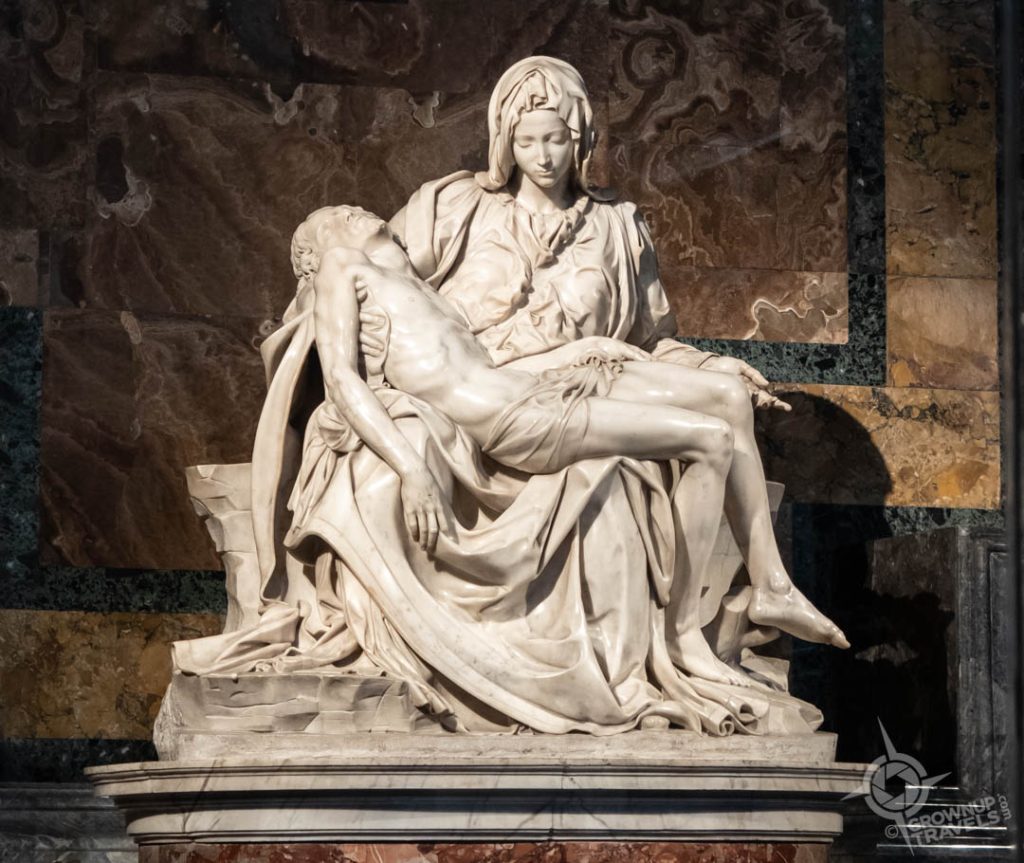
The Madonna and Child in Bruges also has the distinction of being one of the most stolen masterpieces in the world, having been scooped up by Napoleon, and then again during World War II by the Nazis. (It was recovered by the Americans and returned to the church in a story made famous in the movie, The Monuments Men.)
3. Silent Nostalgia Bruges Walking Tour
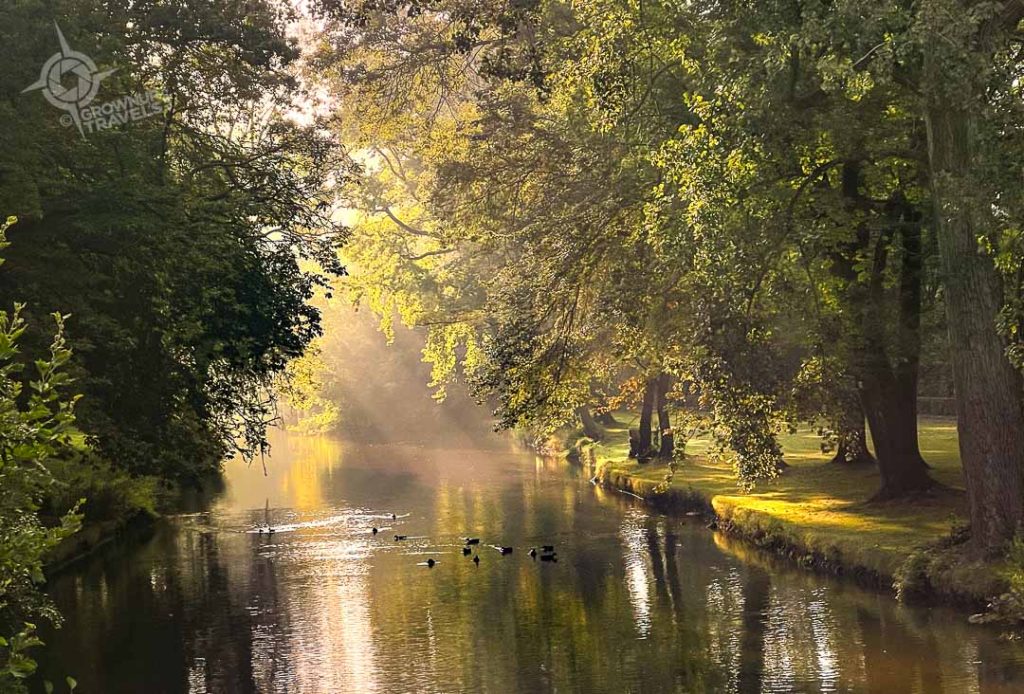
If less crowded, less touristy parts of Bruges are what you are looking for, head to the northern end of the city, or the periphery, away from the historic centre where most of the weekenders and day-trippers tend to congregate. Here you will find canal-side residential streets, green spaces, the odd historic feature and eventually, windmills.
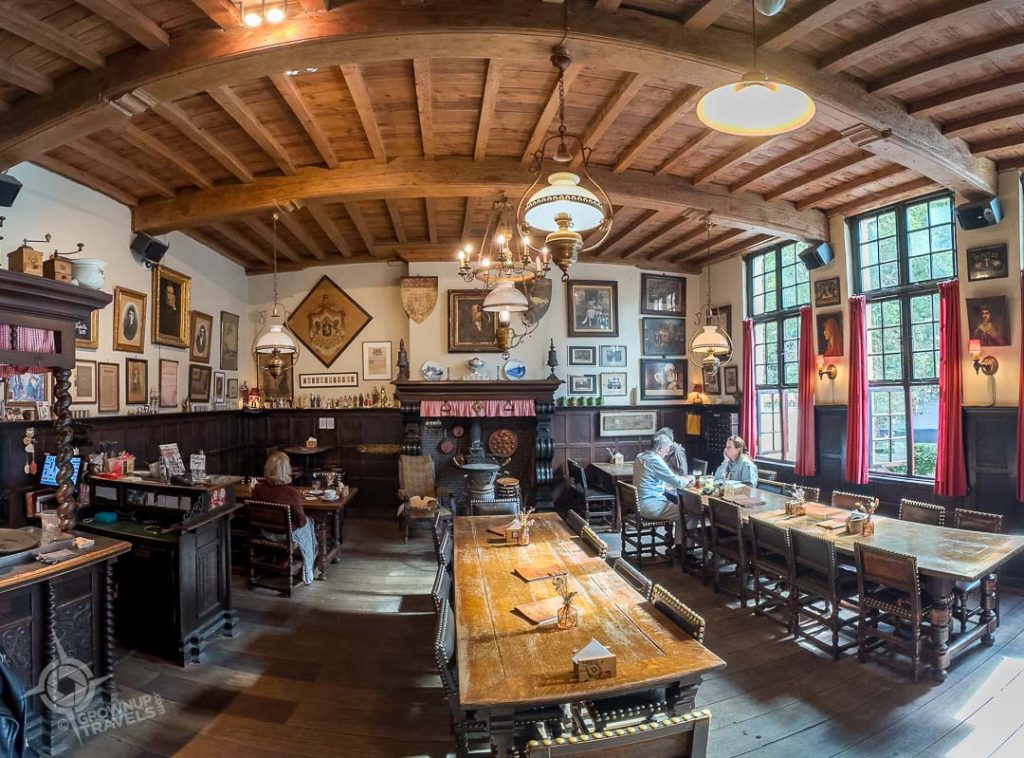
Henk and I started this walking route with lunch in the Sint-Anna quarter at Bruges’ oldest cafe (Café Vlissinghe) whose history dates back to 1515. This historic cafe was a must-see for us, and even though its current appearance is the result of a restoration in the 19th century, it still oozes authentic charm and is a great option for a traditional Flemish lunch.
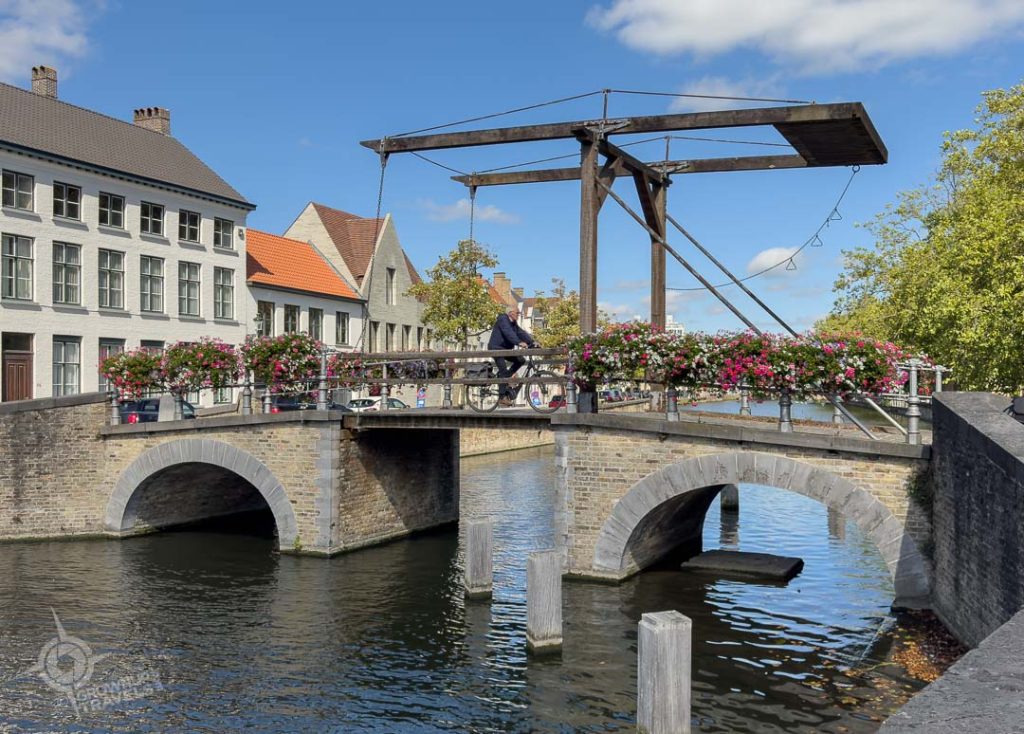
After lunch we headed out where the canal runs between Langerei on one side and Potterierei on the opposite bank, and it was here we discovered the Dune Bridge (Ter Duinenbrug), a wooden lift bridge that is the only one of its kind in the city.
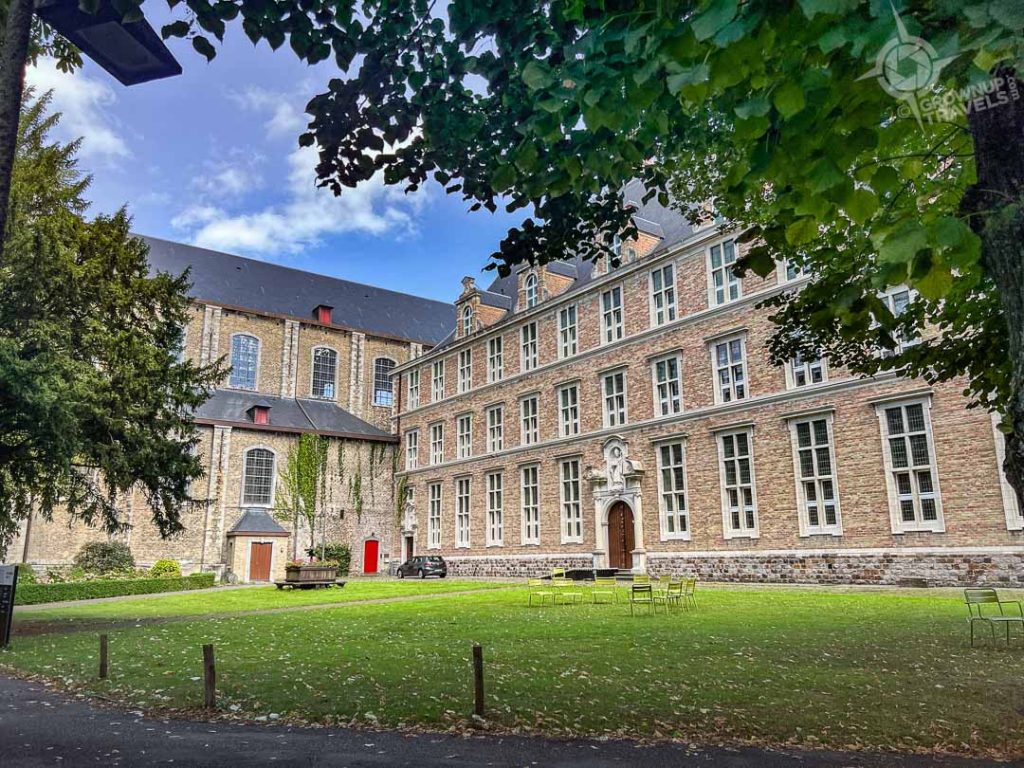
It was built in 1975 near what is now the Major Seminary (the Grootseminarie), a quiet little piece of the city where they actually have an orchard and cows grazing on the property.
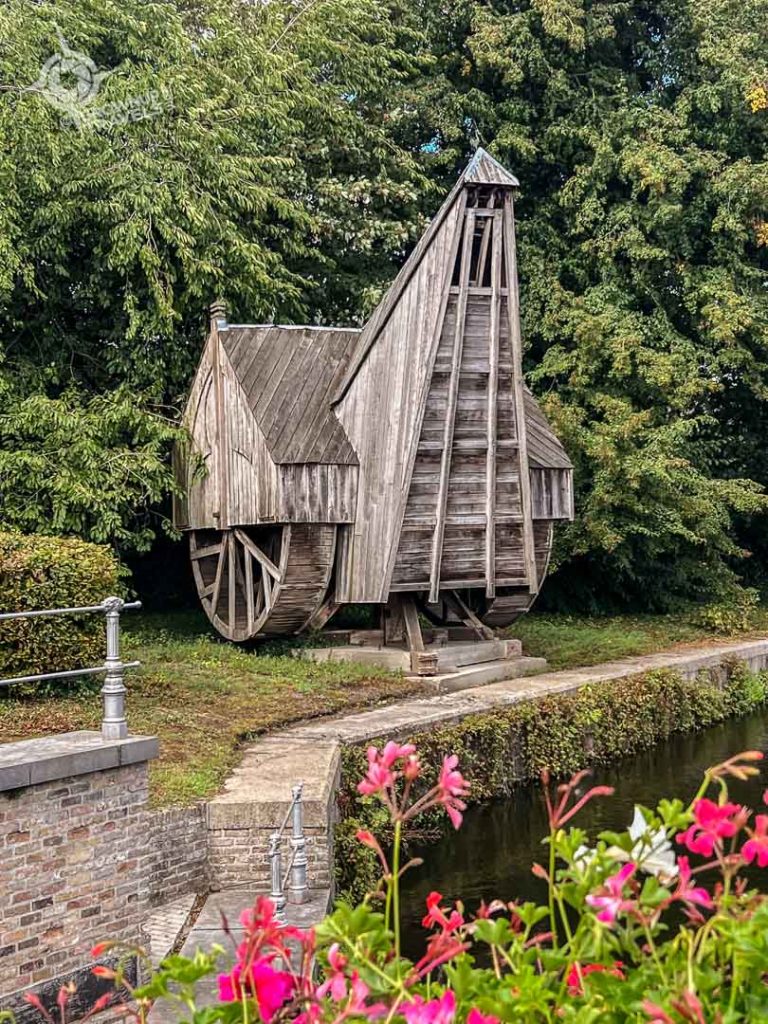
It was also (here near the Bistro Du Phare on Sasplein/Wulpenstraat streets) where we found a replica of one of the historic cranes that would have been used in the 13th century to off-load merchandise brought upstream from the coast to Bruges. We had only seen a virtual version of one of these cranes brought to life in the Historium virtual reality presentation about the history of Bruges, so it was interesting to see a physical example, even one that was not in use.
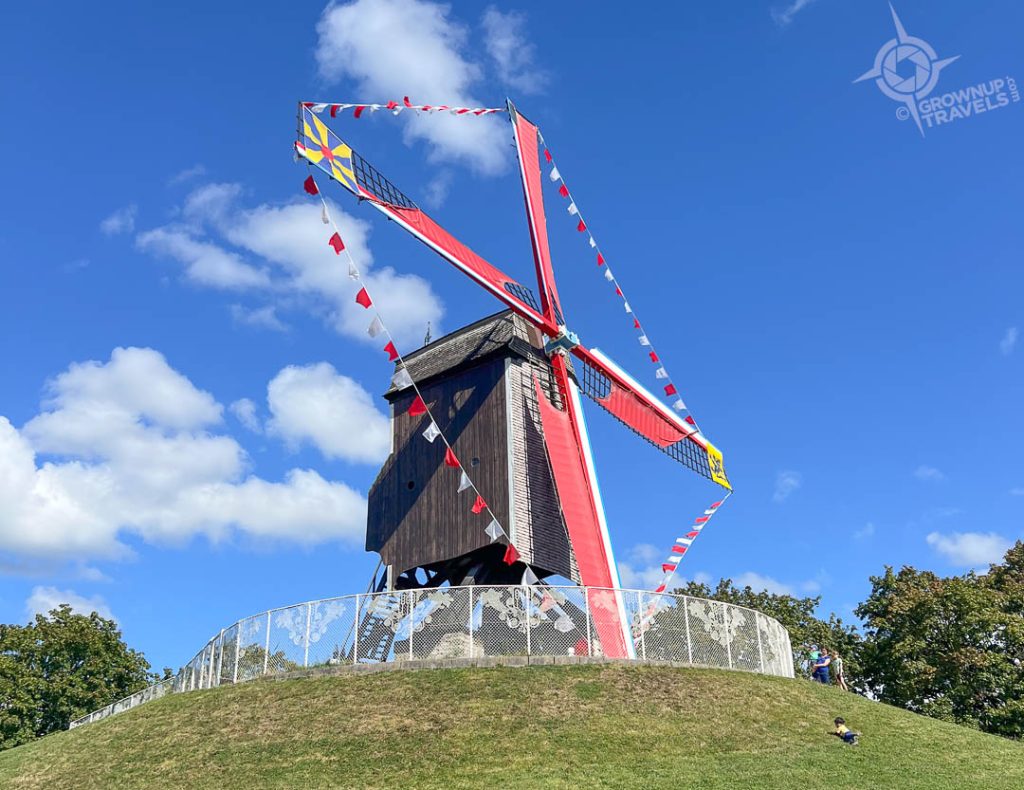
The northeastern perimeter of Bruges is also home to 4 surviving windmills that are installed in a green belt that runs alongside the outer canal that circles the city. These green spaces are popular places for runners and residents who enjoy this bit of parkland and stroll the footpaths between the windmills.
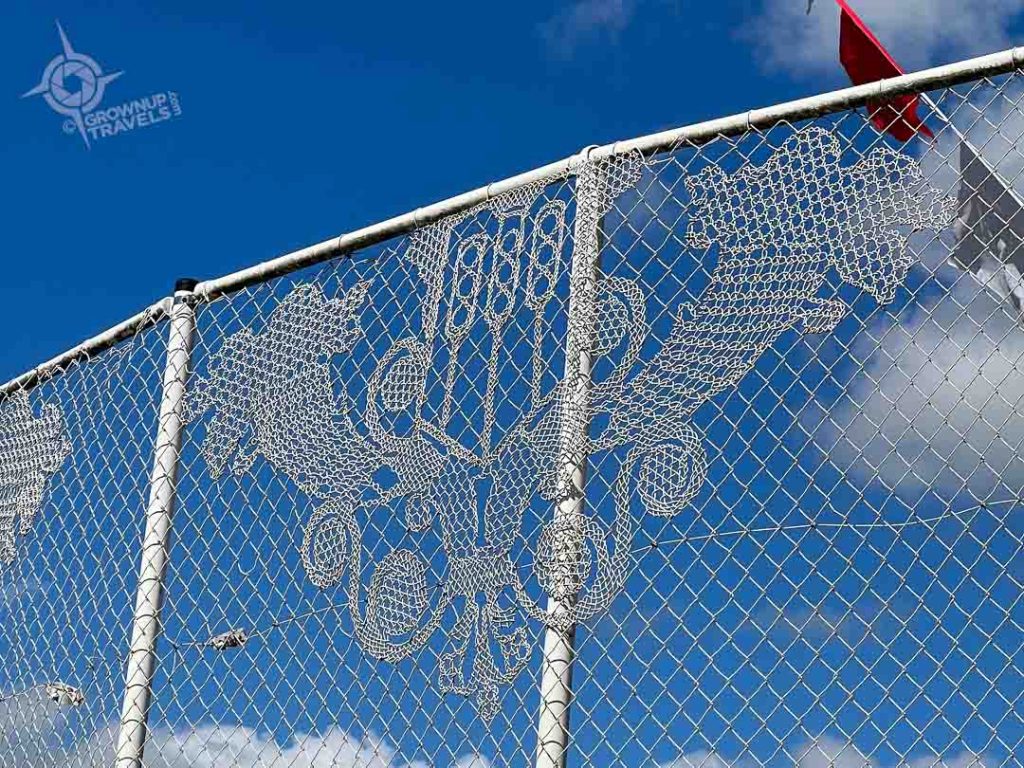
One very cool feature on one of these windmills was the decorative chain link fence that was ‘woven’ to look like lace, a nod to Bruges’ history of lacemaking.
4. Contemporary Hotspots Bruges Walking Tour
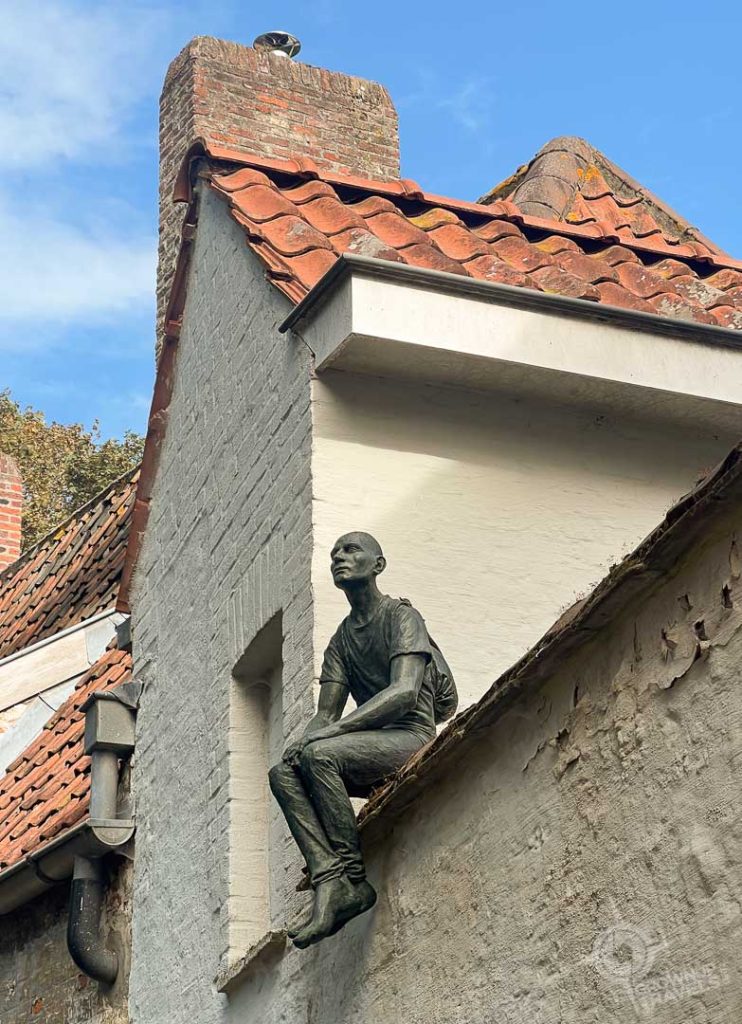
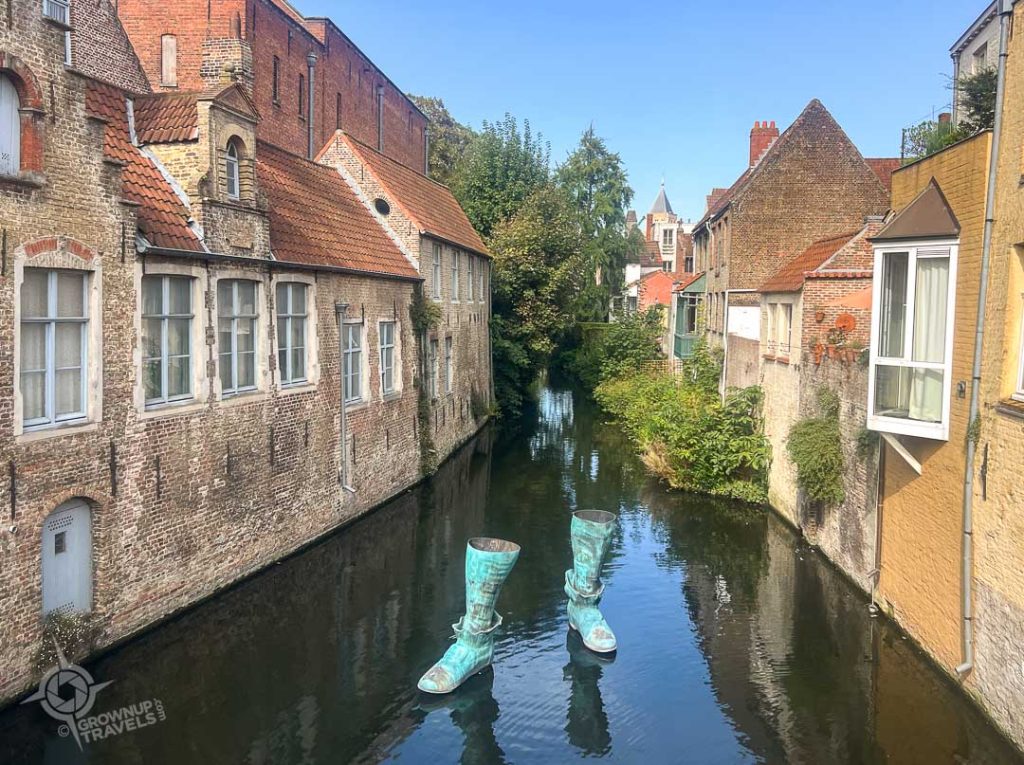
Bruges may be a medieval time capsule in many ways, but there are still modern elements to be discovered here, and this contemporary walking tour takes you to some of them, including sculptures, fountains, and even compact urban housing projects.
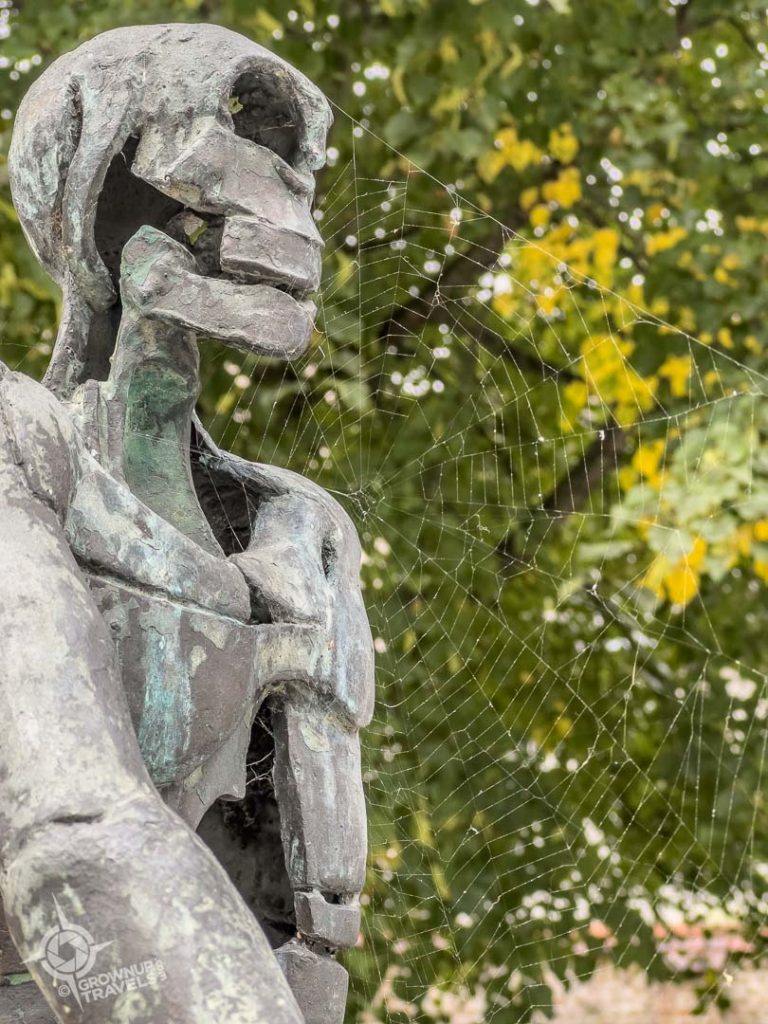
One group of contemporary bronze sculptures installed in the small Arentshof garden between the Groeninge and Gruuthuse Museums caught our attention: a quartet of skeletal riders and their mounts representing the Four Horsemen of the Apocalypse by Belgian artist Rik Poot.
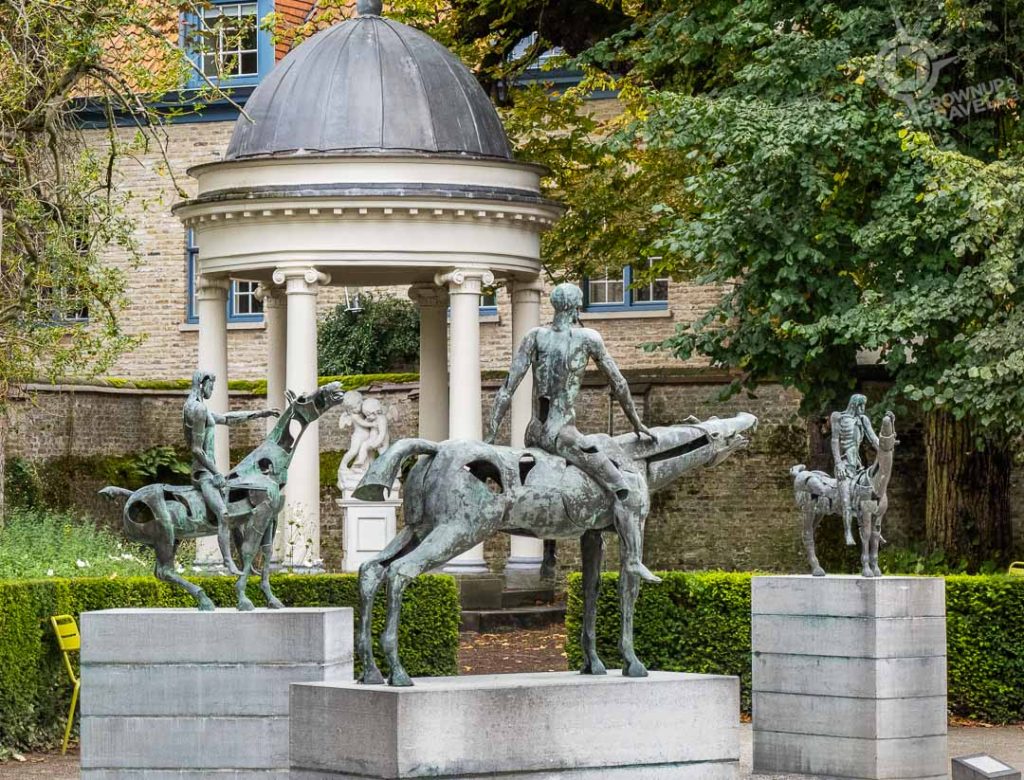
The figures represent Conquest, War, Famine and Death, and their location is particularly well-chosen since this is a popular route for carriage tours – meaning you are likely to hear the sound of real horse’s hooves passing near you as you contemplate these mythical riders and their apocalyptic message.
TIP: If you love contemporary architecture and artwork, Bruges is home to the Bruges Triennale, a temporary outdoor exhibition that takes place every 3 years, with art and structural installations placed all around the city. The next Triennale will take place in 2027.
Walk the Walks in Bruges
There is no better way to explore a city than on foot, and the folks at Bruges’ tourist office understand this well, judging by the walking tours they have created for visitors. With the luxury of time on our side thanks to an extended stay, Henk and I were determined to get to know the city better, and following all these Bruges walking tours gave us the chance to literally walk the walk. Every tour we took, guided and self-guided, introduced us to different parts of the city, and interesting sights and little-known features that we may not have seen had we only come for a few days.
But even if you do visit Bruges for a shorter time, stretch your legs – and your imagination – and venture beyond just the historic Belfry and Burg Squares. The rewards are well worth going the extra mile.
Special thanks to Visit Bruges, who hosted Henk and I on their guided tour, provided passes for us to the city’s museums, and introduced us to the walking tours app and other visitor perks.

Jane is an award-winning travel writer and photographer and an accredited member of the Travel Media Association of Canada (TMAC). In their annual awards competition, TMAC named GrownupTravels.com as the Best Self-Published Travel Blog in 2025 .
She is also a member of the North American Travel Journalists Association, and a freelance travel writer contributing to both print and online publications.





That’s a lot of nice pictures, you guys. You were busy!
Thanks, Gary (we had the luxury of time which helped!)