
No, it’s not a museum dedicated to the latest Jurassic Park-themed movie. But on a recent visit to Tucson’s Arizona-Sonora Desert Museum, Henk and I did have the chance to see free-flying raptors (NOT the velociraptor kind), local Arizona wildlife, a mini-aquarium, on-site art gallery and yes, even a few animatronic dinosaurs. All of this variety is what makes a visit to this outdoor museum/garden/attraction one of the most unique things to do in Tucson, and why visitors of all ages and interests will find that there’s something here for everyone.
The Arizona-Sonora Desert Museum: It’s a Garden
First and foremost, the Arizona-Sonora Desert Museum is an outdoor garden showcasing the native flora of the Sonoran desert, one of the ‘lushes’ deserts on the planet thanks to this area’s bi-annual ‘rainy seasons’. Located on the outskirts of Tucson, adjacent to Saugaro National Park West and Tucson Mountain Park, the location supports the idea of bringing the museum to where the desert is, and not the other way around.
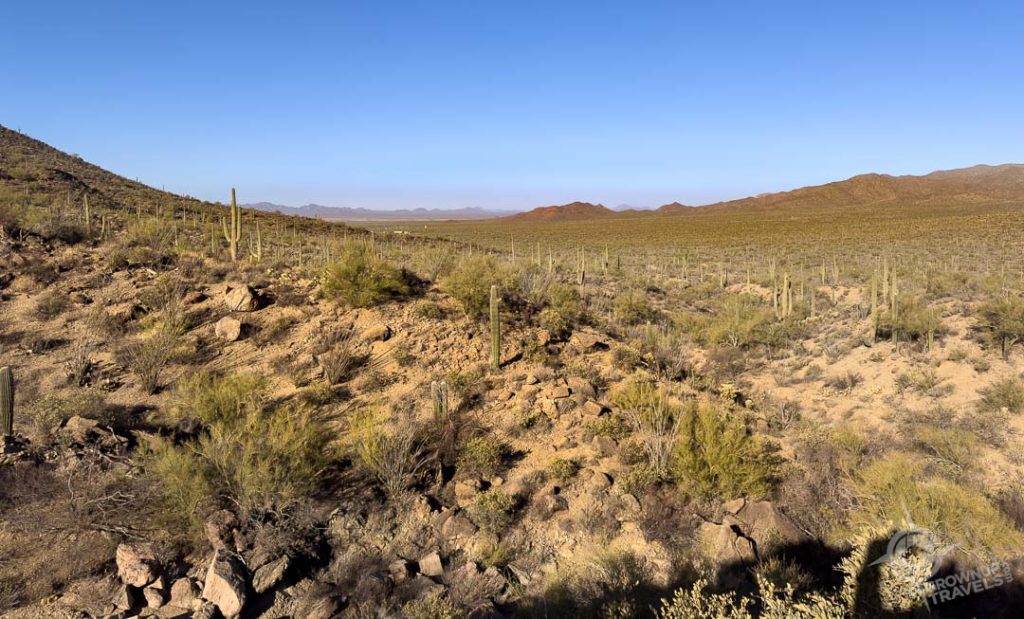
The Desert Museum sits adjacent to Saguaro National Park West Tucson
Visitors immerse themselves in southern Arizona’s natural environment by following a network of paths that wind through 98 acres of gardens and exhibit spaces, allowing them to discover many of the 1200 species of native plants that thrive here. Naturally, cacti are abundant, especially the saguaro, prickly pear and barrel cacti familiar to many of us, but there are also more unusual examples as well, like the fish hook cactus (named for its uniquely-shaped thorns), the ‘Old Man’ cactus, with its silvery-white hairs and the ‘Teddy Bear Cholla’. (Just don’t be fooled by these seemingly fuzzy-looking cacti – touching them is not allowed, for many reasons, one of which is your own safety!)

The shapes of the thorns give the Fish Hook Cactus its name
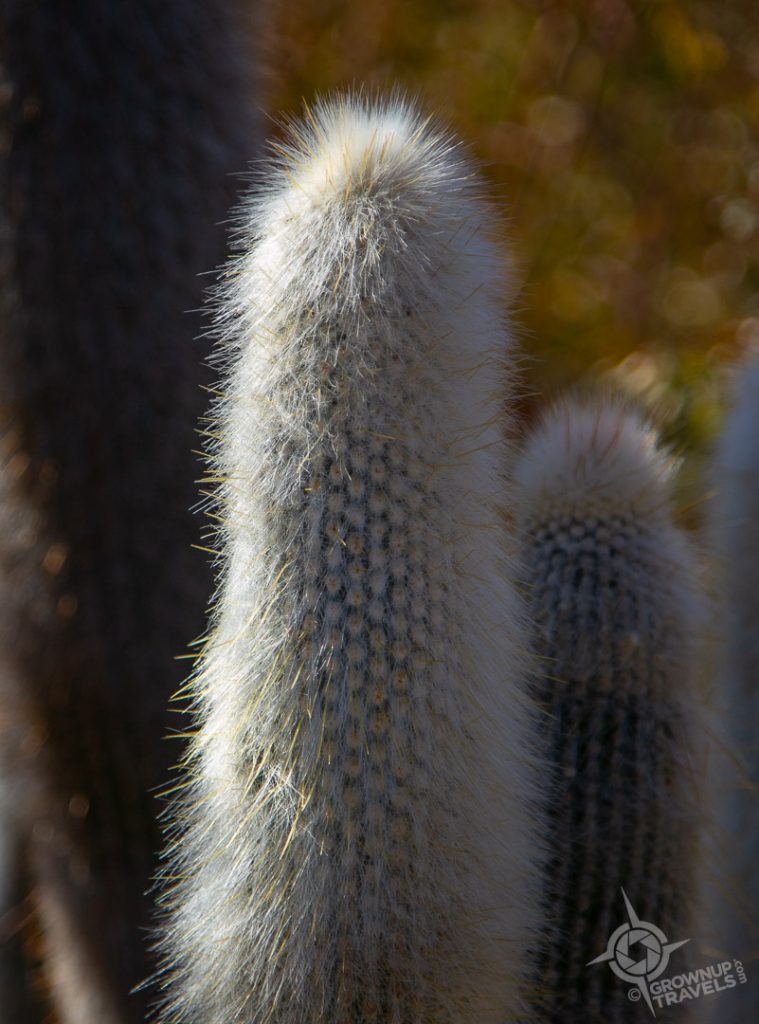
“Old Man” cactus
There are also other botanical species at the Desert Museum besides cacti, including many plants and trees found in mountain woodlands, which may seem odd for a museum in the desert. But this particular part of southern Arizona is home to what are called ‘sky islands’ (the mountain ranges that ring the desert here), which rise to almost 10,000 feet, creating cooler, wetter habitats that are home to pine trees and woodland wildlife not normally found in desert regions. That high-elevation habitat is re-created at the Desert Museum in their Mountain Woodland exhibit, so even if you don’t venture into the nearby mountains, you can get a sense of the botanical diversity that can be found there.
It’s a Zoo, too
Flora may be the main focus of the Arizona-Sonora Desert Museum, but native fauna are also represented here, from the types of birds and animals that are found in the arid lowlands, to the carnivores that roam the forested mountains.
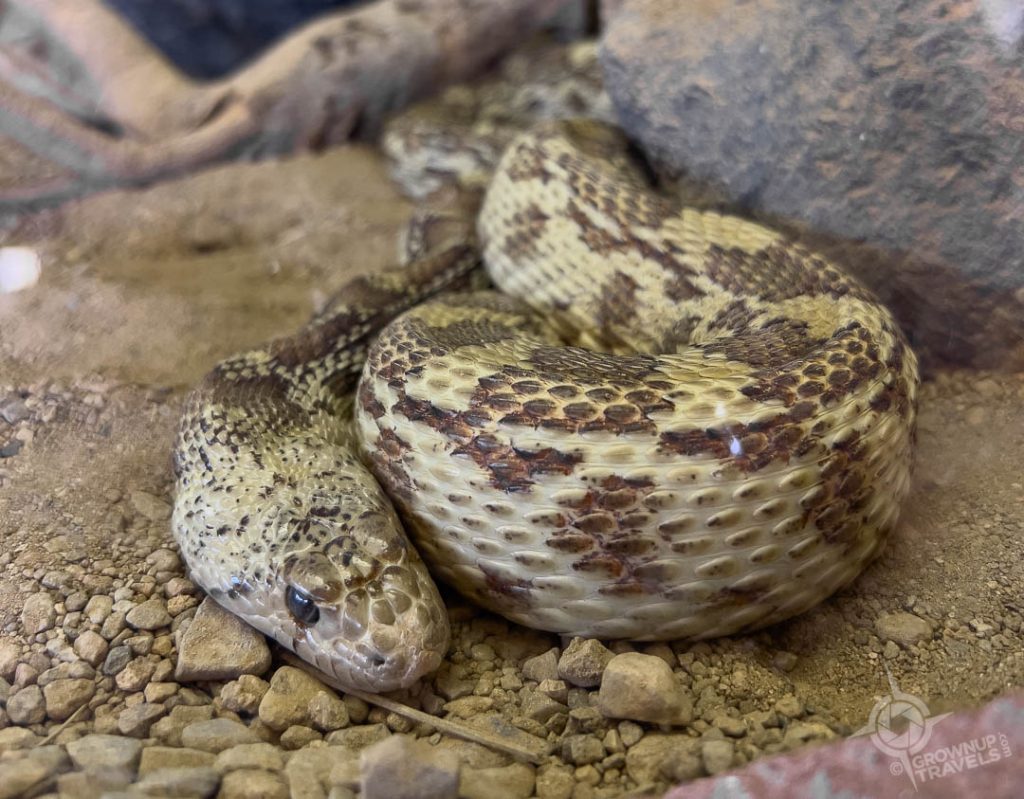
Desert Rattler at the Arizona-Sonora Museum’s reptile hall
There are two aviaries on the grounds, including one specifically for hummingbirds, and another exhibit/pavilion that just recently re-opened that is dedicated to native vulture species. This ‘Vulture Culture’ exhibit even provides a unique photo op for kids or adults which makes for a fun way to engage with this much-maligned species.
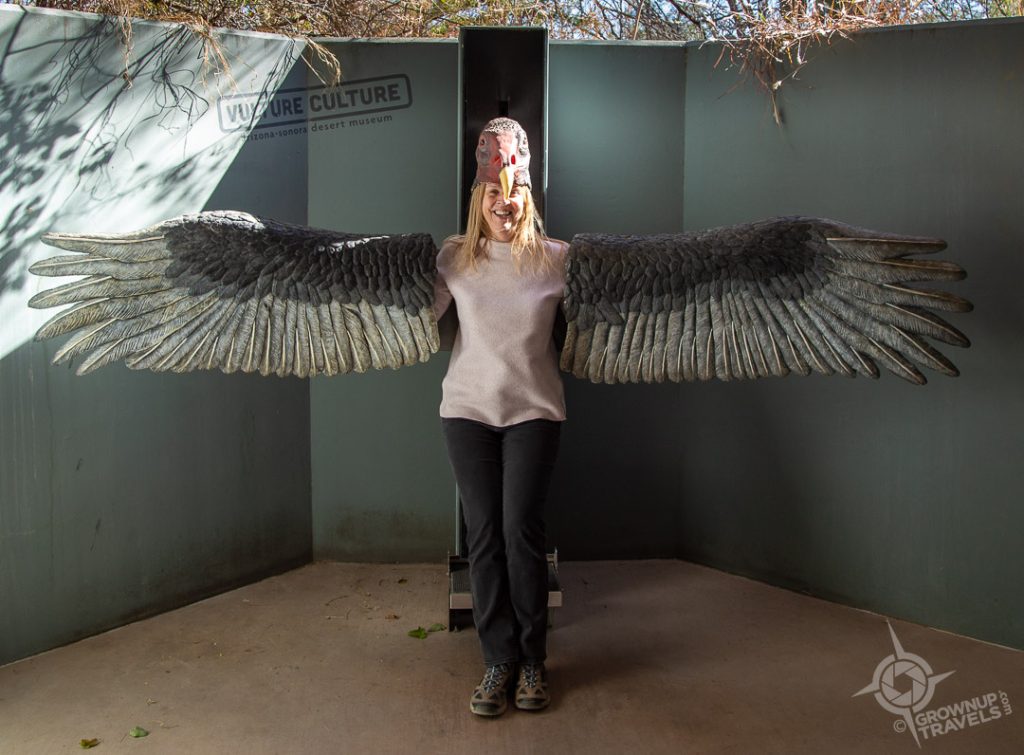
Jane as a Caracara at the Arizona-Sonora Desert Museum Vulture Pavilion
Look closely just outside this pavilion and you are likely to spot the ground owls who make their home inside fallen logs. But these birds blend in so well with the desert surroundings that you may not even realize one is in your photo.

Ground Owl at Arizona Sonora Desert Museum
Likewise, there are coyotes on site, but finding them sheltering in the shade of the small trees and bushes can be a challenge.

Can you find the coyote?
Cat Canyon is a small habitat that is home to smaller mammals like the ocelot, currently on the endangered species list. Visitors who wait a little while may see this little spotted wildcat emerge from its den to patrol its ‘territory’.
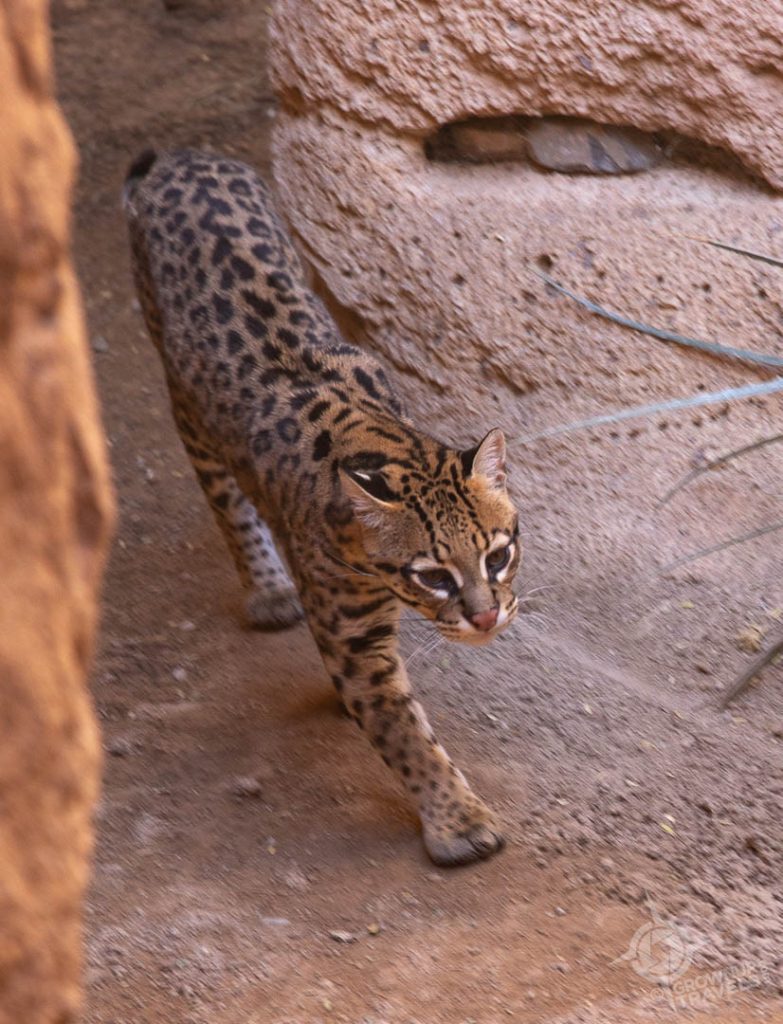
Ocelot in Cat Canyon at the Arizona-Sonora Desert Museum
If you are looking for larger mammals, head to the Mountain Woodlands area to see carnivores like the mountain lion, black bear, bobcat, foxes and wolves, as well as their larger prey like mule deer and bighorn sheep.
Dinos in the Desert
The Arizona-Sonora Desert Museum strives to keep its content fresh, so from time to time they augment their permanent exhibits with temporary additions. “Dinos in the Desert” is one of these initiatives and was on during our visit, with animatronic dinosaurs installed around the grounds of the museum, providing an unexpected surprise for visitors. They aren’t completely out of context here, since dinosaur fossils have been discovered in Southern Arizona, including the aptly named Sonorasaurus, the state’s ‘official dinosaur’.

Dinos in the Desert runs until the end of April 2025 at the Arizona Sonora Desert Museum
The life-sized prehistoric creatures were very life-like, and no doubt thrilled the youngest visitors especially, who also had the opportunity to follow a Scavenger hunt while learning about these creatures.
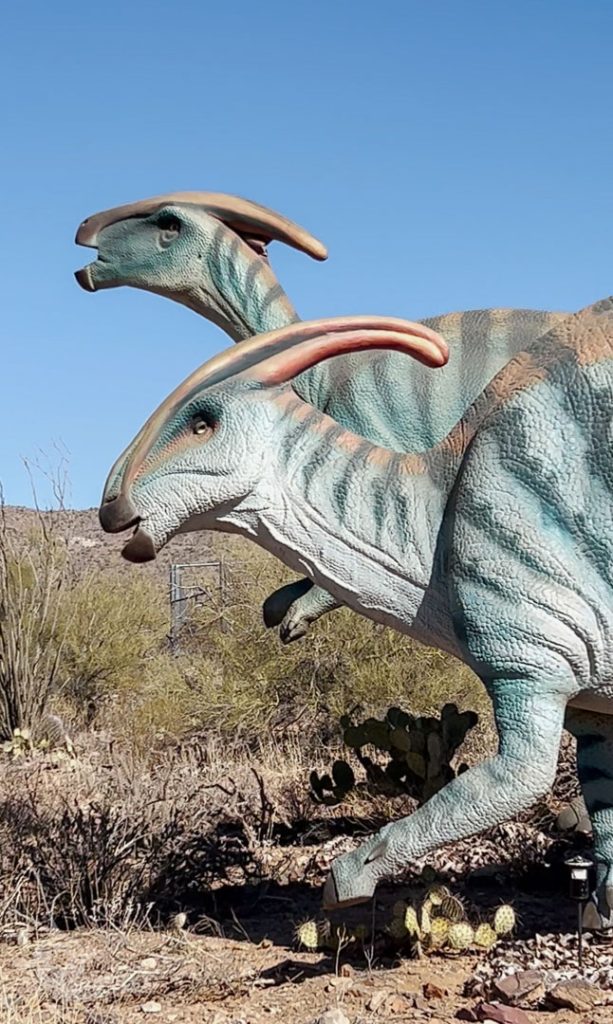
Animatronic dinos at Arizona-Sonora Desert Museum
Experience a One-of-a-Kind Thrill with Free-Flying Raptors
One of the most fascinating and exciting exhibits at the Arizona-Sonora Desert Museum is their Free Flight Raptor demonstrations. This facility may be the only place where visitors can get this close to species like the Harris and Red-Tailed Hawks, Great Horned Owl or the Caracara, as these predator birds swoop down from the open desert sky to within mere inches of your head. Unlike hunting falcons, these birds are not tethered in any way, but instead are taught to respond to hand signals and are rewarded with treats when they return to their respective trainers. The birds are part of the museum’s conservation and educational efforts, with many of them being rescue animals that have found a new home at the Museum where they have been rehabilitated and live on-site in their own habitat – that is when they aren’t soaring above the heads of their awestruck audience.
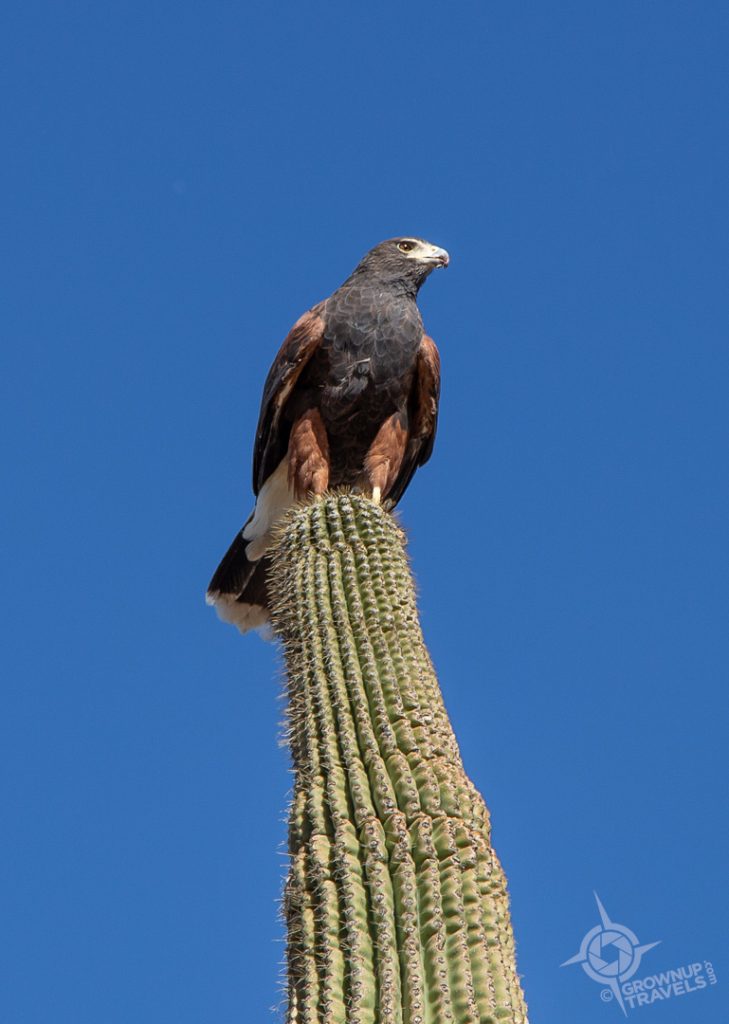
A Harris Hawk surveys his surroundings at the Arizona-Sonora Museum’s Free Fly Raptor demonstration
The Museum offers demonstrations to the public several days a week from December through March, and the event is so popular it can attract a couple of hundred observers at times. Fortunately for us, the day that Henk and I visited the museum was an ‘off day’ for the public. Instead, the handlers were using the day to train a group of Harris Hawks, and we were lucky enough to join only a few other visitors and watch as the birds went through their paces.
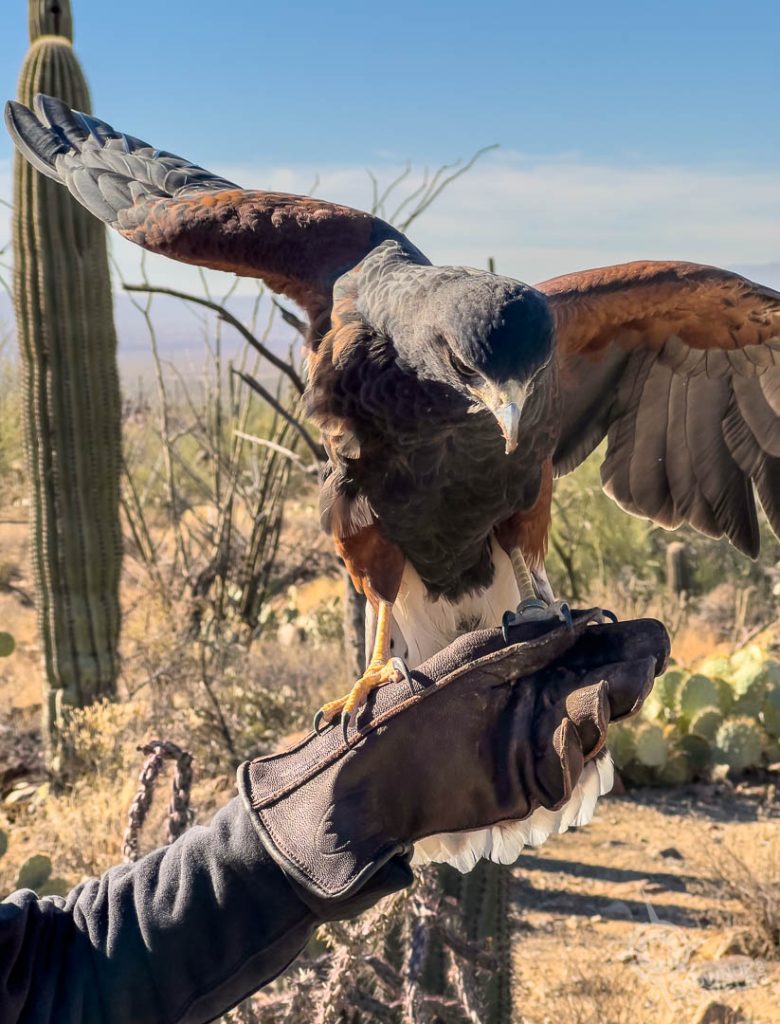
Handler with Hawk
Harris Hawks are very intelligent predators and the only raptor species that will hunt as a group, much like wolf packs, locating prey and coordinating attacks between themselves. We watched multiple hawks fly between 3 trainers, without any evidence of competition between the birds – although each one does have its own distinct personality and behaviours, which the handlers seem to know well.

Only Harris Hawks hunt like a pack
It was impressive watching as these majestic birds flew between their trainers, who with only a subtle hand signal were able to call these huge raptors to them and direct their flights around the trees near the viewing area, buzzing the visitors sometimes as they flew between branches. (In fact, we were told not to raise our hands or cameras above our heads, since this might interfere with the training.)
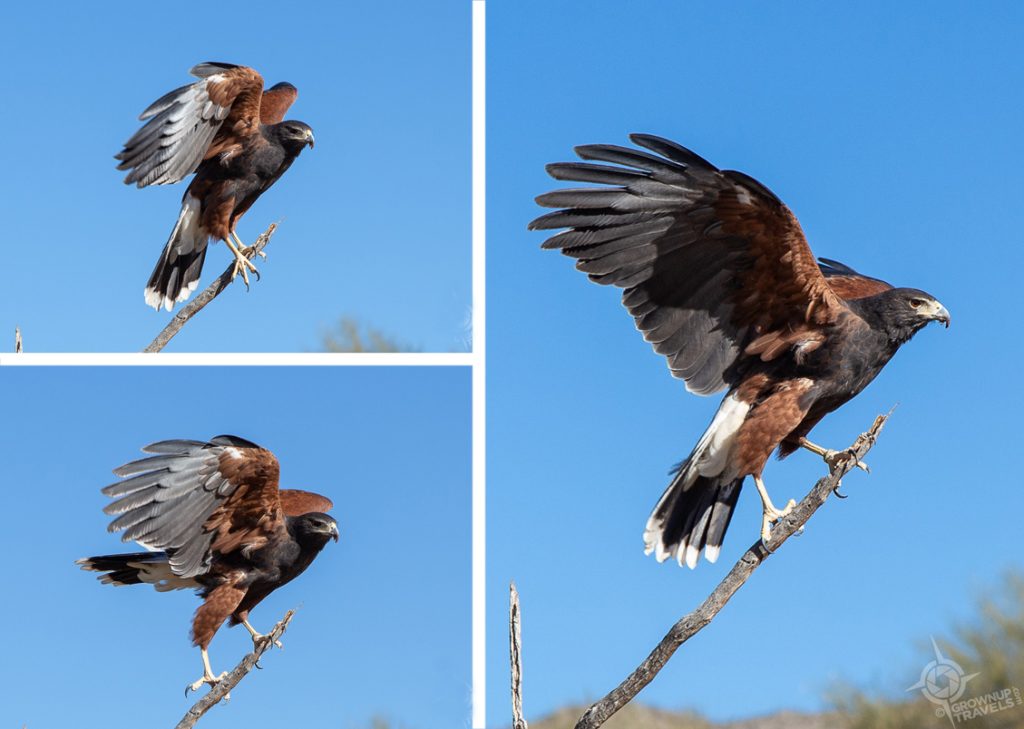
Preparing to launch
TIP: The raptor free flight program is definitely one of the must-see attractions at the Arizona-Sonora Museum, so be sure to check the demonstration schedule so you can time your visit accordingly.

Raptor Demonstration viewing area
Indoor Attractions at the Arizona-Sonora Desert Museum: the Warden Aquarium

Main Entrance Arizona Sonora Desert Museum
If you happen to be visiting in the hotter months and are looking for a break from the heat and the sun, be sure to check out some of the interior exhibits found at the Desert Museum. At the main entrance you’ll find the small Warden Aquarium with tanks that are home to specimens from the region’s freshwater rivers that flow through the desert and empty into the Sea of Cortez, as well as salt-water species like seahorses and tiny, skittish garden eels that pop up and down from their sandy hiding spots as visitors walk by their tank.
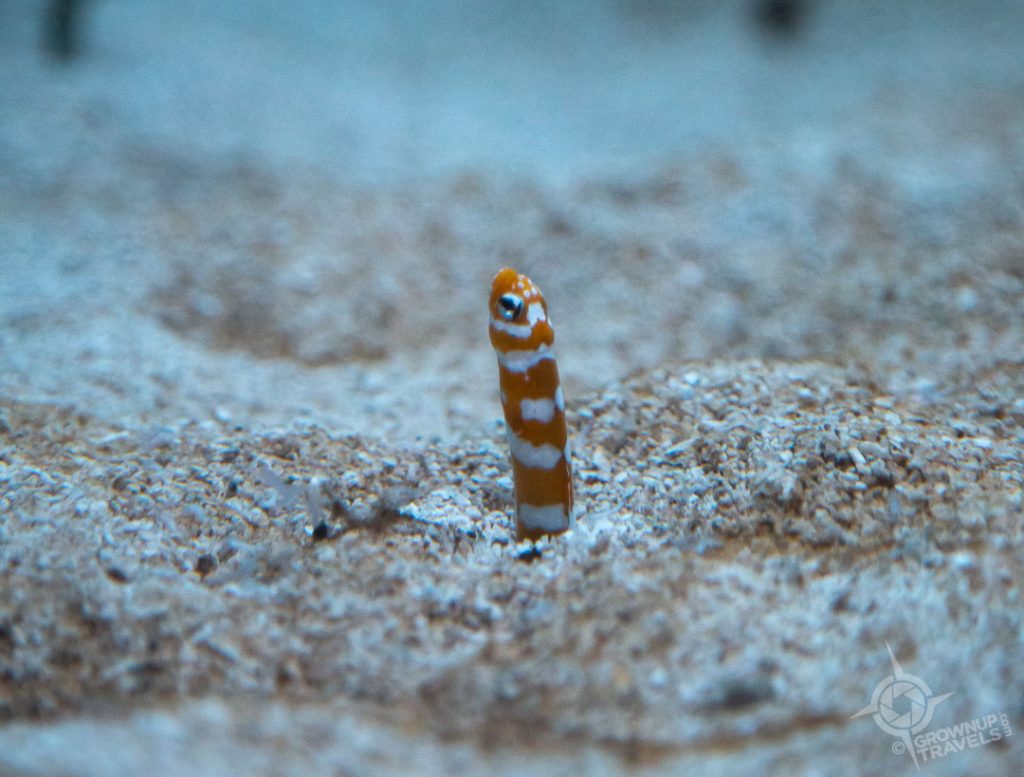
Tiny sand eels pop up and down when they spot visitors
On the other end of the spectrum is the large, vicious-looking Moray who also likes to hide in the coral.
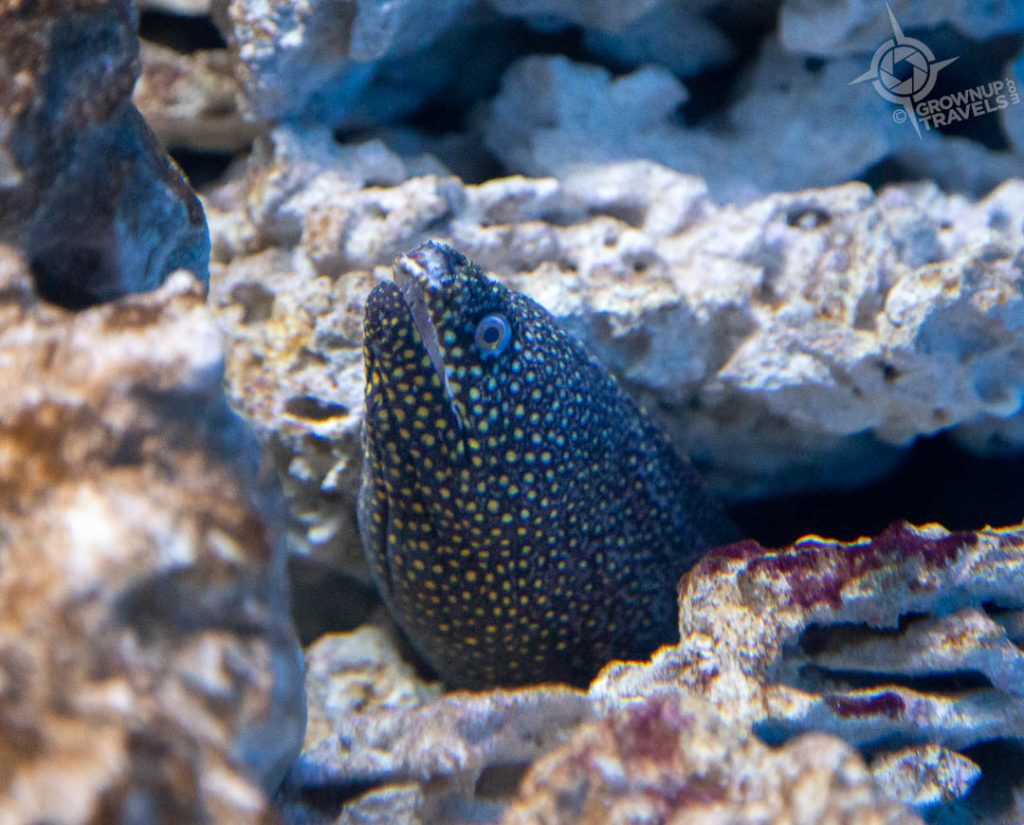
Moray Eel at the Warden Aquarium
The Ironwood Art Gallery
The Arizona-Sonora Desert Museum operates a small art gallery on-site, the Ironwood Art Gallery, that has a permanent collection of over 1,000 artworks and temporary exhibitions that change regularly, many of which focus on the natural environment and local landscapes.

“Desert Within” exhibition at the Ironwood Art Gallery
Admission is included with the Museum entrance fee, and it’s well worth checking out the latest exhibition. Afterwards, you can check out the Ironwood Terraces restaurant right next door which is a great casual place to grab a bite or a drink. Grownup visitors can order a beer or cocktail here too, which you are even allowed to bring with you as you stroll through the museum grounds – a decidedly civilized way to finish off your visit to this top-rated Tucson destination.
Multiple Museums in One
The website for the Arizona-Sonora Desert Museum promises to “turn your idea of a museum inside out”, and the description is accurate. Not only does the museum immerse visitors in the desert that it strives to protect, it rewards them with multiple experiences in one. So whether you are a fan of natural history, geology, aquatic life, desert flora or local wildlife, you’ll find it all here in an open-air experience that helps visitors understand what makes this part of Southern Arizona so unique.
Special thanks to Visit Tucson for hosting our visit to the Arizona-Sonora Desert Museum.


Jane is an award-winning travel writer and photographer and an accredited member of the Travel Media Association of Canada (TMAC). In their annual awards competition, TMAC named GrownupTravels.com as the Best Self-Published Travel Blog in 2025 .
She is also a member of the North American Travel Journalists Association, and a freelance travel writer contributing to both print and online publications.






Subscribe and you'll never miss an update!
Join our mailing list to receive the latest news and updates from Grownup Travels. (We keep your email STRICTLY private)
Thank you for subscribing to Grownup Travels!