

“Set-jetting” is definitely a thing for some travellers, and flying off to other countries to hunt down the locations where their most beloved films and TV shows have been shot is as good a reason to travel as any. Although I have dabbled in this form of itinerary-planning with a visit to select Game of Thrones locations in Northern Ireland, I wasn’t consciously doing this on a recent trip to England. Yet without intentionally trying to do so, Henk and I found ourselves stumbling upon picturesque locations where some of the most well-known and beloved big and small screen productions have been filmed. So if you are a fan of Jane Austen movies (Pride and Prejudice, Emma, Persuasion and more), Harry Potter, Downton Abbey, Bridgerton, or even fantasies like Thor the Dark World, read on to discover these film locations in the UK where you can find yourself front-and-centre ‘on set’ where the real star of the show may be Great Britain itself.
“Starring Great Britain”
In 2025, Visit Britain launched its “Starring Great Britain” tourism campaign to celebrate the film locations in the UK that have served as integral elements in so many popular films and TV shows. Think of Sherlock Holmes, and his fictional home at 221B Baker Street, (now a Sherlock Holmes-themed museum) or the real-life Highclere Castle that doubles as Downton Abbey (which you can also book tours to visit).
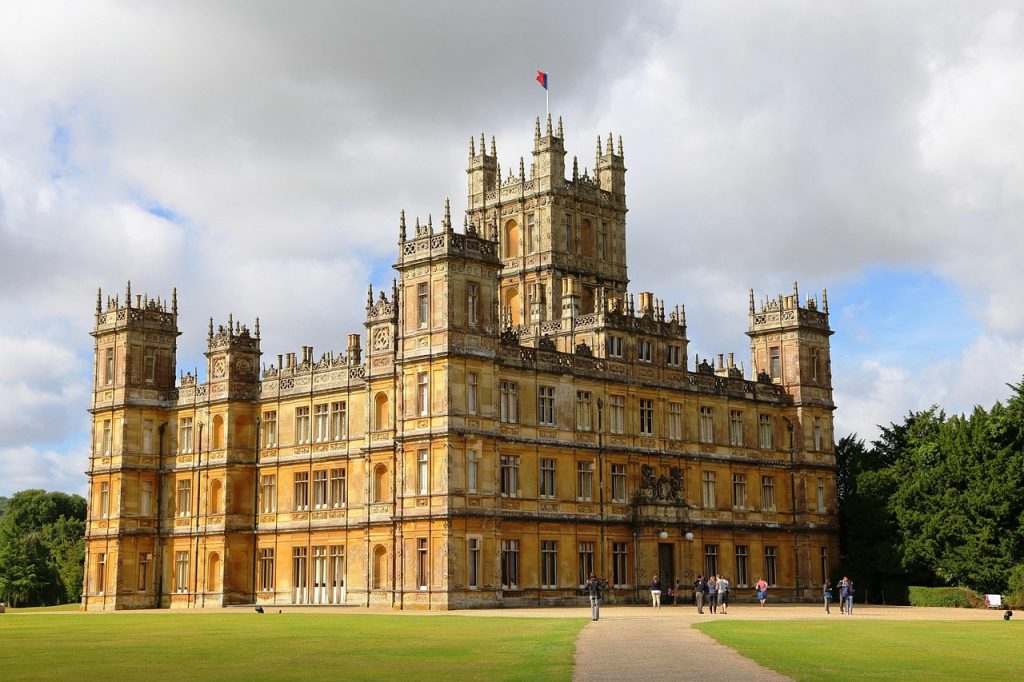
Earl Carnarvon’s Highclere Castle is recognizable as Downton Abbey to fans everywhere. *Photo credit leefenn-tripp Pixabay
Even though there are countless examples where Britain plays a leading role in famous TV and film properties, I was surprised to learn that as many as 9 out of 10 visitors who come to the UK are interested in seeing at least one of these filming locations. Yet after visiting Bath, Hampton Court Palace, and the Cotswolds, Henk and I became accidental set-jetters ourselves, and soon after our visits found ourselves re-bingeing movies and shows, excitedly recognizing landmarks and places we had just seen in person. Here are some of the film locations in the UK that we visited and what to see at each.
Lacock Abbey, Chippenham: Harry Potter, Downton Abbey, The Other Boleyn Girl
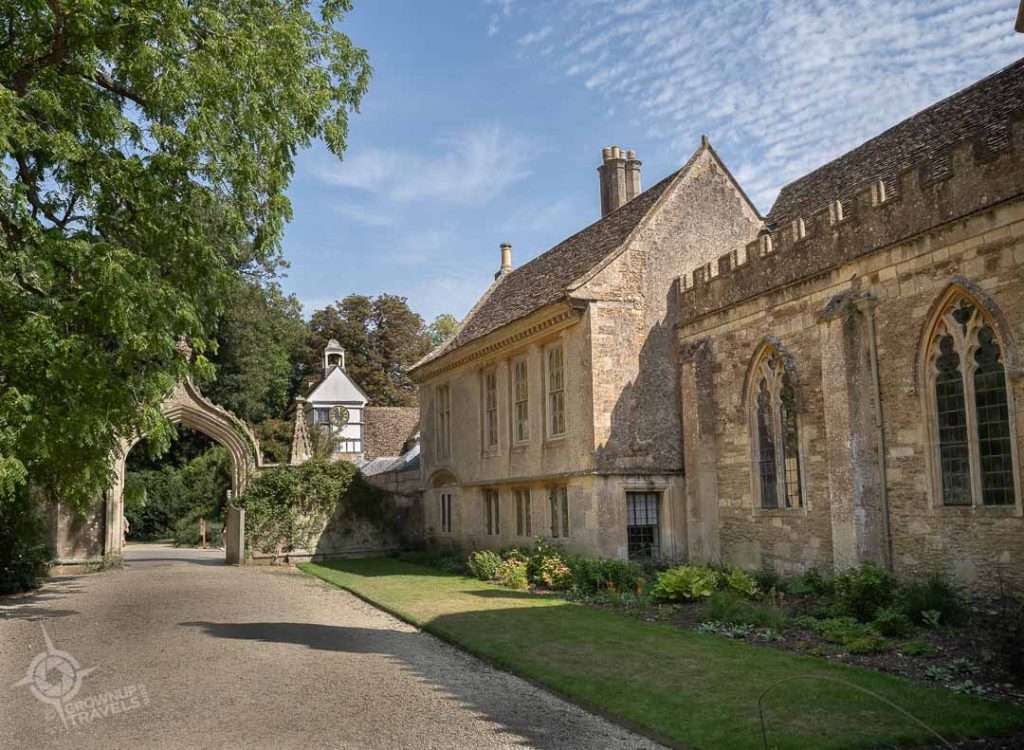
The exterior of Lacock Abbey and entrance gate to the estate
Lacock Abbey sits just outside Lacock Village, both of which were gifted to England’s National Trust in 1944 to ensure that they would remain a protected part of Britain’s heritage. Which explains why to this day the village looks like something out of a medieval storybook with timber-framed houses and ivy-covered cottages lining quaint cobblestone streets, with little or no sign of overhead cables or modern-day infrastructure anywhere. This ‘invisible infrastructure’ is also why Lacock is one of the ideal film locations in the UK for shooting period pieces, including standing in for Downton Abbey’s local village in both the TV series and the first Downton movie.
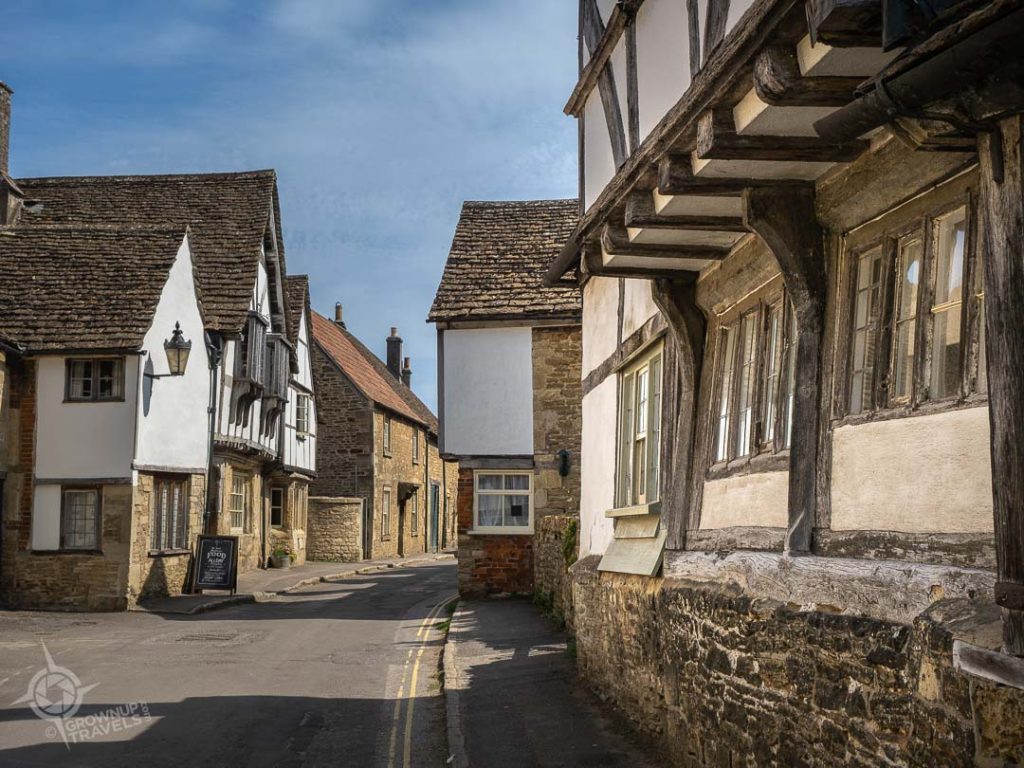
Timber-frame buildings and character filled streets of Lacock Village
Lacock Abbey, which dates back to the 13th century, has also been featured in many films, including The Other Boleyn Girl with Scarlett Johansson and Natalie Portman. But perhaps the Abbey’s most famous appearance was in Harry Potter’s Philosopher’s Stone and Chamber of Secrets movies.
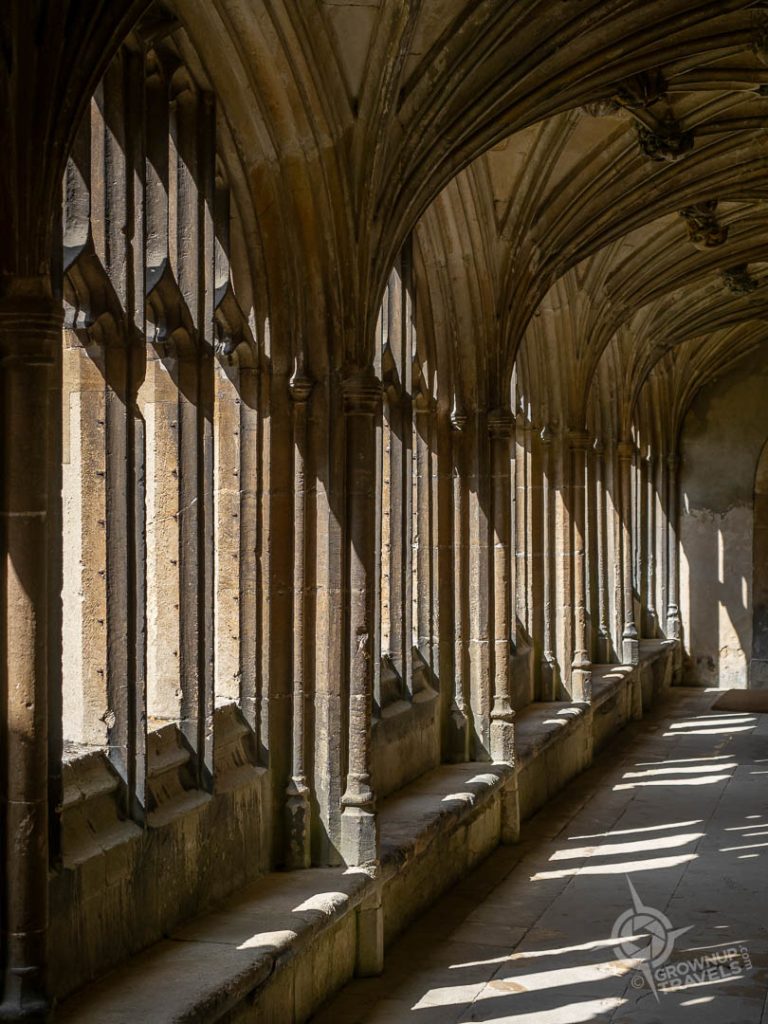
Harry Potter has walked these ‘halls of Hogwarts’ at Lacock Abbey
The Abbey’s cloisters and their vaulted archways are familiar to fans as the ‘hallways’ of Hogwarts and the room containing an authentic giant cauldron from the Abbey’s kitchens served as Professor Quirrell’s Defence Against the Dark Arts classroom.
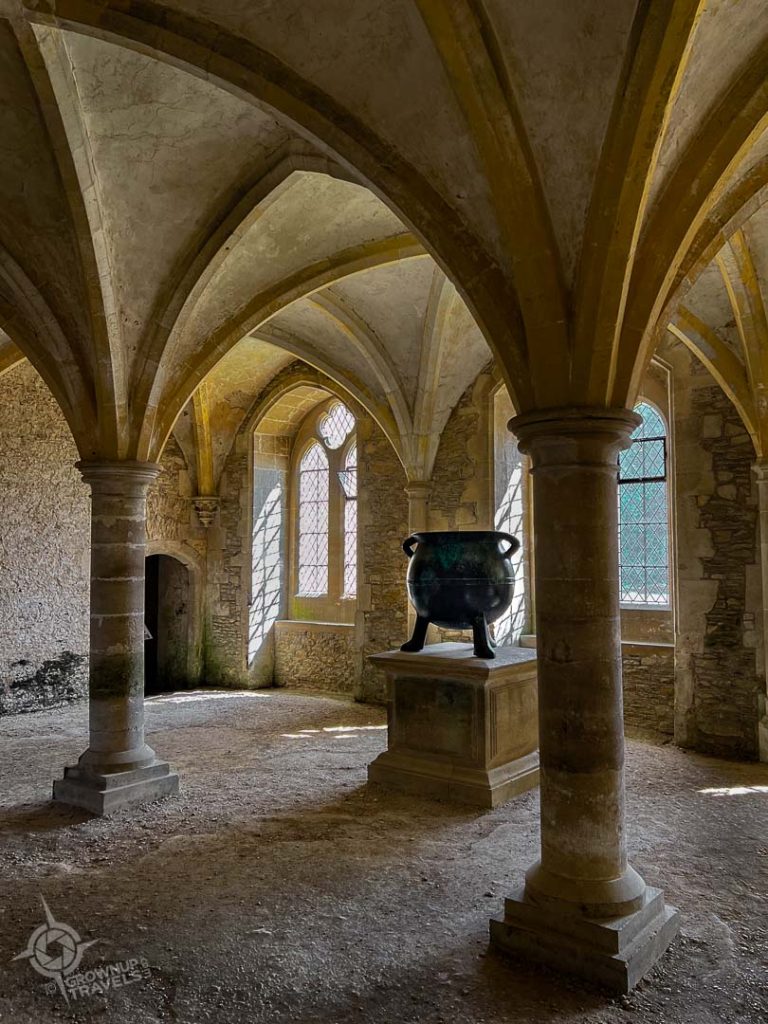
The cauldron is original to the Abbey, not a movie prop.
The Sacristy plays a role here, too, as a classroom for cooking up potions. Lacock village also features in The Half Blood Prince as a backdrop for Harry and Dumbledore’s walk after meeting with Slughorn (whose ‘house’ is also here in the village).
TIP: If you do visit and tour the Abbey (which is highly recommended even if you aren’t a Harry Potter superfan), take note of a few statues on the walls of the great hall of the Abbey that might bring magic to mind. These are not props from the filming. Instead, these gentlemen with pointed hats are meant to represent learned men, so perhaps the origin of the stereotypical magician’s hat represents a similar concept.
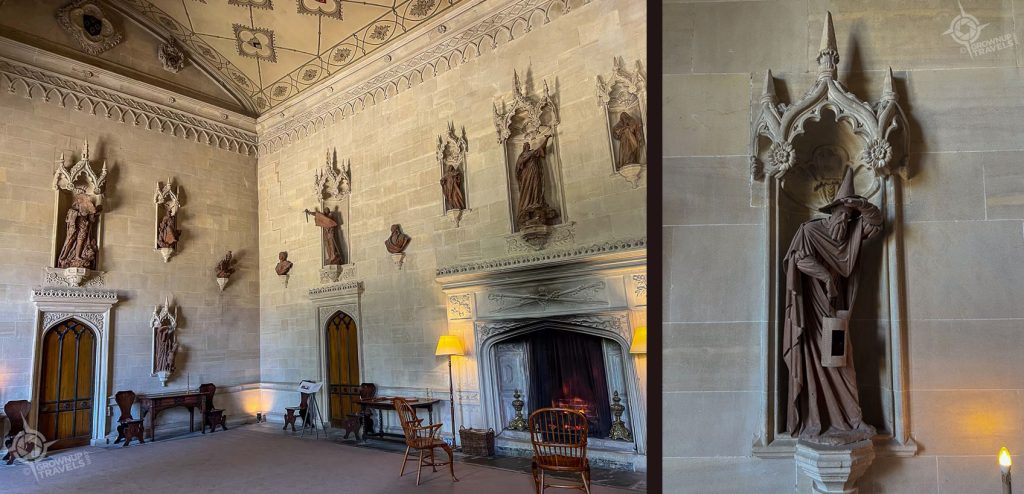
We noticed something ‘wizard-y’ on the walls of the Great Hall at Lacock, but this statue may actually represent Greek philosopher Diogenes.
City of Bath: Bridgerton Series
As if Bath isn’t beautiful enough to draw millions of visitors every year, its frozen-in-time Georgian architecture has given it a starring role in the super-popular series Bridgerton, and elevated this city to one of the prime film locations in the UK for fans to visit.
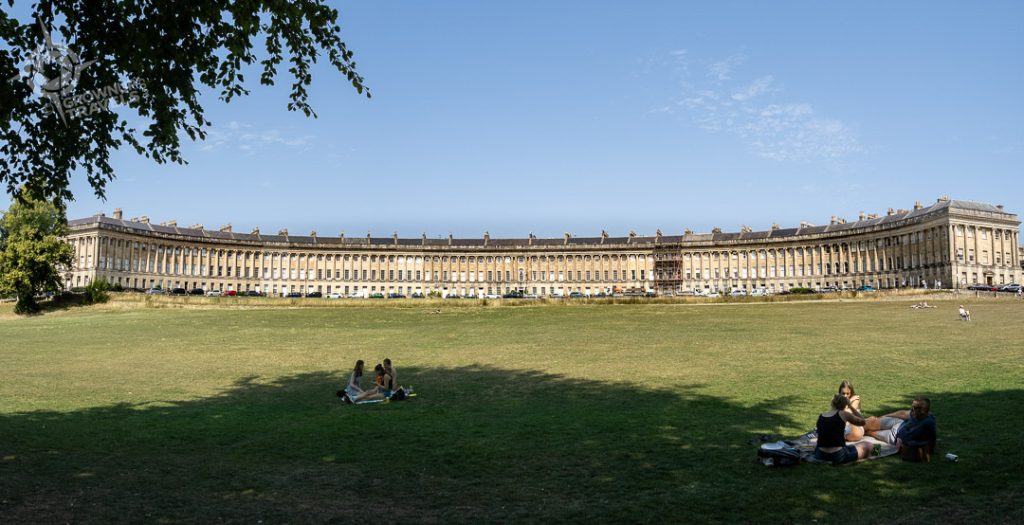
The Royal Crescent is a 500 foot long Bath landmark and stunning example of Georgian architecture
Once you’ve seen the commanding Royal Crescent, for example, with its sweeping semi-circle of elegant 18th century townhomes, it’s impossible not to recognize it in Bridgerton’s city scenes. In fact, the facade of #1 Royal Crescent stands in as the Featherington mansion (with a little CGI additions on either side).

The ‘Featherington Mansion” at #1 is now a restored period house/museum
Today, visitors can go inside the property and get a sense of the 18th century lifestyle in what is now a restored house/museum. Period furnishings and an audio-visual presentation help bring the late 1700s to life, albeit on a more modest scale than that of the Bridgerton characters.
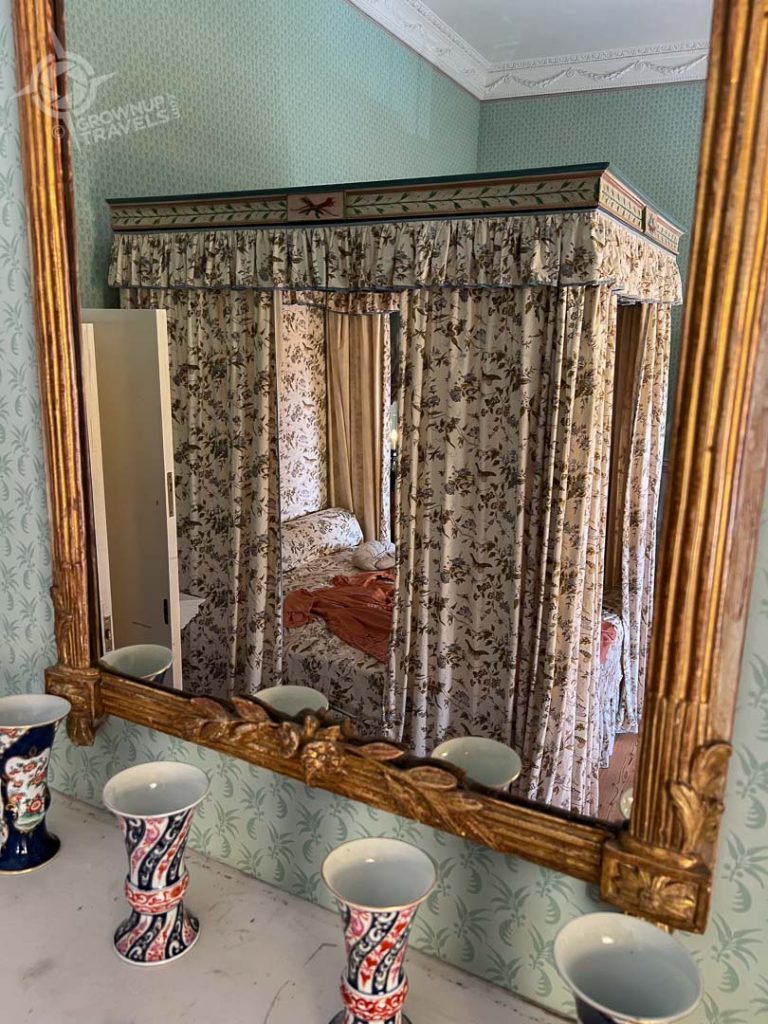
Period furnishings help visitors imagine life in the late 1700s
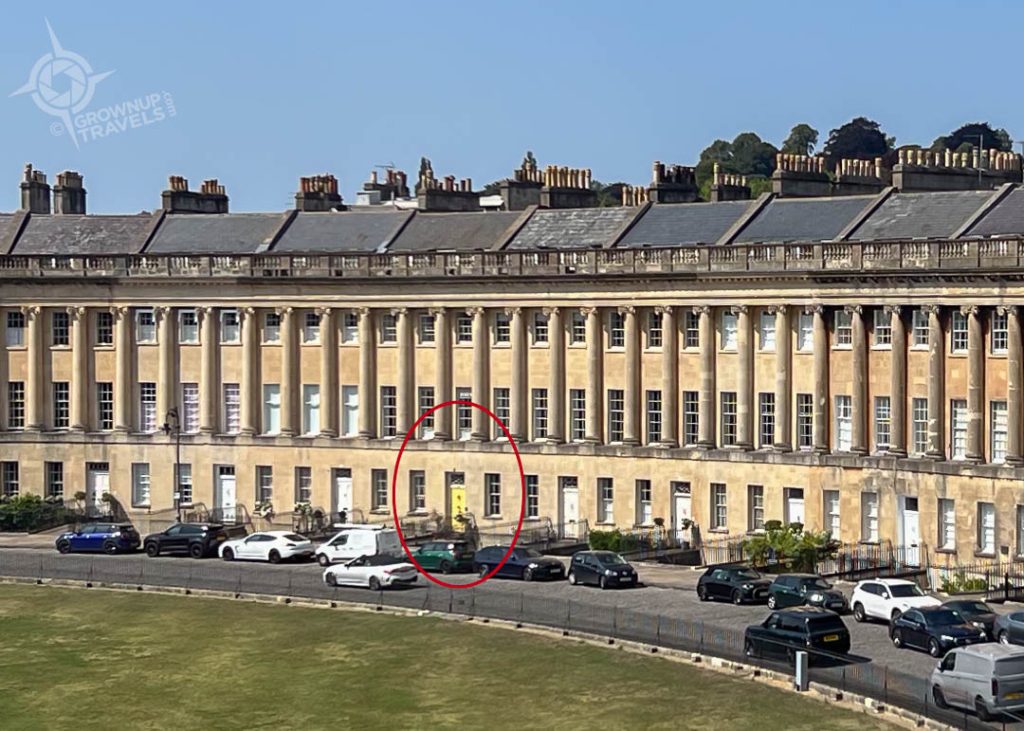
TIP: Notice the yellow door below on one of the otherwise uniform entrances on the Royal Crescent? The current owner had to fight city council twice to be allowed to keep her colourful statement on this historic property. Perhaps this is a modern take on a Jane Austen novel: Personality and Perseverance?
Lady Danbury’s Mansion
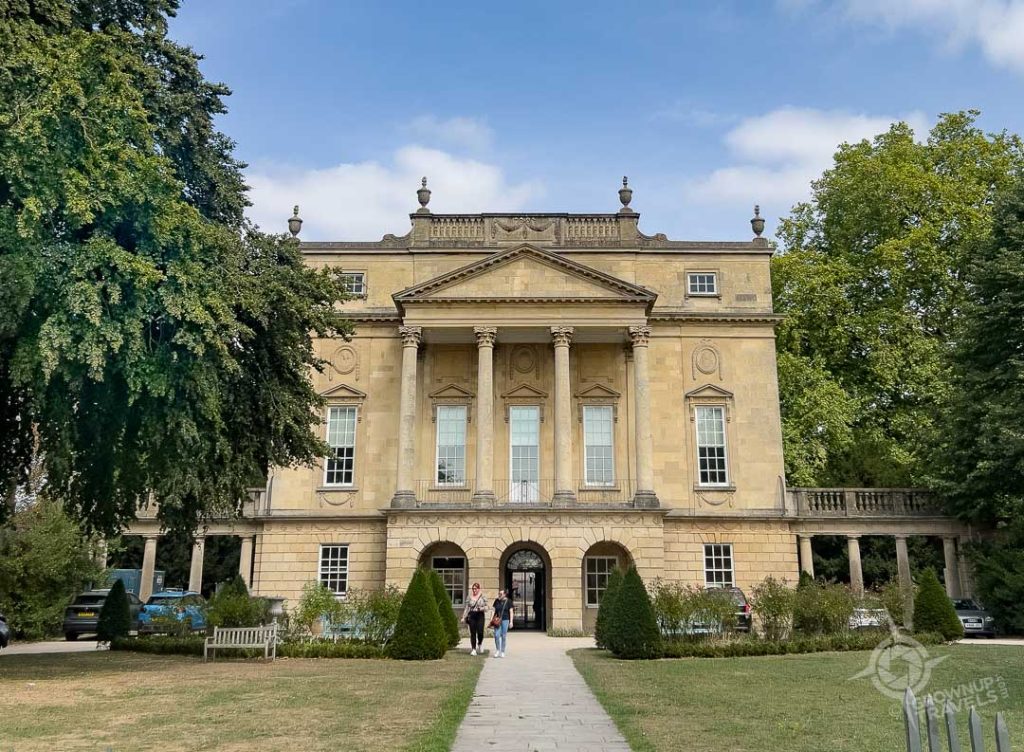
The Holburne Museum in Bath
Speaking of the Bridgerton elite, Lady Danbury’s swanky estate (or what doubles for it in the series), is Bath’s Holburne Museum, the city’s first public art gallery that backs onto Sydney Gardens, an 18th century pleasure garden that is the only one that has survived to this day. If the mansion and its gardens aren’t distinctive enough for Lady Danbury, the Museum sits at the end of the city’s widest and grandest avenue, Great Pulteney Street. At 100 feet wide and 1000 feet long, the street connects two parts of the city across the river Avon and is flanked by elegant Georgian townhomes and properties. Not surprisingly, this street has also made a cameo in the TV series.
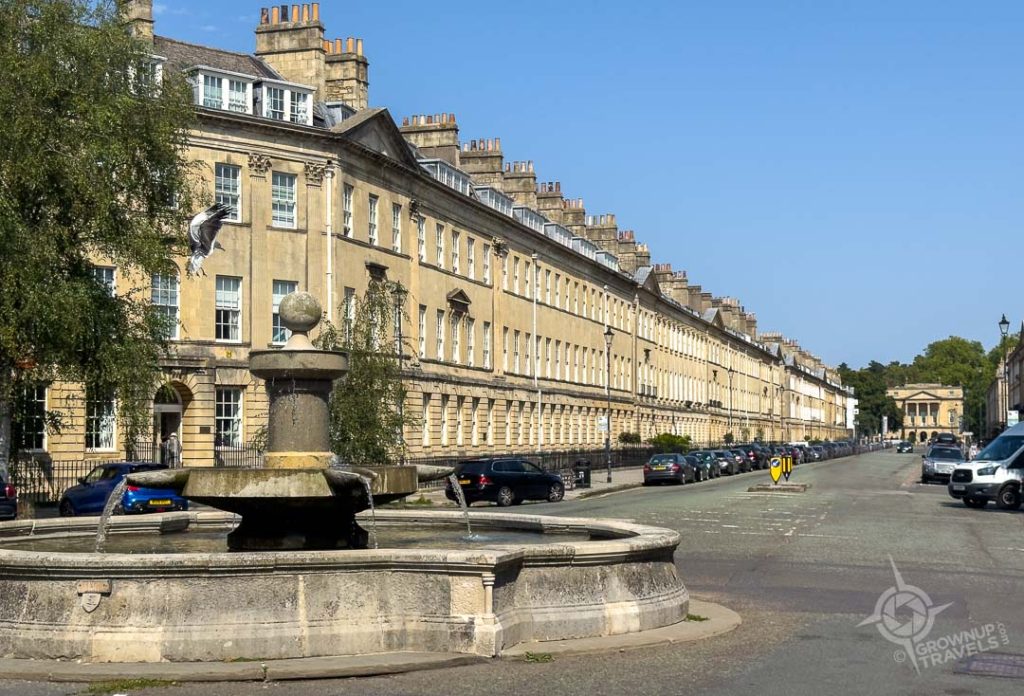
Great Pulteney Street is the grandest avenue in Bath (note the Holburne at the far end)
The Modiste
A surprise encounter with another prominent Bridgerton location happened while Henk and I were exploring some of the characteristic streets in the historic centre. Looking for a breakfast place, we happened onto a small cobblestoned square where we found the Abbey Deli, which I immediately recognized as the Modiste dressmaking shop where all of Bridgerton’s most aristocratic families have their gowns made.

The Abbey Deli aka Modiste dress shop was an accidental discovery while exploring Bath’s historic streets
They say you should never meet your heroes, but I have to say that the Abbey Deli as a modern-day cafe and tea room is just as cute and character-filled as when it plays the part of a couturier’s atelier. (Definitely worth coming in for a tea and a sweet treat, too!)
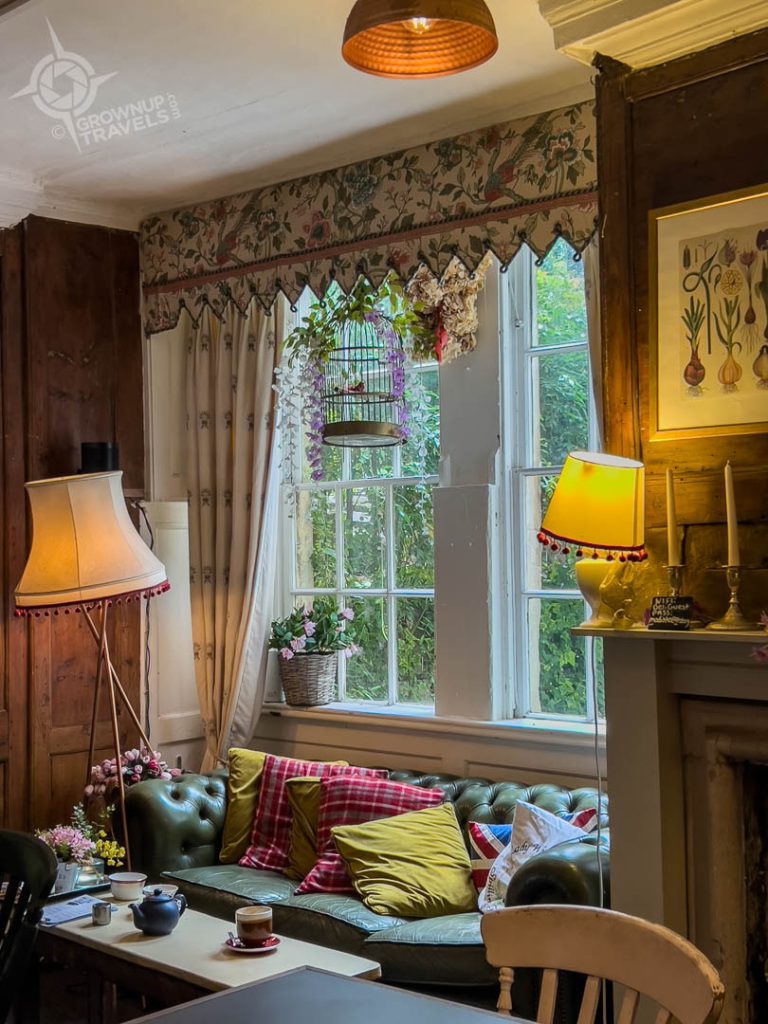
So cute inside, too!
TIP: For Bridgerton superfans, there are several Bridgerton-themed tours you can take in Bath. And in 2027, the Assembly Rooms (which were used for many of the ballroom scenes) will be re-opening to the public with a new ‘Georgian Experience’…check the website to learn more as that opening date approaches.
Jane Austen’s Bath
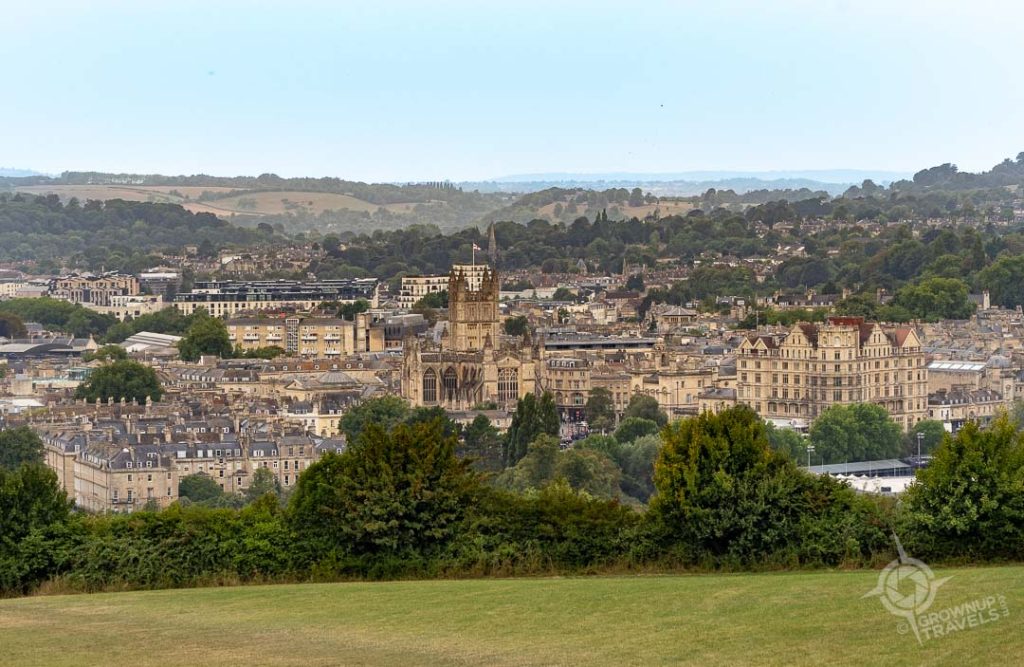
Jane Austen’s Bath would have looked very similar to today’s city
Bath’s reputation as a storied film location in the UK has a very legitimate claim to fame thanks to one of its most famous female storytellers of the 18th century, Jane Austen, who spent 5 years living here from 1801-1806. Austen mentions Bath in all of her six novels, but two in particular, Persuasion and Northanger Abbey, are actually set in Bath. So it’s no surprise then, that when many of Austen’s novels were made into films, Bath was the logical location to shoot them. The city is front and centre in the ‘modernized’ 2022 version of Persuasion starring Dakota Fanning, with the Royal Crescent providing a frequent backdrop for the heroine while she ponders her next moves.
TIP: This 2022 version of Persuasion is considered controversial by some critics because of its more modern language and the stylistic tactic of having the heroine speak and look into camera, known as “breaking the fourth wall”, but I found these additions made the movie that much more appealing to today’s audiences. Austen purists may disagree.
Pulteney Bridge Weir, Bath: 2012 Les Misérables
Who can forget that pivotal scene in Les Misérables (*spoiler alert!) where Inspector Javert cannot make sense of a world in which right and wrong are no longer absolutes, so he throws himself into the Seine off Paris’ Pont au Change. Except that the river in the movie was actually the Avon river in Bath, with its distinctive v-shaped weir that helps to controls the flow of water below the Pulteney Bridge. That shape definitely makes for a more dramatic and dynamic overhead shot for the film, so it’s easy to see why this film location in the UK made the cut for that scene.
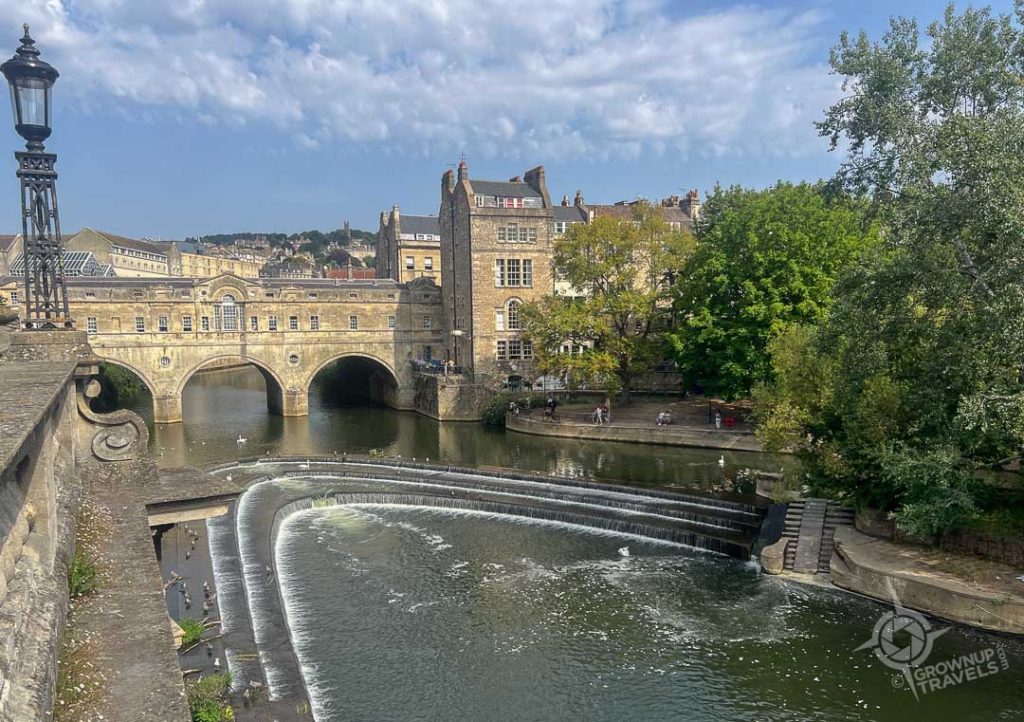
Pulteney Bridge over the River Avon’s distinctive Weir
But even if you don’t know about the connection to Les Misérables, this section of the Avon river is one of Bath’s most beautiful locations, with views of the Pulteney Bridge that spans it.
TIP: Not only is Pulteney Bridge a pretty photo op, but it was inspired by Italian bridges like the Ponte Vecchio in Florence that have shops and cafes built right into the structure. You can enjoy breakfast or tea in one of the narrow cafes on the bridge. From inside you can look onto Great Pulteney Street through one window, and below to the river through the window opposite.
Hampton Court Palace Gardens, Molesey: Bridgerton, Queen Charlotte, The Young Victoria, and The Theory of Everything
After Henk and I visited Hampton Court Palace, and were absolutely blown away by the 60 acres of palace gardens in particular, it’s almost impossible NOT to recognize these gardens in movies.The Great Fountain Garden, in particular, contains 13 fountains and 2 radiating avenues of manicured Yew trees that look like giant dark green gumdrops. So when these gumdrops appear in scenes in Bridgerton, Queen Charlotte, and The Young Victoria movie (with Emily Blunt), it can only be Hampton Court Palace.
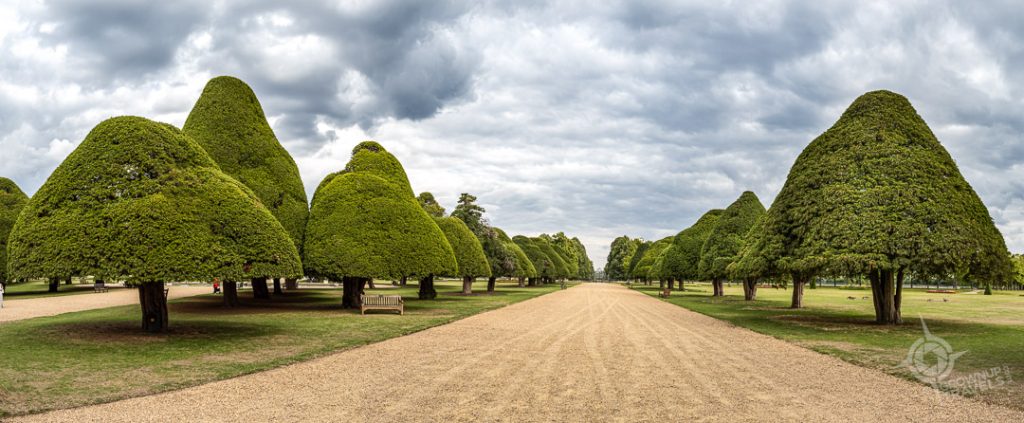
These radiating manicured Yew trees are unique to Hampton Court Palace
Likewise the Privy Garden, which is unmistakeable in Bridgerton as part of Queen Charlotte’s residence. The Palace itself provides a stunning backdrop for the Queen and her ladies-in-waiting and the manicured gardens are beautifully grand, flanked by rows of precisely spaced conical-shaped evergreens. The garden is absolutely worthy of Queen Charlotte’s extravagance, makes a spectacular setting for the would-be wedding of Edwina and Anthony Bridgerton in Season 2, and serves as an artistic backdrop for an intimate conversation between the Sharma sisters.
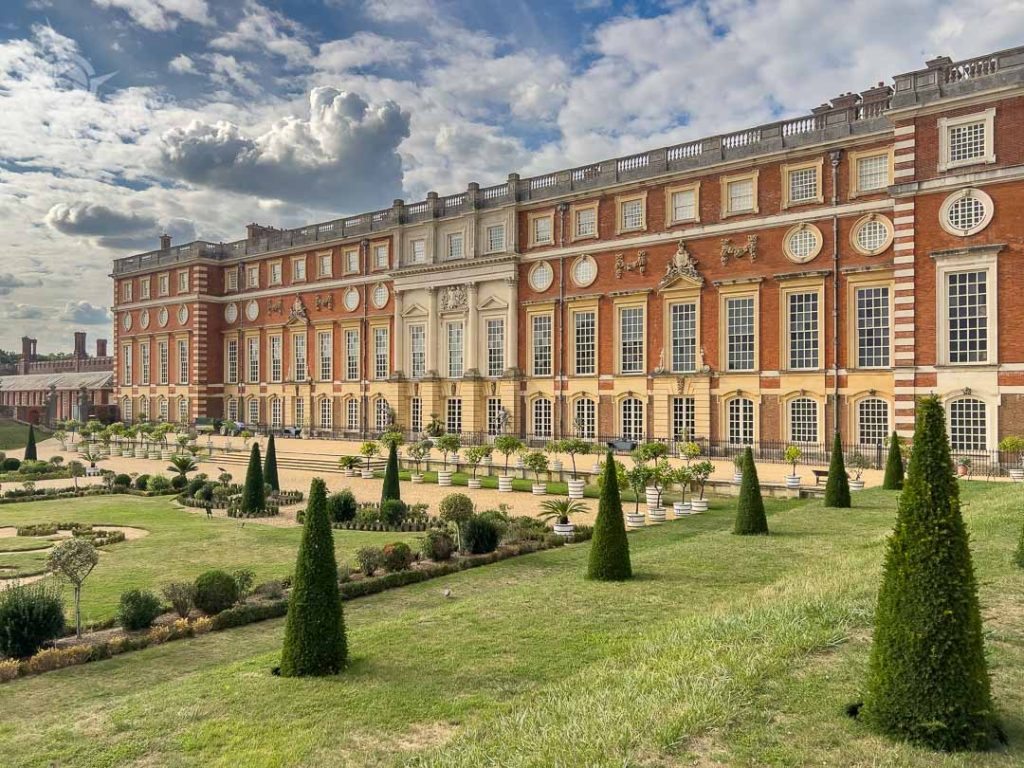
Hampton Court Palace’s Privy Garden is as gorgeous as the palace itself
The Pond Gardens (former fish ponds back in the days of Henry VIII, hence the name) are another colourful backdrop for Bridgerton scenes, and also turned out to be one of my favourite gardens at Hampton Court Palace.Their pretty floral beds are vibrantly coloured, the statuary and fountain feel like a Renaissance villa garden, and there’s a secluded ambiance to the space since it is surrounded by high hedges with the occasional ‘window’ to peek through.
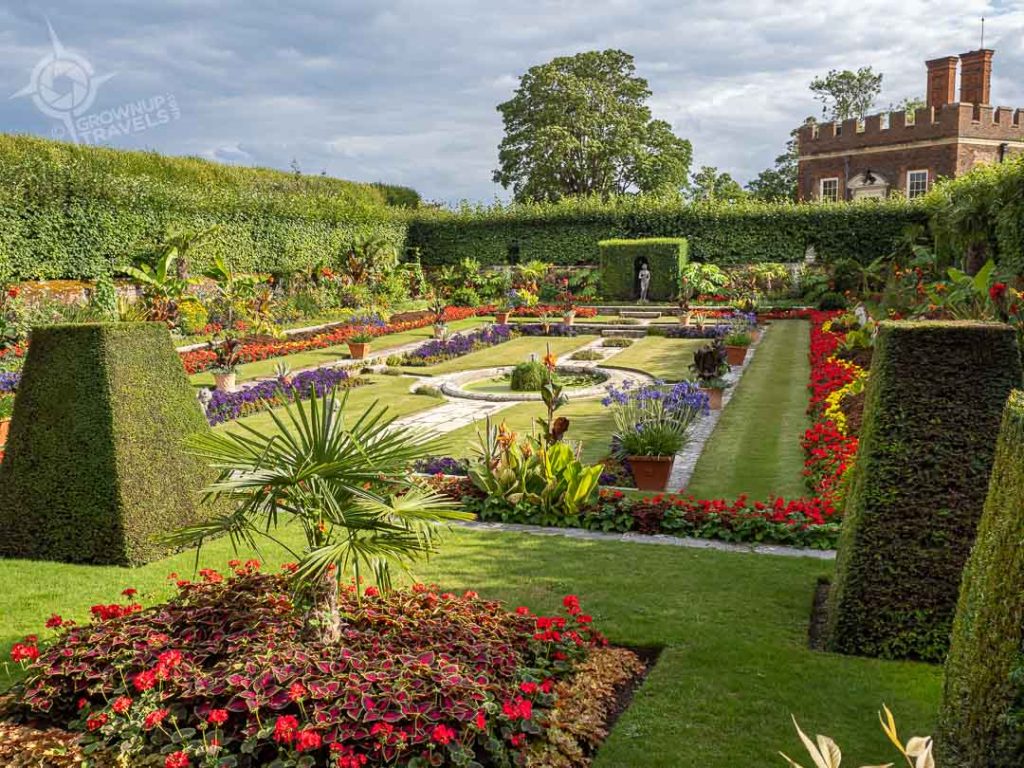
The Pond Garden was my favourite at Hampton Court Palace
This same garden also appeared in The Theory of Everything with Eddie Redmayne starring as Stephen Hawking, (and the Pond Garden starring as Buckingham Palace’s back yard). I give it two thumbs up in both roles.
TIP: You can’t enter the Pond Garden itself, but you can walk around the outside and peek through the occasional ‘window’ cut into the hedges for another perspective on it.
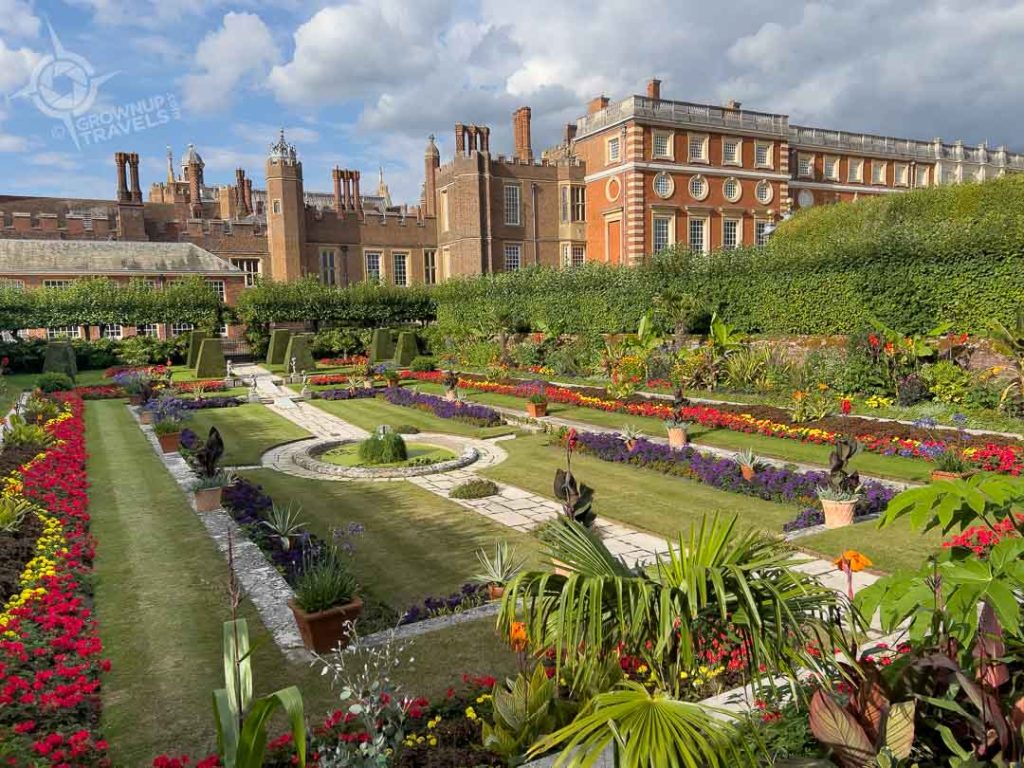
Reverse view of the Pond Garden through a ‘window’ cut into the hedge
Lower Slaughter, Cotswolds: Jane Austen’s Emma (2020)
Henk and I had one plan when we set out to explore the Cotswolds: we were on the hunt to visit some of the UK’s most charming villages. However, when we found the tiny village of Lower Slaughter, believed by many to be the prettiest of them all, we also found ourselves ‘on set’ once again in a village that features prominently in the 2020 movie of Jane Austen’s novel Emma, starring Anya Taylor-Joy. Although we didn’t know it at the time.
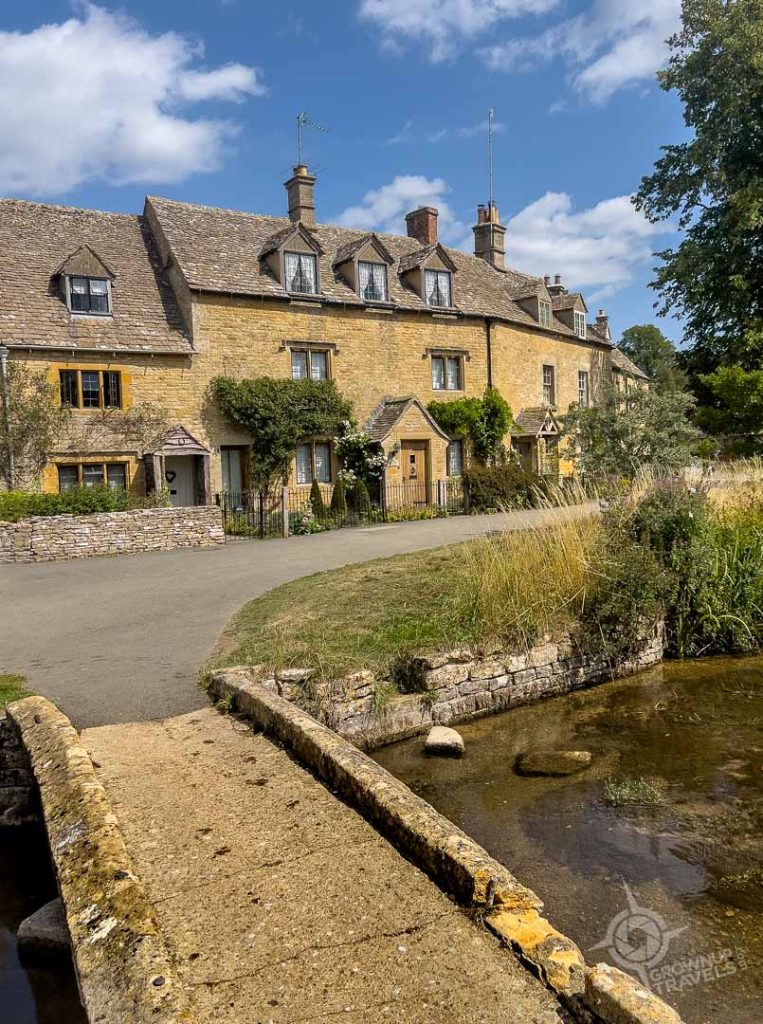
The River Eye flows through picturesque Lower Slaughter in a shallow canal
It was only several days later after visiting Bath and the Jane Austen centre that we decided to watch this movie, and we immediately recognized many of its scenes as being shot in Lower Slaughter.
It’s easy to identify this beautiful and charming hamlet because the shallow canal that runs between its characteristic stone cottages is unique to this village, as are the stone bridges that span the water. As thrilled as we were when we first discovered the beauty of Lower Slaughter, we felt twice the connection when we were able to recognize it in a film. Which I suppose is the whole point of set-jetting in the first place!
Castle Combe: Dr. Dolittle (1967) with Rex Harrison
We chose to visit Castle Combe because of its reputation as one of the Cotswold’s most beautiful villages, and we were keen to add it to our tour of the area. We later found out that it was used as the film location of the fictional seaside village of Puddleby-on-the-Marsh in the 1967 movie of Dr. Dolittle. No wonder, because with its beautiful stone houses and charming main square it is an idyllic location as it is.
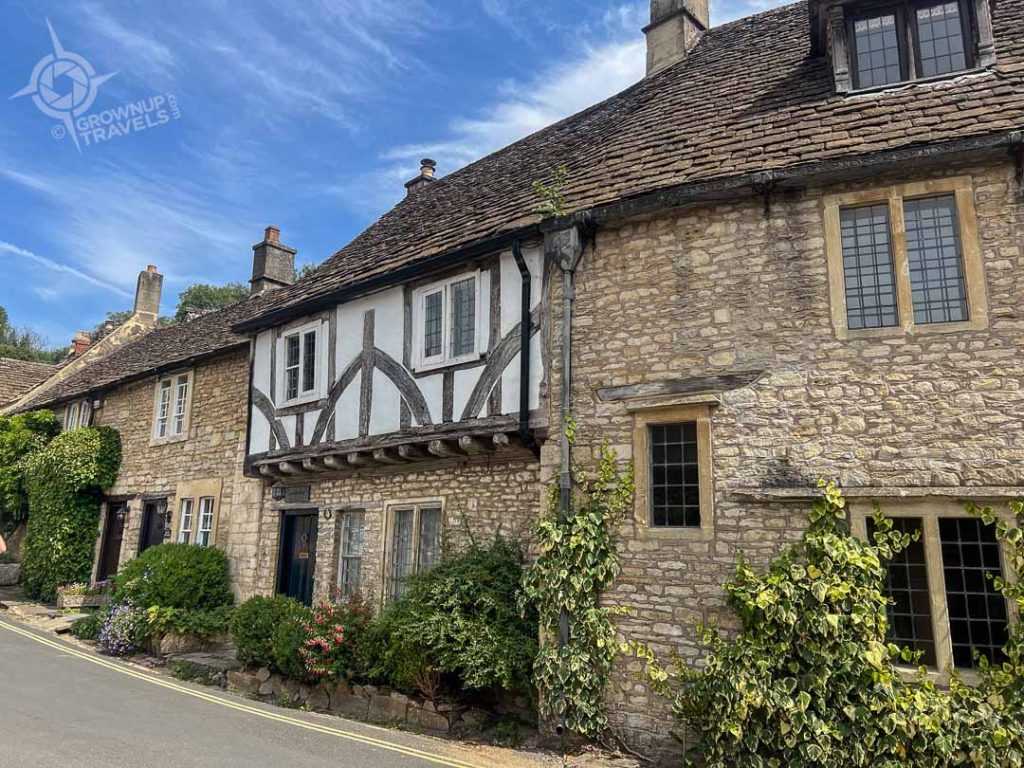
Castle Combe is described by many as the most beautiful village in the Cotswolds
However, Hollywood decided to transform the village significantly to turn it from an inland riverside village to a seaside harbour town. To do so the production crew temporarily dammed the picturesque Bybrook River that runs through the town to create the illusion of a harbour instead. This didn’t go over so well with the locals, one of whom was intercepted while carrying dynamite he planned to use to rid the residents of that temporary dam once and for all.
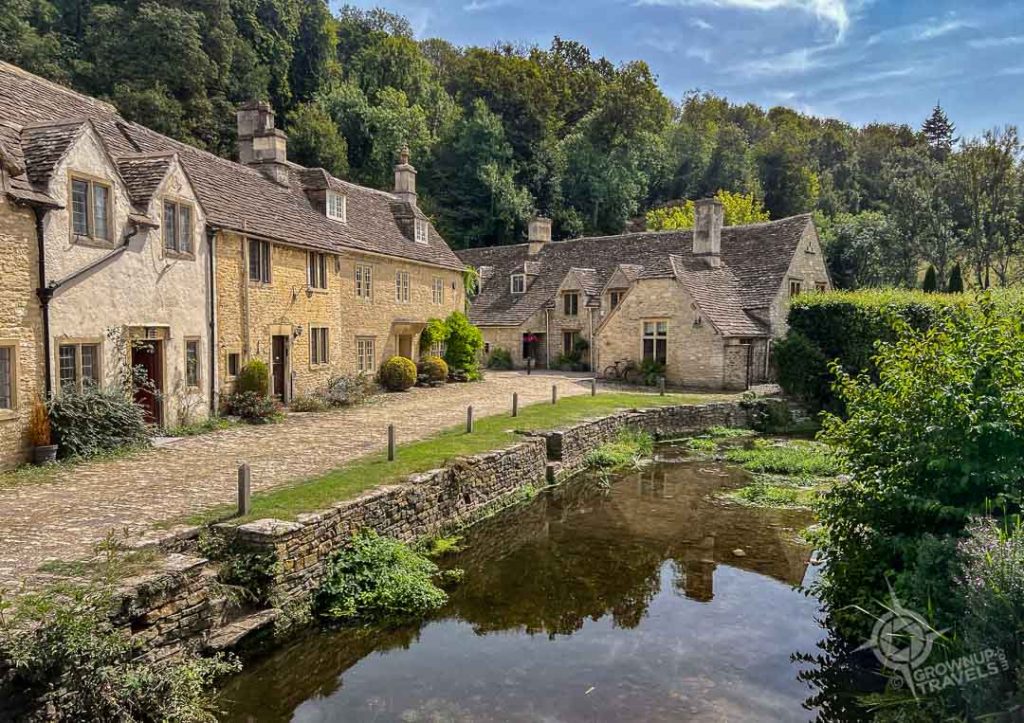
Castle Combe’s riverside cottages are picture-perfect
Fortunately, today Hollywood is more respectful when filming in historic locations, and the Castle Combe locals are not nearly as volatile. Still, the village’s reputation as one of the most beautiful in the country does attract many tourists so it is always advisable to respect the privacy of its residents and not trespass in any restricted areas.
TIP: There is a convenient car park at the top of the hill leading down to Castle Combe, so we recommend you park here since there is little or no parking in the actual village.
The Cotswolds: Clarkson’s Farm
And now from the sublime to the ridiculous: if you are a fan of British celebrity Jeremy Clarkson or have been introduced to him through four seasons of Clarkson’s Farm on Amazon as he tries to make a success as a farm-preneur in the Cotswolds, you will already know that he has had his share of (usually entertaining) difficulties.

Clarkson’s Farm can be seen on Prime Video
But for Henk and I, the show introduced us to this Area of Outstanding Natural Beauty and inspired us to visit the Cotswolds when we were planning our visit to England. Of course, this designation is a double-edged sword since many of the small villages in this area have become tourist hot-spots precisely because of their charm and beauty. But the area does live up to its reputation with its bucolic rolling hills and hedge-lined pastures and there are many places that are still unspoiled by tourist congestion. So thank you, Clarkson’s Farm, for the introduction.

The Lamb Inn Great Rissington was a perfect choice for an authentic overnight stay
TIP: Coincidentally, one of the locations shown in Season 4 of Clarkson’s Farm (when Jeremy was looking for a pub property to buy) turned out to be a country inn and pub in Great Rissington that we had already booked for a stay – The Lamb Inn. This was everything that you would want in a 400+ year-old Cotswold inn: charming, historic, with excellent food and friendly locals at the bar. Definitely recommended for a low-key, authentic village experience.
Stonehenge: Thor: the Dark World
Stepping away from historic 18th century England and its idyllic countryside and into the realm of fantasy seems appropriate when talking about Stonehenge as a film location for a movie headlining a Norse god. Because even to this day, the methods and motivation for how and why this megalithic stone circle was constructed remain a mystery.

Megalithic structures and Nordic gods go hand in hand at Stonehenge
Although the Stonehenge scene from Thor: the Dark World is centred more on an astro-physicist’s bizarre behaviour that gets him arrested (he strips naked while ranting amongst the stones), real astro-physicists or even amateur astrophotographers like Henk cannot fail to be impressed with the precise astronomical alignment of these mysterious stones.
And for those who are fans of another stone circle-centred fantasy, there’s even a connection here to the series Outlander, since the origin of the Altar Stone at Stonehenge has been proven to be from Scotland.
TIP: For an exclusive experience that allows you to actually walk inside the circle of Stonehenge, you can book a sunrise or sunset Stone Circle Experience like we did that gives you access before or after regular opening hours. It’s definitely an intimate experience you will remember forever, watching the sun set between these massive megalithic stones, and it is well worth the additional cost. Streaking through the stones is strictly forbidden, however.
Accidental Set-Jetters
When Henk and I were planning our visit to England, we never set out to create an itinerary that centred on film locations in the UK. But given the natural beauty of Britain’s landscapes, the history represented in its stunning architectural landmarks, and the popularity and fame of its storytellers, it’s easy to see why so many TV shows and movies have been shot here. So I guess it was almost inevitable that we would find ourselves becoming set-jetters ourselves, even if sometimes we didn’t realize it until after the fact. Still, I can’t think of a better way to keep our travel memories alive than re-living them on the big (or small) screen for years to come.

Jane is an award-winning travel writer and photographer and an accredited member of the Travel Media Association of Canada (TMAC). In their annual awards competition, TMAC named GrownupTravels.com as the Best Self-Published Travel Blog in 2025 .
She is also a member of the North American Travel Journalists Association, and a freelance travel writer contributing to both print and online publications.




Subscribe and you'll never miss an update!
Join our mailing list to receive the latest news and updates from Grownup Travels. (We keep your email STRICTLY private)
Thank you for subscribing to Grownup Travels!