

“Moving Forward” mural by Métis artist Kent Ness acts as a gateway to downtown Saskatoon
I had never heard the term “placemaking” used to describe street art until I signed up for a downtown mural walk on a recent visit to Saskatoon, Saskatchewan. My guide on the tour was Pam Staples, a graphic designer, illustrator and theatre set painter who has worked in the arts and culture development sector for many years both in Saskatoon and elsewhere around the country. Pam introduced me to the concept of placemaking while we were touring some of the murals and creative installations in the downtown core. More than simply examples of creative self-expression, Pam explained that public art in Saskatoon is one way the community helps to define and reflect the character of this prairie city and its residents. There were other examples and initiatives we would see on our tour as well, some large and some small, that all contribute to the unique personality of this place.
So, What is “Placemaking” Exactly?
Placemaking can be described as the process by which public spaces are shaped to be more relevant, engaging and beautiful for the community. It’s part art, part culture, and part practical social/urban planning. It can take all kinds of forms, from decorative bicycle racks that are both functional and creative, to busker performances and flash mobs that just make people smile. It could be something ephemeral or permanent, or something that speaks to individuals or to large groups, providing whatever it is helps to contribute to a sense of place. If you’ve ever played a tune on a colourfully decorated public piano (guilty as charged!), you were contributing to and benefiting from “placemaking”.
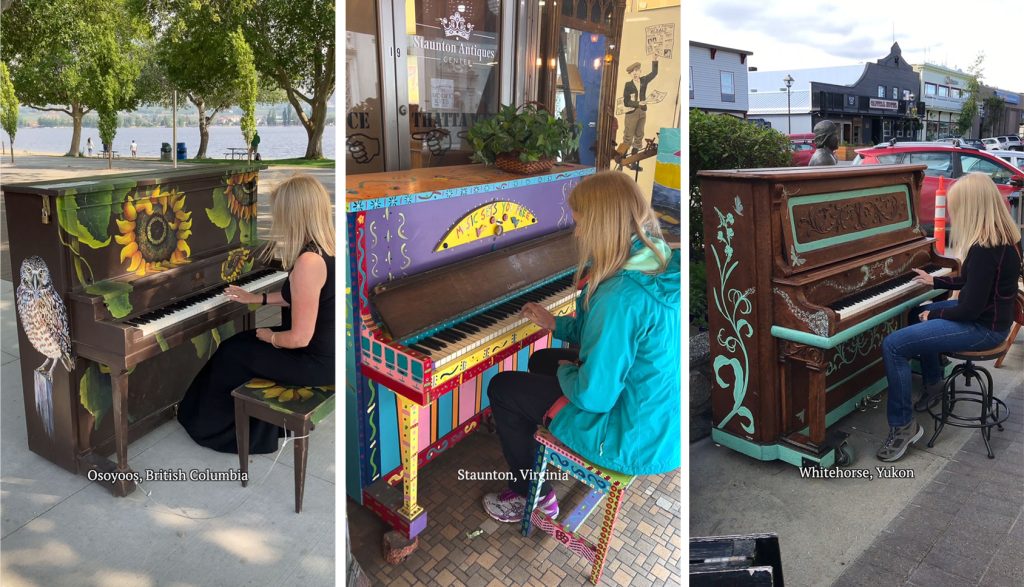
I know only one song I learned on a toy piano at age 8. It’s terrible. I’m terrible. Apologies to all Placemakers and Piano Players everywhere.
Street Art & Murals in Saskatoon
Street art is of course, a very visible form of placemaking and like many urban centres, Saskatoon has its fair share of street art and murals. Some of these are massive in scale, including one by Regina-born artist Emmanuel Jarus that covers the entire side of the First Nations Bank. The artist worked with the Yellow Quill First Nation and the City of Saskatoon’s Placemaker public art program to create the piece which reflects a family theme that is rich in indigenous symbolism, and has it become a landmark in the city since it was painted in 2017.
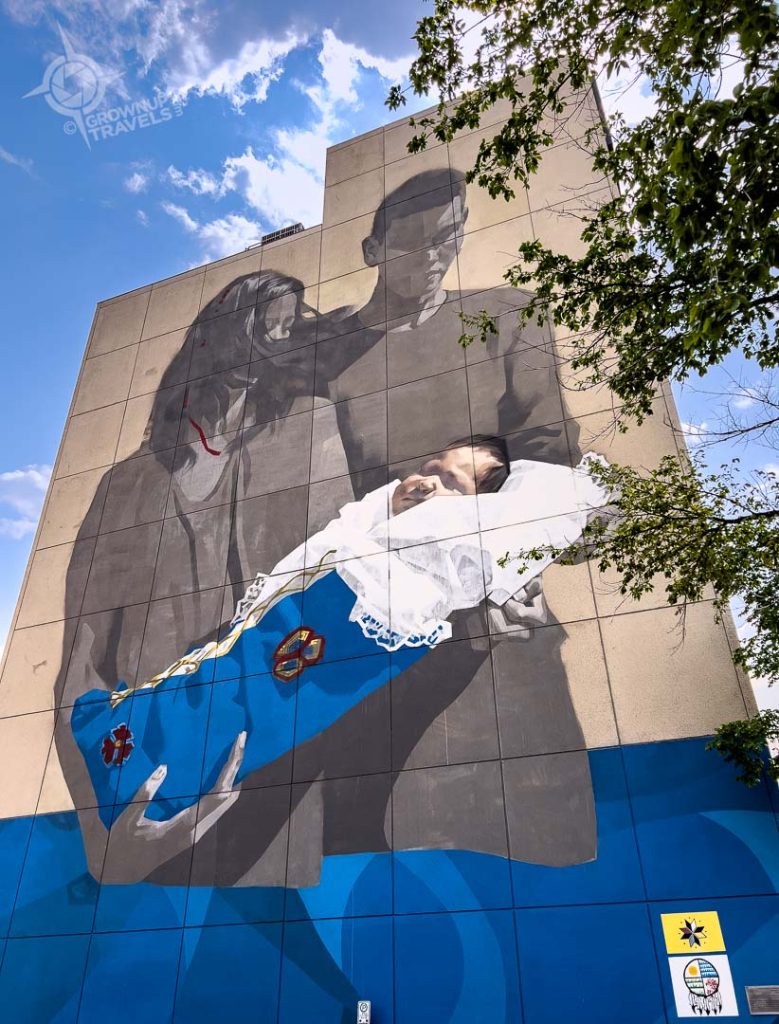
“Rise from Water – Mino Pimatiziwin (A Good Life)” mural by Emmanuel Jarus on the First Nations Bank Saskatoon
Another huge mural near 1st Avenue South and 20th Street East titled ‘Prairie Lily’ features a pair of these vibrant flowers that are found everywhere on the Saskatchewan landscape, paying homage to the province’s natural beauty that surrounds the city.
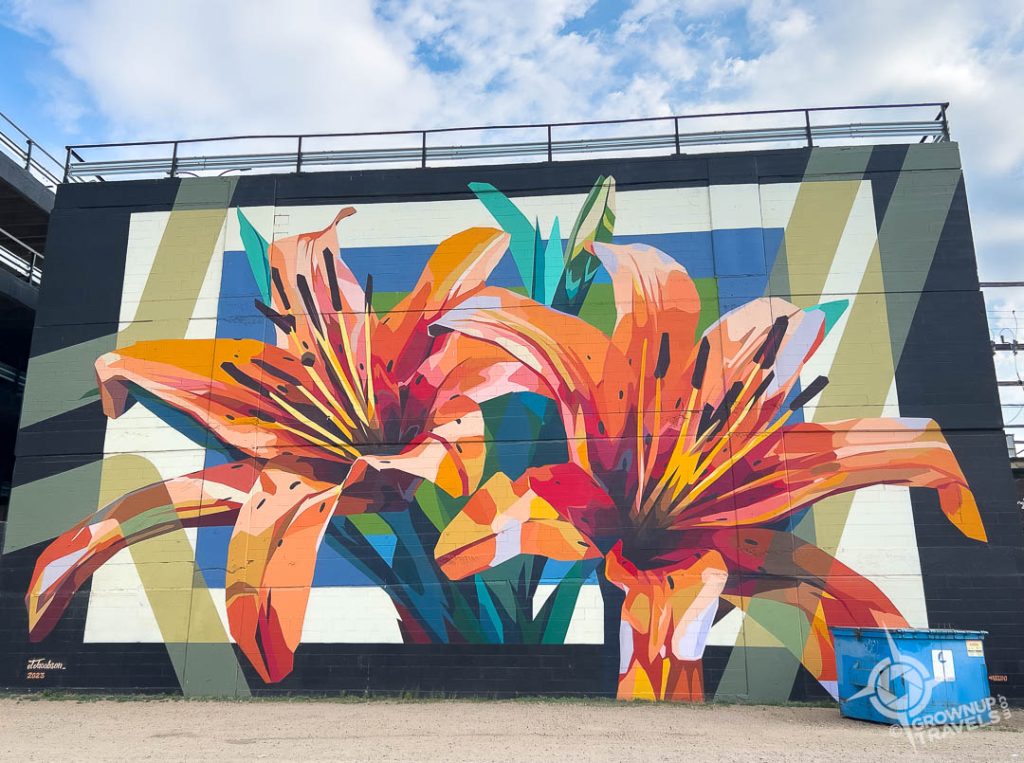
Prairie Lily by Josh Jacobson in downtown Saskatoon is massive and features the provincial flower
Other murals have more of a street artist grittiness, particularly when they are found in laneways between buildings. “Graffiti” they may be in terms of material and technique, but these paintings are created by artists who have a distinct point of view and their artwork reflects their individual style.
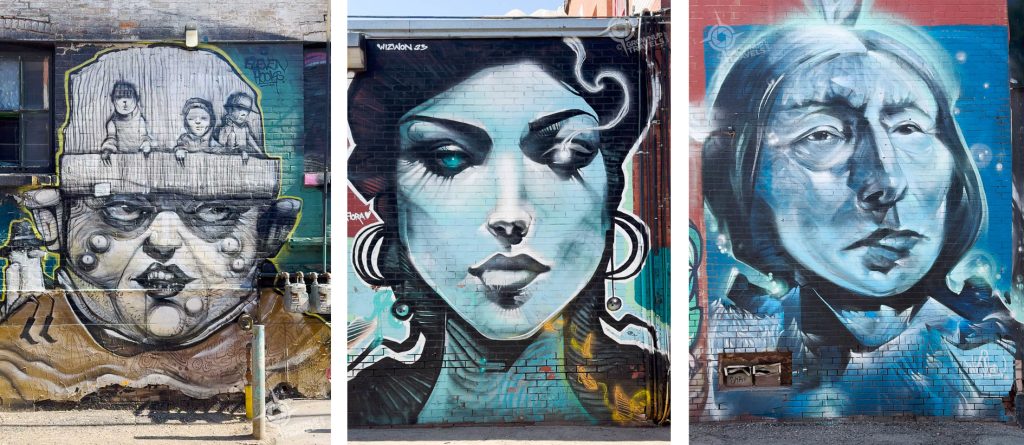
Three different street artists, three different styles
Sculptures are another way to define spaces by educating, commemorating or beautifying a public area. Whether they are created in traditional media like bronze or metal and erected in public parks, or made with modern colourful materials and placed on sidewalks, they all serve to add a sense of place for passersby and residents.
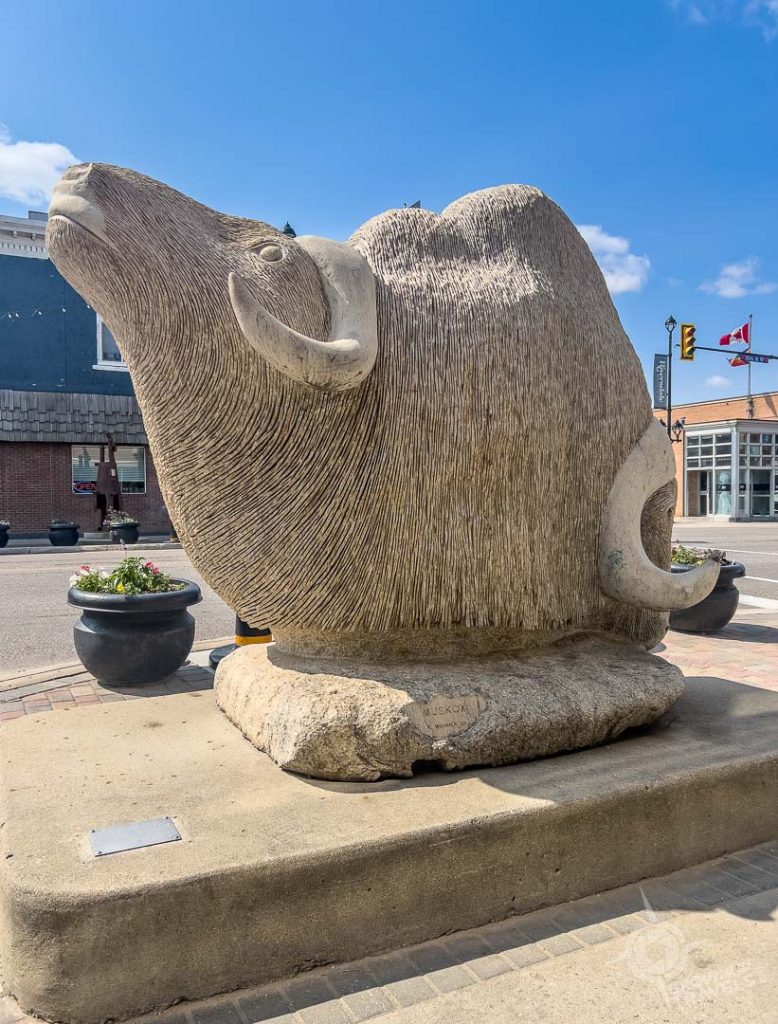
The Riversdale neighbourhood in Saskatoon is home to many types of public art including “Musk Ox” by Floyd Wanner.
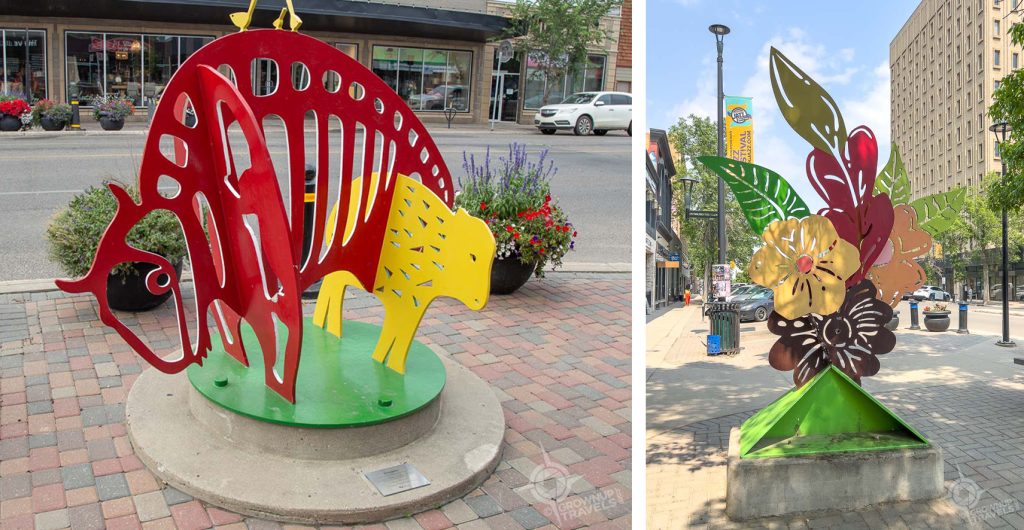
Colourful street sculptures add to the Saskatoon streetscapes
Saskatoon’s “Alley Gallery”
One initiative in particular, Saskatoon’s Alley Gallery, is designed to beautify the laneways and back alleys of the downtown core by utilizing back entrances and doors as canvases for local artists.
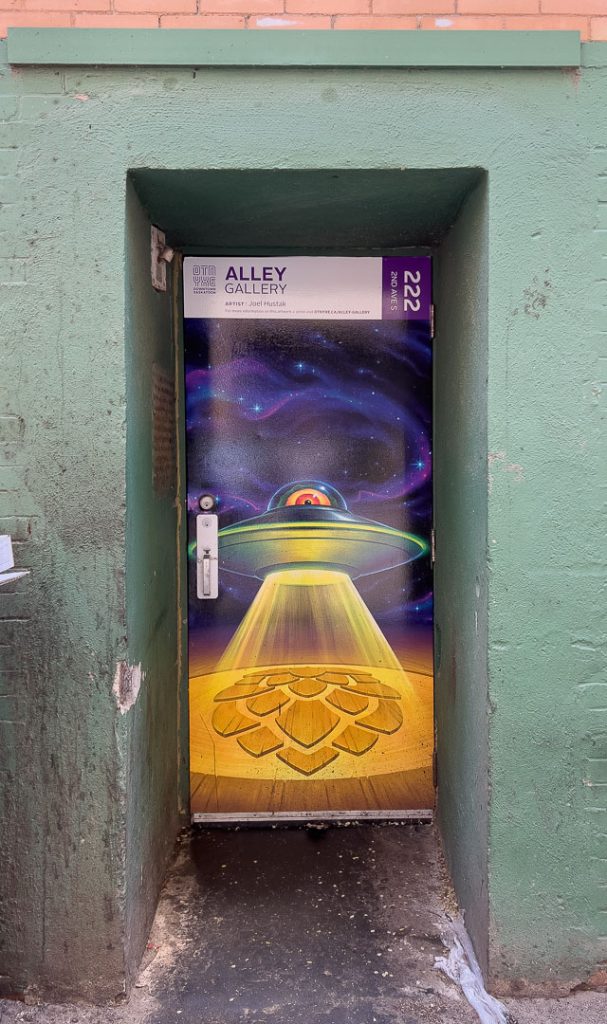
The Alley Gallery uses back doors as canvases
It’s a program that is run by the Downtown Saskatoon Business Improvement District with support from the city of Saskatoon. Artists are invited to present their door designs to be adjudicated, and the artists whose designs are chosen will each receive $550 dollars. Demand for this has grown year over year, with 7 times the number of submissions for doors ‘available’, and there are over 30 doors completed to date.
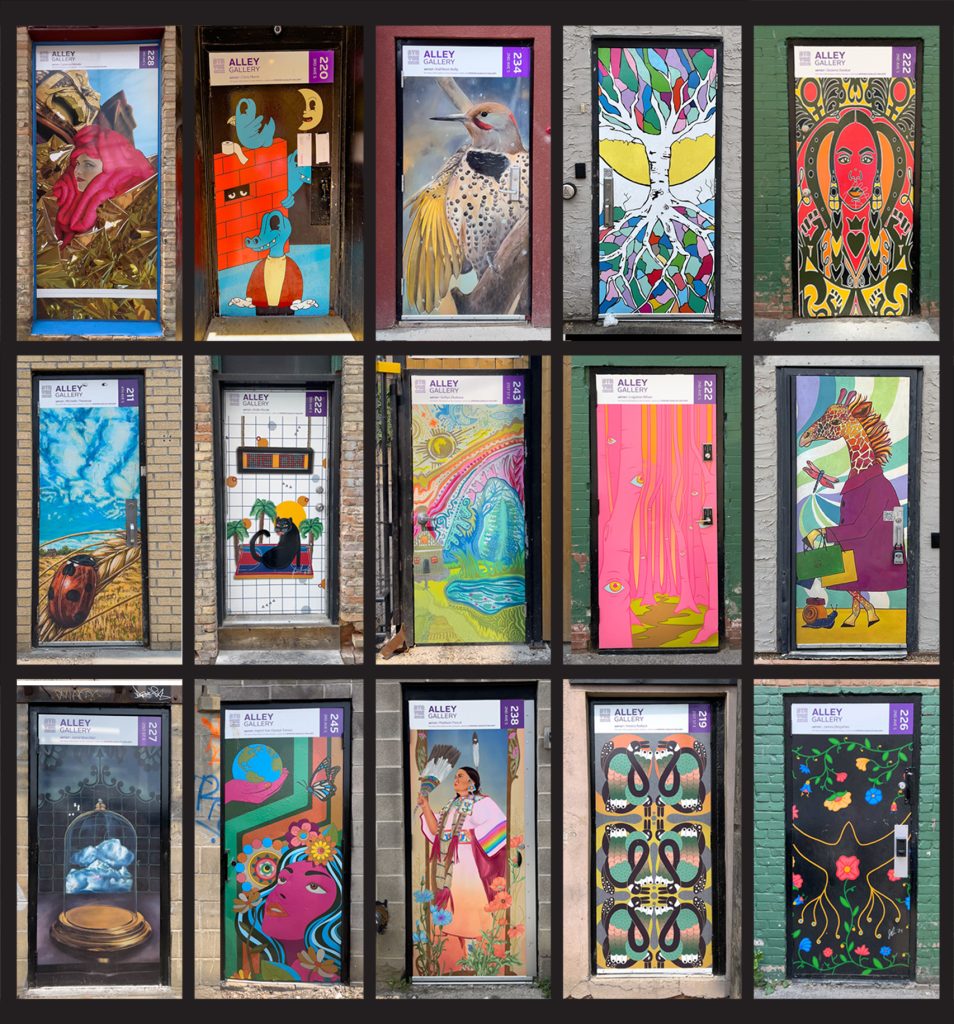
Some of the Alley Gallery doorways that can be found in Saskatoon
It’s a great way to make art accessible to all, make neglected spaces more welcoming, and support the local art community. (It’s also practical: the door designs are printed on vinyl wraps, so any ‘unauthorized graffiti’ can be removed and the artwork isn’t destroyed.)
Functional Art That is Uniquely Saskatoon
Urban planning is part of placemaking, too, with functionality in mind first and foremost. But functionality doesn’t have to come at the expense of beauty. One example of this can be found throughout downtown Saskatoon, if you look at the base of trees that are planted along many of the downtown sidewalks. The metal grates that are designed to protect the trees and allow rainwater to irrigate them all have unique designs that reflect the region or province.
Some of the designs show local wildlife like the bison that were once the dominant prairie dweller here and an integral part of the identity of the Indigenous people who have lived here for generations.
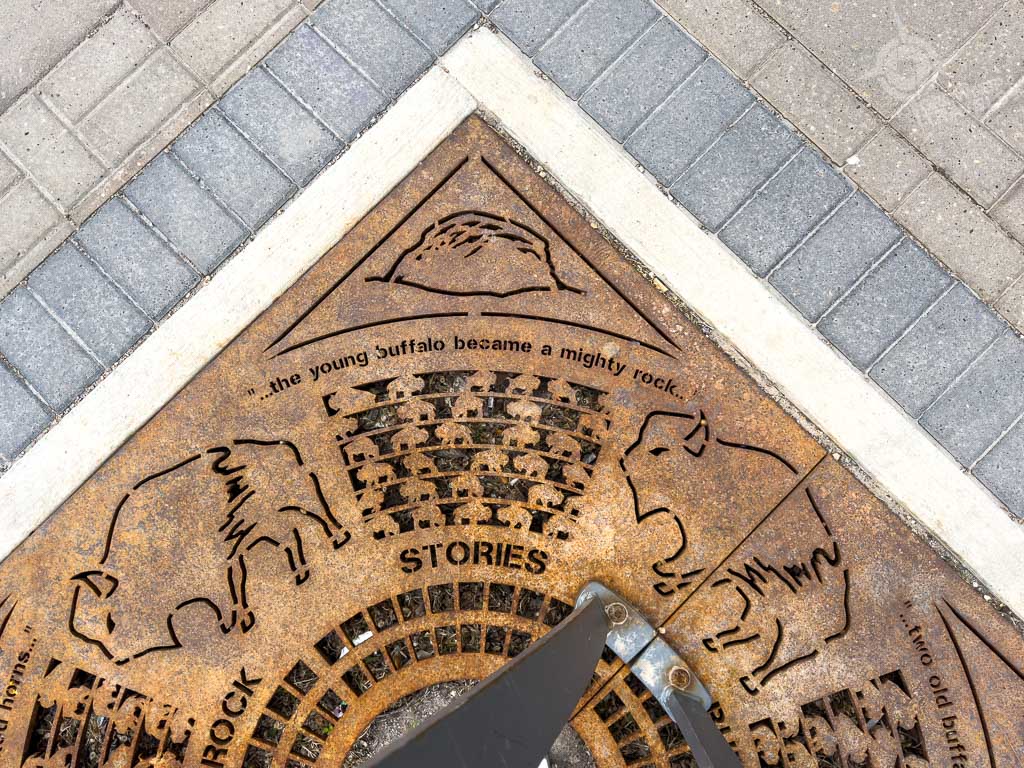
Bison are a part of Saskatchewan’s history and feature on this tree base grate
There are birds as well, including pelicans. (Who knew pelicans actually nest in Saskatchewan!?)
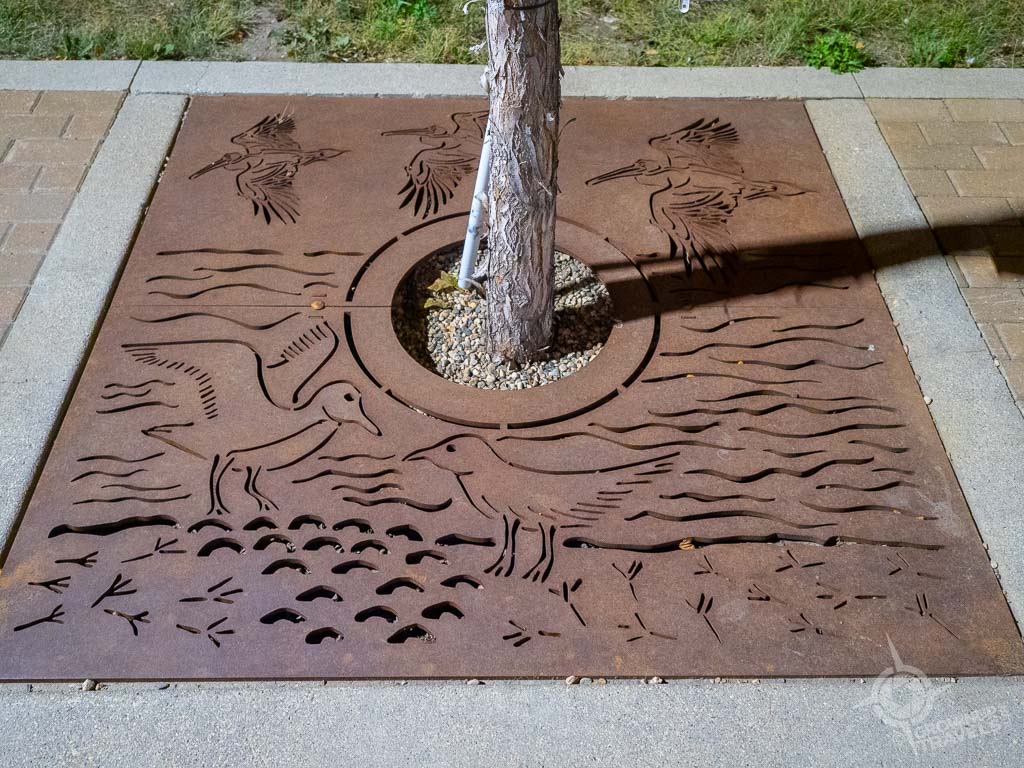
Pelicans are a Saskatchewan species: who knew?
Still others showcase historical businesses from the neighbourhood, like this one in the funky Riversdale neighbourhood that features the MacMillan department store including their merchandise and prices from back in the day. What better way to keep this local history – and these downtown trees – alive.
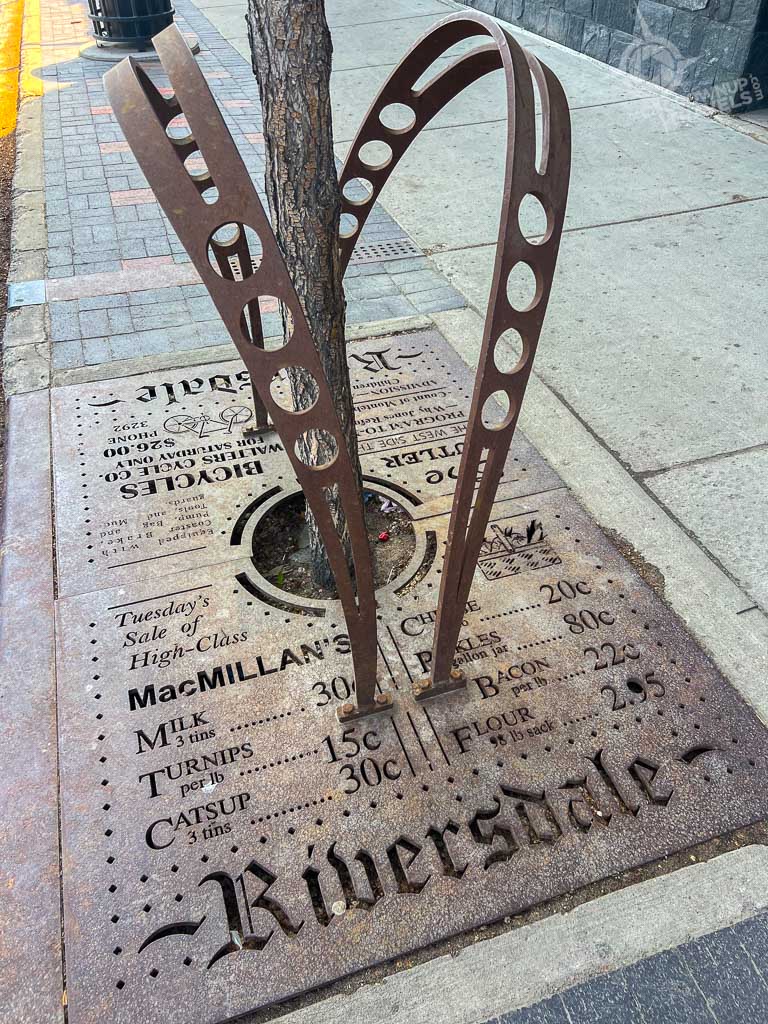
This Riversdale neighbourhood tree grate shows historic prices for MacMillan department store merchandise
And if you have a bicycle and need to park it while you are doing some shopping in those neighbourhoods? Why not do it at a bison bike rack? It doesn’t get more Saskatoon than that.
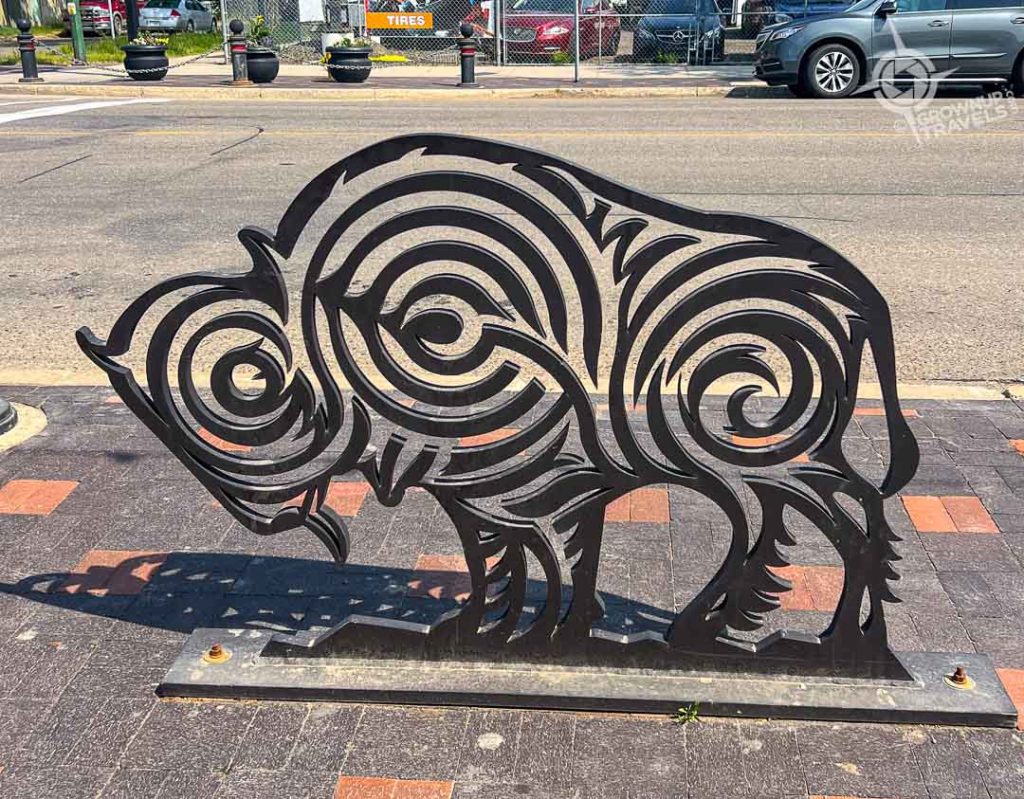
Bison as bike rack. Brilliant.
The Meewasin Trail

Broadway Bridge seen fron the Meewasin Trail at dusk
Grassroots contributions to placemaking often live alongside large urban initiatives, too. The Meewasin Trail is a great example of this. The riverfront network of trails and paths was developed by the city of Saskatoon both consciously and conscientiously to be something the entire community could enjoy. The trail is 107 kilometres long and runs along both sides of the Saskatchewan River right through downtown Saskatoon and beyond. It’s trails, landscaped parkland and natural wilderness areas provide city residents with the opportunity to walk, cycle, cross-country ski, birdwatch and look for wildlife along the river. And there are public art installations and historical markers included as part of the Trail.
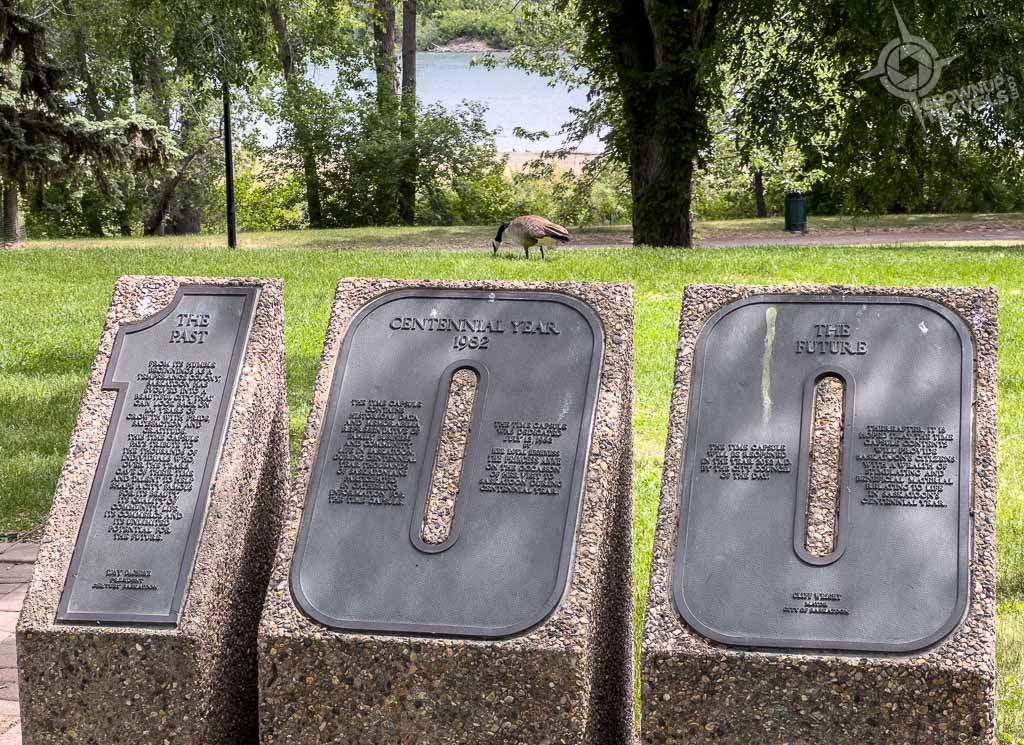
Marker commemorating 100 years of the city of Saskatoon along the Meewasin Trail
Right downtown by the Broadway Bridge, though, you will notice something that the local community has done on its own to contribute to the Trail: the stones that line the banks on this part of the trail have been painted by people in the city. Sometimes conveying inspirational messages, sometimes made as a tribute or memorial to someone or something, and sometimes just for fun, this local ‘rock art’ has become a quirky tradition that isn’t officially sanctioned, but is now part of the Trail. It may not be exactly what the city had planned, it may not appeal to everyone, but sometimes placemaking means letting the community express itself organically, too, so they feel more connected to these spaces.
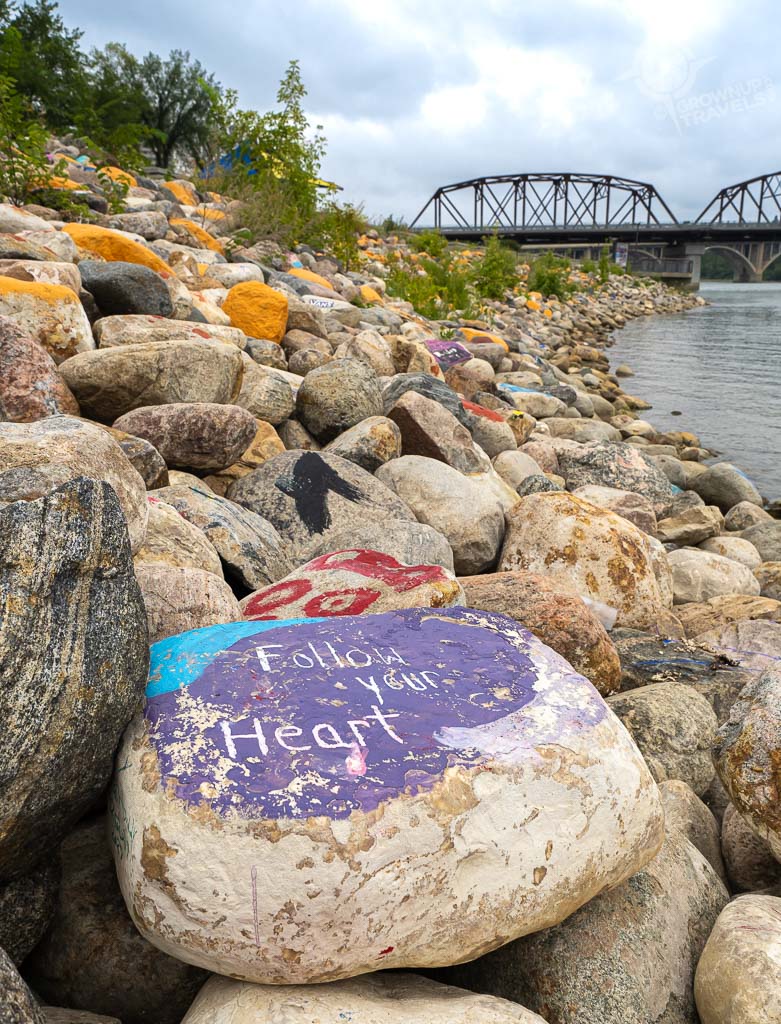
‘Rock Art’ in Saskatoon
An ‘Only in Saskatoon’ Splash Park
The Meewasin Trail has another example of unique placemaking: right in front of the Remai Modern Art Gallery at ‘River Landing’, you’ll find a children’s splash pad unlike any other. The design of the concrete splash area is a simplified map that traces the route of the Saskatchewan River Basin through 3 Canadian provinces and one U.S. State.
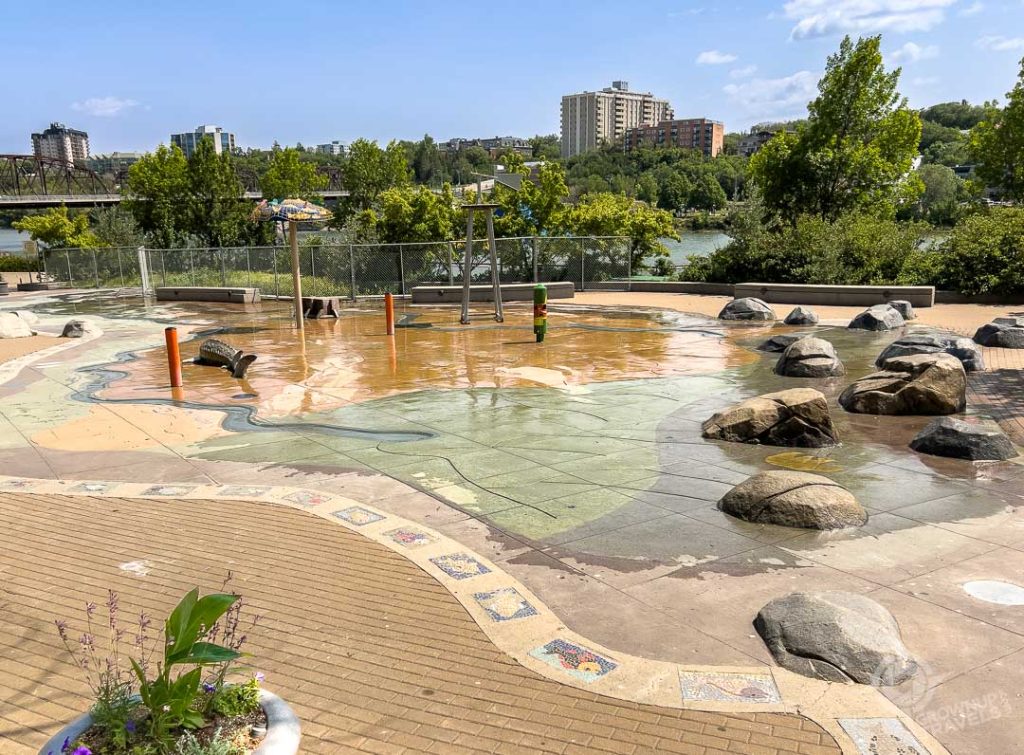
Kids (or adults) can follow the path of flowing water from Alberta to Manitoba, as the river winds past cities that are found along the route, including of course, Saskatoon. There are also mosaics of fish found in the river, hidden features like animal tracks and forts and even a giant sturgeon that sprays water. As an educational and fun way to describe what makes Saskatoon special and to draw visitors to enjoy the space, this splash pad does triple duty when it comes to placemaking.
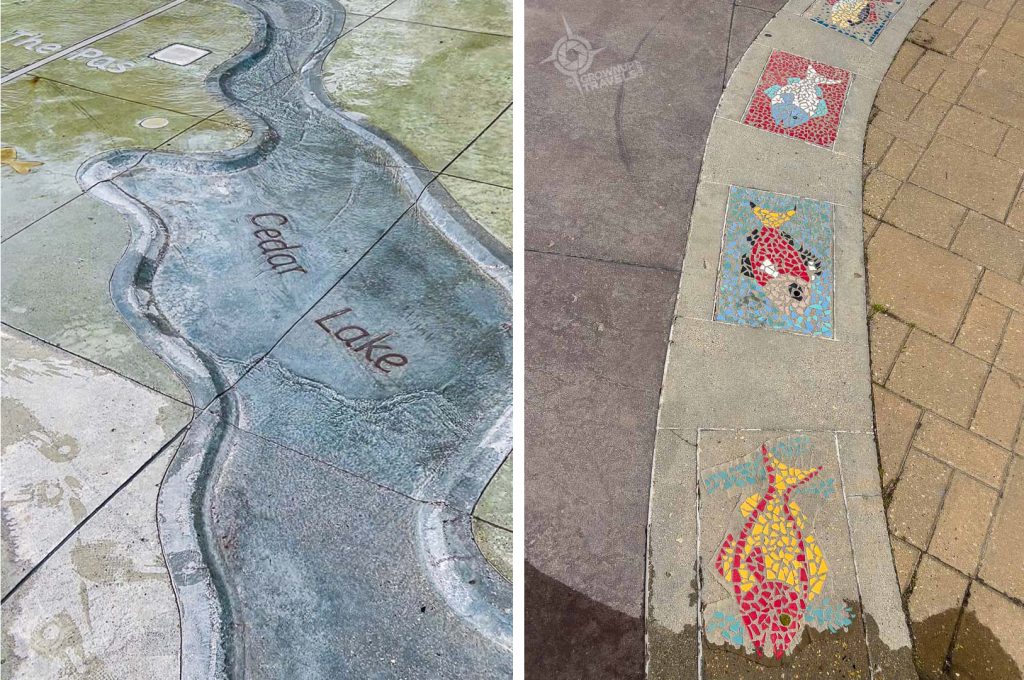
Saskatchewan River Basin splash pad details in Saskatoon
Don’t Discount the ‘Gram’
As much as people may disparage the current obsession with finding ‘Instagrammable spots’ around the world, photographs that capture some of the creative installations that are unique to a place do help to reinforce what makes that place special. Often these photo locations are intentionally placed by the city or an organization to highlight a natural or manmade feature that makes this place noteworthy or special. This one framing both myself and the iconic Delta Bessborough even features the Saskatoonberry whose name speaks for itself when helping to define this city.
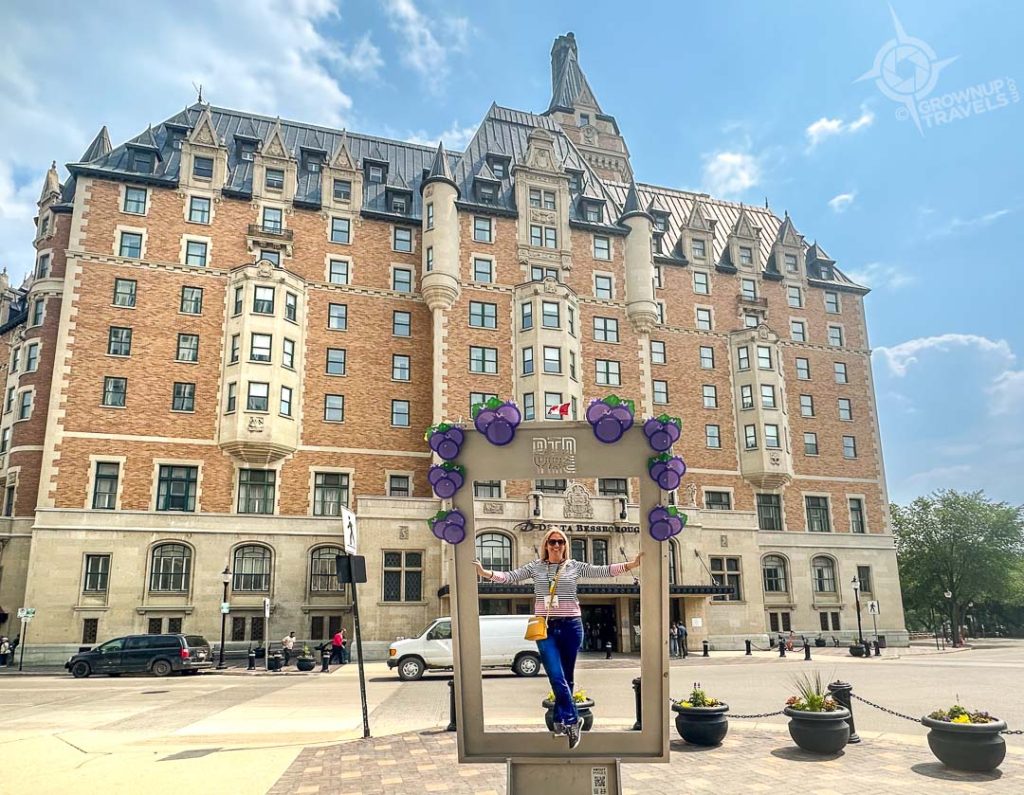
Jane framed by Saskatoon berries in front of the historic Bessborough Hotel
A Place for Art and Much More
Placemaking may not ‘make the place’ all on its own, but if it is done well, it can definitely make a city or destination more vibrant, creative and engaging for its residents and visitors. And while the public art in Saskatoon is just one aspect of what makes this prairie city unique, it definitely shows that art and heart go hand in hand here.
TIP: To discover more public art in Saskatoon, visit the Discover Saskatoon website for a map and descriptions of what you can find. You can also curate your own tour including art galleries and more.
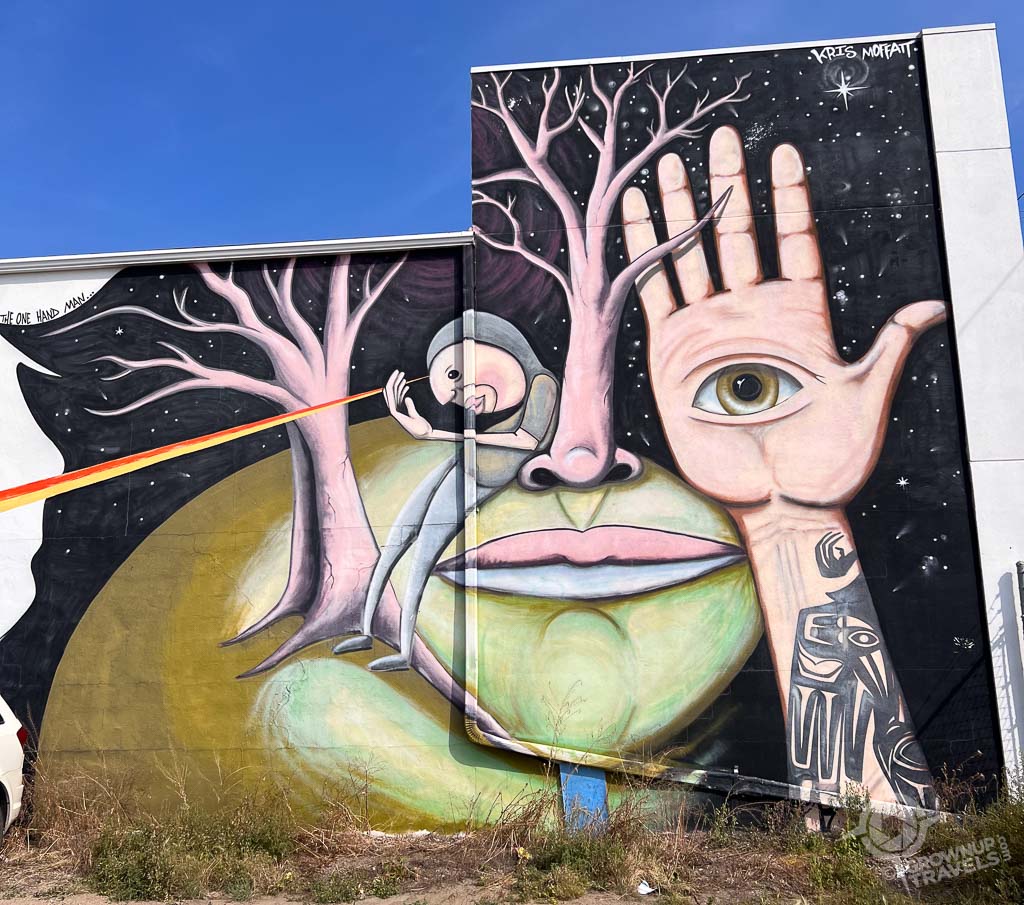
Kris Moffat’s One Hand Man mural in Riversdale
Special thanks to Pam Staples and the city of Saskatoon for organizing this mural walk and introducing me to “placemaking”.

Jane is an award-winning travel writer and photographer and an accredited member of the Travel Media Association of Canada (TMAC). In their annual awards competition, TMAC named GrownupTravels.com as the Best Self-Published Travel Blog in 2025 .
She is also a member of the North American Travel Journalists Association, and a freelance travel writer contributing to both print and online publications.




Subscribe and you'll never miss an update!
Join our mailing list to receive the latest news and updates from Grownup Travels. (We keep your email STRICTLY private)
Thank you for subscribing to Grownup Travels!