
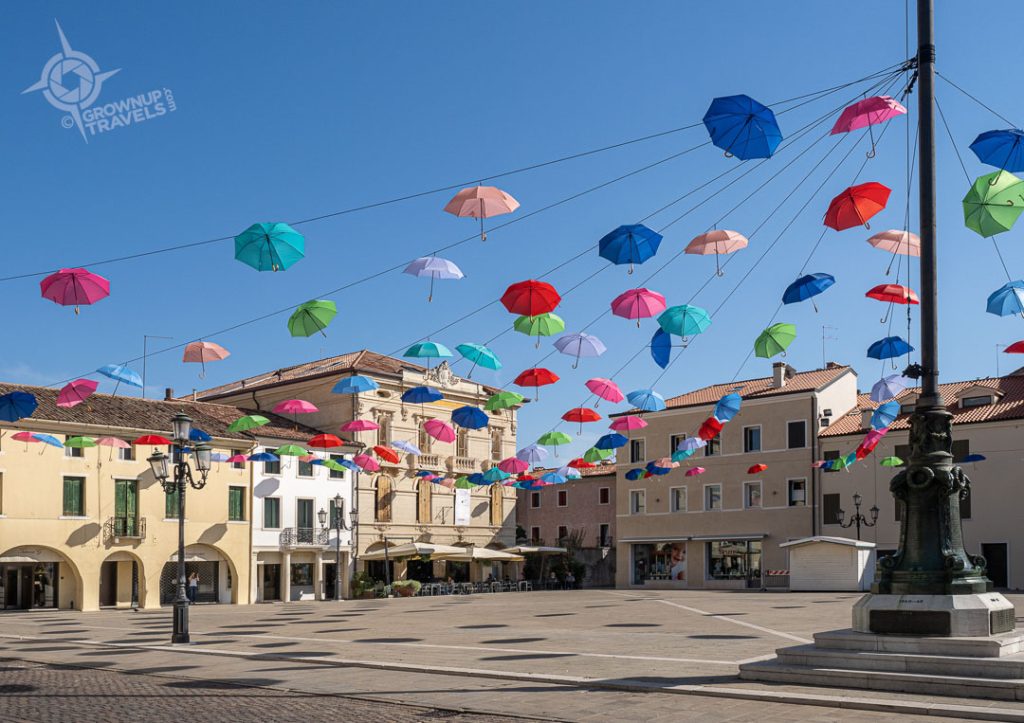
Most people who travel to the Veneto region in Italy go there for one reason: Venice. But there’s more to this northern region than just La Serenissima. This northeastern corner at the top of Italy’s ‘boot’ offers so many opportunities to explore Italy off the beaten path, especially if you are travelling by car. Here are two unique places to visit near Venice that are special in their own right: in Caorle, a charming seaside town on the Adriatic Sea, you will find one of the Veneto’s best beach destinations and one of the most colourful towns in Italy; while in Cittadella, history buffs can get a glimpse into the past not just by admiring the 800-year old stone walls surrounding this medieval town, but by walking on top of them!
Caorle, a Vibrant Beach Town with Historical Roots
There are many places around the world that claim to be colourful, usually referring to its people or its history. But Caorle, just an hour or so from Venice on the Adriatic sea, is literally one of the most colourful places that I’ve visited. Even the vibrantly-painted houses of Guatape in South America, which brags about being ‘the most colourful town in Colombia‘ would have serious competition in Caorle.
Located on the Adriatic Sea, Caorle may be popular with many Italians for its 17 kilometres of beaches, but there’s more to this seaside town than just stretches of golden sand; Caorle has a rich history as well, dating back to the time of the Romans. With its strategic position at the mouth of the Livenza river, Caorle was a major centre for fishing, trade and the military until the fall of the Roman Empire. During the middle ages, it was also an important religious seat, as evidenced by the Cathedral of Santo Stefano dating back to 1038. The Cathedral’s 48-metre-tall round bell tower in Piazza Vescovado is one of Caorle’s iconic landmarks and still stands tall at the heart of this community with its gothic architecture and pillared windows.
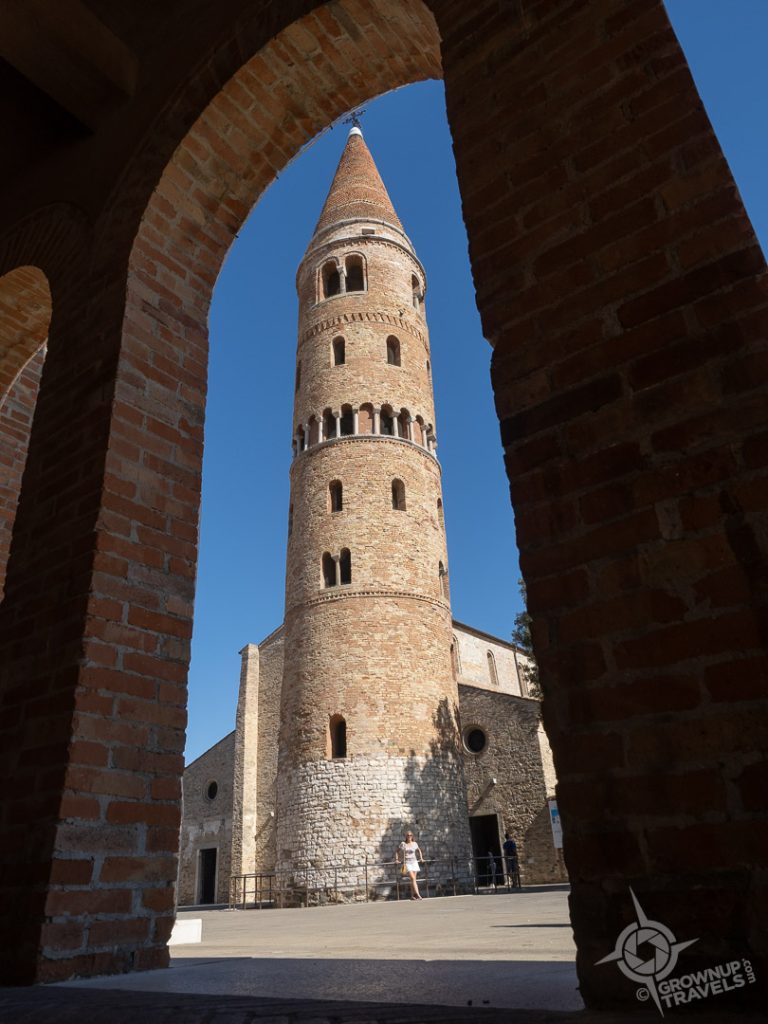
TIP: The Bell Tower is open to visitors and gives great sunset views out over the town and the ocean. Visits are by appointment only, so check the Caorle website to book.
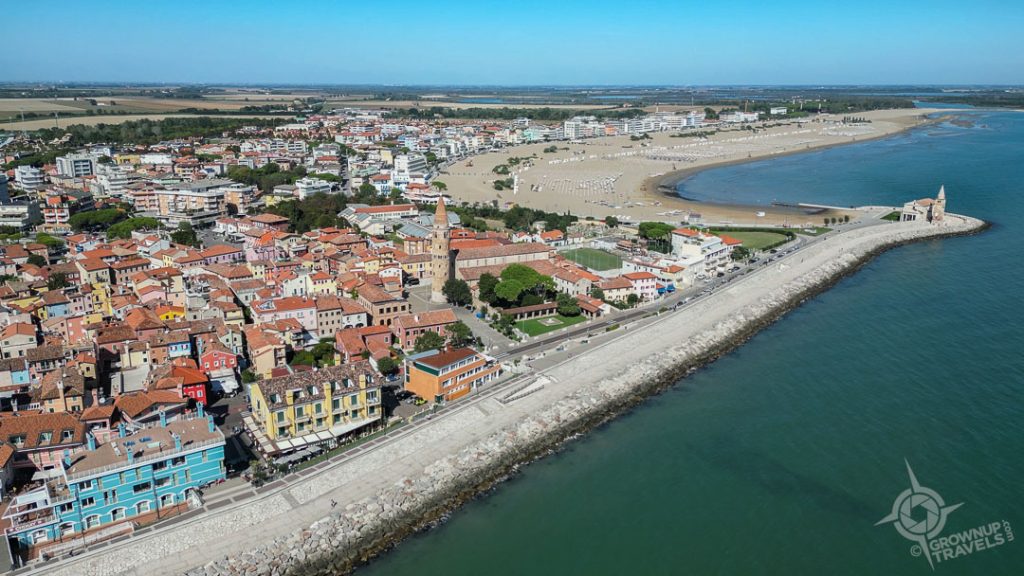
On an even older religious site than the Cathedral stands a small church on the tip of Caorle’s headland: the Sanctuary of the Madonna dell’Angelo. This church was built in 1751 but it sits on top of what was probably the oldest religious building in Caorle: a small wooden church that was dedicated to Saint Michael the Archangel. The location of the Sanctuary that stands there today not only makes this church one of Caorle’s distinctive landmarks, it has also become a pilgrimage site for many visitors.
Explore the Colourful Centro Storico of Caorle

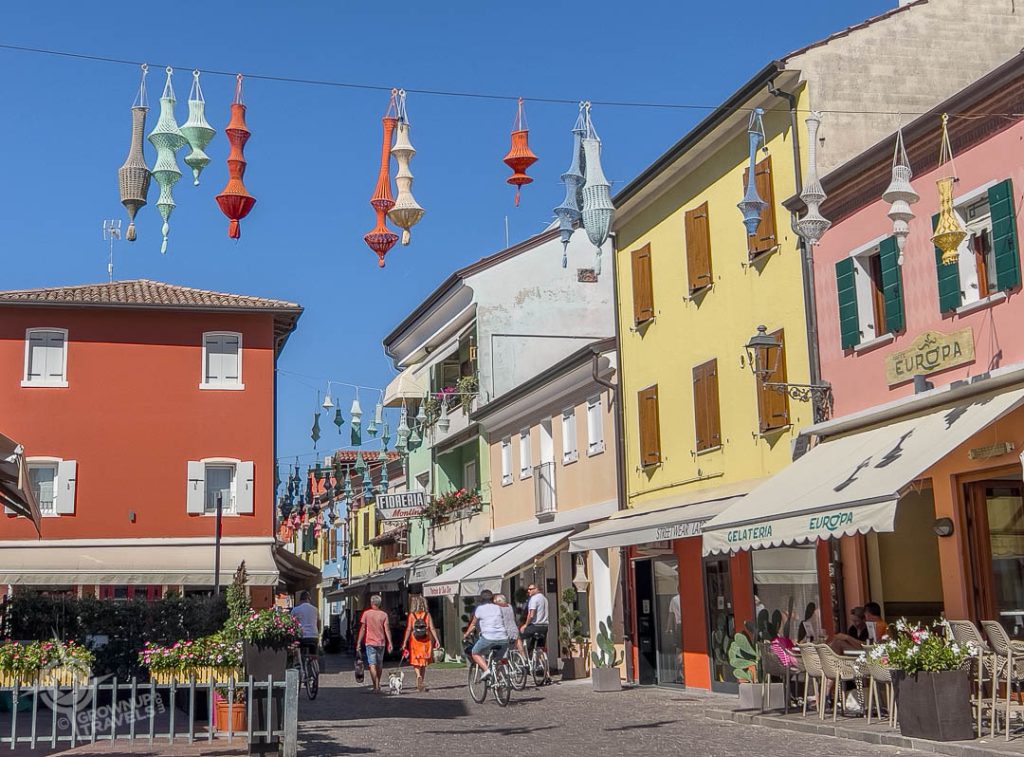
The main commercial district of Caorle is a pedestrian haven at the centre of which is Via Rio Terrà, which was originally a canal, not a street. Today the former canal-side houses have been refurbished into cafes, restaurants, gelaterie and unique boutiques that make this a vibrant, energetic gathering place for visitors and locals. Shop the stores, nosh on some cicchetti (Veneto’s version of tapas-style snacks) or just enjoy the sunshine with a cocktail on one of the many outdoor patios.
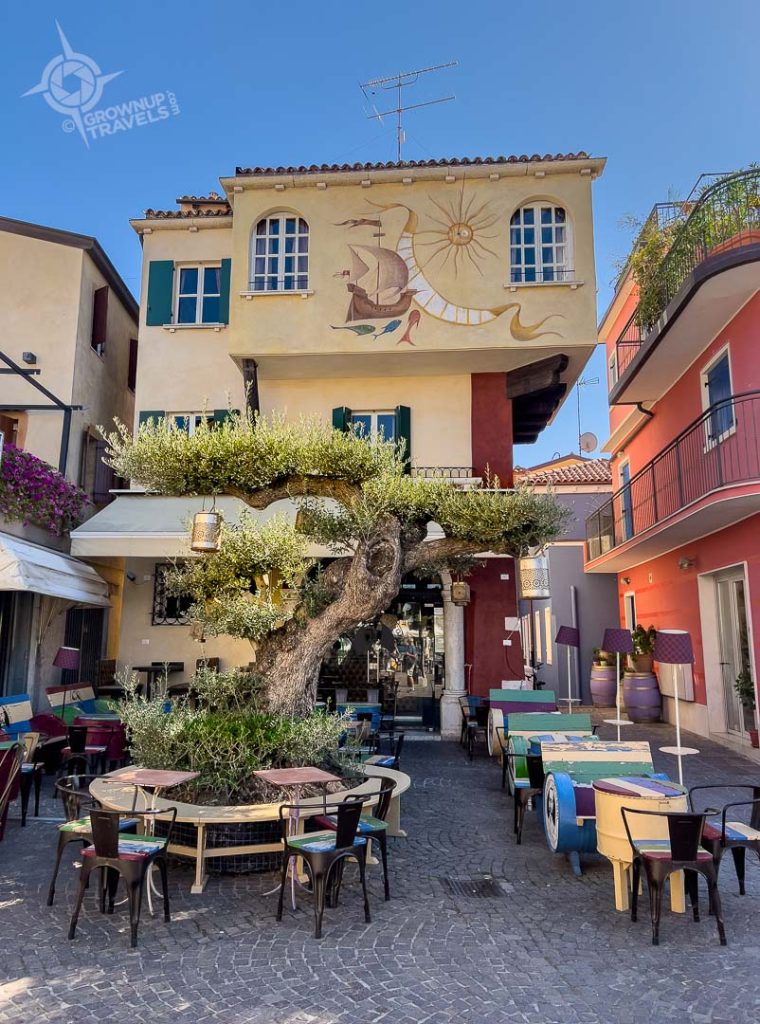
Caorle’s location, history and small town appeal helps sets this town apart from other seaside Italian towns, but it is the colours of the buildings here that wow visitors today.
Colour-Blocking, Block after Block after Block
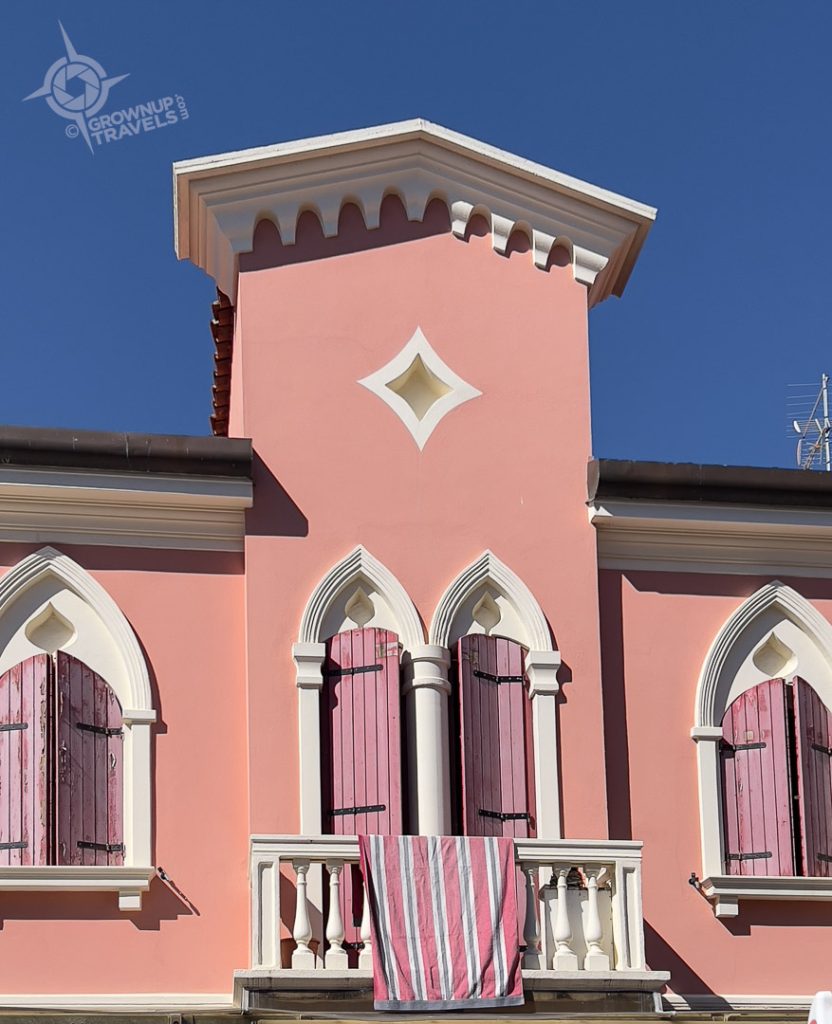
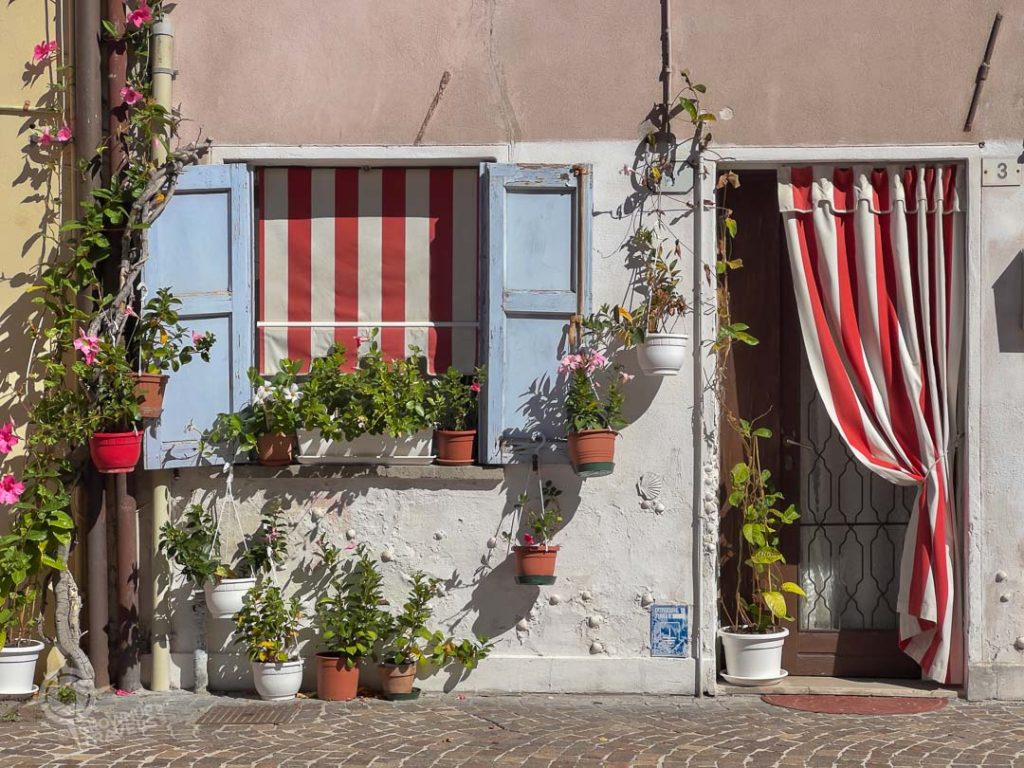
The people of Caorle love colour, judging by the vibrant palette that is used everywhere in town on the buildings, the storefronts, the shutters, the benches, the railings along the boardwalk and even the buildings’ downspouts. It’s almost like someone spilled a box of crayons, and the residents decided to use every colour and every combination of colours imaginable on their buildings. And it works – because if colour can spark joy, then Caorle offers colour therapy everywhere you look!
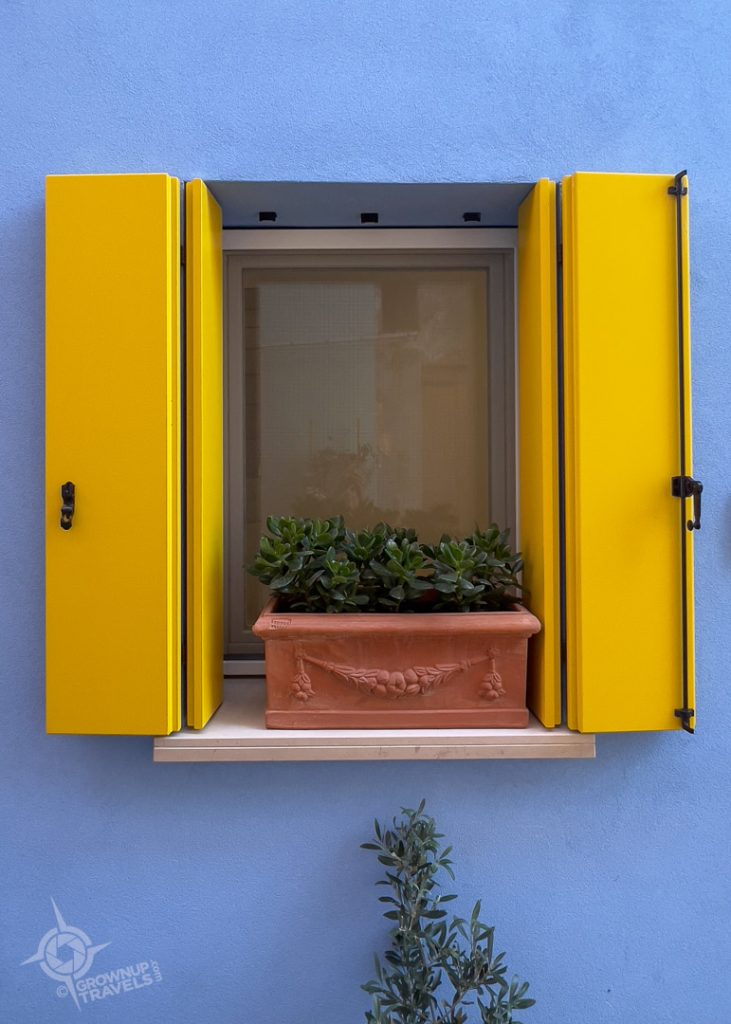

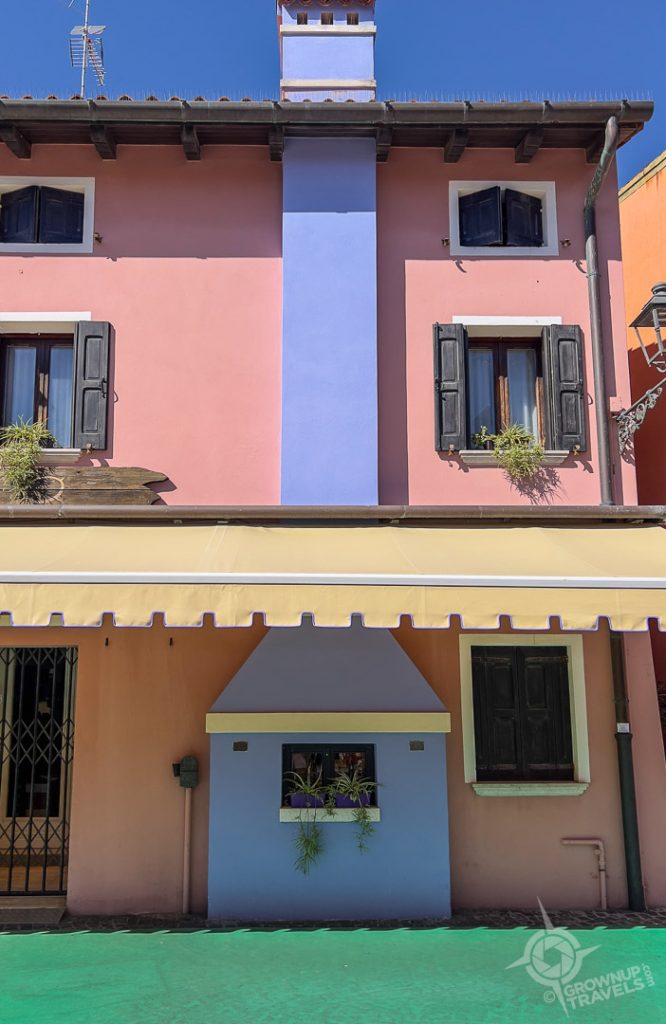
Walking the side streets is a must-do in Caorle, giving you the chance to discover nooks and crannies with interesting stores and piazzas. Plus there are plenty of photo opportunities thanks to the colourful walls, window boxes, and awnings on the buildings. The residents obviously take great pride in their choice of colours, each one seeming to outdo the other in their unique combinations and choices.
Caorle Boasts Some of the Veneto’s Best Beaches
Apart from its colourful exteriors, Caorle is of course known as a popular beach destination, thanks to miles and miles of wide sandy beaches that run along the shoreline here. Two of the largest beaches, the Ponente and Levante, stretch out on either side of the headland, and draw thousands of Italians here every year to soak up the sun and swim in the warm waters of the Adriatic.

Even in late September when Henk and I visited, the waters were still warm enough to attract swimmers, and judging by the numbers of beach umbrellas, it can get very busy here during the height of summer.
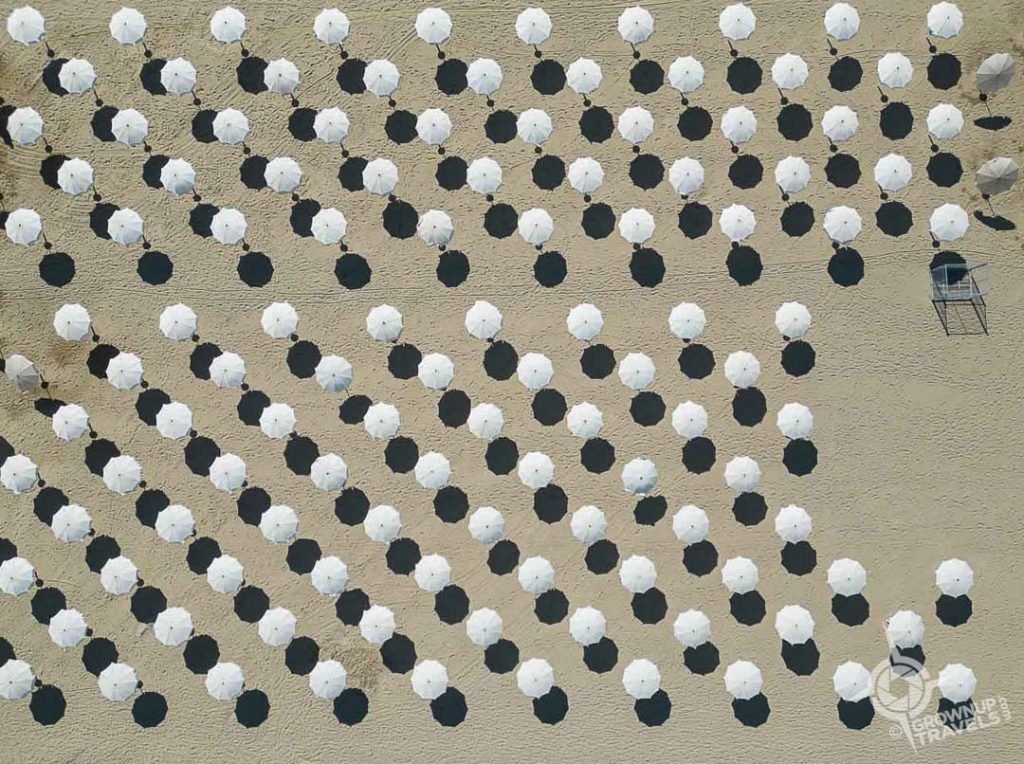
As a popular resort town, this also means that there is no shortage of hotel options in Caorle right on or close to the two main beaches, which is great news for visitors. The same goes for dining, with dozens of restaurants to choose from, whether you are looking for a beachside establishment or one in the centro storico. Many of these specialize in seafood, so you can take your pick based on dining preferences and budget. (or maybe choose the restaurant that is your favourite colour!)
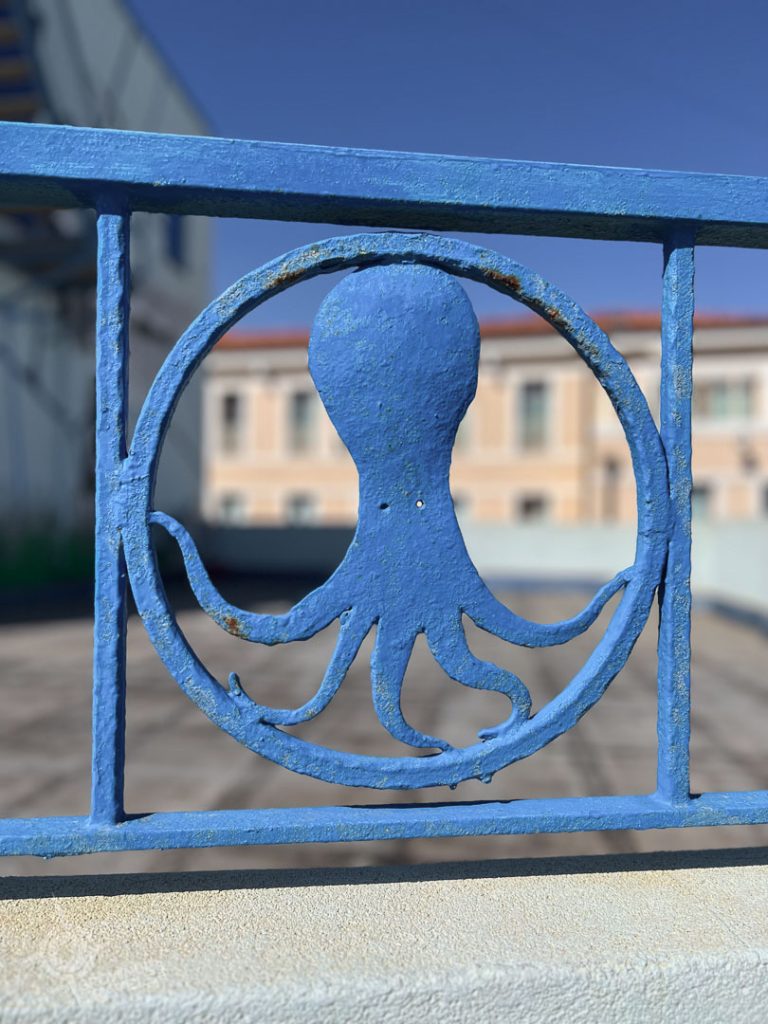
Whether it’s for a day trip or a longer stay, Caorle offers everything you would want in a beach destination, plus a walkable, historic downtown that is as vibrant as its colourful buildings.
Cittadella: Walk Around – and Above – this Medieval Town
If you are looking for places to visit near Venice that will appeal to history buffs, look no further than the town of Cittadella, a beautifully preserved example of what a Medieval Italian city might have looked like more than 800 years ago. The city’s claim to fame is that it is the only walled city in all of Europe with an intact, ‘walkable’ Medieval parapet. (Which is a heckuva claim, given the number of walled cities on the Continent. )
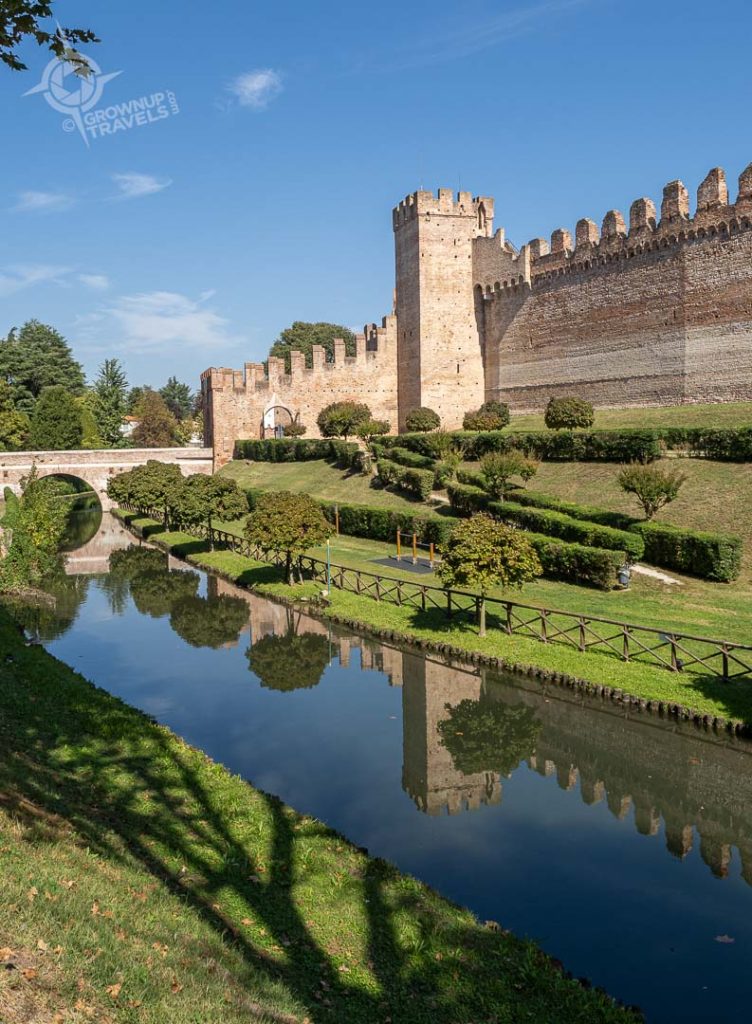
But this is no lame boast. Cittadella was founded in the 13th century as a military outpost of Padua, and the wall was built to protect it during a period when cities and regions were at war with one another in this part of Italy. And that wall still stands today.

About Cittadella’s Walls
It took some time to build Cittadella’s fortified wall, and it was done in stages with the construction of 32 towers, massive walls with battlements connecting them, a protective moat and 4 drawbridges next to the entrance gates. The walls themselves are 2 metres thick, 13 metres high and the total length encompassing the centro storico is around 1450 metres long (or about 1 mile around).
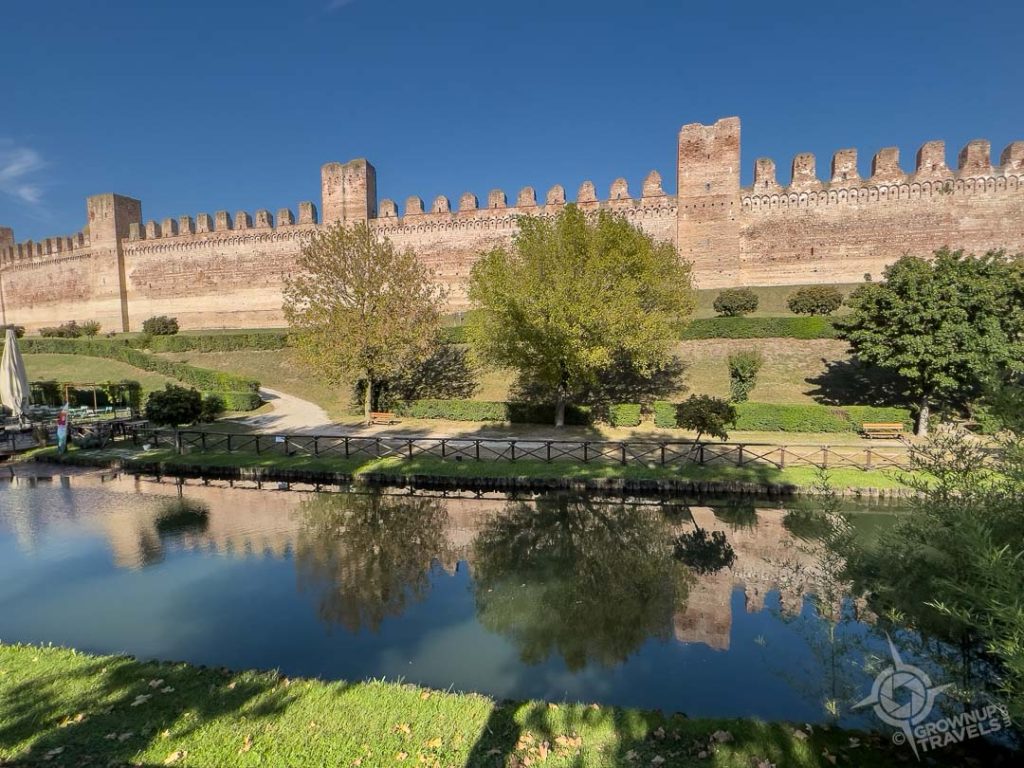
The walls are almost 100% intact except for a small stretch where you will need to use a footbridge-style platform to cross the broken section, but restoration continues and this too will be completed in the coming years. The moat surrounding the walls is still here today, too, although it is half as deep as it once was, and today serves more as a pretty green space and fish pond than as a defense feature.
Porta Bassano Gate
The best place to start any visit to Cittadella is through the northern Porta Bassano gate, where visitors will also find Cittadella’s tourism office in what was the former ‘Captain’s House’ just past the entrance on the left side.
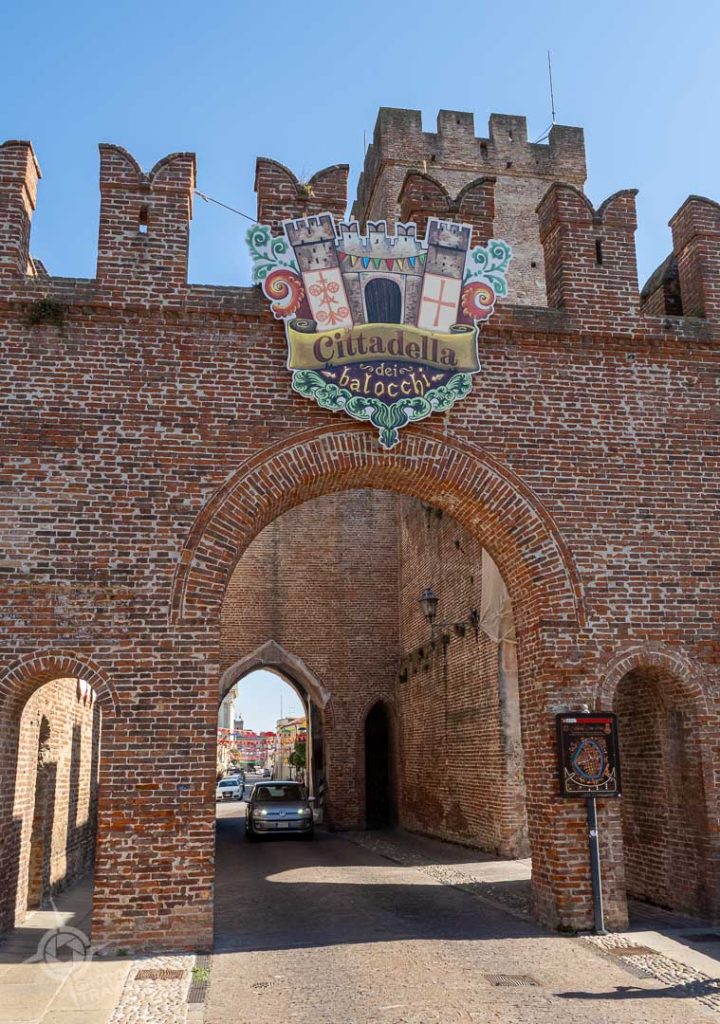
There are still remnants here of the medieval structure on the ground floor including the best preserved frescoes in the building, but the rest of the building has been reconstructed and functions as a museum. There is a small-scale model of the town on display, and one room is set up to look like a Renaissance dining room with coats of arms, weapons and period costumes. These replicas are used as part of a medieval festival and re-enactment that takes place here in September, organized by the ‘Weapons, Ladies and Knights’ Association.
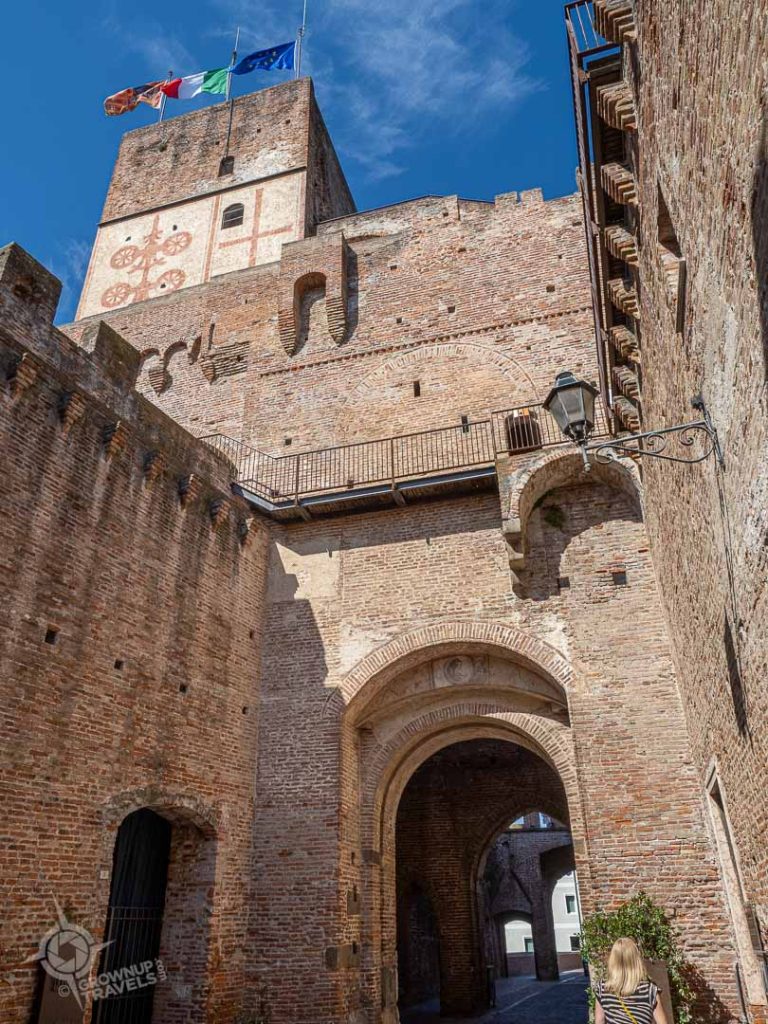
Your Ticket to ‘Walk Through History’
The tourist office is also where you need to purchase your ticket if you want to walk the walls (and this is of course a must-do in Cittadella!) Access to the walls is from the upper floor of the tourism office, where you will follow the directional signs and start your walk.
TIP: Single tickets to walk the walls cost 5 Euros, or you can purchase a 5-attraction “Citadel Card’ for 10 Euros which is a combo ticket that gives you access to the walls plus 4 other museums and monuments in the city.
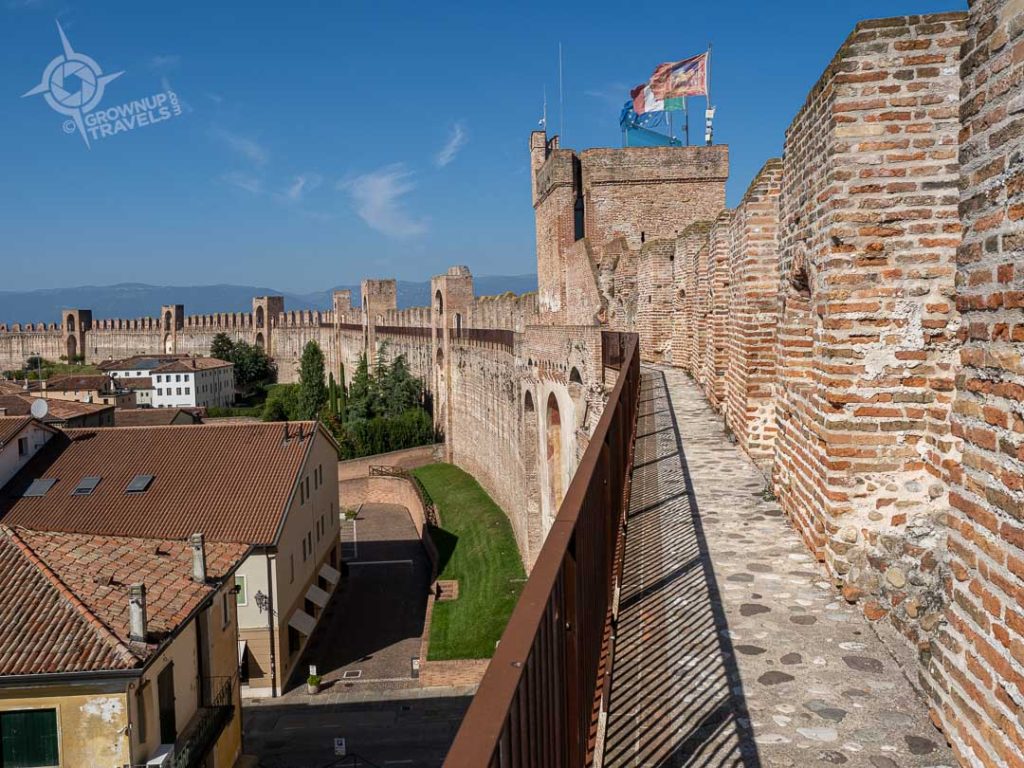
Walking atop these parapets gives you a sense of what it must have been like to patrol this defensive structure as a soldier, with the elevated position giving you far-reaching views both inside and outside of the town.
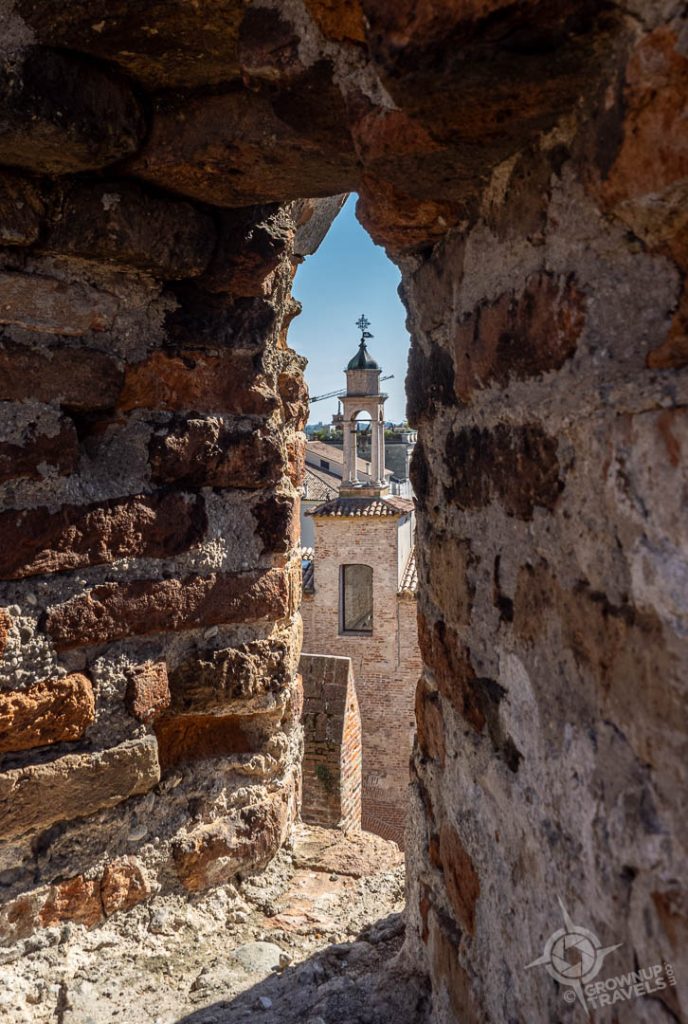
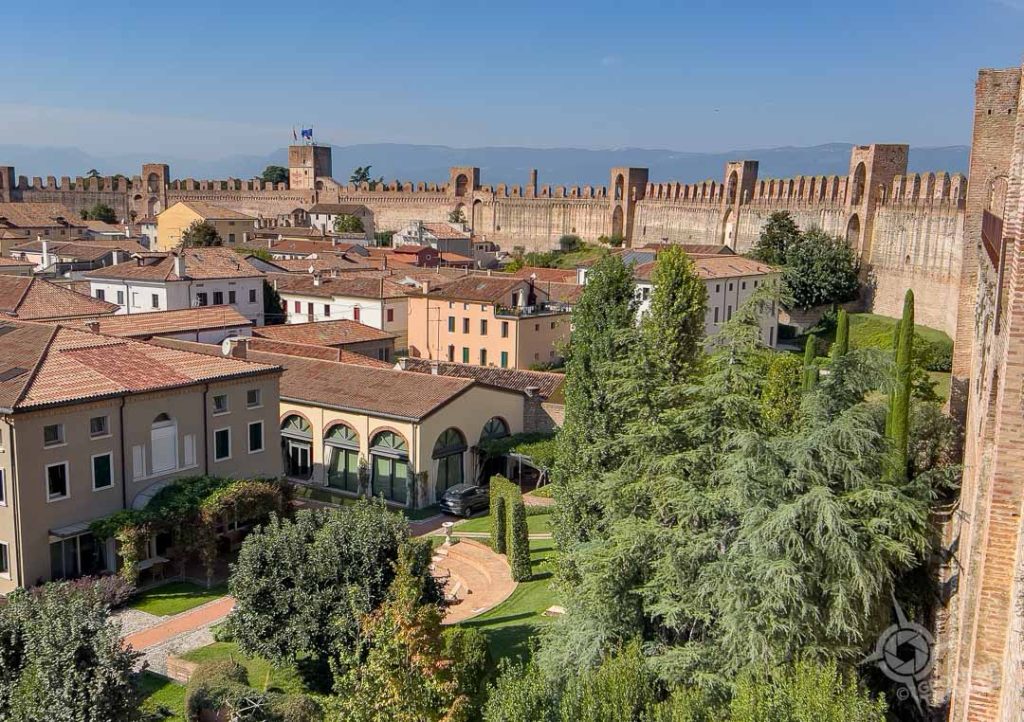
There are some beautiful buildings on both sides of the walls, and the almost aerial view gives you the opportunity to see into the green space and gardens around them.

Standing tall in the centre of town is the Duomo of Cittadella, looking more like an ancient Greek temple than a Christian cathedral built in the 18th and 19th centuries. But it makes a striking focal point as you walk the circumference of the walls, giving you a point of reference as you complete your tour. On a clear day you can even see the Dolomites in the background.

Cittadella at Ground Level
It’s worth exploring Cittadella at ground level as well, especially the main Piazza Luigi Pierobon where you’ll find the Duomo di Cittadella.
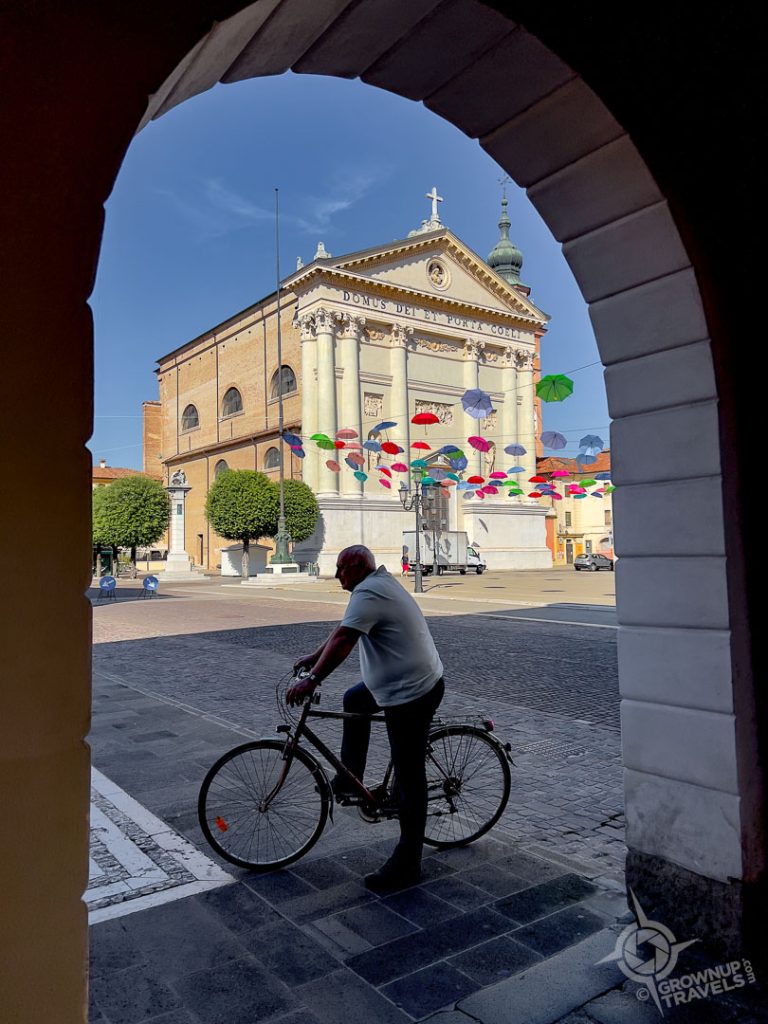
The Cathedral sits on the site of an old monastery that was dedicated to the hermit Saint Prosdocimus who became the first Bishop of Padua. Interestingly, he was also the saint people turned to when they suffered from what was called the ‘fire of Saint Anthony’ in the Middle Ages. (a painful shingles-like condition caused by eating grains contaminated by a fungus that could lead to gangrene – Yikes!)

We happened to visit Cittadella on a market day and there were stalls selling food and crafts set up in the square. Speaking of which, when you get hungry after walking all around town (literally!), check out one of the restaurants where you can sample a Cittadella staple– polenta. This corn-meal-based starchy side dish is served in any number of ways with any number of meats and savoury sauces (there’s even a specialty sweet cake version that is only made here).
Veneto is More Than Venice
The crown jewel of the Veneto region of Italy is without a doubt Venezia itself, but there is more to explore in this area than just that storied (and often horribly overcrowded) canal city. Cittadella and Caorle are just two places to visit near Venice that showcase some of the history, architecture, cuisine and beautiful seaside locations that characterize this northeastern corner of Italy. The added bonus? Even during high season, when you visit these small towns you can actually see what you came here to see, without having to wait in long lineups.
How civilized is that.


Jane is an award-winning travel writer and photographer and an accredited member of the Travel Media Association of Canada (TMAC). In their annual awards competition, TMAC named GrownupTravels.com as the Best Self-Published Travel Blog in 2025 .
She is also a member of the North American Travel Journalists Association, and a freelance travel writer contributing to both print and online publications.




Another interesting, colourful and unique glimpse of Italy. Thank you again for taking me on this journey of discovery of beautiful places.