

The Village of Castle Combe in the Cotwolds UK
Let’s just start off by saying that anything deemed to be ‘the most beautiful’ is clearly subjective, as we all know beauty is in the eye of the beholder. But if you are visiting the Cotswolds in England for the first time, you will definitely want to explore some of the characteristic communities that are part of what is designated as a ‘National Landscape’, (formerly described as an “Area of Outstanding Natural Beauty”) by the government itself. Having done a fair bit of research before visiting this area, Henk and I visited places that we agreed were three of the most beautiful villages in the Cotswolds, plus a couple of Honourable Mentions, and one specific village that is best avoided (at least in high season).
Where are the Cotswolds and What Makes Them Special?
The Cotswolds comprises an area of about 800 square miles located 2 1/2 hours northeast of London, and is known for its broad meadows flanking the upper Thames which gradually give way to a dramatic escarpment that rises above the Severn valley. It is this escarpment and what lies under the rolling landscape that makes this area so unique, all thanks to Jurassic limestone. Not only does that limestone form part of a rare grassland habitat for the flora and fauna here, it has been used to build stone walls, historic houses, churches and village structures all across the region, giving some of these ‘most beautiful villages in Cotswolds’ their distinctive look. With shades ranging from cool greys to warm, honey-yellow and ochre and occasionally topped with thatched roofs, the stone buildings in these 3 small towns are the very picture of oldie-worldy rural England. Or as a friend has described them, scenes that are “worthy of a jigsaw puzzle”.
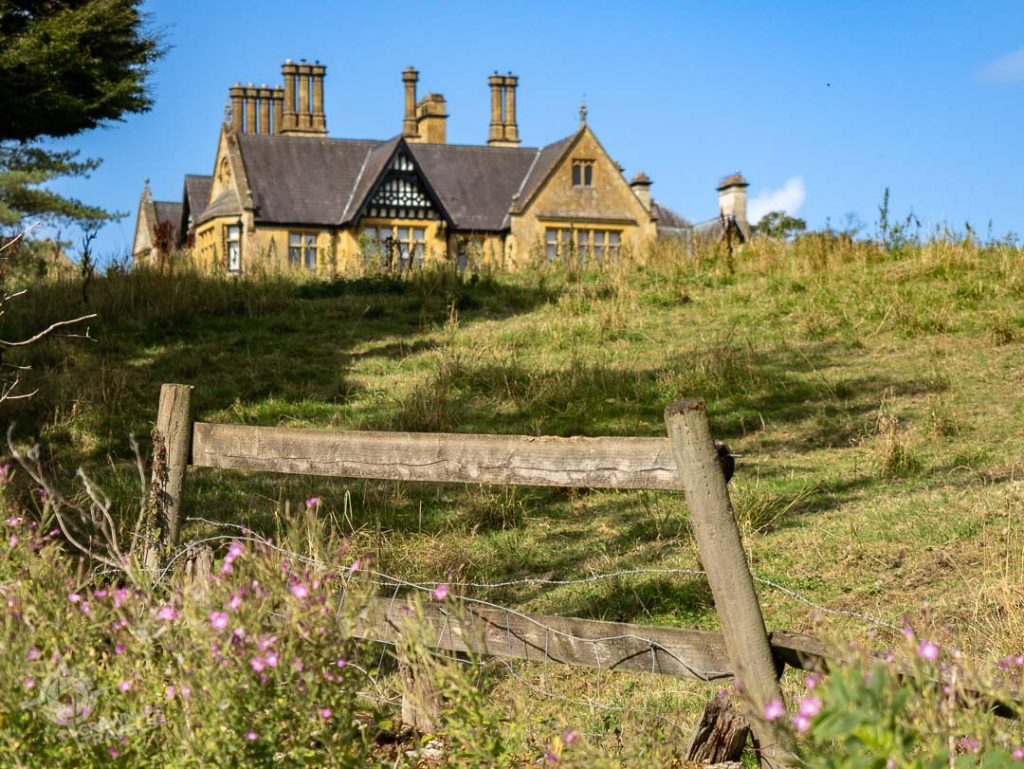
Country views near Stow on the Wold, UK
Castle Combe
Castle Combe has often been described not just as one of the most beautiful villages in the Cotswolds, but as the ‘prettiest village in England‘. That’s a huge claim to fame, so Henk and I were a bit skeptical, but we have to say that we were suitably impressed, even as we descended the tree-lined road into the town, which is set in a valley with the By Brook river running through it. Steeply gabled houses made of ivy-covered ochre-coloured stone lined the streets, leading to a central square dominated by a covered monument known as the Market Cross, where the remains of the original village well and marketplace once stood.
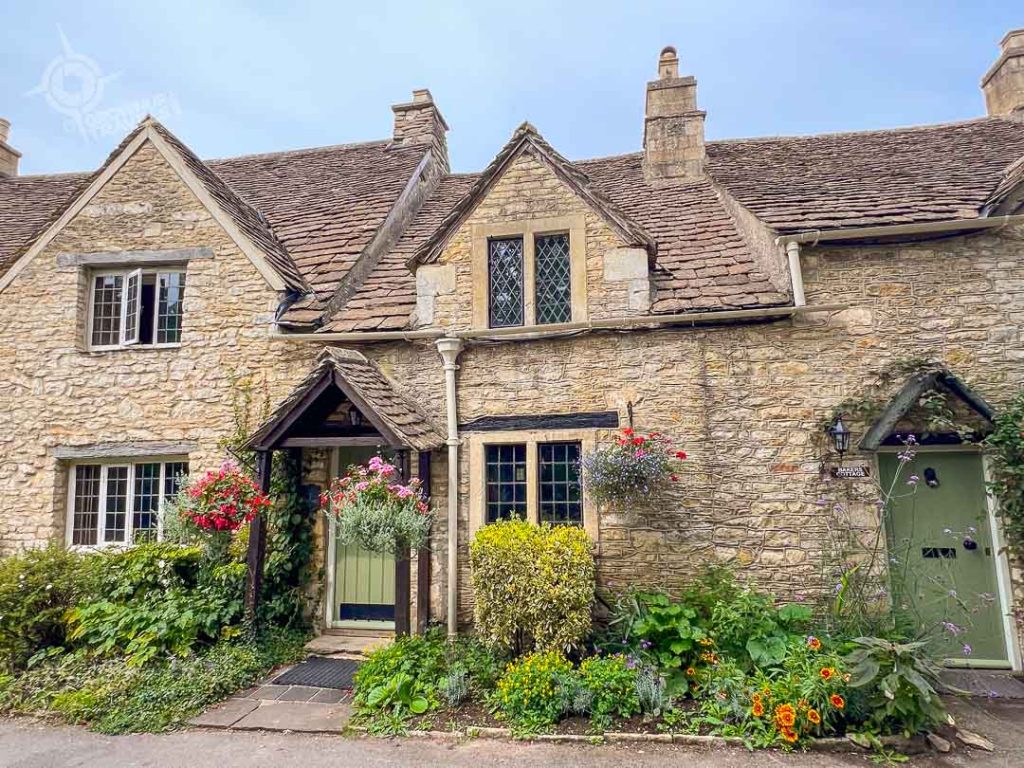
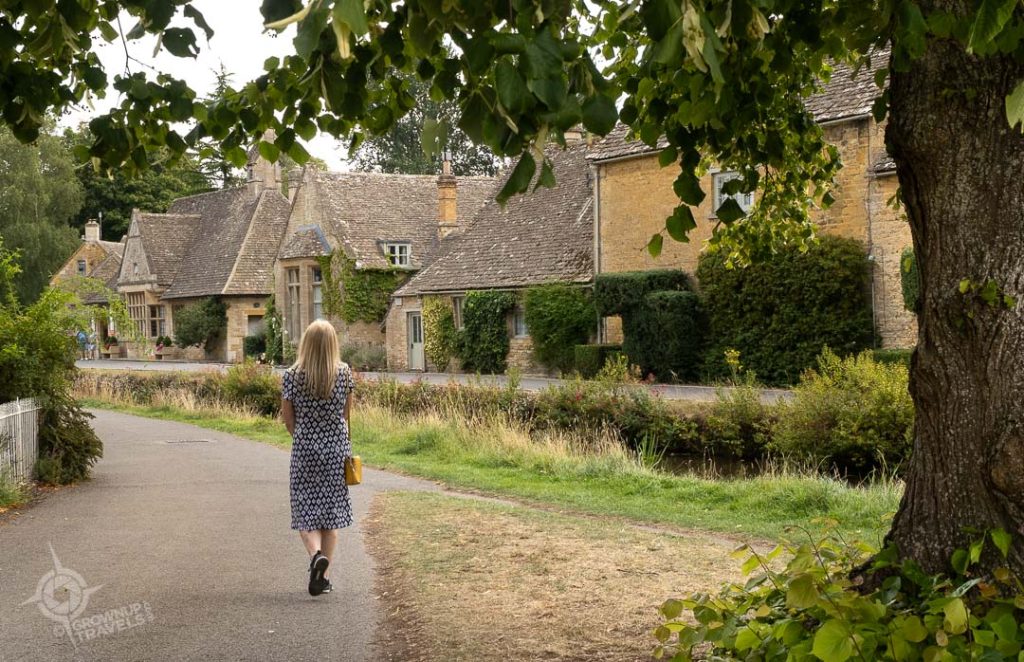
Cottages in Castle Combe are made with ‘Cotswold stone’
Continuing on foot along the main road we arrived at the iconic location that has figured in so many photos of Castle Combe: a stone bridge that spans the By Brook, with a row of former weavers’ cottages on one side of the river. It is an incredibly picturesque location, so much so that the local residents have had to install a barricade to keep people from flooding their enclave to pose for photos in front of those cottages. Henk and I had to admit that it was a pretty beautiful scene, but not the only place in town for a photogenic vignette, so it was easy to see why Castle Combe had earned its reputation for characteristic Cotswolds beauty.
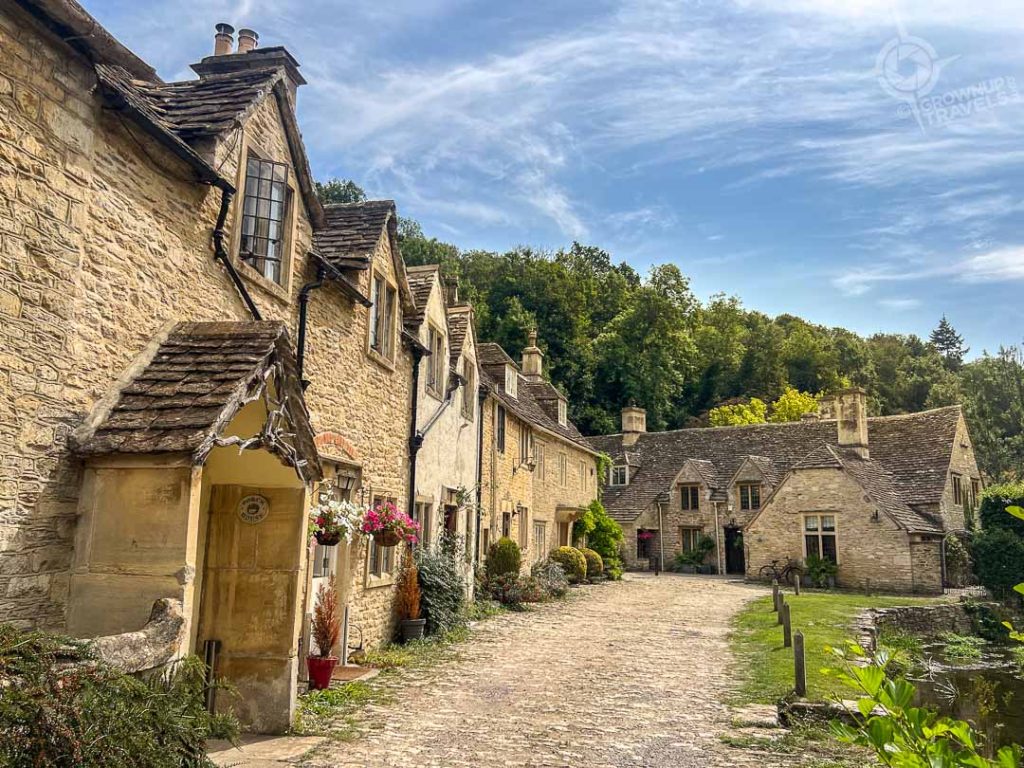
Weavers’ cottages beside the By Brook in Castle Combe
FUN FACT: When the original Dr. Doolittle film with Rex Harrison was shot here in the 1960s, the production crew temporarily dammed the river to create the illusion of a sea harbour. This didn’t go over so well with the locals, one of whom was intercepted while carrying dynamite that he planned to use to rid the residents of that temporary dam once and for all. Fortunately, Castle Combe’s current residents aren’t nearly so aggressive, but please respect that barricade and admire the cottages from afar.
TIP: It is best to park your car at the top of the road leading into the village, as there are few spaces available in the village. The parking lot is well marked and costs next to nothing (there’s an automatic pay kiosk with easy instructions for visitors to pay with a credit card) and the walk down to the village is under a tree canopy, making for a lovely introduction to the village.
Bibury
The 19th century artist and designer William Morris may have named Bibury as the most beautiful village in England, but in 2025 Forbes magazine raised the stakes and actually crowned this small town of 600 as the most beautiful village in the world. And although marketers may argue that there’s no such thing as bad publicity, even good publicity like this can become a bad thing, especially when it comes to a tiny village that is already super popular with tourists. But despite busloads of day trippers from London who arrive here to fill the small cafes and line up to pose in front of the charming houses, it’s still possible to appreciate the beauty of Bibury.
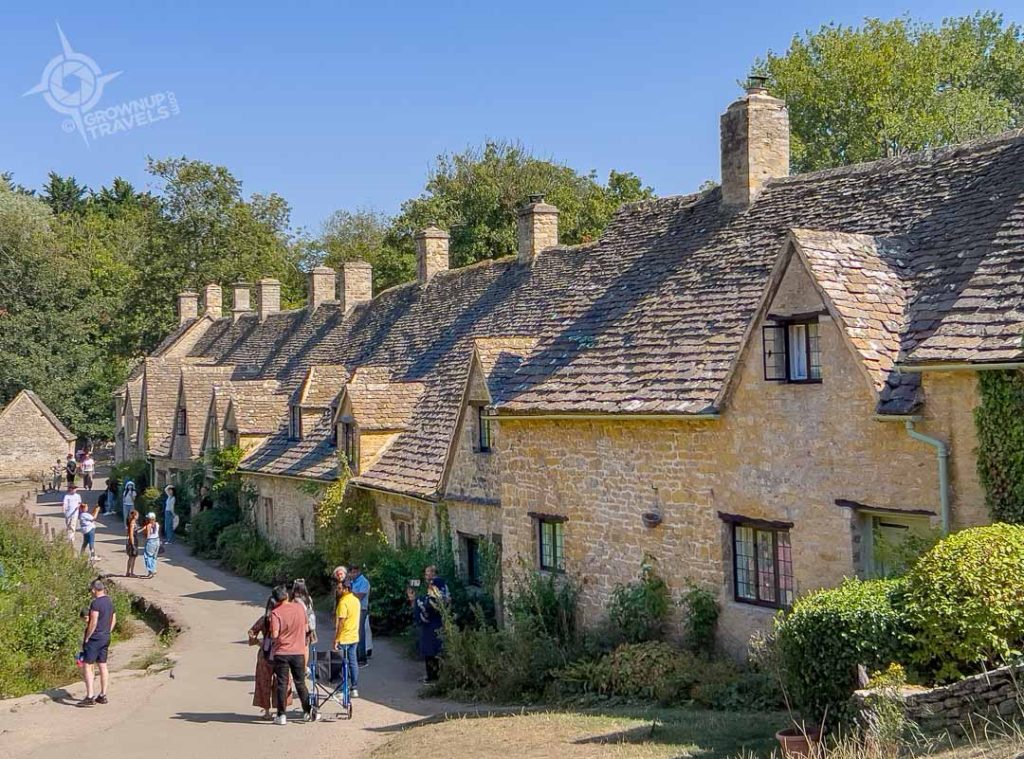
Arlington Row in Bibury UK
There’s something undeniably quaint about Arlington Row and the small doors on these limestone cottages, barely tall enough to admit even those of average height, so it’s no wonder visitors like to stand in front of them for their photos. But if you follow the paths that line the river, explore the upper village, or just sit on the stone wall that lines the roadway beside the river, you can still appreciate what makes this village so admired by so many.
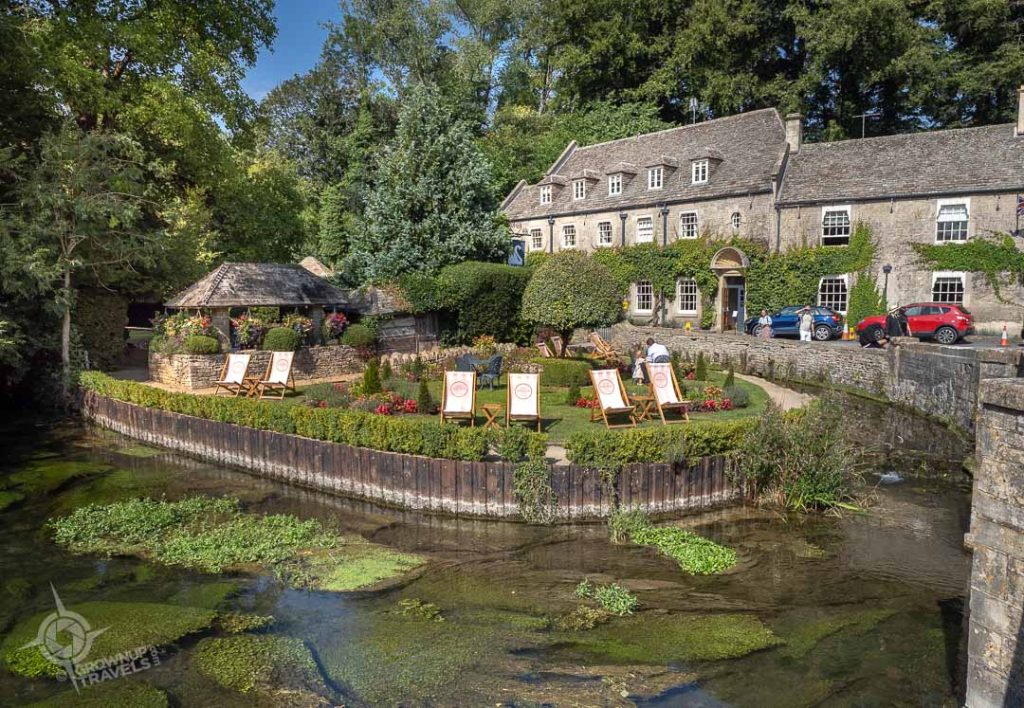
View of Bibury from the bridge
TIP: If you can, avoid visiting Bibury on the weekends (and during the high season of the summer months especially), and you’ll enjoy a much more peaceful visit. But if you do come during the busiest times, we did discover a very ‘grownup’ oasis in the newly opened Eleven cafe and terrace. Enter the cafe through its front door on the main street, and you’ll find their cafe serving decadent sweets, fresh local salads, breakfast and lunch items and seasonal hot entrees. But go up the stairs at the back and the real surprise awaits: a secluded terraced garden where you can enjoy any of the cafe’s delicious offerings while relaxing far from the crowds. Maybe even treat yourself to a shared charcuterie plate and a glass of bubbly on a hot summer day – very, very civilized!
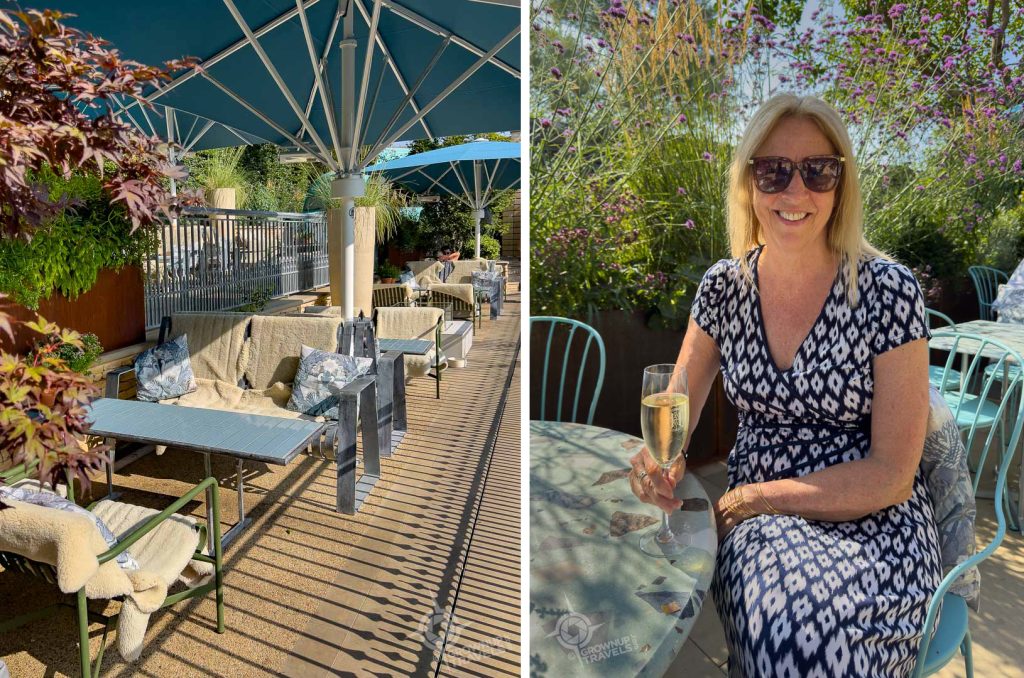
Bubbly in Bibury, anyone?
Lower Slaughter
When I first heard of the villages of Lower and Upper Slaughter, the name ‘Slaughter’ had me a little taken aback. Linked by the river Eye, these two villages got their “slaughter’ names from Old English, meaning ‘muddy place’, which probably refers to the shallow nature of the river itself. Either way, when we arrived in Lower Slaughter, I was smitten. Yellow limestone townhomes with pretty front gardens line the narrow roadways on either side of the river, a shallow canal-like waterway that winds through the town, and is punctuated by stone bridges at several points. There’s a mill at one end where horses are welcome to enter the river to drink, a 13th century church in the centre of town, and beautiful properties everywhere you look, from stone manors to private residences.
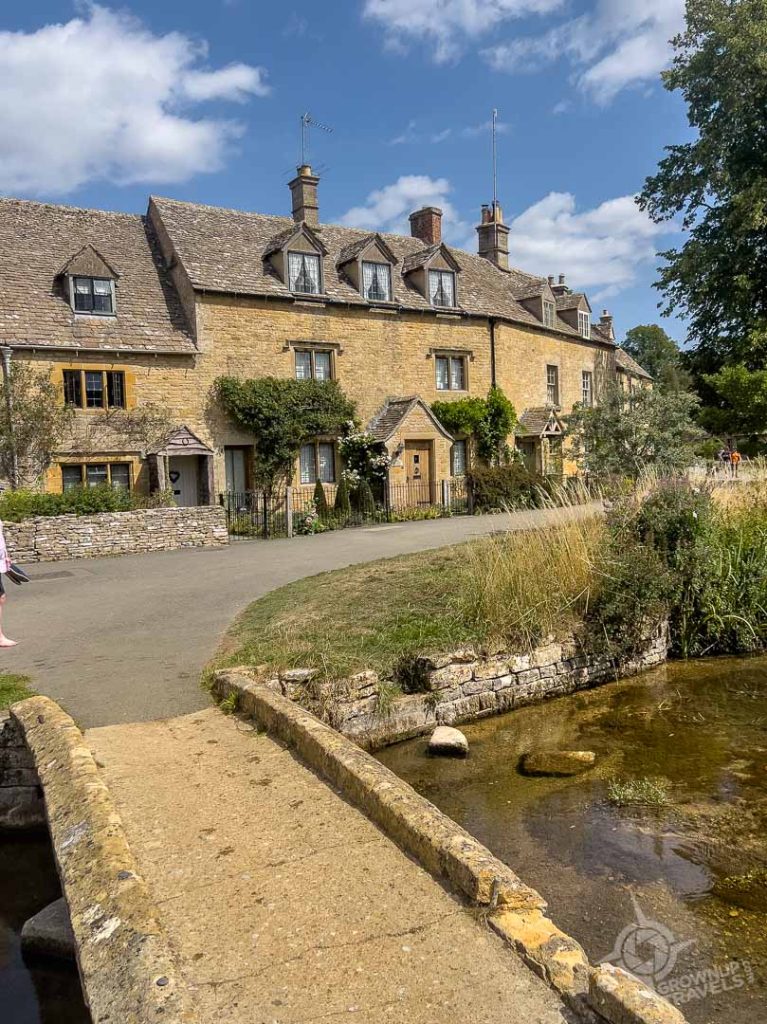
Lower Slaughter with the Eye River under a stone bridge
Connected to many of the other Cotswold villages by walking trails that run through and alongside it, Lower Slaughter is a popular village to explore for both locals and visitors alike. We met a Scot named Ian, who lives in the area and walks through the Slaughters regularly as part of his daily exercise. Ian directed us to the path that leads to Upper Slaughter, (the smaller of the two villages), through fenced farm fields where sheep and cows were grazing between the gates. En route we caught sight of the beautiful 17th century Lord of the Manor Hotel, which offers luxurious guest rooms and even afternoon tea for both its guests and walk-in visitors like ourselves. (Sadly on the day we visited, the hotel was fully booked for a conference, so we could only admire the gardens and the exterior of the hotel before returning to Lower Slaughter.)
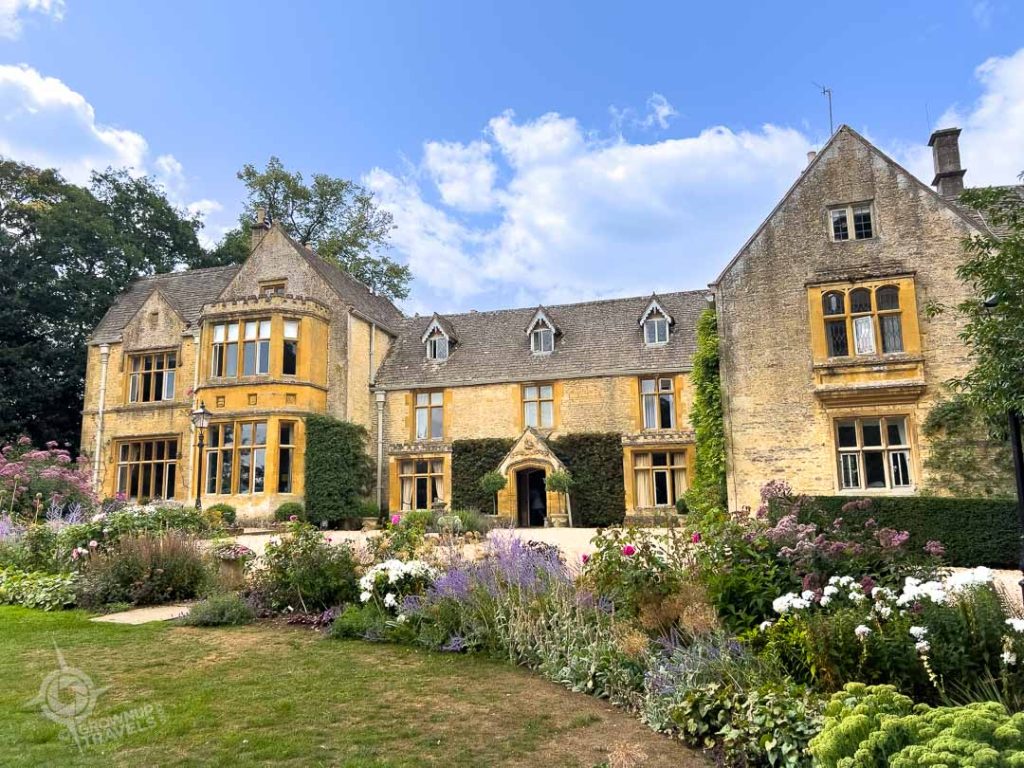
Upper Slaughter Lord of the Manor Inn
We had Ian to thank for experiencing a little of this trail network that runs throughout the Cotswolds and we could see why hiking between these villages is such a popular pastime, but I have to give Lower Slaughter top marks compared to its sister village. This lower village was picturesque and friendly, the river Eye was a beautiful defining feature, and there were some pretty impressive historic buildings here as well, like the 4-star 17th century Slaughters Manor House hotel, and the 13th century St. Mary’s Church.
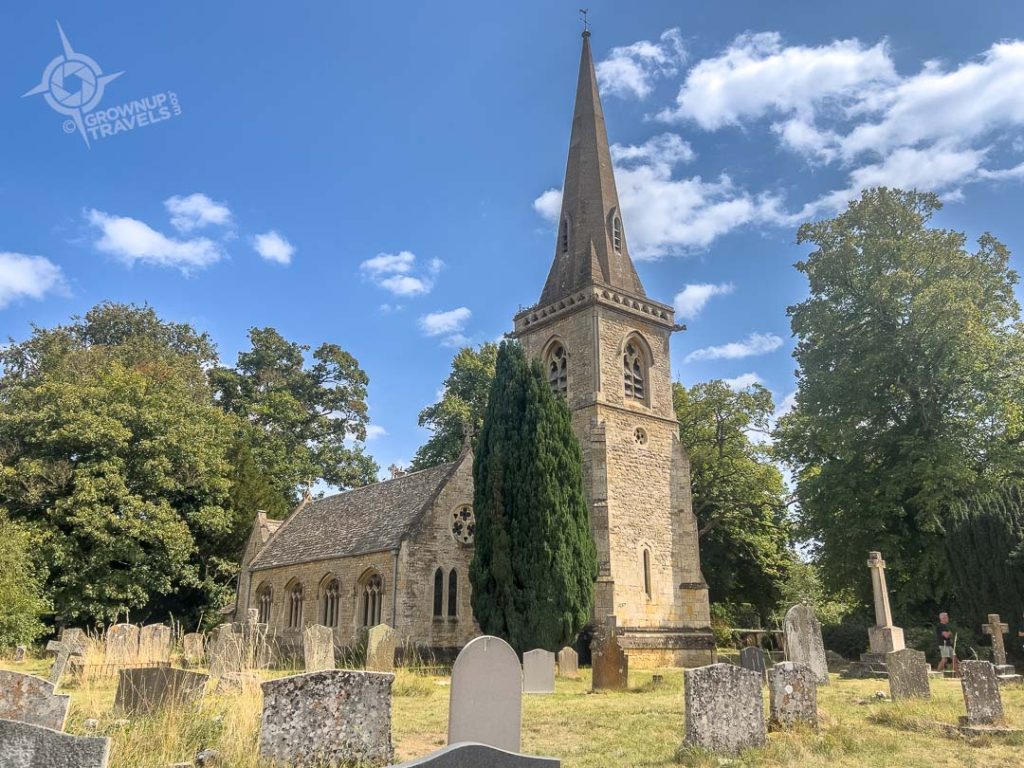
Lower Slaughter’s St. Mary’s church
It probably didn’t hurt that there was a lovely pub opposite the church (in the the Manor’s more casual sister property, The Slaughters Country Inn), which had an expansive outdoor patio and lawn where Henk and I could enjoy an adult beverage under the trees while enjoying the beautiful weather.
Too Busy to Visit: Bourton-on-the-Water
If you follow the series Clarkson’s Farm by Amazon Prime following the exploits of ‘farm-preneur’ celebrity Jeremy Clarkson, you already know that his own farm is smack dab in the middle of the Cotswolds, so he certainly knows the region well. So when even Clarkson suggests that Bourton-on-the-Water is just too busy to visit, you take heed. Because Henk and I were touring the Cotswolds on a summer weekend (definitely not the ideal time for this sort of thing), and we had already seen how busy places like Bibury could get, we chose not to visit this village, even though many call this the ‘Venice of the Cotswolds’ and rank it high on the list of prettiest villages in the Cotswolds.
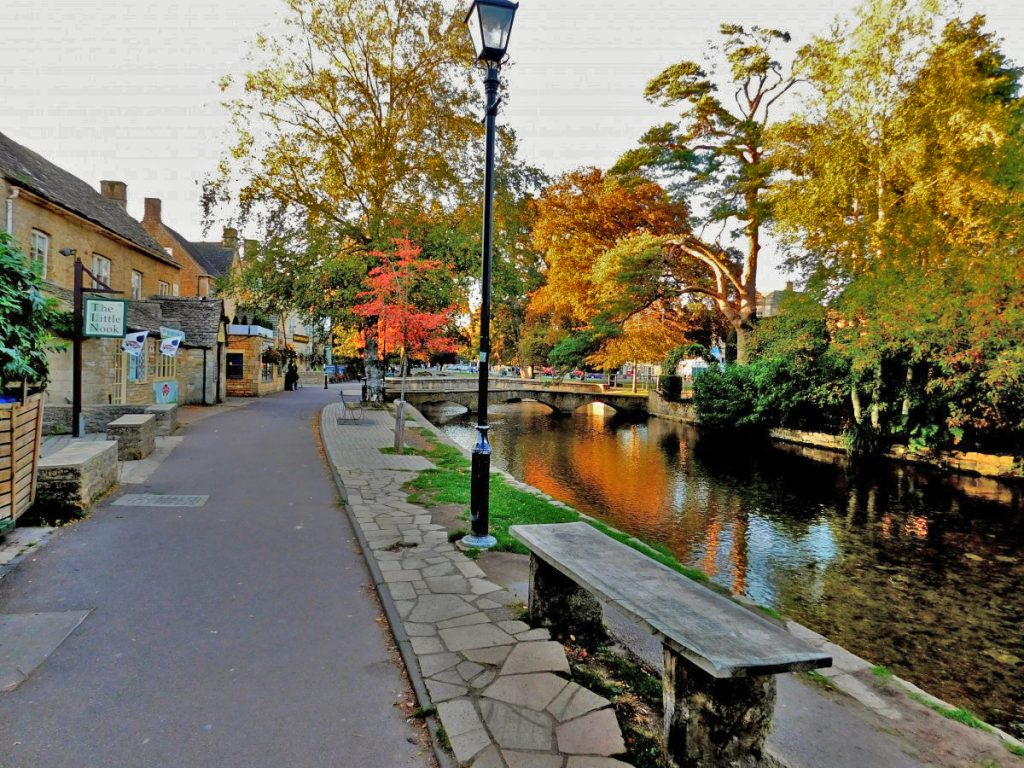
Bourton-on-the-Water
That being said, if we had been visiting in the off-season, or on a weekday, we definitely would have checked out this village of 4,000, because it would have been nice to compare our previous villages to one that is a fair bit larger. Next time, Bourton-on-the-Water it shall be!
Honourable Mention #1: Lacock
While Lower Slaughter, Bibury and Castle Combe may have topped our list of the most beautiful villages in the Cotswolds, there are a couple of honourable mentions to include here as well, starting with the medieval town of Lacock (pronounced Lay-cock), which technically is NOT part of the Cotswolds, but just outside it in the county of Wiltshire.
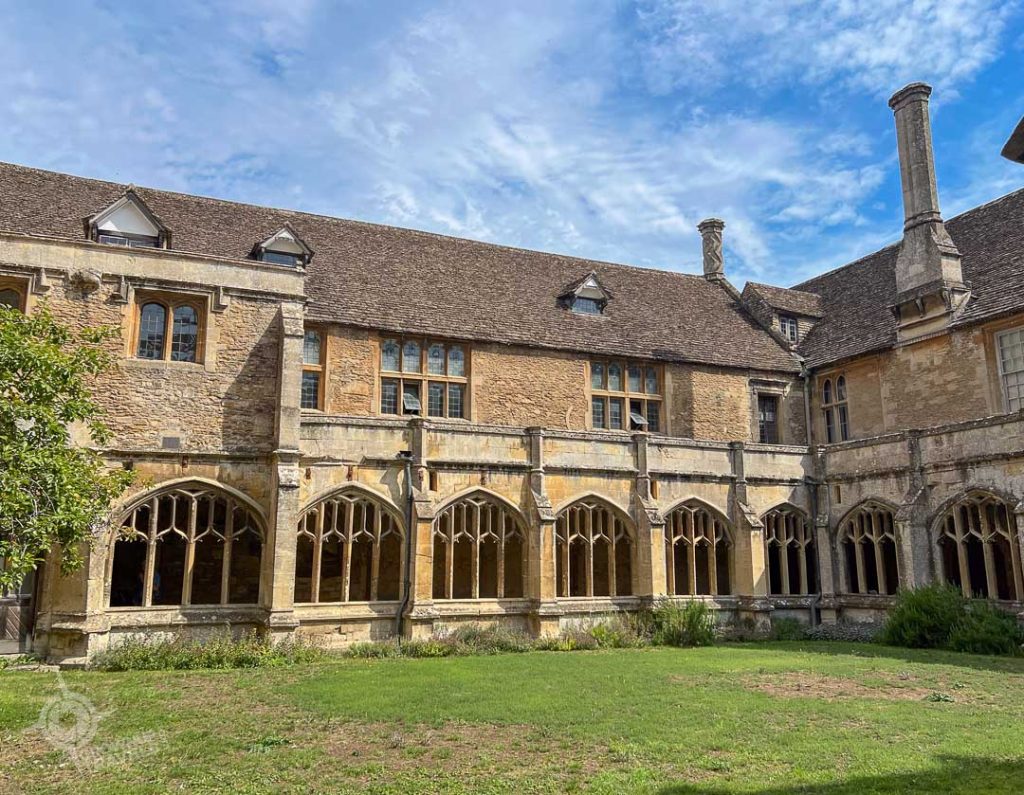
Lacock Abbey cloister
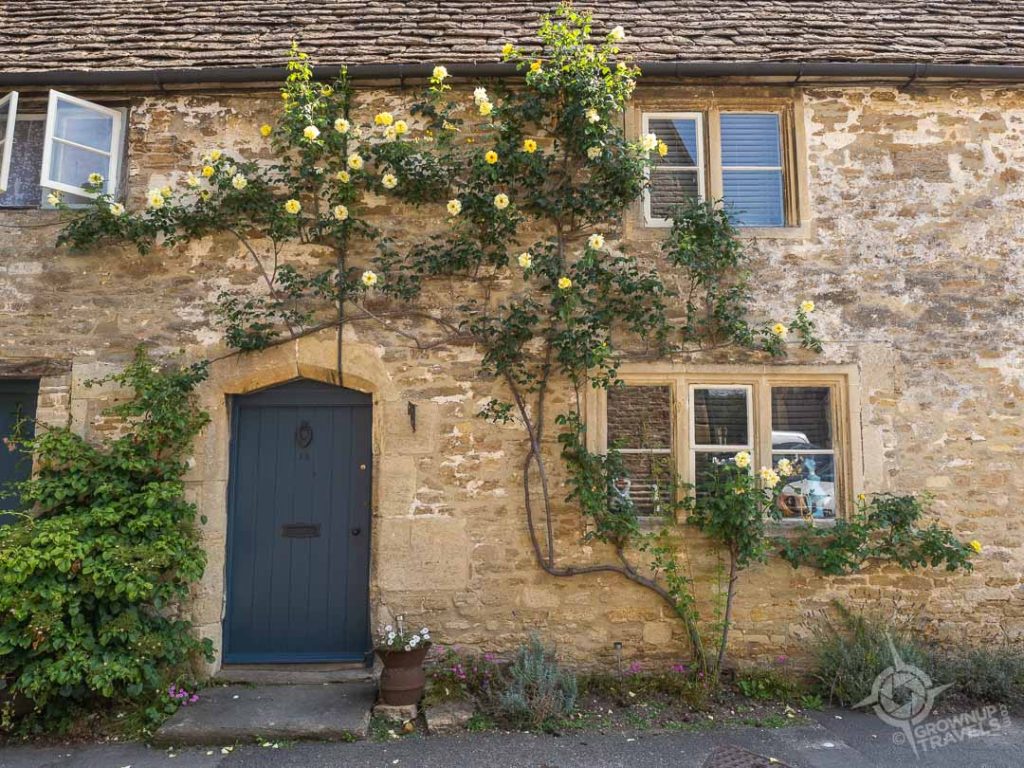
Although located outside the Cotswolds’ geographic boundaries, Lacock has many of the same characteristics as the other villages, including the fact that its cottages, shops and church buildings were all constructed with ‘Cotswold stone’. What makes Lacock extra special is that the entire village, including its impressive Abbey, is part of the National Trust and has been virtually untouched by modern alterations. For this reason, the town and the Abbey have often figured in historical film and TV productions. Yet despite its well-preserved status and character, Lacock is very much a living village with residents, pubs, and shops that operate for locals, not just visitors.
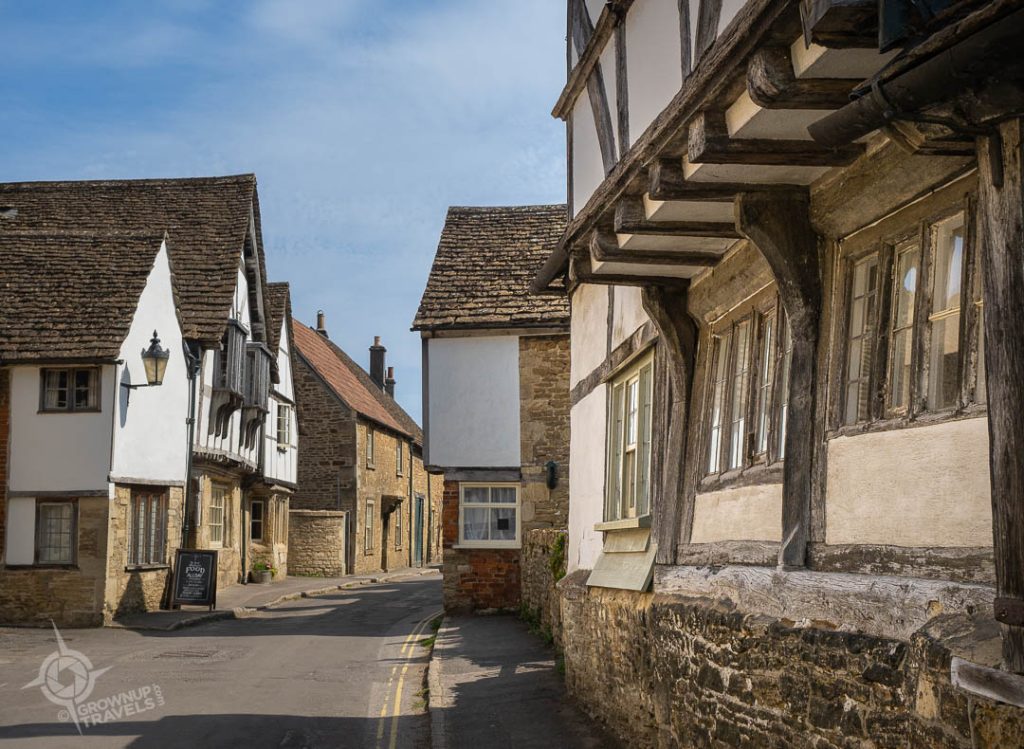
Step back in time in Lacock, UK
Wander the streets and you will feel like you are stepping back in time. Timber-frame houses lean against each other, there is an ancient church you can admire both inside and out, and if you’re lucky and the Bakery is open, you can indulge in some sweets there. If not, there is always the Red Lion pub for a libation or two, which has been a popular location for Harry Potter and Downton Abbey productions.
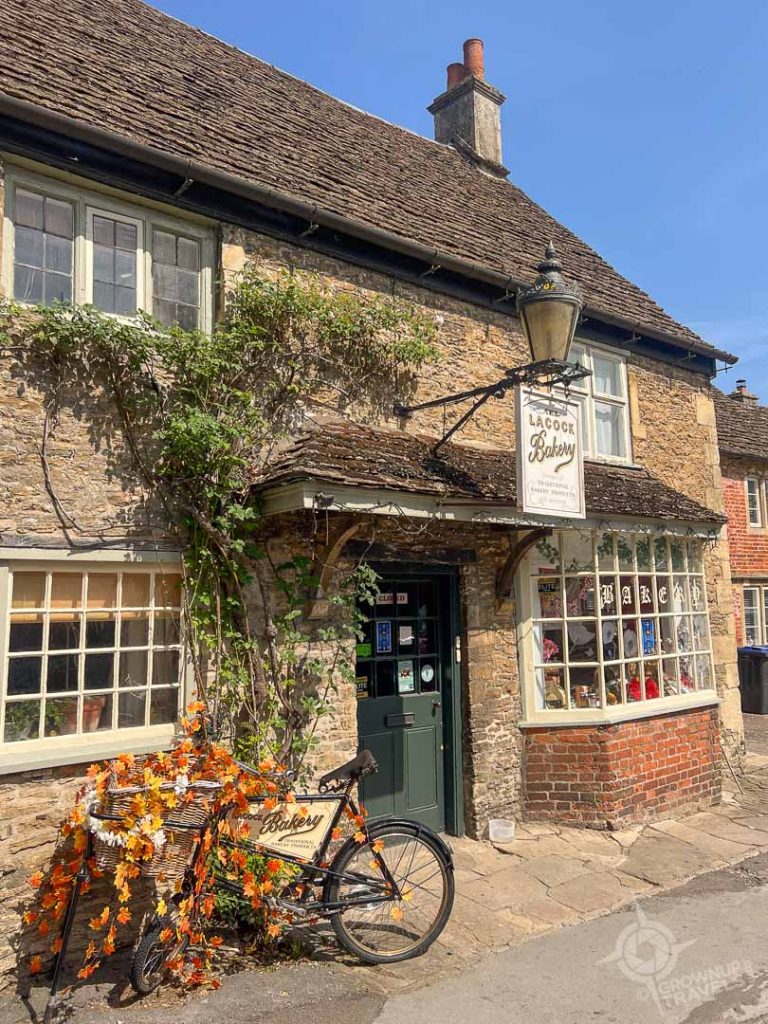
Lacock Bakery UK
Honourable Mention #2: Bradford-on-Avon
Like Lacock, Bradford-on-Avon sits just on the border of the Cotswolds but we felt it deserved to be on this list for many reasons, even though with 10,000+ residents, it is much more of a town than a village. Still, Bradford-on-Avon has plenty of small-town, old world charm, including a stone bridge in the centre of town that acts as a photogenic centrepiece for locals and visitors both.
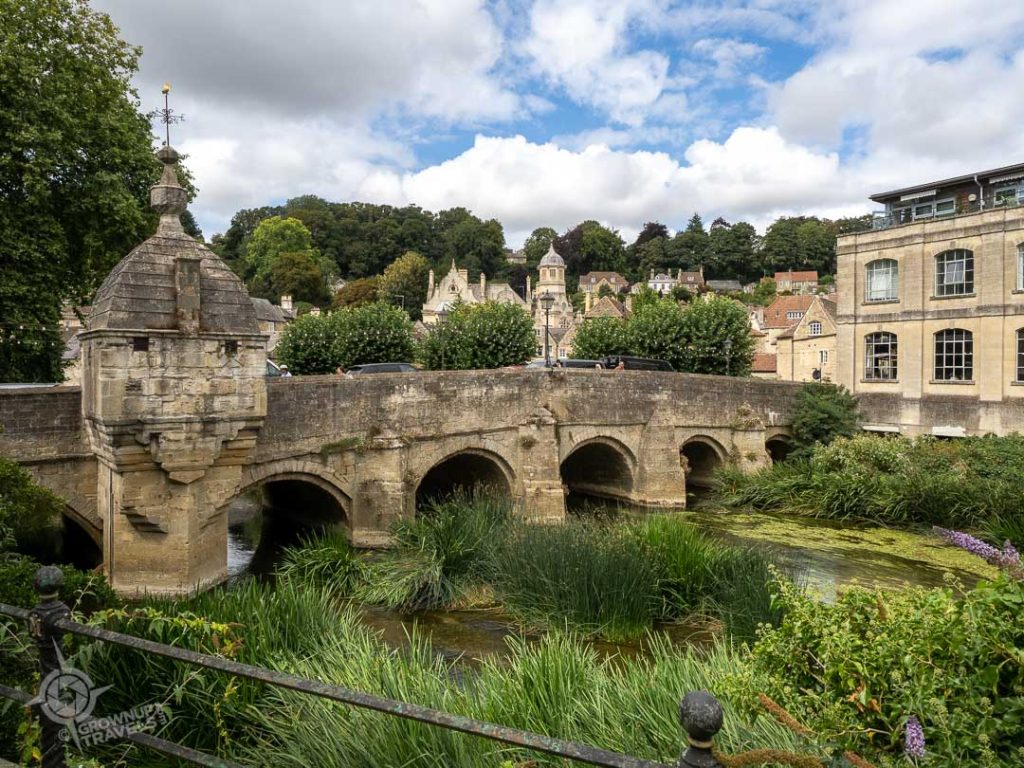
The stone bridge in Bradford on Avon
The river Avon, of course, is another pretty feature of this town, dripping with willow trees and even the occasional swan, and there are paths along the river that are perfect for quiet strolls. Don’t be surprised if you see locals fishing along the banks or children splashing where the water is shallow and easily accessible.
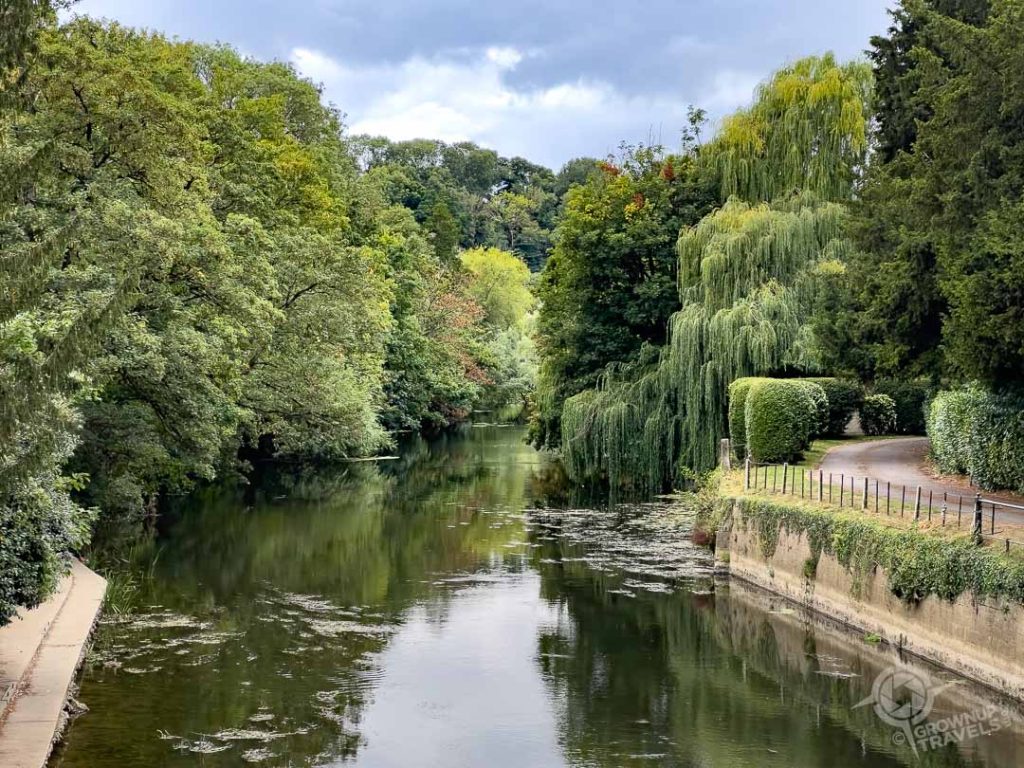
Avon River runs through Bradford On Avon
Downtown is small, including a cute street called The Shambles, and running alongside the river are many repurposed buildings that once housed textile factories, and are now home to residences and shops, including some right on the banks of the river overlooking the bridge. (like the Sweetpea Kitchen where we enjoyed a refreshing cocktail.)
Feeling for afternoon tea instead? Why not enjoy a Victorian Tea in one of Britain’s Top Tea Rooms, the Bridge Tea Rooms, which is the epitome of old world charm both outside and in. Seriously, I found this one of the most beautiful historic buildings in Bradford, and if we had planned ahead, I would definitely have opted for tea, as I am a huge fan of afternoon tea and seek opportunities to indulge everywhere I can.
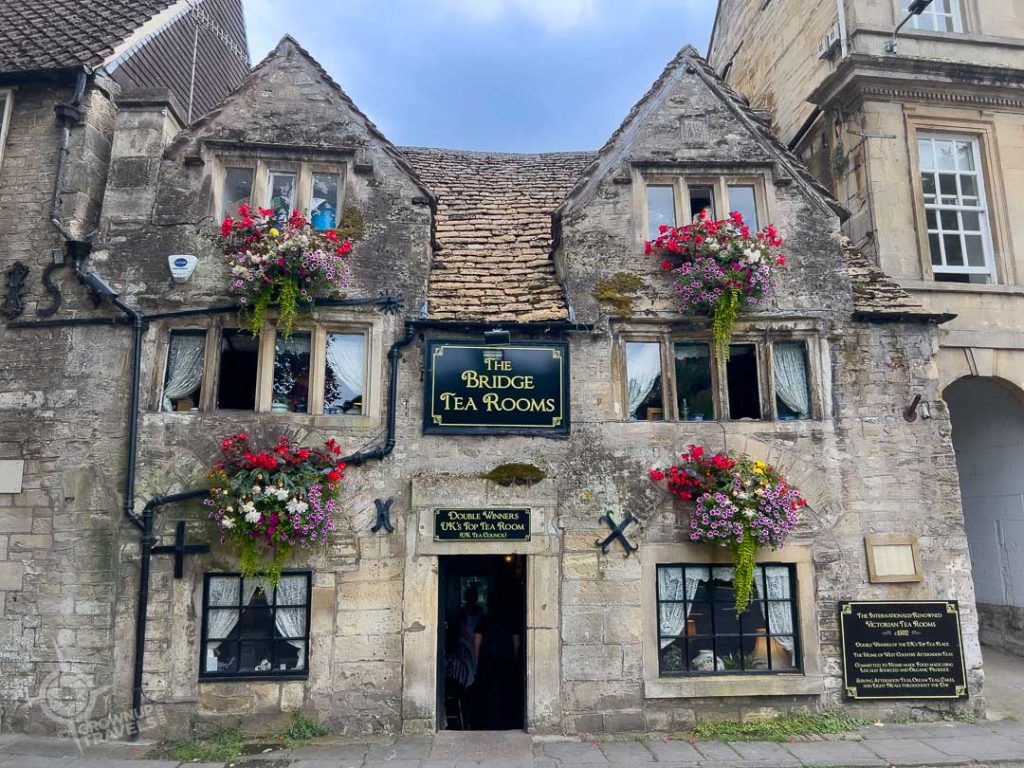
The Bridge Tea Rooms in Bradford On Avon are ranked as the best for afternoon tea
The 11th century Saxon church of St. Laurence is also a dominant landmark here, as well as the 12th century Holy Trinity church beside it, both of which sit on beautiful, serene grounds on the banks of the Avon.
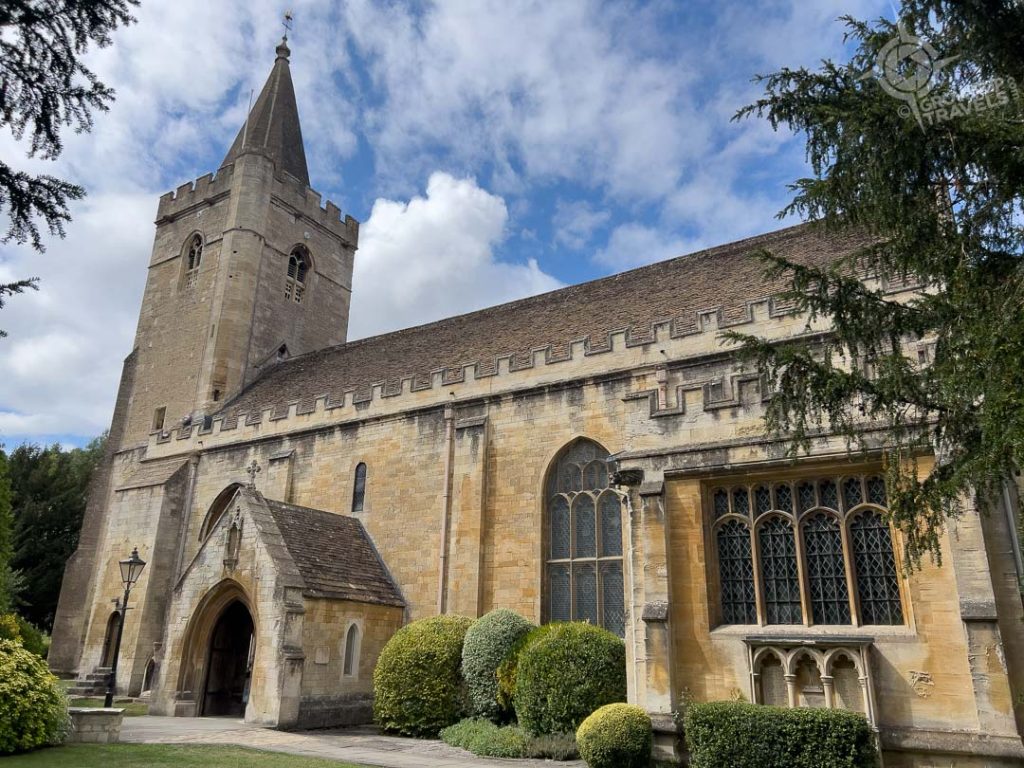
Holy Trinity Church Bradford On Avon UK
Henk and I decided to venture a little farther up into the hilly streets on the north side of the river, since we were looking for views of the town from above, so we headed past the two churches and just kept walking up Conigre Hill on whatever road pointed up until we caught some of those rooftop views. Even on these steep slopes, there were charming stone row houses filled with character, many with pretty terraces overlooking the town below. Hauling groceries must be a chore, but the character-filled homes and views must be well worth it.
A Visual Sampling of the Most Beautiful Villages in the Cotswolds
The Cotswolds region of England is home to 69 villages, 28 towns and 3 cities, (not counting the Wiltshire ‘honourable mentions’ that we threw in), so obviously there is much more to see here than just this short list of villages that we’ve compiled. As first-time visitors, however, we wanted to sample at least a few of the villages purported to be ‘the most beautiful’ and we weren’t disappointed. Whether they rank in the top 10, or the top 25 in the region, country or world was not what mattered to us, so much as the chance to drive through the countryside with a few destinations to help determine our route. It became a scavenger hunt of sorts, and a great way to road trip through one of the most scenic regions in England, making stops along the way to sip, savour and snap photos. What we realized too, is that we could easily do this again many more times, either by car or by foot, without ever seeing exactly the same thing twice.
Which might just be the real beauty of the Cotswolds.
WHERE WE STAYED:
THE LAMB INN
Henk and I spent our first night in the Cotwolds at The Lamb Inn, in the heart of the region near Cheltenham in the village of Great Rissington. The location was perfect, giving us easy access to the villages we had on our list without having to drive long or far between them, so we could spend our time enjoying the villages themselves. The Lamb was exactly what we hoped for: a character-filled historic stone inn dating back almost 600 years but with luxurious touches in all the rooms that complemented the stone fireplaces and beamed ceilings. It was intimate, friendly and absolutely charming both inside and out, much like the locals we met at the cozy pub inside. Definitely plan to eat here, too, as the Lamb is known for its kitchen, and we indulged in elevated British classics (think shepherds pie) that did not disappoint. Definitely a great stay.
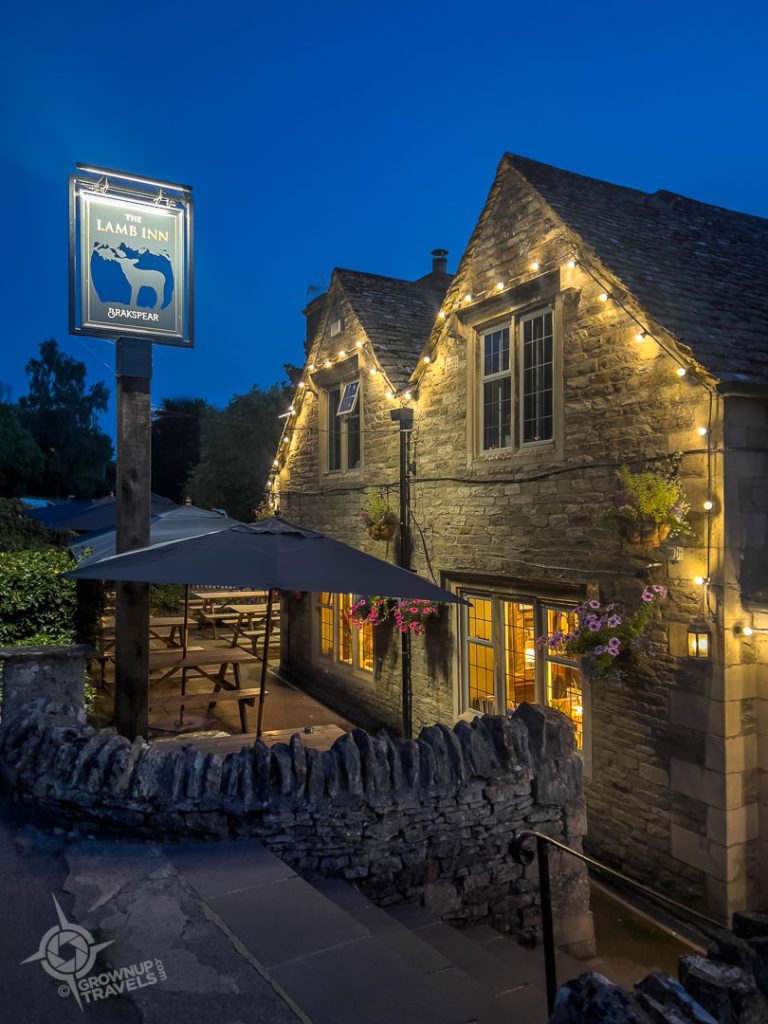
The Lamb Inn
URBAN LOFTS
For our second night, we chose a stunning property in Melksham called the Urban Lofts, just on the border of the Cotswolds in Wiltshire, and a short drive from Bath. The loft apartments (there are only two in a converted covered market – we were in the Butler) are absolutely gorgeous and clearly a labour of love for the owners, who renovated them exquisitely during the pandemic. The apartments aren’t just stylish, they are fully equipped with top-of-the-line appliances and amenities, paired with historic details like arched beams, exposed stone walls, soaring ceilings and multi-level living spaces The hosts even provided a few essentials for breakfast, having thought of everything possible to make their guests welcome. Cannot recommend this property more highly, other than I would happily live in this exceptional apartment full-time if I could!
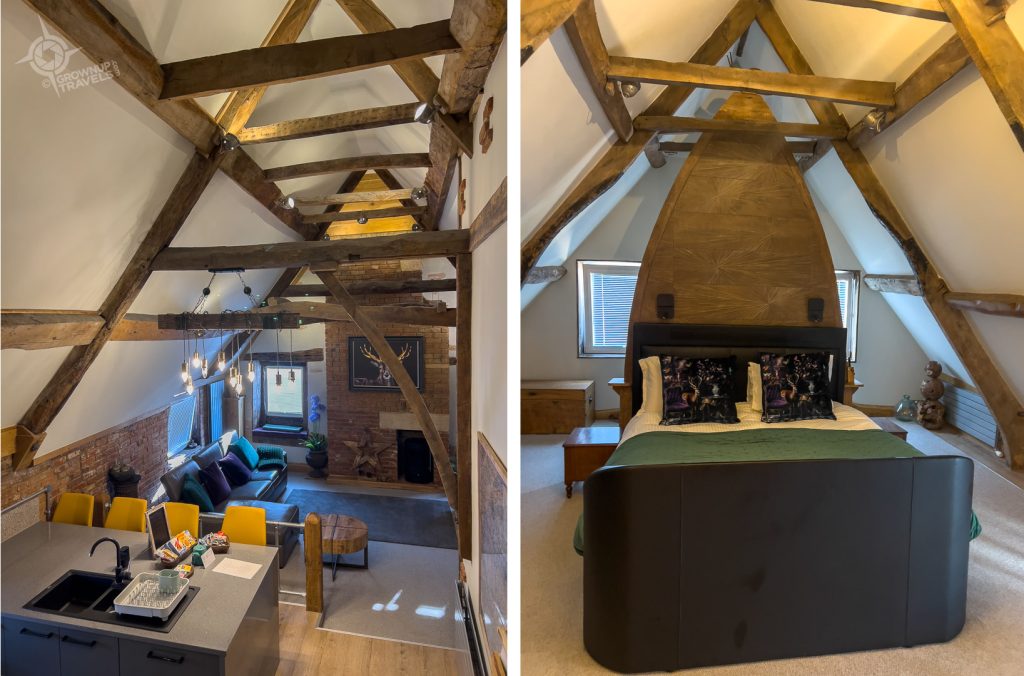
Photos don’t do this Butler multi-level loft justice. (there’s a TV in the console at the foot of the bed, too!)
Added bonus: if you are visiting Bath, there is a bus stop directly opposite the Lofts that takes you right into the city in less than half an hour (so there’s no need to drive, as parking can be problematic in Bath especially during the summer months).

Jane is an award-winning travel writer and photographer and an accredited member of the Travel Media Association of Canada (TMAC). In their annual awards competition, TMAC named GrownupTravels.com as the Best Self-Published Travel Blog in 2025 .
She is also a member of the North American Travel Journalists Association, and a freelance travel writer contributing to both print and online publications.





Subscribe and you'll never miss an update!
Join our mailing list to receive the latest news and updates from Grownup Travels. (We keep your email STRICTLY private)
Thank you for subscribing to Grownup Travels!