
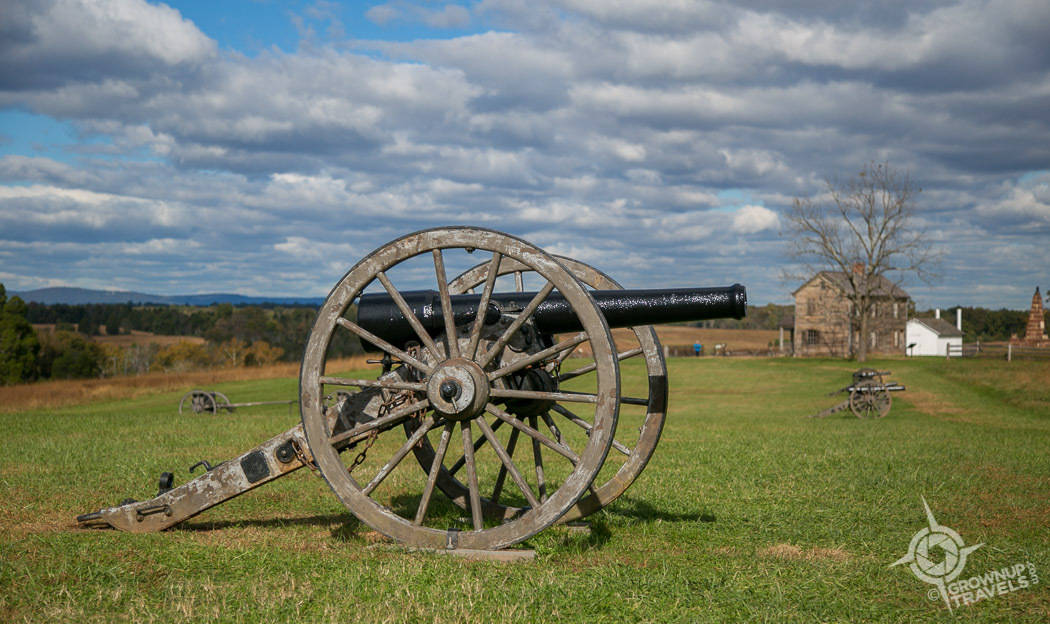
It was a battle that everyone thought would be over before it began, yet it would mark the beginning of a 4-year-long bloody conflict that would rip a country apart before stitching it back together, and destroy once and for all any naively romantic notion of the glories of war. This was the Battle of Bull Run, where on a windy field in Northern Virginia in the early hours of July 21, 1861, the first major battle of the American Civil War took place. And yet, for all its historic significance, I knew nothing about any of this until a recent trip that Henk and I took to visit two moving civil war sites in Virginia.
As a Canadian, my knowledge of the American Civil War is rudimentary at best, and sadly what I do know I probably owe to Hollywood movies like Gone With the Wind. But after visiting Manassas National Battlefield Park and Ben Lomond Historic Site in Prince William County in Northern Virginia, I can better appreciate the real cost of the war that would divide this country.
Manassas National Battlefield Park
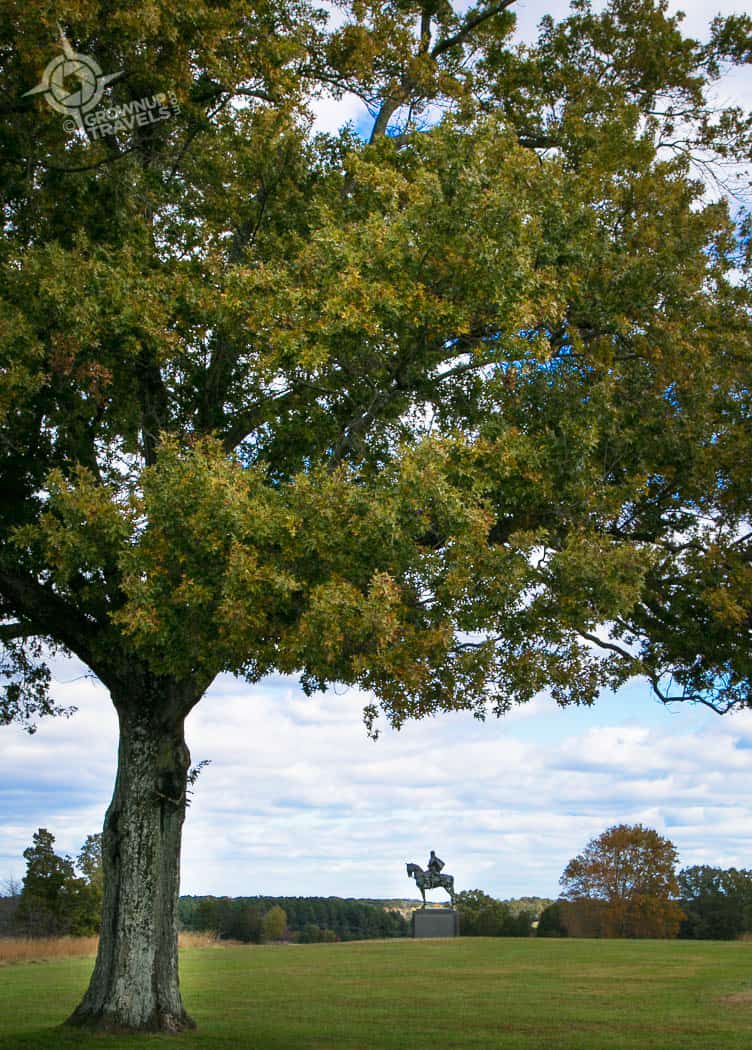
Henry Hill is the site of the first battle of the American Civil War
Although the first battle of the American Civil War is known as the Battle of Bull Run (named for a nearby river), the confrontation actually took place atop Henry Hill, a grassy plateau in Prince William County, about an hour’s drive from Washington DC. Now run by the National Parks organization and known as Manassas National Battlefield Park, this civil war site in Virginia is a historic site and memorial where visitors can learn about the battle that was fought here and its significance in American history, and respectfully acknowledge the thousands who died here.
The National Park Service offers interpretive guided tours several times daily that I would highly recommend taking, particularly because the guides really know their material and help bring context to what you are seeing. We joined the First Manassas walking tour and the Park guide who led it did more than just describe the mechanics and strategies of the actual battle, or how Confederate General “Stonewall” Jackson got his nickname (he stood ‘like a stone wall’ against the Union soldiers, inspiring his soldiers to victory). Our guide also described the confusion, human error and psychological aftermath experienced by the soldiers.
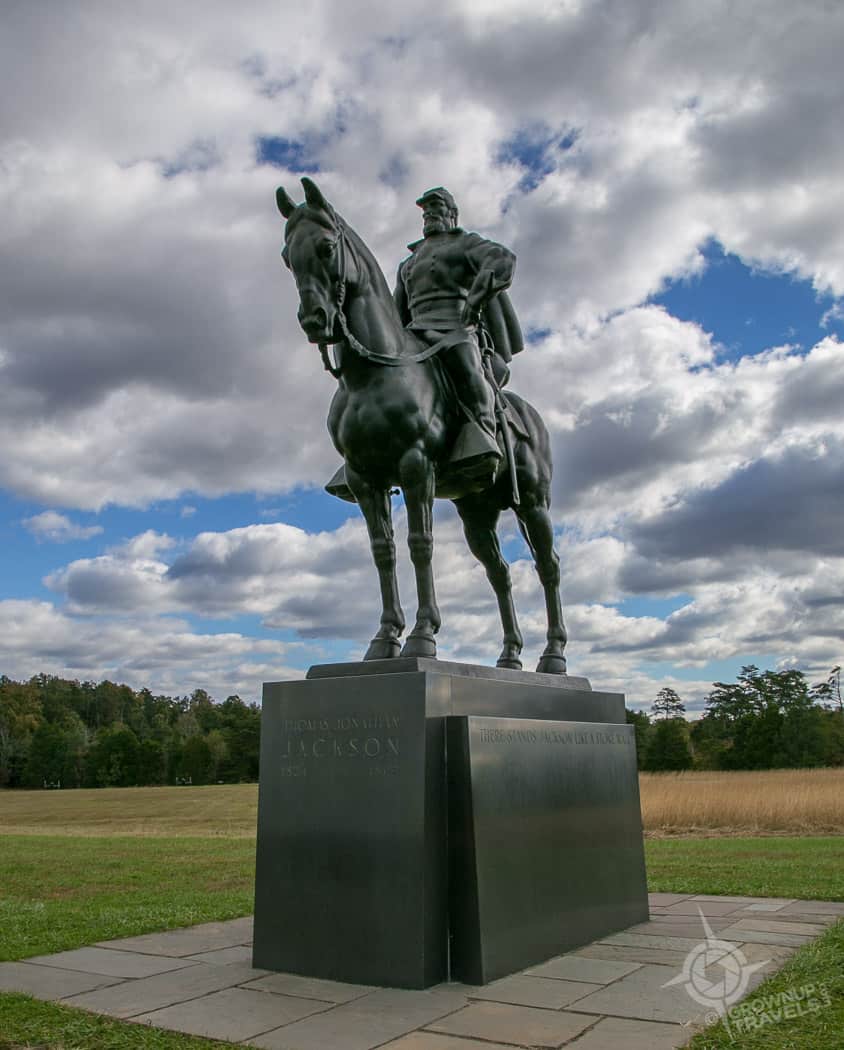
Statue of General Thomas J. ‘Stonewall’ Jackson
Many of the soldiers who fought each other here for the first time were young, starry-eyed volunteers, lured by the romantic idea of battle and completely unprepared for the realities of war. Untrained and faced with barrages of artillery fire and the prospect of individual combat, many froze where they stood or fled the field altogether. Even knowing who your enemy was became confusing, as many on both sides were wearing similar grey coats, and others had not been issued proper uniforms at all, making Unionists and Confederates difficult to distinguish from one another. Friendly fire casualties ran high as a result, adding to the confusion and chaos, and in a few short hours, the battle disintegrated into a disorganized full-on retreat by the fleeing Union soldiers.
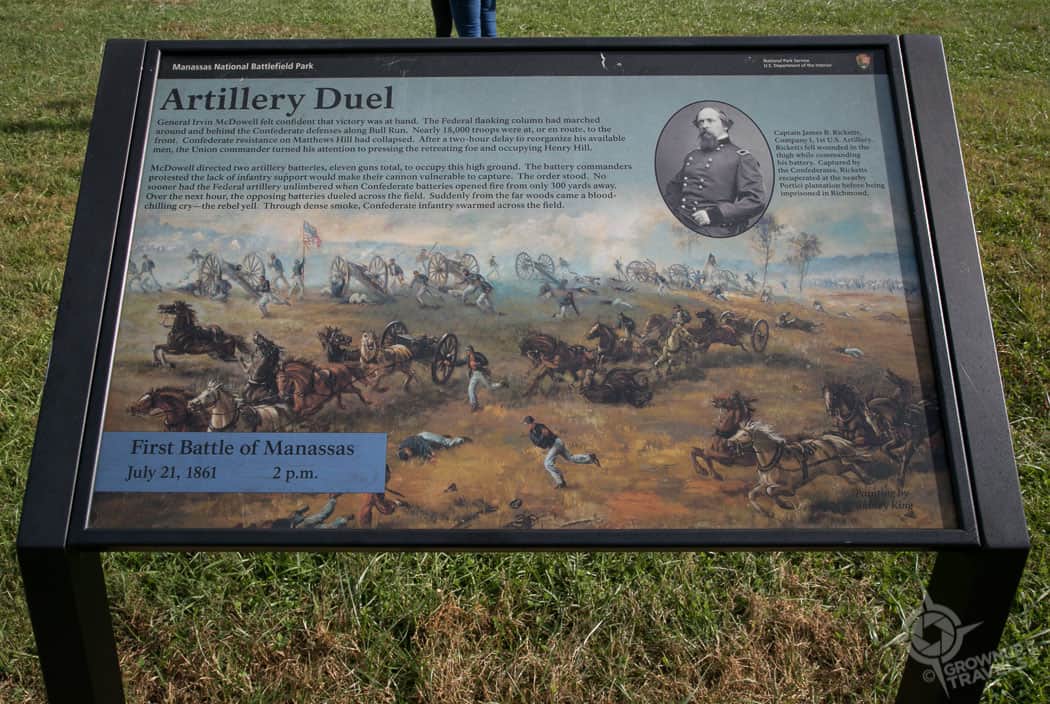
The Battle of Bull Run was a chaotic bloodbath
Many of the rookie soldiers who weren’t killed described their first experiences on the battlefield in diaries and letters they sent to their loved ones. These remain some of the most graphic and expressive letters ever written about the Civil War, probably because the accounts were as raw as the young recruits who wrote them.
“”I saw a bomb shell strike a man in the breast and literally tear him to pieces…the bodies of the dead and dying were actually three and four deep…while in the woods the trees were splattered with blood and the ground strewn with dead bodies.” Excerpt from a letter written by Samuel J. English, Corporal Company D, Second Rhode Island Volunteers, to his mother.
Some of the Union soldiers who survived were brought to a Stone House near the battleground, a former tavern a short distance away from the battle. Like many houses in the area, it was put to use as a field hospital, but this place stands out from the others because in diary after diary, soldiers mentioned this structure in particular. Perhaps it represented normalcy for these young men after the horrors they had just witnessed on the field.
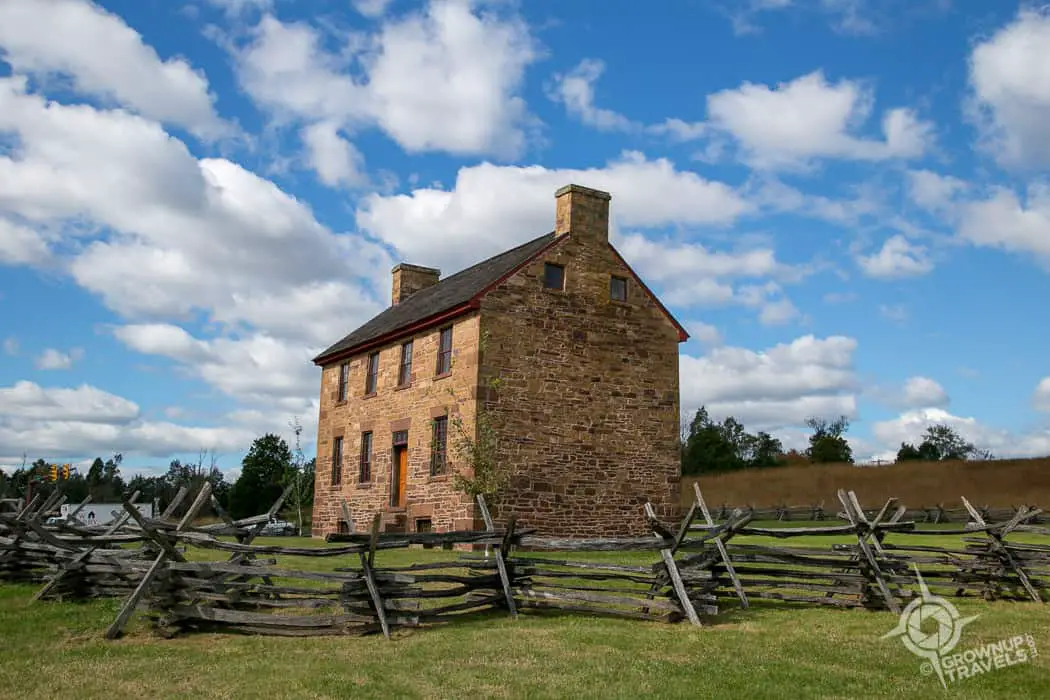
Many soldiers’ diaries mention this Stone House near the battlefield which served as a field hospital during both battles at Manassas
For me, it was imagining these young idealistic men and their resulting loss of innocence that stayed with me most after our tour. In fact, it was hard to even imagine that a year later some of those same soldiers who survived would return here to fight each other in a second battle, resulting in another defeat of the Union troops and yet another harried retreat across the same historic Stone Bridge.
“As we neared the bridge, the rebels..mowed us down like grass. As I crossed on my hands and knees, Capt. Smith who was crossing by my side was struck by a round shot ..and completely cut in two…” Samuel J. English

The Stone Bridge was a critical landmark allowing Union troops to cross the Bull Run river
Ben Lomond Historic Site
What happened to wounded Civil War soldiers is perhaps best understood by visiting Ben Lomond Historic Site, a short drive from the Manassas site. When war first broke out here in Virginia, this estate had been operating as a wool farm under the supervision of a tenanted Scottish family, the Pringles. Because of its proximity and direct access to the Manassas battleground via a road that ran adjacent to it, the Ben Lomond property was commandeered by the Confederate army to serve as a field hospital following the battle.
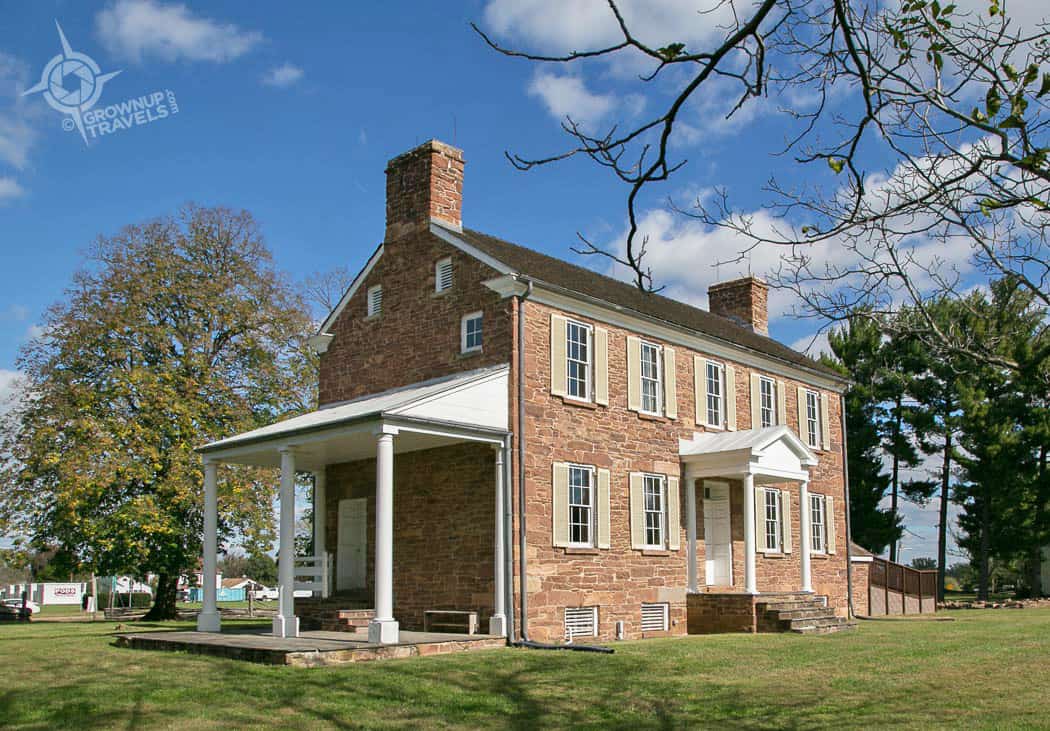
Ben Lomond’s manor house was commandeered by the Confederates as a field hospital
Today, the home has been preserved as a museum, with the interior set up to recreate what it may have looked like during the month or so that it served as a Confederate hospital. ‘Hospital’ of course is a generous term, since there was little advance preparation to ready the house for the casualties it received, nor were there procedures in place or proper supplies for the overwhelmed medics and doctors.
A Museum Like No Other
The Ben Lomond museum is more than just a collection of artefacts in a room: it is a fully immersive experience unlike any I had seen before. History is brought to life (and death) here, and as visitors move through the house they can actually feel and hear the sounds of the artillery in the distance, the shouts and moans of the men inside the house, and even smell the unpleasant odours that you could only imagine in a crowded space filled with wounded and dying men. It’s for this reason that the docents prepare visitors for what to expect even before they enter the house, and I have no doubt that some find the experience a little too much to handle.
Inside, every room in the house reflects what it might have looked like when the influx of wounded began: the parlour is set up as a makeshift ward, where due to the shortage of supplies even the drapes would have been torn and used as bandages.
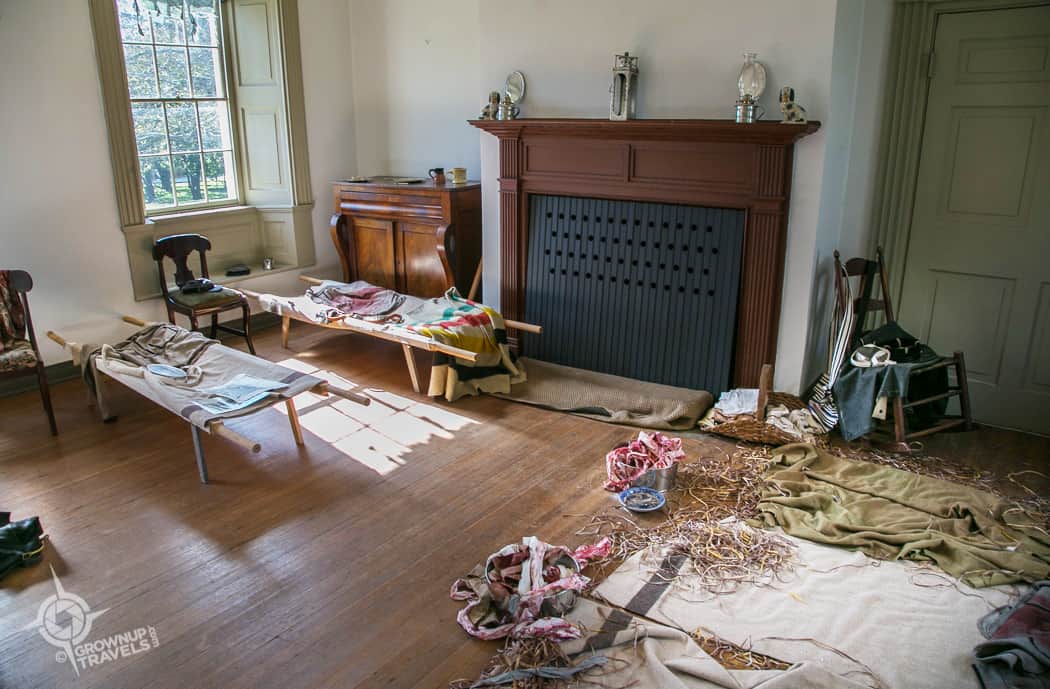
The parlour of Ben Lomond served as a patient ward
The dining room was put to use as an emergency operating room/field office for the doctor who struggled to keep up with the wounded and who often chose the easiest and quickest options for treatment (i.e. amputations).
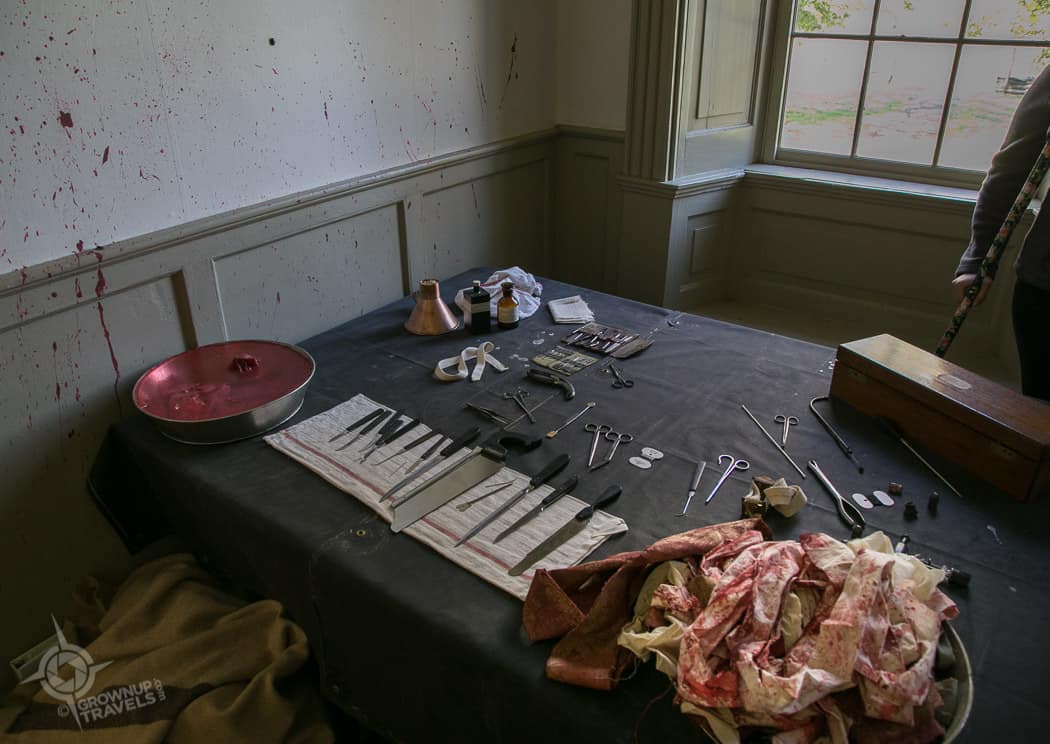
The former dining room became the operating room at Ben Lomond.
It wasn’t long before the house became overcrowded with soldiers in hallways and stairwells, forcing many of the wounded and dying to remain outside, seeking shelter under the trees from a cold rain that only added to their misery. Picturing this in my mind I was reminded again of Gone With the Wind and a scene showing wounded soldiers laid out in an Atlanta train yard.
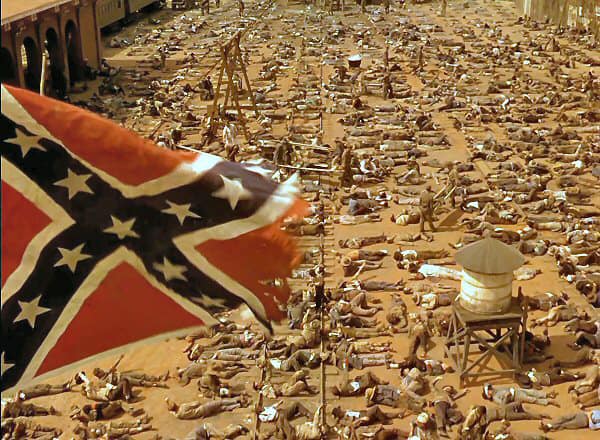
The train yard filled with wounded from the movie Gone With the Wind
The casualties following the Battle of Bull Run may not have been as numerous as in other civil war battles that would follow, but Ben Lomond bore witness to the aftermath of the very first battle. For this reason, I couldn’t help but feel that this house holds a unique place in history, and for this reason the spectre of the American Civil War seems to haunt it still.
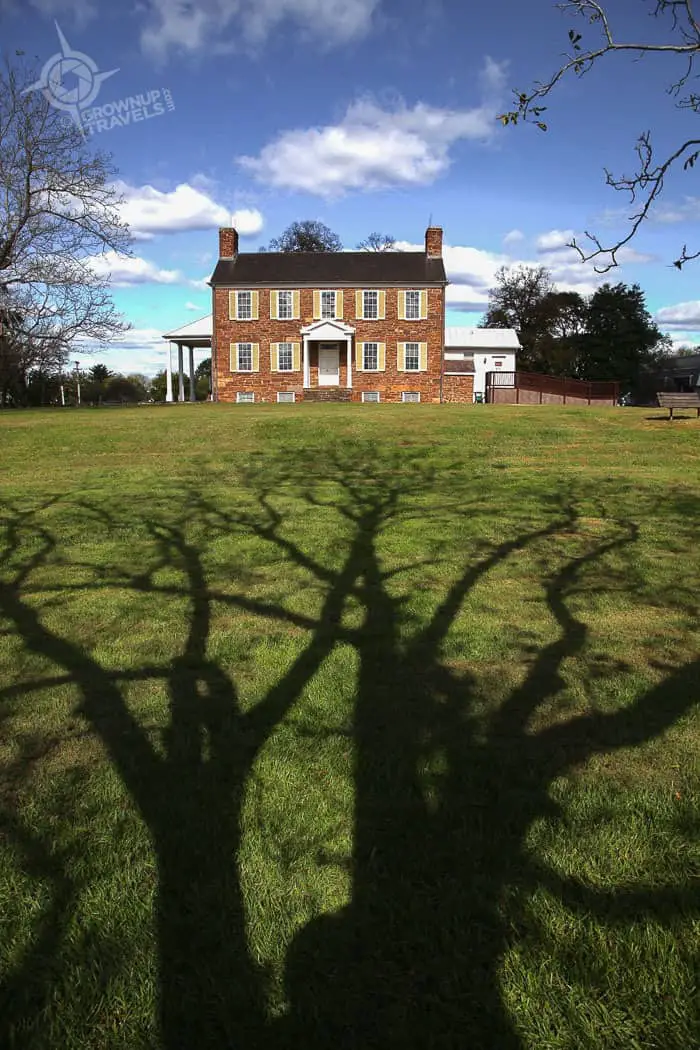
The spectre of war still seems to haunt Ben Lomond
Up until this first visit to Northern Virginia, I had very little understanding of the specific role this part of the States played in the American Civil War. I realize now just why Henry’s Hill was such a strategic piece of real estate, given its proximity to Washington, and why it became the site of the first major battle. But it was after visiting the Manassas and Ben Lomond civil war sites that this conflict became much more real for me – real because of the scars left behind on the landscape, but even more so because of the physical and psychological scars left on the soldiers who survived.
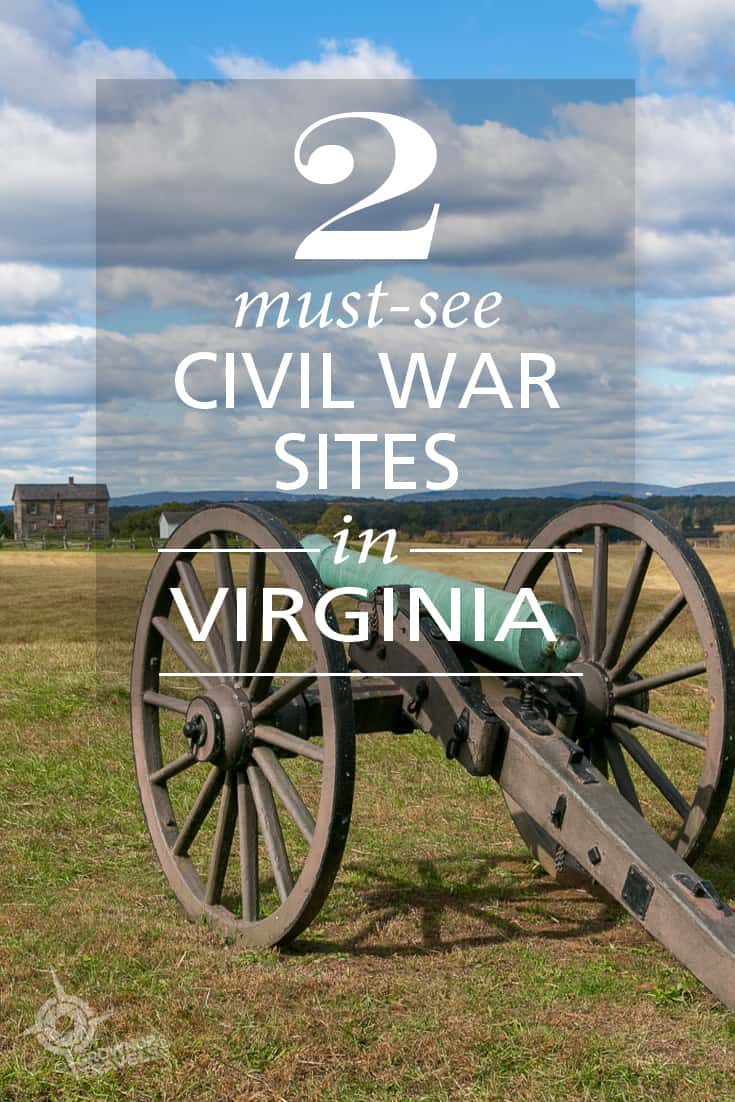
Special thanks to the tourism offices of Prince William County Virginia and Northern Virginia who hosted Henk and I on our visit.

Jane is an award-winning travel writer and photographer and an accredited member of the Travel Media Association of Canada (TMAC). In their annual awards competition, TMAC named GrownupTravels.com as the Best Self-Published Travel Blog in 2025 .
She is also a member of the North American Travel Journalists Association, and a freelance travel writer contributing to both print and online publications.





Even as a U.S. citizen I don’t think my education clearly covered the Civil War. Thanks for sharing the information on your visit. This looks like a place everyone should visit. I’m hoping that we learn something from this horrible piece of history. It’s an important time for us to recognize our history and not let it repeat itself.
Interesting you say that, Sue, because our visit to Virginia and then subsequently Washington DC made us think exactly the same thing!
I’ve read a bit about the American Civil War (including Gone with the wind!) but there’s no substitute for seeing the places for yourself.
absolutely, Karen. It’s what makes something real, not just something you have to read by Monday!
I’ve been to several Civil War battlefields and the always do an excellent job of telling the story of the battle, and of the common soldiers who suffered there. The US Park Service always does a great job on the tours, and the Rangers who guide are uniformly excellent. One of my favorite things to do on our US road trips.
Right!!!???? I actually commented that our guide should be an actor, he was that expressive and descriptive! He was definitely a huge reason why I was so impressed by my visit to Manassas.
Thx for telling us about the battle in North Virginia during the American Civil War. Most interesting!
It was really interesting, especially as a Canadian who knows so little about the American Civil War battles. Starting at the first major battlefield and Ben Lomond felt like the perfect introduction.
We love all of the amazing photos you have assembled in this article about North Virginia Civil War sites. We live in the heart of America, and have quite a few sites in our region, as well. It’s always a stark reminder when we visit one. Thanks for sharing.
Thank you – now I’ve become even more curious to explore these sites. There is a whole Graffiti House Route that exists, too, where you can visit some of these makeshift field hospitals where the soldiers scrawled names and images on the walls…apparently quite moving. Oh well, next time!
I’m really getting to appreciate your writing, Jane, and Henk’s photographs. It would be a blast to travel with you… hint hint!
Thanks Petra! Actually, it works out pretty well when Henk and I travel: I’m all over the docents and the guides, taking notes, and Henk runs around taking photos which are often a surprise to me as well!
Never would have known. Thank you for a poignant post.
Thanks Shila, it was a real eye-opener for me too!