
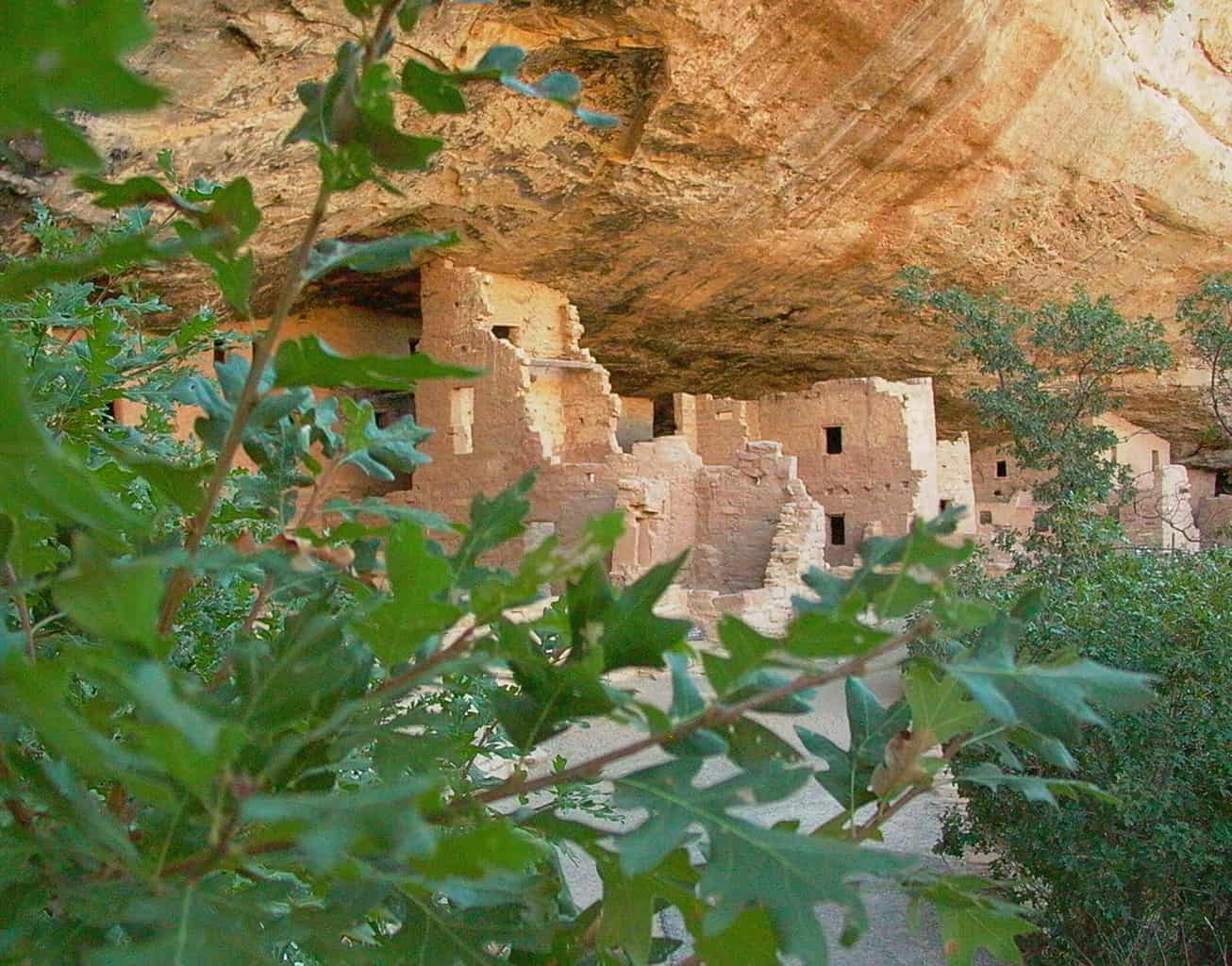
Mesa Verde
Egyptians. Mayans. The Inca. We all know of these exotic peoples and the incredible structures and cultural sites they’ve left behind. Their architectural showpieces draw us from around the world to marvel at the creativity and ingenuity that went into their construction. Yet there are some equally impressive sites right in the U.S. that will blow you away when you see them – you just need to know where to look. Which, if you happen to be on the plateaus of Mesa Verde National Park, means looking down. Because it is there you will see the most famous cliff dwellings in Colorado.
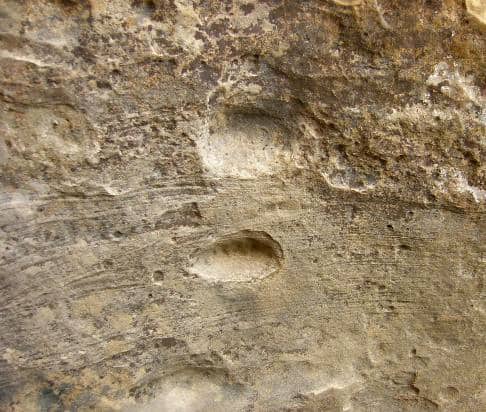
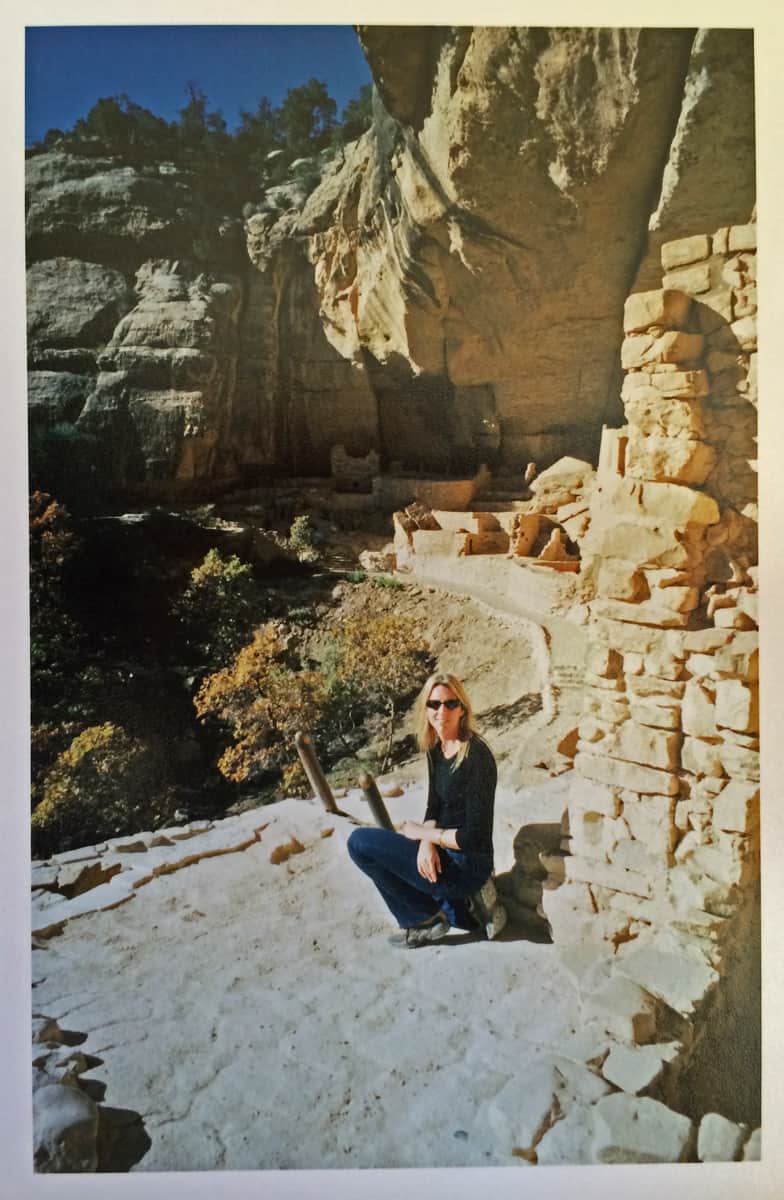
Carved depressions used as toe and hand holds
Primitive, Perhaps, but Inventive Too
Imagine climbing down the sheer side of a sandstone cliff using only foot and toe-hold depressions carved into the rock face itself. Unknowingly, you start off on the wrong foot so that as you descend, the toeholds no longer match up with your next step – eventually, you find yourself with nowhere to place your foot without dangerously criss-crossing your limbs. Your only choice is to return to the top.
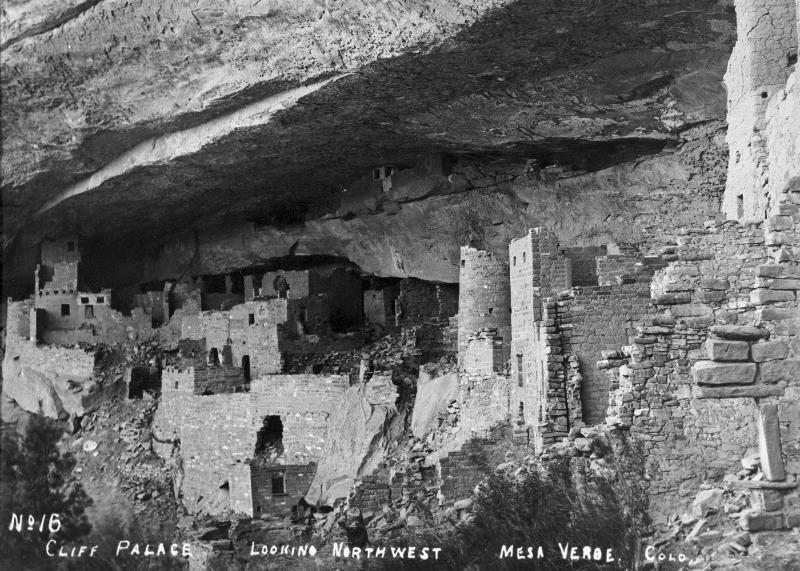
This was an ancient ‘security system’ devised by the Anasazi people who built their cliff dwellings in Colorado, high up on shallow ledges under enormous rock overhangs carved into the cliffs of Mesa Verde National Park. Known as the Ancient Ones in the Navajo language, it’s not entirely clear why this culture chose to build their settlements in such inaccessible locations, since they had originally lived on the tops of the mesas up until the last 100 years of their existence.
Why Build on a Cliff Edge?
Obviously something much more terrifying than a fear of heights must have driven the Anasazi to seek out these remote locations for their villages. Archaeologists believe it was probably to keep invaders or more aggressive tribes from attacking. There’s no arguing that the cliff dwellings in Colorado were tough to beat location-wise when it came to security, as witnessed by the clever use of the toe hold ‘code’. If you were part of the cliff village, you knew the code. If you weren’t part of the village, well, that’s what the security system was for. And if the toe-hold code didn’t deter you, narrow and restrictive access onto the rock ledges via ladders or tunnels could be easily defended by a single guard with a large stick. A simple bonk on the head and your body was tossed over the side. These access systems might seem ‘primitive’, but the thinking behind them was anything but.
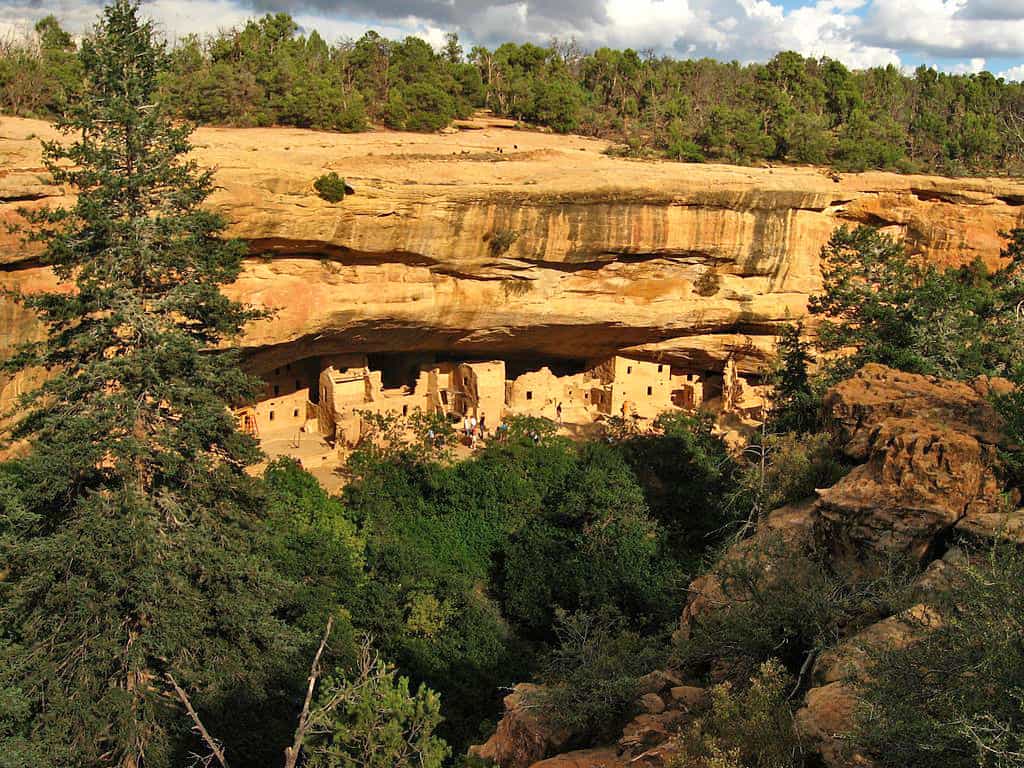
Spruce Tree house
But how do you live on a cliff?
Food and water obviously had to come from somewhere, so the flat mesa tops were used by the Anasazi to farm crops; water was sourced from desert ‘seep springs’ which stored and slowly leached rainwater through the sandstone that make up the cliffs and mesas. In some cases these seep springs were found at the back of the ledge-caves where the villages were constructed. But in most cases, the water had to be carried to the settlement from nearby springs using the access ladders and ledges.
Crowded Quarters
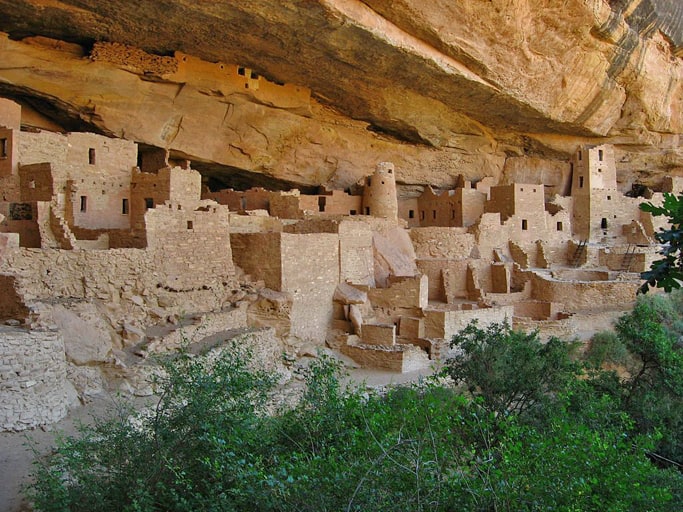
More than 100 inhabitants called Cliff Palace home. *
Discover your inner Indiana Jones.
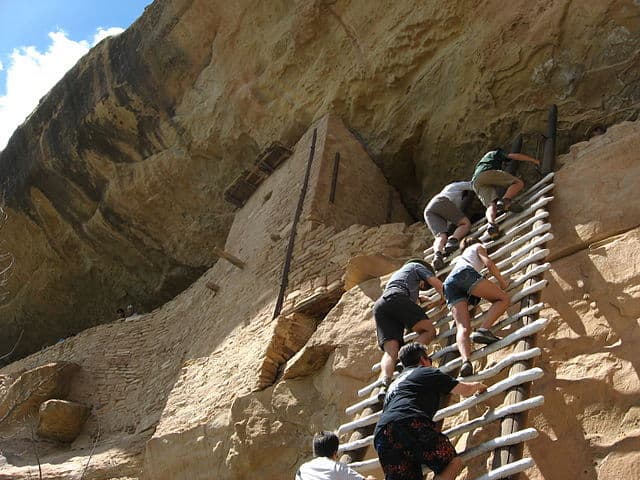
Getting to Balcony House is an adventure in itself.*
If might have been the mystery of the Anasazi people, and the ingenuity involved in the construction of their incredible cliff villages that drew me to this part of the Colorado desert, but the absolute best part of visiting Mesa Verde is this: you don’t often get the chance to do much more than look at many of the world’s most famous archaeological sites, but here you get to actually explore these cliff dwellings and experience a tiny fragment of what life must have been like for the original inhabitants.
To get to Balcony House, for example, one of Mesa Verde’s most well-preserved villages, you have to climb ladders and crawl through stone tunnels to access the site, and once there, you are allowed to step inside the homes and even climb down into one of the kivas where ancient religious ceremonies were held centuries ago. With light streaming from the overhead opening into the circular underground space, you can’t help but envision the ancient ceremonies that once took place there, and feel a sense of discovery no photo can ever convey.
This is one Mesa that is simply amazing.
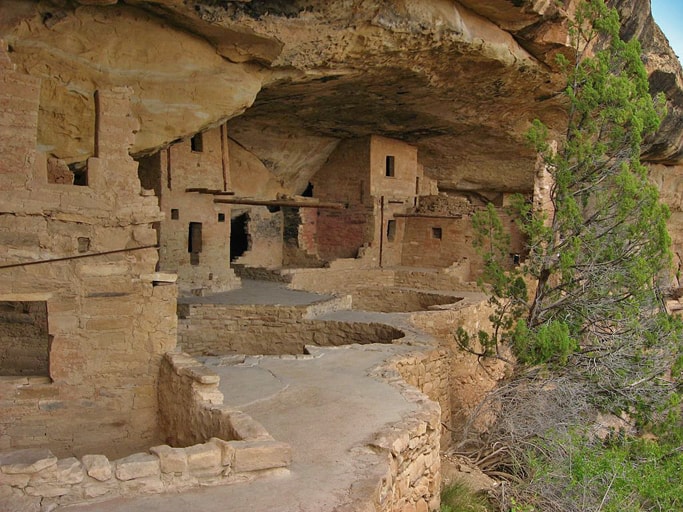
Balcony House*
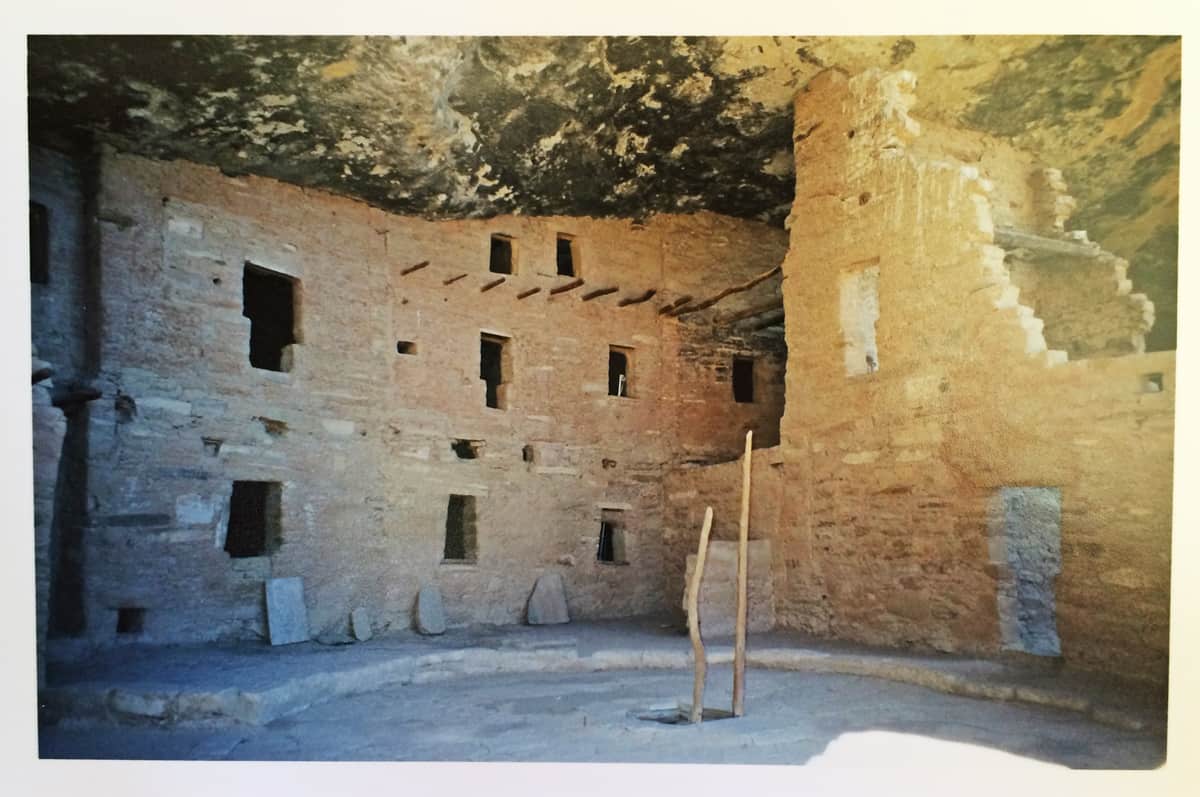
Those are ladder poles that are sticking out of the subterranean kiva!
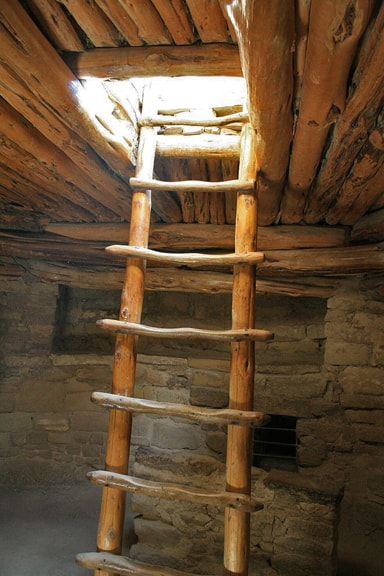
Circular chambers of a subterranean kiva.*
TIP: Mesa Verde delivers an incredible archaeological wow factor and the minimal cost of these guided tours delivers a lot of bang for your buck (tours run around $10-15 on top of the park entrance fee). This national park is definitely a must-visit so it’s not surprising these tours book early and sell out fast, so definitely plan ahead so you can get the most out of this amazing site. If you have physical or mobility challenges, be sure to check the website for descriptions of the tours to see what is involved and whether it is suitable for you or not.
* photos courtesy of Wikimedia ** photos courtesy of NPS

Jane is an award-winning travel writer and photographer and an accredited member of the Travel Media Association of Canada (TMAC). In their annual awards competition, TMAC named GrownupTravels.com as the Best Self-Published Travel Blog in 2025 .
She is also a member of the North American Travel Journalists Association, and a freelance travel writer contributing to both print and online publications.




These photos take my breath away! Since this is in the US my husband will go. I’m so glad I read this post!
I’ve always been fascinated by the Anasazi. Great post!
Thanks, Irene. 🙂