

It it weren’t for Claude Monet, or perhaps more specifically Monet’s garden, Giverny might still be the sleepy little village in Normandy that it was before the famous Impressionist moved here in 1883. But Monet’s residency here has put this place on the map, not just in France, but internationally as well: artists began coming here in the late 19th and early 20th century to follow in the footsteps of Monet, and even today, more than half a million visitors come every year to this quaintly beautiful town to see Monet’s garden and especially the lily pond that he made famous with his world-renowned paintings.
I came here for the same reason, of course, having studied Monet and the Impressionism movement when I pursued my Fine Art degree in university, and I couldn’t wait to see the light, the gardens and the village of Giverny that served as his inspiration. But first, I needed a refresher on the artist himself, so I could better understand the man, his work and why Giverny became so important to him.
Show me the Monet
Claude Monet was a controversial character, not only through his paintings which helped to revolutionize the idea of what was considered ‘art’, but in his own personal life as well. Even from a young age, he defied his father’s ambitions for him, not just by becoming an artist, but in his bohemian lifestyle: in 1865 when he was 25 or so, Monet met 19 year-old Camille Doncieux who became his mistress and with whom he eventually had two sons, but their scandalous relationship resulted in Monet’s father cutting him off completely financially. Struggling to make ends meet while also trying to make a name for himself, Monet still managed to put on the airs and appearance of a wealthy man, despite the fact that he was barely able to provide food for his family and was having little success in the conventional art salons of Paris. Monet and Camille eventually did marry, but their personal lives didn’t exactly ‘settle down’ after that.

In 1876, an affair with another married woman, Alice Hoschedé, made Monet’s life even more complicated, not just because Alice was married, but because Alice’s husband had been one of Monet’s first art patrons. His two relationships with Alice and Camille overlapped, and became even more intertwined when Camille gave birth to a second son in the spring of 1878. Later that same year, Alice left her husband, took six of her children with her, and moved in with Claude and Camille. The unconventional arrangement was certainly a blessing in disguise for Monet, because Alice’s dowry helped pay off Claude’s debts, and later, when Camille fell ill and eventually died, it was Alice who cared for her until her death. (Talk about a modern family – or maybe the original ‘sister wives’…?)
The Move to Giverny
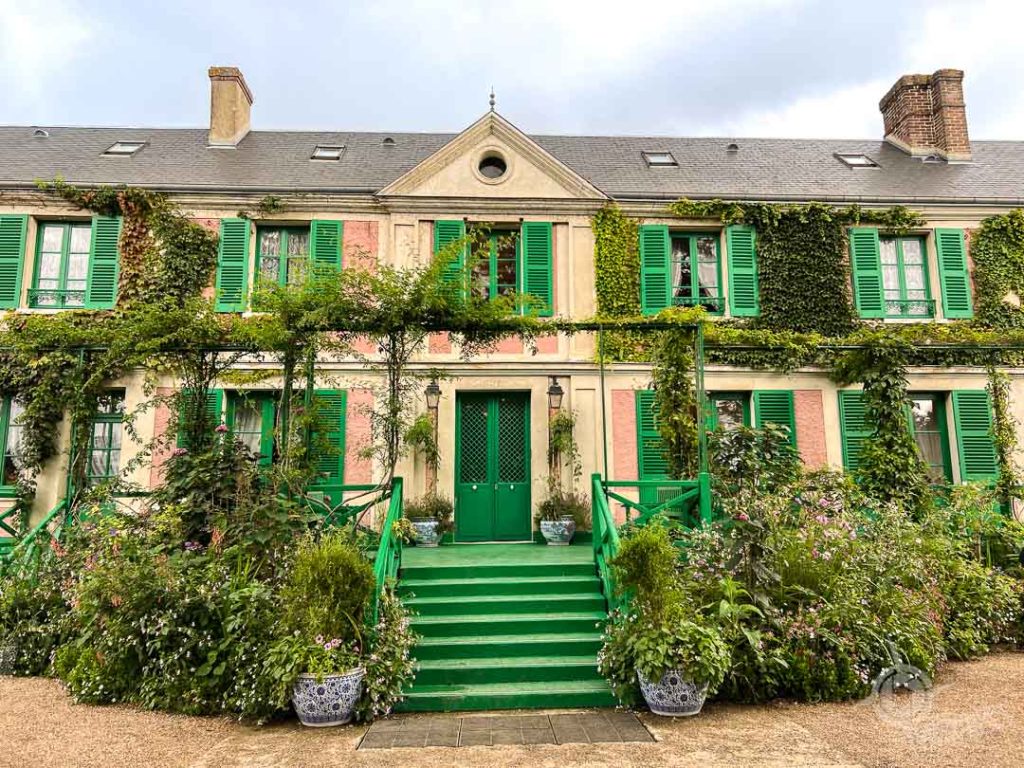
By the time Claude, Alice and their unconventional blended family moved to Giverny in 1883, things were looking up for the artist professionally, and he began to devote more time to studying nature, which became the single most defining influence in his later works. At Giverny, Monet embraced the rural countryside in his work, producing a series of haystack canvases that explored the changing light on the fields and landscape around his home. The series was well received and financially successful for him, after which Monet began to turn his attention to another passion project: gardening. And as it turned out, it was Monet’s garden that would inspire him until the very end.
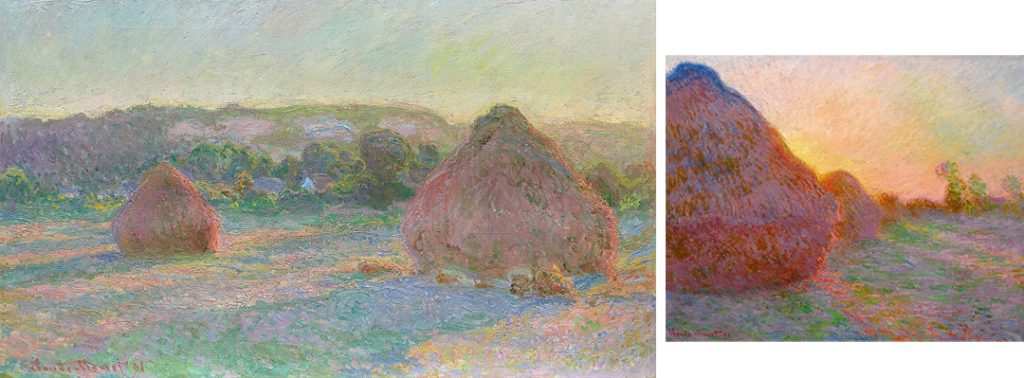
Monet’s Garden: a Living Palette
Even as a gardener, Monet was still the artist, organizing his plantings like he did his paint palette, in blocks of colour. He even cut down dozens of trees in order to make way for flowers instead, and he arranged his beds of red, orange, yellow, blue and violet flowers to bloom throughout the seasons. The garden grew in scale during the year as well, with spring plantings of shorter flowers giving way to taller, wilder plants in the late summer and fall.
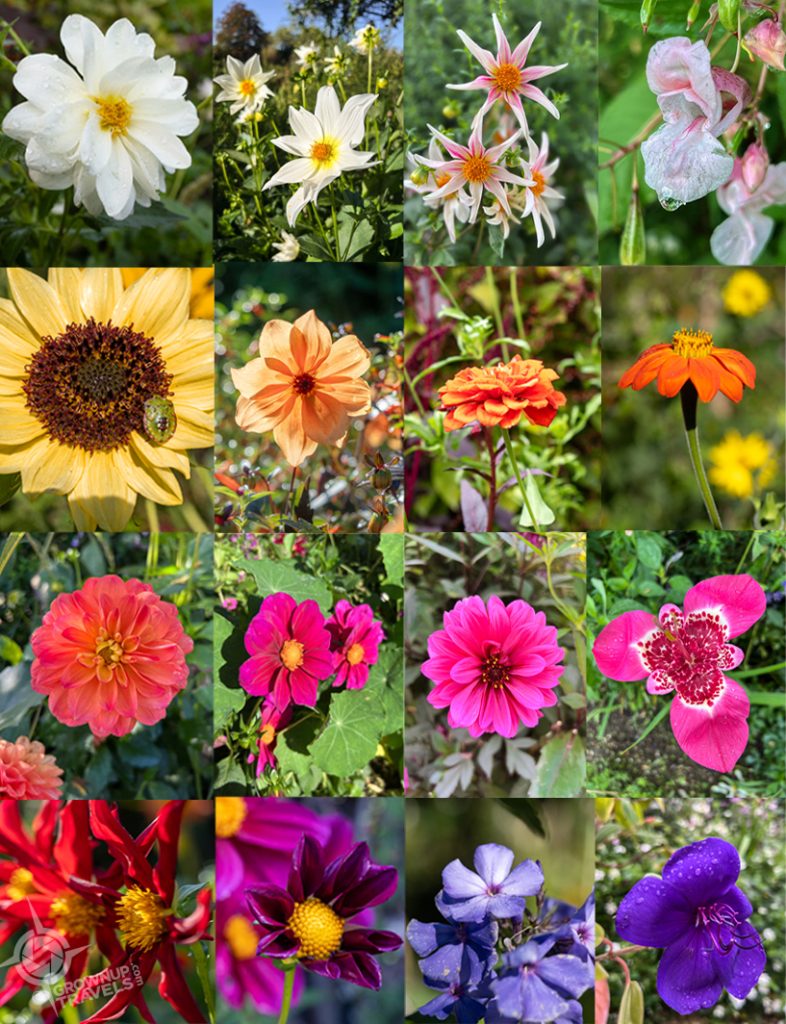
Monet’s garden became a showcase for colourful and exotic plants from all over the world, but it was his interest in Japanese art that led Monet to construct what would become one of the most famous gardens in the world: his water lily pond.
Monet’s Garden as Muse: the Water Lily Pond
To create his lily pond, Monet purchased the land across the road from his house in 1893 and got permission to divert a stream in order to create his own Japanese water garden, inspired by exotic plants and landscapes that he had admired in his vast collection of Japanese prints. Before long, Monet’s garden had grown with the addition of willow trees, bamboo groves, vibrantly-coloured bridges and of course, the water lily plants (nymphaea in Latin) that had inspired it all.
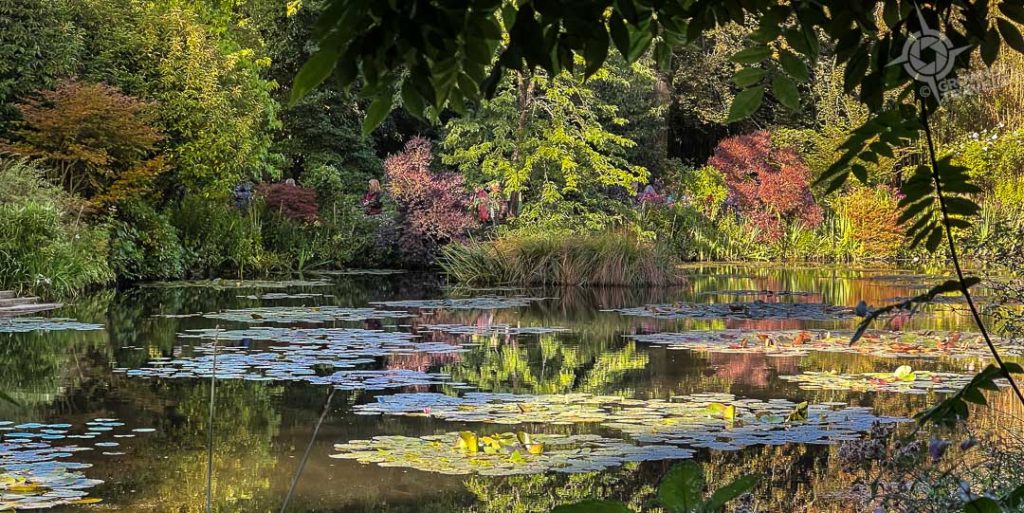
Without realizing it at the time, Monet had built the ultimate muse for his art, a unique garden whose ever-changing light, colour and mood would inspire him for the next 30 years.
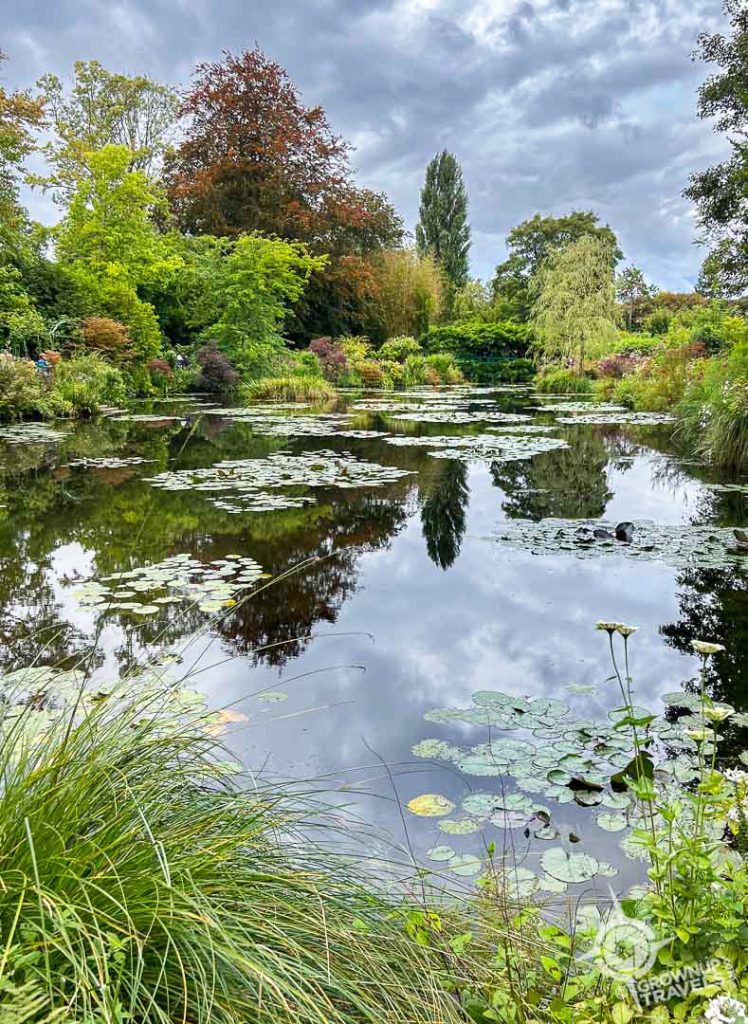
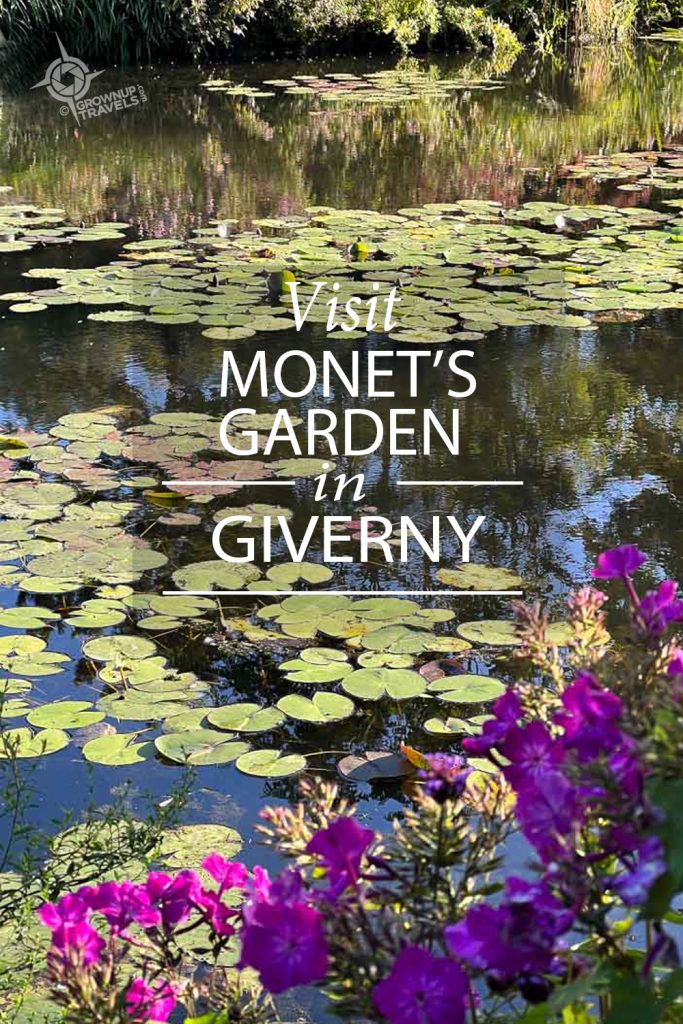
Henk and I visited Monet’s garden twice, once in late afternoon under an overcast sky, and the following morning, with a brilliant blue sky overhead. Viewing the lily pond under different conditions allowed me to see some of what had inspired Monet: the change in light and shadow at different times of the day played out on the surface of the water, which reflected the colours of the sky, the clouds and the surrounding trees. The early morning angle of the sun brought everything into sharper focus, highlighting the glistening undersides of the lily pads, and intensifying the colours of the plants and the vibrantly painted bridges that define the banks of the pond. It was like seeing a different garden each day.
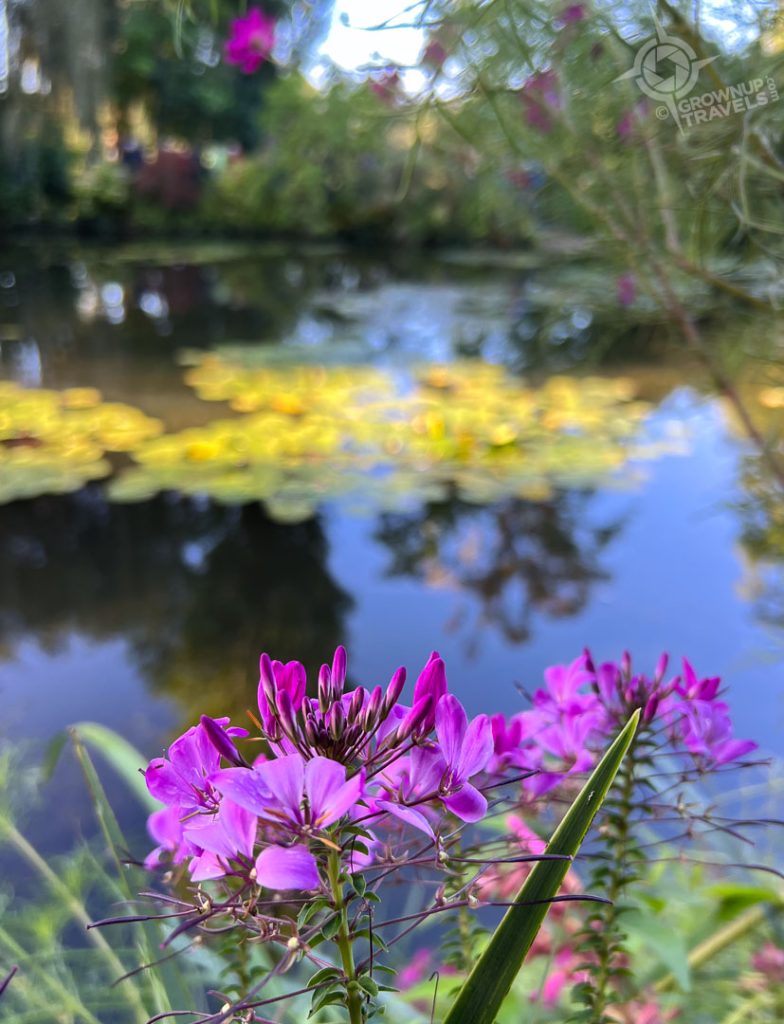
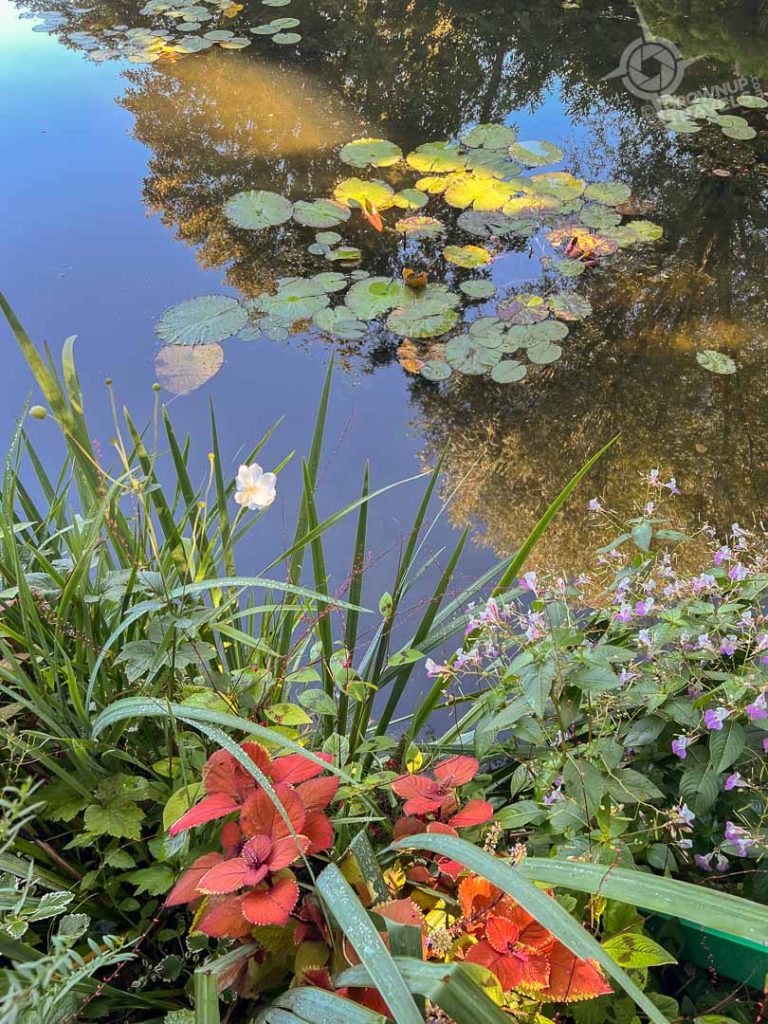
It’s easy to see how this one place could be inspiration for innumerable paintings, but it’s still astounding to realize that Monet created 250 works of art here over the course of his lifetime.
Monet’s Impressionist Masterpieces
Although Monet painted different subjects throughout his career, including portraits, landscapes and more than 30 canvases of Rouen Cathedral alone, most people know Monet for these colourful and vibrant water lily paintings that he produced in his later years.
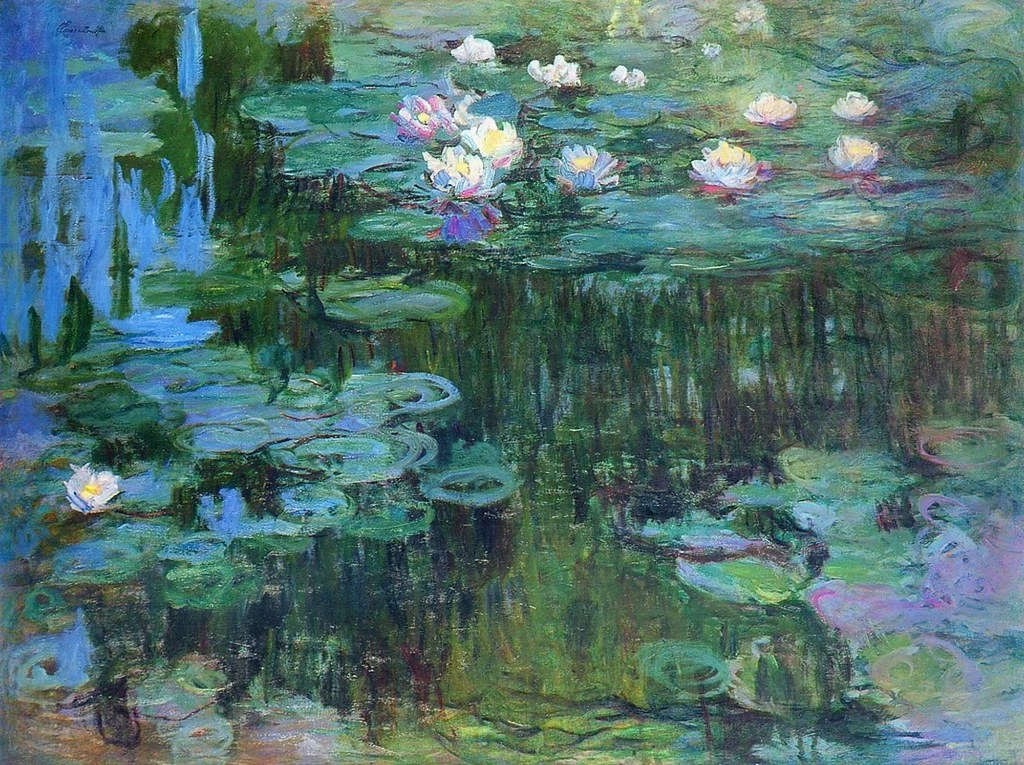
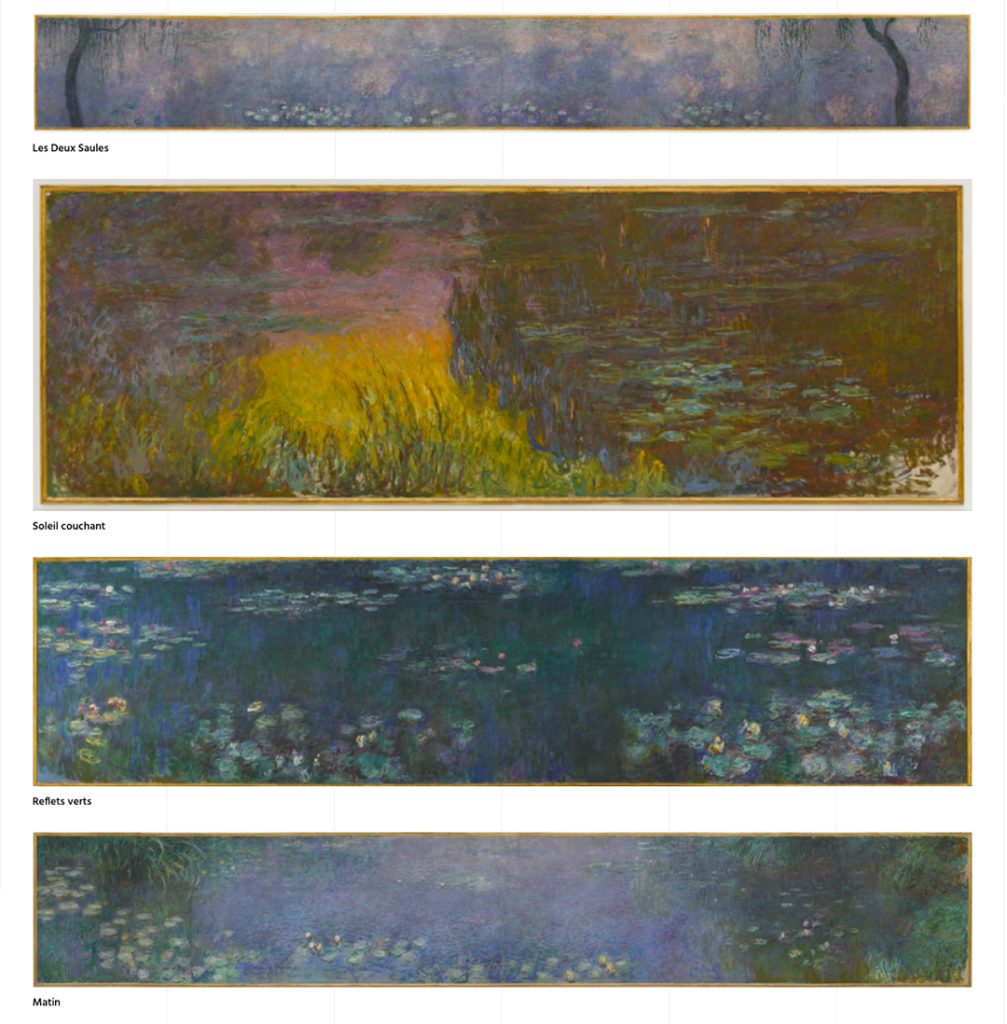
The most famous of these paintings are the 8 monumental murals displayed in two rooms in the Musée de l’Orangerie in Paris, where Monet’s lily pond canvases envelop the visitor with almost 328 linear feet of colour, lilies, willow branches, reflections and clouds.
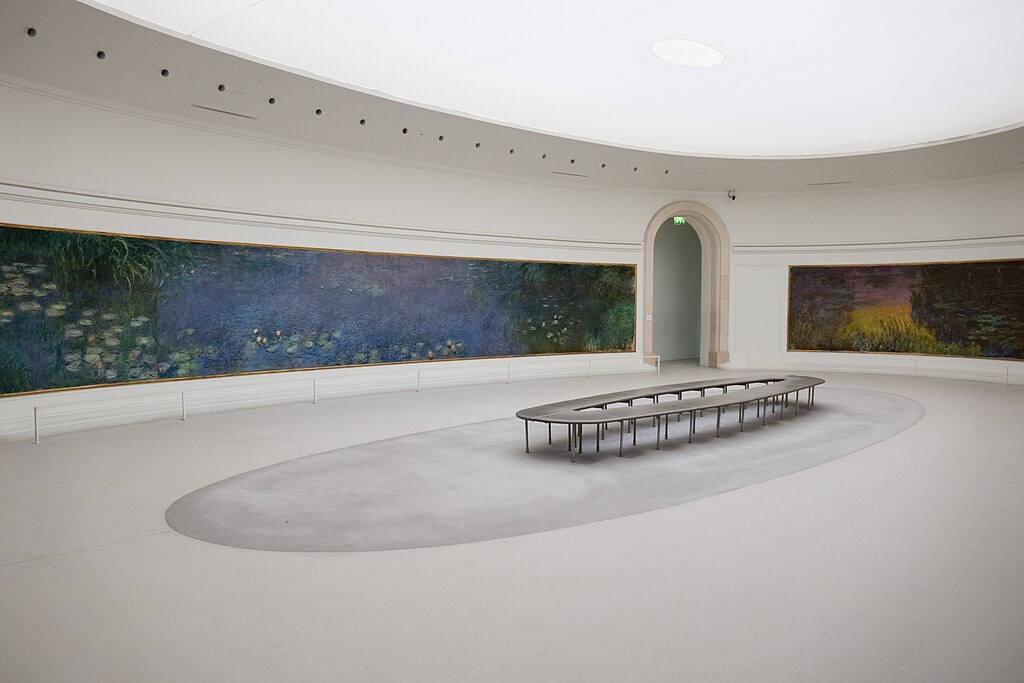
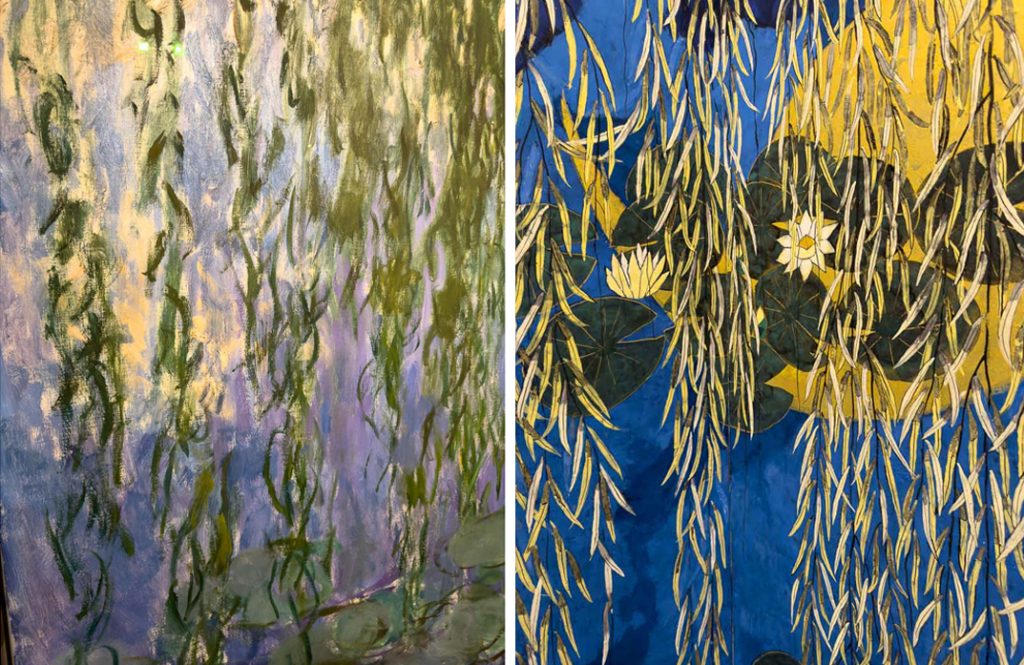
Below are some of the canvases on display. (You can explore these painting with a 360-degree viewer here.)
The Light Fades for Monet
Sadly, in Monet’s final years he suffered from cataracts which greatly inhibited his ability to see the very landscapes he had become so passionate about. But even that didn’t stop him, and his canvases became increasingly more abstract, distilling the natural elements even further so that they became less about form and more about colour. Perhaps Monet’s visual impairment and the resultant paintings inadvertently paved the way for a new wave of Abstract Expressionist artists that would emerge in the decades following his death.
Monet’s House & Gardens, Restored
People who come to Giverny today to visit Monet’s house and see his gardens may be surprised to learn that both are a product of an extensive restoration project that began almost 50 years ago. After Monet’s death on December 5, 1926, his son Michel inherited the property, but took little interest in it and left its upkeep to his step-sister/sister-in-law Blanche Monet-Hoschedé instead. After her death in 1947, the house and gardens were sadly abandoned and left to ruin.
In 1977, Gérald Van der Kamp took on the daunting task of restoring the gardens and the property. He and his wife had been instrumental in tackling the 30-year restoration of the Palace of Versailles and its grounds, and they set about to do the same with Giverny, raising funds from American patrons who were fans of Monet’s work. It took several million dollars and four years to restore the house and the gardens, with considerable help from Gilbert Vahé, the man who became the head gardener, who had also worked at the Gardens of Versailles.
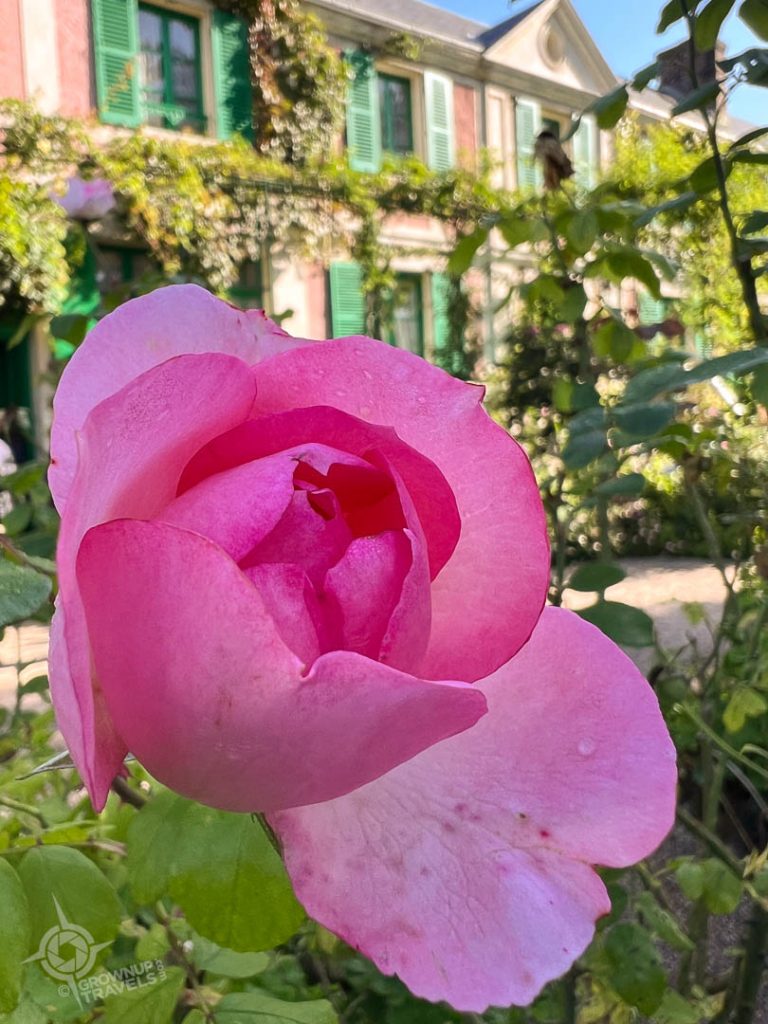
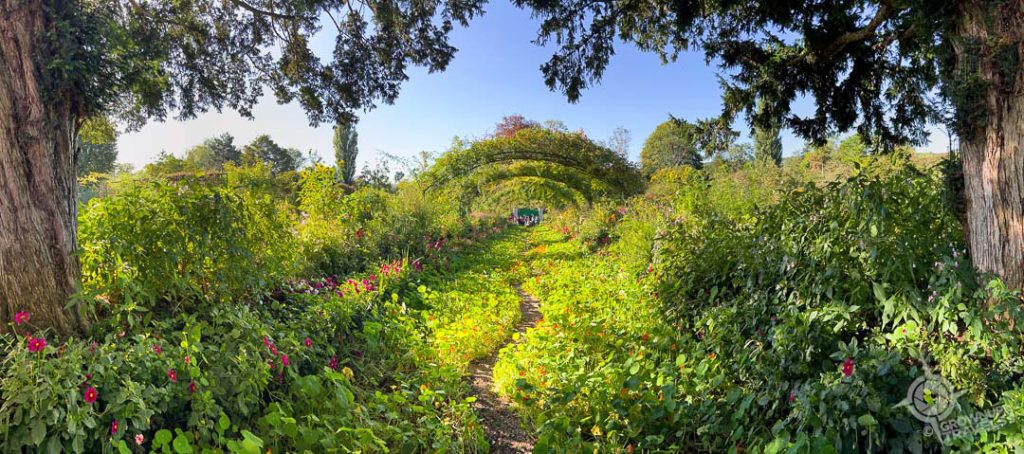
Using forensic skills and historic photos and maps of the garden, Vahé helped return the property to how it was when Monet lived there, including the impressive central path (or Grand Allée) leading from the road to the house, that the artist designed to gradually ‘fill in’ over the summer with lush plantings. That arched tunnel of roses was a favourite subject for Monet and one of the last things that the near-blind artist painted, in fact.


Inside the House of an Artist

The interior of Monet’s home is certainly no Palace of Versailles, but when touring the restored farmhouse it’s easy to see the artist’s hand in the decor, and to imagine his life here amongst the inviting and colourful furniture that fills the rooms. Like in his paintings and in his gardens, colour is everywhere in Monet’s home, from the painted wardrobes to the artwork on the walls to the walls themselves, which are vibrant blue, yellow, green and pink.

The large kitchen was not just colour-drenched with blue tiles, but it was also very modern for its time, with hot and cold running water, and even an ice box (apparently Monet was very fond of banana ice cream, and liked to always keep some on hand).

It’s not surprising the Monet’s house would be so colourful, as the artist was known for his use of colour even in shadows, preferring to create depth and contrast in his paintings by using combinations of hues, but never black pigment. It is even said that at the artist’s funeral, when Monet’s coffin was being led through the town of Giverny to the church, a friend snatched off the black drapery covering the coffin, proclaiming “No black for Monet!”
TIP: You can see Monet’s hearse in the Sainte-Radegonde Church in Giverny, beside which Monet and his family are buried.
Come for Monet, Stay for Giverny!
Most visitors who come to Giverny end their visit after seeing Monet’s garden and farmhouse. But this would be a mistake, as the village of Giverny is definitely worth exploring and makes for a wonderful overnight getaway.
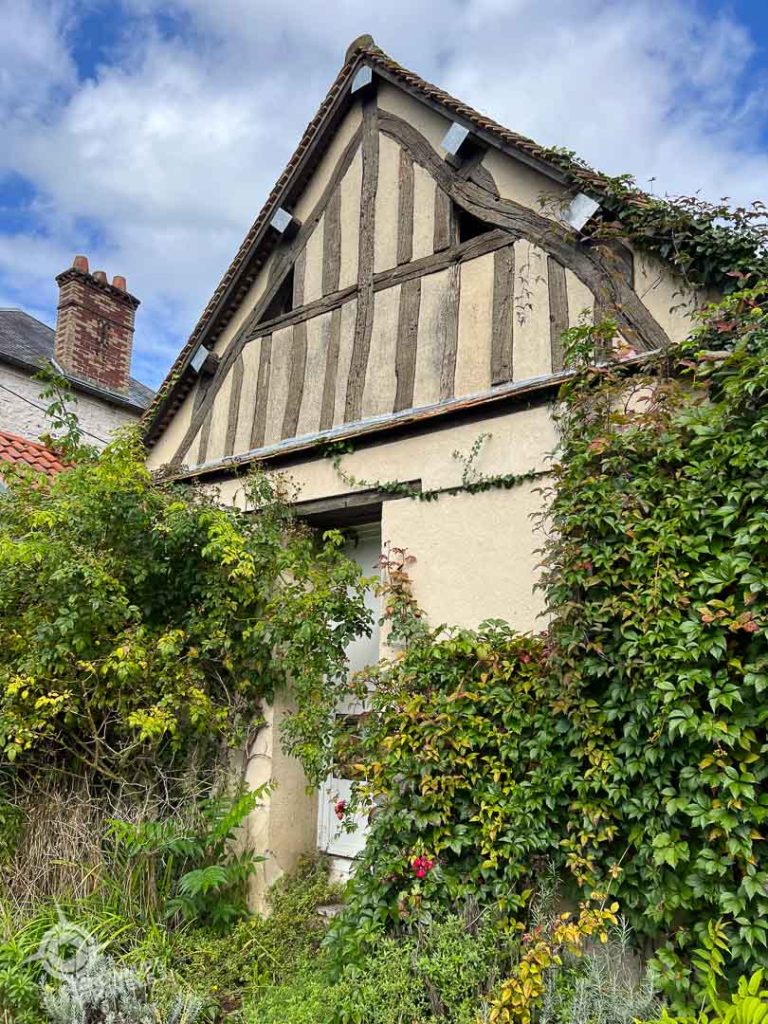
The ivy-covered stone houses are about as charming and photogenic as they could get, so it’s no wonder there are still artists living and working here today. In fact, this place has been attracting artists for more than 100 years, including many American artists who came here in the early 20th century to live and paint the surroundings, hoping to befriend Monet in the process.
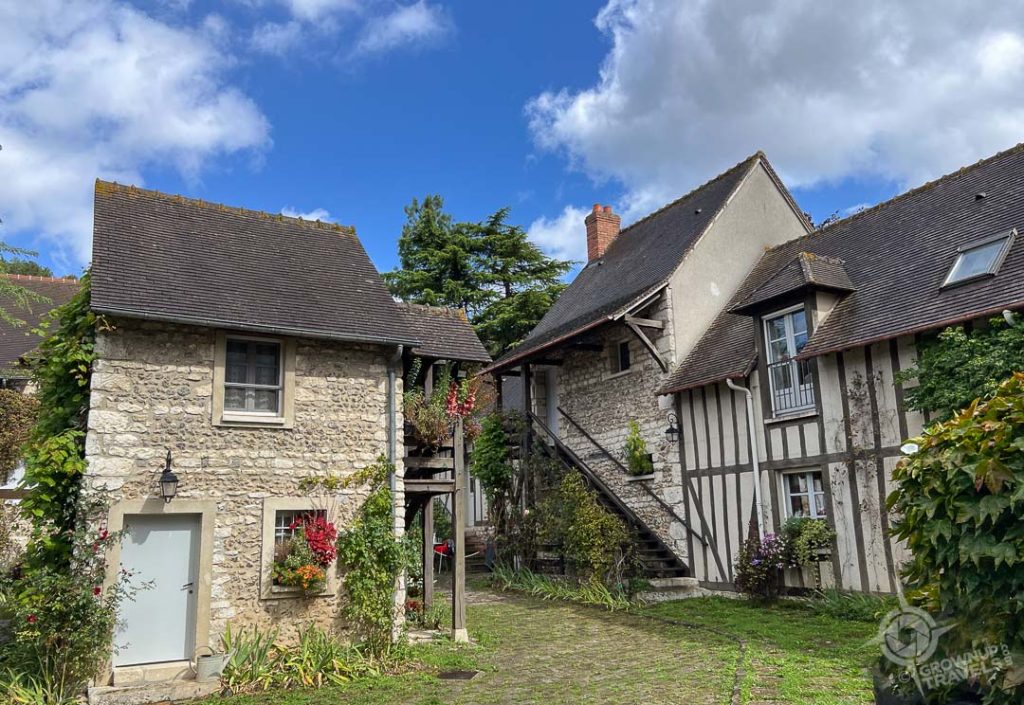
Hôtel Baudy and a Savvy Entrepreneur
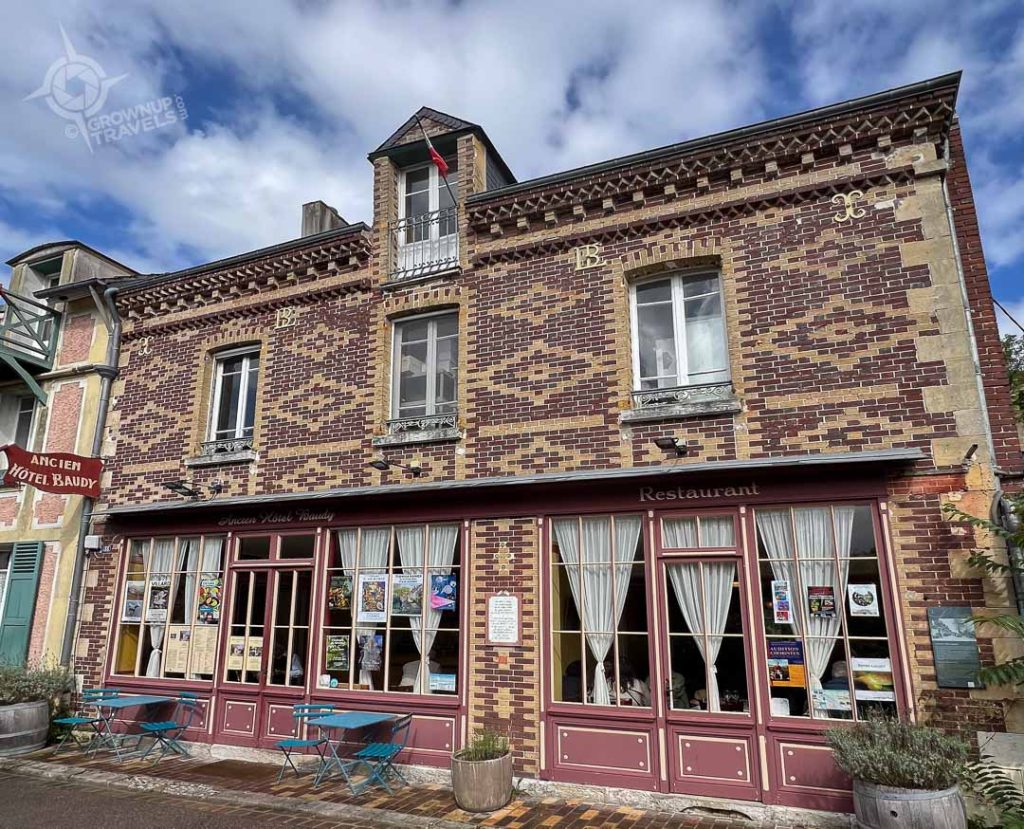
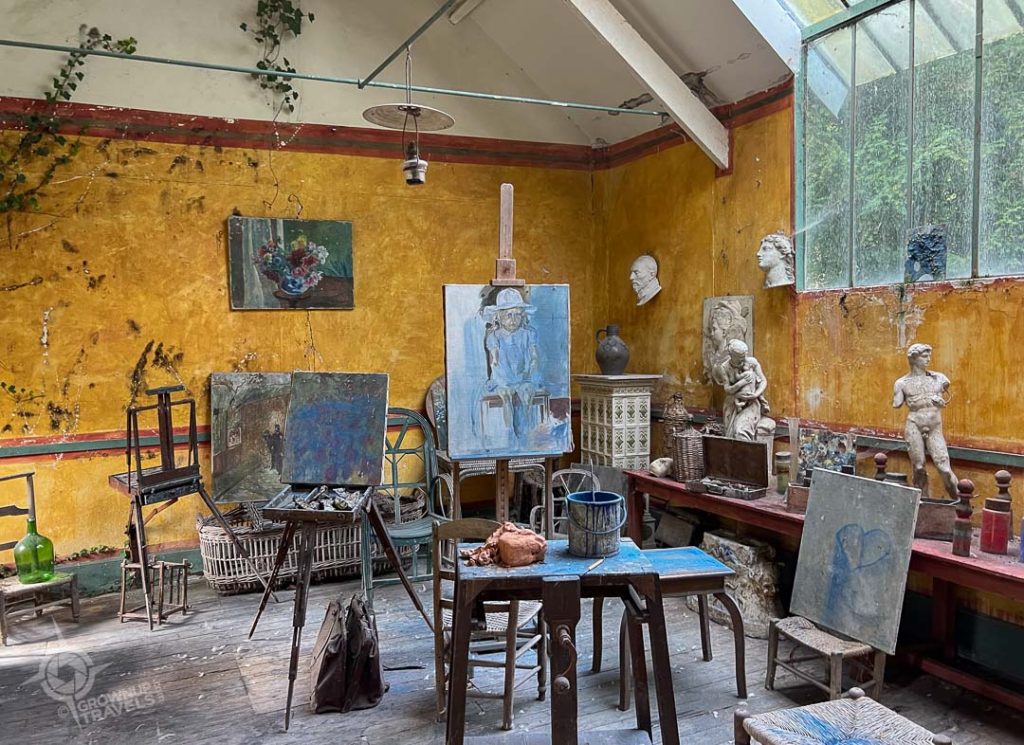
As the influx of these artists began in the early 1900s, one local woman entrepreneur, Madame Baudy, saw the opportunity to cater to these part-time residents. She expanded her existing tavern and store into a proper hotel where visiting artists could stay for weeks or even months at a time. Baudy even constructed a studio in the back of the property for these artists to use, and began to sell art supplies, as well as serving American menu items in her restaurant, and installing tennis and croquet courts for the budding artists’ colony.
Today Hotel Baudy is still a restaurant, and a great option for a leisurely lunch after a visit to Monet’s gardens. You may not find baked beans here (the American addition Madame Baudy added to the menu), but you will definitely enjoy delicious French options.
Musée des Impressionismes
The village of Giverny is home to a unique museum, too, the Musée des Impressionnismes. It’s important to note that this museum is dedicated to ‘impressionISM‘, not the ‘ImpressionISTS“. Meaning this is not the place to find artwork by Cezanne, Pisarro, or Renoir, but rather, artwork that relates to or is inspired by impressionism as an art movement. The museum does have the odd Monet, but primarily ro provide for context for its current exhibitions.
During our visit, I saw an impressive collection of works created by Japanese artist Hiramatsu Reiji who immediately recognized a certain Japanese sensibility in the water lily paintings of Monet when he first viewed them at the L’Orangerie museum in 1994. Hiramatsu subsequently visited Giverny many times to see the gardens for himself, after which he was in turn inspired to create his own artwork. These recently-acquired works are Hiramatsu’s own homage to Monet’s giant canvases: monumental Japanese ‘screens’ that fuse traditional techniques and stylized imagery with Monet’s water lily subject matter.
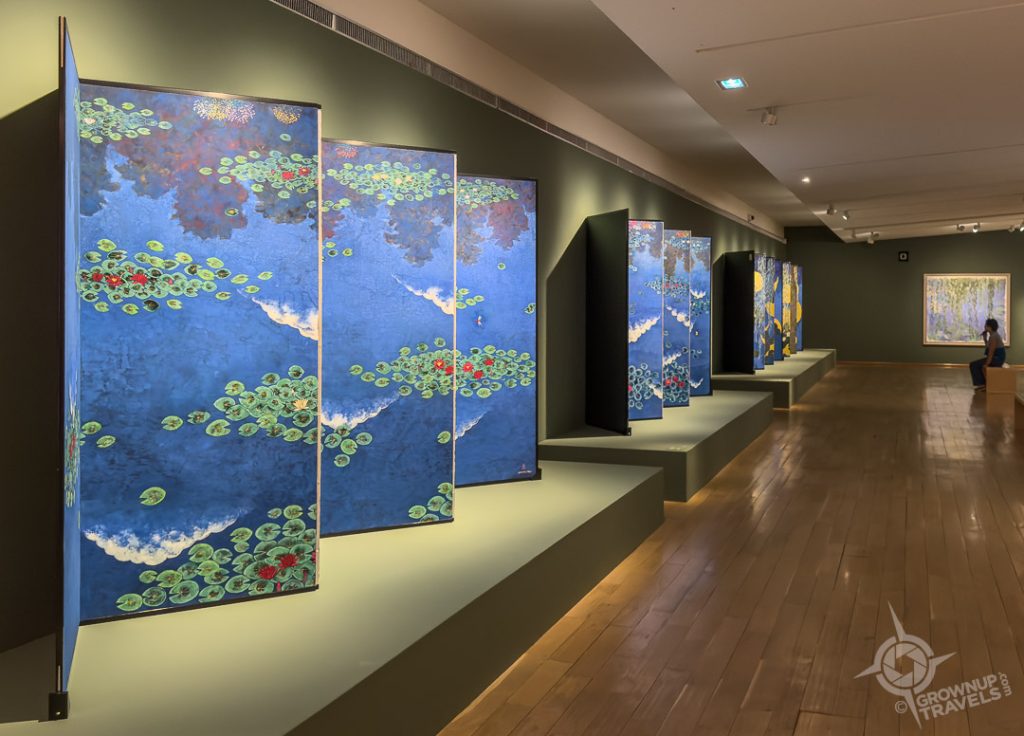
These kinds of Monet-inspired or in fact, impressionism-inspired collections, are exactly what the Musée des Impressionnismes is all about, with different thematic interpretations of this movement reflected in their exhibitions.
Giverny: a Monet Mecca
Whether they come to see the house where a great Impressionist lived and painted, or Monet’s garden that inspired some of his greatest masterpieces, visitors have made Giverny a modern-day “Monet mecca”. This is a good thing, of course, because it has kept the village as vibrant and alive as the paintings of its most famous resident, with cafes, restaurants, art studios and an interesting and well-curated museum all its own.
Better still, when the day-trippers have returned home and the tour groups have moved on, those lucky enough to remain overnight in Giverny can experience all of the above minus the crowds – not to mention the quiet, bucolic landscapes and ever-changing light that Monet fell in love with, and that inspired him to create some of his greatest masterpieces.
With all of that going for it, Giverny definitely makes a very good first impression.
PRACTICAL INFORMATION FOR VISITING GIVERNY
TIP: Whenever you make a specific place a ‘must-see’ item on your travel itinerary like Monet’s garden, definitely plan for an overnight at that destination. You never know what the weather may be, and having an extra day gives you the opportunity to work around the weather and/or revisit the attraction and experience it more than once. You’ve come all this way to see something – why not give yourself a little extra time to enjoy it!
Where to Stay in Giverny:
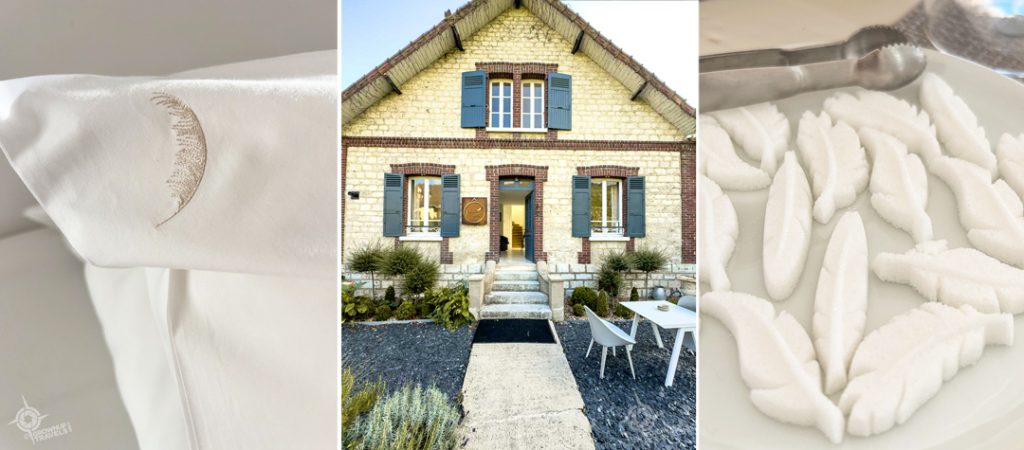
Ô Plum‘ART is an exquisite boutique hotel right in the village of Giverny, and we cannot recommend it highly enough. The unique hotel rooms are a study in white and cream, striking the perfect balance between refined minimalism with its monochromatic decor and rustic warmth with its painted floors, antique mirrors and wood furniture accents. Every detail has been curated beautifully from the elegant, luxurious amenities, right down to the embroidered feather details on the pillows (referencing its sister hotel, Le Jardin des Plumes). There are even sugar ‘feathers’ served at breakfast. So. Beautiful.
Where to Eat in Giverny:
Oscar, right in the Musée des Impressionnismes is more than your typical museum cafe, as the chef running it, David Gallienne, is well-known for his talent in the kitchen, having trained at several Michelin-starred restaurants in Normandy.
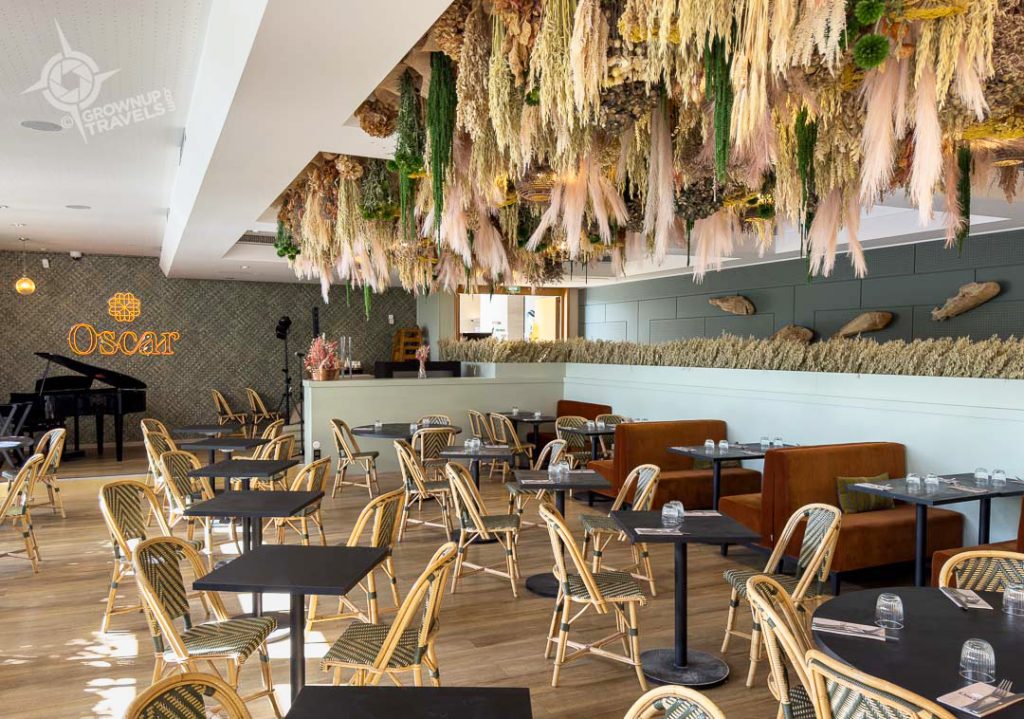
In fact, if a Michelin-starred restaurant is what you want to add to your Giverny experience, head to the restaurant at Le Jardin des Plumes, the hotel which Gallienne also owns, offering an even more elevated gourmet experience including tasting menus of 4, 5, 7 and 9 courses.
A more affordable option is Restaurant Baudy in the Hôtel Baudy which serves lunch and dinner in the cozy restaurant inside the historic hotel that originally belonged to Madame Baudy. We had a delicious lunch complimented with good wine and attentive service.
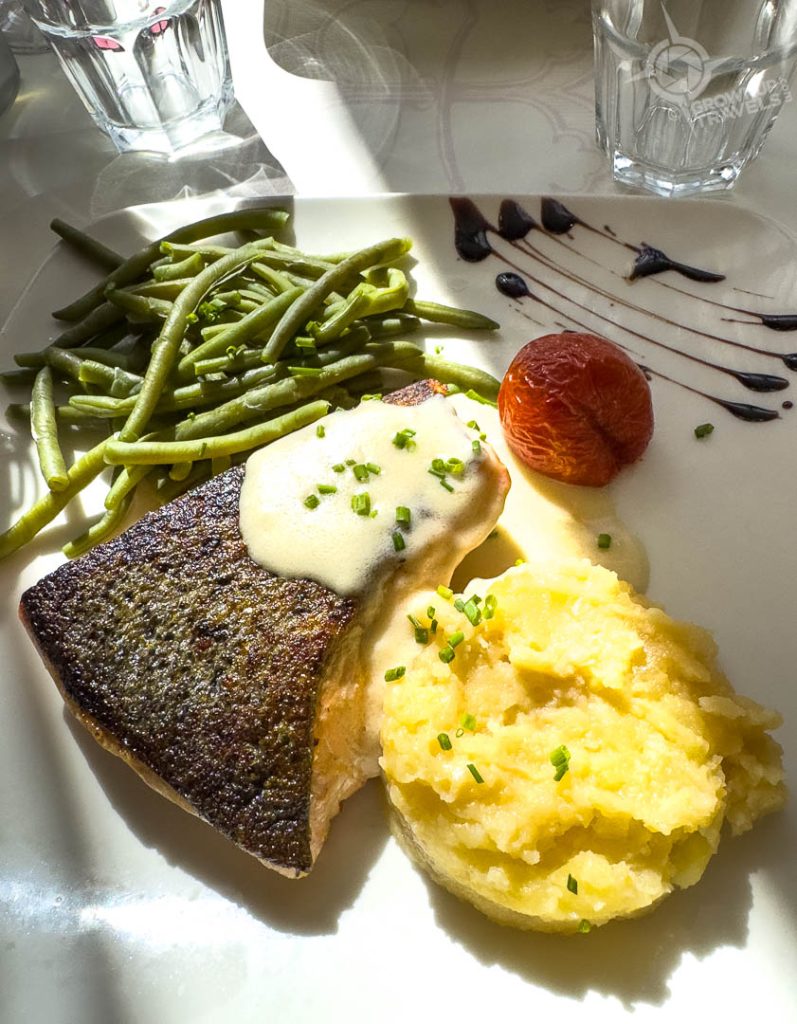
Revelations restaurant at the La Musardière hotel was our choice for dinner, where Henk and I decided to be adventurous and opt for the ‘surprise’ 4-course menu. The selections were modern, tasty and beautifully presented and all the waitstaff were friendly and knowledgeable about the menu and the wine list.
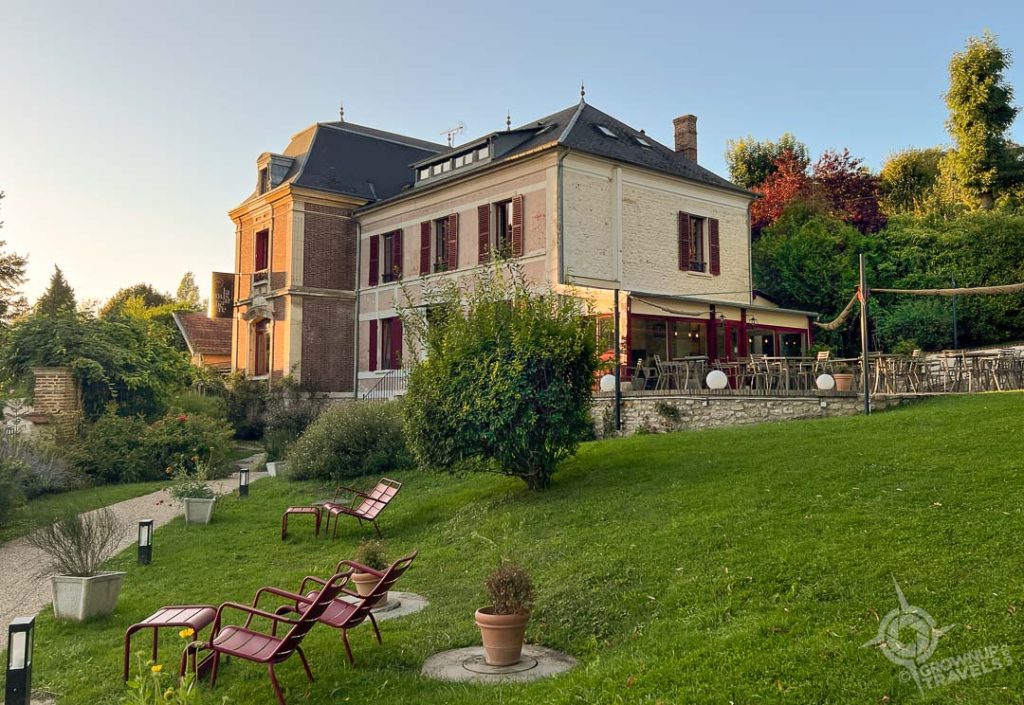
Monet’s Garden and House Tickets & Parking
Monet’s garden and farmhouse are open every day starting from the end of March – November 1st. It’s always a good idea to book tickets in advance, especially on weekends. Timed entry tickets can be purchased on the website for around 12 euros. There is a small parking area on the side of the road where the house is located, but there is also a large parking lot on the opposite side of the road, with a pedestrian passageway under the road that connects you to the property.
Special thanks to Tourism Normandy who hosted Henk and I on our visit to Giverny.

Jane is an award-winning travel writer and photographer and an accredited member of the Travel Media Association of Canada (TMAC). In their annual awards competition, TMAC named GrownupTravels.com as the Best Self-Published Travel Blog in 2025 .
She is also a member of the North American Travel Journalists Association, and a freelance travel writer contributing to both print and online publications.





Very interesting article, both for the artistic as well as the non artistic