

I really wasn’t prepared for my reaction when I first saw the Canadian National Vimy Memorial.
Henk and I had been travelling through Normandy, as part of the 150th anniversary of Impressionism, following in the footsteps of artists like Claude Monet, and visiting places like Giverny, Rouen and Honfleur, where painters were inspired to change the way the world looked at art. But 2024 was also the year commemorating the 80th anniversary of D-Day, which changed the world itself, so we were keenly aware that just a few kilometres up and down the coast lay the infamous beaches of Normandy where so many soldiers had sacrificed their lives to help free Europe from Nazi occupation in World War II.
A few hours farther east was another site we recognized from Canadian history books and so many Remembrance Day ceremonies: Vimy Ridge. So on an impulse, we decided to stop by to see the World War I Canadian memorial there, since we were ‘in the neighbourhood’.
One look at the monument, even from a distance, and my first words to Henk were “I’m so glad we came.”
History Made Real
Our approach to Vimy was a very different one than the long and bloody one the Canadian soldiers made in 1917, who had to claw their way up to the ridge from the Douai Plain under heavy shelling from the Germans. All Henk and I needed to do was follow a narrow tree-lined drive from the turnoff of the highway, winding our way across peaceful countryside, the trees on either side casting late-afternoon shadows across the grass-covered, undulating mounds beneath them. It was serene and beautiful.
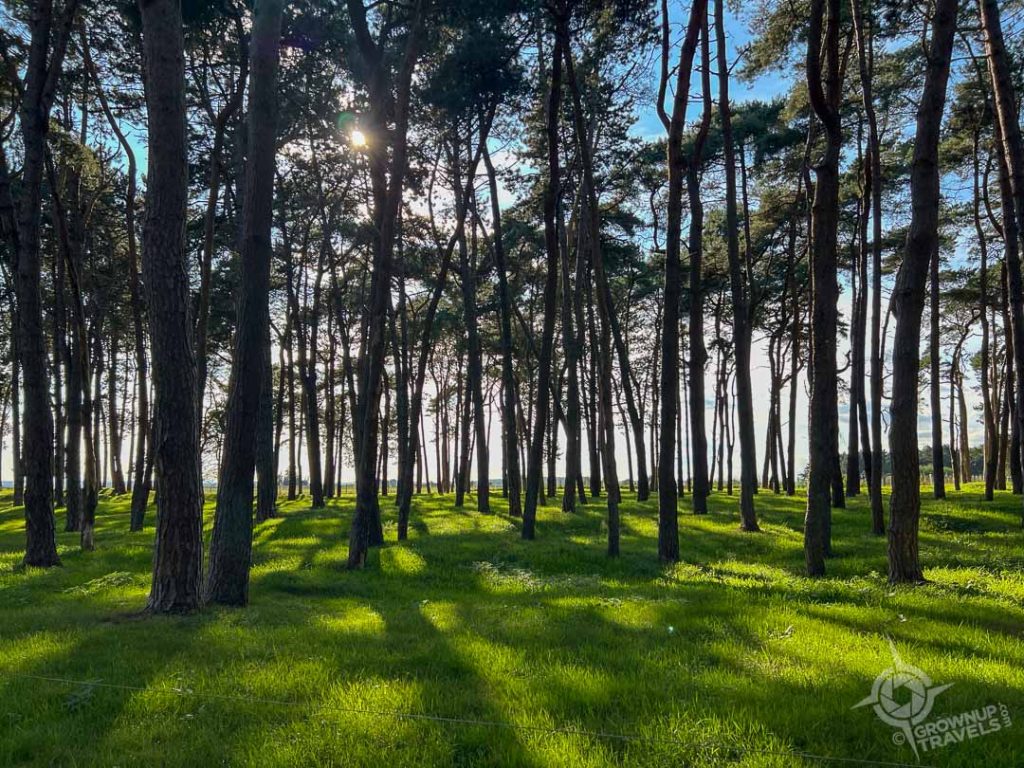
When the trees ended, the vista opened up in front of us to reveal a long, open field at the edge of which was a pair of monumental white pylons, the Vimy Memorial. I was stunned.

The stark whiteness and simplicity of the 8-story tall structure had a commanding presence, framed as it was against the blue sky and perched hundreds of feet above the plain below it, which was hidden from our view. It seemed to define the edge of the world, not just the edge of the horizon. And at that moment, the importance of the Battle of Vimy ridge became real to me for the first time.
An Enduring Symbol
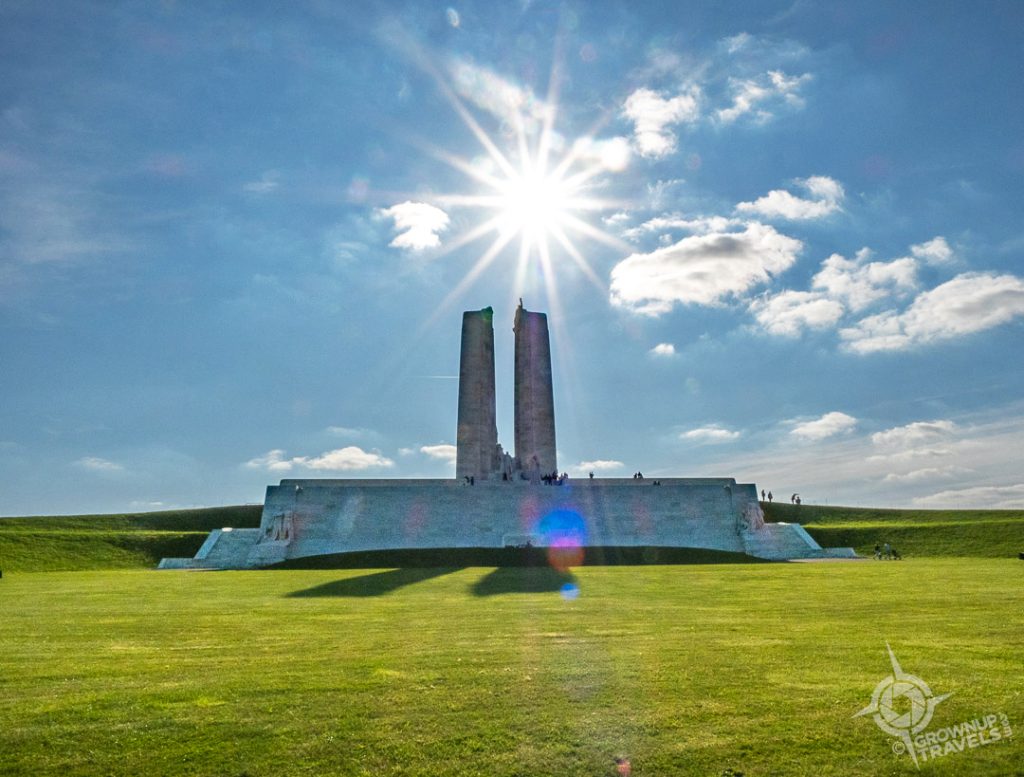
Even at first glance, I was struck immediately by the timelessness of the Vimy Memorial’s design: the scale and style of the monument could have stood alongside ancient Egyptian temples, or modern glass skyscrapers and would easily have looked at home with either. We have Walter Seymour Allward to thank for this, the Canadian sculptor and architect who was awarded the Vimy Memorial project after a design competition that saw 160 designs submitted to the government.
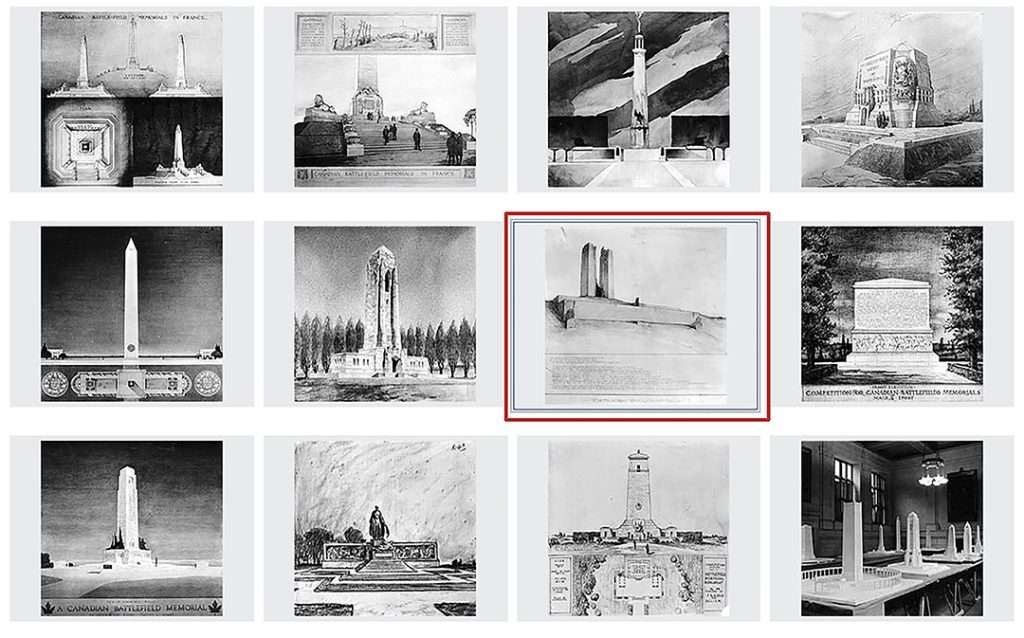
Allward’s striking and original design had come to him in a dream, and impressed the jury so much they decided it should be Canada’s one and only national war memorial in Europe. That dream became concrete (quite literally) eleven years later and at the cost of $1.5 million dollars, when the completed Vimy Memorial was unveiled on July 26, 1936.
It was an immense honour and responsibility for any designer to try to capture what had taken place here. Not only did Vimy Ridge represent the site where Canadians had made a decisive victory, the battle here helped solidify our identity as a nation: it was the first time all 4 divisions of the Canadian Expeditionary Force acted together, uniting to form a cohesive unit, the result of which became a source of national pride for generations. The victory here also helped turn the tides of World War I. The memorial needed to be something extraordinary.

The Design
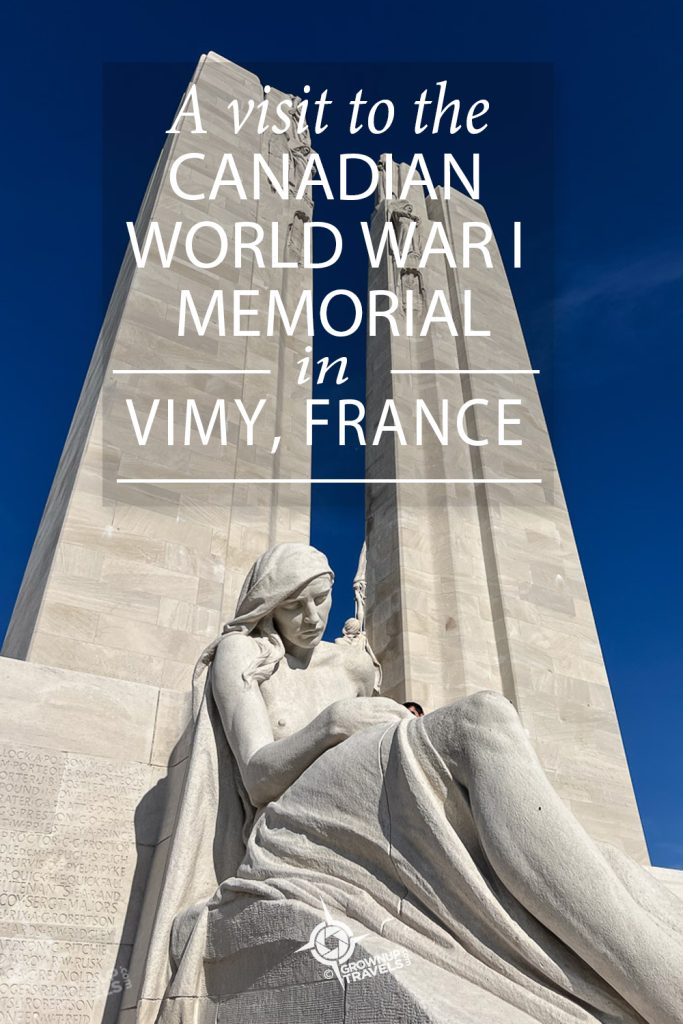
The Memorial’s design is elegantly simple but powerful: its stepped rectangular base is massive and required more than 11,000 tons of concrete and limestone to construct. The vertical surfaces are carved all around with the names of 11,285 Canadian soldiers who died in France but whose bodies were missing or presumed dead with no known gravesites.

Resting on top of this base and rising 37 metres into the sky are the twin pylons. Twenty allegorical figures are placed on and around the monument, representing universal ideals such as honour, justice and a prayer for peace.

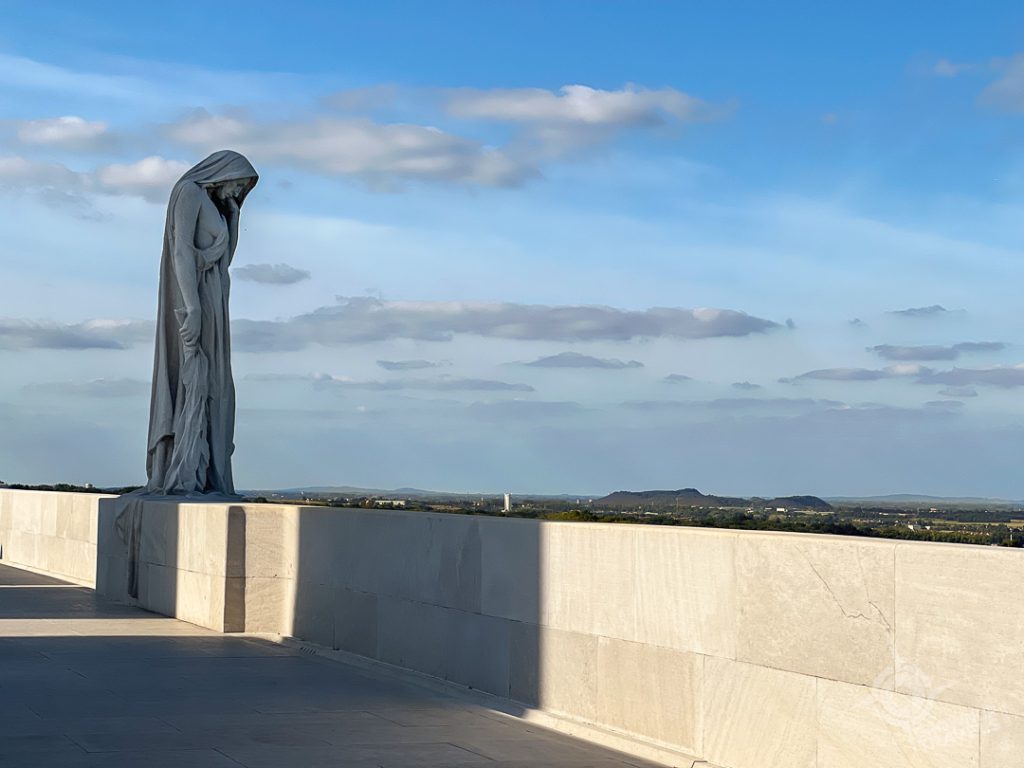
Perhaps the most poignant sculpture is the one titled ‘Canada Bereft’, a cloaked figure of a young woman representing the young nation of Canada mourning her fallen sons. Carved from a single, 30-tonne block of stone, she stands alone on the east side of the memorial facing the Douai Plain below where so many of those men sacrificed their lives to liberate others.
Sobering Surroundings
The walk to the Memorial from the parking area was a contemplative one for both Henk and I, not just because it allowed us to appreciate the scale of the monument, but because it also gave us time to fully understand its location: the grassy mounds surrounding the Monument and the Visitor Centre today had first appeared to us to be part of the rolling countryside, but we soon realized that they were the scars and craters of that 1917 battleground, forever etched into the earth by the more than one million shells that pulverized the Ridge. And the trenches between them were once the site of mud, blood and guts, both literally and figuratively.
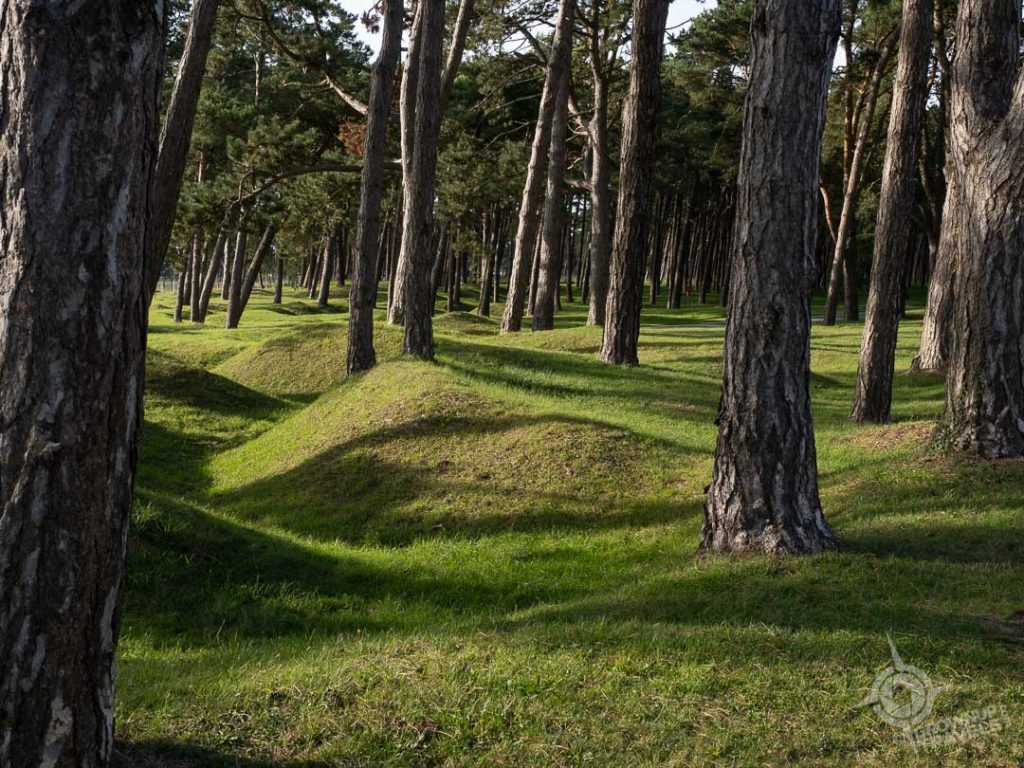
Even today, visitors are prohibited from walking over the grass, or between the trees, in the unlikely case that an unexploded shell may have worked its way to the surface over time. There’s a reason sheep tend to the grass, not humans – a sobering reminder of what those Canadians faced more than 100 years ago.
The Visitor Education Centre at the Vimy Memorial
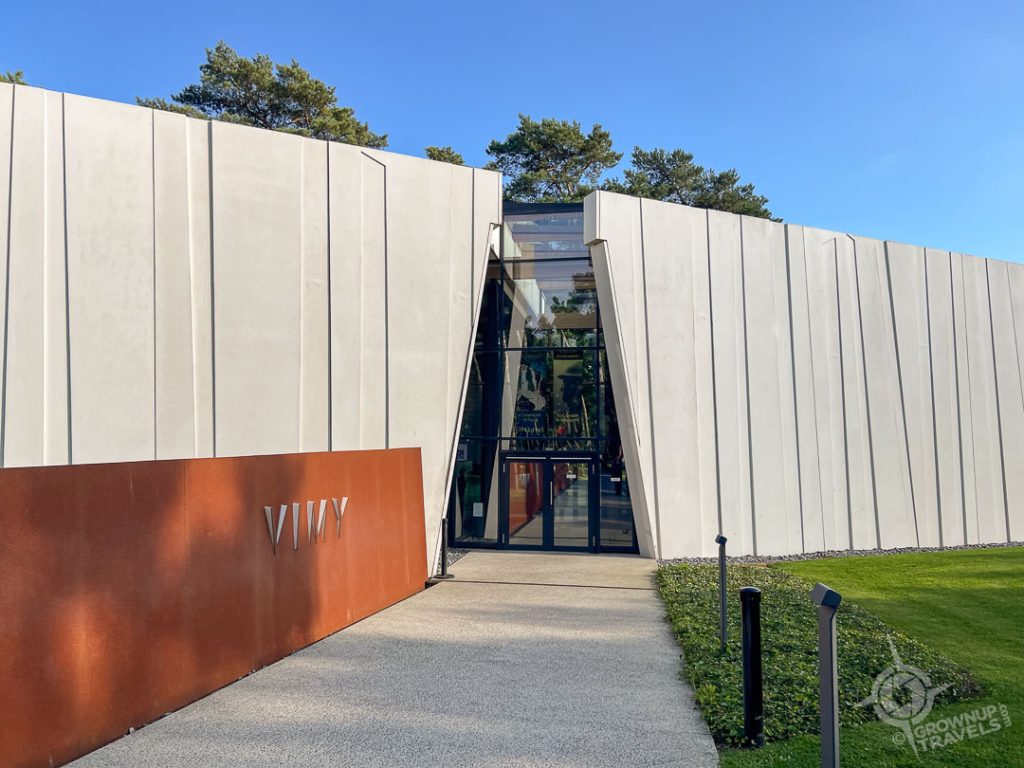
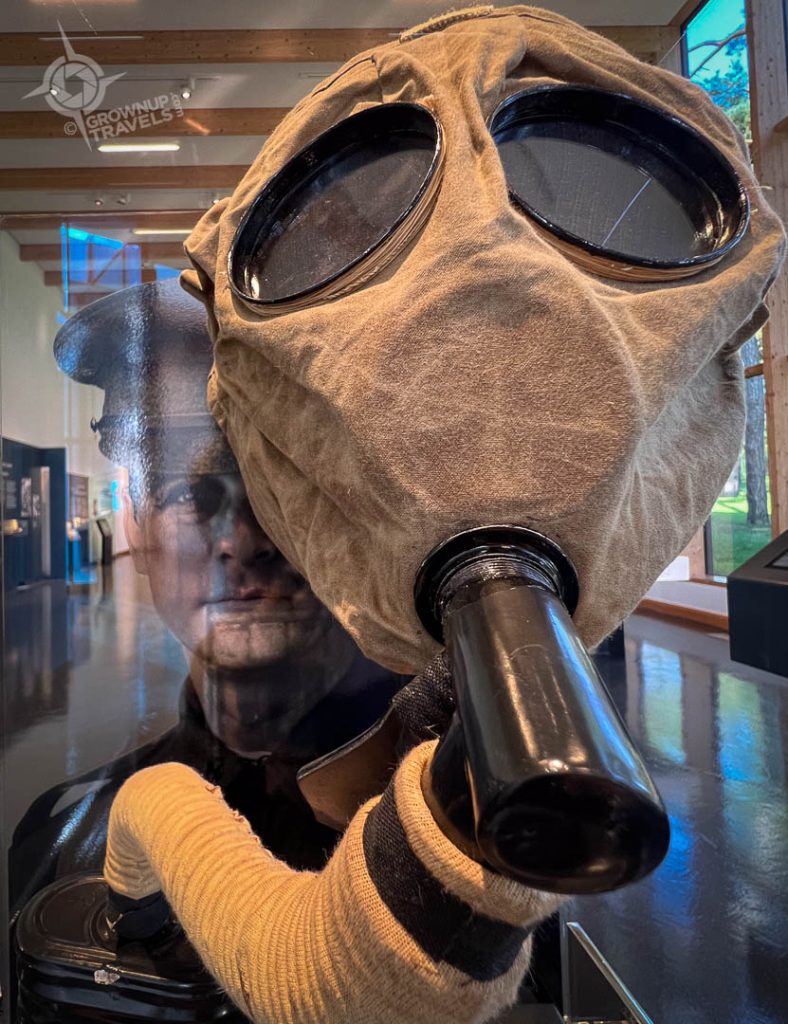
In 2005, a new building was added to the Vimy Memorial site, the Visitor Education Centre, a discreet yet impressive structure that helps to contextualize not only the details and events of the battle itself, but the human cost and impact of the war. Letters and personal accounts reflect the human toll it took and hint at some of the deplorable conditions and horrors faced by soldiers – horrors that made World War I one of the most brutal conflicts in history.
“Once overseas, I had a good idea of what the Germans had in store for us. But today, the Colonel was talking about a silent weapon. Some sort of gas…”
I was also drawn to the recruitment posters in the Centre, some of which have a uniquely Canadian message, like the ones calling for ‘bushmen’ to come help serve in the Canadian Forest Battalion.

And then there are ones that served as a reminder of just how many ‘new Canadians” joined in the battle to protect their former homeland: headlines called on Irish, Scottish, and British immigrants to enlist to help their European brethren with a message of “British blood calls British blood!”.
Much of which ended up spilled on the fields of Vimy Ridge.

Pride, Awe, Respect, Sadness, Gratitude and Peace
Visiting the Memorial, viewing the exhibits and letters in the Visitor Centre, and even speaking with the young Canadians who feel so honoured to work here, it was difficult to identify which emotion I was experiencing. There were many.
Up until this moment, war had seemed very much like a foreign concept to me, since it had never directly touched Canada’s shores or my own immediate family. But visiting this piece of ‘foreign’ soil that has since been granted to the people of Canada to use ‘freely and for all time’ as a Memorial, I couldn’t help but be touched by the significance of this place, and the many millions of lives that were changed by the events that took place here.
In the tangle of emotions that the Vimy Memorial evoked in me, one thing is certain: I’ve never been prouder to be Canadian.

PRACTICAL INFORMATION FOR VISITING THE VIMY MEMORIAL
The website for the Canadian National Vimy Memorial is a good place to start for more information on all things Memorial-related. The Bulletin Board section lists the hours of operation as well as events taking place at the site. Note that the Visitor Centre is closed from mid-December to early February.
Where to stay near Vimy: ARRAS
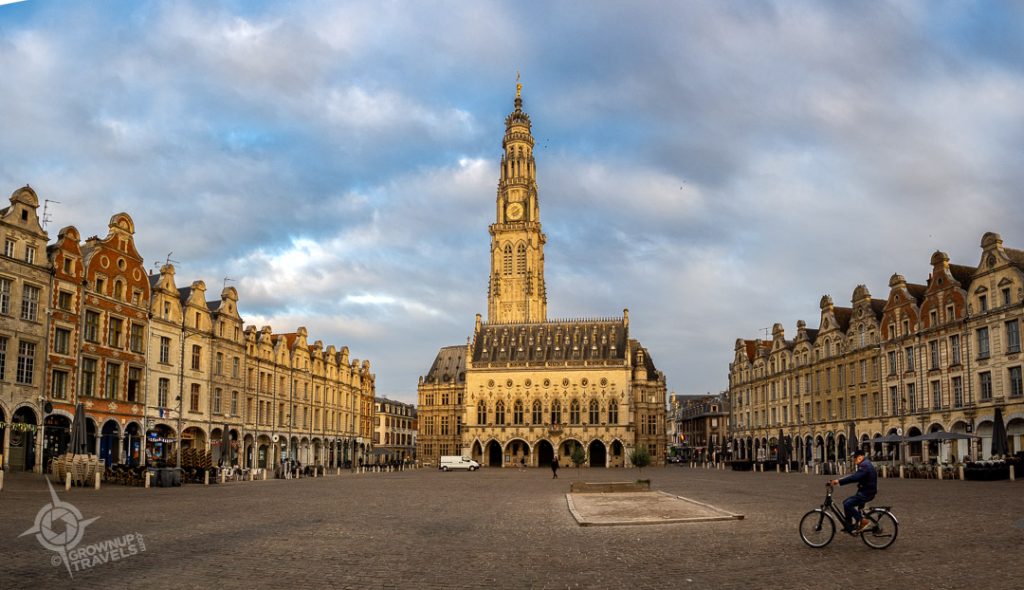
Henk and found a very affordable place to stay close to the Place des Heroes in the town of Arras, which is only a 15-minute drive from the Vimy Memorial. This town was impacted severely by both World Wars, being close to the Western front in both cases. But in World War II, thanks to the strategic use of former underground limestone quarries that were repurposed as tunnels to hide soldiers, the Allies were able to surprise the Nazi troops with an offensive of their own. You can take tours into these ‘Boves” tunnels today.
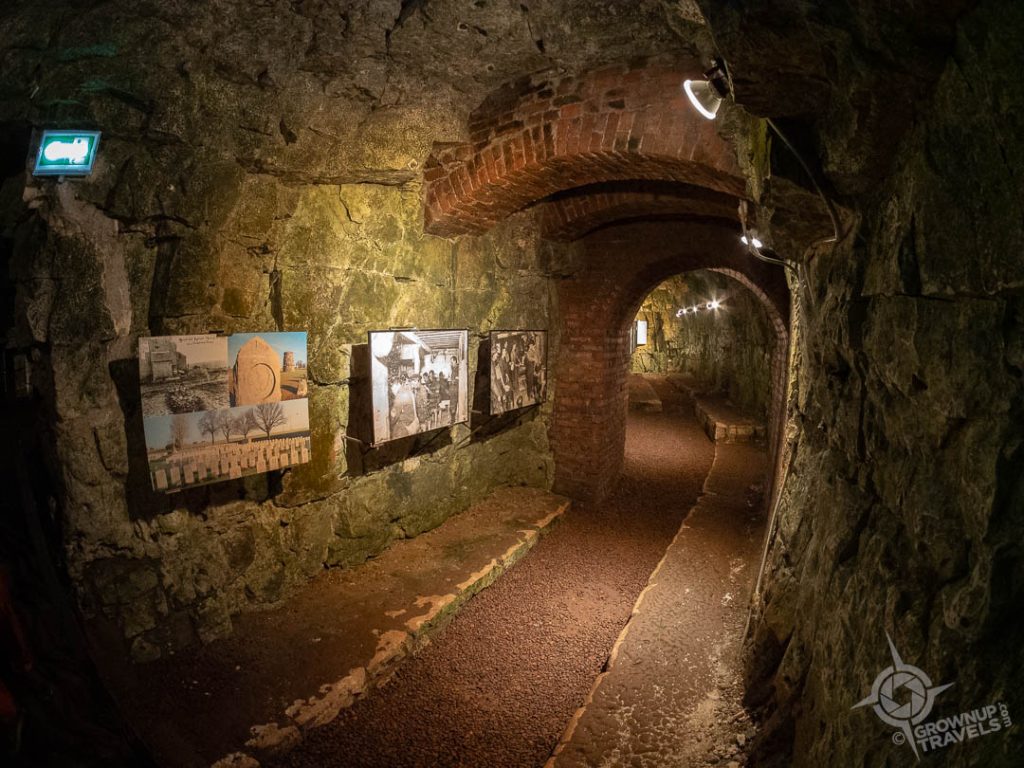
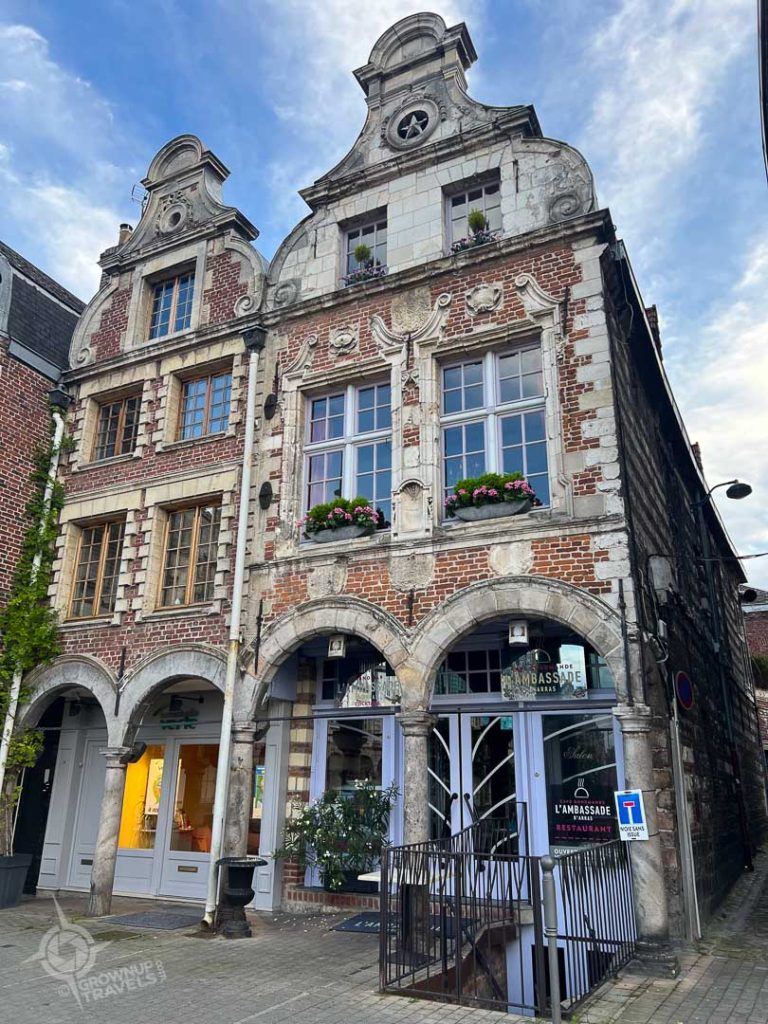
Although shelling destroyed about 80% of Arras during World War II, the photogenic Place des Heroes with its belfry tower and the Grand Place nearby were painstakingly reconstructed to appear the way they would have looked historically. And since Arras is located very close to Belgium, much of its architecture is more Flemish in style, with Baroque gables and facades that add a lot of charm to the town.
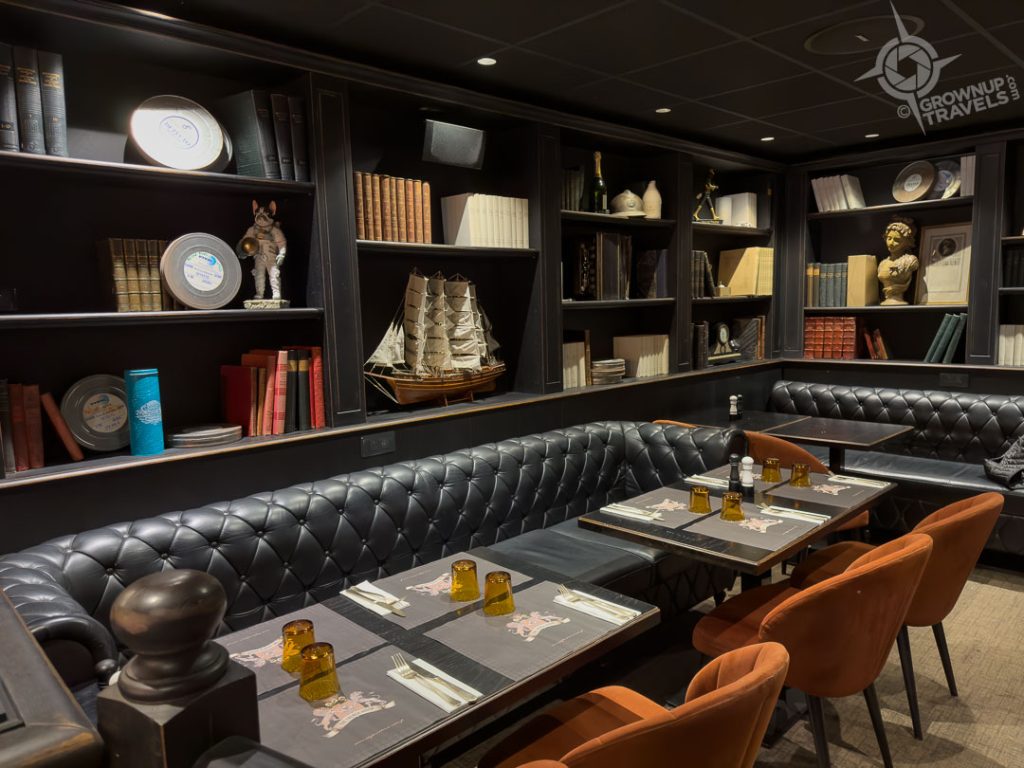
Where to eat in Arras: The French House pub
We learned about The French House on the Grand Place when we happened to meet another Canadian couple who recommended it to us. Great food, and a very cozy ambiance. It’s a great option and the food here is an elevated French take on many British favourites plus a few things all their own.

Jane is an award-winning travel writer and photographer and an accredited member of the Travel Media Association of Canada (TMAC). In their annual awards competition, TMAC named GrownupTravels.com as the Best Self-Published Travel Blog in 2025 .
She is also a member of the North American Travel Journalists Association, and a freelance travel writer contributing to both print and online publications.




Subscribe and you'll never miss an update!
Join our mailing list to receive the latest news and updates from Grownup Travels. (We keep your email STRICTLY private)
Thank you for subscribing to Grownup Travels!