
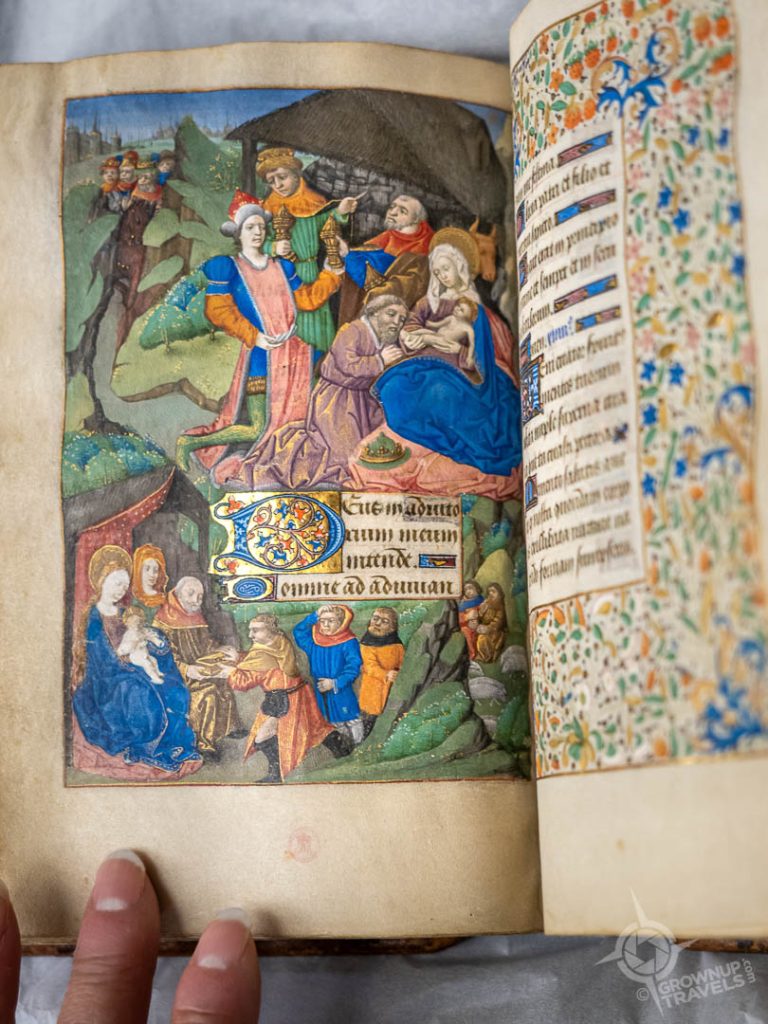
Birth of Christ illumination from Marguerite de Foix Book of Hours at the V&A National Art Library
Most people may only ever view a beautifully illuminated 15th century manuscript from behind glass in a museum cabinet, never mind have the chance to actually turn its pages. So when I learned that it was possible to personally handle a 500-year old book whose every page is decorated with miniature illustrations and brilliant gold leaf, I was all over it. And the key to having this VIP experience? Simply having a free library card for the Victoria and Albert museum’s National Art Library. Here’s how I literally got my hands on two of the rarest and most valuable books in the Library’s collections during my own illuminated manuscript private viewing at the V&A museum.
Victoria and Albert Museums – a Family Affair for Every Taste and Audience
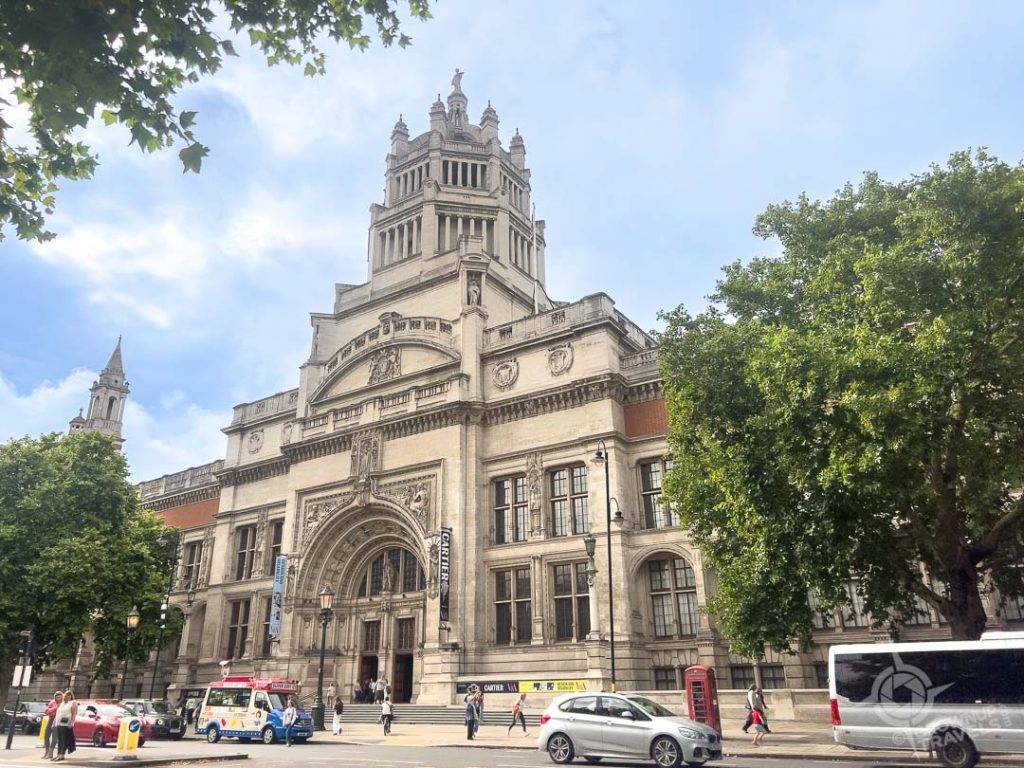
V&A South Kensington Museum main entrance
The Victoria and Albert Museum of England is actually a family of museums with 6 different venues in 5 different locations, each one catering to a variety of audiences and interests. Whether it is their Young V&A that is designed to appeal to a younger demographic, or their Wedgwood Collection that traces the history of the Staffordshire Potteries, each museum strives to make museum culture more modern and accessible to more people in ways that are unique and inspiring. Not only are all of the V&A museums free to explore, a few locations have introduced ways for the public to view museum objects up close, interacting with these artifacts in a way that has never been done before.
Breaking the Museum Mold at V&A East
The newly opened V&A East Storehouse is one example of the museum’s new approach to a more individual and self-directed way for the public to experience a museum. Devoted to the creative arts in all its forms, V&A East looks more like a warehouse than a curated series of galleries, and this is intentional.
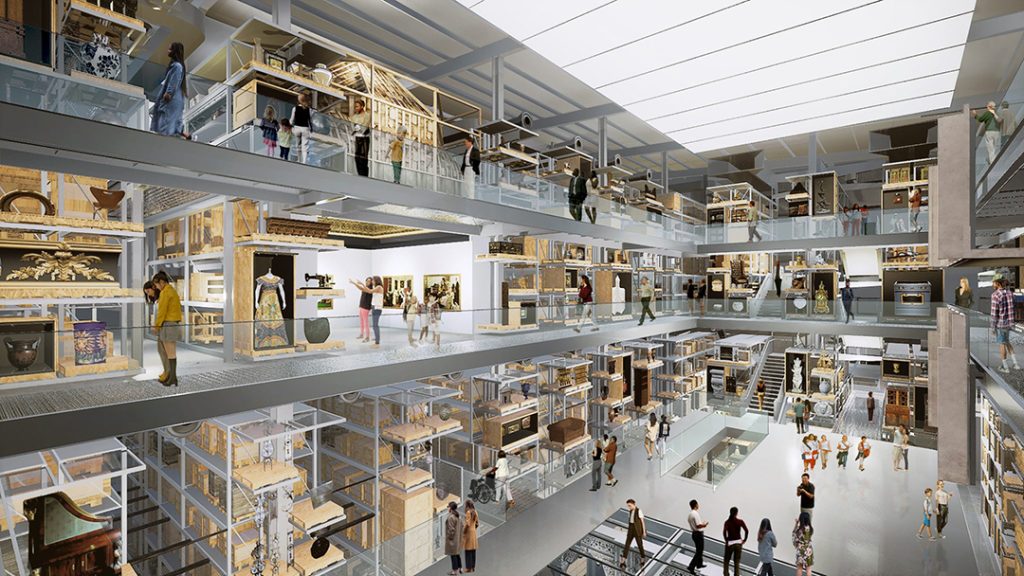
V&A East Storehouse interior *Photo from V&A website
More than a million objects are stacked high and deep in huge spaces that are massive enough to allow for installations of huge architectural pieces (like the gilded ceiling from a long-lost palace in Spain, or a complete Frank Lloyd Wright office interior) while also providing tons of storage space for smaller objects like miniature Japanese dolls, music scores and video recordings. Sections within the museum are devoted to different aspects of creative culture (including the David Bowie Centre, as one example), and popup displays, performances and creative workshops encourage visitors to participate, not just observe, making this museum special for that reason alone.
“Radical Access” via Order an Object
What makes the V&A East even more exciting is the ‘radical access’ they provide to the public with the museum’s revolutionary new Order an Object initiative. Any member of the public can reserve up to 5 objects from the museum’s many collections, giving them the chance to see those objects up close at a private appointment, and in many cases handle the objects for themselves. Museum staff are on hand to explain and help you understand more about the artifacts, and you can even bring a guest with you to share the experience. Want to have a closer look at a ‘frock coat’ designed for David Bowie by Alexander McQueen in 1997 for Bowie’s 50th birthday concert? Order it up. Or maybe you’d like a closer look at a pair of early 18th century British embroidered silk shoes? Add that to your request.
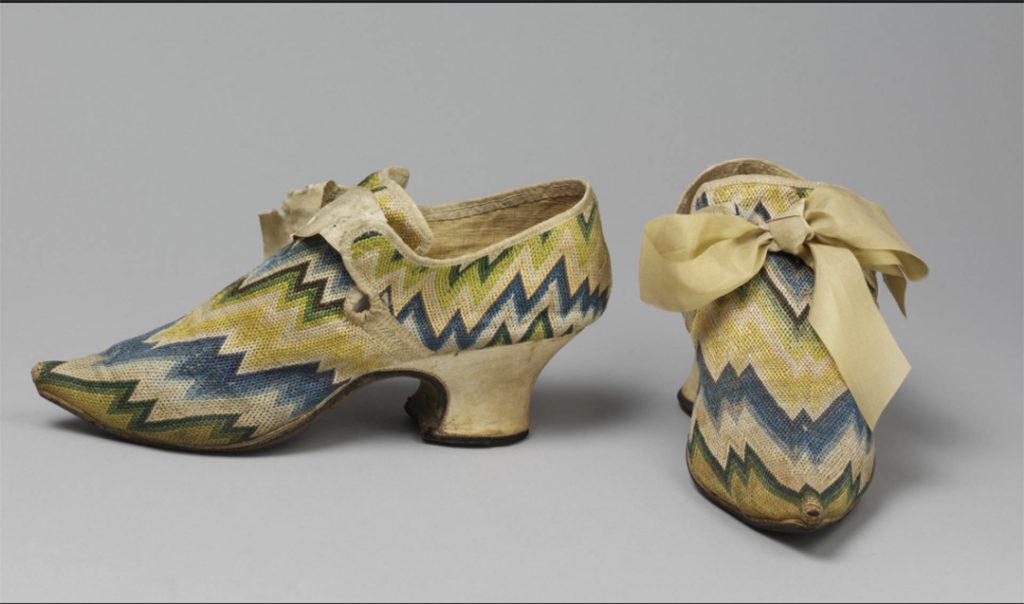
18th century silk embroidered shoes from V&A museum
Search the museum collections online, and if you see a clickable button to ‘Order this Object’, you basically put it in your virtual ‘cart’ and reserve the date and time you wish to see it. All absolutely free. How cool is that.
“Request to View” at V&A South Kensington, Too
V&A East isn’t the only museum in the family that allows the public this up-close-and-personal privilege. The South Kensington ‘flagship’ location of the V&A also has objects that you can Request to View in both its National Art LIbrary and its Prints and Drawings Study Room. It was here that my breadcrumb trail of illuminated manuscript research had led me, and where I was introduced to two of the museum’s most precious books: the Italian Bentivoglio Book of Hours made in 1493-1503, and the slightly older French illuminated Book of Hours of Marguerite de Foix.
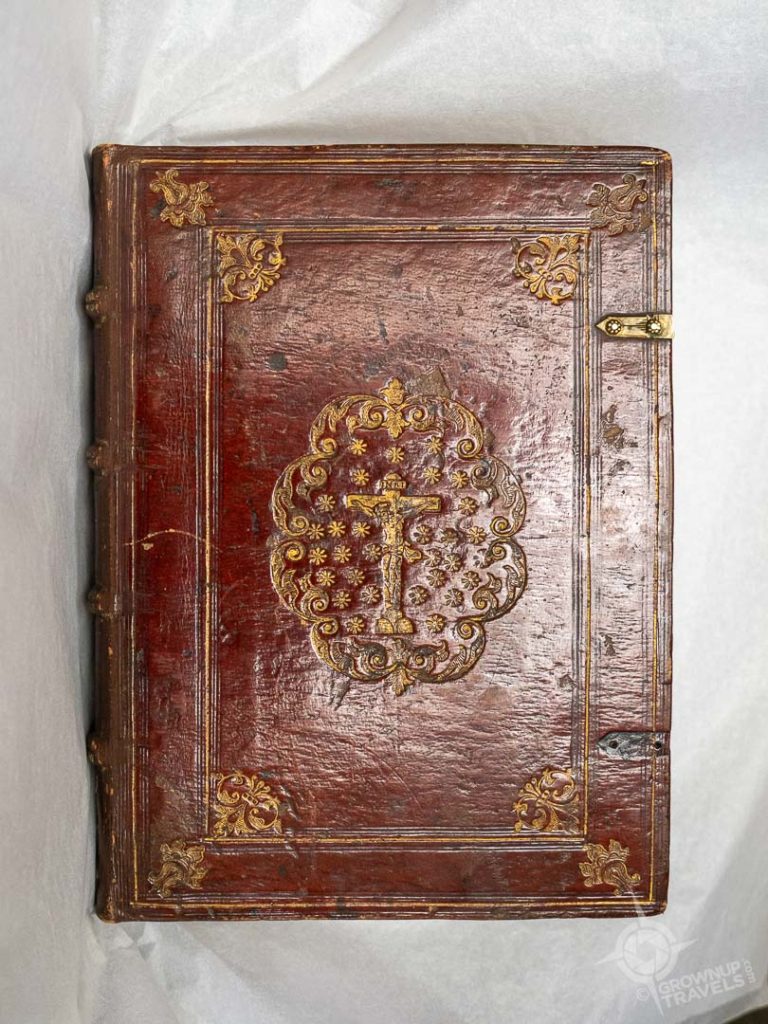
This 15th century Italian Bentivoglio Book of Hours at V&A National Art Library is approximately 7 inches tall
Why an Illuminated Manuscripts Private Viewing at the V&A museum?
When I was trying to decide what to request through the Order an Object service, I knew I wanted something that would be detailed enough to warrant a much closer inspection than through a glass cabinet, and something that spoke to my own interests and tastes. The miniature paintings and exquisite craftsmanship that went into creating illuminated manuscripts appealed to me for these reasons, and for their extraordinary beauty and value. (Plus, the David Bowie centre wasn’t open yet, sadly!)
For those who aren’t familiar with illuminated manuscripts, they are essentially hand-inked texts on vellum or parchment that are embellished with highly-detailed illustrations and decorative elements such as initials and borders. They became particularly widespread from the Middle Ages to the Renaissance when their imagery was enhanced with vibrant pigments and gold and silver leaf. Anyone who may have seen the movie or read the Umberto Eco book, The Name of the Rose, will remember the key role these manuscripts played in the plot, along with the monks whose job it was to studiously craft these pages.
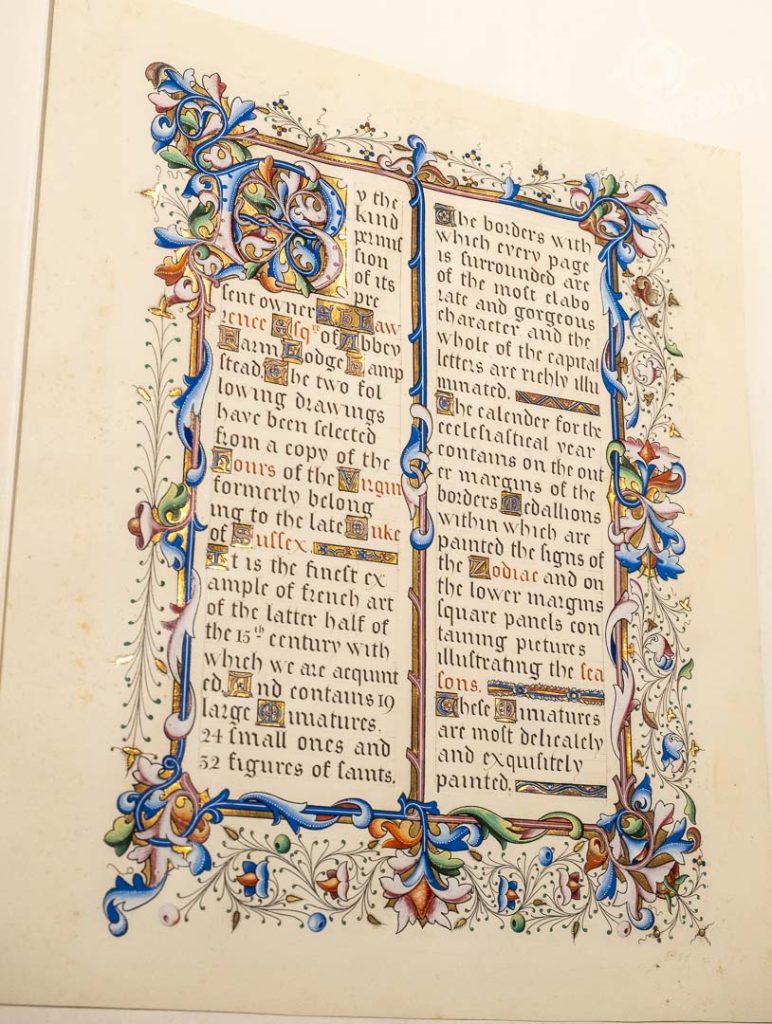
A large illuminated manuscript example in English from the V&A Prints and Documents Study Room, South Kensington
Sometimes these illuminated manuscripts took the form of large choir books, with beautifully ornate capital letters decorating the lyrics on the page. These were large enough for the singers to read the music and lyrics from a bit of a distance, so were often oversized documents.
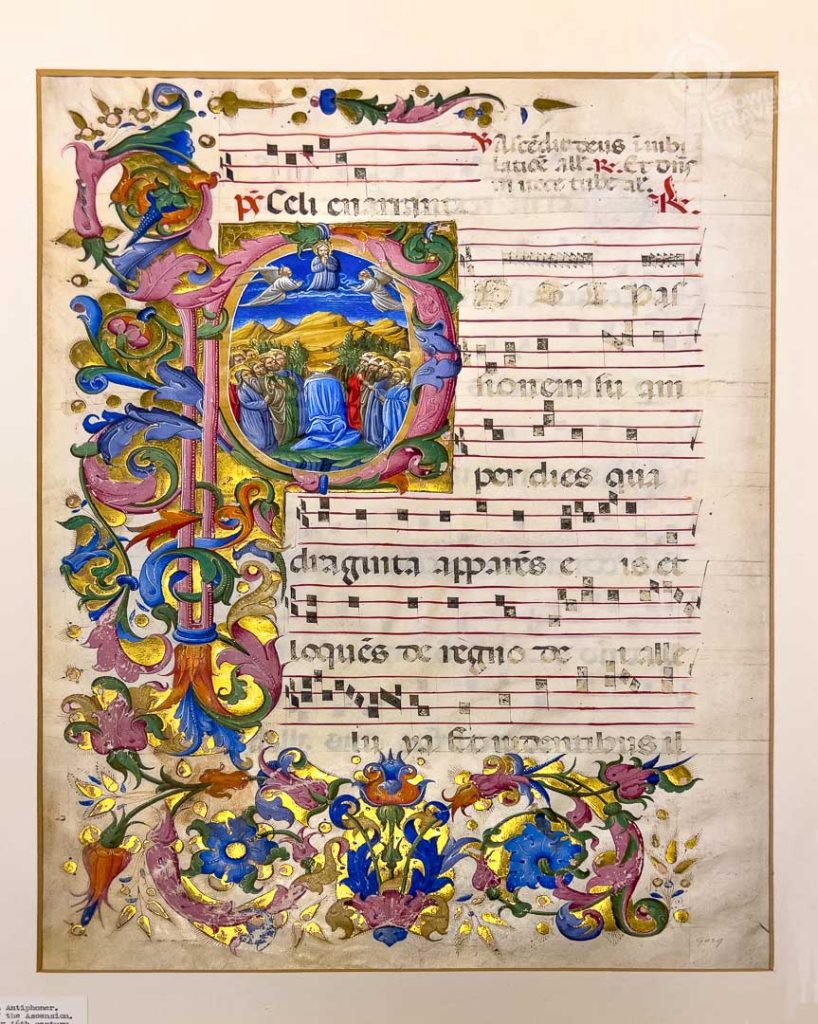
Illuminated Choir Book page
Other manuscripts took the form of bound books containing religious texts or scriptures. Books of Hours were individually crafted books for personal use by people of rank or wealth to help guide them through their daily devotional prayers. These Books of Hours were ‘pocket sized’ so they could be carried easily and typically contained prayers, psalms, excerpts from the Gospels and the calendars of feast days, all of which were accompanied with beautiful miniature illustrations and designs.
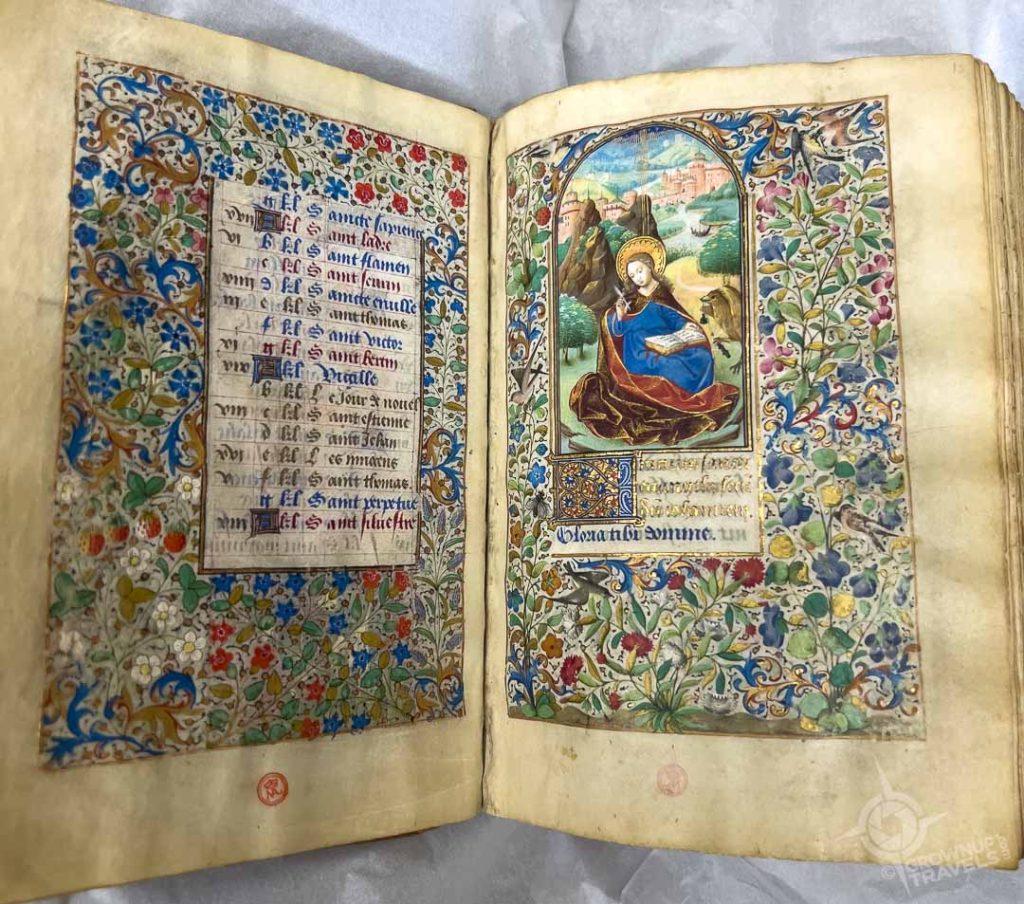
The Marguerite de Foix Book of Hours at V&A National Art Library is smaller than a paperback
You don’t need to be a religious devotee to appreciate the beauty of these hand-crafted works of art. Miniaturists will appreciate the skill that went into these tiny yet exquisitely detailed painted scenes; graphic artists will admire the colours, composition and decorative design of the book text and borders; and historians will appreciate the mere fact that these items have survived for centuries. But even someone seeing these works of art for the very first time can appreciate their beauty.
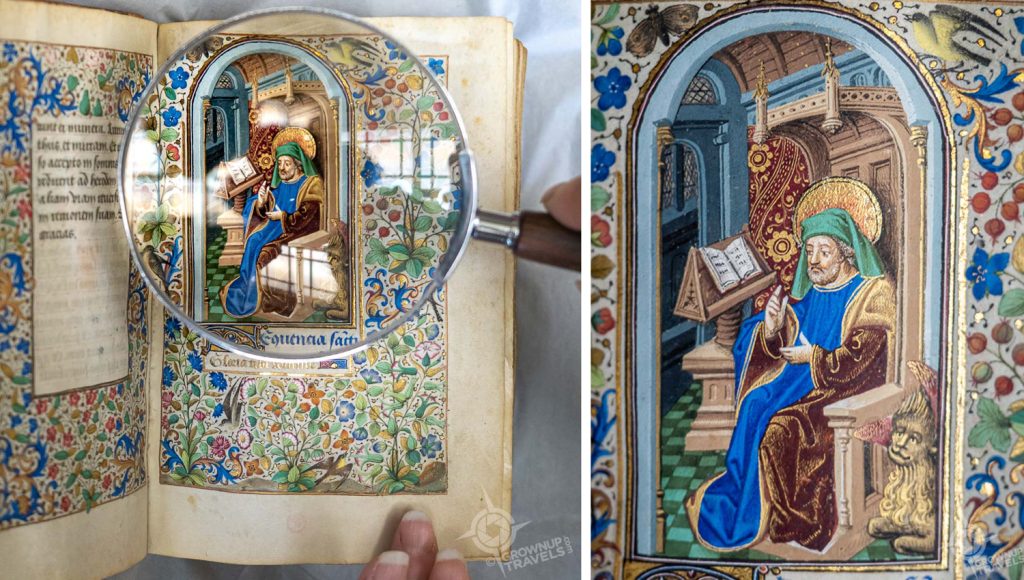
The detail in this pocket-sized Marguerite de Foix Book of Hours at the V&A National Art Library is incredible
In Napoleonic times, in fact, illuminated manuscripts of all kinds became a hot commodity for collectors, and many of the large choir books were cut into pieces so that their ornate initials could be sold individually. Which makes finding intact manuscripts and books all the more precious.
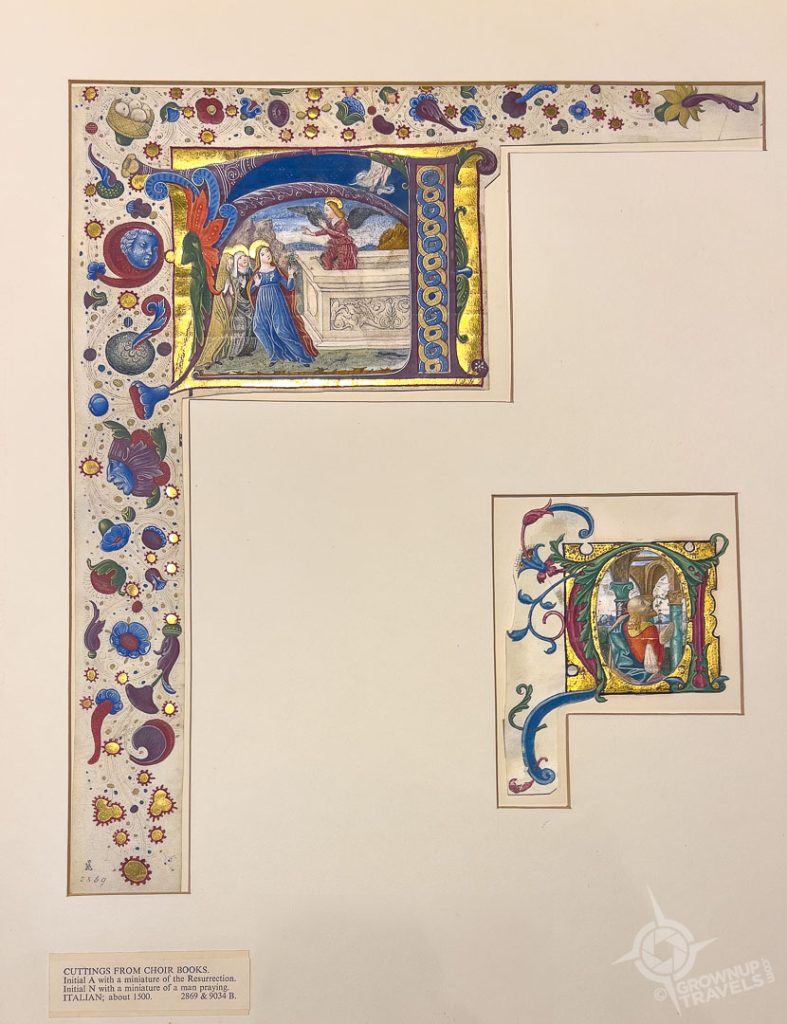
Choir Book cuttings from V&A Prints and Documents study room
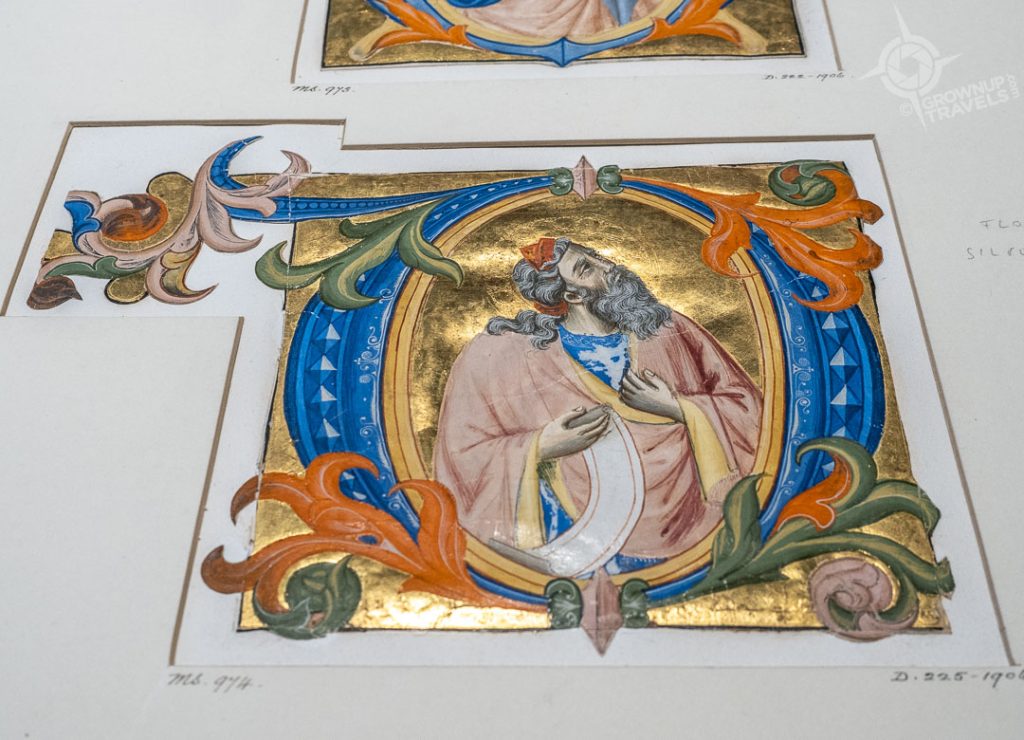
These cut out illuminated initials are approximately 4 inches tall
Having the opportunity to actually see and handle these artifacts personally is extremely rare, especially for ‘regular’ admirers who are not academics, clerical VIPs or other specialized experts. Which is why I was thrilled that the V&A museum actually offers this privilege to visitors like myself.
Bentivoglio and Marguerite de Foix Books of Hours
In my search for an object to request to view at the V&A, I had come upon two particular books, the Bentivoglio Book of Hours, which was created in the late 15th century, and the Book of Hours of Margauerite de Foix, both of which are part of the National Art Library at the V&A South Kensington location. So I sent off an email and requested to view them during our upcoming visit to England. An exchange of emails later, and I had a date and time to view these books, as well as a collection of choir book initials to see at the Prints and Documents Study Room of the museum.
The National Art Library – a Studious Oasis of Calm
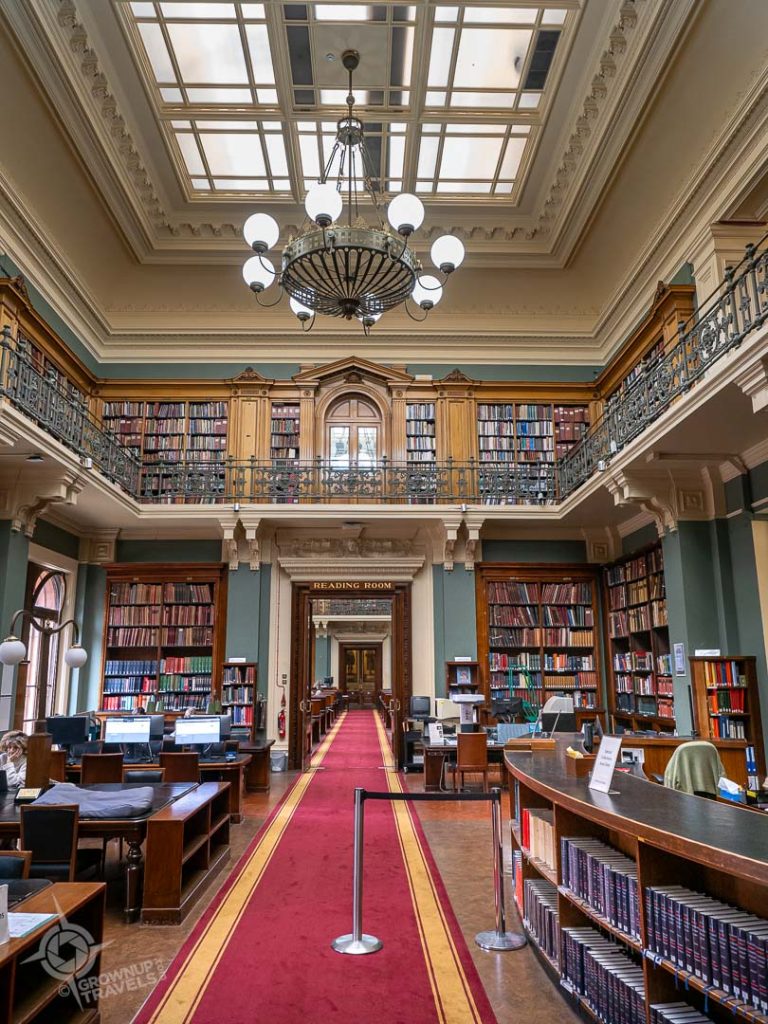
Far from the crowded museum galleries, the V&A National Art Library is a quiet oasis
Anyone who has been to London in the summer knows that the city’s museums can be a bit of a madhouse. With free admission, this is not surprising, meaning you are likely to be sharing places like the British Museum with upwards of 70,000 visitors a day. But when we arrived at the National Art Library of the V&A South Kensington for our date with our Renaissance manuscripts, it was like entering an oasis of quiet academia. The Library itself is a beautiful room with soaring ceilings and shelves packed with leather-bound tomes, study desks laid out in ordered rows and a respectful ambiance. And the best part was that there was almost no one else in the room when we arrived for our illuminated manuscripts private viewing.
We approached the desk and mentioned our appointment, and one of the staff took out a key and retrieved the books in their special protective boxes, each book wrapped in acid-free cloth to protect them from harm. It was at this point as they were about to entrust them to my care that we learned that these books were two of the most precious and valuable items in their entire collection. (No pressure.) But with some friendly instruction from the staff member on how to handle them, we were left with the books and encouraged to explore and photograph their pages for as long as we wished.
Turning Back Time With Every Page Turn
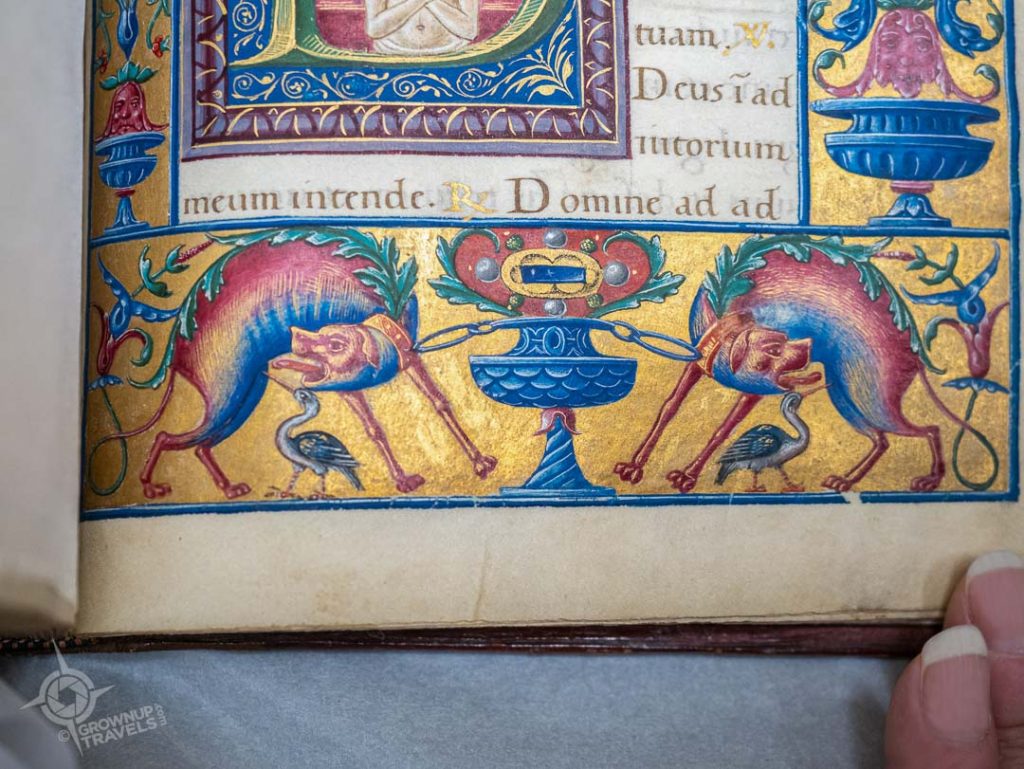
Bentivoglio Book of Hours V&A National Art Library border detail with animals
As I carefully turned the pages of these volumes, I could not help but feel privileged just to see, let alone actually handle these artifacts. How many people had leafed through these pages, sung these psalms, read these words over the five centuries since these books were first painstakingly crafted for their original owners? The colours were as brilliant today as if they were painted yesterday, and the gold leaf was burnished to a brilliance that was hard to capture in a photograph. Full-page illustrations punctuated the pages of text, but even those text pages were beautiful works of calligraphy where one mistake with the pen would have necessitated redoing the entire page.
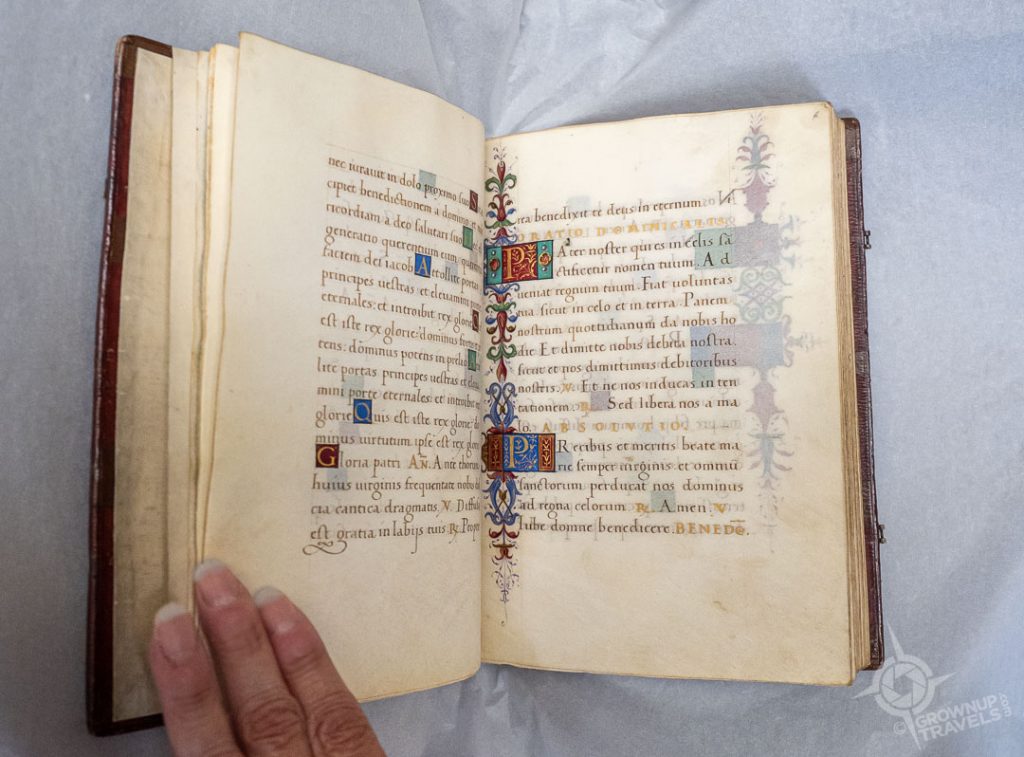
Bentivoglio Book of Hours V&A National Art Library text spread
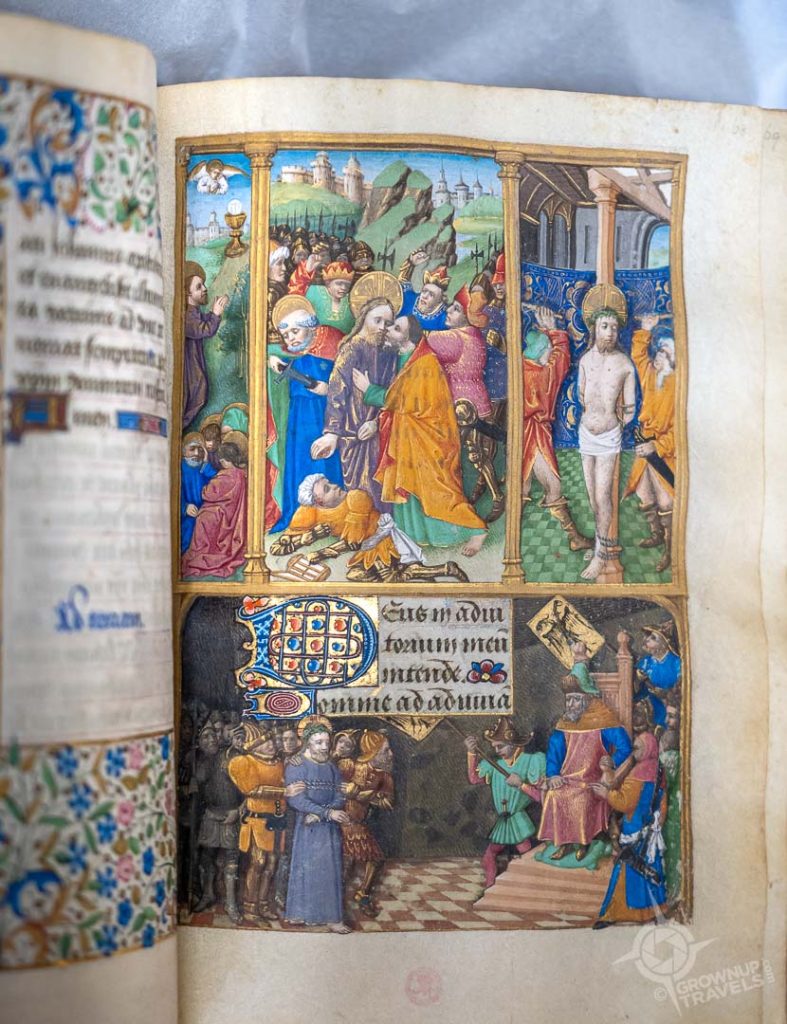
Marguerite de Foix Book of Hours V&A National Art Library full page_
Each book also reflected a very different style of the artist/designer. Although the craftsmen for both the Italian and French books were equally gifted, it was interesting to see the different layouts of text and how the embellishments were different between the two manuscripts. The Bentivoglio book had bold, heavily gilt borders, whereas the French book took a more delicate approach to the floral borders and backgrounds.
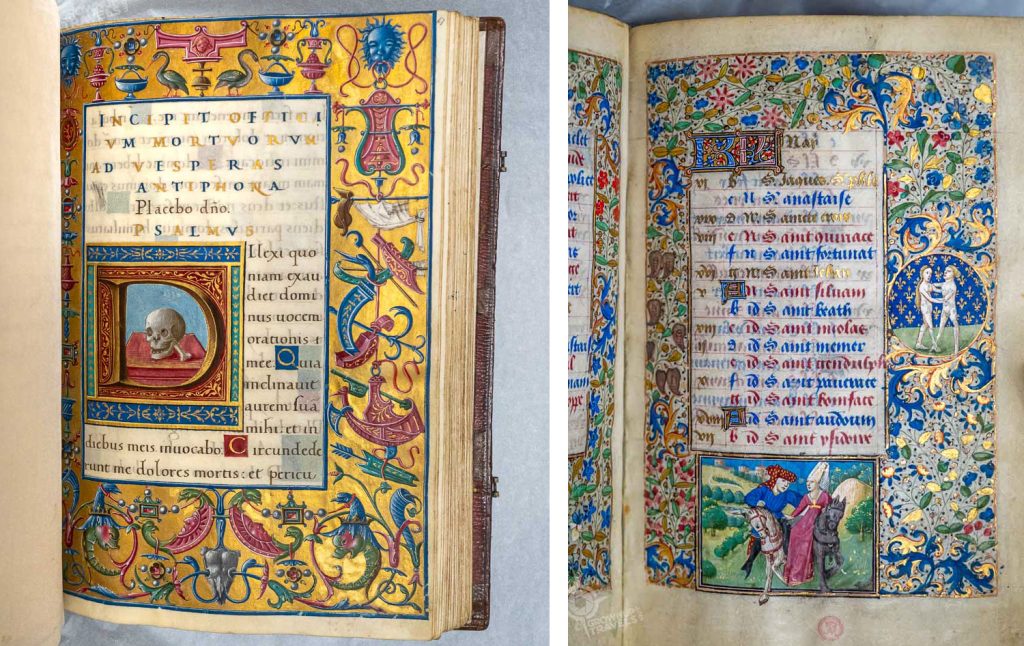
Each book reflected different styles. The delicate, feminine florals on the right might have been deemed more suitable for Marguerite de Foix
It came as no surprise that it would have taken years to complete these books, with both the scribes and the illuminators having to coordinate their work and do everything perfectly. And while both volumes had been re-bound at various points in their lifetimes, even those bookbinders and craftsmen who helped preserve these artifacts had contributed to the history of these objects.
Leonardo da Vinci’s Notebooks, too!
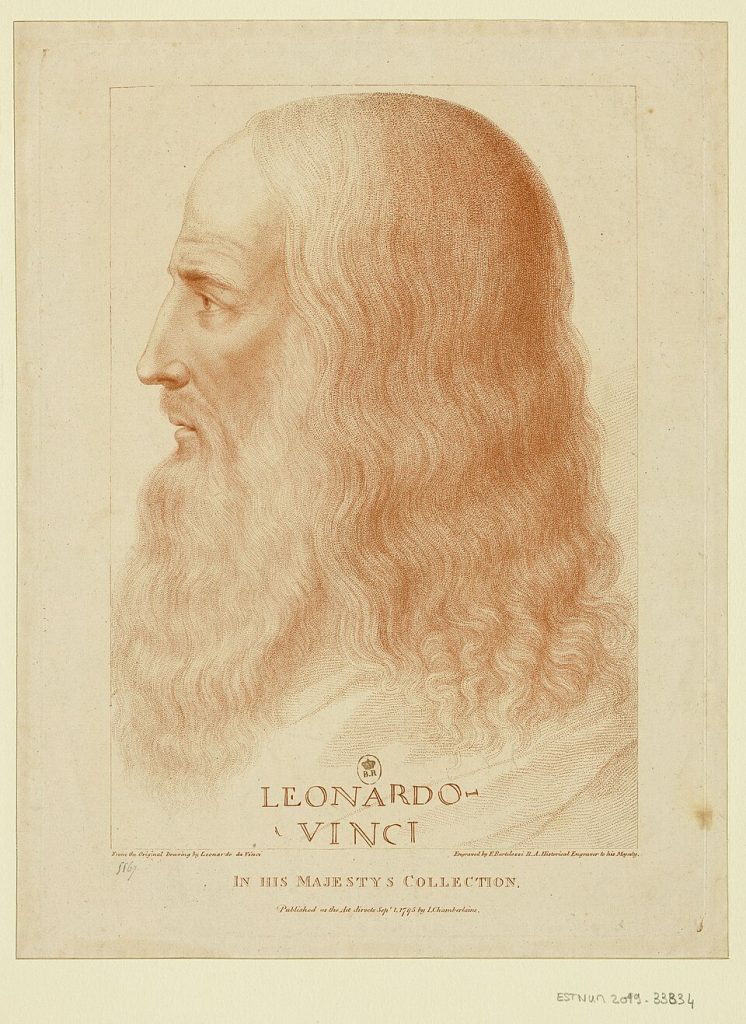
In talking with one of the curators at the Library, we also learned about other objects in their collection that could be made available through the same Request to View…including, of all things, Leonardo da Vinci’s notebooks!
Five different notebooks by the Renaissance master are in the library’s Collection, one of which is on public display in the V&A museum’s Medieval & Renaissance Gallery (under glass of course). These tiny pocket-sized books were bound from sheets of loose paper that Da Vinci would have carried around with him, making notes, doodles, jotting down ideas, etc, and these loose papers were eventually folded and bound into these codices after da Vinci’s death.
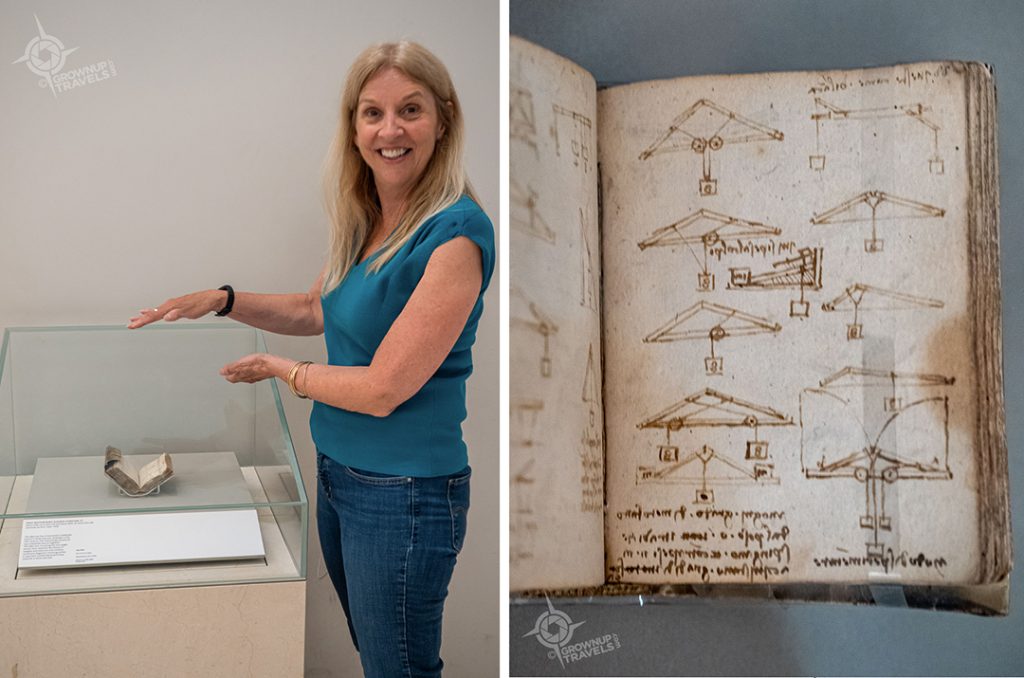
One of Leonardo Da Vinci’s notebooks is on display in the Medieval gallery, but under glass and you certainly can’t turn the pages.
Sure, you can go and see the book on display in the Gallery, opened to its one set of pages, but many people miss the display entirely because the book is so tiny. Imagine instead being able to view these privately and up close at the National Art Library, the same way we had done the illuminated manuscripts! To turn the pages and actually see Leonardo’s own ‘backwards’ writing and sketches for future inventions. Even if you aren’t fluent in Latin – because who is? – it would be quite the thrill to know that one of the greatest minds in history had put down some of his thoughts and ideas in the 500-year old notebook in front of you.
A Hands-On Experience Like no Other
With most museums only able to exhibit a small fraction of their collections to the public (in some cases as little as 10%), it’s impossible to know what amazing artifacts may lie tucked away in the storerooms and archives. Which is why it was such a rare treat to be granted this kind of access to some of the V&A’s stored – and storied – objects on our recent visit. It is a testament to the museum’s commitment to provide free and appropriate access for the public so that any visitor can study, admire, or learn from the items in the museum, not just academic researchers or VIP invitees. This museum doesn’t just talk the talk when it comes to sharing their treasures with the public – they walk the walk.
Tips for Using the Order an Object/Request to View Service
SEARCHING: As great as the V&A Order an Object system is, their database is no Google search engine. While the online catalogue does contain 1.2 million objects from the Museums’ many Collections, to be honest, it’s hard to know exactly what to search for, especially if you are ‘just browsing’. Some of the results are not as specific as you might like, or seem off topic (you don’t know what you don’t know when it comes to the correct query) and many of the objects are on physical display already in the museum, so not available through the Order an Object reservation system.
TIP: If you don’t know what to ‘order up’, try using Google itself to research the “most interesting objects contained in the V&A [specific] museum’ to see if that helps you come up with ideas.
ADVANCE NOTICE: You need to give the museum at least 2 weeks advance notice to Order an Object. Bear in mind also that popular objects may be booked, so the earlier you start searching the better.
LOCATIONS THAT SUPPORT ORDER AN OBJECT: Only the V&A East Storehouse and the V&A South Kensington locations offer this service. NOTE: If you are ordering multiple objects to view (the maximum is 5), they all need to be housed in the same location.
NATIONAL ART LIBRARY/PRINTS AND DOCUMENTS STUDY ROOM OBJECTS: If the item you want has ‘Order This Object’ button below it, you can simply click to book that item directly online. But if it is an item stored in the National Art Library at South Kensington, it will have a “Request Appointment to View’ button where you can send off an email to request a viewing. The Library staff may ask about your reason or interest in the object, but you don’t require any special credentials to view it. You will, however, need to register for a Library Card (free) in order to view the item. You can register online ahead of your visit, and just pick up the library card at the Library before seeing the object.
HANDLING OBJECTS: Surprisingly, no gloves were required when we handled the Books of Hours (or the cut out illuminated initials in the Prints and Documents Study Room). This is because experience has shown that when people do NOT wear gloves they are actually MORE careful with the items. Clean hands are required, however (without creams or lotions) and the library staff provides guidance on how best to handle the books so that the illuminations and pages are best protected.

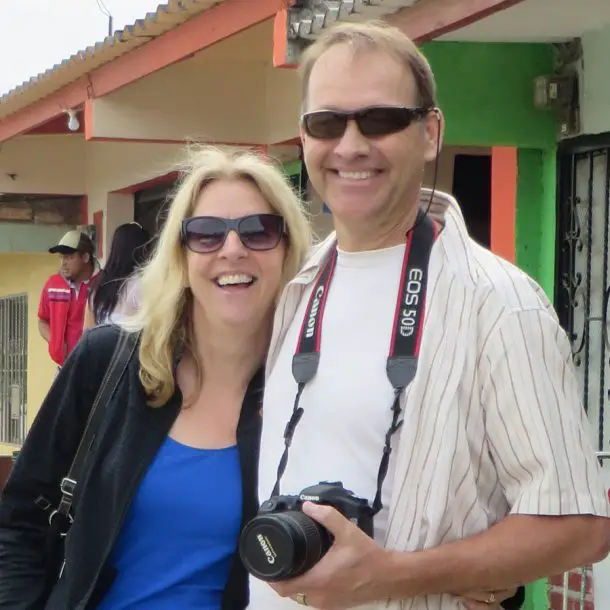
Jane is an award-winning travel writer and photographer and an accredited member of the Travel Media Association of Canada (TMAC). In their annual awards competition, TMAC named GrownupTravels.com as the Best Self-Published Travel Blog in 2025 .
She is also a member of the North American Travel Journalists Association, and a freelance travel writer contributing to both print and online publications.





Subscribe and you'll never miss an update!
Join our mailing list to receive the latest news and updates from Grownup Travels. (We keep your email STRICTLY private)
Thank you for subscribing to Grownup Travels!