

Detail from Henry VIII and his “dynastic” family painting in the Procession Hall at Hampton Court Palace
One thing is certain about England’s King Henry the VIII – he was a collector. Perhaps most famous for his acquisition of 6 wives (even though he dispatched with four of them, including sentencing two of them to death), Henry’s bevy of beautiful wives was nothing compared to his collection of beautiful palaces. Over the course of his lifetime and 38-year reign as King of England, Henry VIII owned a staggering 55 palaces scattered around his kingdom. And some of these, like Hampton Court Palace about an hour from London, became a favourite for entertaining and hosting visitors, as well as for collecting and displaying art. Here’s what to see at Hampton Court Palace, perhaps the most magnificent of Henry VII’s palaces.
A Hand-me-up to Curry Favour with the King
Henry VII may have been the first ‘royal re-designer’ responsible for transforming Hampton Court into the ultimate pleasure palace of its day, but Hampton Court Palace didn’t start out in his possession. It began as a country property that had been leased to Cardinal Thomas Wolsey, the King’s Lord Chancellor, who invested huge sums of money to upgrade the property in order to make it luxurious enough for visits from the Royal Court.

Cardinal Wolsey tried buy his way back into the King’s good graces
He did a great job, so good in fact, that after Wolsey failed to get King Henry’s first marriage annulled by the Pope (consequently earning the wrath of the King), Wolsey gifted the house and 750-acre property to the King in an attempt to win back his favour. It didn’t work. Wolsey was later charged with treason but fortunately managed to die before having to face Henry VIII’s version of a just trial. I say ‘fortunately’ because given what happened to Wifey #2, Anne Boleyn, and Wifey #5, Catherine Howard (both executed by Henry), I’d say Wolsey caught a lucky break.
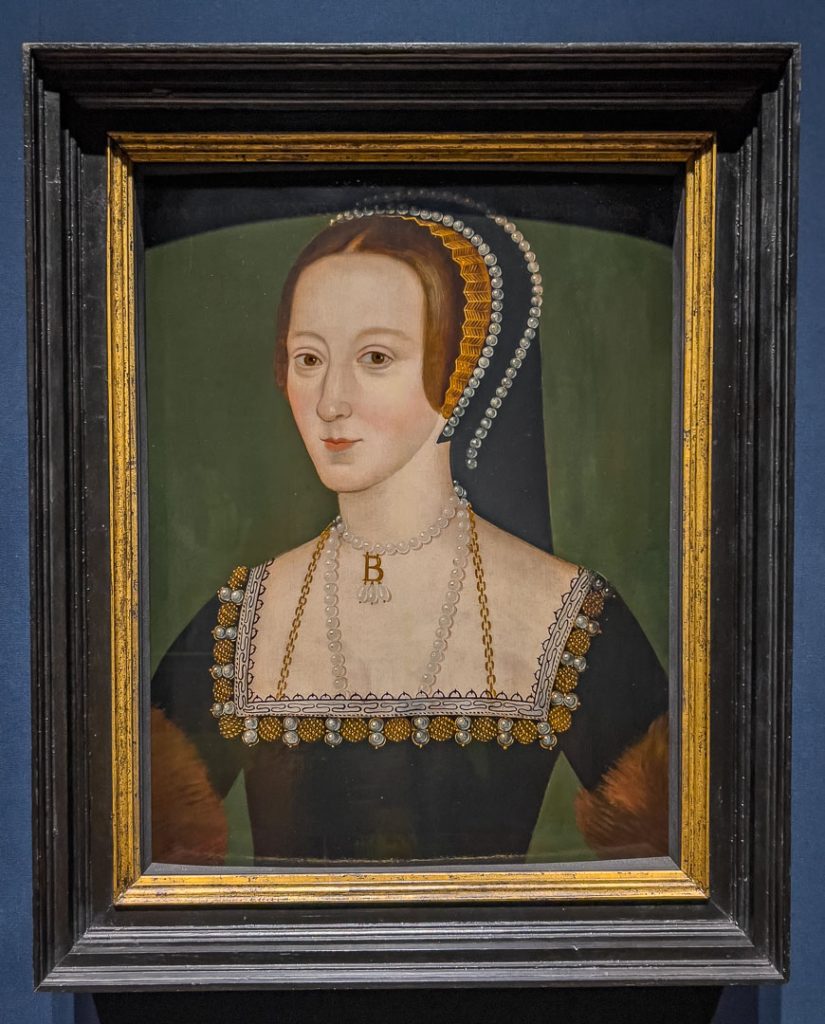
Things didn’t end well for Anne Boleyn in Henry VIII’s court – or courtroom.
But I digress.
Henry VIII’s “Pleasure Palace Makeover”

Hampton Court Palace aerial image by Ollie Craig
Once in his possession, Henry VIII spared no expense on re-imagining Hampton Court Palace as his ultimate playground, finishing the job that Wolsey started. After his extensive, expensive additions, Hampton Court became a favourite amongst all of Henry VIII’s palaces. More than just a leisure complex that included not just the palace and its sumptuous royal apartments, Hampton Court Palace also boasted a hotel, a theatre, sporting facilities, hunting grounds and the last medieval style Great Hall built by a British monarch. Hampton Court Palace stood as a symbol of the King’s magnificence and power, and even after his reign, subsequent rulers continued to remodel and add to the Palace, adding their own stylistic and architectural touches. Today the impressive property includes 6 acres of buildings that visitors are able to explore, from Tudor-style buildings and stockrooms to Baroque halls and couryards.
What to See Inside Hampton Court Palace
Six acres of palace buildings is A LOT. So if you are trying to decide what to see at Hampton Court Palace, our first tip is to not try to see it all, but focus on things that interest you most. After entering through the West Gate, it’s really up to you how you structure your visit, since the palace is free to roam in whatever order you prefer.
TIP: It’s important to note that although all 6 of Henry VIII’s wives spent time here, there is almost nothing original left of the Tudor Queens’ apartments, so if you were hoping to check out Anne Boleyn’s bedroom, you will be disappointed.
King Henry VIII’s Apartments: the Great Hall
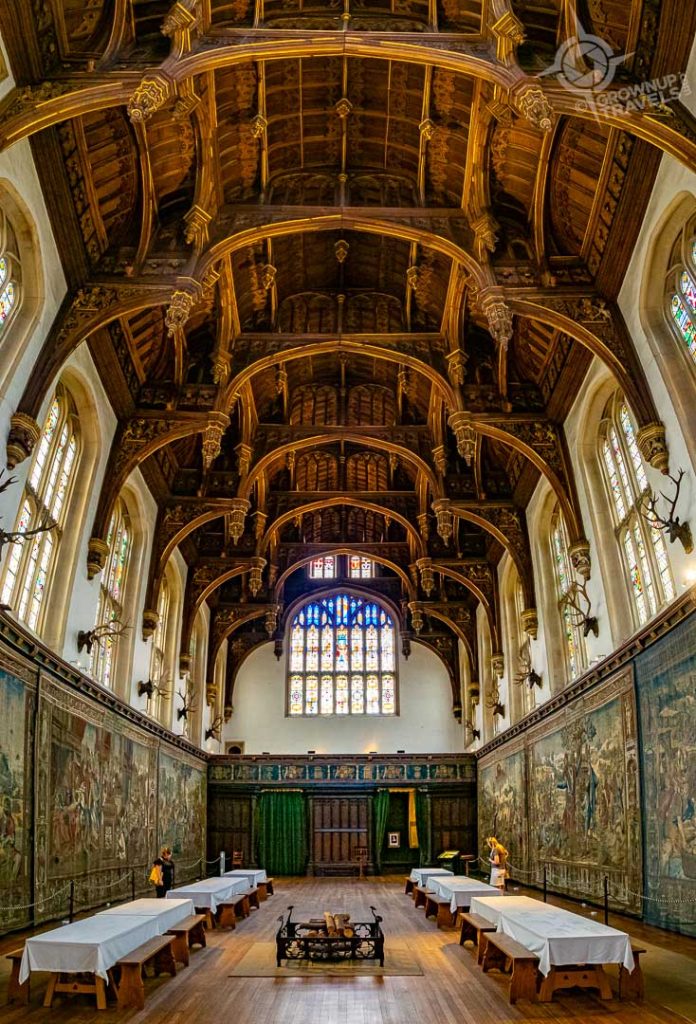
The Great Hall is the last medieval-styled Hall to be built by a British monarch
Although nothing much remains architecturally of the Tudor Queens’ rooms, Hampton Court Palace does have some very impressive rooms in the King’s wing (once again proving that it is not just good to be the King, but better). One of these rooms is the Great Hall itself, which is architecturally stunning, with its hammer beam ceiling and impressive stained glass windows that soar 60 feet over your head.
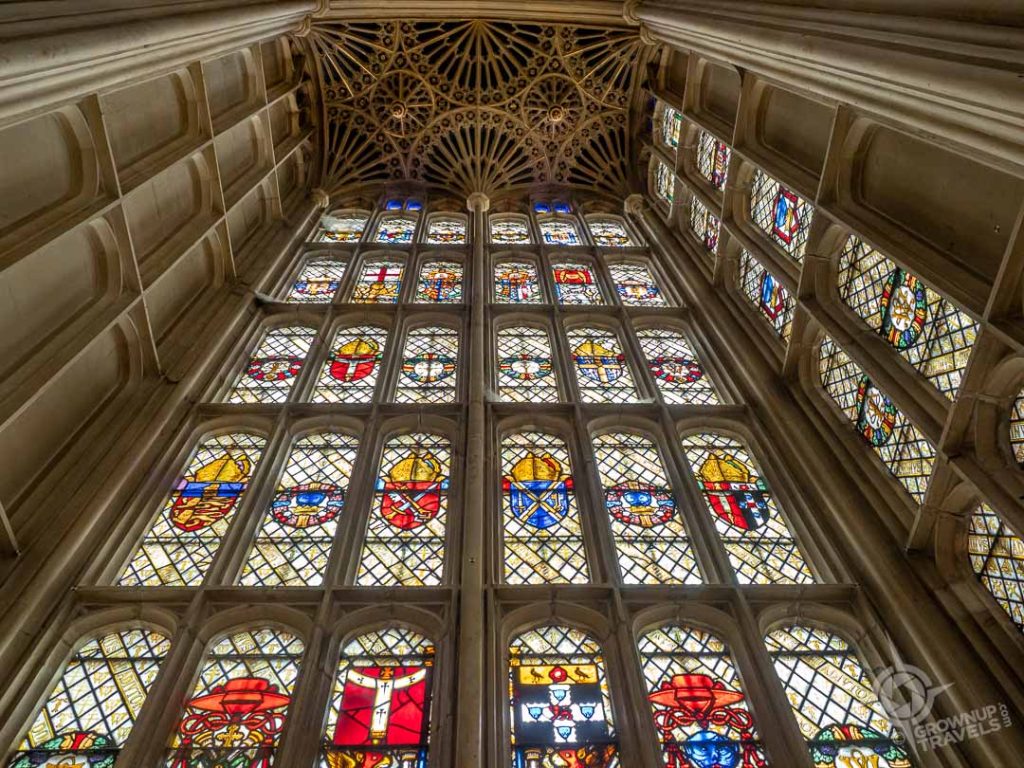
The centrepiece of Henry’s pleasure palace, the Great Hall was the location for many an indulgent banquet hosted by a King known for his love of food and revelry, and not surprisingly, gout and obesity. But the Great Hall also served as a dining room for the hundreds of courtiers and staff who worked at the palace and ate their meals here every day.
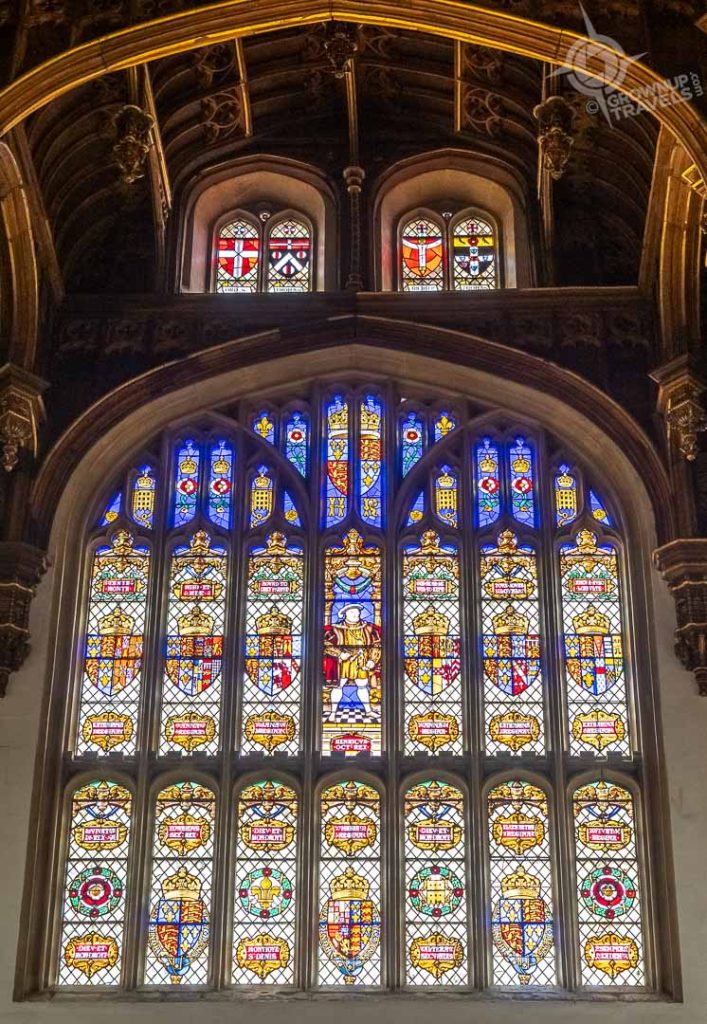
Recognize the figure in the centre of the window?
There are fun facts printed on the long dining tables in the Hall that give visitors a sense of just what is involved when feeding 600 or so staff. Courtiers didn’t just eat here, they ate WELL, consuming 4500 – 5000 calories a day! That amounted to a LOT of food and drink consumed over the course of a year: about 14,000 animals to start with, including oxen, sheep, deer, pigs and wild boar. Not to mention 600,000 gallons of beer and 300 barrels of wine (for health reasons, of course, since water purity in the 1500s was suspect and alcohol killed off any bacteria. At least that’s their story and they are sticking to it.)
FUN FACT; The Great Hall at Hampton Court Palace was also the stage – literally – for the first performances of Shakespeare’s Hamlet and Macbeth in 1603 for then-King James I.
Tapestries Worth an Armada
The Great Hall’s tapestries are notable, too, not just for their subject matter depicting the story of Abraham and their exquisite craftsmanship, but for their relative worth. King Henry VIII’s Palaces were home to over 2000 tapestries, the largest collection in the world at the time (even wealthy courtiers may have owned a maximum of 50), but the Abraham tapestries were particularly valuable. With each tapestry costing the equivalent of a warship, these Abraham tapestries alone would have been worth the price of an entire fleet.
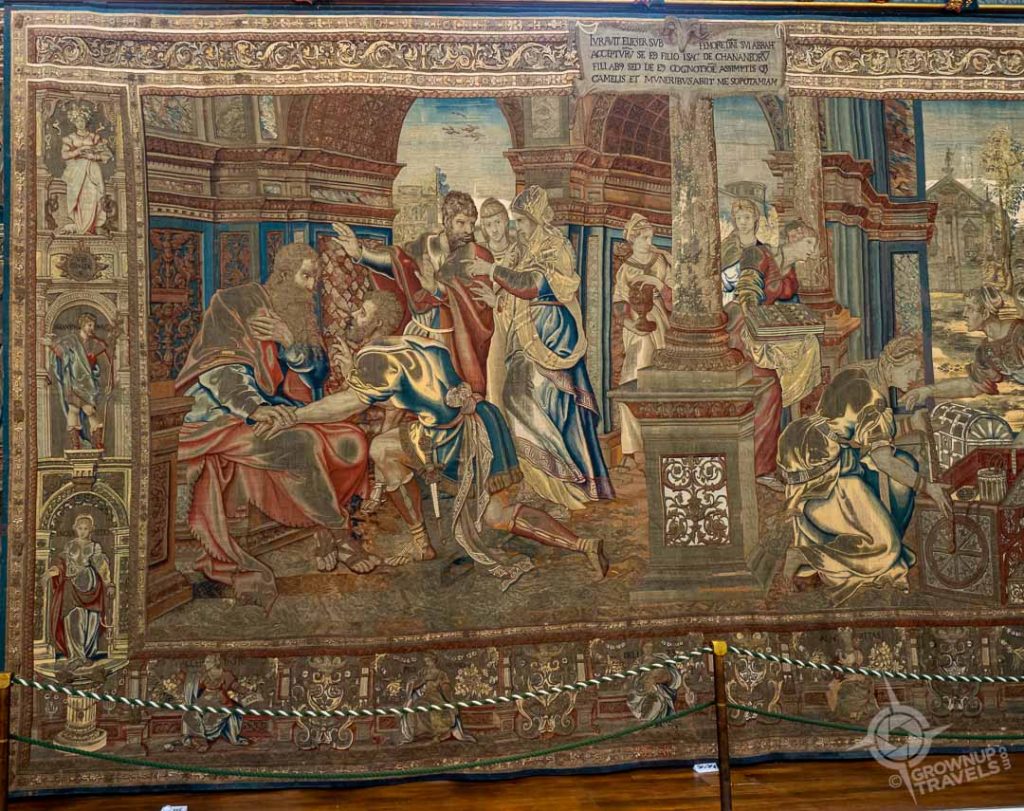
One of the Abraham tapestries in the Great Hall
The Chapel Royal at Hampton Court Palace

The Chapel Royal in King Henry VIII’s palace
The Chapel Royal is a must-do when visiting Hampton Court Palace as it is one of the most opulent rooms in all of King Henry VIII’s palaces, particularly known for its stunning blue and gold ceiling. It was commissioned by King Henry VIII early in 1535 and required fifty craftsmen to realize the King’s vision, including a master carver and carpenter who built individual pieces off-site, floated them on the River Thames to the palace and then assembled them to create the ceiling. Then the painters, gilders and varnishers got to work on the interlaced pattern and carvings. The carved altar, wood panelling and stained glass windows add another level of grandeur to the chapel, and the result is a room that feels as rich and luxurious as the King’s regalia. And since the Royal Pew was located above the chapel overlooking the room, the King would have had the best seats in the house to admire his ceiling up close.
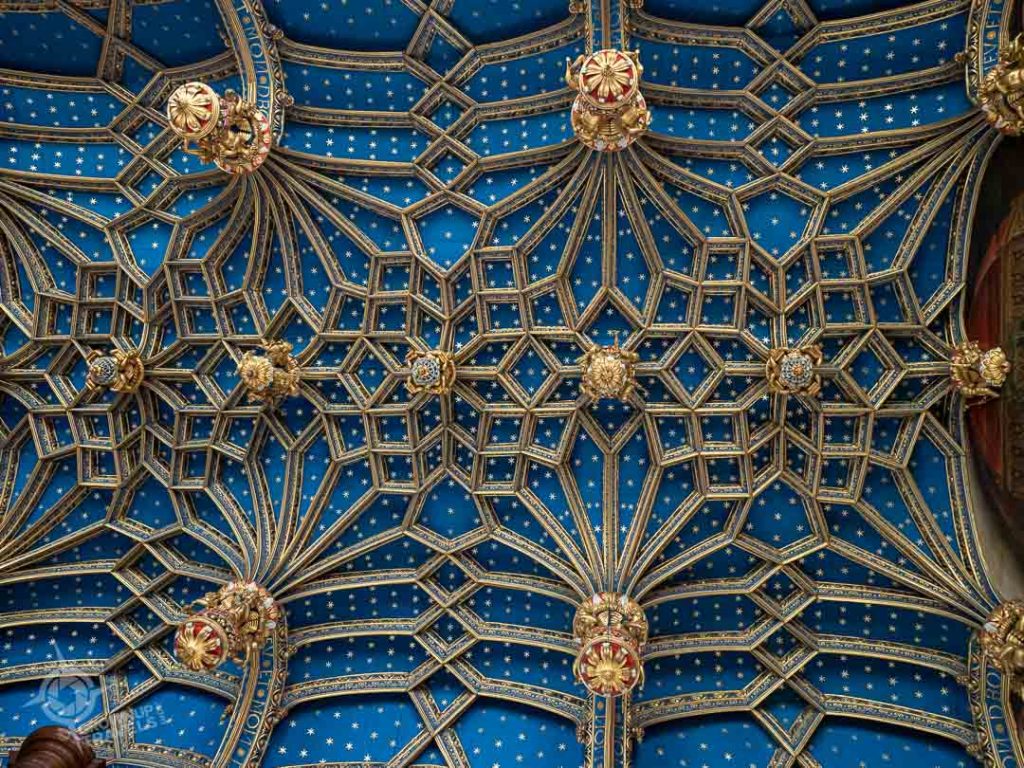
The details in the Chapel Royal ceiling are best appreciated up close
King Henry VIII’s Lost Crown
Visitors are welcome to enjoy that same view from that Royal Pew, which sits a floor above the Chapel, and here they also have the opportunity to see King Henry VIII’s Imperial crown. At least, they can see a replica of the original, since the actual crown worn by Henry VIII (and likely his father before him) was ‘lost’ in 1649 – destroyed deliberately by Oliver Cromwell after his Commonwealth took over England and abolished the royal power and religious authority of the Monarchy. As a symbol of both, the crown was destroyed, the gold melted down and made into coins, and its various gems sold off.
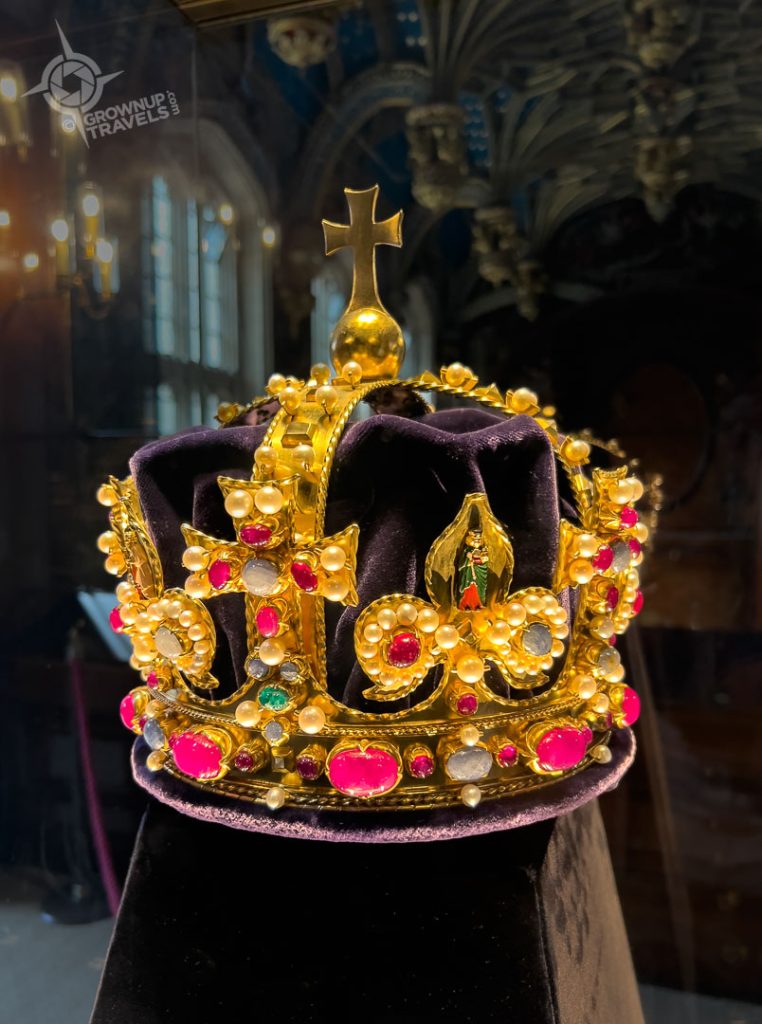
This replica of King Henry VIII’s crown is a work of art in its own right
So how do we know what the original Crown looked like? Well, thanks to the Instagram of the day (ie. Illuminated manuscrips and historical paintings), along with meticulously written records describing the size, number and position of the 344 jewels, a Royal Replica was commissioned in 2012.
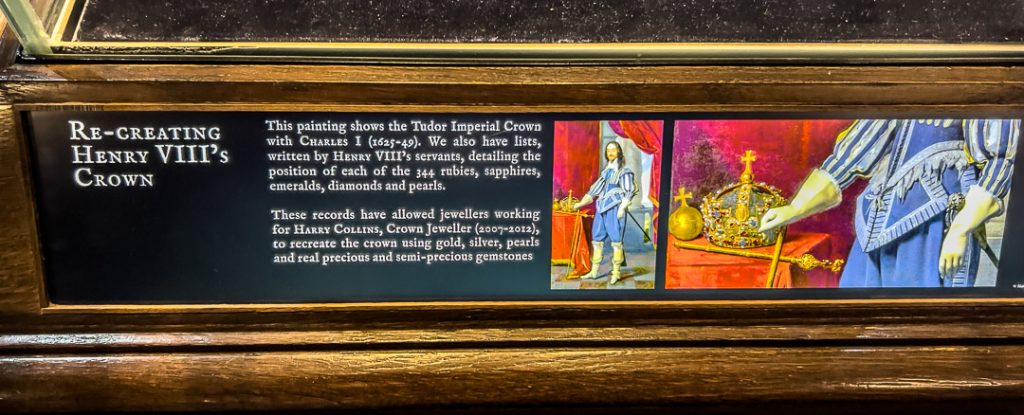
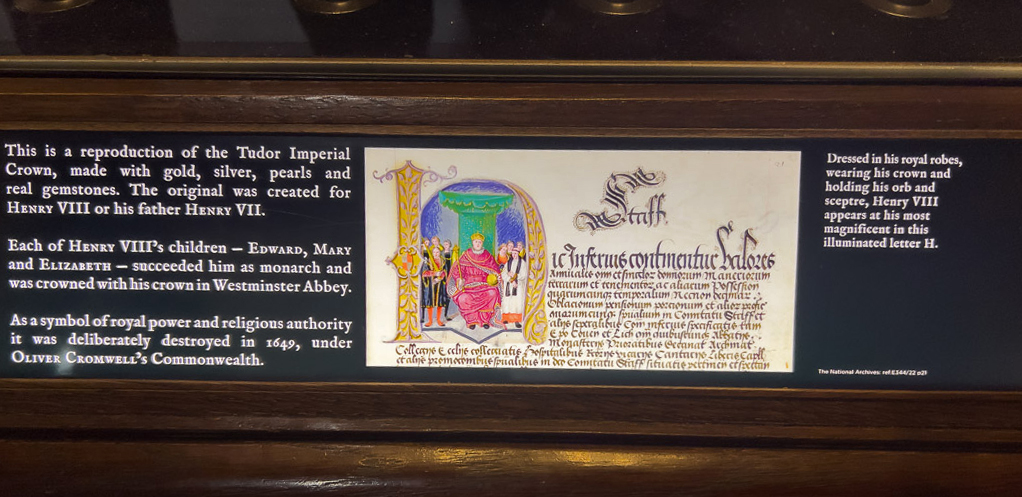
Harry Collins, the Crown Jeweller of the time, made the reproduction that is currently on display in the Royal Pew balcony. And here’s the thing: all the gold, silver, pearls and almost all of the precious and semi-precious jewels are real (only the huge diamonds were replaced with rock crystals)! So while it may not be the original, this reproduction crown glitters all the same and is worth who-knows-how much.
FUN FACT: In 2017 a metal detecting enthusiast discovered a gold and enamelled figurine that may have been a centrepiece of King Henry VIII’s crown. If proven to be true, that little figurine alone could be worth almost $3 Million dollars, and shows that not all the gold from the crown was melted down and turned into coins.
A Wine Fountain, Too!
What would a true Tudor Pleasure Palace be without a wine fountain? And true to King Henry VIII’s style, the one at Hampton Court Palace is huge, located in the Base Court just after you enter through the West Gate. The fountain you see here today is a replica, but built on the excavated remains of the original that was discovered in 2008. This replica fountain is fully functioning, and although it wasn’t flowing with any Burgundy or Bordeaux during our visit, it has been used to serve wine to visitors on special occasions. Having a wine fountain at its centre may also explain why this is the largest courtyard in the Palace!

The Wine Fountain in Base Court, Hampton Court Palace
Courtyards and Creatures
There are several other courtyards you will stroll through or beside as you make your way through Hampton Court Palace, including the Clock Court that holds an astronomical clock, which reflects Henry VIII’s love of technology, a side of him that many people wouldn’t associate with this King.

The astronomical clock at Hampton Court Palace
The Fountain Court, which although not from King Henry VIII’s time, is an important Baroque remodelling of the original Tudor cloister that was here. Designed by Christopher Wren during the reign of William III and Mary II, it is characterized by its arched collonnade and red brick facades with medallions, at the centre of which is the fountain.
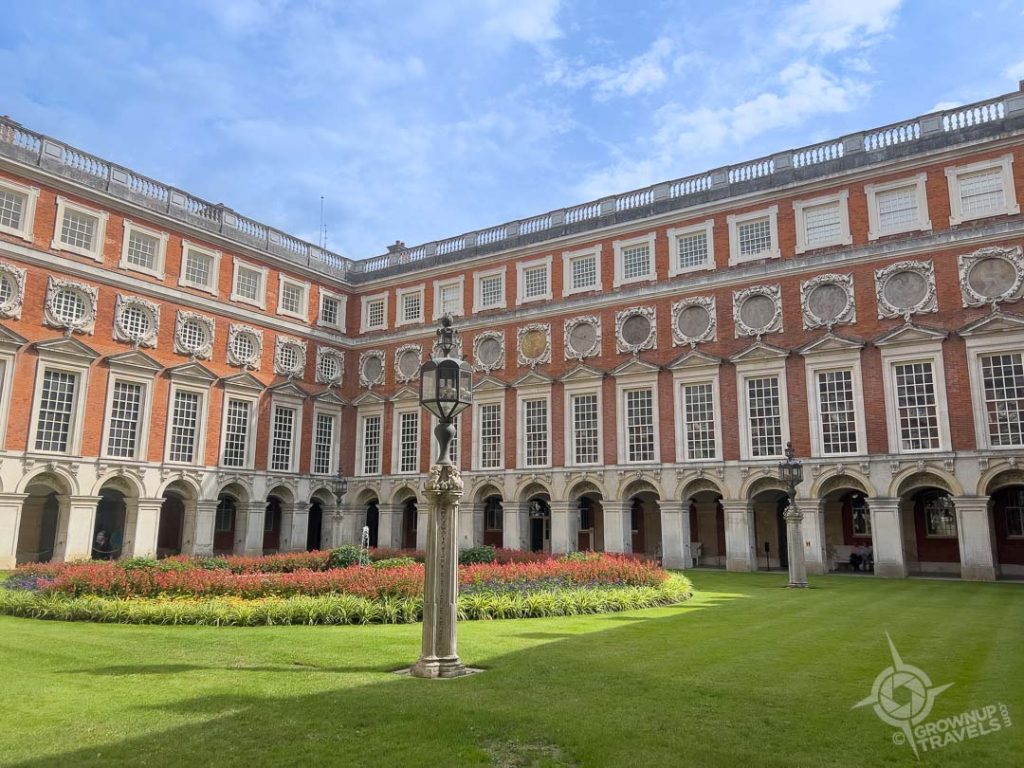
Fountain Court, designed by Christopher Wren in the Baroque style
Another interesting courtyard is the small Chapel Court, which is home to a kitchen herb garden that was planted to mark the 500th anniversary of King Henry VIII’s ascension to the throne. “Guarding” these herbs are Tudor beasts, 3-D versions of the fanciful animals typically found on coats of arms from this period.
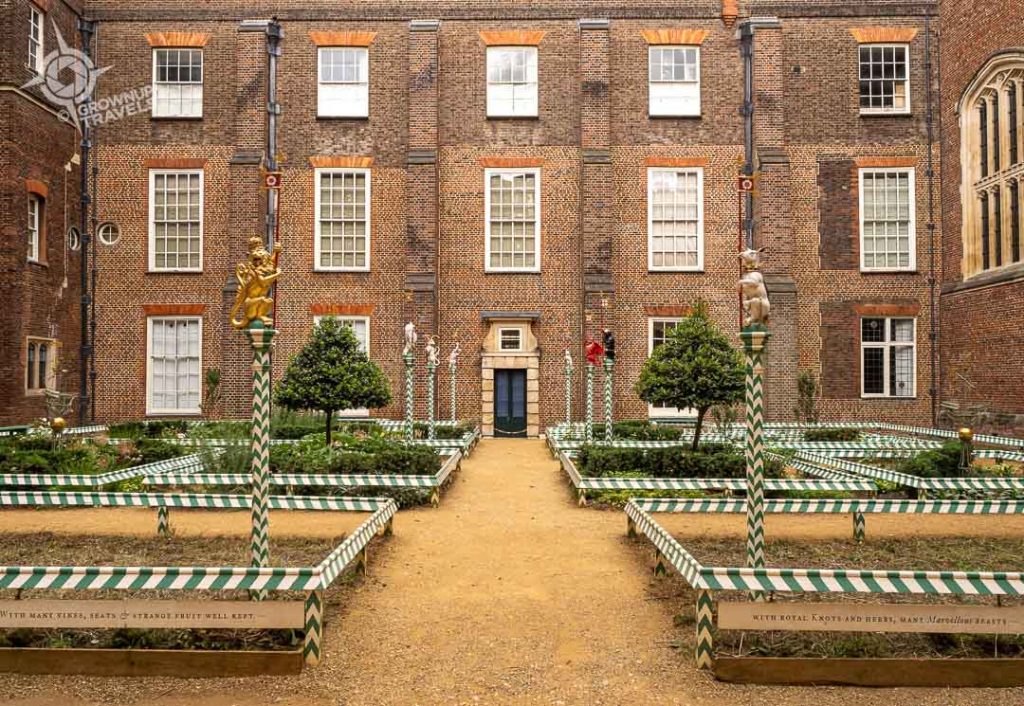
The Chapel Court (now a kitchen garden)
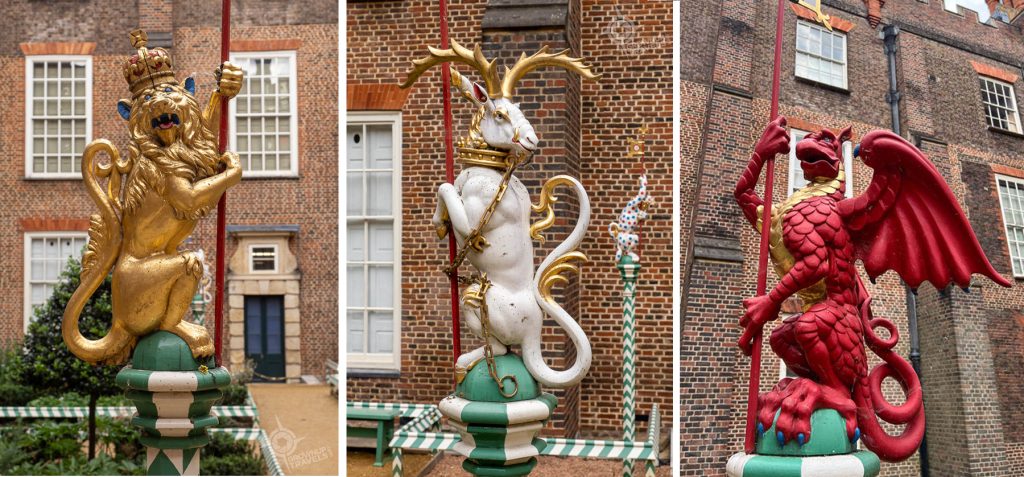
Tudor Beasts in the Chapel Court Garden
The Haunted Gallery
Any palace as old as Hampton Court is bound to have its share of ghosts and ghost stories. Add to that an owner who had 2 of his wives beheaded, and another who died in the palace shortly after childbirth, and you can bet that of all of King Henry VIII’s palaces, Hampton Court has a few restless royal spirits. One of these beheaded wives, Catherine Howard, Henry’s fifth queen, was accused of adultery, and after breaking free from her apartments in the Palace, ran down the Processional Hallway to try to find the King and plead her innocence. She was seized by guards who took her, screaming, back to her rooms, before being taken to the Tower of London where she was executed 3 months later. Her ghost is said to be heard screaming to this day, and this Processional Gallery has become known as the Haunted Gallery.
SPOOKY FACT: In 1999, on two separate tours on the same day, 2 women fainted in exactly the same spot in the Haunted Gallery….
Then there is Jane Seymour, perhaps Henry VIII’s favourite wife because she succeeded in giving him his long-sought-after heir, Edward VI. She didn’t enjoy that favour for long, as she died shortly after giving birth to Edward from postpartum complications. Following her death, a pale figure, believed to be Seymour’s ghost, has been reportedly seen on the ‘Silvertstick stairway’ leading to the room where the Queen died.
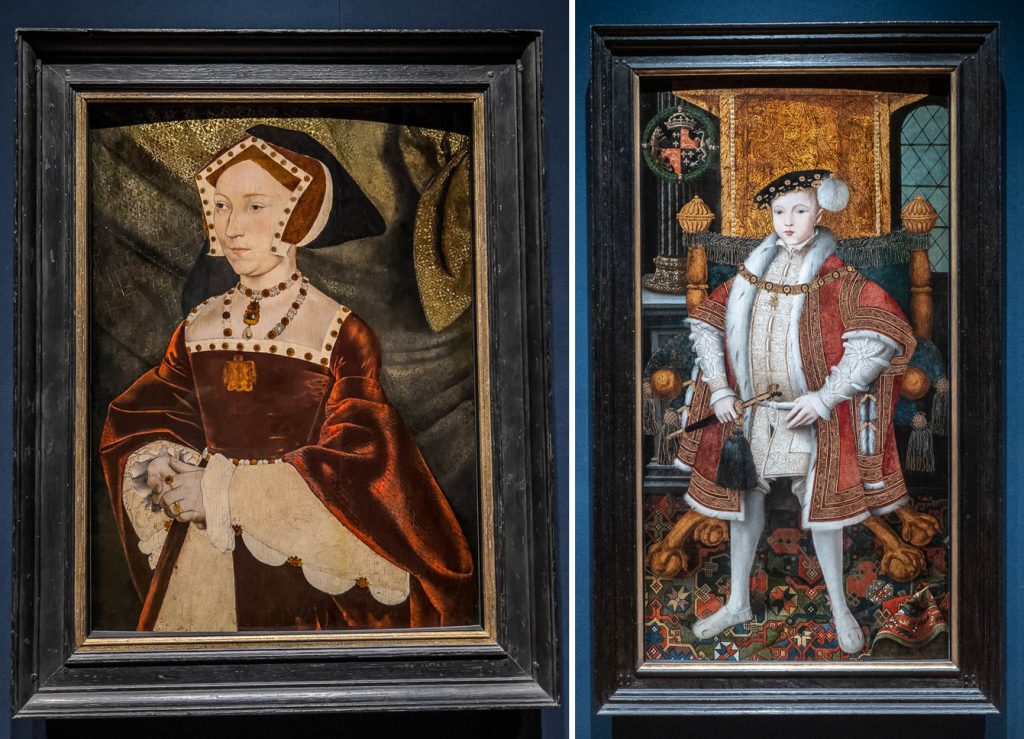
Jane Seymour and her son Edward VI
Beyond King Henry: The Privy Chamber of King William III (1689-1702)
Leaving King Henry VIII behind for a moment, another must-visit place inside Hampton Court Palace are the apartments of King William III. These rooms are the inner chambers used by the monarch and access to them was reserved for the most intimate and influential members of the King’s court. Even the dining room and bedroom of the King were considered ‘public’ places where privileged courtiers were allowed to be present when the king dined or was dressed for royal duties.
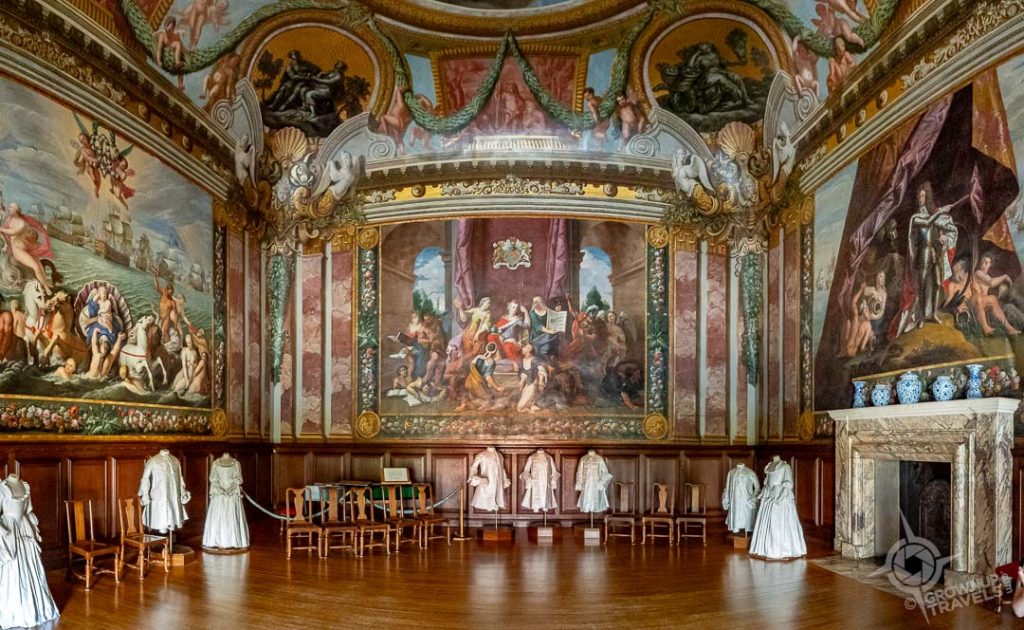
Hampton Court Palace King William III Privy Chamber
The rooms feature huge fireplaces, paintings and elaborate decoration on the walls and ceilings. (The white-clad mannequins are leftover from a previous installation where ‘fashions’ were projected onto the figures, but they also serve to help demonstrate the scale of the rooms.)
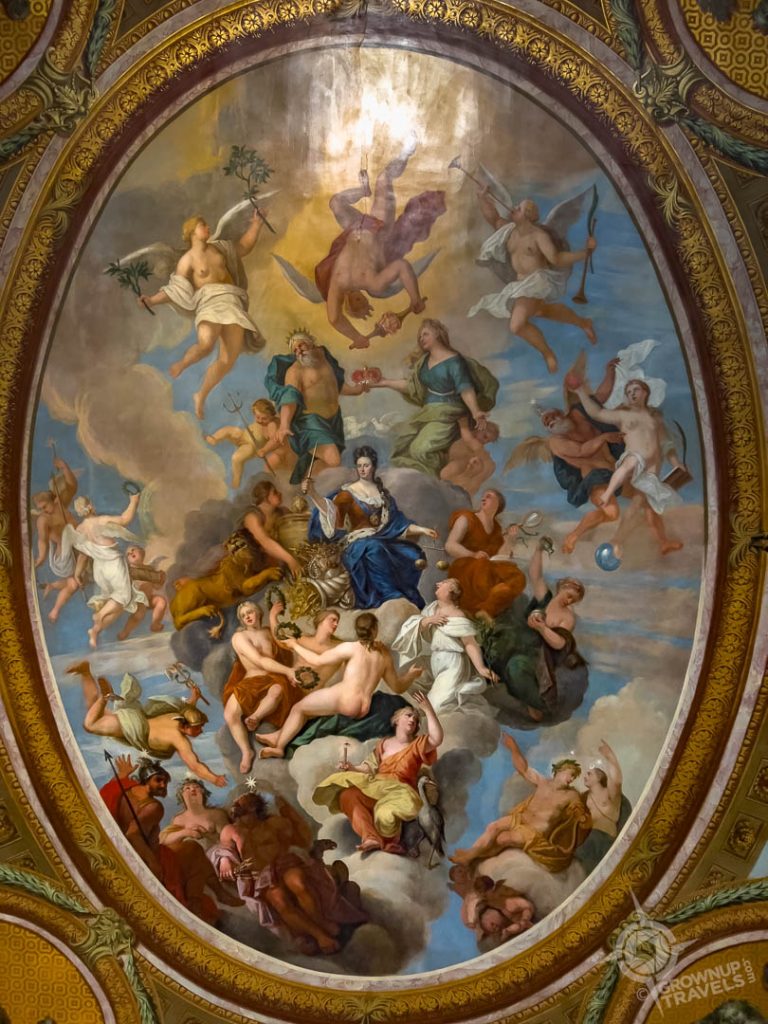
Ceiling artwork, Privy Chamber Hampton Court Palace
FUN FACT: Even at the time, these rooms contained very little furniture, as the space was usually filled with people, so although they may appear empty to visitors’ eyes, these spaces were never designed to have many furnishings.
What to See Outside Hampton Court Palace: 60 Acres of Gardens
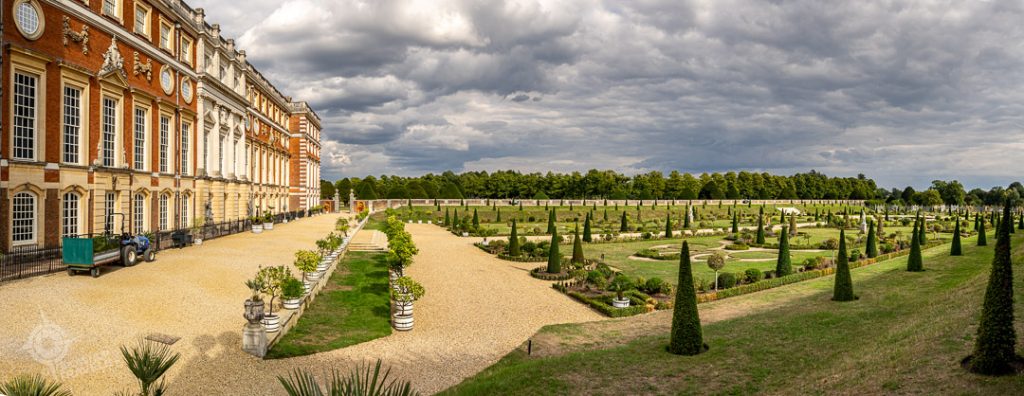
There are 60 acres of gardens to explore at Hampton Court Palace
A visit to Hampton Court Palace without allowing time to see the gardens would be a mistake, especially if it happens to be a nice day. There is a maze here (always a fun thing to do regardless of how old you are), as well as a Rose Garden and Kitchen Garden. But if you are short of time, you will definitely want to visit the gardens at the rear of the palace (east side) and on the Thames side to the south of the Palace. Not only are these gardens some of the most beautiful, but there’s also an unexpected surprise that you’ll find here…
The Great Fountain Garden
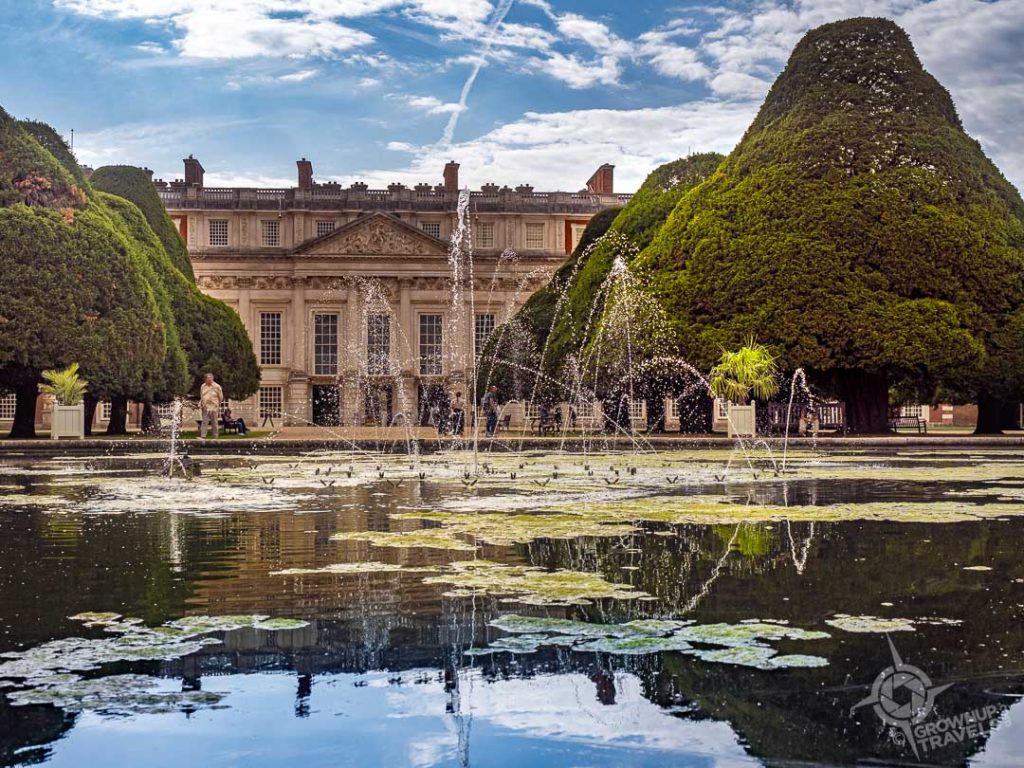
The Great Fountain Garden’s one remaining fountain
This garden was originally built for King William III and got its name from the 13 fountains that were installed here, only one of which remains today. But this huge formal garden is most famous (and recognizable in TV series like Bridgerton) for its huge yew trees planted by Queen Anne, following William’s reign. She wanted to add the yews as a decorative element instead of some of the hedges which she disliked, and her intention was to keep the trees small and clipped to a more ornamental, less monumental size. It was actually the head gardener in the mid 1700s, Lancelot ‘Capability’ Brown (gotta love that name!) who allowed them to grow much larger, and two hundred and seventy-five years later, they resemble giant green gumdrops flanking 3 long walkways that radiate away from the Palace.
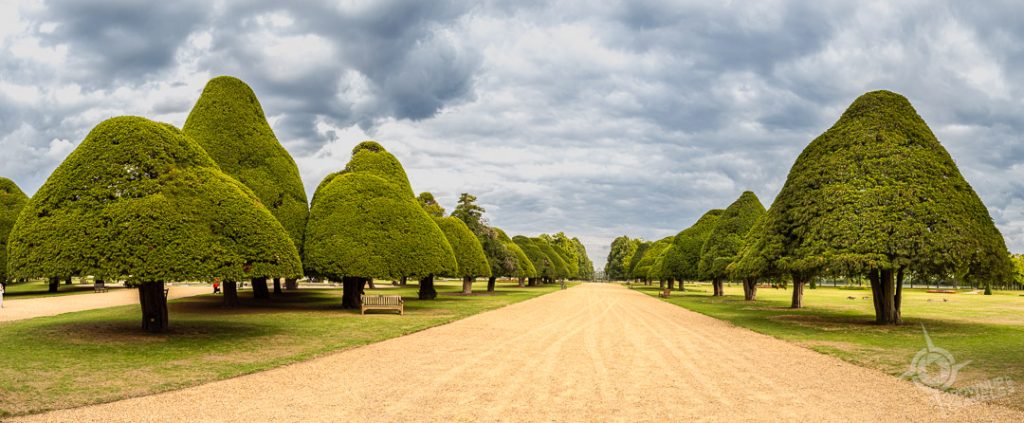
Yew trees in the Great Fountain Garden at Hampton Court
The Privy Garden
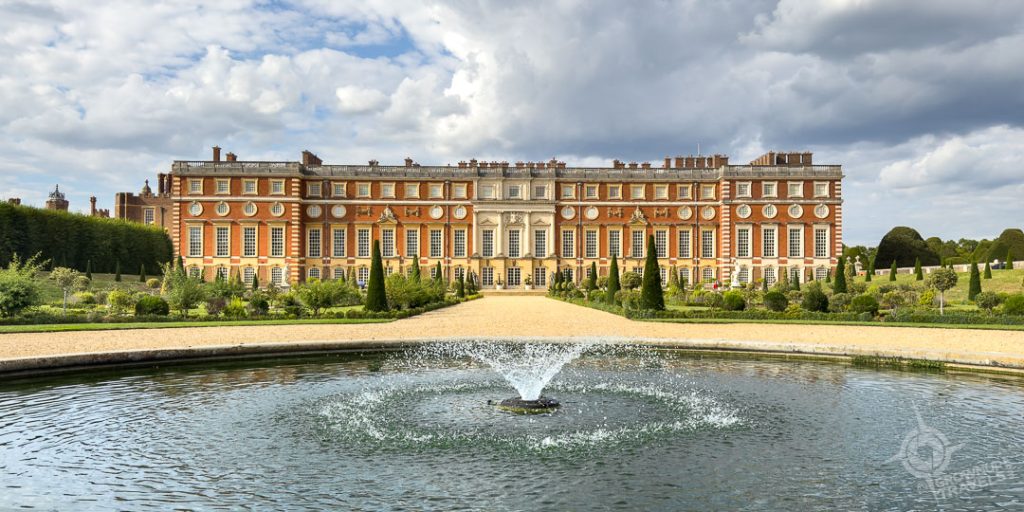
On the south side of Hampton Court Palace are some of its most beautiful and colourful gardens, (at least in my opinion), starting with the Privy Garden. Although it was created at the time of King Henry VIII, it was King William who gave the structured garden its Baroque formality, statuary and wrought iron fencing, all of which has been meticulously restored after centuries of neglect.
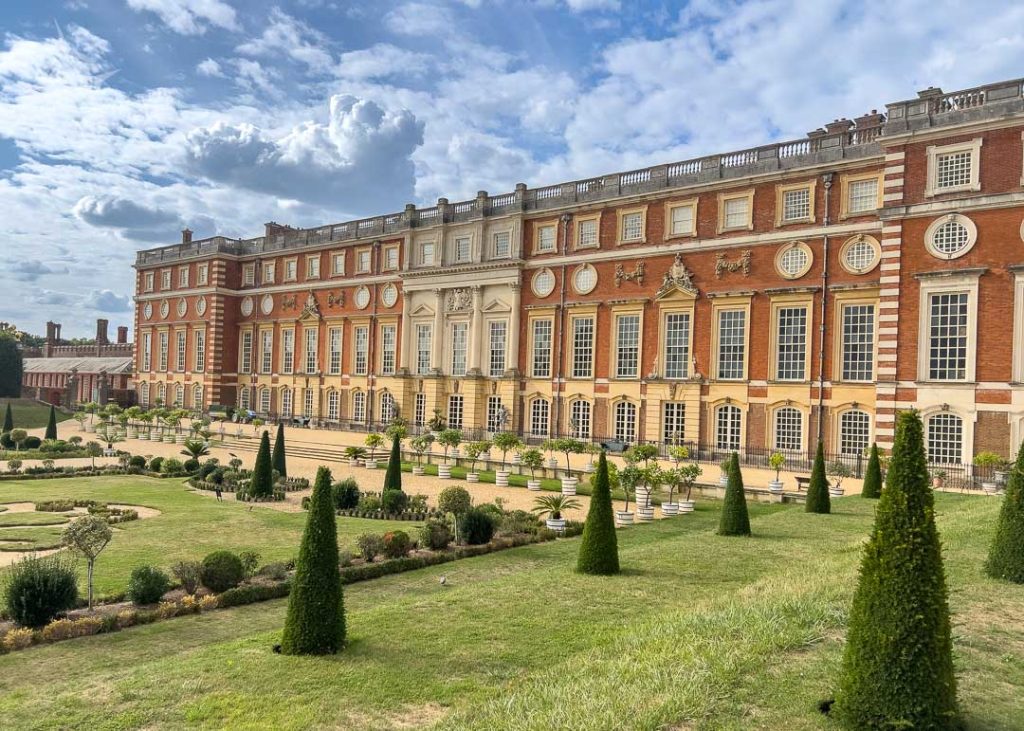
The Privy Garden doubles as Queen Charlotte’s Palace in Bridgerton
The Privy Garden is another favourite film locating for the Bridgerton series as it is laid out in front of the beautiful south facade of the Palace and this backdrop and formal garden walkways are the perfect settings for many interactions between the characters.
Along one side of the garden is a long, leaf-covered pergola known as Queen Mary’s Bower, that was built to provide a shady stroll for the Queen and her ladies on hot days. Interwoven hornbeam trees have been trained to grow over the trellised archway, creating a cool green tunnel underneath.
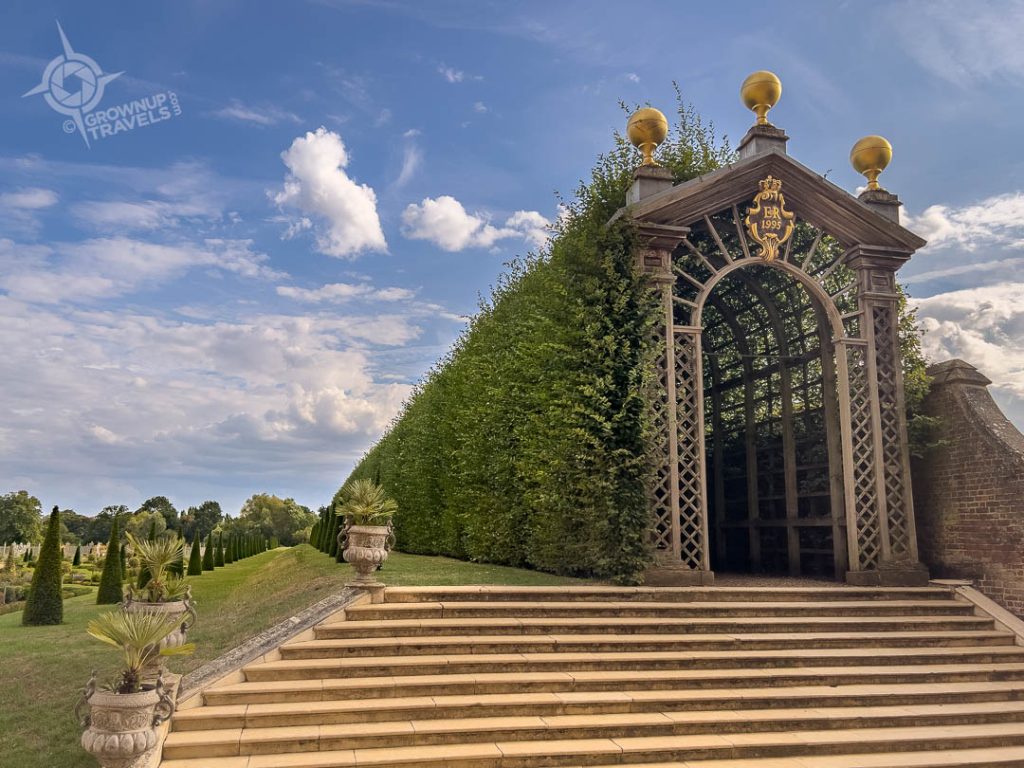
Queen Mary’s Bower, Privy Garden
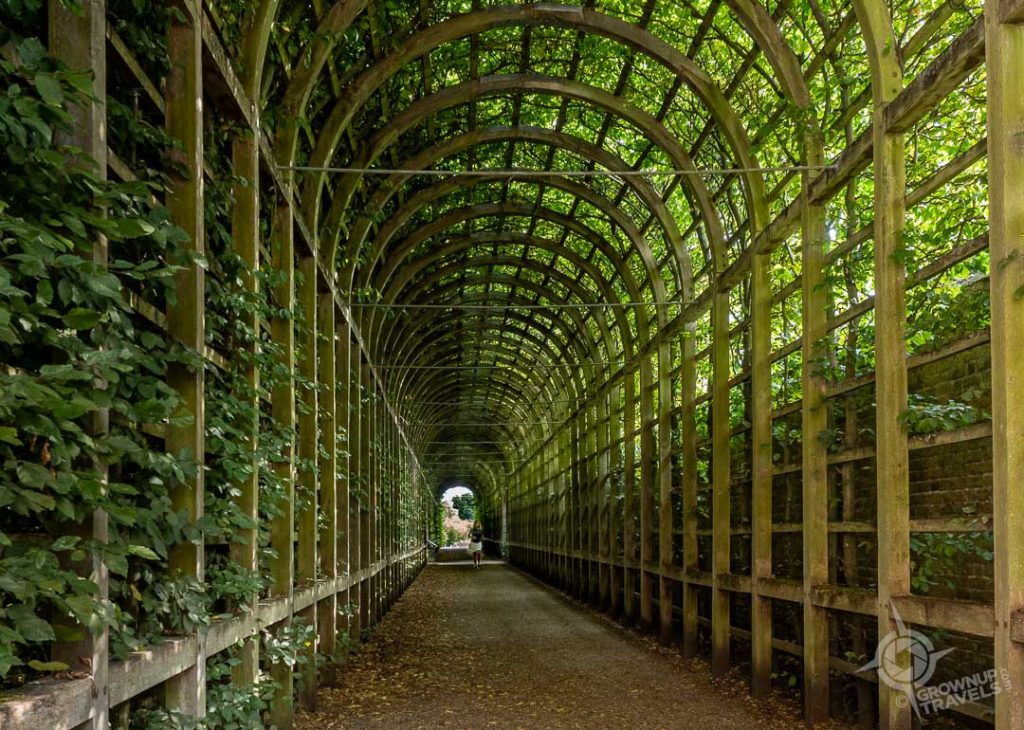
The Pond Gardens
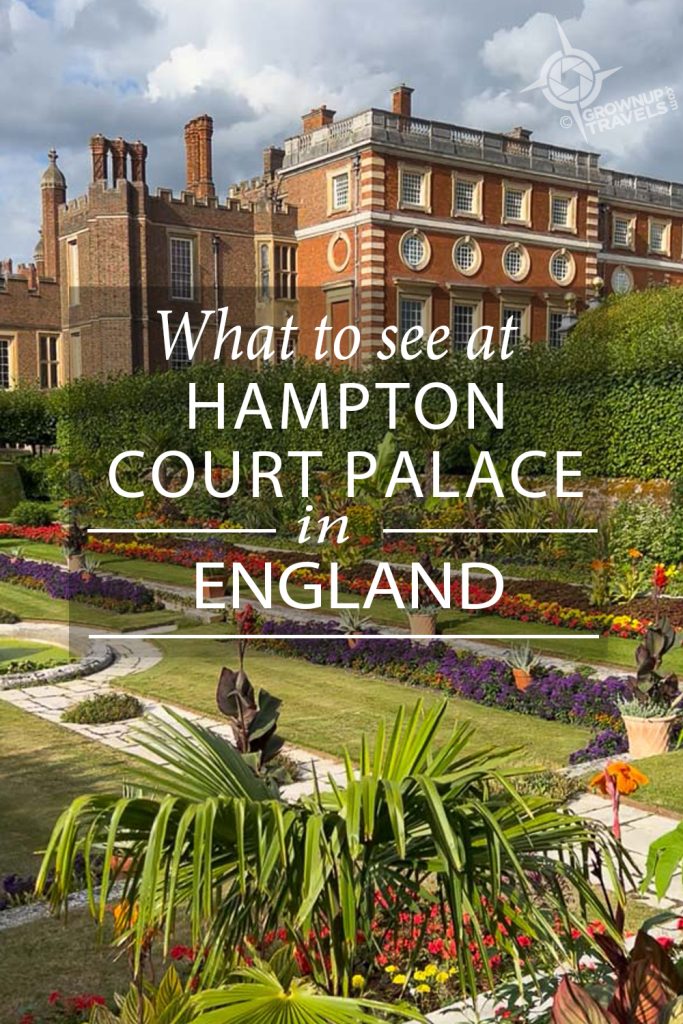
Next to the Privy Garden are two ‘sunken’ gardens that are surrounded by walls of hedges, making these two places not only feel more intimate and sheltered, but also very photogenic. These spaces originally served as stocked fish ponds during the time of King Henry III, where the carp and bream in the ponds were used to feed the court.
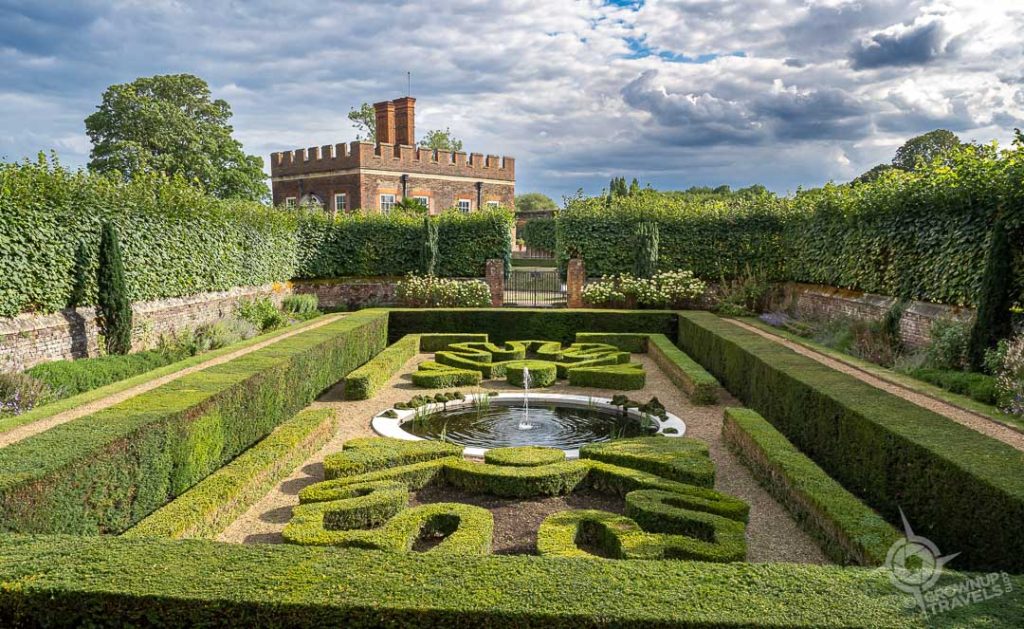
One of the Pond Gardens at Hampton Court Palace
Queen Mary re-imagined the former ponds as exotic gardens and today they are filled with manicured hedges, fountains and colourful flowers.
TIP: If you walk around the perimeter of these gardens, following the wall-height hedge, there are a few hidden ‘windows’ that provide a different view into the garden.
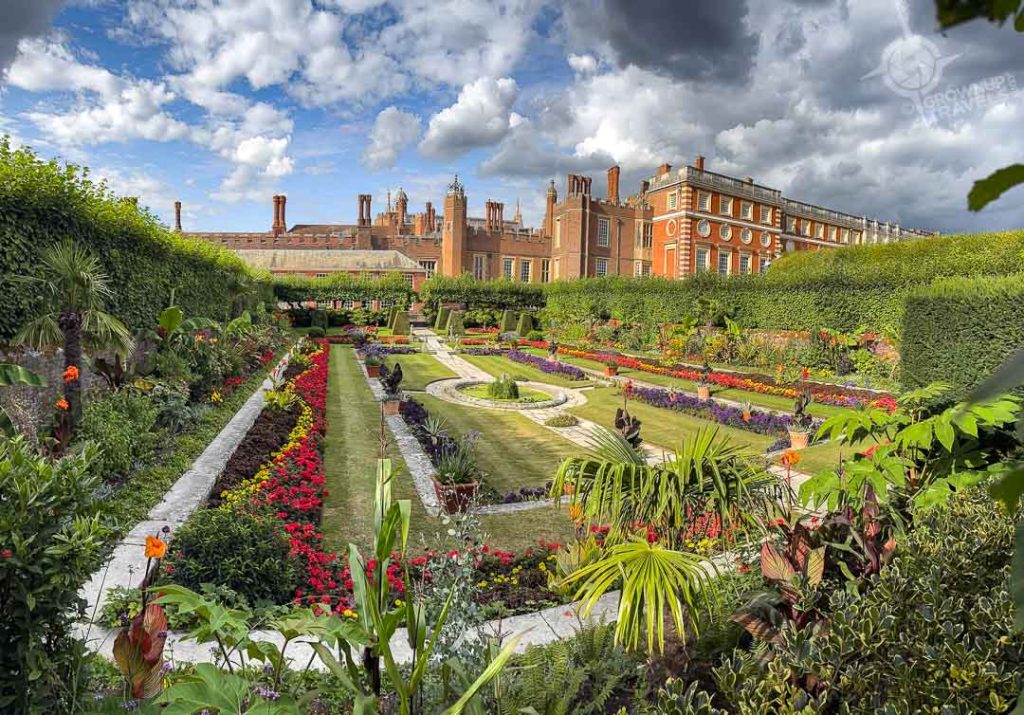
The former pond is now a colourful sunken garden (see through a ‘window’ in the hedge)
The Largest Grapevine in the World!
Hampton Court Palace holds a surprise that I definitely wasn’t expecting, and once again, we have the legendary landscaper, “Capability” Brown to thank for it: the Great Vine, the world’s largest grapevine, as certified by Guinness in 2005.
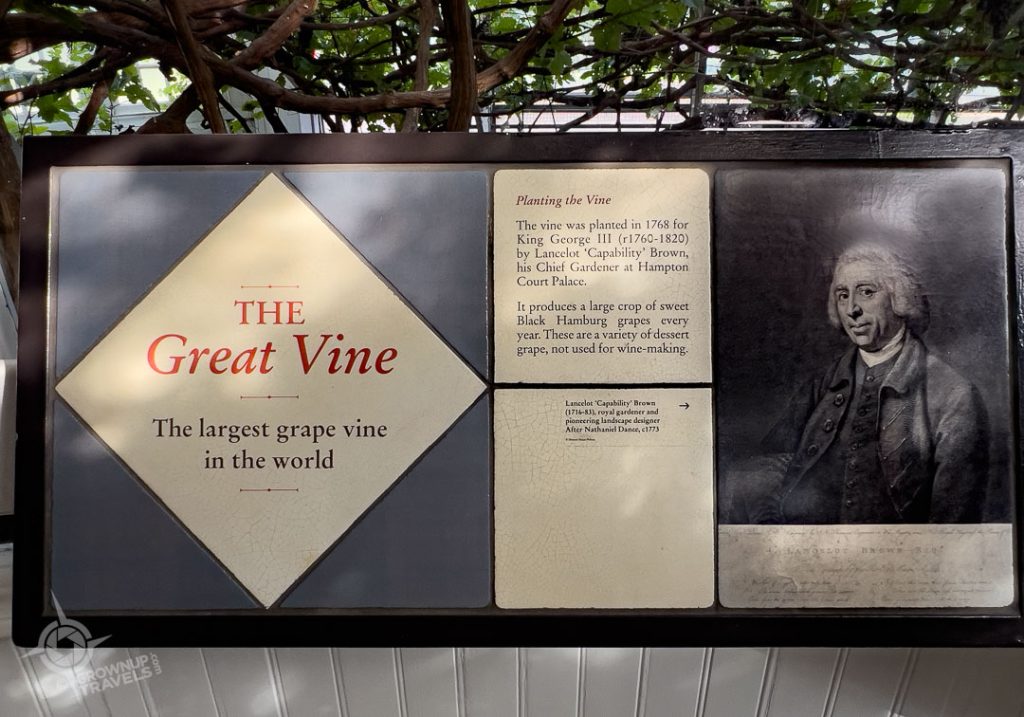
A more than ‘capable’ landscaper planted the Great Vine in 1768!
So, how big is the biggest grapevine in the world? It’s branches are typically over 100 feet long, with the longest measuring a staggering 246 feet (and that was 20 years ago). The vine has its own greenhouse where you can see some of its 12-foot circumference, and outside there’s an entire field under which are buried the roots of this massive vine. The field is kept clear of other plantings, and the roots regularly fertilized so that the vine can continue to produce its annual harvest of around 600 pounds of Black Hamburg grapes.
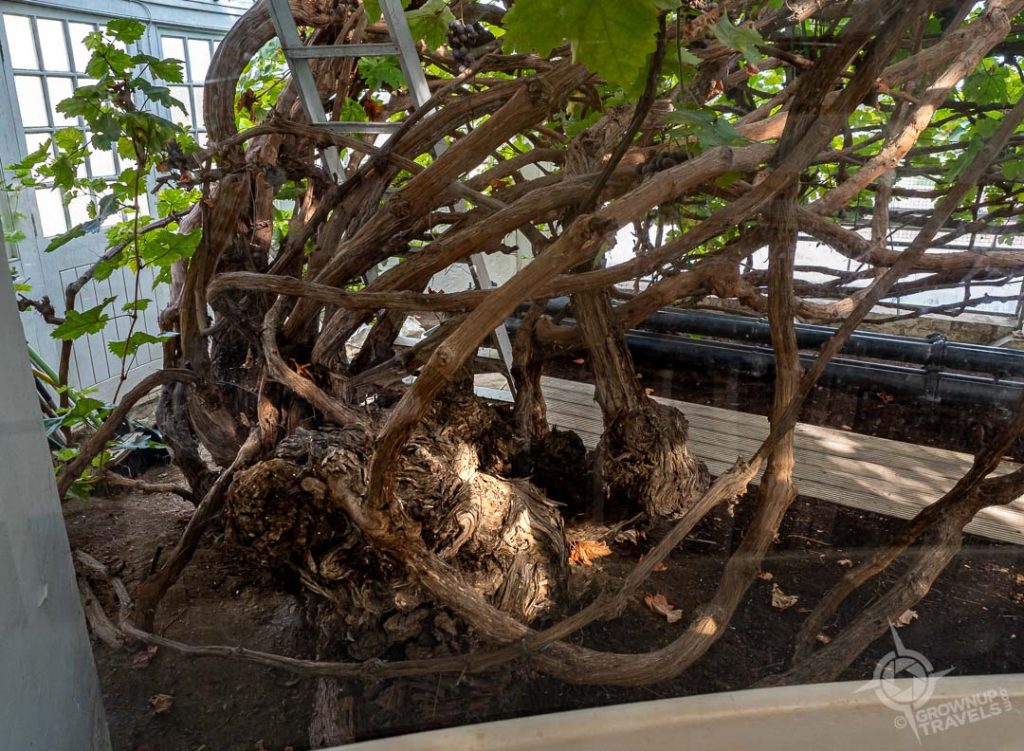
The Great Vine has a circumference of more than 12 feet
FUN FACT: If you visit Hampton Court Palace in August/September you can actually buy some of that year’s grapes in the Palace gift shops!
A Pleasure Palace, Now a Public Treasure
Hampton Court Palace may once have been an invitation-only estate where only the rich and royal came to play, but today it is a public treasure where all are welcome. A favourite amongst King Henry VIII’s palaces, Hampton Court gives visitors a glimpse into the lifestyle of some of the most famous Kings and Queens of England, and offers everyone the chance to play at being Royals themselves, even if it’s just for a few hours.
PRACTICAL TIPS FOR VISITING HAMPTON COURT PALACE
TICKETS: Visit the Hampton Court Palace website to see admission prices, hours, etc. They often have promotional pricing for some days, peak and off-peak pricing, and seniors discounts.
TIP: If you are visiting England and plan to visit multiple historic sites, you might want to consider a Membership (which can cost less than 3 individual attraction tickets). Membership gives you unlimited entrance to Hampton Court Palace, the Tower of London, Kensington Palace and Hillsborough Castle. Joint memberships for 2 people offer even more savings.
GETTING TO HAMPTON COURT PALACE: There are all kinds of guided tours and excursions from London. Or you can take a train from London’s Waterloo station (about an hour) that drops you off at the Hampton Court train station, which is about a 5 minute walk to the Palace.
Or make more of a full day of it by taking a train to Kingston-Upon-Thames (again from Waterloo Station in London), and then hop on a 30-minute boat cruise that drops you off close to the Palace. It’s a nice way to start your Palace visit with a cruise on the water first.
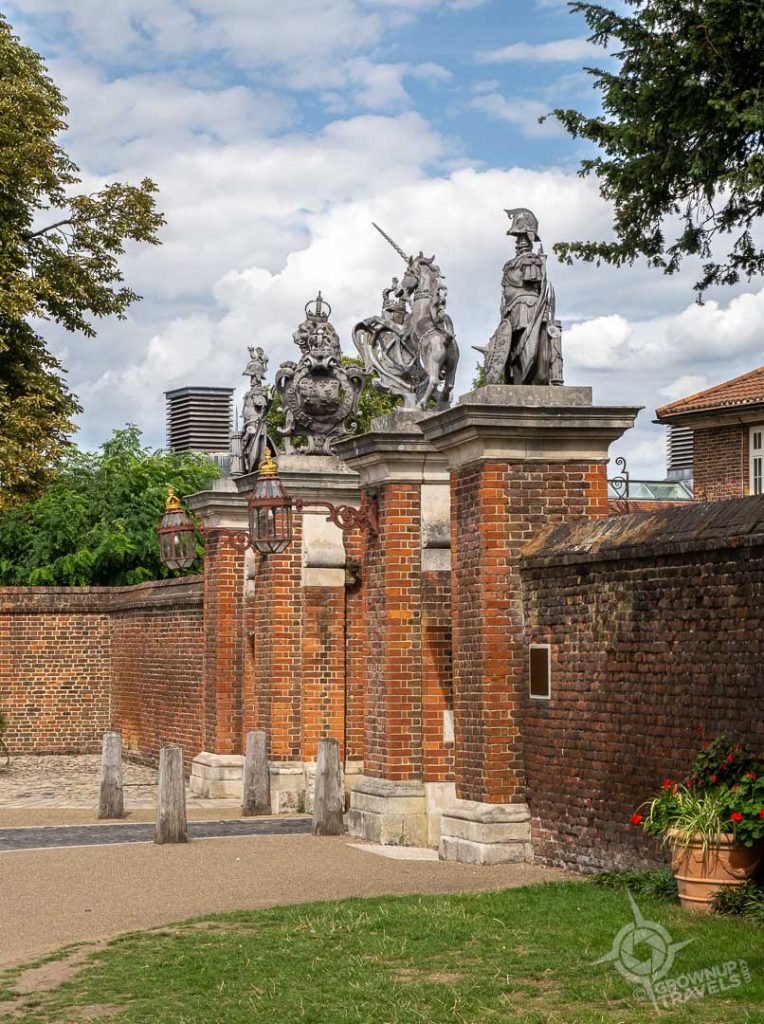
The Hampton Court Palace Entrance gates are a short walk from train or boat
WHERE TO EAT AND DRINK NEARBY: Looking for an adult beverage following your visit to Hampton Court Palace? Check out the Mitre Hotel, just across the road from the Palace entrance gates. Their Riverside Terrace is a great place to enjoy a drink, enjoy the sunshine and watch the boats go by. Alternatively, there is a nice selection of restaurant options and shops in East Molesey village (a short walk just cross the bridge, then continue along Bridge Street).
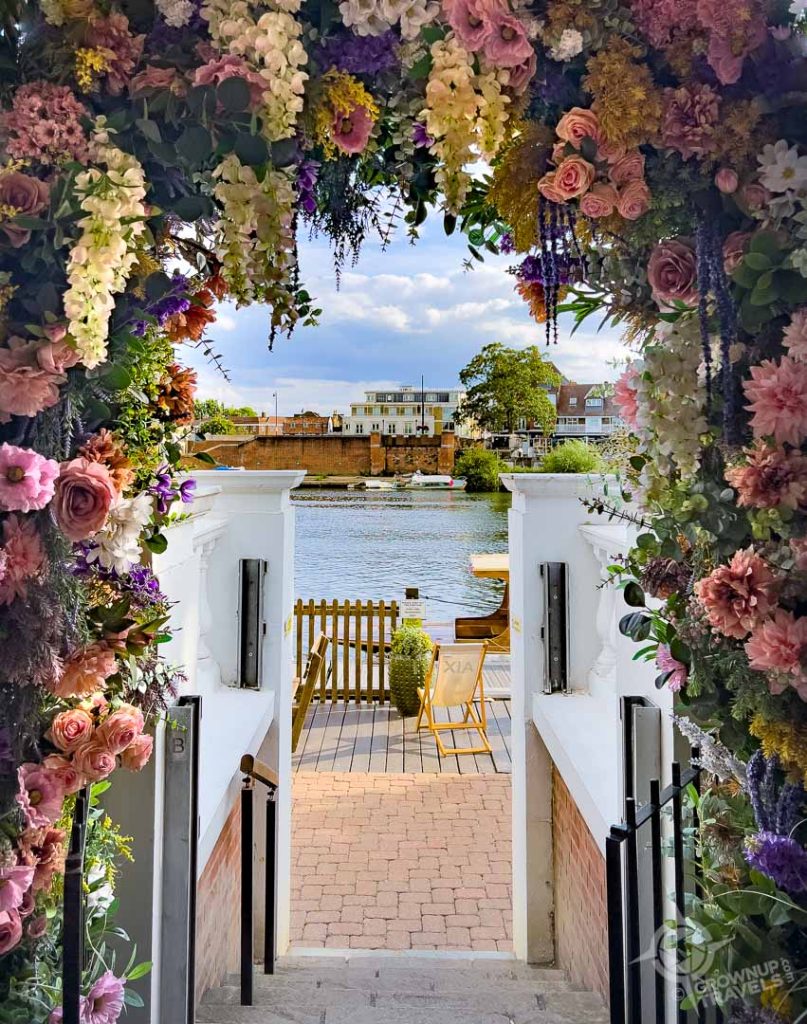
Hotel MItre’s Riverside Terrace entrance

Jane is an award-winning travel writer and photographer and an accredited member of the Travel Media Association of Canada (TMAC). In their annual awards competition, TMAC named GrownupTravels.com as the Best Self-Published Travel Blog in 2025 .
She is also a member of the North American Travel Journalists Association, and a freelance travel writer contributing to both print and online publications.






Subscribe and you'll never miss an update!
Join our mailing list to receive the latest news and updates from Grownup Travels. (We keep your email STRICTLY private)
Thank you for subscribing to Grownup Travels!