

It was a perfect day for a mid-September zodiac boat tour out on the waters of Lake Superior near Thunder Bay: the sun was blazing, the skies were a brilliant blue and the waters were almost mirror-calm, a far cry from the ‘Gales of November’ made famous in Gordon Lightfoot’s ballad, The Wreck of the Edmund Fitzgerald. We had already rounded the famous Sleeping Giant landmark and were heading towards Porphyry Island to spend a few hours exploring its volcanic black beaches and lighthouse. Ahead of us was a small island about the size of a Toronto studio condo unit. “Cute photo op”, I thought, noticing the couple of trees on this tiny little rock and the blue waters surrounding it.
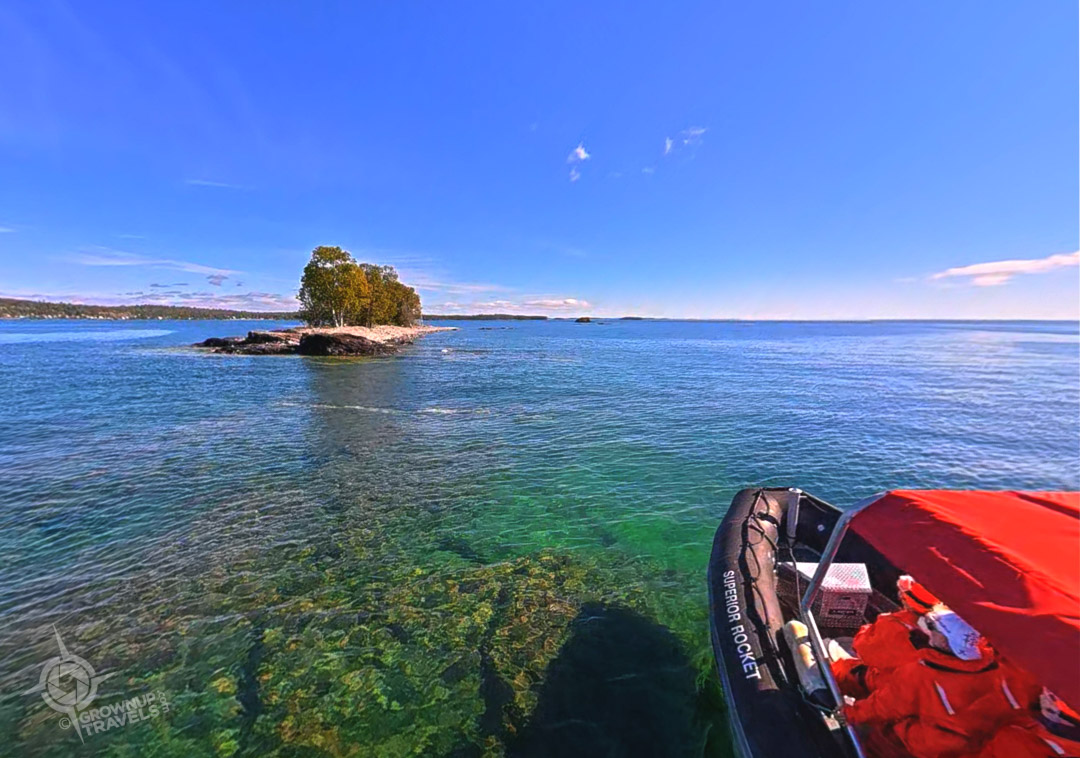
What I thought was a cute little island had a huge story waiting to be told
When our captain and guide said that we were looking at the site where the richest silver mine in the world once operated, I thought he was talking about something on the shore. “Wait, where?” I asked. And he pointed to the 540 square foot rock that I was looking at. “Silver Islet”, he said. “Look closely and you can still see the entrances to the mine shafts about a foot under the water.”
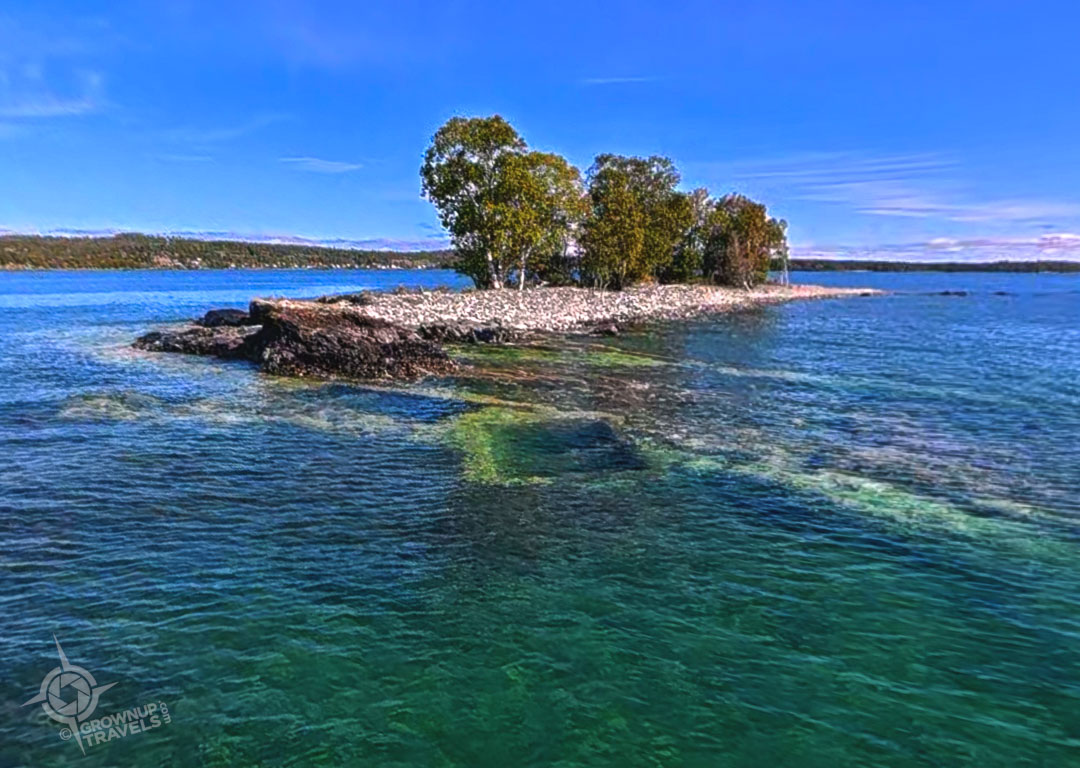
The two dark rectangles underwater are the former mine shaft entrances!
An Underwater Silver Mine in Lake Superior? Wait, What?!
I grew up in the northeastern Ontario mining town of Sudbury, so the idea of tunnelling deep into the Canadian Shield to haul out precious minerals is not a foreign concept to me. But the idea of putting a mine on an island the size of a postage stamp in the middle of Lake Superior, and digging 1200-foot-deep shafts under billions of gallons of water was Just. Plain. Nuts. Now imagine doing that in the year 1870. My mind boggled, I was completely fascinated, and I set out on a mission to learn more about this feat of engineering – and imagination.
The History of Silver Islet Mine
The discovery of silver on this tiny Lake Superior islet on July 10, 1868 was essentially a happy accident. At the time, the islet was known as Skull Rock, and was part of a large tract of land owned by the Montreal Mining Company. When a tax of .02 cents/acre was being proposed by the federal government, the mining company hired Thomas Macfarlane to survey their holdings and determine whether their 15,000 acres showed any mining prospects and were worth paying the tax. It was while Macfarlane was exploring Skull Rock that he discovered silver, enough even at first glance to pay that tax for the next twenty years and then some. Seeing huge potential based on his discovery, he recommended the company invest $50,000 to develop a mine on the island (an amount worth about $1.2 million in today’s dollars).
The prospect of trying to extract silver from a miniscule islet sitting almost a mile offshore and barely 8 feet above the waters of Lake Superior proved too daunting for the Montreal Mining Company. So in 1870 they sold the rights to Skull Rock and the rest of their 15,000 acres to an American mining company, the Silver Mining Company of Silver Islet. The new owners took on the challenge and by October of that same year, the company began constructing wooden cribs filled with rocks all around the island to act as a coffer dam and hold back the waters of Lake Superior so they could begin excavation. Three weeks after the dam’s completion in 1871, the first winter storm hit the island, smashing the cribbing, filling the open pits behind them, and forcing the company to repair the structure and rebuild it all over again, this time with 50,000 tons of rock. It was a warning from the Lake that would repeat itself many times during the lifetime of the mine, constantly reminding the miners that Mother Nature had the upper hand here, whether it was violent storms battering the island in the summer or ice dams crushing the cribbing in the winter.
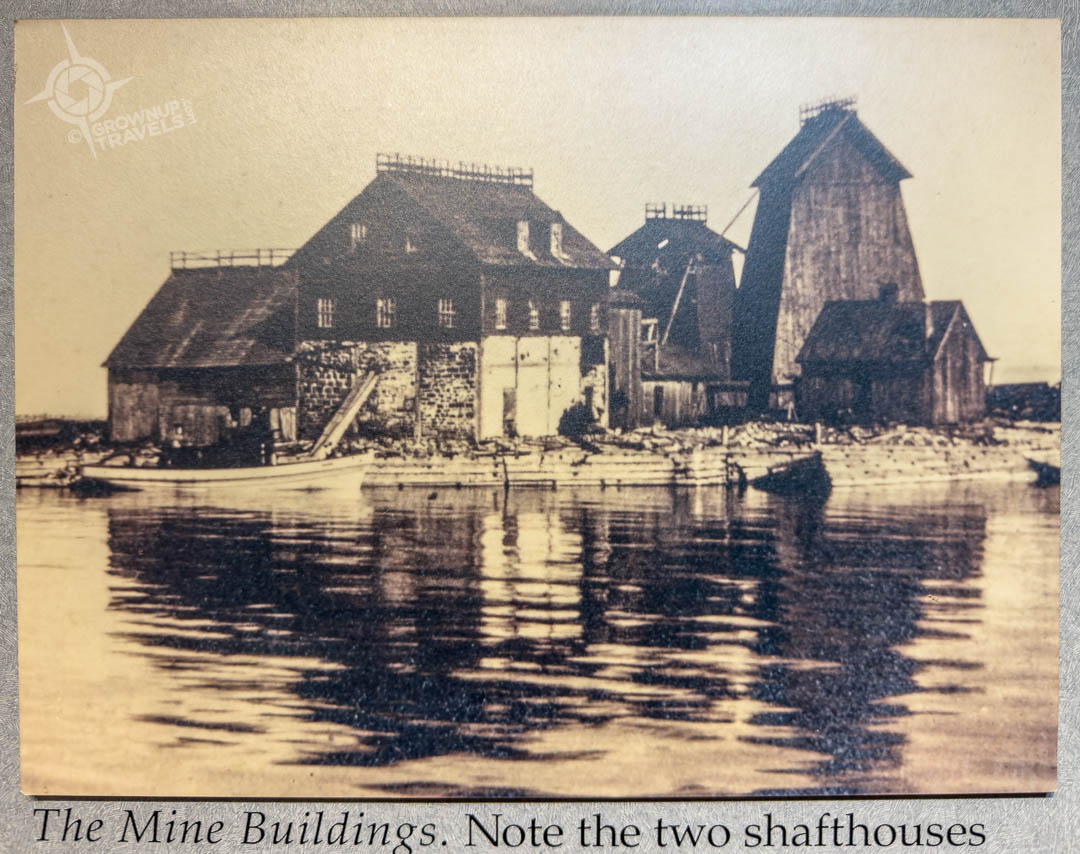
Historic photo showing the ‘expanded’ Silver Islet with buildings
The engineers persevered and Silver Islet was eventually enlarged to ten times its original 540 square feet, with the extra ‘land’ being used to accommodate mining infrastructure and buildings. Above ground, machinery was brought in and structures were built to house supplies, machinery and men. There was a blacksmith shop, library and hospital, saloon, a boarding house and a ‘Search House” where miners had to strip down to make sure they hadn’t hidden any silver in their clothes as an unearned ‘bonus’.
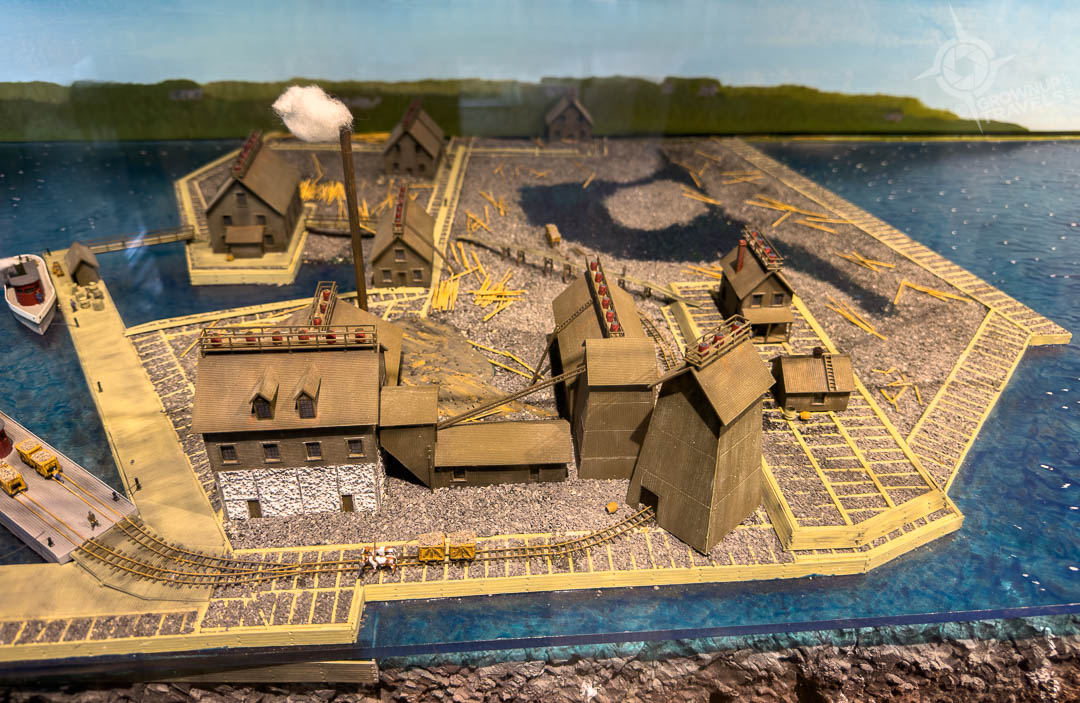
This diorama at the Visitor Centre of Sleeping Giant Provincial Park shows an overhead view of the structures on the ‘expanded’ Silver Islet
Below ground, shafts were dug as deep as 1300 feet below the surface of the Lake with secondary tunnels fanning out under the lake bed, going wherever the silver veins took them. Nothing was easy here: extracted ore had to be hauled from deep below the surface and then shipped to the shore on flat-bottomed rock scows. To help separate the rich ore from granite and other unwanted rock, an innovative new system was invented by William B. Frue, the first mine captain. The ‘Frue Vanner’ as this invention came to be known was an inclined rubber conveyor belt that vibrated and helped to separate the heavy silver from the other waste rock, all while being washed with water. It was a revolutionary technique first developed for use at Silver Islet, but one that was so effective it is still used in mining today.
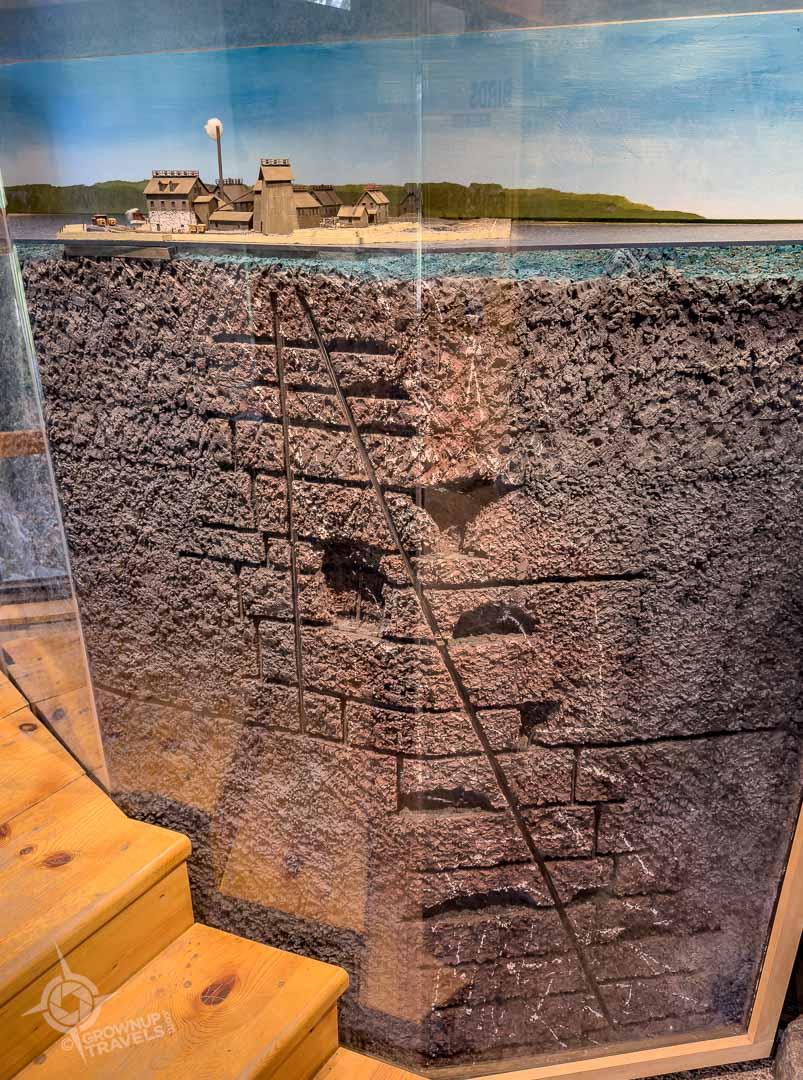
This scale model shows the Silver Islet mine, including the underwater shafts. The vertical shaft was named after Macfarlane.
Despite the inventiveness of the mining engineers, Lake Superior never gave up trying to thwart the miners’ efforts. Coal-powered water pumps operated 24 hours a day to keep the property and mine shafts free of water, and storms continually battered the island. The conditions were so intimidating that many would-be miners quit before starting, after learning that they would be working 1200 feet below the surface of the Lake. I can’t say that I would blame them: miners worked 10 hour days, 5 and a half days a week for a grand total of $26 per month. Safety equipment? Nonexistent. Light in the tunnels was a candle worn on their heads, and the only source of fresh air was from the tunnel openings hundreds of feet above. Yet many workers did stay, and in the process, established a new community on shore as well as on the islet.
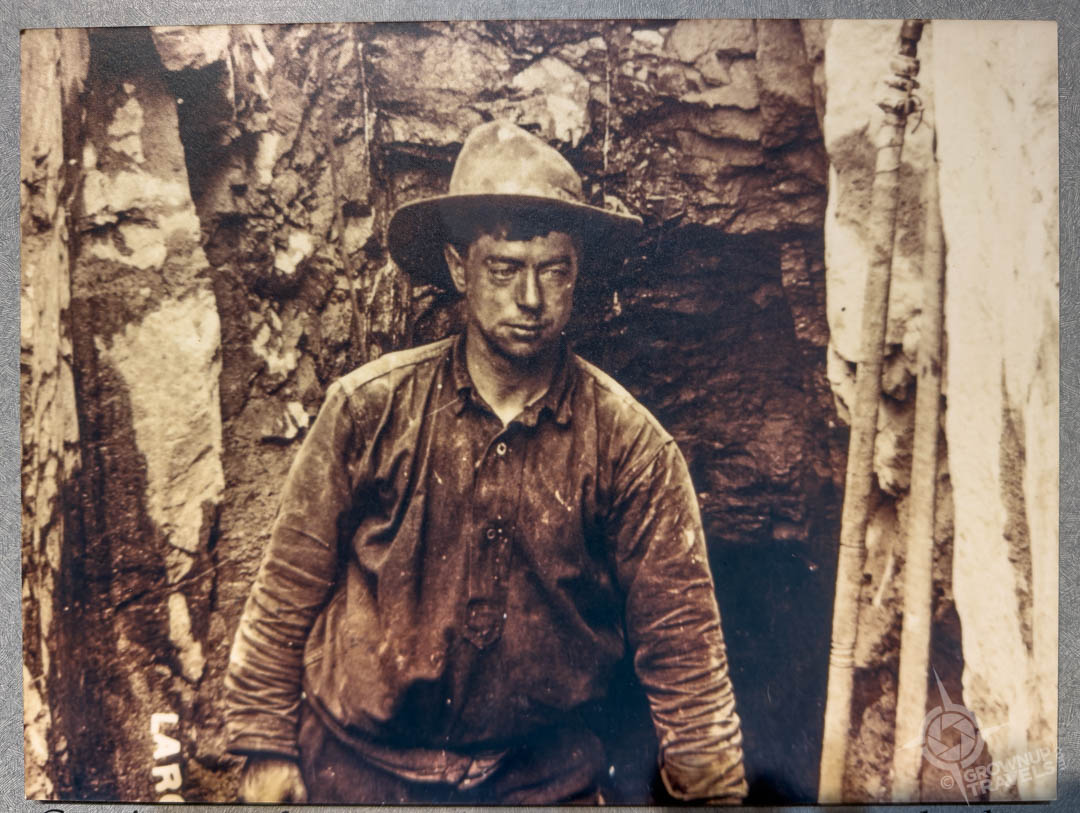
Silver Islet miner coming up from underground (from one of those submerged entrances no doubt)
The Rise of Silver Islet
The town of Silver Islet was initially built as a depot to offload the ore being brought back to shore. A marina and wharf were built to accommodate these rock scow shipments and transfer them to larger lake steamers for processing in Michigan. Supplies had to arrive by boat as well since there were no roads here, and when the lake froze, the only way to reach Silver Islet was by dogsled. However, once the mine was in full operation, log homes were built along the shore to house the workers and their families, and there was also a hotel, jail, 2 churches and a general store to serve the community of 500 people who lived here.
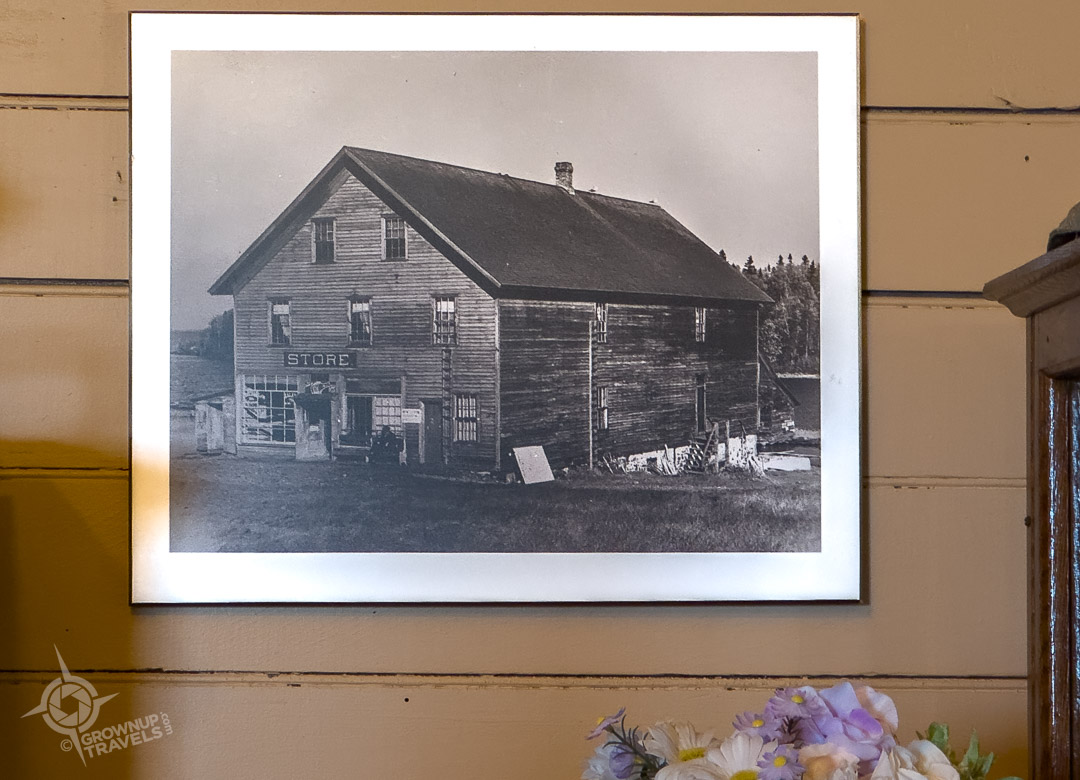
A historic photo of the Silver Islet General Store
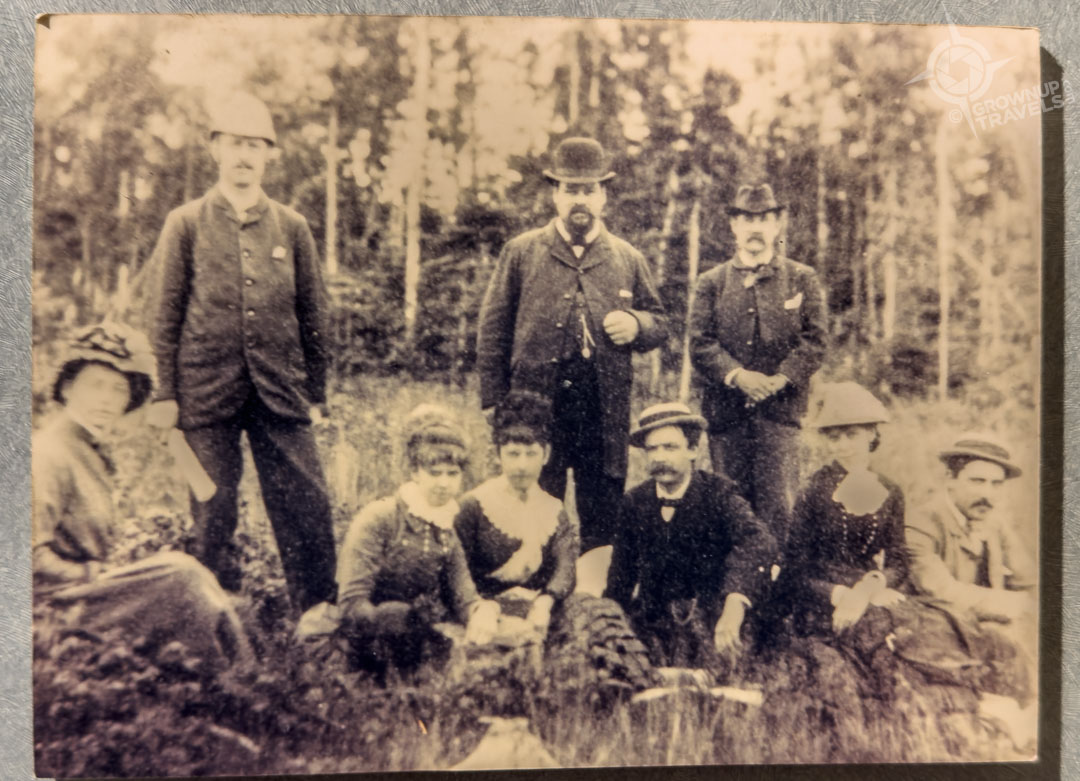
Some of Silver Islet’s Mine Officers in a photo from 1882. Mine captain Richard Trethewey is in the middle back row.
…and the Fall of Silver Islet
Sadly, like so many mining towns in Ontario know all too well, what goes boom often goes bust. By early 1884, the price of silver was in decline, and the offshore silver veins below Silver Islet had begun to yield less and less. The final death blow came to the mine when a coal shipment to the area was delayed and without fuel, the steam-powered pumps that kept Lake Superior at bay stopped working at the mine. Water flooded into the deep underground shafts, and the damage was too great to warrant re-opening. After 16 years as one of the strangest underwater silver mines, the Silver Islet mine ceased operations completely and was abandoned.
SO, WAS IT WORTH IT? Yes – and then some. The Silver Islet discovery became the richest silver mine in the world at the time. In fact, some of the ore was so pure it required next to no processing and went straight into bullion bars. Between 1869 and 1884, the mine produced 89 metric tons of silver valued at between $3.2 and $3.5 million dollars, which in 2026 dollars would equate to between $83 and $153 million dollars (depending on whether you calculate the value in purchasing power or an equivalent weight of silver at today’s price).
Silver Islet Mine Today

Silver Islet, today seen from the shore of what is left of the community of Silver Islet
Today, the tiny little offshore islet once known as Skull Rock is once again a tiny little offshore island, but with a different name and a few hardy, windblown trees clinging to it. Lake Superior has completely reclaimed Silver Islet’s shoreline, the mining buildings that once sat on rock-filled cribs have disappeared and the entrances to the shafts that yielded tons of silver ore are now just dark openings lying submerged a few feet below the surface of the lake.
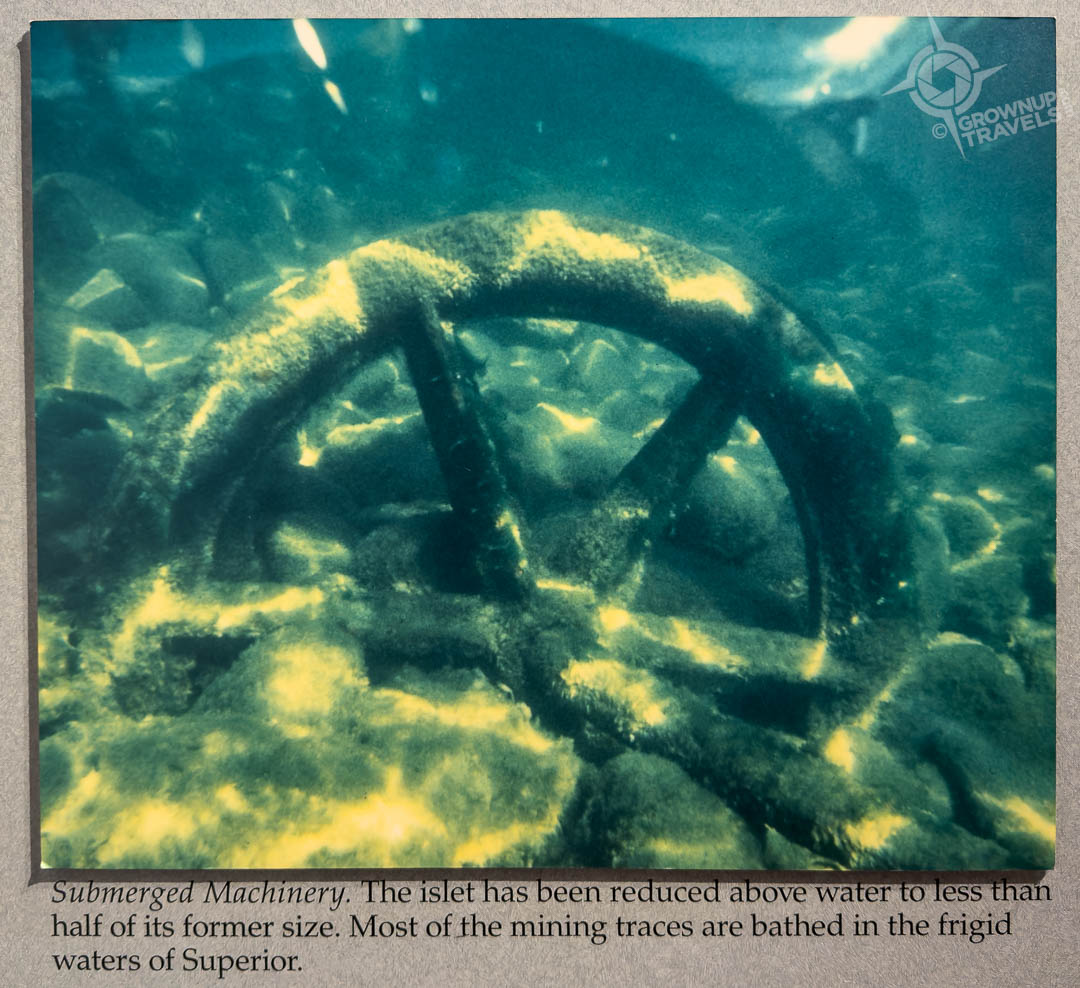
On a calm day, visitors who know what they are looking for can still make out the rectangular mouths of those shafts, and maybe even see the old cribbing boundaries that once enlarged the islet. But if you didn’t know the history here, you might just dismiss this island as a cute little photo op, or bypass it entirely, never realizing the astounding story it holds.
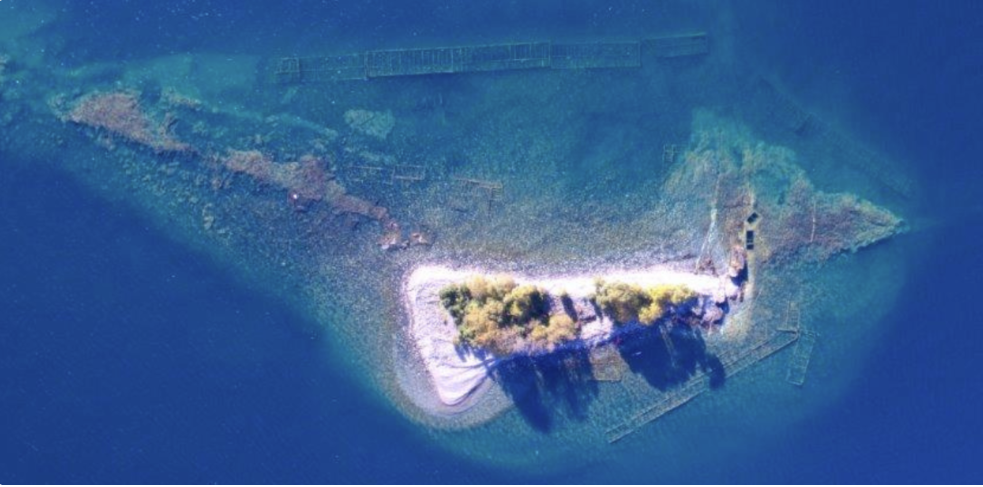
The submerged outlines of old cribbing and the two dark rectangles of the mine shafts can be seen in this aerial shot of Silver Islet *Photo author unknown
And as for the town of Silver Islet? The good news is that there is still a small seasonal community here, consisting mostly of cottage owners who have repurposed the former workers’ homes into characteristic, off-grid summer properties.
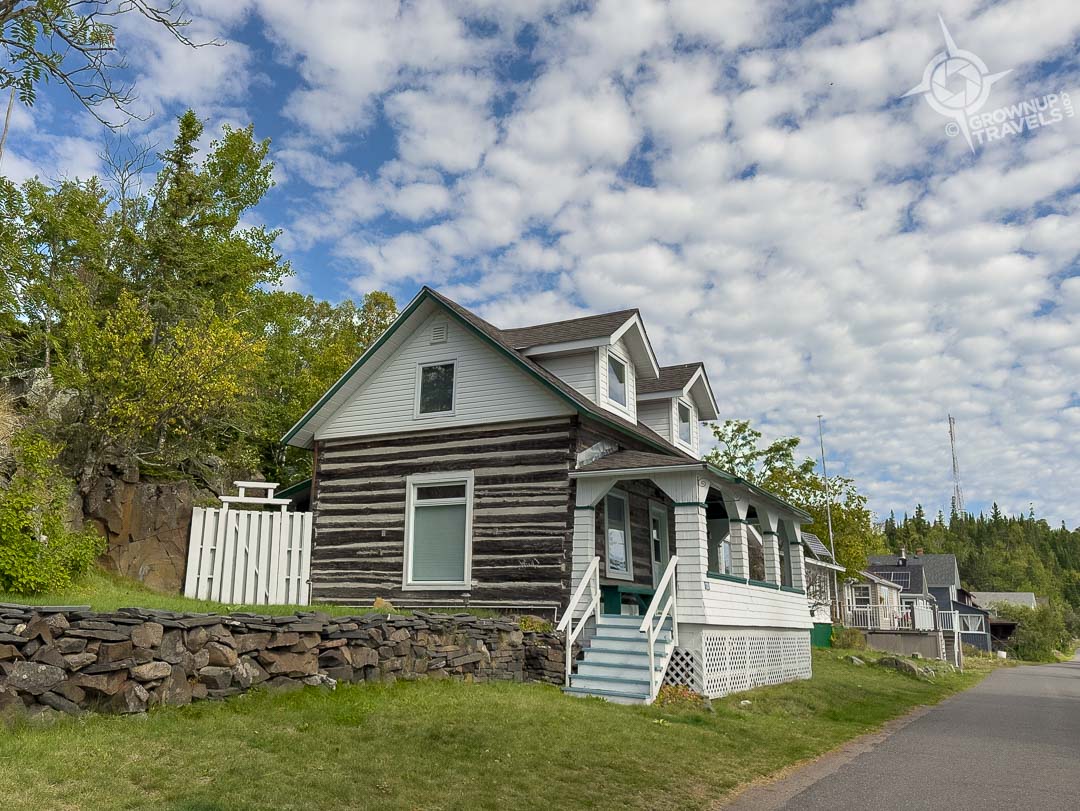
Old workers’ homes are now seasonal cottages
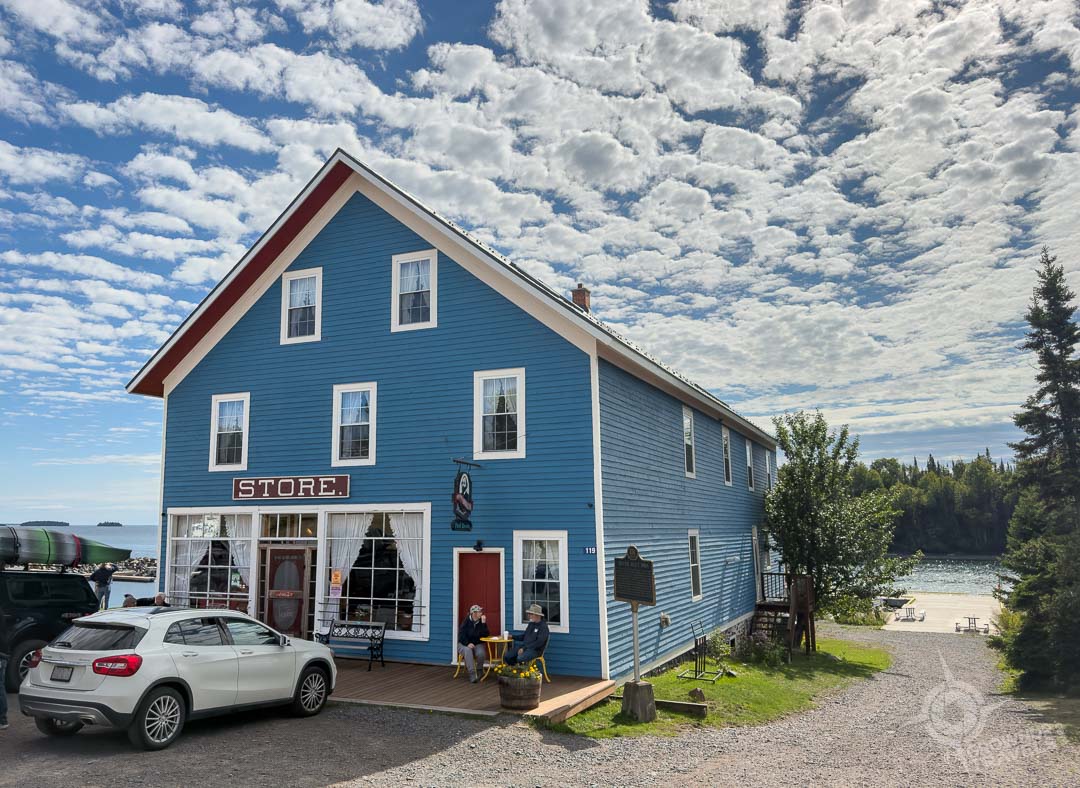
Silver Islet General Store exterior today.
And although the hotel and jail are long gone, a wharf still operates here, as does the historic 1871 General Store which has been restored and is a well-loved local landmark.The store is only open during the summer months, selling merchandise and apparel, and operating a cafe that sells light lunches and baked goods (including Thunder Bay’s famous ‘Persian’ treat). The interior is a homey antiques-filled space that harkens back to its 19th century roots, and the tea room is a great place to sit and enjoy a snack, either from inside or on the deck overlooking the water. Sitting at one of the wooden tables, it’s easy to imagine what life might have been like for the people here in the silver boom days when the smallest island mine in the world became one of the richest.
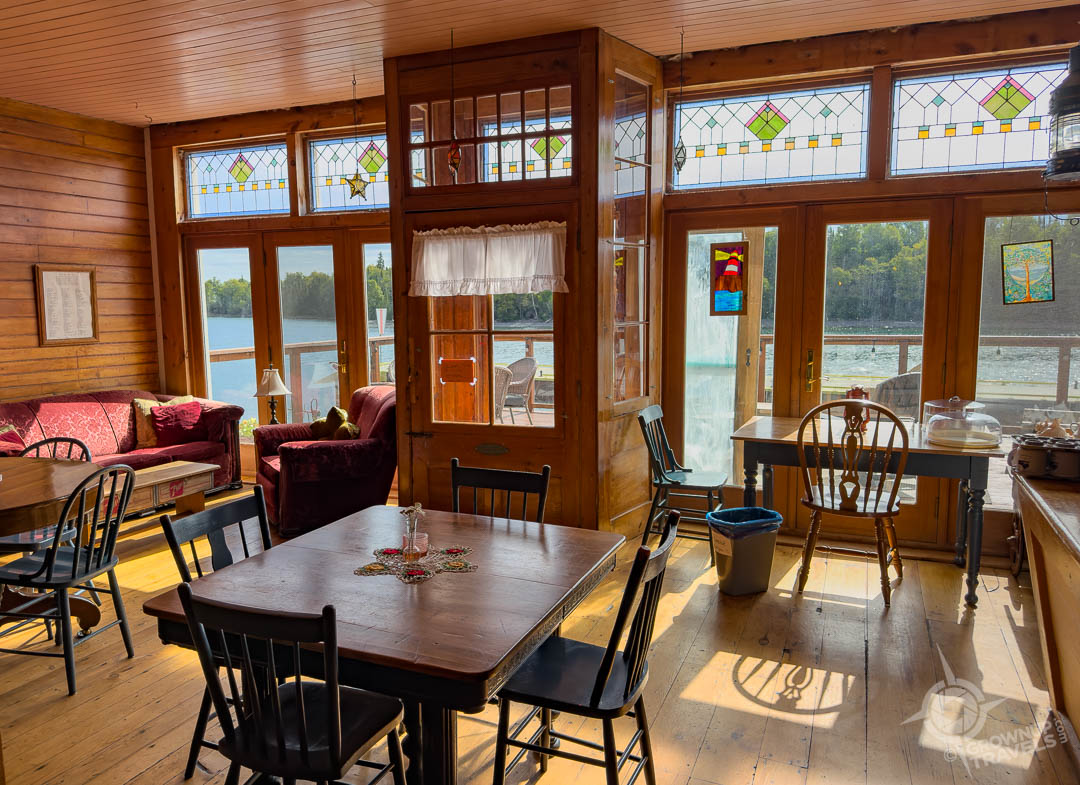
Silver Islet General Store Tea Room interior
Indigenous Legends About Lake Superior’s Silver
One of the things I learned while delving into the history of Silver Islet is that the story of Lake Superior’s silver is not just a 19th century mining tale. Generations-old Anishinaabe folklore is also tied to Silver Islet. One of their legends tells of the benevolent giant Nanabijou, the spirit of the deep water, who knew of the silver beneath the Lake and as a gift, told the local Ojibway people its location. His one caveat was that they were never to share that location with anyone, especially the white men. But a rival Sioux scout used trickery to discover the location of the silver by disguising himself as an Ojibway, and after learning of the silver’s location, he in turn was tricked into sharing that location with two Europeans.
When Nanabijou saw the white men heading towards Silver Islet in search of the silver, the giant conjured up a violent storm on the lake which drowned the white men. But because the secret had been revealed, Nanabijou was himself turned to stone, forming the feature that today is known as the Sleeping Giant. It’s not clear whether he was placed there as a stone guardian to protect the silver below, or as punishment from the Great Spirit, as there are different versions of the story. Either way, the Sleeping Giant and the story of Lake Superior’s silver remain an important part of local indigenous legends.
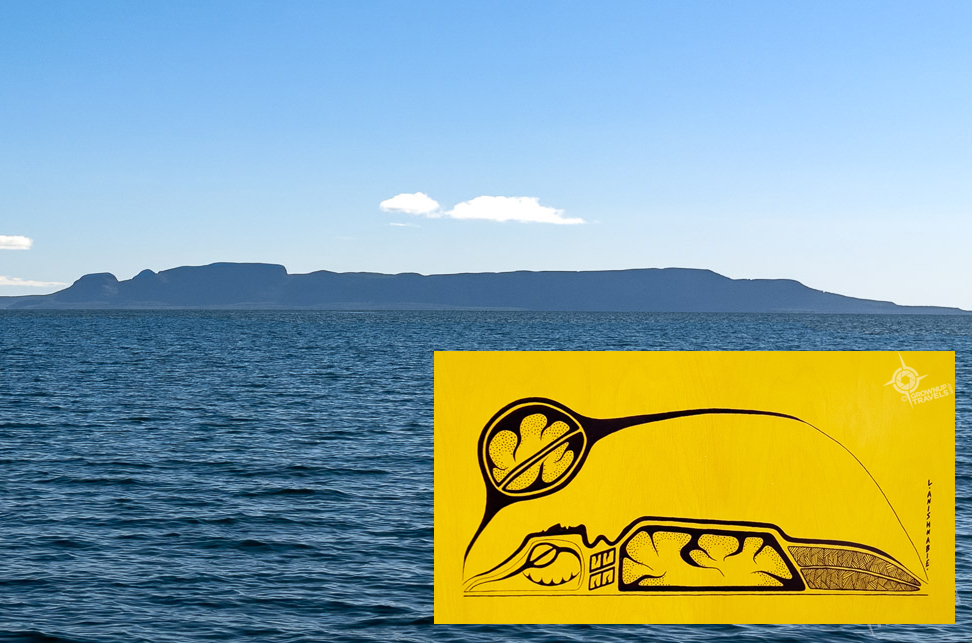
Can you see the outline of the [very tall!] Sleeping Giant?
A Surprising Discovery
Lake Superior has no shortage of strange stories, many of them related to the wild weather, indigenous legends or unfathomable depths of the lake itself. But unlike Gordon Lightfoot’s ballad of a stormy shipwreck, the story of Silver Islet comes with a silver lining. Not just because it became a world famous underwater silver mine on one of the smallest islands in one of the world’s largest lakes. But also because from the moment I saw Silver Islet, I became obsessed with learning its history, and that story proved to be just as astonishing – and almost as rewarding – as the discovery of the precious metal itself.
PRACTICAL INFORMATION ABOUT SILVER ISLET
HISTORIC EXHIBITS AT SLEEPING GIANT PROVINCIAL PARK
The Visitor Centre at Sleeping Giant Provincial Park is located on the Sibley Peninsula, about an hour’s drive east of Thunder Bay, and has interesting exhibits telling the story of Silver Islet.
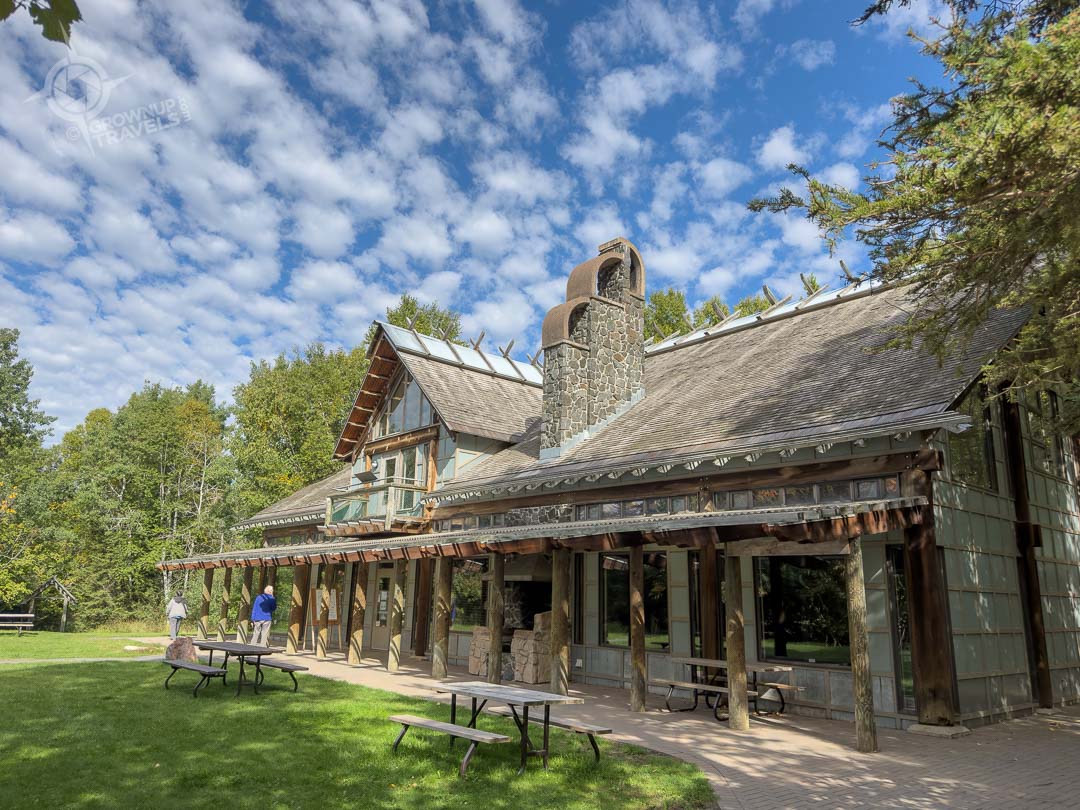
Visitor Centre Sleeping Giant Provincial Park Thunder Bay
There are photographs and historical information about the mine and the community and even a scale model diorama of the island and its mine, showing the above-ground buildings and underwater tunnels (photos of which are shown above in the article).
ACCESS TO SILVER ISLET (ISLAND)
The actual island of Silver Islet sits almost a mile offshore from the mainland and is only accessible by boat, but you cannot disembark on the island because it is protected under the Parks Canada Lake Superior National Marine Conservation Area. We took a zodiac boat tour with Sail Superior of Thunder Bay that included a sightseeing stop to view Silver Islet en route to Porphyry Island. Experienced kayakers can also paddle out to the site, but a boat tour is our recommendation because a) it’s easy, b) they provide warm, comfortable gear and c) it’s safe. (Remember the Wreck of the Edmund Fitzgerald?…just sayin’.)
ACCESS TO SILVER ISLET COMMUNITY
The community of Silver Islet can be reached by car and is about 1 hour 15 minutes from Thunder Bay, about 10 minutes farther than Sleeping Giant Provincial Park Visitor Centre (we recommend you do these two stops on the same day since they are so close). Note that the General Store only operates seasonally and closes in late September.
Special thanks to Visit Thunder Bay who hosted Henk and I on our visit to the city and to Sail Superior for the zodiac tour.


Jane is an award-winning travel writer and photographer and an accredited member of the Travel Media Association of Canada (TMAC). In their annual awards competition, TMAC named GrownupTravels.com as the Best Self-Published Travel Blog in 2025 .
She is also a member of the North American Travel Journalists Association, and a freelance travel writer contributing to both print and online publications.





Subscribe and you'll never miss an update!
Join our mailing list to receive the latest news and updates from Grownup Travels. (We keep your email STRICTLY private)
Thank you for subscribing to Grownup Travels!