

With almost 10,000 kilometres of rugged coastline zig-zagging in and out of its coves and inlets, Newfoundland is a photographer’s dream destination. But where to start when you are looking for the best locations? ‘The Rock’, as the island is affectionately known, is deceptively huge, and although there are many charming communities nestled around the harbours and shoreline on the edges of the island, there’s also what’s been described as a ‘whole lot of nothing’ in between. For our 2-day road trip out of St. John’s, Henk and I wanted to pack as much in as possible, including lighthouses, picturesque towns, stunning cliffs and hopefully even some wildlife. So after doing our research and asking the advice of some in-the-know locals, we set our sights on the Bonavista Peninsula and headed off with a rental car, a slew of memory cards, and high expectations. We weren’t disappointed.
Bonavista, Newfoundland
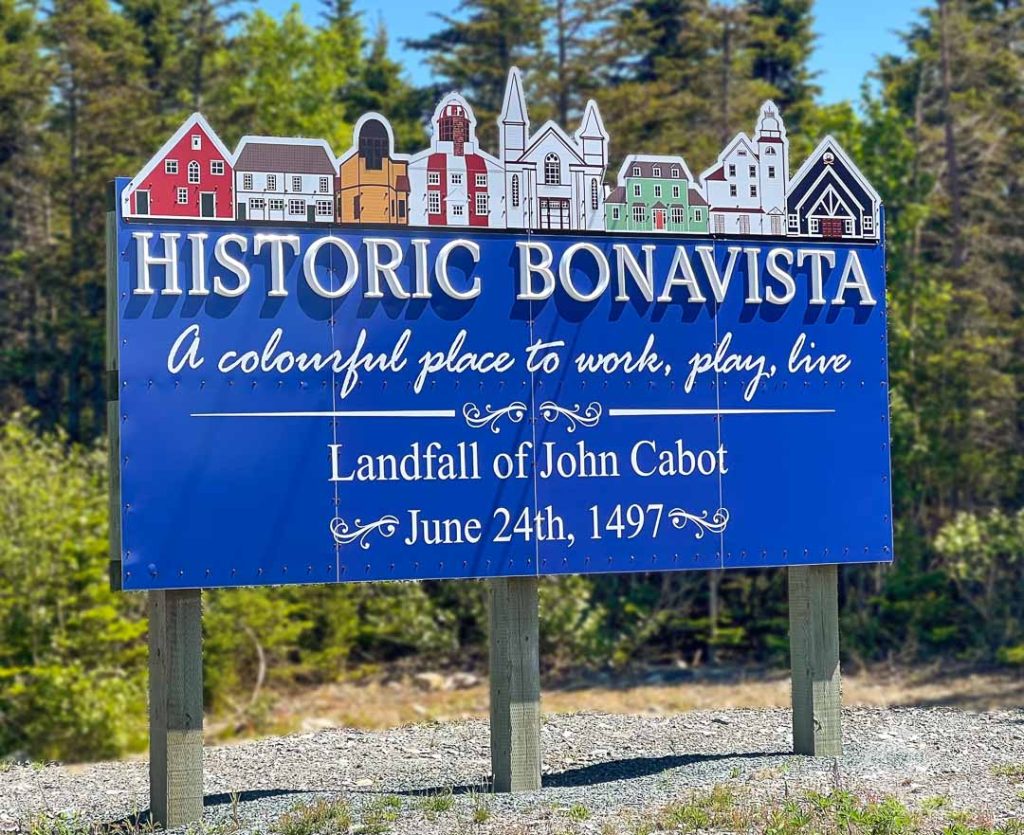
Our base for the weekend was to be the town of Bonavista on the Peninsula of the same name, about a 3 1/2 hour drive from St. John’s. We had chosen this place in particular because the town is located on the tip of the peninsula, and it’s not unusual for icebergs to pass by within sight of the town. As it turned out, the ice had chosen a different route the summer Henk and I visited, travelling west along the northern coast and slipping between the island and Labrador on the mainland. It didn’t matter to us in the end, because we discovered more than enough eye candy near Bonavista, starting with its lighthouse.
The Cape Bonavista Lighthouse

The name ‘bonavista’ reputedly came from Venetian explorer John Cabot, who, upon seeing the Cape in 1497 exclaimed “che buon vista!” (“what a beautiful view!” in Italian). More than five centuries later, nothing much has changed when it comes to the rugged shoreline, sea stacks and pretty coves found near here. But there is a ‘new’ addition to Cape Bonavista, the red and white striped lighthouse that was built in 1841, that has since become one of the most photographed lighthouses in Newfoundland & Labrador.
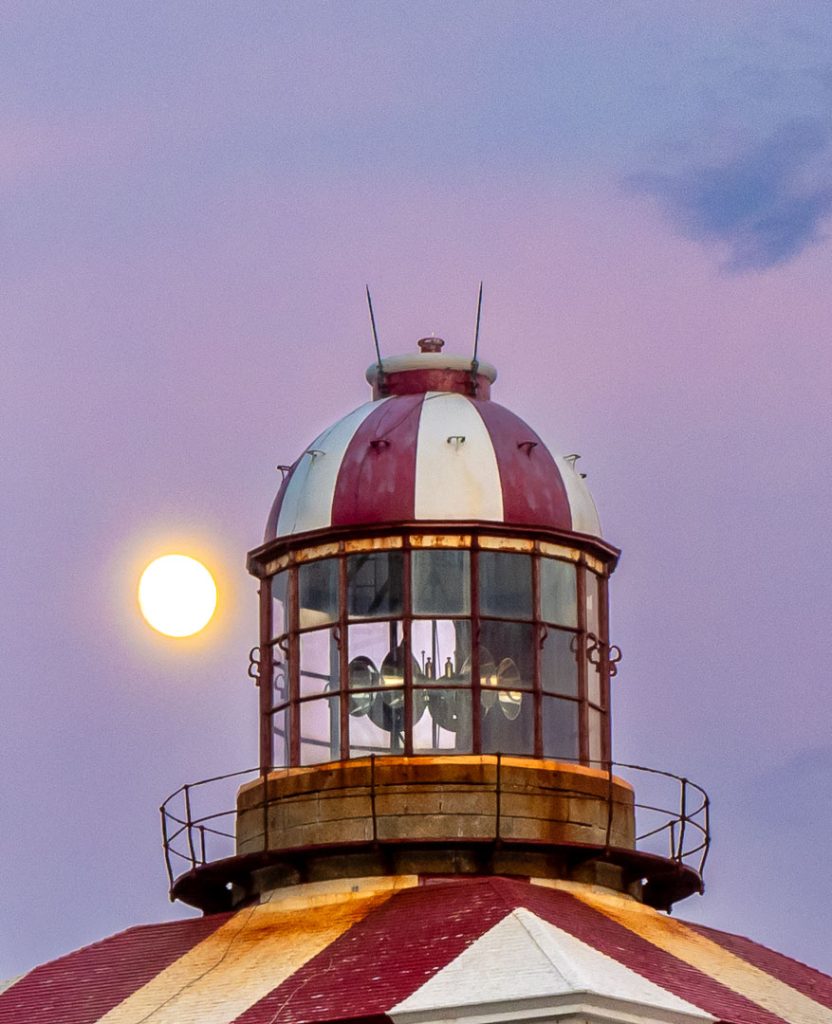
The Bonavista lighthouse is actually the fourth-oldest in the province, and today is a Provincial Historic Site where visitors can climb the interior tower up to the lantern room to see the original seal-oil-fuelled light apparatus on display, the only remaining one of its kind in North America. (The light was decommissioned in 1962 and replaced by an electric light on an adjacent steel tower, but the original workings and reflectors are still in place.)
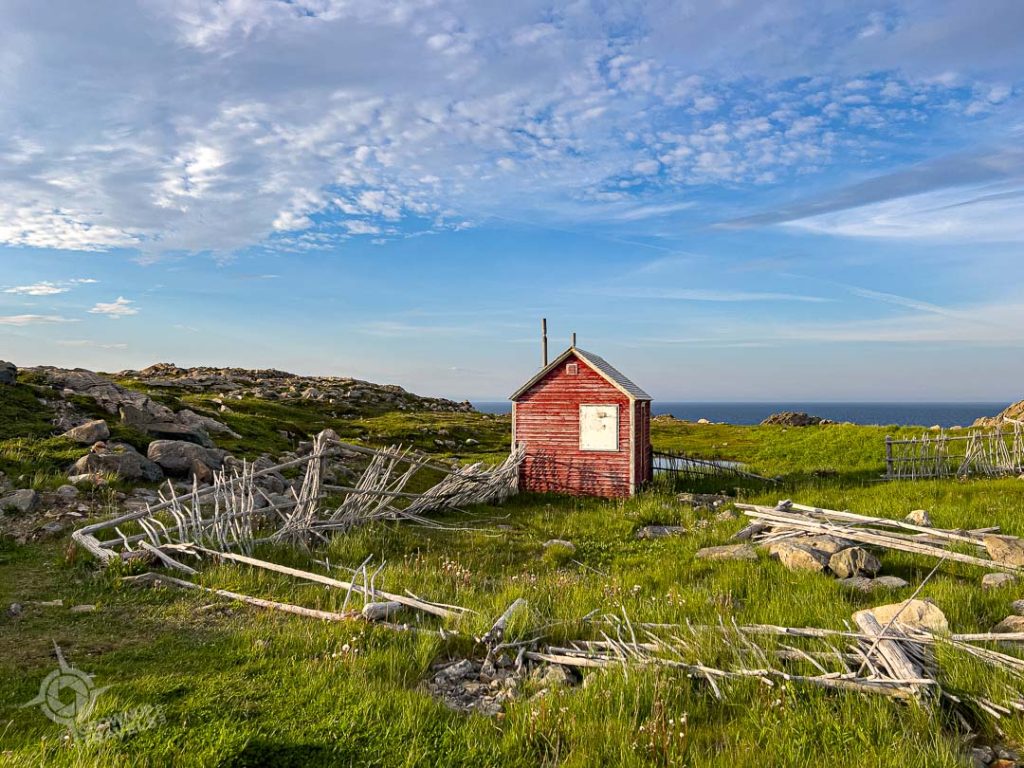
But it’s not just the lighthouse here that makes this spot so photogenic: the rocky coast is beautiful too, especially come sunset, when you won’t find a better ‘Inspiration Point’ on the Peninsula to cuddle up and admire the view with your partner.
Or, if you are like Henk and I, it’s the perfect place to pull out the cameras and run around like crazy people trying to find unique locations where we can capture the light!

TIP: During the day Cape Bonavista is also a prime location for whale-watching and puffin viewing, so you’ll often find other shutterbugs here during the day as well.
Dungeon Provincal Park UNESCO Geosite
Not far from the lighthouse on the road back to the town of Bonavista Henk and I noticed a sign for Dungeon Road, a nondescript turnoff that heads away from the coast across a grassy plateau. It didn’t look like much to us, but we decided to explore it the next day anyways and we were very glad we did – because at the end of this driveway we found Dungeon Provincial Park and its feature attraction: a collapsed sea-cave.

At one time, (however many millions of years ago), the cave had two separate openings to the sea, the arches of which you can still see today. But over time the powerful wave action of the Atlantic has eroded the underlying stone and caused the roof to fall inward. This is what you see today and it is this geological heritage that has earned ”the Dungeon’ its UNESCO status as part of one of the world’s Geoparks.
TIP: In addition to this Geopark, Newfoundland & Labrador is home to four UNESCO World Heritage Sites, including the Tablelands in Gros Morne National Park, another spectacular destination for photography.
‘Discovering’ Bonavista’s Discovery Geopark
Having ‘discovered’ the Dungeon, Henk and I learned that this is not the only place on the Bonavista Peninsula recognized for its geological significance. That site is just one of 11 places along a half billion year-old Discovery Geopark trail that includes geologically significant locations all along the Peninsula. Without having planned it, Henk and I were about to stumble onto 4 more during our two days of sight-seeing and photo-chasing.
Spectacular Sea Stacks at Spillars Cove

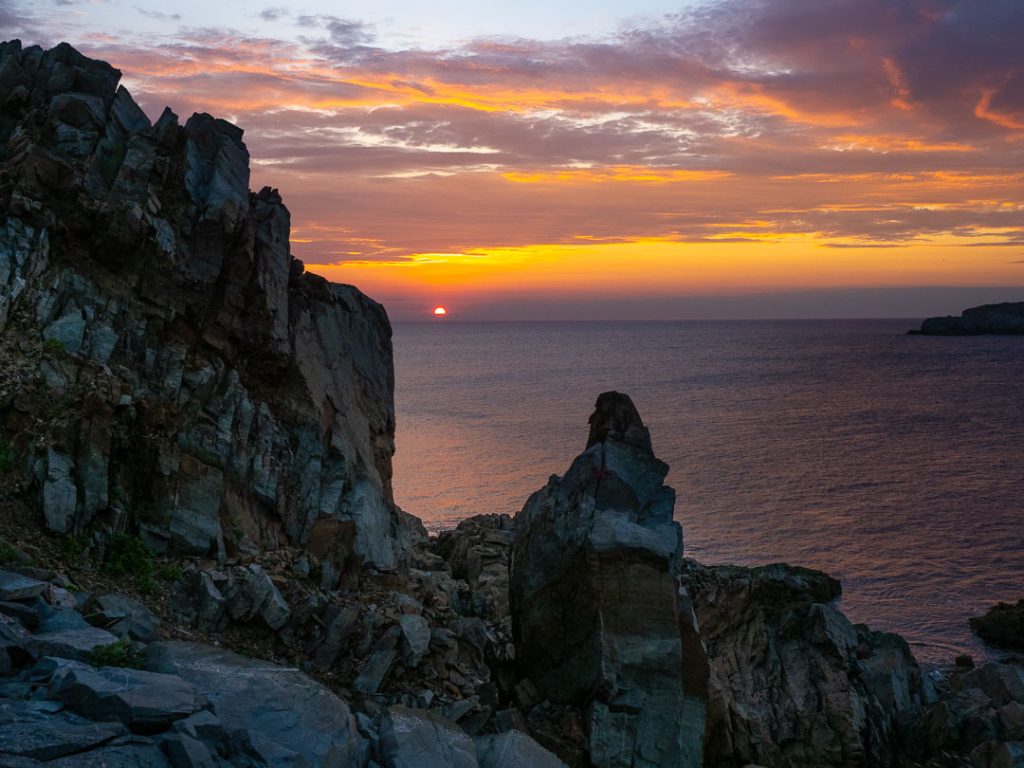
It was our second day in Bonavista and the weather promised to be beautiful for a coastal hike, so after reading about Spillars Cove and its cliff-edged trail, Henk and I decided to check it out. It was a short drive across the Peninsula and after leaving the car at a small parking area, we headed up the sloping hill to the left, following our noses until we reached the top and the view opened up to the ocean. Once there, we followed the cliff edge to the right where the views became more and more spectacular, with sea stacks and knife-edged rocks slicing out into the Atlantic in front of us.
The rock formations here are amazing, including a skinny pillar known as The Chimney, an igneous remnant that has become a signature landmark for this cove, and one that is a favourite with photographers, ourselves included.

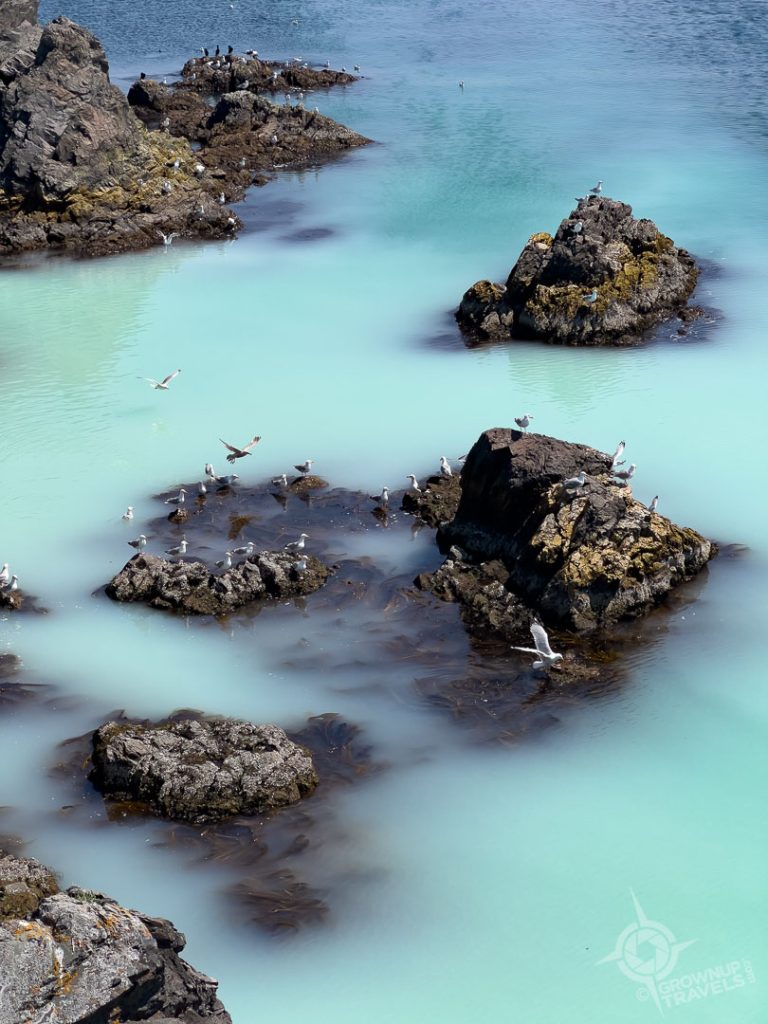
But the real surprise came when I noticed a vibrant turquoise colour in the water in a cove just past the Chimney. As we got closer, we could see that the waters nearest the shore were actually a milky white, with streams of it drifting out into the ocean. We also noticed there were dozens of sea birds flying over the water and gathered on the nearby rocks. We had stumbled onto a herring spawn!
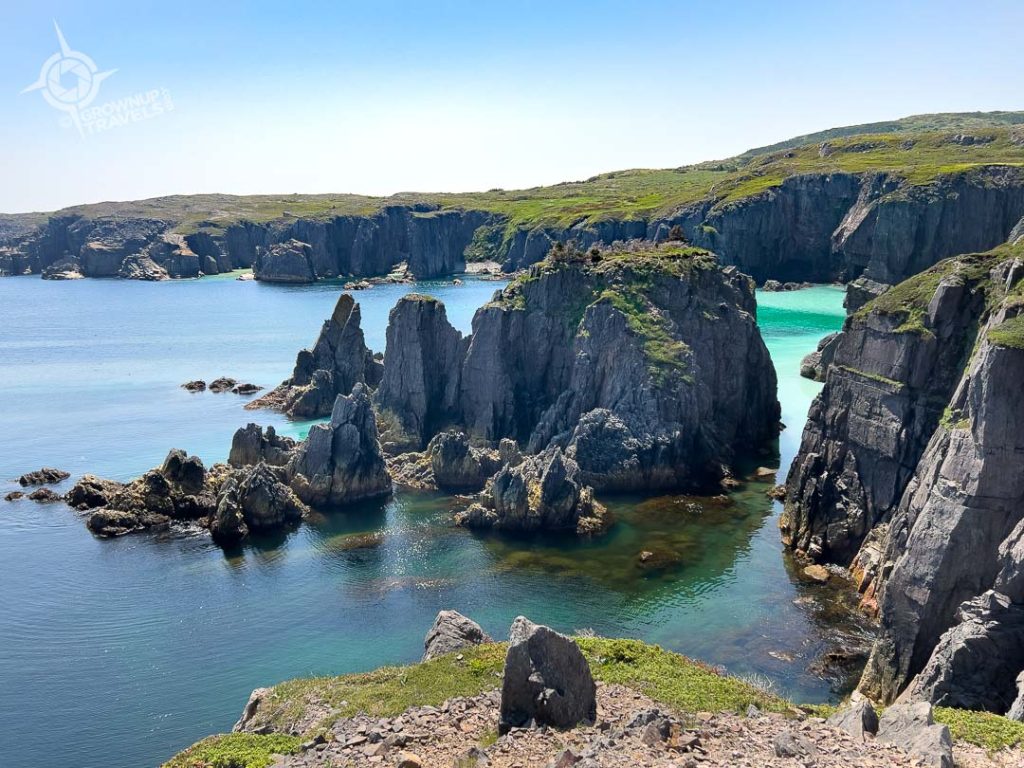
This annual event usually takes place in Eastern Newfoundland in the spring when female herring lay hundreds of thousands of eggs near the shore, which the males fertilize by releasing their milky sperm (milt) into the water. This phenomenon is as fleeting as it is unpredictable, and Henk and I just happened to be in the right place at the right time.
It may not have been an iceberg sighting, but this was just as rare.
TIP: We took the ‘long way’ to get to the Chimney by first heading up the hill to the left of the parking area. Take the short cut by walking to the right from the parking area and following the dirt road until you see an ATV trail that heads directly towards the coast.
Elliston, Newfoundland: The Root Cellar Capital of the World
Most people who grew up on farms or with older homes on the outskirts of towns wouldn’t think twice about root cellars. They were just a cool, dry place to store vegetables in the winter – an old-timey refrigerator of sorts. (I remember one at my grandmother’s house as mostly a forgotten place full of cobwebs used to store garden bulbs if anything.) But when a small town on the Bonavista Peninsula has more than 133 of these documented structures (some almost 200 years old), it becomes part of a geological and anthropological history of the area. That place is Ellison, Newfoundland, and it’s why this site is part of the Discovery Geopark, too.

I’m still not a fan of cobwebby spaces, but I had to admit that Elliston’s root cellars did have a certain charm and a hobbit-like cuteness to them. I liked them even more when I heard that back in the day, there were stories told to children in Elliston that this was where babies came from, and that the babies were ‘dug out with a silver shovel.” If that doesn’t bring a smile, nothing will.
…Plus Puffins!
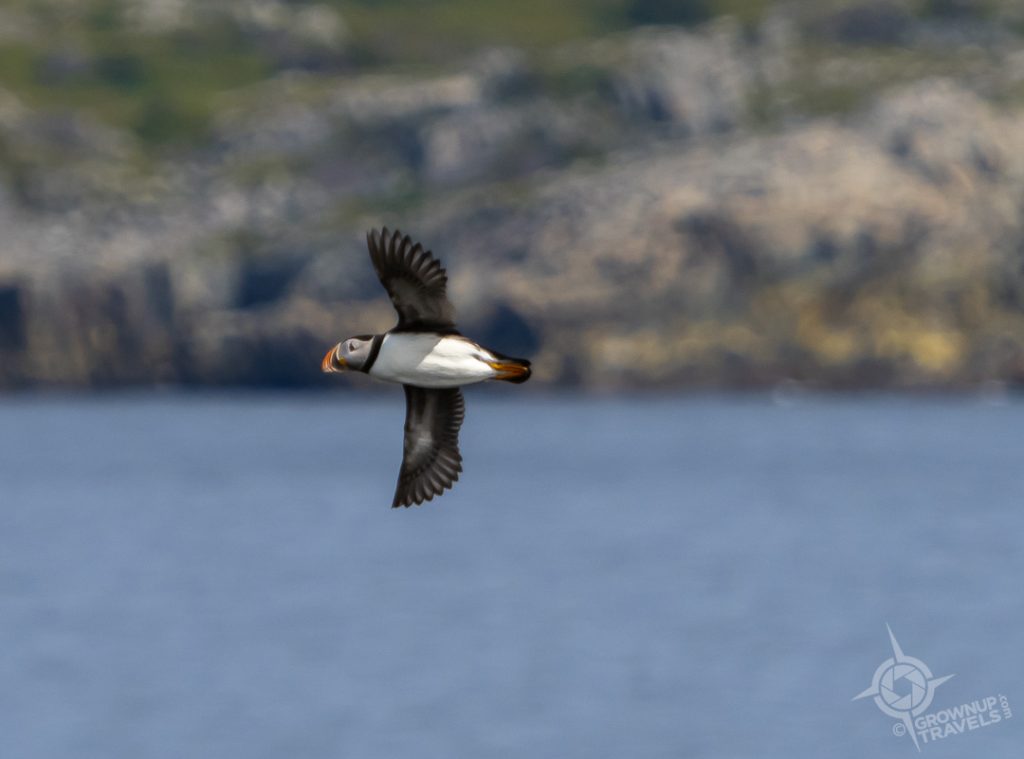
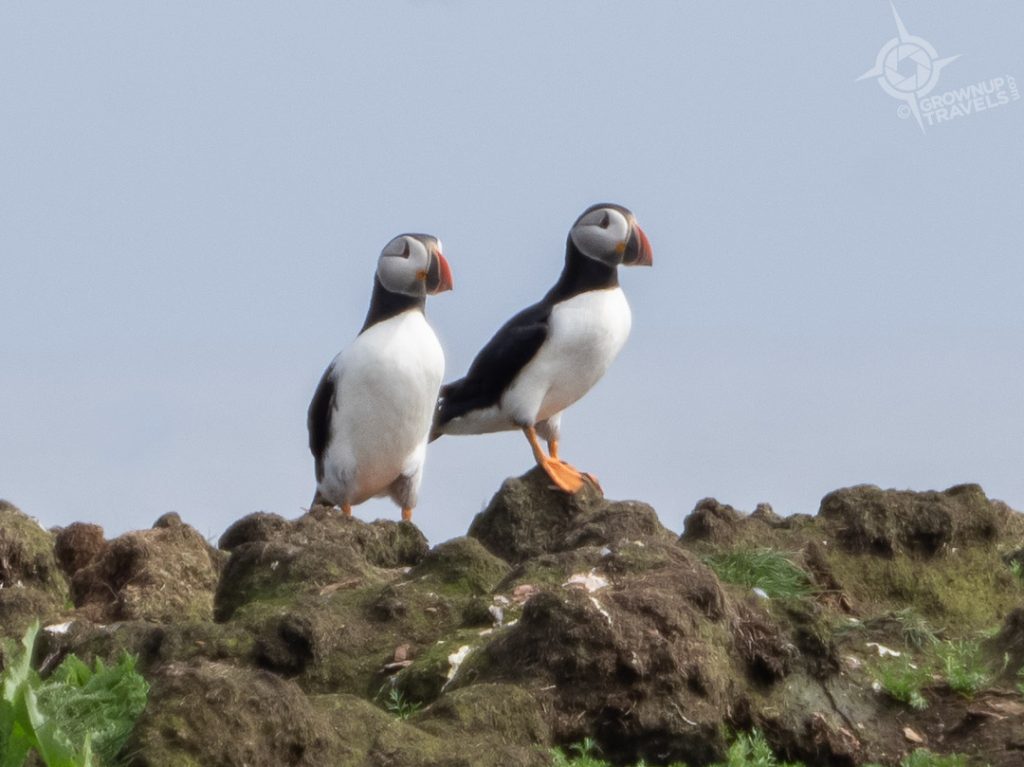
Of course there’s another reason why thousands of visitors come to Elliston every year: puffins! This particular piece of Bonavista Peninsula coastline happens to have an easily accessible spit of land where just off its tip lies an island with a large population of puffins, aptly named Bird Island. Which means you don’t need to take a boat to get close to the birds (making it much easier to focus your camera when you aren’t riding ocean swells). It’s one of the few places in Newfoundland with this kind of land-based access, and it’s free to visit.

Of course, there’s no guarantee how many puffins you will see on any given day, but Henk and I visited this little peninsula twice, and were able to see these colourful little bird-clowns both times. We were also told by other photographers that the puffins sometimes fly over from the island to the mainland viewing area, giving visitors an even closer view. We didn’t have that kind of luck, unfortunately, but we were able to capture some of the birds as they hopped around the island, or launched themselves off its cliffs to look for fish.
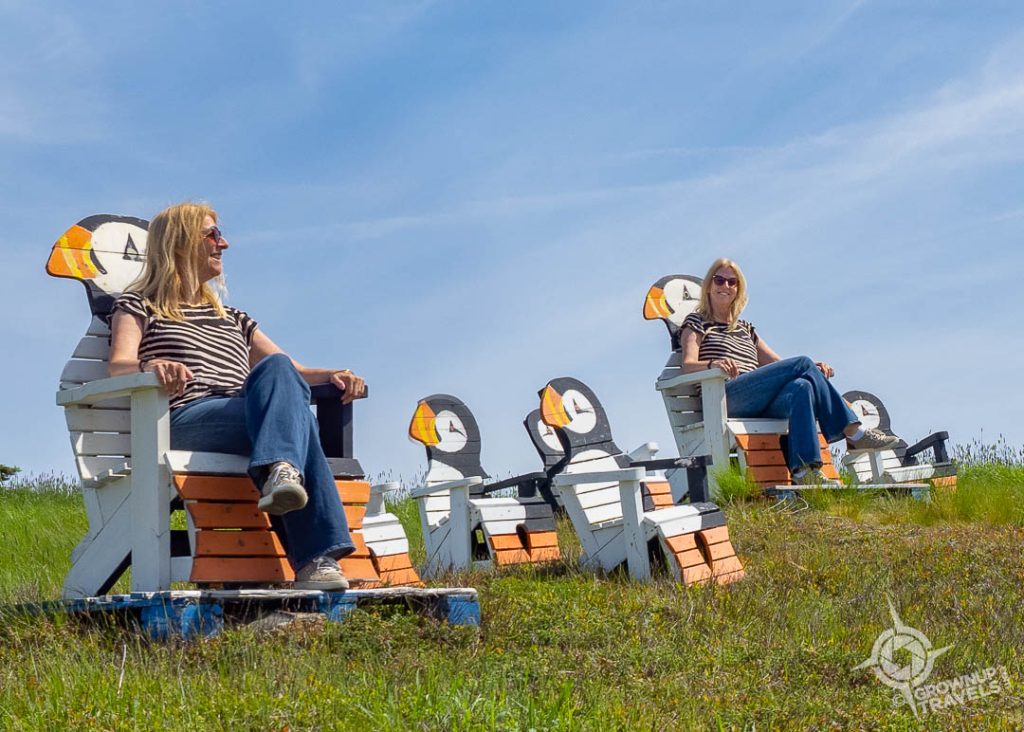
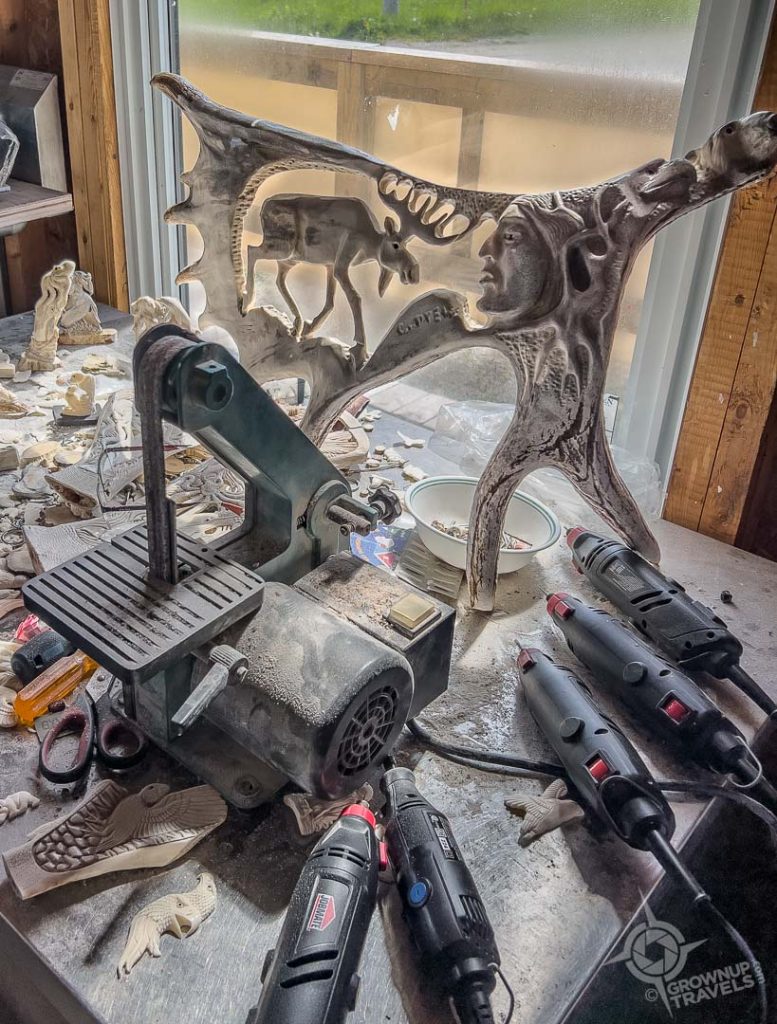
TIP: Be sure to stop in at the Ice Floes Craft Shop on Main Street in Elliston just off Maberly Road. Not only are there plenty of fun puffin-related photo ops (like the World’s Largest Puffin Chair), inside the shop you can see artisan crafts from local artists, including moose antler and bone carvings done on-site by one of the owners. There are also washrooms here.
Trinity
If picture-postcard-perfect outport communities (say that 3 times fast!) are on your list of photo must-sees in Newfoundland, head to the small town of Trinity (not to be confused with the town of Trinity East, which is also nearby).

Here you will find everything you could want for your viewfinder, from colourful clapboard houses with white picket fences to harbourside fishing huts and white steepled churches. Come in the early summer when the purple lupins are in bloom, and you can even frame your first view of the town and its harbour with these flowers in the foreground.
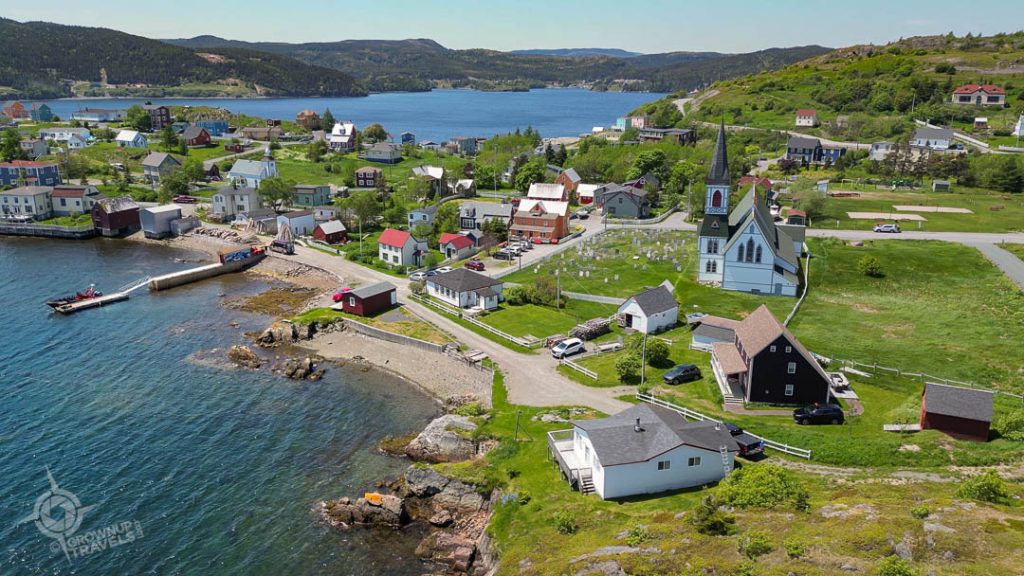
Trinity Harbour is more than just picturesque; it’s the reason why this town is part of Bonavista’s Geopark Trail, because this is one of the finest natural harbours in Newfoundland, formed by millions of years of geological processes and protected by a natural headland.
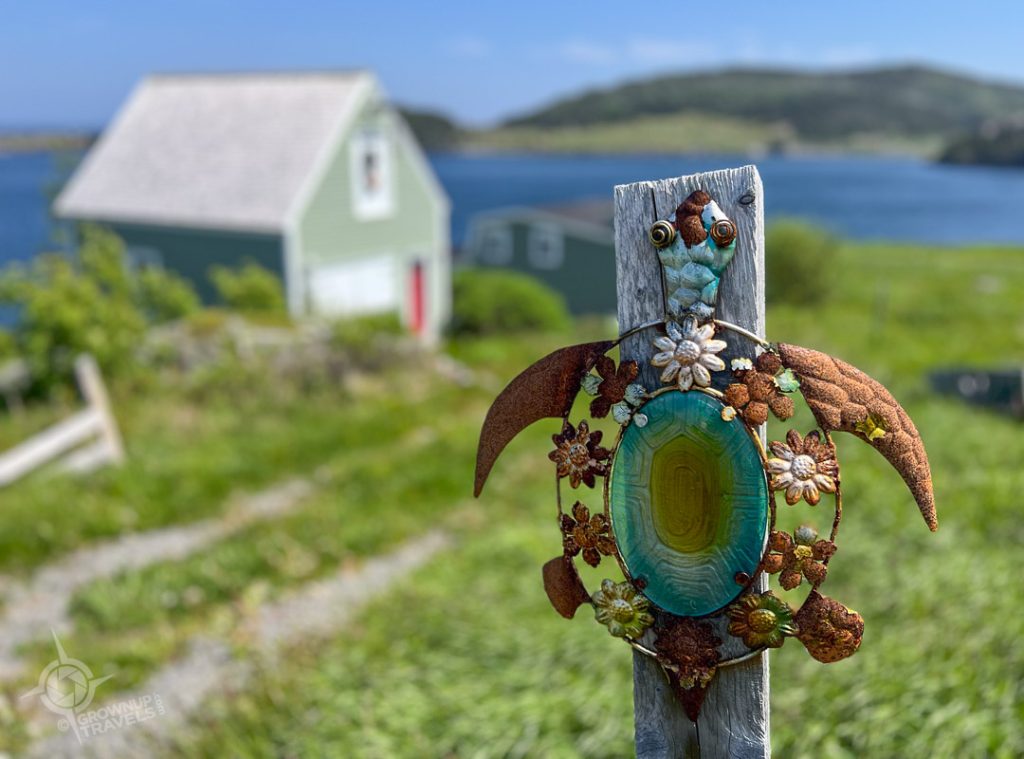
Park the car and stroll around Trinity and you’ll have no trouble finding subjects for your camera lens, but there are also craft shops to explore and several restaurants where you can enjoy a drink or a meal with an ocean view.
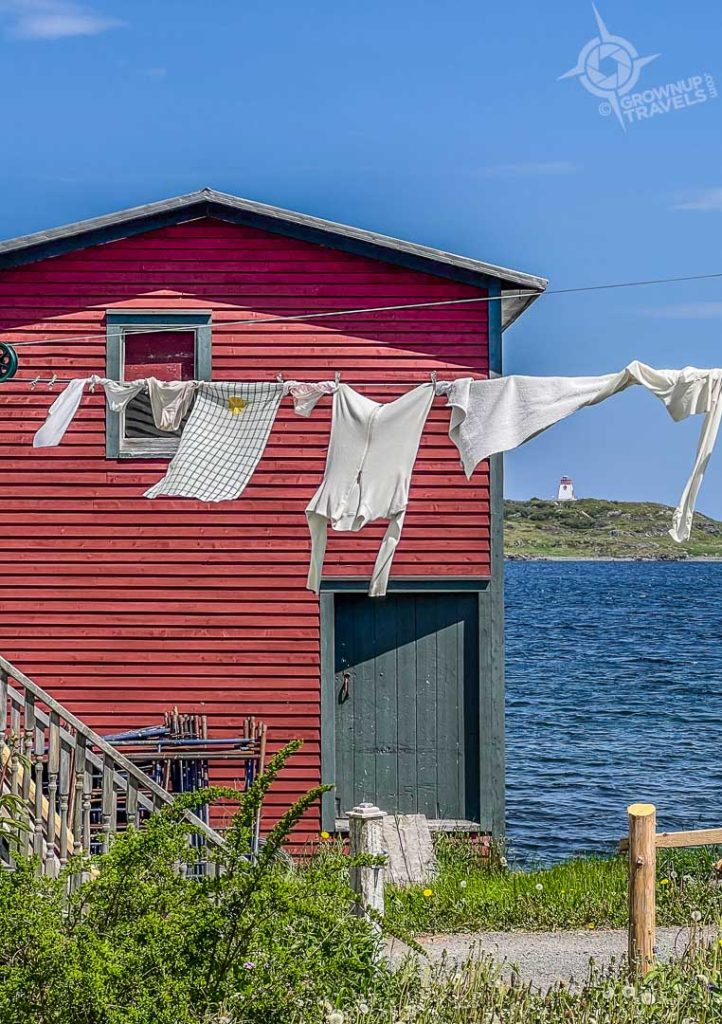
Henk and I stopped in for something to eat at the Dock Marina, a restored 300-year-old former fish storage building that has a huge deck, good food and cold beer.

TIP: If you are visiting Trinity in the summer and are a theatre buff, the Rising Tide Theatre offers a summer-long schedule of shows, including dinner theatre packages.
Port Union
We initially decided to visit the town of Port Union because we had heard about its rather unique history and thought it might make for a quirky destination. This town is unusual for a couple of reasons, the first being that it was a completely union-built town, the vision of a prominent Newfoundlander named Sir William F. Coaker.
Coaker was a native of St. John’s, and a huge advocate for the working man. He was responsible for establishing the Fishermen’s Protective Union in 1908, which went beyond just looking after the interests of fishermen alone, and extended to many aspects of community life, from housing construction and farming to the publication of a newspaper called the Fisherman’s Advocate. The town of Port Union was the epitome of his vision for a holistic approach to building a community for the community by the community: because this place became North America’s first and only 100% union-built town.

Today Port Union is more of a living museum, and designated as a National Historic District of Canada, with many of its red clapboard-sided duplexes and commercial structures serving as museums, including the former fish plant which is the centrepiece of the town.
But down at the water’s edge lies the second reason why Port Union is unusual, and why it forms part of the Geopark Trail: there are two significant fossil sites here that attest to the geological history of this part of the planet. We happened to be visiting at low tide, when a guide from the Park was pointing out fossils in the rocks exposed near the Murphy’s Cove-Lodge’s Pond trail just below the boardwalk. This is the place where a fossil was discovered showing muscle tissue in an animal, the first evidence on the planet of this evolution of life. (that fossil is on display at The Rooms Museum in St. John’s).
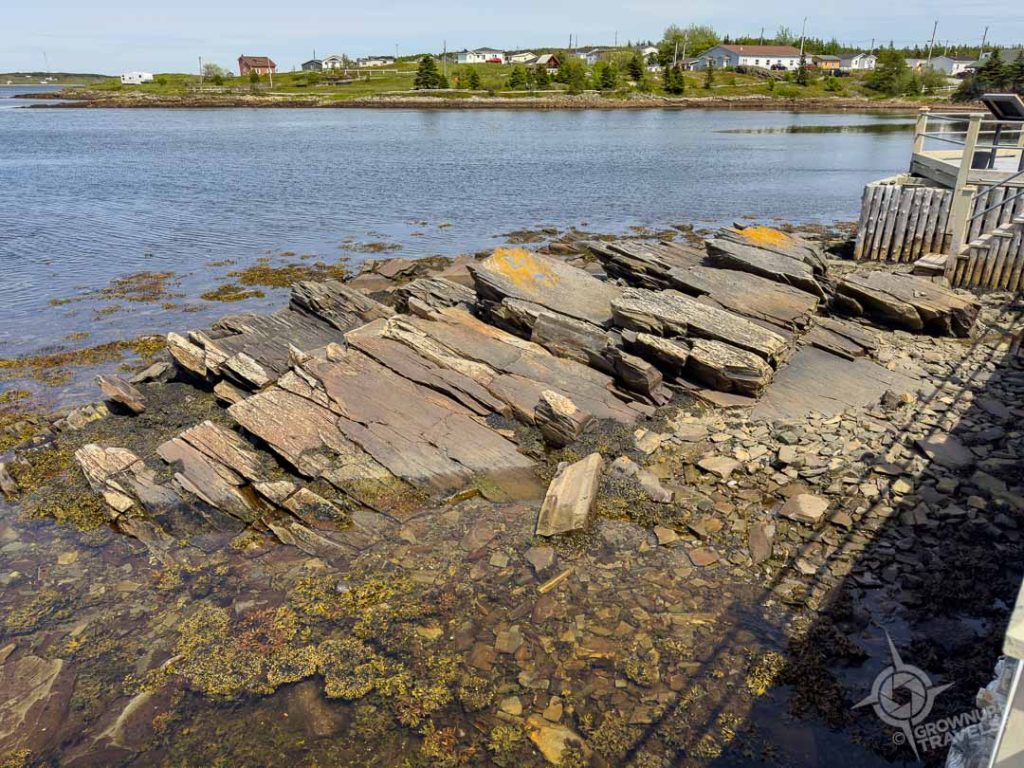
Definitely not something we expected to learn when we came to Port Union.
The Town of Bonavista, Newfoundland
Bonavista may be the perfect base for exploring the surrounding area and its natural attractions, but the town itself also makes for a charming and picturesque destination in its own right.
Not surprisingly, the harbour is at the centre of the town, although today it is more about attracting tourists with its museum and whale-watching tours than it is about commercial fishing. There are still small fishing vessels here, though, and and if you wait for the right conditions, they make for a beautiful photo.
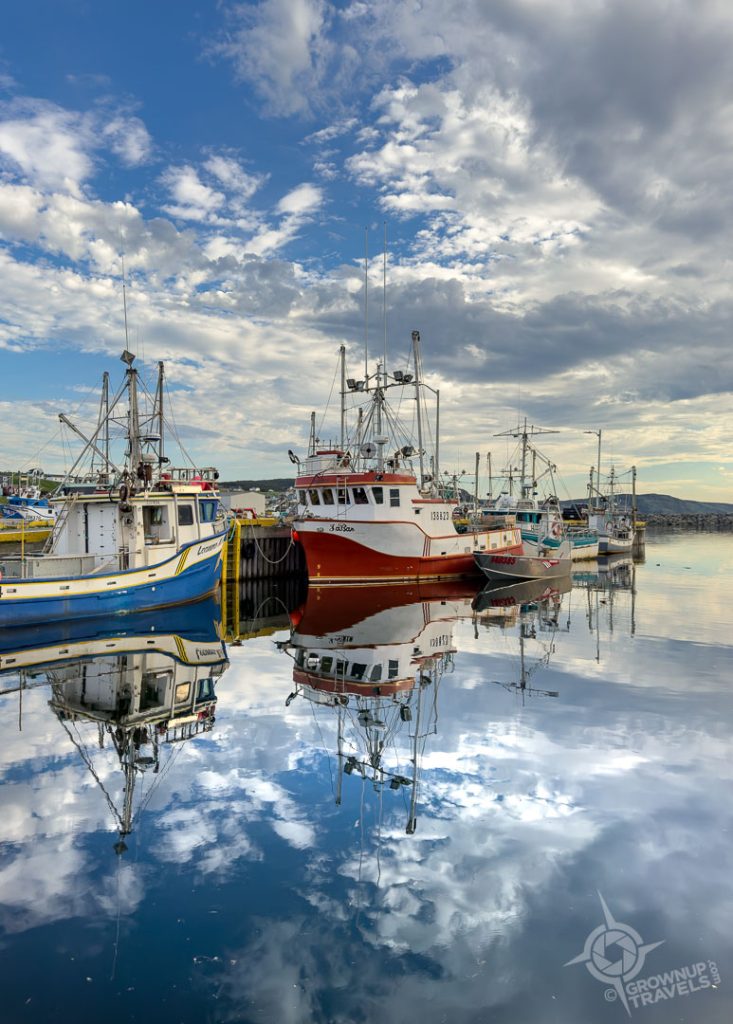
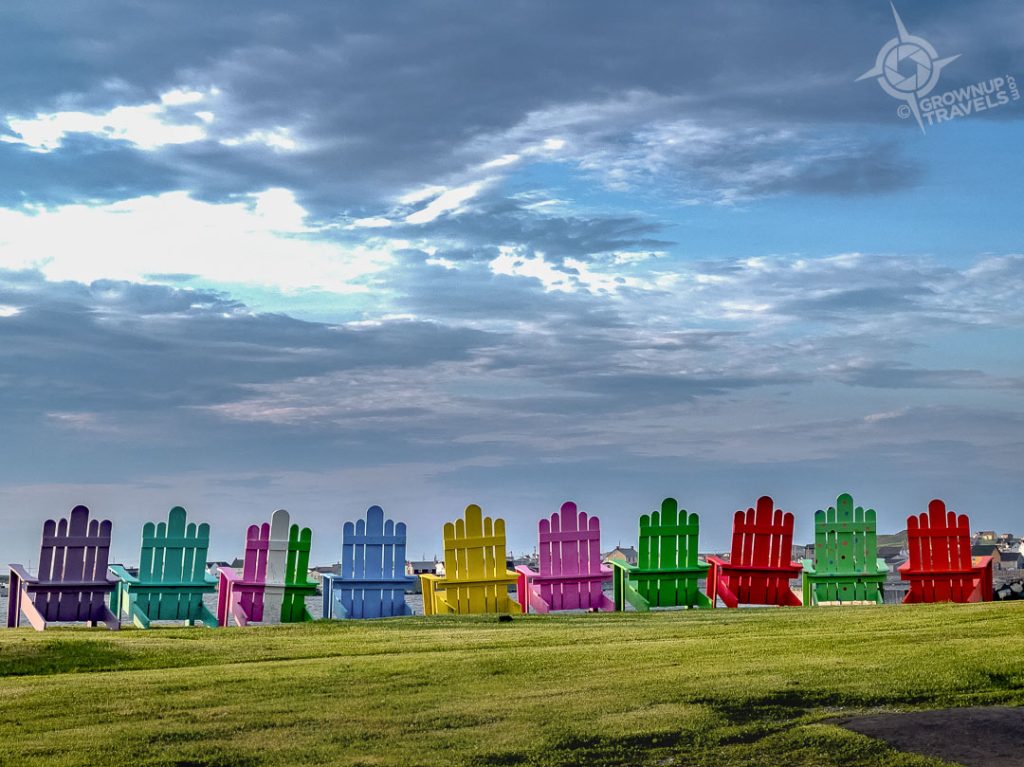
Henk and I took late afternoon drives around the small streets and coastal roads and found something colourful everywhere we looked, whether it was a lineup of sunset-watching chairs, or the sunset itself.
And when we were done with the cameras, it was off to Church Street, Bonavista’s main drag where in the past several years, an influx of small businesses, craft shops and restaurants have helped breathe new life into this historic street. These entrepreneurs are helping transform Bonavista from the fishing port that it once was into the popular tourism destination that it is becoming.
DID YOU KNOW? Bonavista has its own connection to geologic activities, in this case one of the most destructive earthquakes in European history, which struck Lisbon 270 years ago on November 1, 1755. Much of the city of Lisbon was levelled, and the quake also generated a tsunami that was so big, it travelled 4300 kms across the Atlantic Ocean, impacting the shores of Bonavista at Long Beach, just east of the Harbour.
“Che Buon Vista!”
John Cabot had it right when he exclaimed at the beauty of Cape Bonavista the first time he saw it. With its rugged, rocky coastlines and geological wonders that have since become backdrops to colourful towns and villages, this part of Eastern Newfoundland served up everything we had been looking for when we set out to photograph some of its beauty. And while we may not have seen any icebergs on this trip to the Rock, that just gives us another excuse to visit.
After all, there’s still another 9,200 kilometres of coastline or so to explore.
PRACTICAL INFORMATION FOR VISITING BONAVISTA
Note: Many of the businesses in Bonavista are only open seasonally to take advantage of peak tourism months and may close at the end of the summer, or early fall. Be sure to check if they are operating when you are planning to visit.
Where to Stay in Bonavista
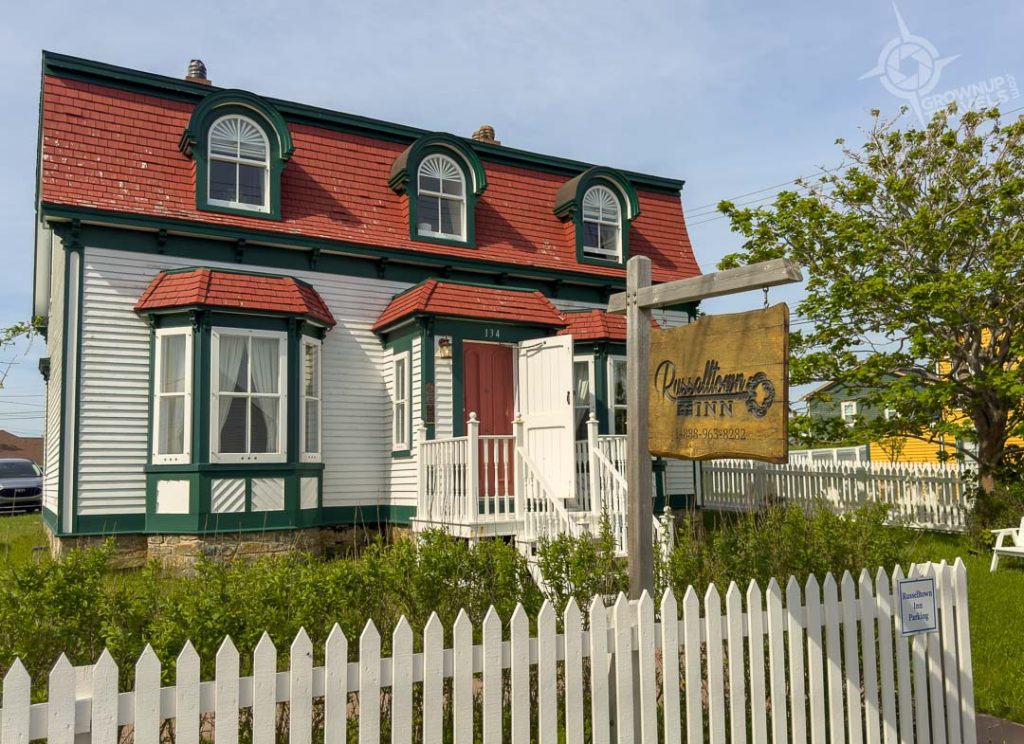
The Russelltown Inn consists of a collection of beautifully renovated historic houses and buildings on Coster Street, just a short walk from Church Street. Each building and room has its own distinct character and many have suites with sitting areas as well. We stayed in two different rooms, one a Loft Suite which had a huge separate sitting area, and another Queen room in the main Inn. We loved both. The Inn also serves a boxed breakfast with the accommodation, which is another nice touch.
Where to Eat in Bonavista
You can’t really go wrong with a craft brewpub, and since Henk loves to ‘drink local’ whenever we can, we went to the Ragged Rocks Gastropub on Church street. The burgers were great (even came with their own ‘branded’ logo on the buns) and Henk enjoyed his Discovery lager by the Baccalieu Trail Brewing Co. (I went for the Iceberg beer out of Quidi Vidi Brewery in St. John’s, just so I could say we DID enjoy the icebergs in Bonavista!)


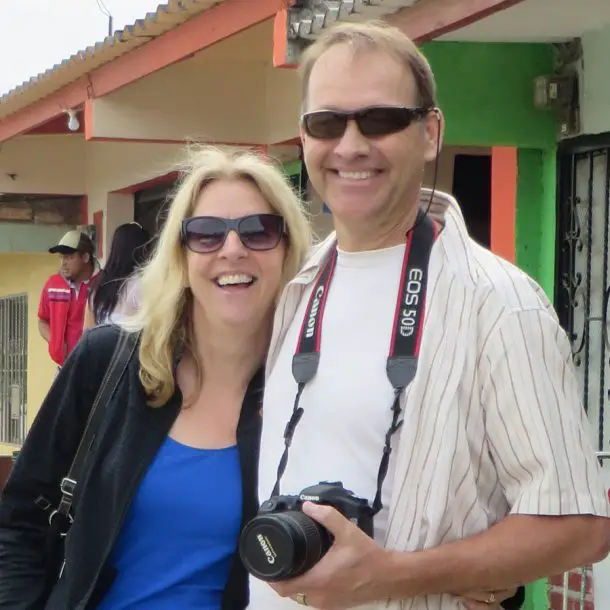
Jane is an award-winning travel writer and photographer and an accredited member of the Travel Media Association of Canada (TMAC). In their annual awards competition, TMAC named GrownupTravels.com as the Best Self-Published Travel Blog in 2025 .
She is also a member of the North American Travel Journalists Association, and a freelance travel writer contributing to both print and online publications.




Subscribe and you'll never miss an update!
Join our mailing list to receive the latest news and updates from Grownup Travels. (We keep your email STRICTLY private)
Thank you for subscribing to Grownup Travels!