
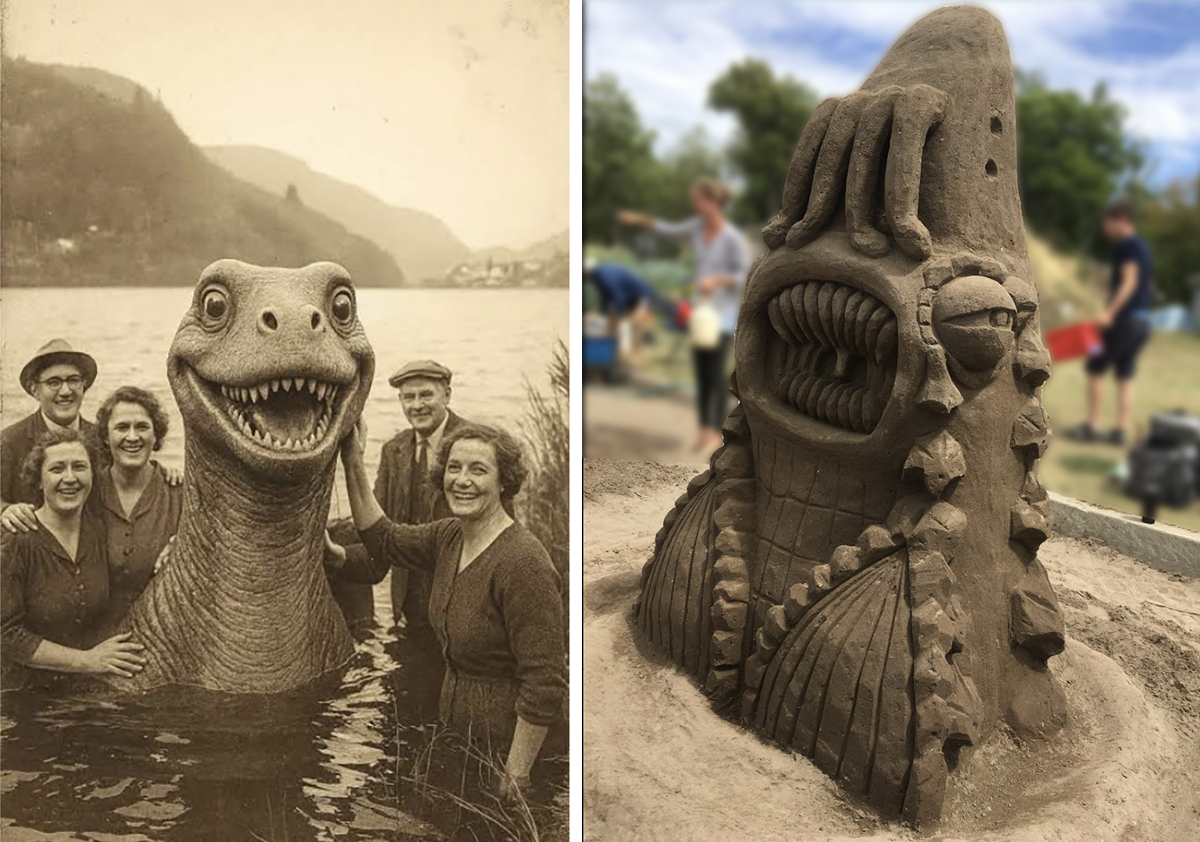
A hysterical 1933 ‘historical’ photo of Mugwump, and a sand sculpture by James W. Scott in 2018
For more than a century, there have been rumours of a mysterious creature called a ‘mugwump’ inhabiting this northern Canadian lake. Not unlike the famous Loch Ness monster, local witnesses recount tales of seeing a 20-foot long serpentine body occasionally breaking the surface of the deep, still waters. Even before the mugwump stories began to surface (pun intended), generations-old indigenous legends told of hairy little rock demons, or Memegwesiwag, who lived here in the rock crevices and sheer cliffs of the same lake, uttering supernatural noises and stealing fish off the lines of fishermen venturing too close. Indigenous guides would attempt to appease those creatures with offerings of tobacco, to help still the lake’s waters and facilitate a calmer passage, and fur traders reported the sound of knocking on the undersides of their boats.
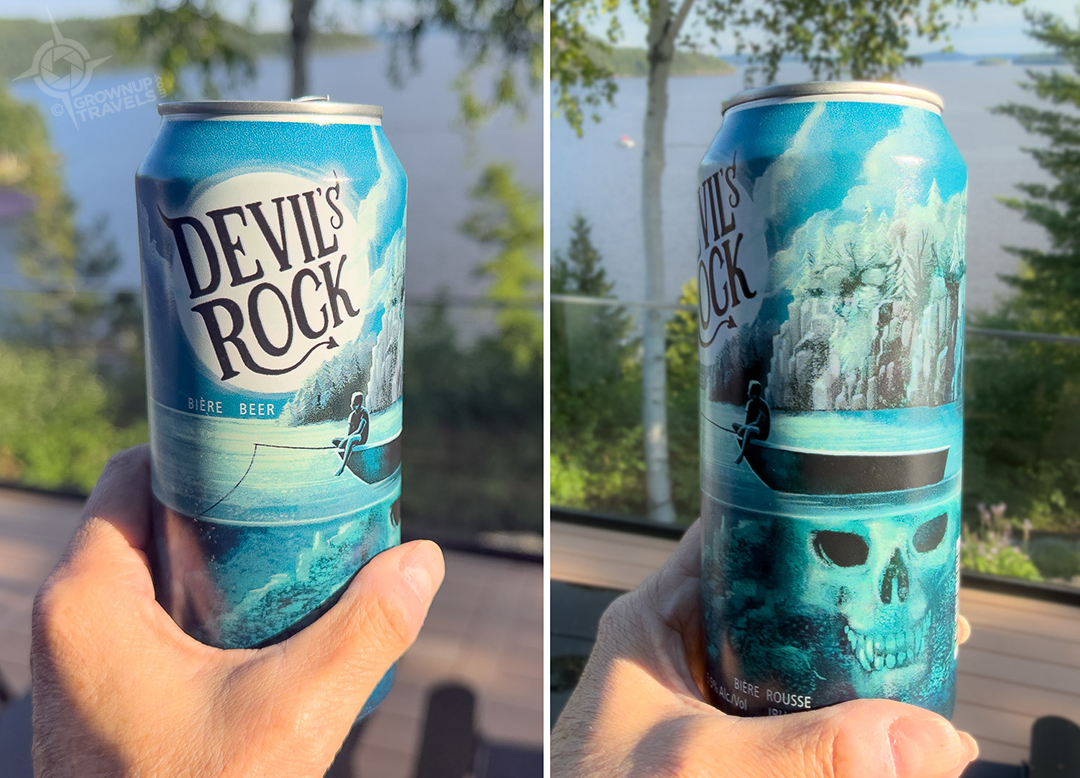
There’s even a Devil’s Rock Temiscaming craft beer with sinister connotations on its label
This legendary lake of underwater cryptids and rock spirits is Lac Témiscamingue, a 108-kilometre long body of water that forms a natural boundary between Ontario and Québec, and whose dramatic landscapes and unpredictable nature have inspired stories for centuries. At more than 700 feet deep in some places, and with sheer cliffs formed two billion years ago that extend hundreds of feet above and below the water, it’s not surprising that some of those stories speak of supernatural aquatic creatures or beings. Yet the history of this part of Québec is a very human one, too, from the First Nations who have lived near Lac Témiscamingue for generations, to the fur traders who navigated its wild waters, and finally to the loggers and settlers who saw the rich potential and beauty in this area and came to make their homes on the shores. Their stories are as much a part of this place as the Lake itself, as Henk and I discovered on a hosted trip to this part of the Abitibi-Témiscamingue region of Québec.
Timiskami, Temiskaming,Timiskaming, Témiscamingue: however you say it, it means deep, open waters
The name Lac Témiscamingue originates with the First Nations who have called the regions surrounding the lake home for generations. Tim in the Anishinaabe language means ‘deep’, and kami means ‘open waters’, but because the lake is shared between Ontario and Québec, it is spelled slightly differently depending on which province you are visiting. We had previously hiked the Ontario side of this lake years before, but it was while Henk and I were touring the Québec side of the lake that we began to discover not just the legends of this lake, but its importance to the region and its people.
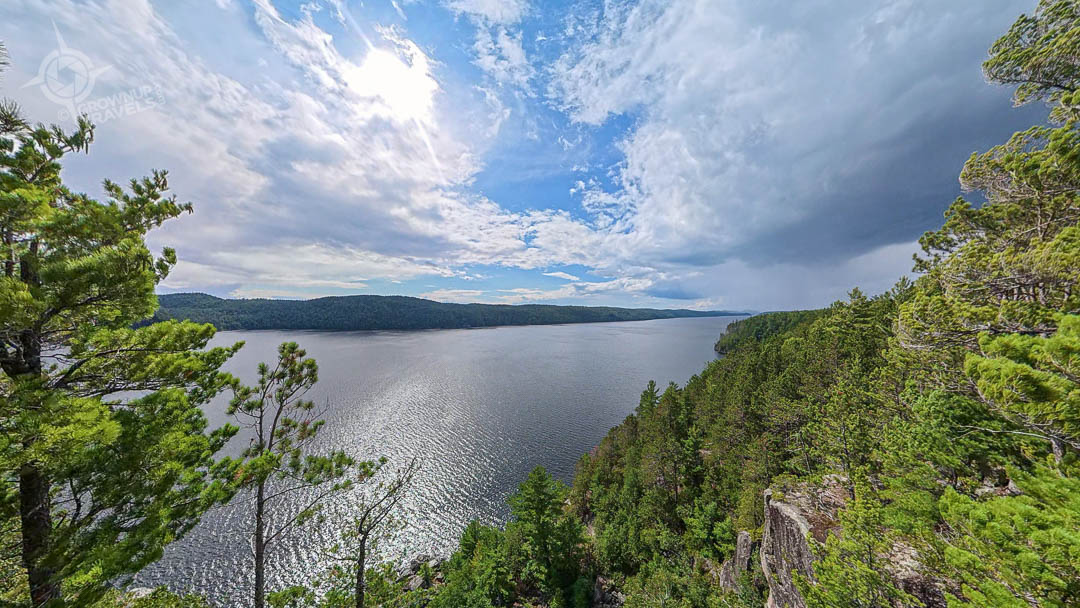
A Watery Trade Corridor Dating Back 6,500 Years
Lac Témiscamingue is technically a widening of the Ottawa River watershed, and as such it formed part of a vital transportation network for indigenous people for centuries. Many of these First Nations from the Témiscamingue area were semi-nomadic, using the lake and its network of rivers and streams to harvest the resources of the boreal forest, or trade goods with other Indigenous groups as far north as James Bay, west to Lake Superior, and into southern Ontario and beyond.
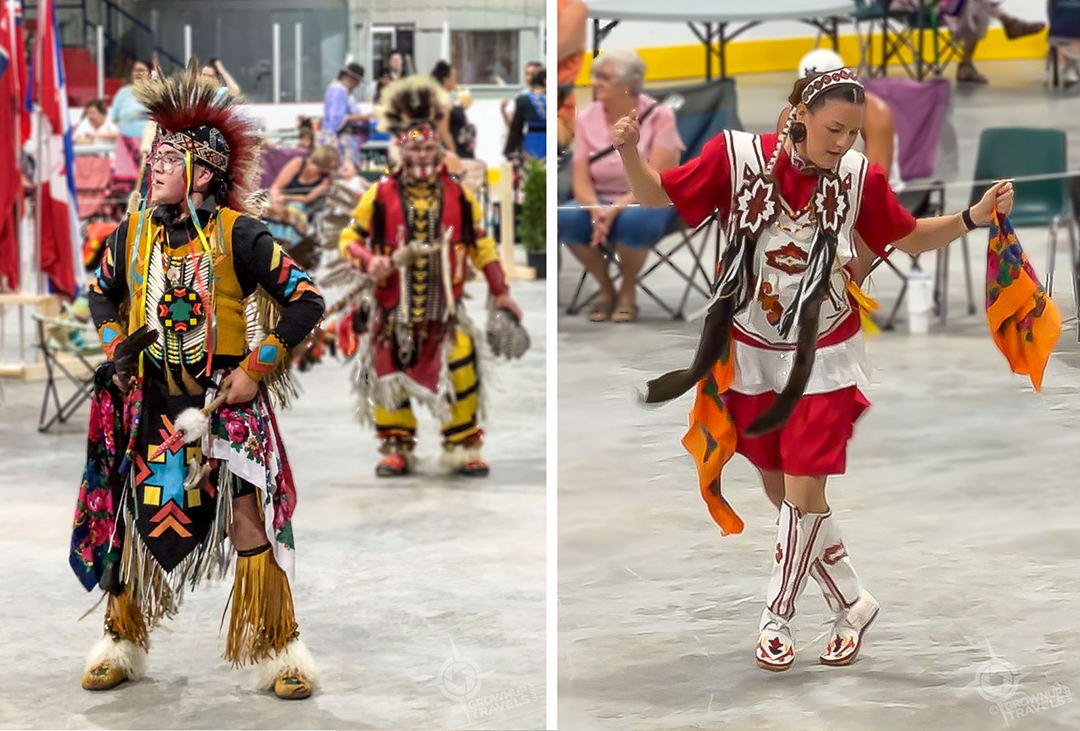
Members of the Timiskaming First Nation (shown dancing at their annual Powwow) have lived near Lac Témiscamingue for generations
One site in particular, now known as Obadjiwan-Fort Témiscamingue, shows evidence of being used by these groups as early as 6500 years ago. So it was only natural that when the fur trade began to explode in the late 1600s, this site became home to one of the first trading posts on the lake where white traders and indigenous groups could congregate to exchange goods.
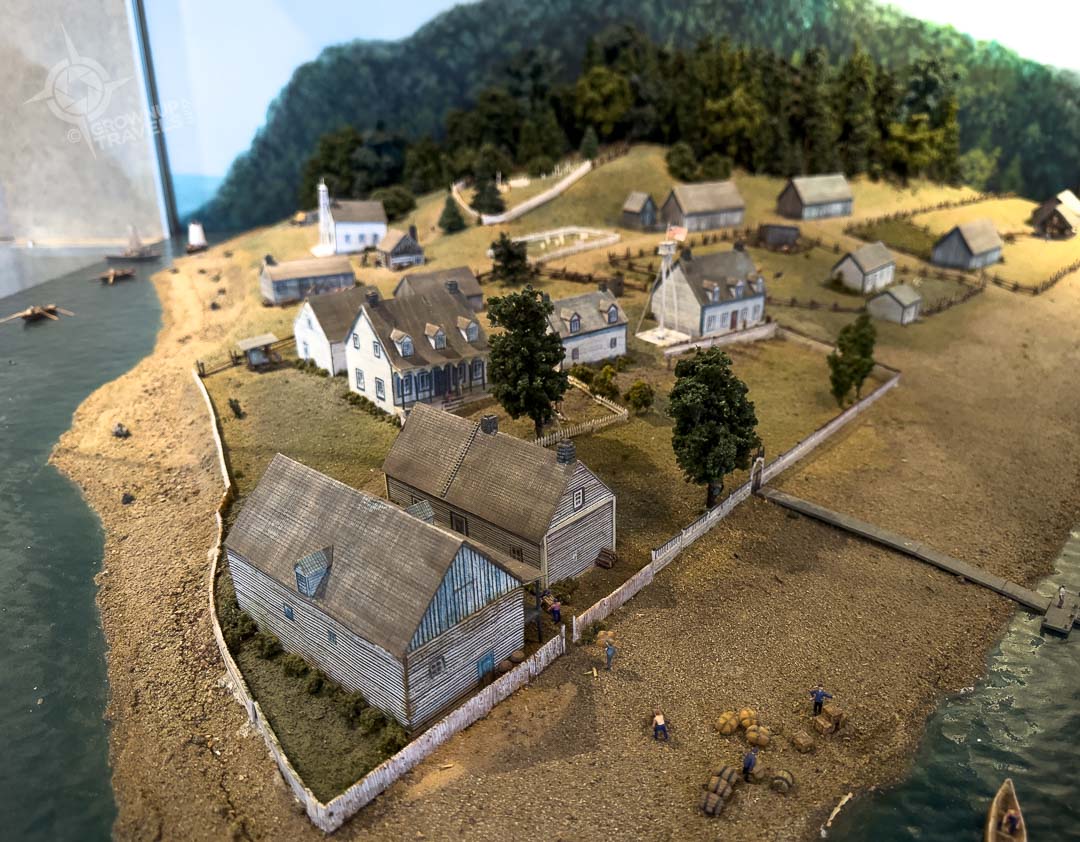
A diorama in the visitor centre shows what Fort Témiscamingue looked like in its heyday
A Foothold for the Fur Trade at Obadjiwan–Fort Témiscamingue
Obadjiwan-Fort Témiscamingue is today a National Historic Site on the eastern shore of Lac Témiscamingue, jointly managed by Parks Canada and Timiskaming First Nation. It’s early history on Lac Témiscamingue is rooted in rivalries – fur trade rivalries, specifically. This began in the mid-1600s when the government of New France first established a trading post at the mouth of the Montreal River where it empties into Lac Témiscamingue on the Ontario side. By 1720, that post had been re-established on the Québec side at a strategic narrowing of the lake that gave the French a foothold on a busy trade route and allowed them to compete with the English who had established trading and shipping posts farther north on Hudson Bay.
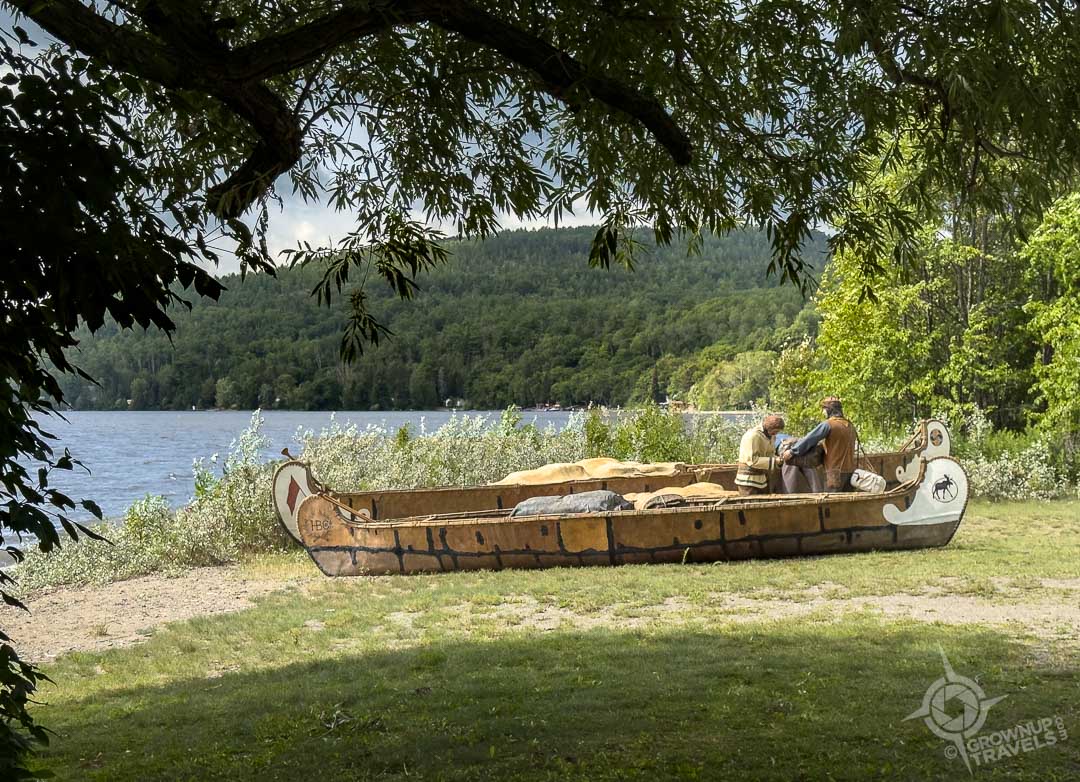
The French fur traders set up their trading post on a strategic point on the Lake
The fur trade was so lucrative at this time in Canada’s history that English and French factions continually fought for dominance, but after New France fell, the North West Company became the dominant force in the fur trade here, squeezing out independent traders and monopolizing the industry until well into the 1800s. It was only then, after the Hudson’s Bay Company received a Royal Charter for all of Canada that the two companies merged to create a monopoly that was ‘too big to fail’.
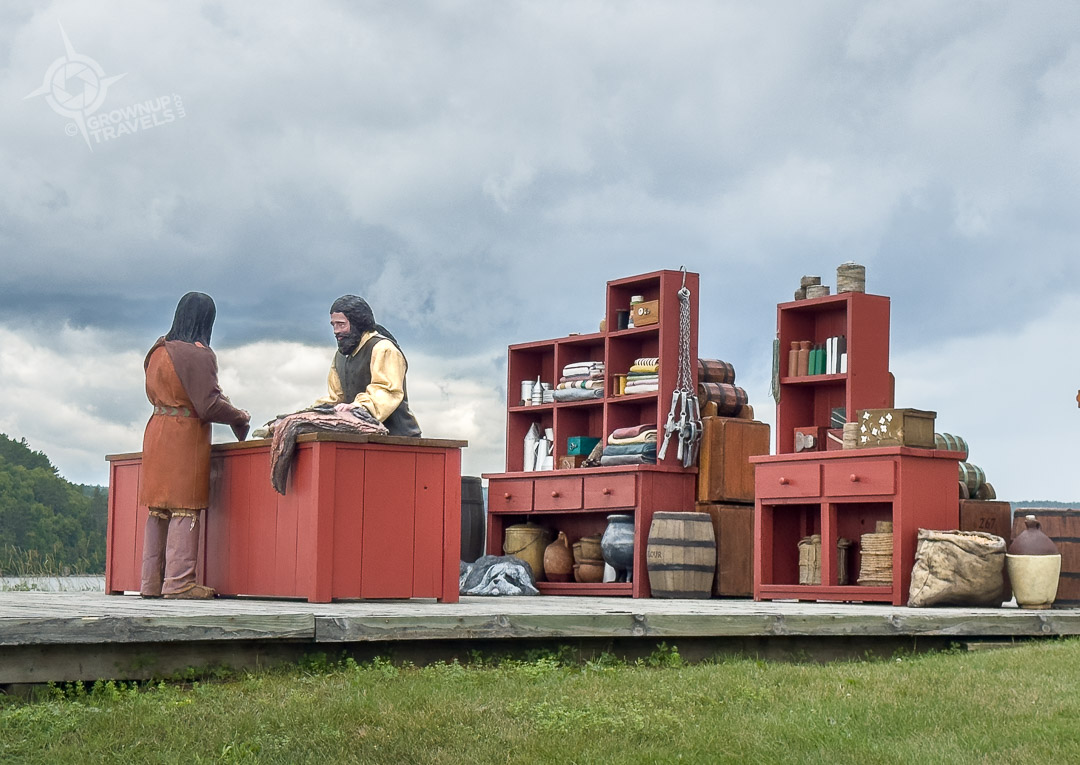
Life-sized displays bring to life different aspects of life at the Fort, including the Trading Post
Although the original trading post structures are no longer present at Obadjiwan-Fort Témiscamingue, the site has become an outdoor museum with on-site guides who do a great job of interpreting its history for visitors. Life-sized displays on the property bring to life what this trading post may have been like at the height of the 17th and 18th century fur trade. And inside the Visitor Centre there are also displays and artifacts left behind by people who lived and traded here, and the missionaries who followed.
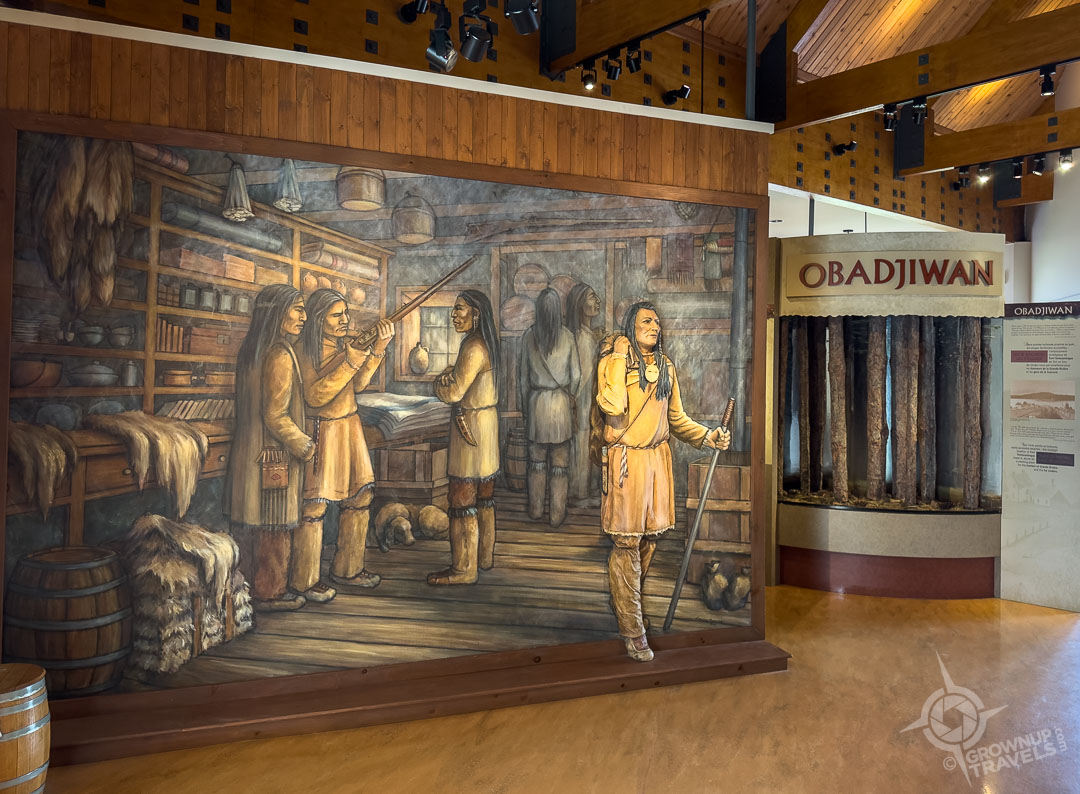
The Visitor Centre at Obadjiwan-Fort Témiscamingue has interesting dioramas and artifacts found on-site
We toured the property with Jean, one of the senior interpreters here, who has been fascinated with Fort Témiscamingue since he was a child. His fascination has turned into a passion for research, and he loves sharing the insights he has gleaned from reading historical journals and trading post entries. His recounting of the resilience of the Voyageurs who transported the furs here had me marvelling at the hardships they had to endure, and the risks they took travelling these untamed rivers and lakes.
As if to underscore that point, Lac Témiscamingue decided to show us her dangerous, unpredictable side, conjuring up a sudden storm that trapped us in a meagre shelter while high winds pelted the grounds with hail and a lightning bolt struck the far shore. It gave me even more respect for the intrepid voyageurs who navigated these waters, paddling their way into Canadian history.
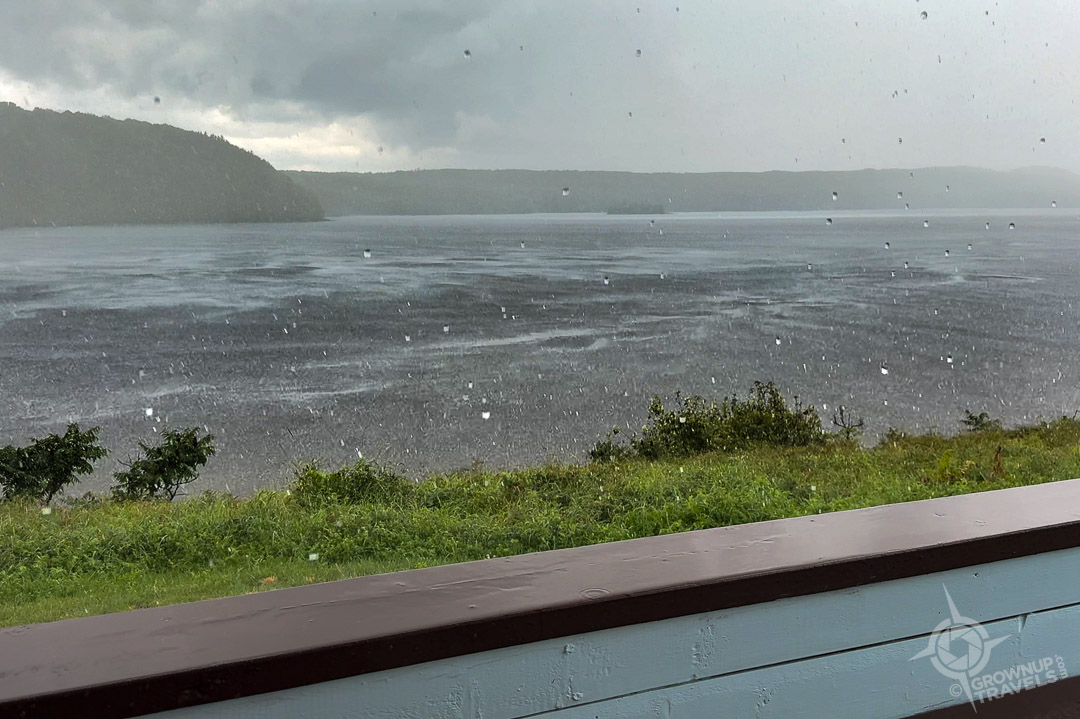
A sudden, violent hail storm and high winds showed the dangerous side of Lac Témiscamingue
DID YOU KNOW: Voyageurs, like jockeys, were chosen based on their size, to minimize their weight in the canoe. But they needed to be extremely fit and strong to paddle for hours every day and portage up to 270 pounds of cargo on their backs, stabilized with a strap across their foreheads. Their signature woven arrow belt, the ceinture fléchée helped support their core, but in many cases, hernias were a career-ending consequence for many voyageurs (if they did not literally break their necks while scrambling overland with their packs). Most voyageurs did not know how to swim, either, ensuring that they would do everything possible not to tip over – and thereby not lose the valuable cargo for the Company.
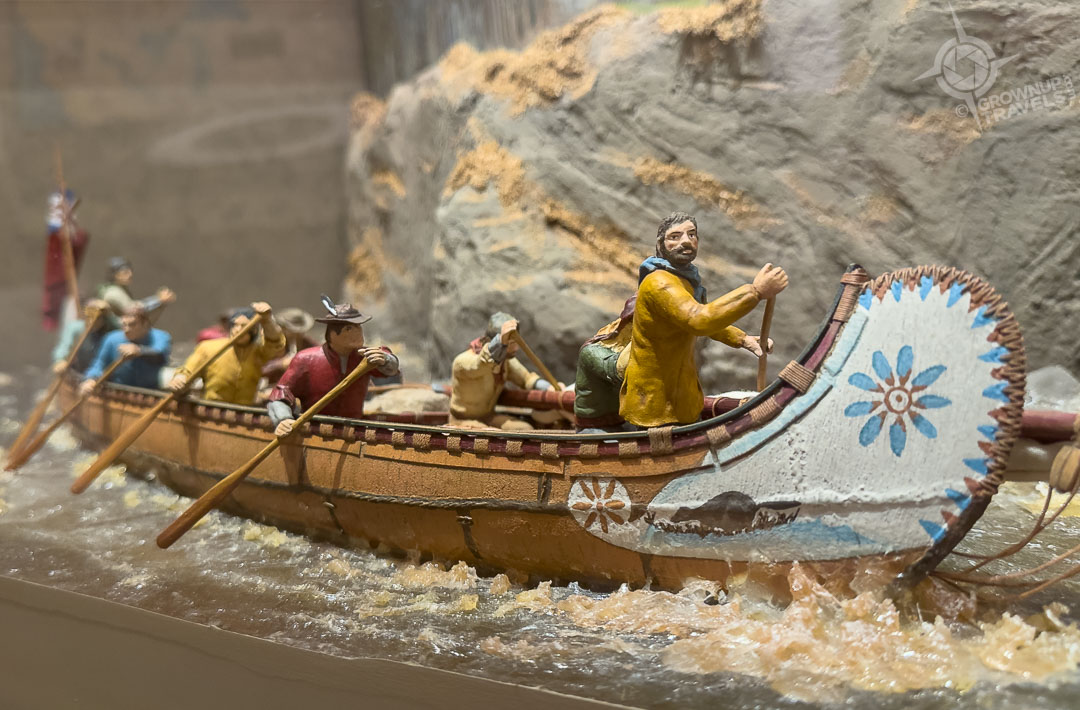
A miniature Voyageur diorama inside the Visitor Centre
Meeting an Anishinaabe Canoe-Builder
As impressive as the Voyageurs may have been, their success and in many cases their lives were dependent on the birch bark canoes that they piloted between posts. Renowned for its waterproof qualities and durability, it was still hard to comprehend how a craft made from tree bark could withstand rapids and rough waters, carrying 6-8 men and 2 tons of cargo. It was only thanks to the skills and knowledge of the Indigenous craftsmen who built these crafts, that the Voyageurs were as successful as they were. And luckily for us, during our visit to the Fort, Henk and I were fortunate to meet Karl Chevrier, a local Timiskaming First Nation artist and canoe builder, who was on site with his apprentices and happy to explain just how those canoes are built.
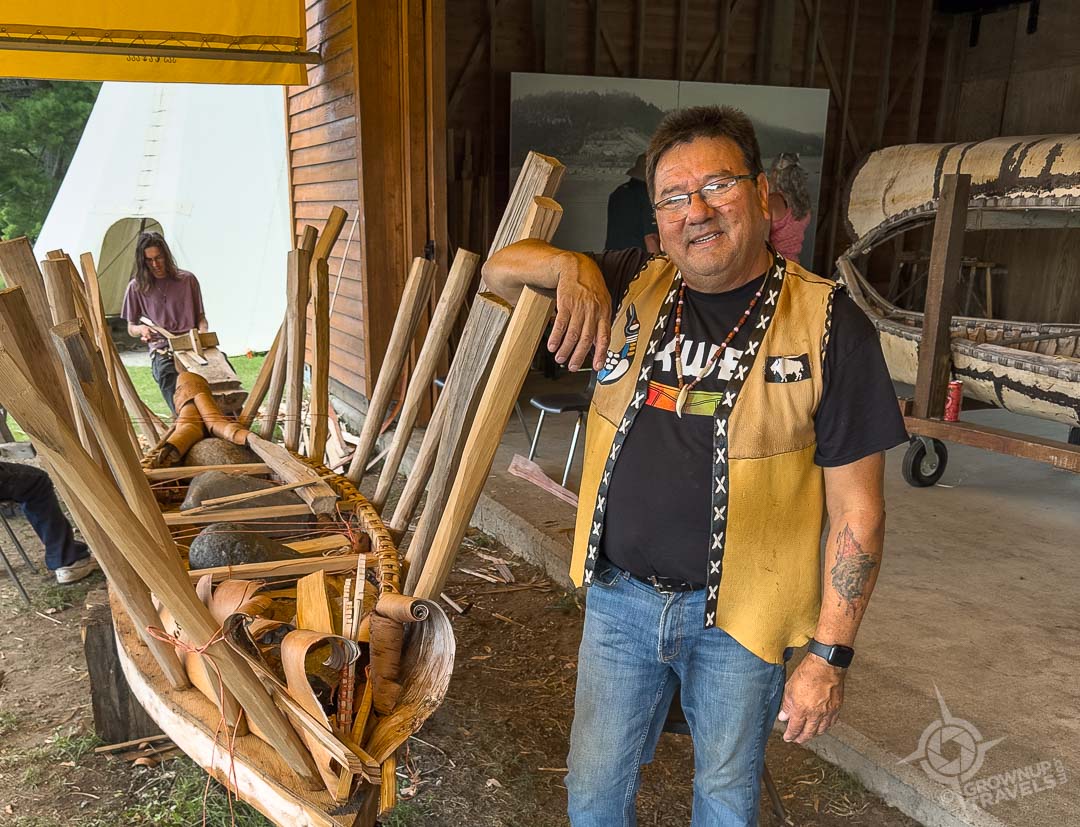
Karl Chevrier, an Anishinaabe artist and master canoe builder
As we chatted with Karl, we were fascinated as he explained the techniques involved in harvesting and preparing the birch bark, how the wood for the frames of the canoes is chosen and soaked to make the strips pliable for shaping the canoe, and how the right mixture of bear fat and pitch acts as both glue and waterproofing for the bark panels. When we asked how he got into canoe building, Karl shared that he had struggled with addiction in his youth, but found new purpose in life when he began to learn the craft of birch bark canoe building. Mastering the techniques taught to him by elders in his community, Karl has become not just a skilled builder, but an elder himself who is passing that knowledge on to a younger generation.
As an artist, builder and teacher, it was clear to us that what Karl finds most fulfilling is his appreciation for nature, his culture, and the importance of sharing that knowledge with others, both within his community and outside of it.
TIP: Obadjiwan-Fort Témiscamingue operates seasonally from late spring until early September, with both self-guided tours and guided tours available in English and French (we highly recommend a guided tour). Before you visit, be sure to check the website for its hours and to see which activities are available, including the canoe-building demonstration.
Lac Témiscamingue in the 19th Century: Forests Replace Furs
The story of Lac Témiscamingue began to change after the fur trade all but disappeared in the mid-1800s. But at the same time that the fur trade was waning, another natural resource was poised to become the next booming business: lumber. The shores surrounding Lac Témiscamingue were rich in old growth pine forests, and logging became the next great wealth-maker, bringing development and infrastructure to the region. Once again, the Lake became a transportation conduit, this time for millions of harvested trees that were felled in the winter, corralled into huge log booms and then floated downstream when the ice melted in the spring.
Some of the historic structures from this period have been preserved and restored as part of a Heritage Trail in Parc Opémican, a relatively new Québec park covering 252 square kilometres that opened in 2018, about 30 kilometres north of the small town of Témiscaming at the southern end of the Lake.
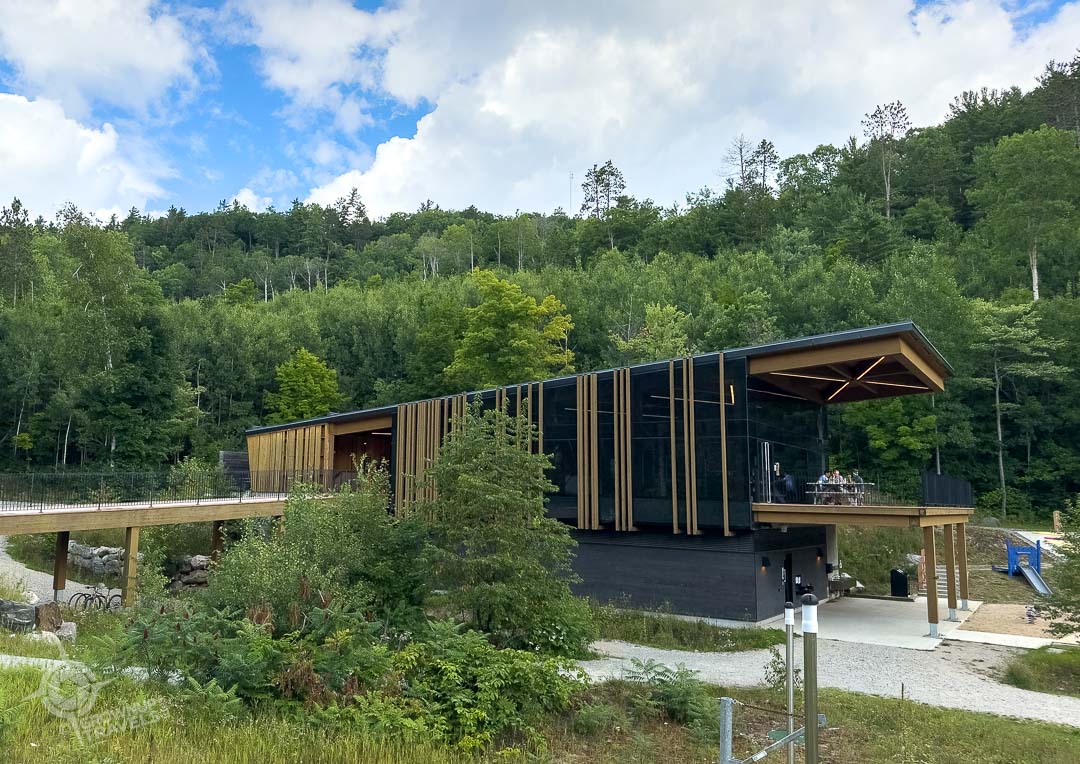
Pointe-Opémican Visitor Centre
Parc Opémican and the Lake’s Logging Legacy
Parc Opémican consists of 4 sectors, with different sectors offering visitors diverse landscapes and opportunities where they can camp, hike, and explore the region’s history. It is in the Pointe-Opémican sector near the Parc’s Visitor Centre where you will find the Heritage Trail that highlights the logging legacy in this area. The Trail runs along the shore here and includes the remains of a forge workshop, boom shed, garage and carpentry workshop, with interpretive panels and information describing the history of the logging industry. This particular location on Lac Témiscamingue functioned as the base of operations for a permanent raft relay station where loggers would construct massive booms containing up to 3,000 logs which were then floated down to Mattawa and the Ottawa River to reach the major markets in Montreal and Québec City.
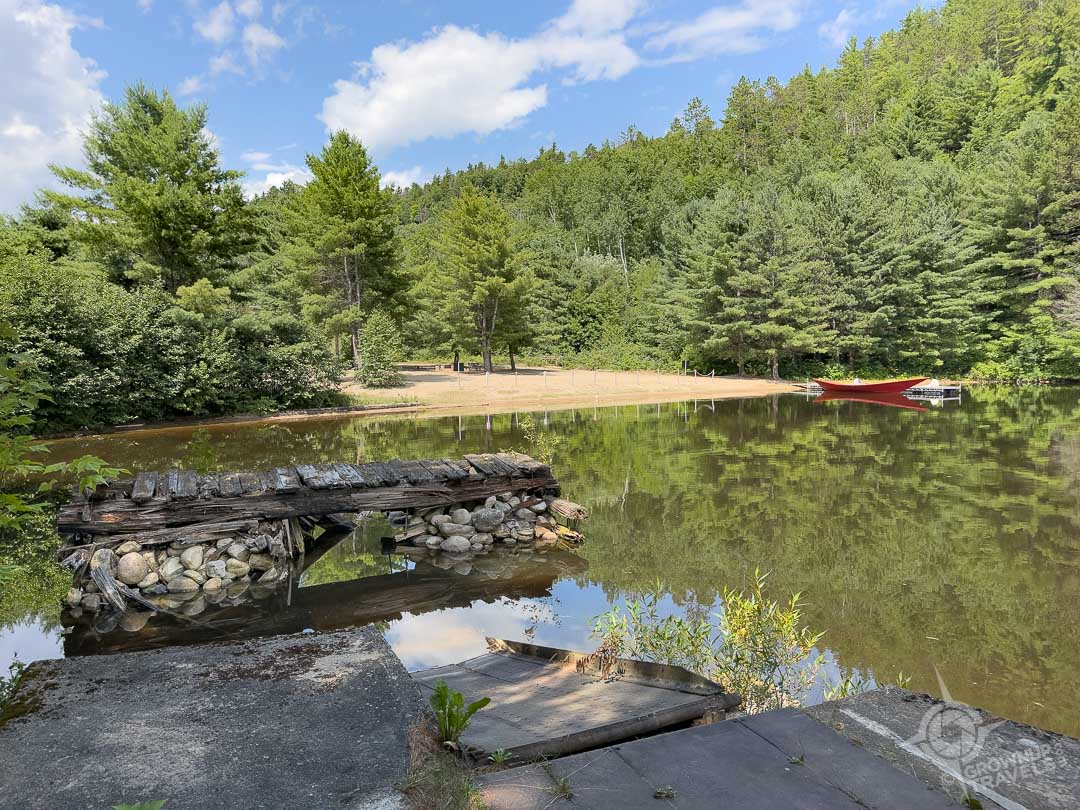
Remains of an old boom loading ramp at Parc Opémican
Looking at some of the old photographs on display, the lake was so congested with logs that it’s impossible to even see the water under them. Many of those heavy timbers became waterlogged and sank to the bottom, leaving an extensive underwater ‘forest’ in Lac Témiscamingue whose decaying organic compounds have altered the water’s original chemical composition.
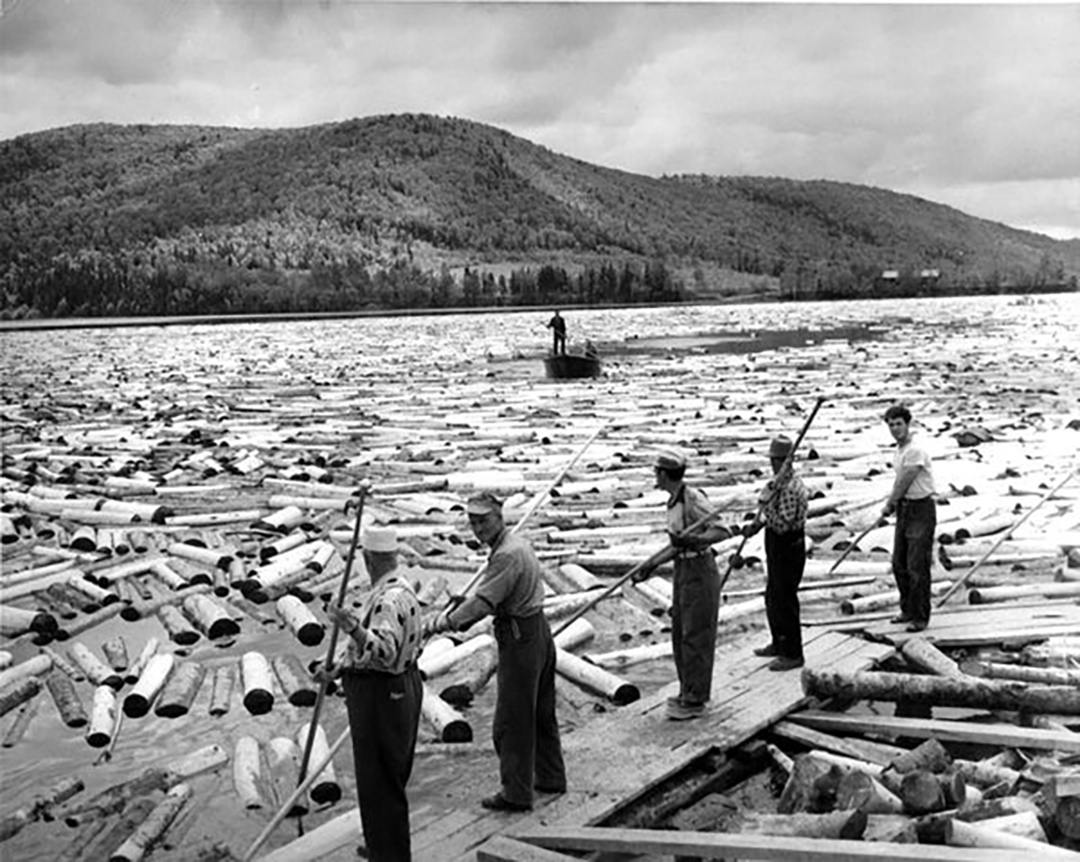
Historic photo of Québec Log drivers (draveurs) who had a tough job herding logs
Walk down to the main beach area at Pointe-Opémican and you will find the former Jodoin Inn, which was built in 1883 by Joseph Jodoin to serve the seasonal loggers and workmen, as well as the pioneers and missionaries moving to this area. As part of the development of the Parc, the building underwent a meticulous restoration and today it serves as a museum. Displays and audio recordings bring to life the story of the inn and the Lake through the voices of the people who worked and lived here. It’s a piece of the past that serves to remind us of how important this Lake was – and still is – to the economic development of the region.
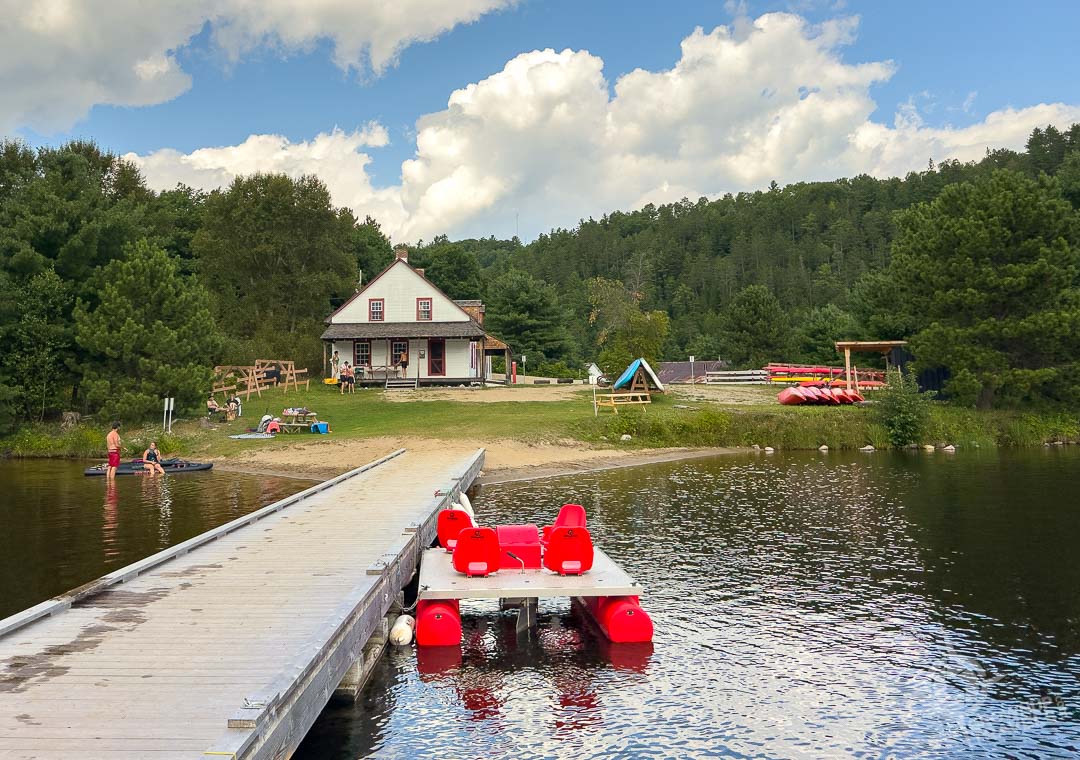
The historic Jodoin Inn sits on the shore at what is now the main swimming beach and water recreation centre in Parc Opémican on Lac Témiscaming
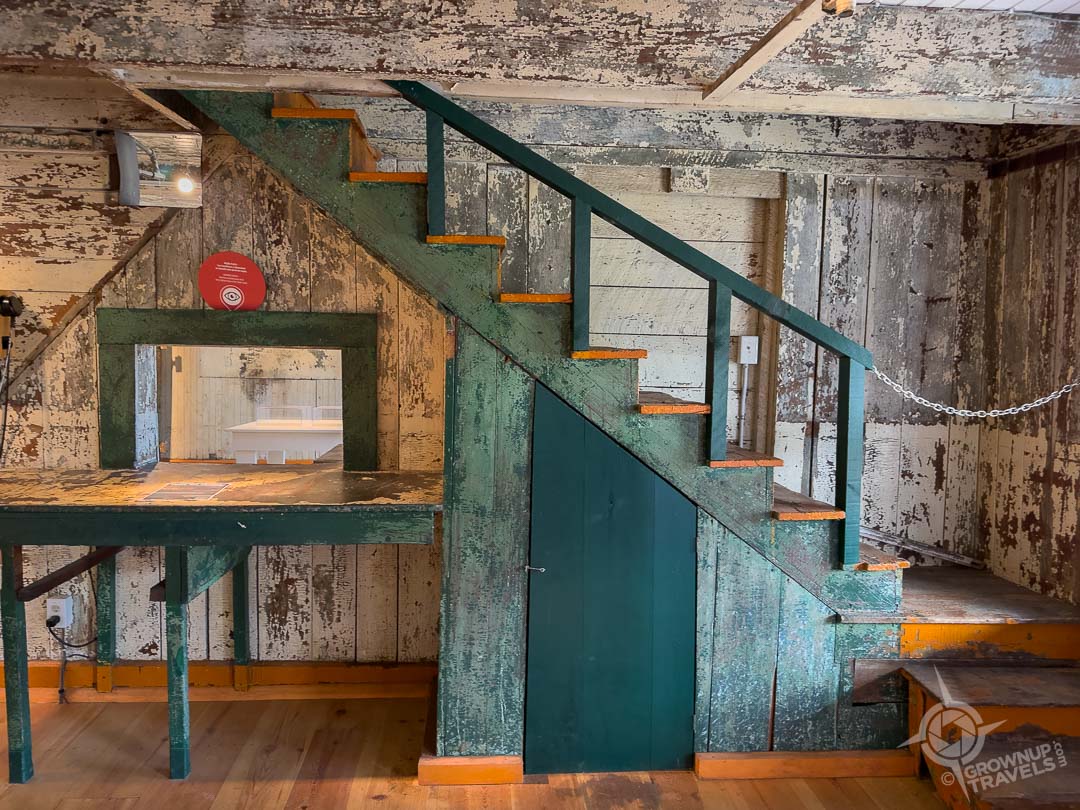
The Jodoin Inn interior is now a museum
LESSONS LEARNED: Log booms have not been used on Lac Témiscaming since the 1970s, and logging has become much more strictly monitored and regulated with conservation a priority. This is also one of the reasons why Parc Opémican was established: to help renaturalize and restore the shoreline, and preserve the existing ecosystem on this part of the Lake, which contains Québec’s highest concentration of historic red and white pine trees.The Parc also safeguards the nesting habitats of the Peregrine Falcon, the lake’s sturgeon population, and the native plant species of the Lake.
Lac Témiscamingue Today: Beauty is in her Nature
It’s hard to believe, looking at the lush, forested shores near Parc Opémican, that Lac Témiscamingue was once so heavily logged. Today her natural beauty is visible everywhere, in the dramatic escarpments rising from the waters, the rugged, rocky capes jutting out from the shores, and the forested game trails that are home to moose and other resident wildlife. And it is that natural beauty that has fostered another economic driver in the region: tourism. For those who love the outdoors, Lac Témiscamingue is a dream destination, and one of the best ways to appreciate some of its beautiful terrain is by hiking some of the many trails in the Park.
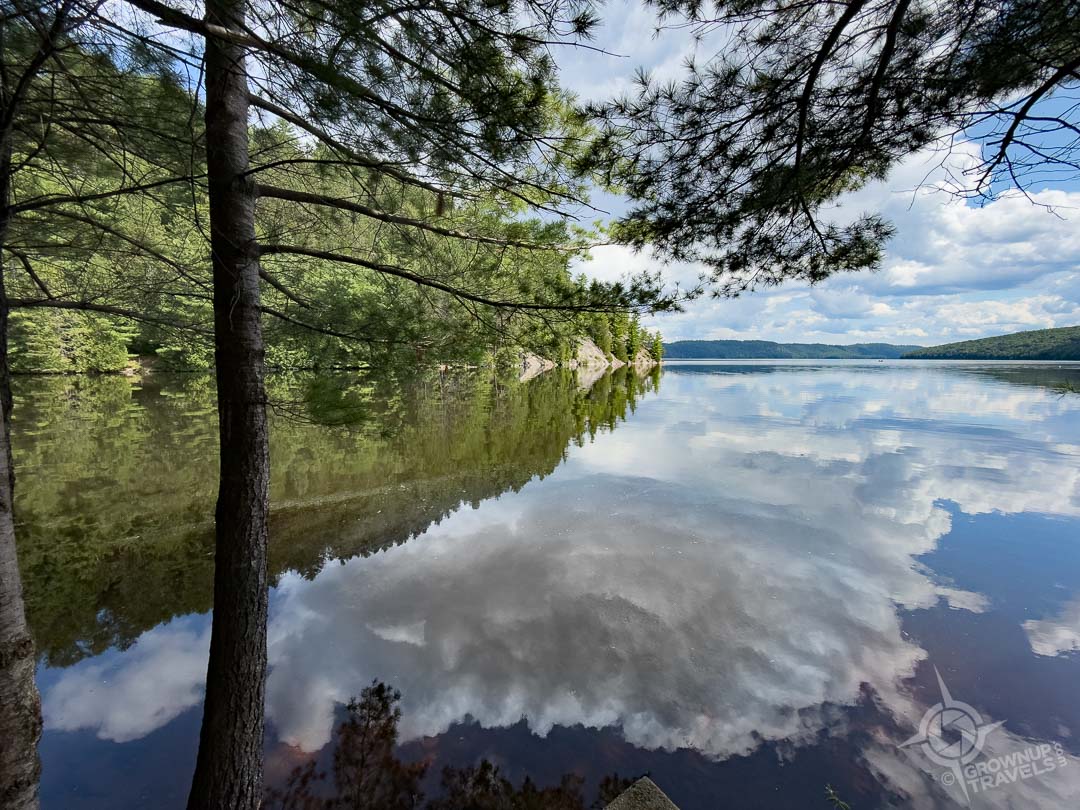
Hiking near Lake Temiscaming
When it comes to spectacular views, there were 3 trails that Henk and I definitely recommend: the first was the Grand Chute Trail in the Rivière Kipewa sector of Parc Opémican, an easy, well-groomed 1.3 km path that took us through the forest to a dedicated platform perched next to a roaring waterfall on the Kipewa River. The 19-metre tall waterfall is set in a beautiful gorge and the sound of the rushing waters fills the forest here, making for an impressive first glimpse of this river that eventually empties into Lac Témiscamingue.
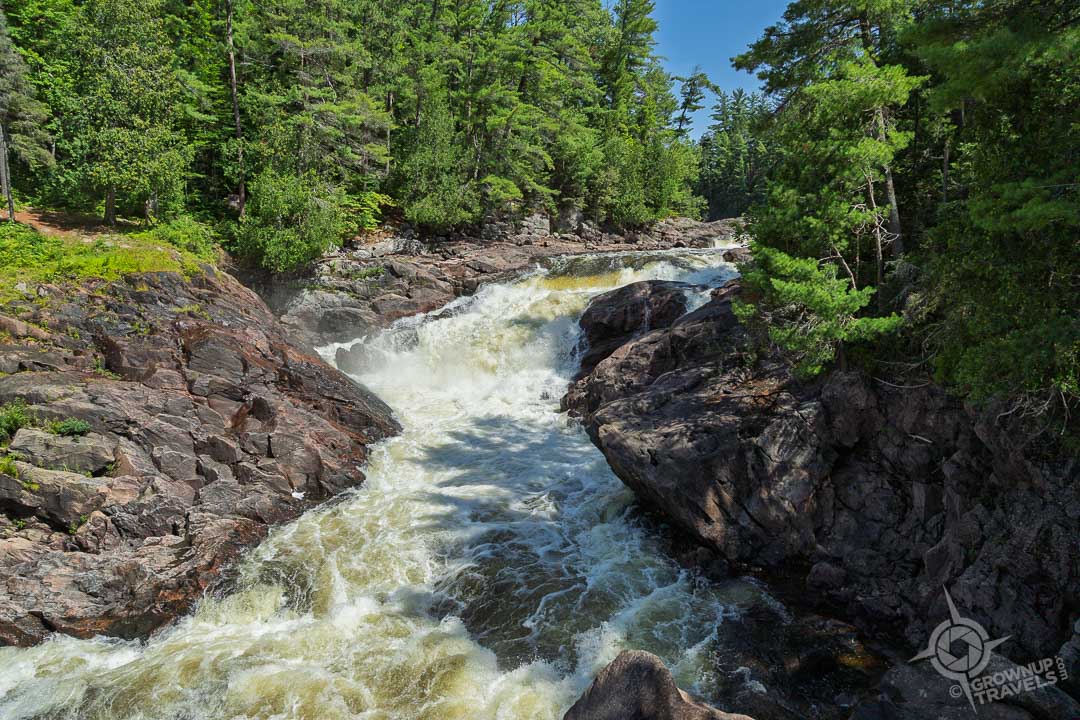
Parc Opémican La Chute waterfall on the Kipewa River
Another short but spectacular hike is in the same Kipewa area of Parc Opémican, this one being the Falcon’s Cliff Trail, or Le Paroi-aux-Faucons, so named because there have been breeding pairs of falcons spotted here in recent years. The trail is short, a 1.8 km loop, and takes you out to the edge of dramatic cliffs rising above Lac Témiscamingue. The wind had come up by the time we arrived at the edge, and it made the location that much more impressive with the wind whipping through the huge trees that somehow manage to cling to their rocky footholds, despite the steep drops visible from all along the edge.
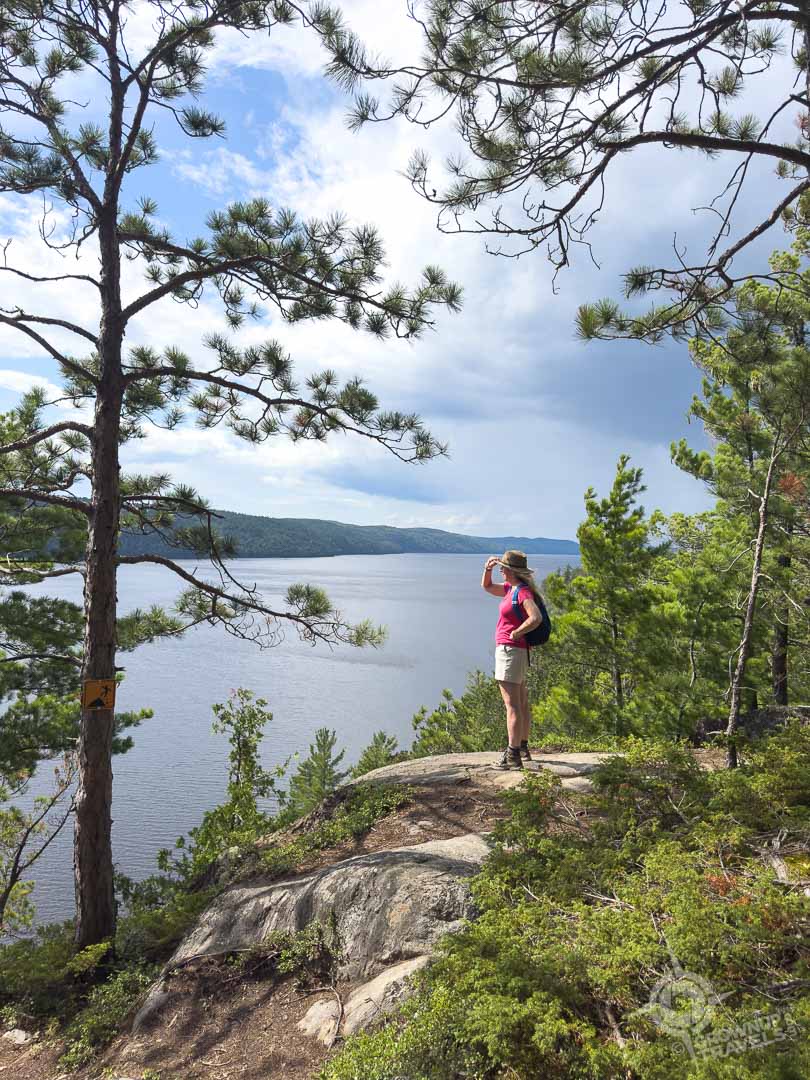
A third hike that also offers incredible views is the Inukshuk Trail, a 2.7 km moderate forest trail that intersects the Grand Chute Trail. We actually hiked this trail as an extension of the Grand Chute Trail, following the Kipewa river downstream and then inland through forests and gullies and along narrow ridges where evidence of moose was everywhere.
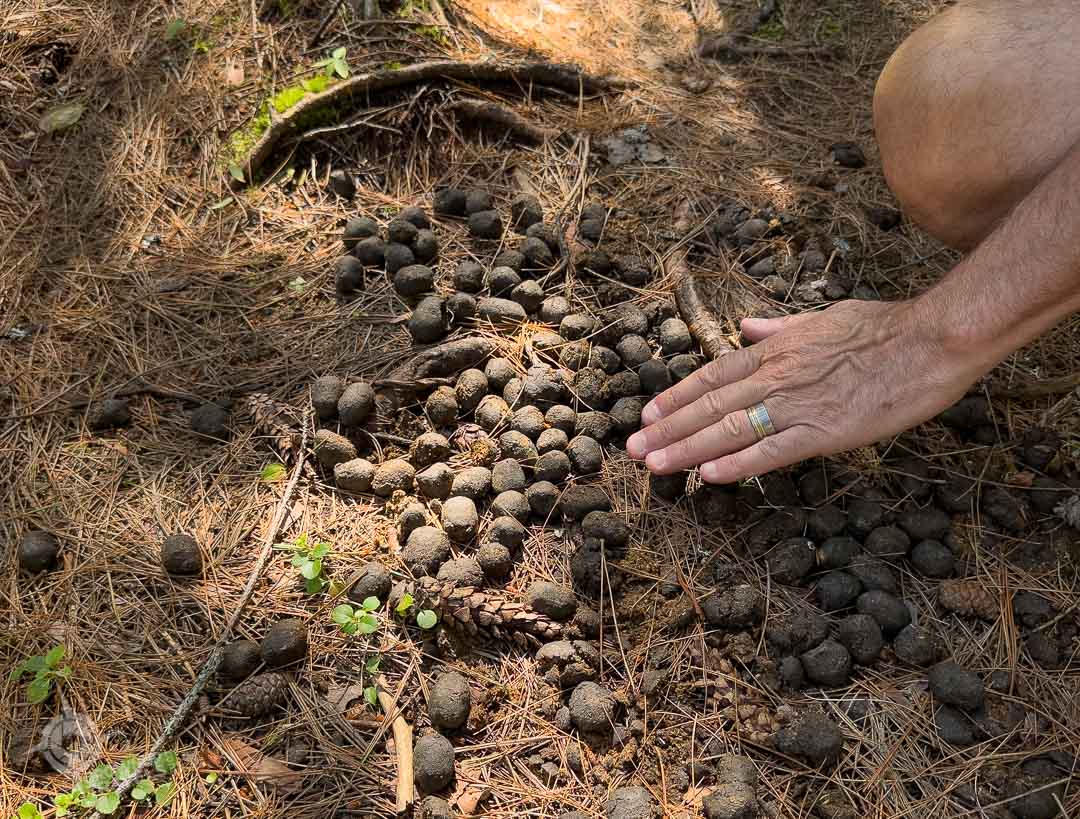
We were sharing our trail with moose
Eventually we arrived at a stunning lookout over Lac Témiscamingue where we shared the impressive view with the trail’s namesake inukshuk. We learned later that this particular inukshuk was erected as a memorial in 1978 by local Scott Sorensen to commemorate a terrible canoe accident that took place the year before. Twelve school boys and one youth leader lost their lives to hypothermia after their canoes overturned, underscoring the fact that although Lac Témiscamingue is beautiful, it can be unpredictable and dangerous.
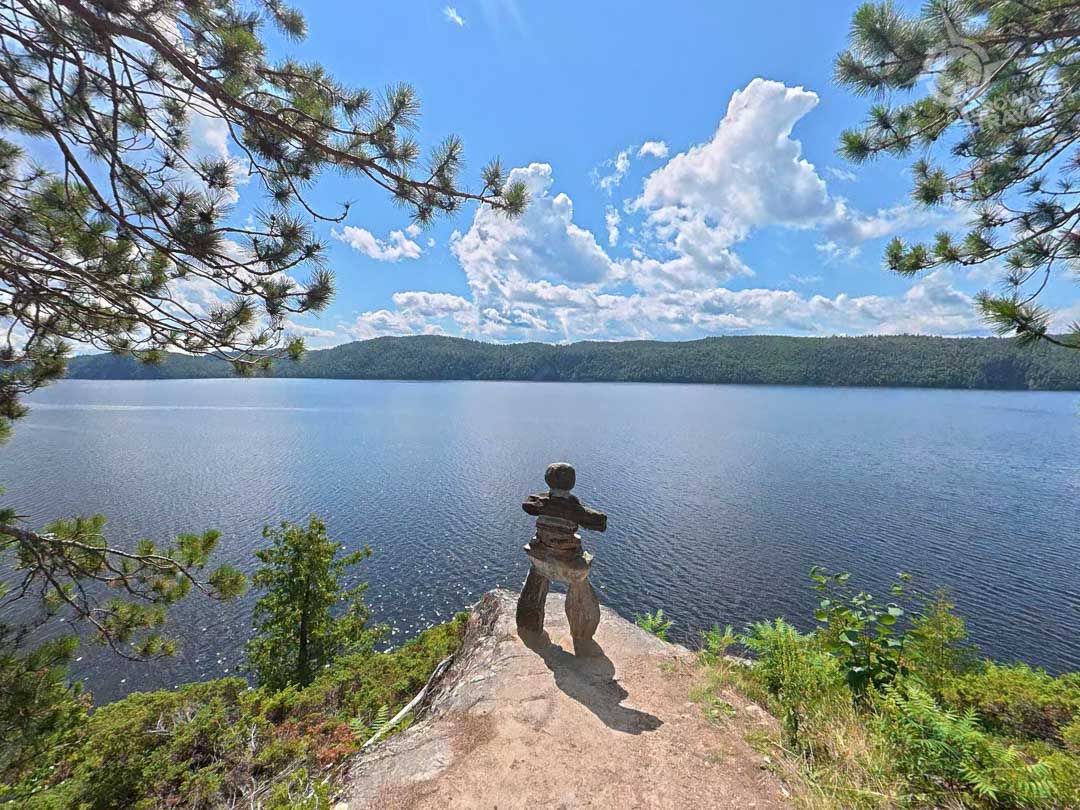
Inukshuk trail overlooking Lac Témiscamingue Parc Opémican
A Legendary Lake for So Many Reasons
During our 5-day visit to this region of Quebec, Henk and I discovered just some of the secrets that Lac Témiscamingue holds. From it’s billion-year old cliffs and legends of deep-water creatures, to its history as a critical trade route for Indigenous peoples, traders and settlers, the lake is the spiritual, commercial and outdoor recreational centre of this western Quebec region. We’ve seen different sides of the Lake’s personality reveal itself: calm and serene with mirror-like waters perfect for a late summer swim, and angry and unpredictable with sometimes deadly consequences.
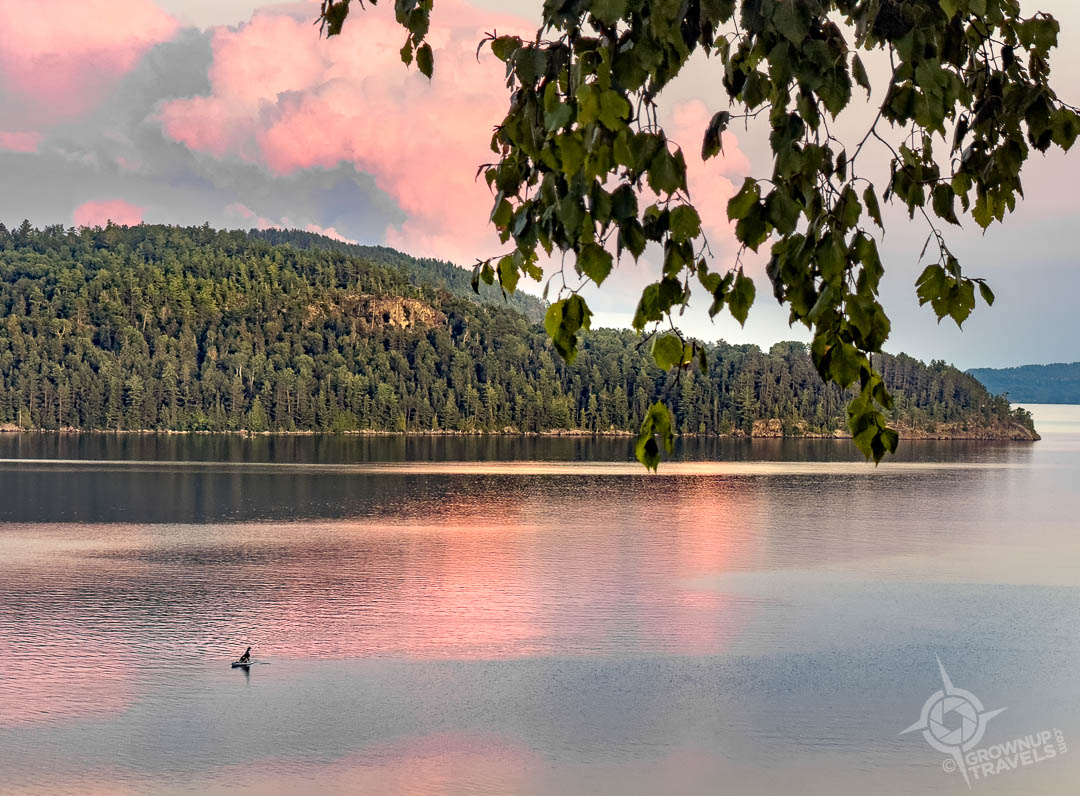
Lac Témiscamingue view from La Bannik hotel room at sunset
And the Mugwump?
Though we discovered much about Lac Témiscamingue and its history during our time here, we never did solve the mystery of the mugwump. Is it perhaps just an oversized lake sturgeon, a common species found in these northern lakes? Or maybe it’s a water-soaked ‘deadhead’ log from old lumbering days that rises to the surface from time to time? Or maybe the reported sightings are just ripples on the surface formed by underwater tremors as the lake shrugs its shoulders, keeping some of its secrets to herself. Either way, one thing is certain: no visit to this region of western Québec is complete without understanding the importance of this waterway to the people who call this place home.
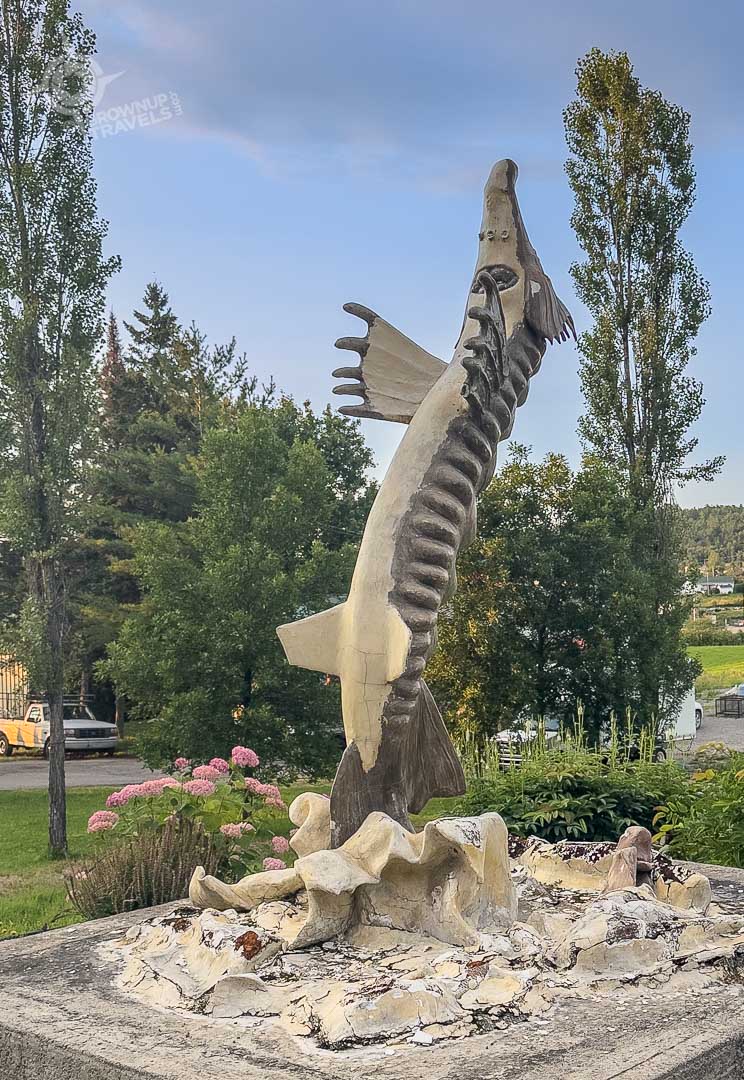
The mugwump greets visitors entering the town of Ville-Marie
Special thanks to Tourisme Abitibi-Témiscamingue who hosted Henk and I on our visit to the region.
PRACTICAL INFORMATION FOR VISITING THE LAC TÉMISCAMINGUE AREA:
WHERE TO STAY: BOUTIQUE AND UNIQUE
The main lodge at La Bannik just outside of the town of Ville-Marie is definitely the perfect choice for travellers who like their creature comforts, plus a super-convenient location (literally steps from Obadjiwan-Fort Témiscamingue and the lake). The rooms are stylish, modern and new, and you have the luxury of a private terrace overlooking the lake offering exceptional views of Lac Témiscamingue day or night. Cozy robes come standard, and the on-site restaurant Clau Clau Bistro is well known as one of the best dining experiences in the region. The property also has a wonderful outdoor pool that is all deep end, no shallows, so very grownup-friendly.

La Bannik rooms have private terraces with amazing views of Lac Témiscamingue
WHERE TO EAT: VILLE-MARIE
Clau Clau at La Bannik is only open from Wednesday-Sunday, so if your visit doesn’t align with that timing, you can always find other options in the town of Ville-Marie, although many of those restaurants are also closed on Mondays and Tuesdays. Two restaurants you can always count on are La Gaufriere for breakfast, brunch and lunch options, and Restaurant Louise which offers comfort food menu items every day of the week.
WHERE TO STAY: CAMPERS will love Parc Opémican, and in particular the Étoile Ready-to-Camp permanent structures in the Pointe-Opémican sector which have everything you need for a more comfortable stay than just tenting it (including heating and electricity and even a mini-fridge and 2-burner gas cooktop) The kitchen is fully stocked with pots, pans, dishes, etc. and there are double beds that can sleep up to 6 people. You will need to bring your own bedding, though, and of course, your food.

TIP: There are no bathrooms in the Étoile units, so if you want the shortest walk to the washrooms and shower station, choose Étoile Number 61 which is about 200 steps from the closest facilities.

Jane is an award-winning travel writer and photographer and an accredited member of the Travel Media Association of Canada (TMAC). In their annual awards competition, TMAC named GrownupTravels.com as the Best Self-Published Travel Blog in 2025 .
She is also a member of the North American Travel Journalists Association, and a freelance travel writer contributing to both print and online publications.





Subscribe and you'll never miss an update!
Join our mailing list to receive the latest news and updates from Grownup Travels. (We keep your email STRICTLY private)
Thank you for subscribing to Grownup Travels!