
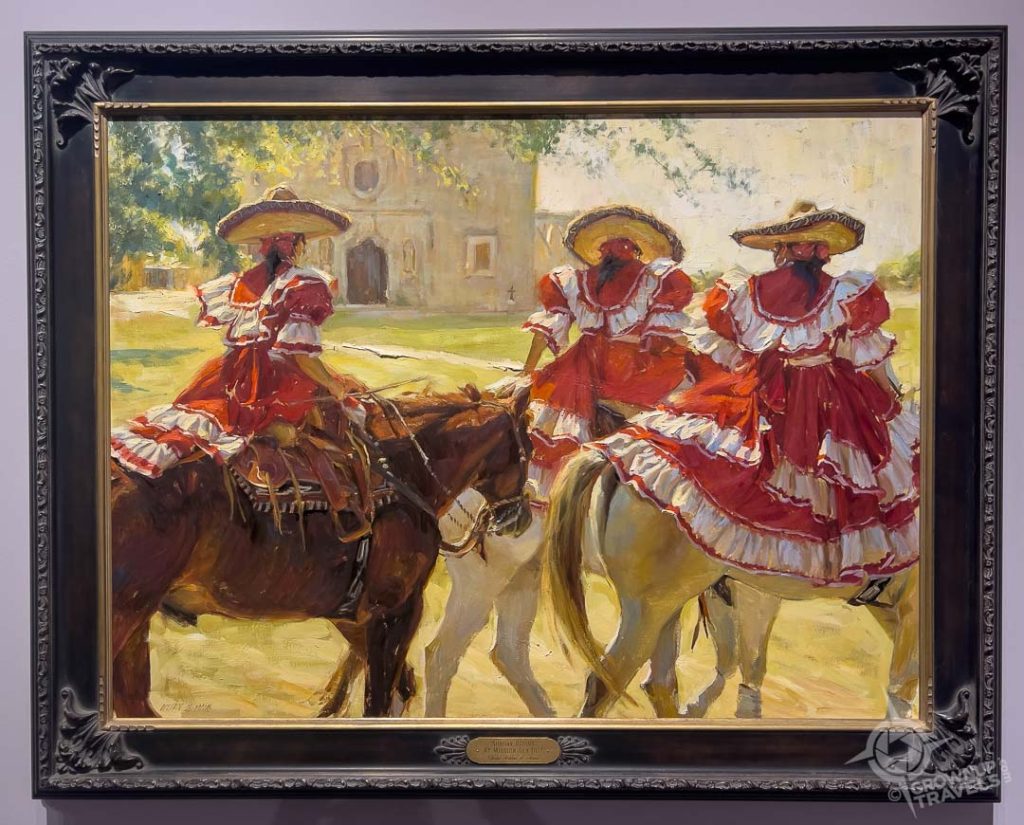
From the popularity of ‘cowboy core’ fashion trends (thank you, Beyoncé) to Netflix’ American Primeval dramatic series, America’s Old West in all of its iterations is definitely having a moment. But this fascination with the Wild West isn’t new or fleeting: for the past 200 years or so, there have been countless artists who have been inspired to create art reflecting the West’s other-worldly landscapes, native peoples, European settlers and unique history. And there’s no better place to see some of this art in San Antonio than at the Briscoe Western Art Museum.
Briscoe Western Art Museum Overview
The Briscoe is a relatively new museum for San Antonio, having opened in 2013 in the 1930s-era building that housed the city’s original public library. Part of the condition under which the Museum acquired the deed to the building was that they preserve its function as a library, and so even today, the first floor has a dedicated library space and a digital portal to the San Antonio Public Library.

The Museum is located right on the city’s beautiful downtown Riverwalk, and spread out over three levels: at ground level you will find newly acquired artworks on display (which changes quarterly), as well as the Women of the West gallery.
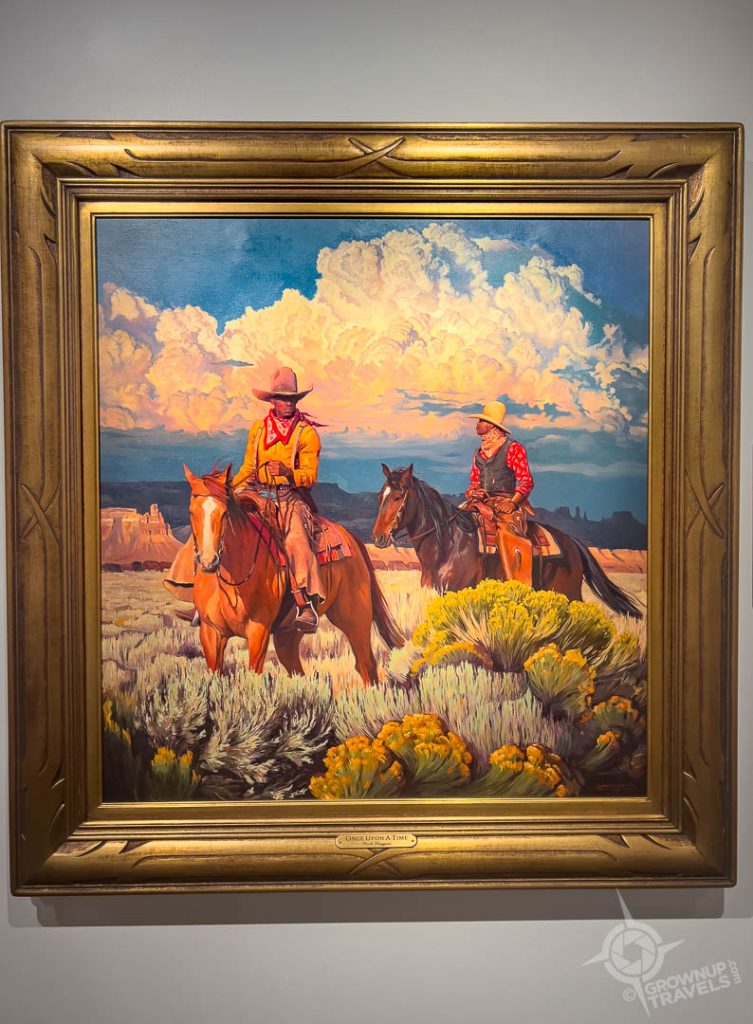
Level Two houses Southwest and Native American art plus a sky bridge that takes you to the Jack Guenther Pavilion where temporary exhibitions are displayed. During our visit, more than 70 works were on display in a temporary exhibition called Storytellers: Narrative Art and the West, showcasing how the American West has been brought to life in everything from popular culture to traditional sculpture.
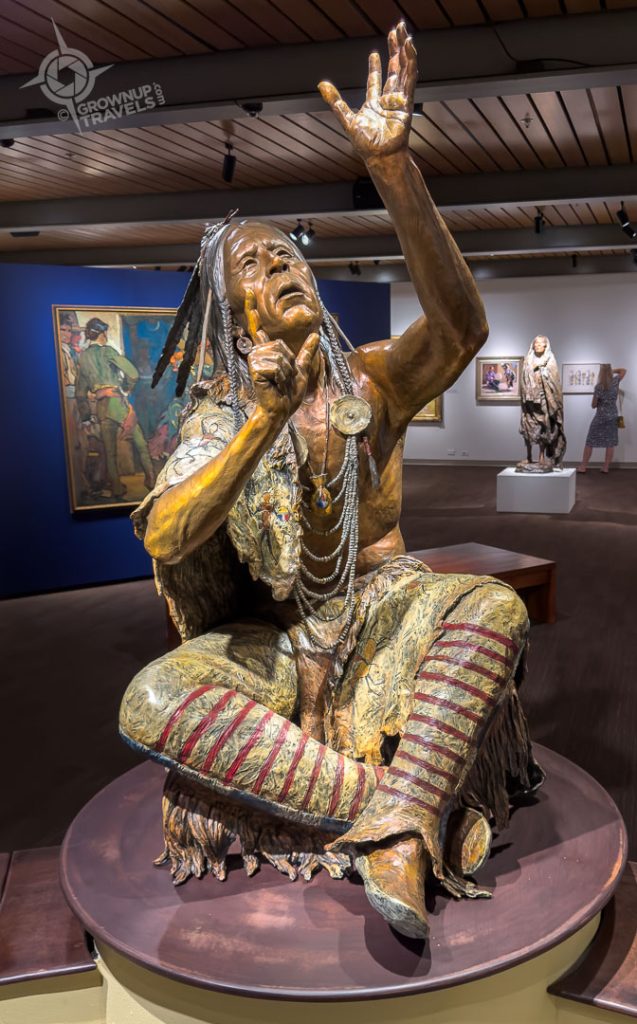
And Level Three’s galleries feature cowboy culture and related artifacts plus specifically Texan exhibits like this diorama reflecting the Battle of the Alamo, one of San Antonio and the state’s pivotal moments in American history.

You may be surprised by the variety and types of art that you’ll find in the Briscoe Western Art Museum, because we certainly were. Although the museum isn’t huge there is a breadth of work here with something for everyone whether you prefer contemporary paintings, traditional sculpture, or even historical artifacts.
Contemporary Artwork at the Briscoe
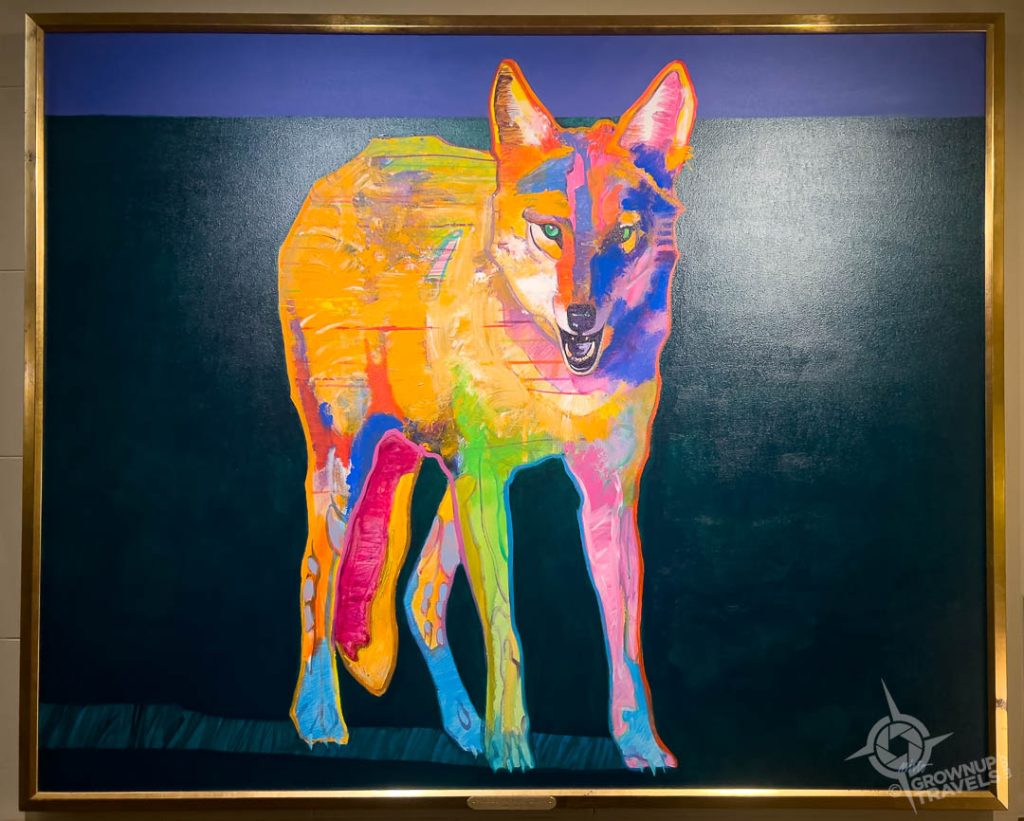
If you think western art is only about cowboys and horses, the contemporary works inside the Brisco Western Art Museum may alter that perception. Our own preconceived ideas were challenged immediately with one of the first pieces that greeted us after entering the museum, Poised Coyote by John Nieto.
Another large landscape, El Capitan, by Harriet McDonald certainly gave all the Old American West vibes, but with a very contemporary representation of these iconic views.

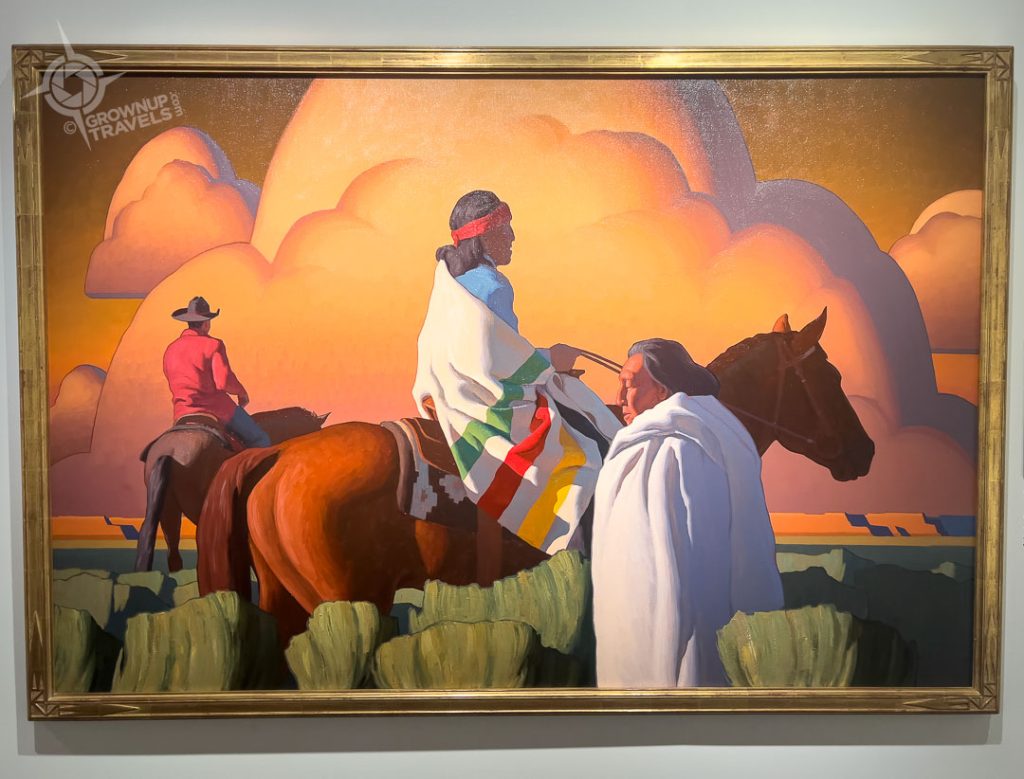
The stylized realism of “Yesterday the Sky Was Blue” by Logan Maxwell Hagege emphasizes his contemporary graphic approach to depicting southwestern landscapes and the people living there and even the intensity of colour makes it decidedly modern.
Of course there ARE depictions of horses at the Briscoe, too, but I think you would agree these painted wooden panels are not your typical representation of horses that you might expect from ‘western art’.

Artifacts That Bring History to Life
Interpreting the past through painting or sculpture is one thing but nothing brings history to life better than seeing tangible examples of how people actually lived, the tools and equipment they used, how they got from place to place, and even how they communicated. The Briscoe devotes some of its gallery space to doing just that, displaying artifacts lifted right from the history pages and putting them centre stage.

One thing is certain: despite hundreds of movies, photos and documentaries describing cross-country journeys made by many European settlers in covered wagons, seeing just how small and relatively fragile these vehicles were really drives home the hardships these pioneers must have endured.
And it’s almost unimaginable in today’s age of smart phones to think that the only way to communicate across these distances before the telegraph was via mail delivered by stagecoach.

Provocative Artwork, Too
What I love about visiting museums is that there’s always something provocative or unexpected to be discovered. One example was a modern interpretation of a Plains Indian 19th-century ‘ledger painting’.
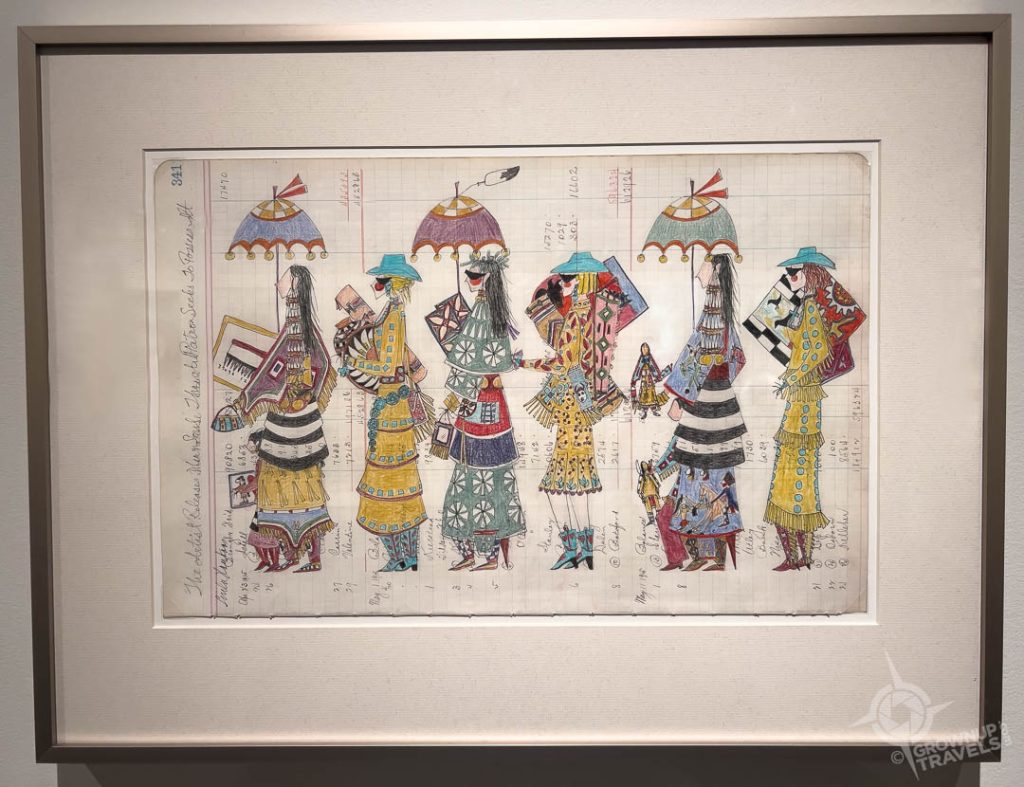
I had never heard of ledger paintings until seeing this piece, and it sparked my curiosity to learn more. What I discovered was that historically, Native Americans would repurpose sheets of paper from used ledger books as canvases for their own artwork, telling their own stories visually in pen, pencil, crayon and sometimes watercolours. Initially these scenes captured the traditional Native American lifestyle which was rapidly disappearing, or documented events in their history, but eventually these paintings became a source of income for many artists.
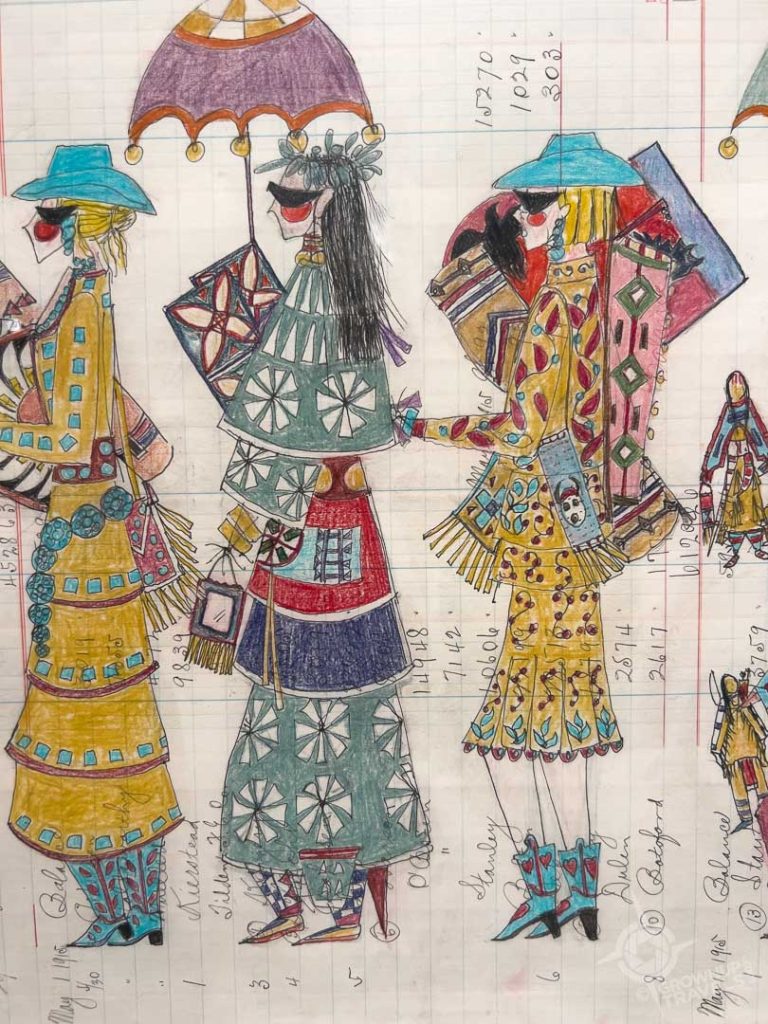
This modern piece by Linda Oyate Waste Haukaas reflects the power dynamic between artist and patron by showing Indigenous artists and outlandishly-dressed contemporary women in western wear, with arms full of recently purchased art. The fact that it all happens on a 19th-century accounting folio reinforces the transactional nature of their relationship, as does the title: The Artist Releases Her Soul, The Art Patron Seeks to Possess It.
Another controversial piece of historic artwork, a bronze sculpture titled ‘End of the Trail’ by James Earle Fraser, is on display at the Briscoe alongside a modern piece by Indigenous artist, Fritz Scholder. Although Fraser never revealed his true intentions when sculpting his slumped and exhausted horse and rider, it is believed by some to represent the inevitable extinction of the Indigenous people due to ‘Manifest Destiny’, (and/or their genocide at the hands of the federal government).
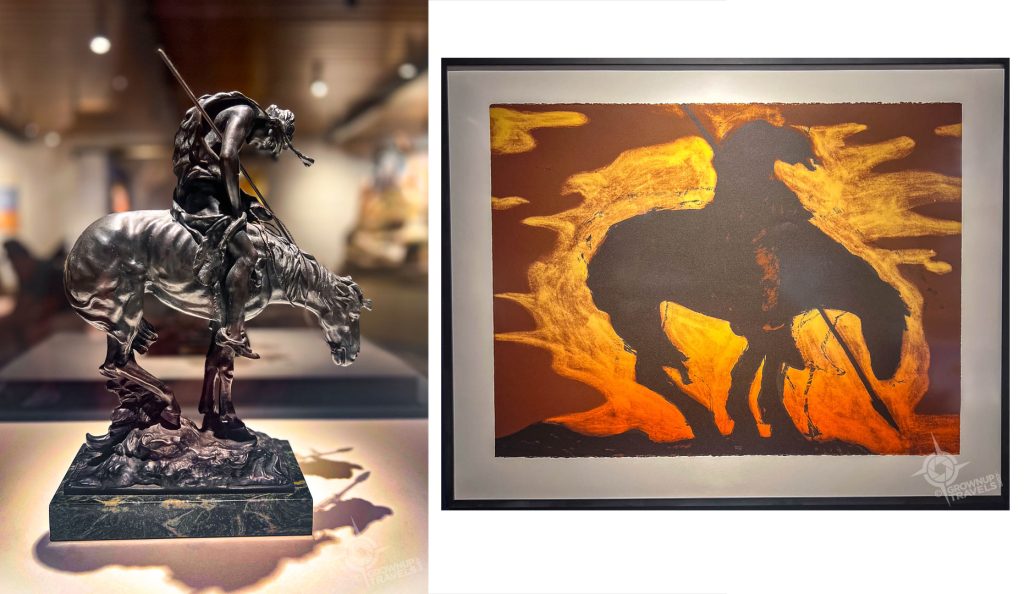
Fritz Scholder’s interpretation is summed up in the title of his modern lithograph, Indian Cliché?, which references Fraser’s artwork as a misrepresentation of Native Americans and their supposed destiny. Scholder’s work asserts that he and all native peoples have a continued voice and presence that has not been extinguished, as expressed in his own artwork – created generations after Fraser’s.
Native American Artwork
Whether it’s artwork done by Native American artists, or pieces that feature Native Americans as their subject matter, the Briscoe Western Art Museum has dozens of beautiful examples, both historic and contemporary including works in charcoal and bronze by John Coleman.
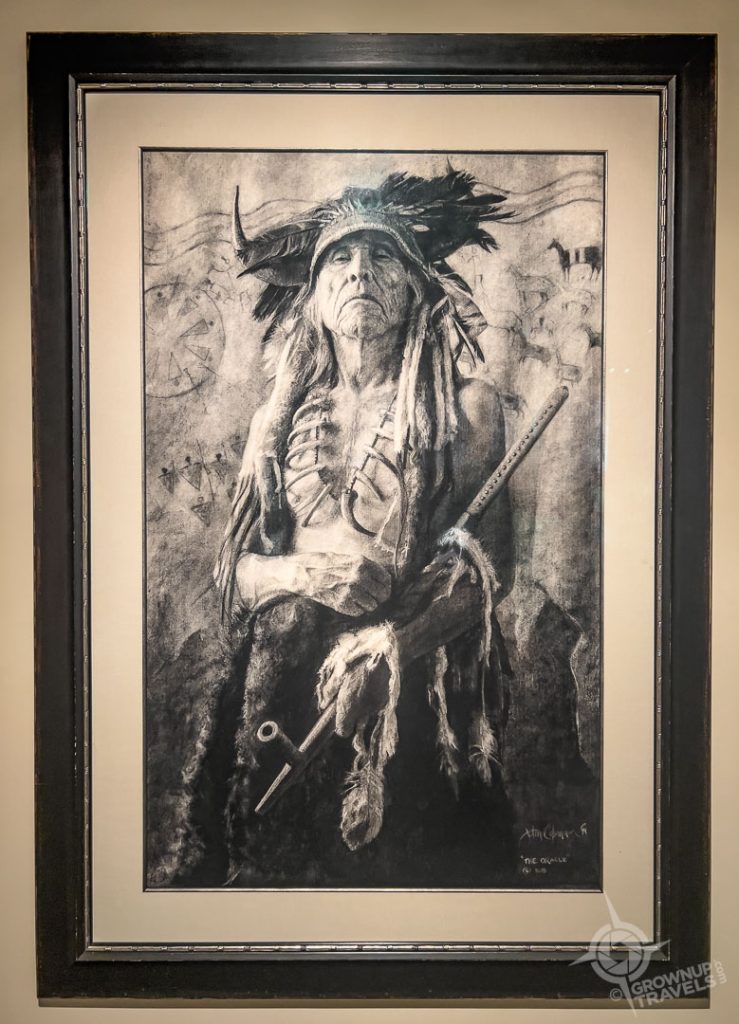

There are even some exhibits that present both historic and modern pieces together, like this display where a photograph from 1900 by Edward Curtis is paired with a 1984 tromp l’oeil painting by William Acheff that includes an image of the same vintage photo.

Community Engagement
The Briscoe Western Art Museum is as much about engaging with the community in which it lives as it is about the art contained within it. One example of this was an initiative launched during National Poetry Month in San Antonio: people were invited to interpret a piece of art in the museum by creating a poem or written piece to express the meaning of the artwork. This bronze sculpture, Walkara, inspired a poem by Jonathan Fletcher that went beyond the action depicted in the bronze sculpture to touch on the complex dynamic between Native Americans and settlers.

“Atop a tacked charging stallion, you pony a mare behind you, sheathed bowie in your belt. Buckskins yellow, your rictus, too, you take what’s not yours. Or maybe, take back what was your people’s.” Excerpt from poem by Jonathan Fletcher
Don’t Miss the The McNutt Sculpture Garden
Any visit to the Briscoe Western Art Museum should include some time to explore its outdoor sculpture garden, a pretty courtyard that doubles as a public space and is open to the public free of charge during the museum’s regular opening hours. Here you’ll find many impressive life-sized bronze works, murals and more by some of the country’s leading Western artists. Have a seat and enjoy the peaceful atmosphere while admiring the artworks all around you.
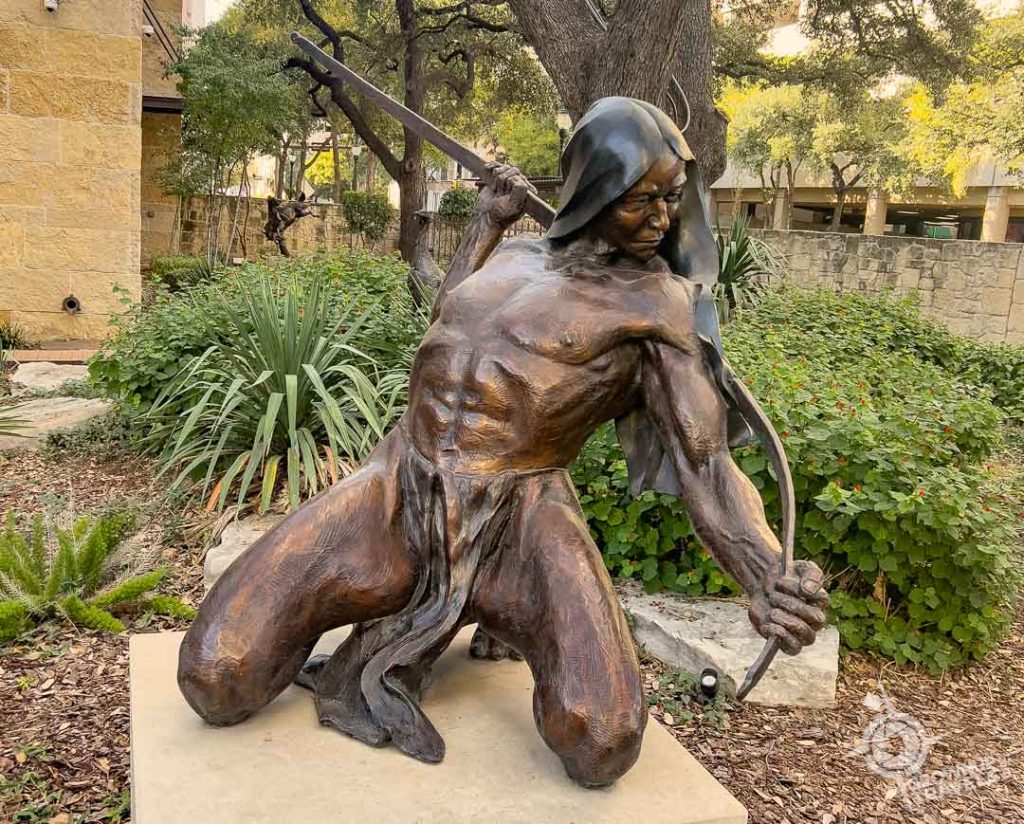
“Go West, Young Man”
The Briscoe turned out to be a delightful surprise of a museum. Not only did it shatter many of our preconceived ideas of what ‘western art’ might look like, it provided insight into the experiences of both Native Americans and European settlers both in the past, and in the present. So if you are wondering whether to include this particular stop on your San Antonio itinerary, I would quote the phrase attributed to newspaper editor Horace Greeley in 1865, and encourage you to “Go West, young man” – by embracing the art of the Briscoe Western Art Museum.

Special thanks to the Briscoe museum for providing complimentary admission to Henk and I as media professionals. General admission costs $16 with discounts for seniors and other groups, but for up-do-date prices, museum hours and current exhibitions on display, check out the Briscoe’s website.

Jane is an award-winning travel writer and photographer and an accredited member of the Travel Media Association of Canada (TMAC). In their annual awards competition, TMAC named GrownupTravels.com as the Best Self-Published Travel Blog in 2025 .
She is also a member of the North American Travel Journalists Association, and a freelance travel writer contributing to both print and online publications.



Disappointed to come from Atlanta to see museum and sculpture garden closed on a Saturday for private party. My guests especially wanted to see the majestic Indian, arrow straight up – now I can’t find even a photo of it