

There’s no arguing that the Brits love their gardens. Large or small, they take them seriously enough to hold annual competitions to name the ‘Best Garden” both regionally and nationally, and they even classify many of these green edens the same way they do their historic buildings (Grade I, Grade II, etc). So when we learned that Iford Manor Garden was listed as a Grade I garden, signifying it is of exceptional interest (something only 8.5% of registered British gardens can boast), we knew that this garden would definitely be worth a visit. And after seeing this unique terraced garden in its idyllic secluded setting we can definitely say this is one of the country’s hidden gems – not just for its pretty blooms.
Iford Manor & Garden – Getting There is Half the Fun
One of the things that makes Iford Manor Garden a hidden gem is its location: the estate lies nestled at the bottom of the scenic Frome valley, beside a river of the same name and just a short drive from the pretty town of Bradford-on-Avon. Somewhat off the beaten path, the best way to reach this rural estate is by car; however, to reach it you’ll need to navigate a steep, green-canopied road that may sound lovely, but is very narrow (and a bit harrowing) even by typical English country road standards. (if you’ve ever driven in England off the main multi-lane highways, you’ll know exactly what to expect when I say a ‘typical’ country road: a paved surface barely wide enough for one car, let alone two, flanked by hedges that typically conceal a stone wall that is adept at taking out your side mirror or at the very least scraping the side of your rental car. This is reason enough to opt for extra insurance!)
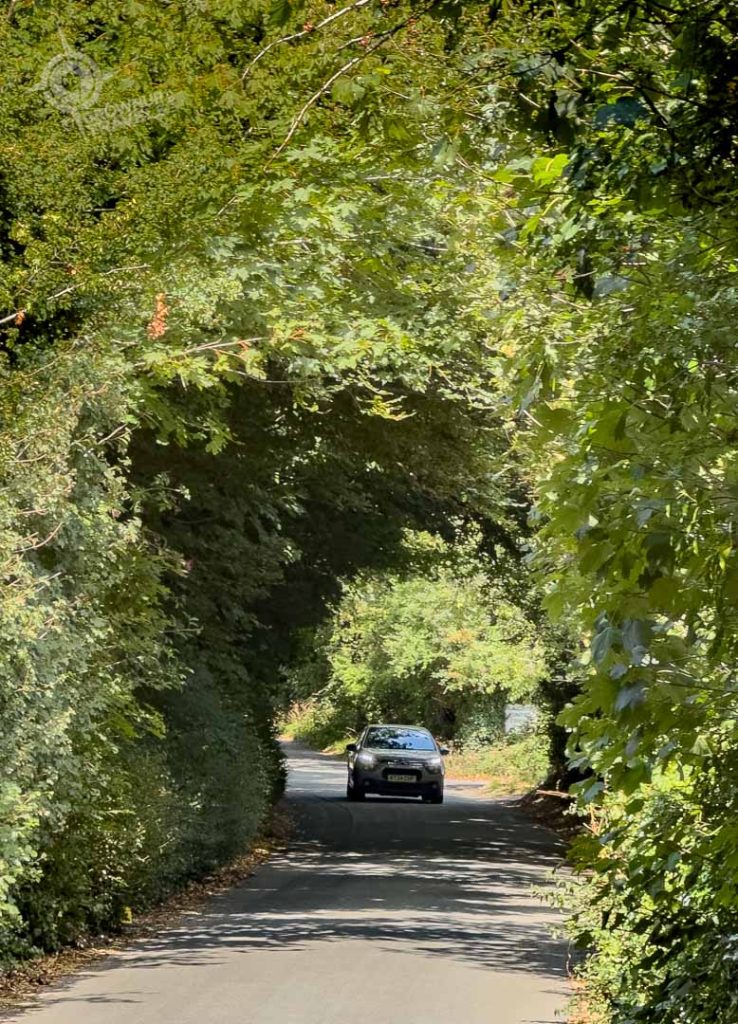
(This is actually a ‘wide’ country road in England!)
But don’t be scared off by this description. Its location is part of what makes Iford Manor Garden the hidden gem that it is, and it IS possible to survive the short drive down the road without too much PTSD (there are actually a few pullouts where vehicles can pass each other). Once you arrive at the bottom and cross the picturesque stone bridge spanning the river it will all be worth it, with Iford standing ready to greet you in all its stately Georgian elegance.

Iford Manor & Garden sit in a secluded valley accessed by a narrow road and a medieval stone bridge
Made Famous by a Famous Landscape Architect
Although Iford Manor is primarily a Georgian property constructed in the 1730s, (also boasting its own Grade II historic designation), its origins go back much farther than that. Some parts of the house are believed to date back to the 15th century, and the valley where the house is located is known to have been occupied and farmed since Roman times. Although the manor house has its own historical significance, it is not the architecture of the house that has put this property on the map – it is the landscape architect and Manor’s previous owner, Harold Peto, who made Iford Manor Garden the main attraction here.
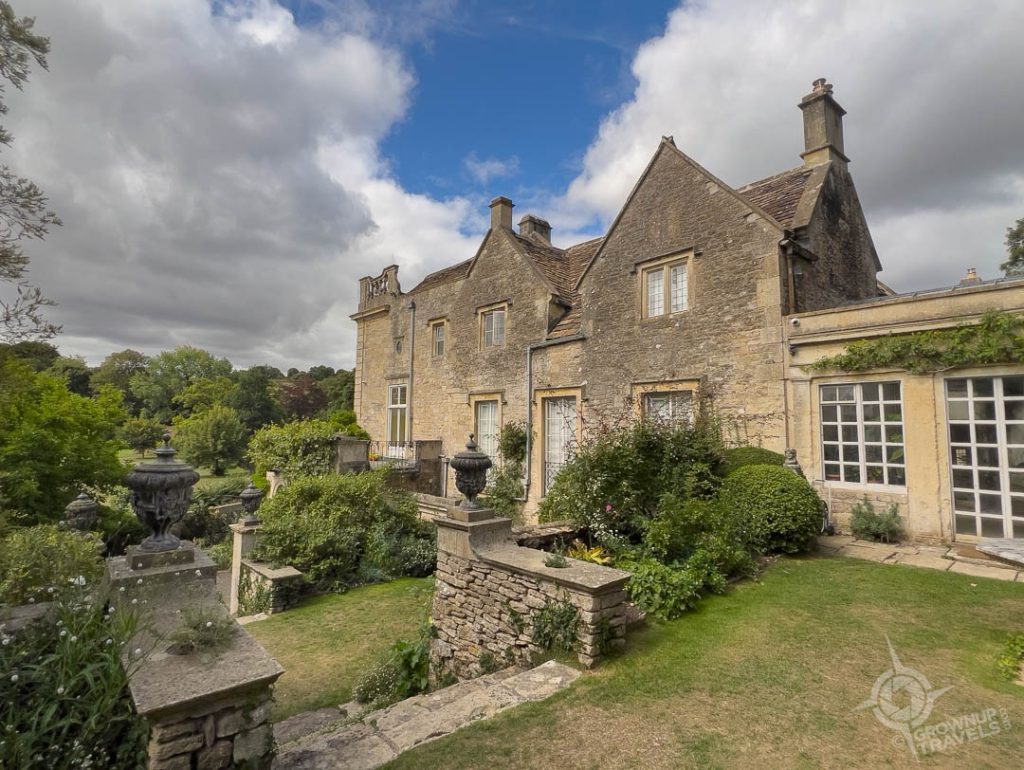
The Iford Manor house may be a Grade II, but the gardens are Grade I
Harold Peto was a British architect and landscape designer, renowned for creating gardens for royals and aristocrats from around the world. After discovering Iford Manor and falling in love with its setting and the existing Georgian terraced garden, Peto bought the property and made it his home from 1899-1933. An avid global traveller, Peto visited Europe, Egypt, Japan, Canada and the US, often bringing back not just ideas, but plants that he could incorporate into his garden designs. Nowhere did he do that more than at Iford, where he utilized the hillside terraces beside the Manor as his structural base for creating an internationally-influenced collection of garden spaces. With no client but himself, Peto indulged every artistic whim and creative muse that inspired him.
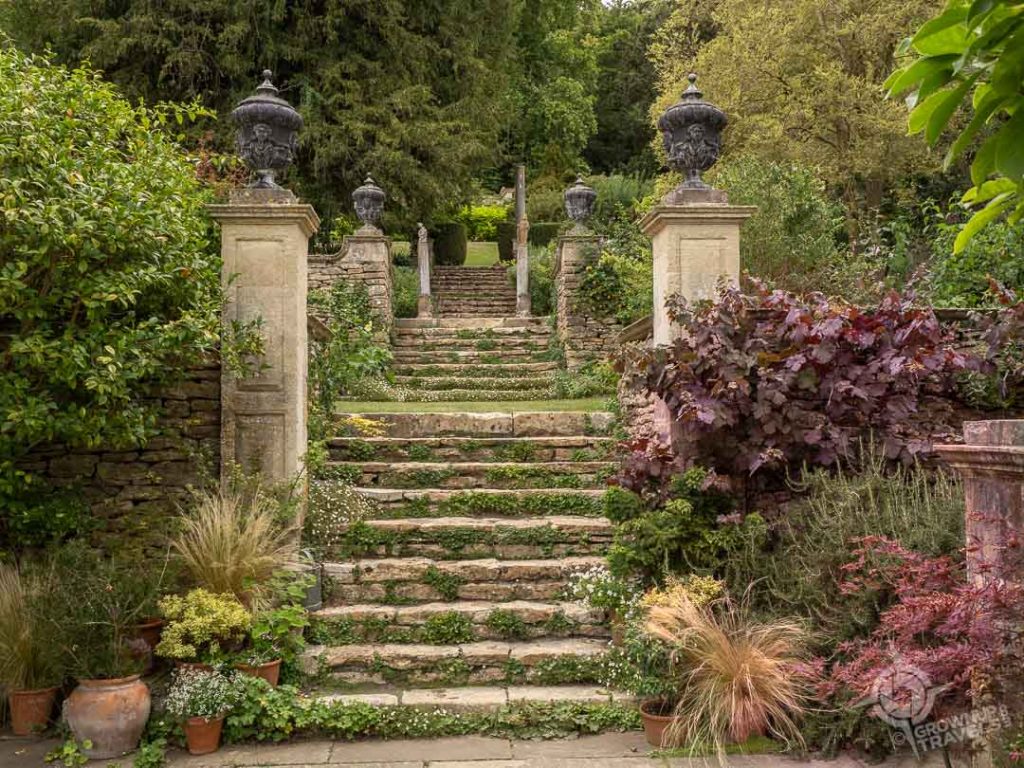
Iford Manor garden consists of multiple terraces originally constructed in the Georgian era
What Makes Iford Manor Garden so Exceptional
Location, location, location. The gardens at Iford take full advantage of the landscape and the steep sides of the sheltered valley surrounding the Manor. The gardens consist of a series of terraces that climb the hillsides beside and behind the house, providing impressive views out onto the valley and its rolling pastures and forested hills. Add to that a south-facing aspect, and you have the ideal growing conditions for a variety of plantings, both domestic and exotic.
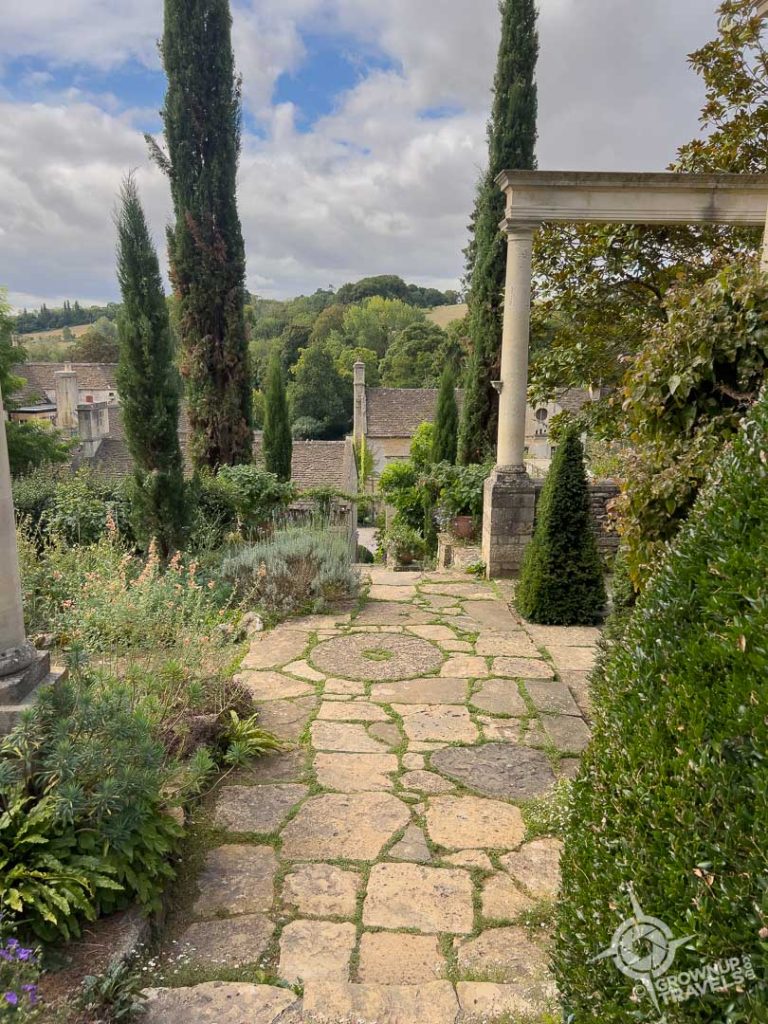
Views from the garden
Creativity and Inspiration. It is not just the beautiful vantage point that makes Iford’s Garden so noteworthy. Exploring the garden takes you outside of England, too, with each level of the garden reflecting different cultural influences that inspired Peto, including both organic and structural elements that are incorporated into the design.

There is definitely an Italianate influence here, as seen in the ‘Appian Way’ paved stone terrace that is lined with columns and ancient Roman architectural fragments and even a statue of Romulus and Remus suckling a she-wolf. No doubt the existing cypress trees that were planted here by the Georgians decades earlier provided more inspiration for Peto, and with his addition of classic statuary, water features and garden structures, these parts of the garden look like they were transplanted from a Tuscan villa.
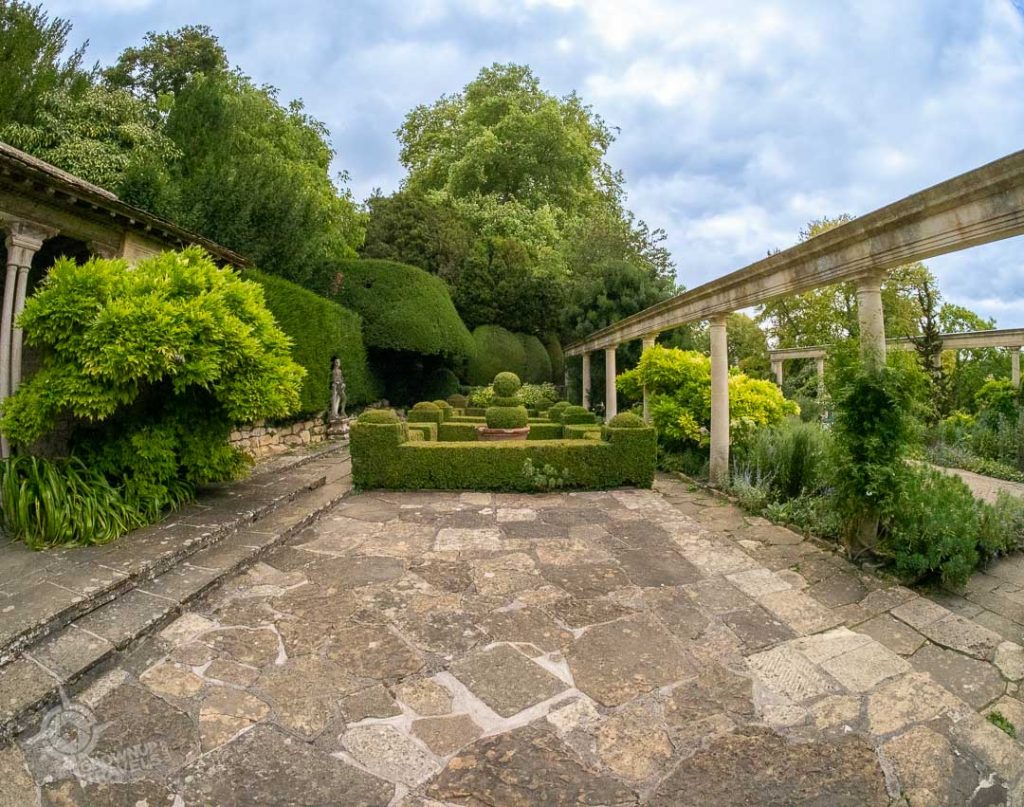
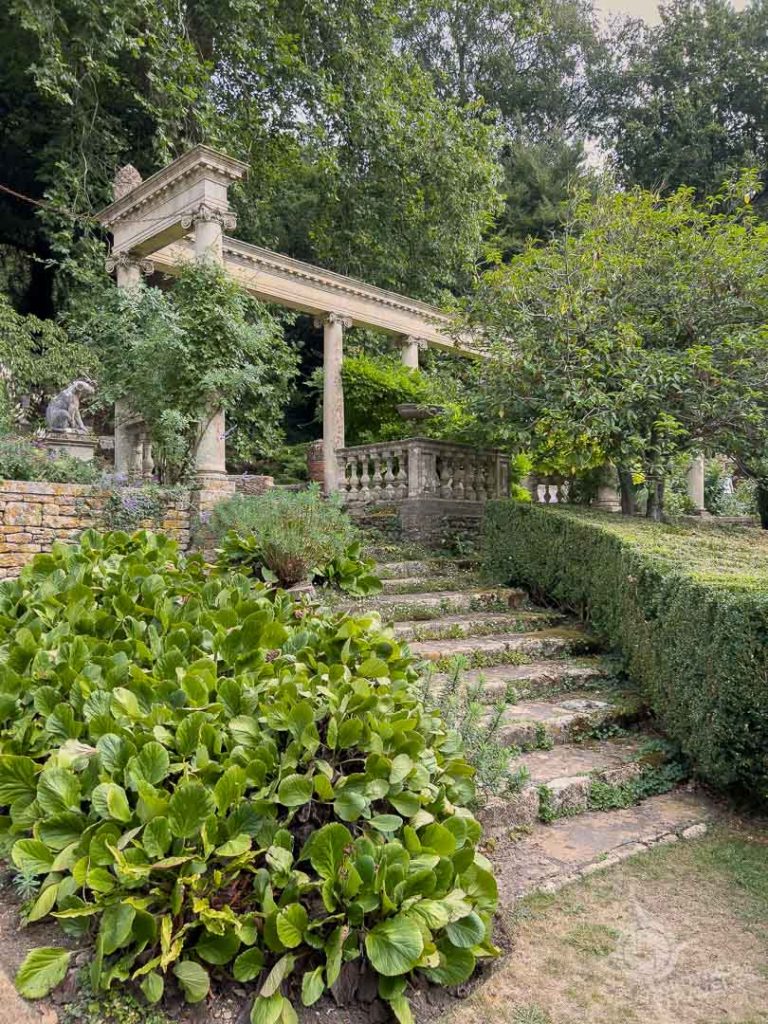
Italian influences take the visitor to the Mediterranean
But there are also classic British elements, too, from the climbing roses that adorn the classical columns flanking the Appian way to the statue of Brittania on the medieval stone bridge at the entrance to the estate. Not to mention the sheep grazing on the opposite hills. Peto was a British designer, after all, and loved what his own landscape could bring to the table too.
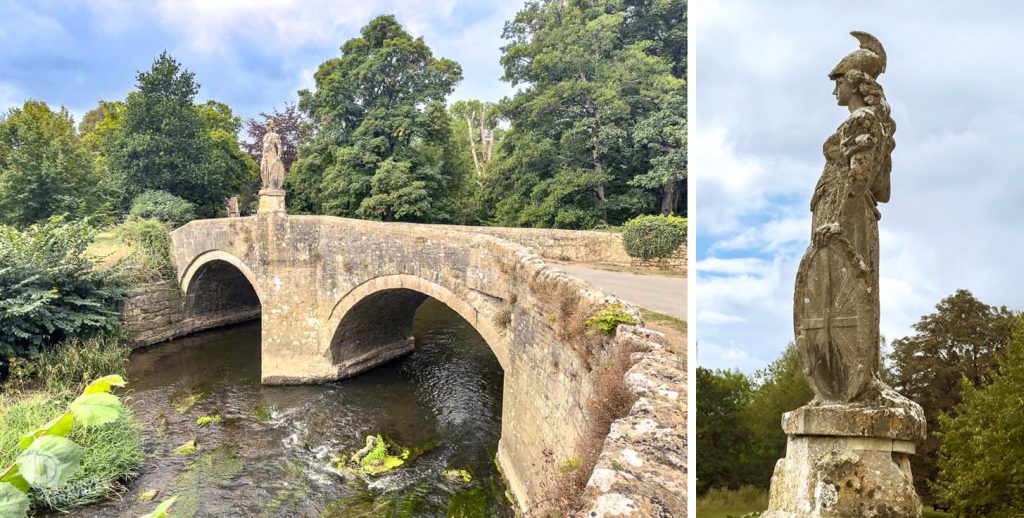
Medieval stone bridge with Brittania Iford Manor Garden
Descending down a curved staircase to a lower terrace there’s a pretty pond filled with water lilies and even some late blooming wisteria, offering a hint of what this place must be like in peak wisteria season. Deeper in there’s a secluded Japanese garden that includes a trickling waterfall, pond and stone lantern. It’s a serene and peaceful enclave that felt nothing like the other spaces we had seen, yet seemed perfectly at home with them nonetheless. This harmonious juxtaposition is no accident, and part of Peto’s grand plan.

What is nice about visiting Iford Manor Garden is that visitors are encouraged to linger to really appreciate everything the garden has to offer. There are no guided tours or time limits and people are free to wander. Although it may not be large by royal standards (think Hampton Court Palace with its 60 acres of manicured gardens), there are pavilions and places to sit throughout the garden to just listen to the sound of fountains or enjoy the views.
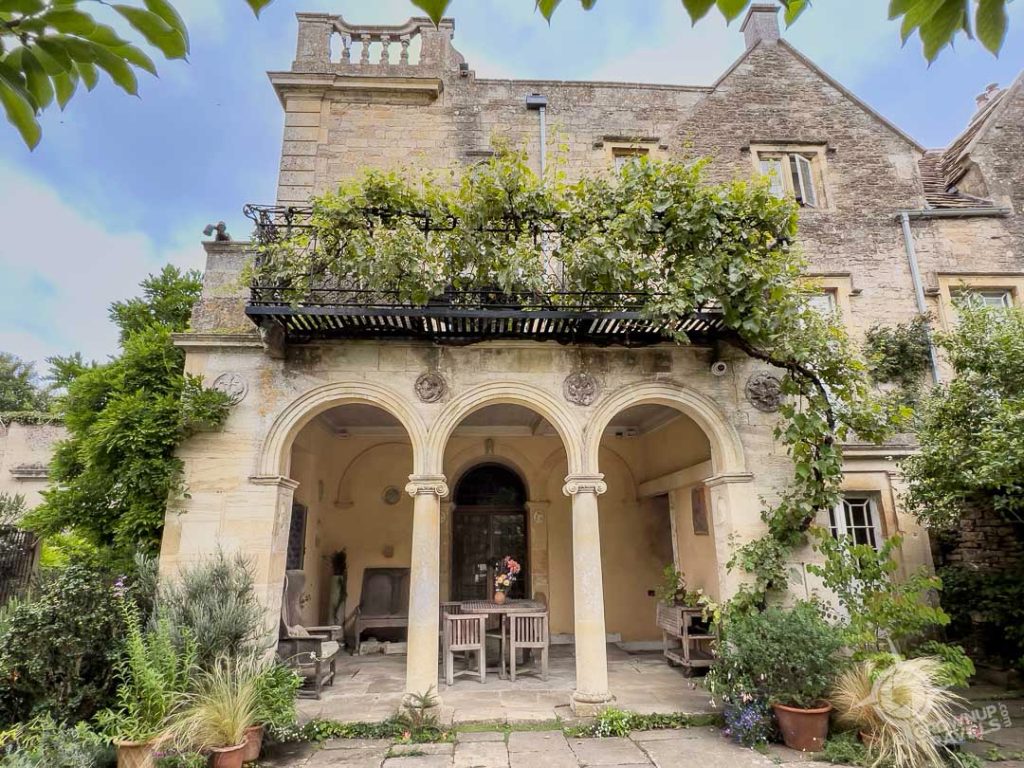
FUN FACT: One of the interesting things about Peto is that he hated symmetry. If you look closely at some of this structures, you will see that they are not 100% square, and some of the architectural details on them are odd-numbered, not even.
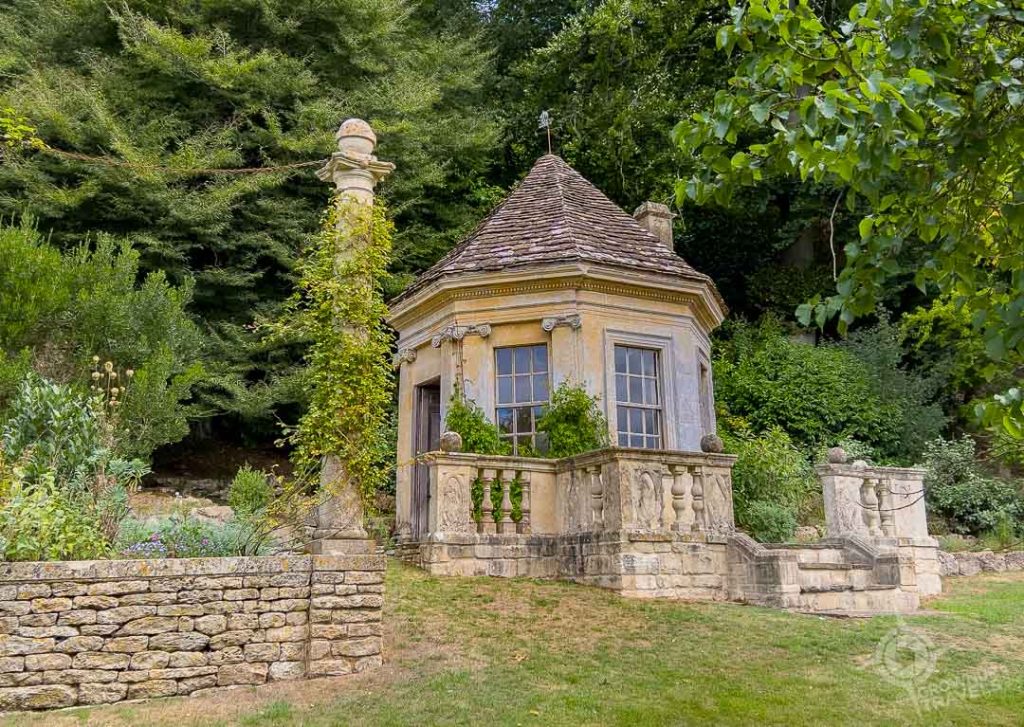
An Award-Winning Garden in Any Season
Henk and I visited Iford Manor Garden in late summer of 2025, at which time it was shortlisted for the Historic Houses’ Garden of the Year award. Having been named Best Garden/Arboretum in 2024 by the Cotswolds Slow Travel Guide, they were hoping for another feather to add to their cap, but unfortunately Iford didn’t take home the 2025 title. However, the garden’s beauty and its unusual ‘international’ character make it a winner even without any formal recognition.
VISITING TIP: The Manor and garden are particularly spectacular in the spring when the wisteria is in full bloom. Apparently, the wisteria vine on the front of the Manor house is one of the oldest in the country (planted in the 1820s), and reason enough to put this place on any garden-lover’s must-visit list come spring. It was certainly reason enough for me to buy a wisteria-in-bloom postcard.

A pretty stained glass window shows how views in the garden change. We saw the August greenery (left) vs spring Wisteria blooms (with my postcard superimposed) on the right.
Another Hidden Delight: an Award-Winning Restaurant
We had no idea when we planned our visit to Iford Manor Garden that we would end up having a delicious meal here as well. After touring the gardens for an hour or so, we went to see what the Cafe and Kitchen had to offer, thinking we would enjoy a croissant or snack on their sunny outdoor terrace before heading out. Instead, we discovered that the Manor operates an award-winning full-service restaurant here, not just a bakery/cafe, so we immediately decided to extend our stay to enjoy a proper lunch.
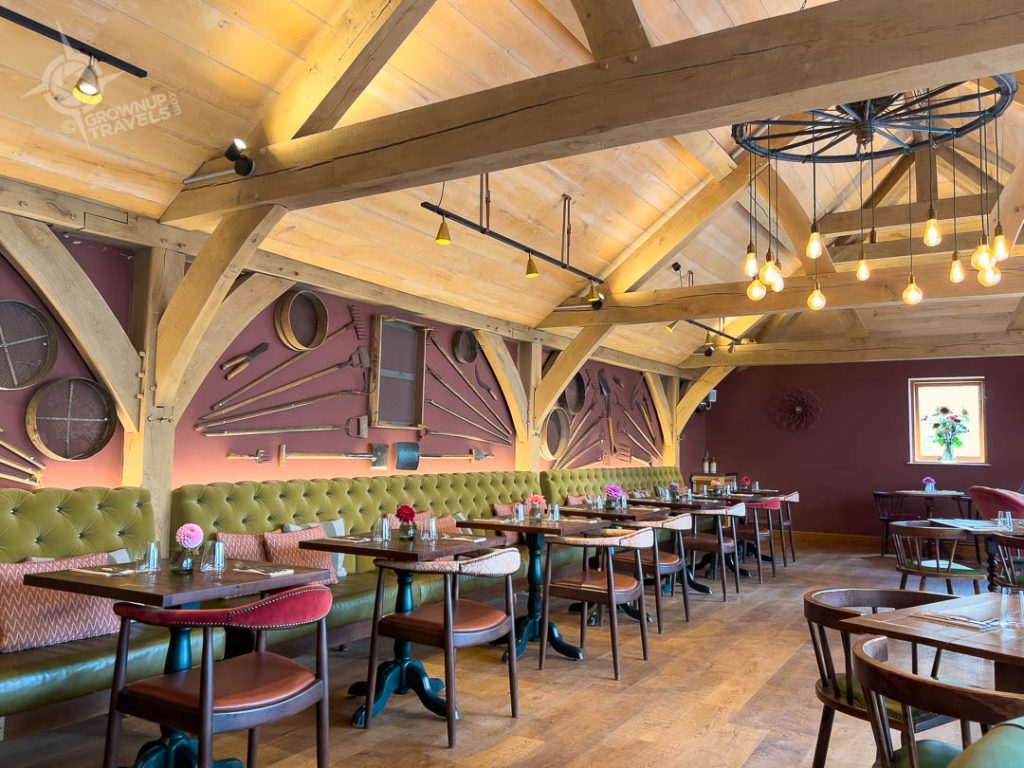
Iford Manor has an award-winning restaurant, too
It was a smart decision, as we enjoyed one of the best meals of our trip, with many of the ingredients in our dishes sourced right from the Manor’s kitchen garden.

Seasonal beet salad and homemade buccatini all’amatriciana! YUM.
It was hard to top off a scenic drive to a secluded valley estate with incredible views and a garden that transported us to other countries. But a restaurant that served up homemade pasta worthy of the Italian-inspired garden beside it? That was the crowning touch from what is truly one of southwest England’s hidden gems.
PRACTICAL INFORMATION FOR VISITING IFORD MANOR GARDEN
When to visit: The Garden is open to the public from the April to September from 11:00 am to 4:00 pm. Advance tickets are recommended to guarantee entry, especially on weekends since the capacity of the garden is limited.
Cost: Adult entry prices for 2026 are listed as 12 British Pounds. Children under 10 are not allowed.
Parking: There is a free parking lot opposite the Manor that was actually staffed by someone when we visited.
DRIVING TIP: If you are continuing south after your visit to Iford, you can avoid backtracking up that same hill by taking another equally steep and narrow (but shorter) country road from the Manor to the A366 and continue on from there. (We found shorter is better, when it comes to super-narrow English roads!)
The Restaurant is open for lunch on Friday, Saturday and Sundays throughout the year, but best to book ahead especially for Sunday Roast Lunch. The Cafe is open all day from Wednesday or Thursday through Sunday in the summer/winter months. Check the website to confirm hours and reservations.


Jane is an award-winning travel writer and photographer and an accredited member of the Travel Media Association of Canada (TMAC). In their annual awards competition, TMAC named GrownupTravels.com as the Best Self-Published Travel Blog in 2025 .
She is also a member of the North American Travel Journalists Association, and a freelance travel writer contributing to both print and online publications.






Subscribe and you'll never miss an update!
Join our mailing list to receive the latest news and updates from Grownup Travels. (We keep your email STRICTLY private)
Thank you for subscribing to Grownup Travels!