
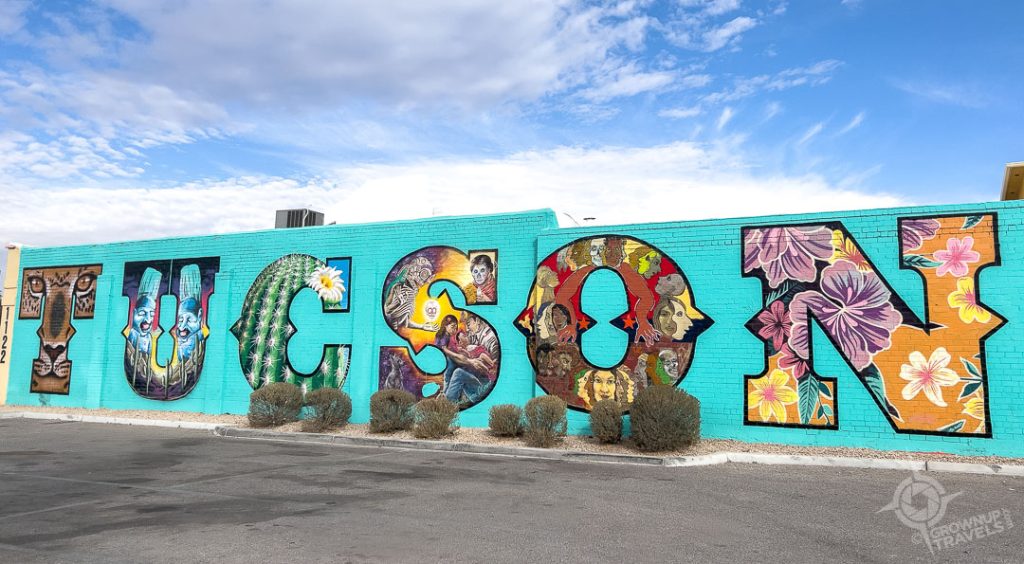
A different artist painted each letter of this TUCSON mural on 1126 N. Stone Avenue
Visitors who have been to Tucson, Arizona may already know that there is a vibrant arts scene here, a description that the city takes great pride in. But the city’s love for all things art-related extends far beyond traditional media or venues, like the Tucson Museum of Art, or its Museum of Contemporary Art. Both museums are of course well worth visiting, but there are other events and places that celebrate more of what makes Tucson unique. Its culinary arts are showcased at events like the SAVOR food and wine festival which reflects Tucson’s UNESCO designation as a City of Gastronomy, and the city’s annual Gem and Minerals Show is the world’s largest of its kind, and features all kinds of jewellery and art pieces as well as the raw materials – which are works of art in themselves.
But it is the unexpected places where Tucson’s artistic side shines, too, a few of which Henk and I discovered when we were visiting – sometimes by accident, sometimes intentionally – but each with its own unique appeal. Here are a few of those more unexpected places where you can discover art in Tucson, and a little farther afield.
The City as a Canvas
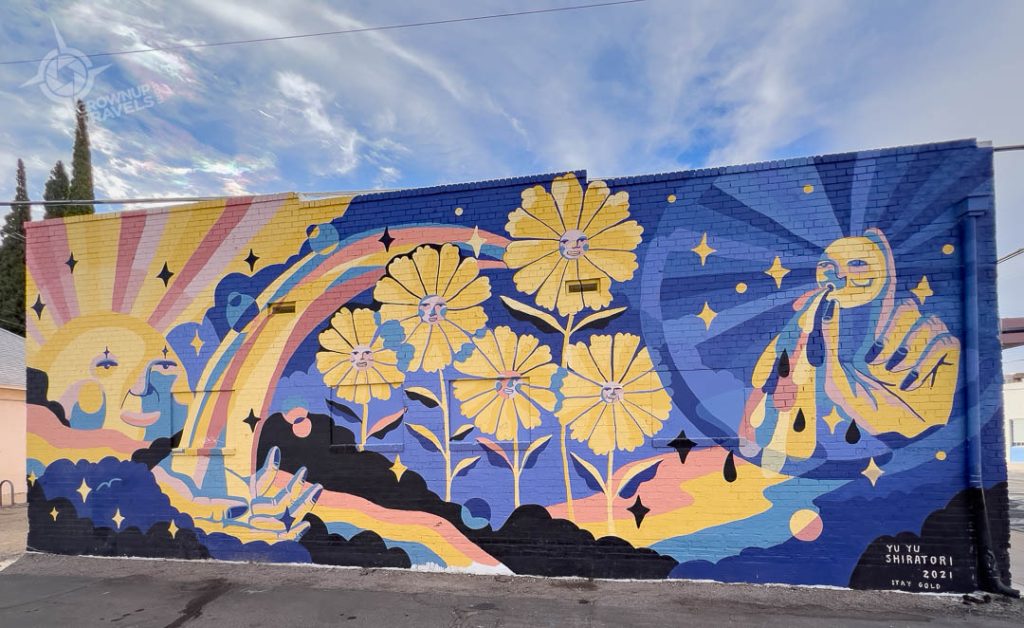
“Stay Gold” Mural by Yu Yu Shiratori 432 N Hoff Ave
Like most cities, Tucson has its fair share of street art, with both sanctioned and ‘organic’ artwork that decorates the sides of many of its downtown buildings and structures. (For the record, we have been on many street art tours, and generally prefer commissioned pieces that are executed with the permission of the property owners, since not every free-wheeling artist who picks up a can of spray paint is the next Banksy.) That being said, Tucson has done a great job of promoting local artists by giving them the opportunity to express themselves on some of the largest canvases available, and there’s even an online map that helps visitors find them. A good place to start is East Broadway Blvd where we found a few murals that were very impressive, but there are examples scattered all around the greater downtown area.
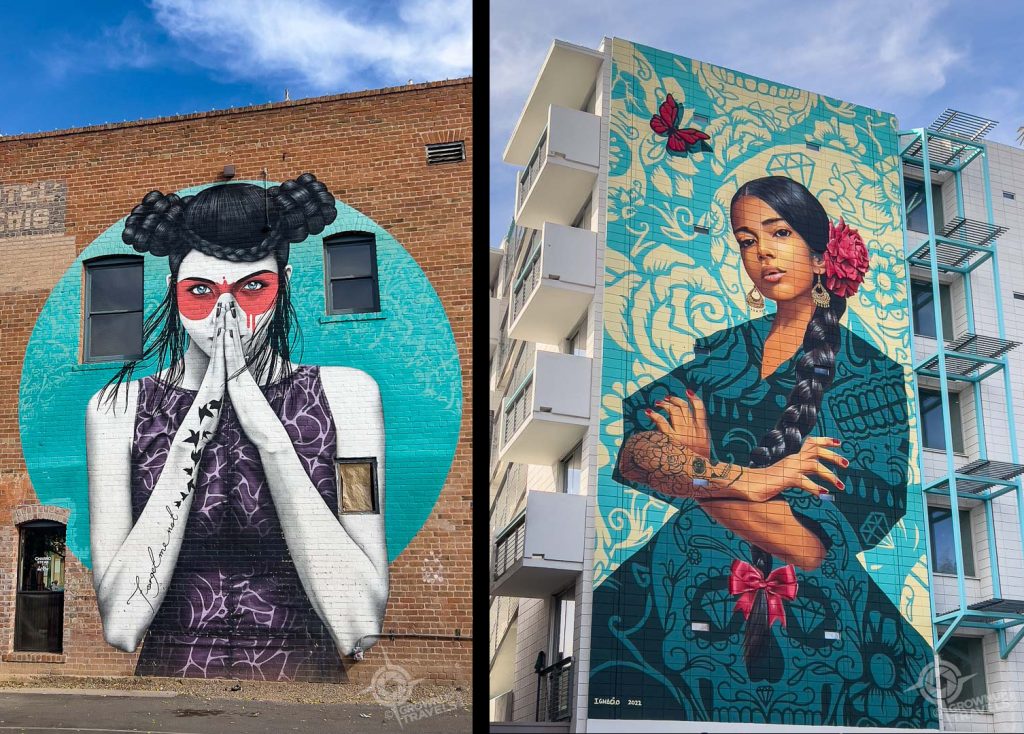
Vergiss on the left by Fin Dac at 178 E. Broadway Blvd. and a 6-story tall “La Mujer Empoderada” (Empowered Woman) by Ignacio Garcia at 1 N. 5th Avenue
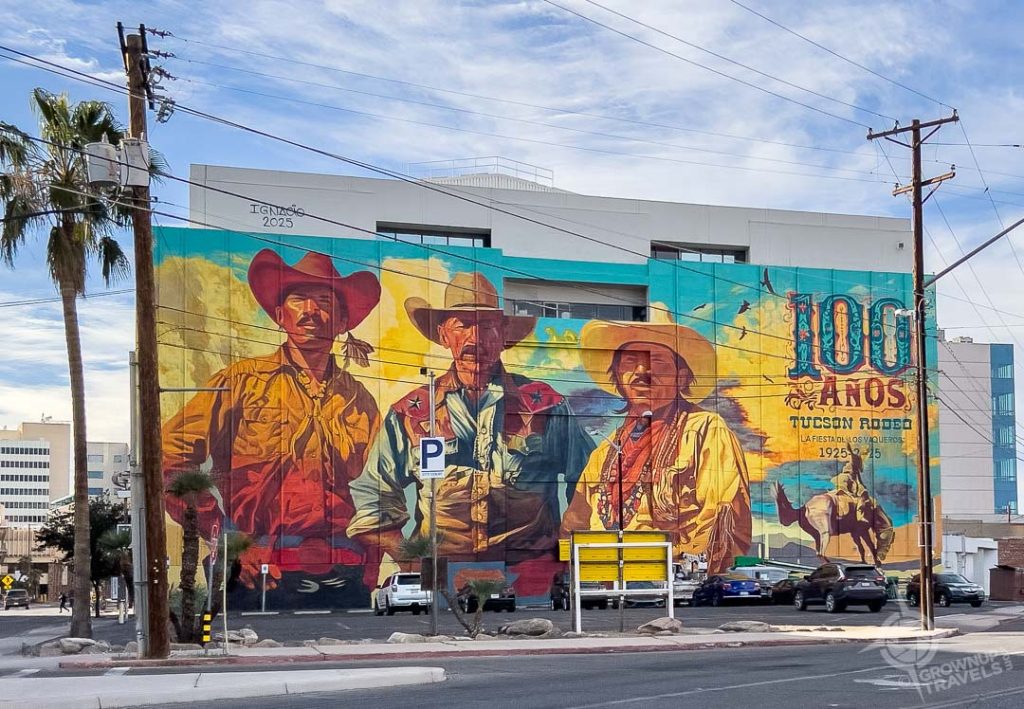
New for 2025: another mural by Ignacio Garcia at 103 East Alameda Street celebrating 100 years of Rodeo in Tucson
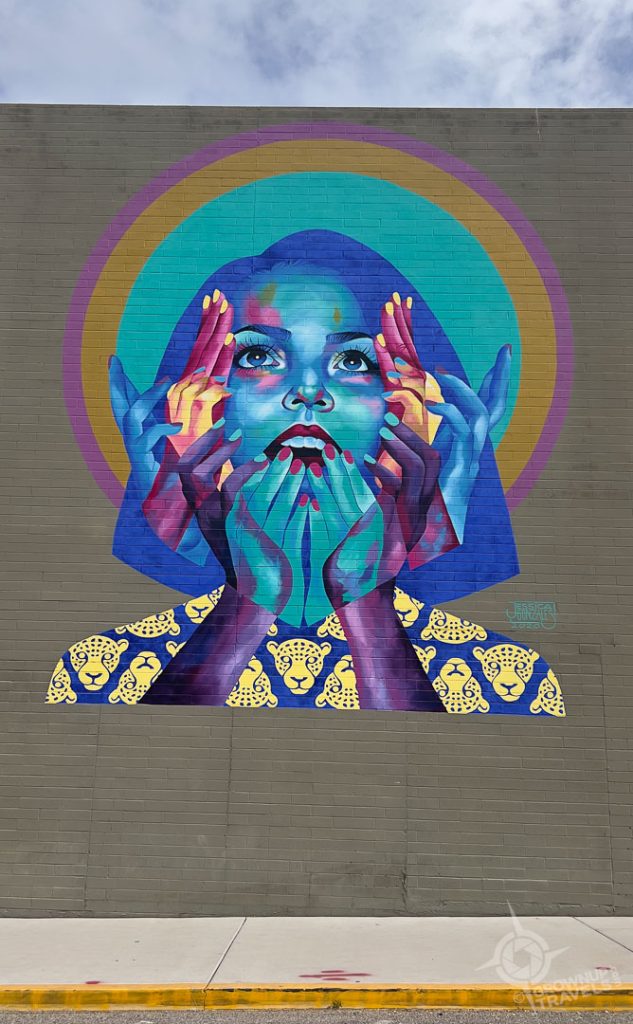
Jessica Gonzales mural at 3233 E. Speedway’s Loft Cinema
TIP: Although the murals map on the Tucson tourism website is great for identifying mural locations, we did find the navigation a little clumsy on our phones. And some of the murals may be out of date or new ones may be missing. That being said, it is still helpful to get a sense of where to go in the city. You can also check out this site which may be more current with recent additions.
Art on the Avenue
Tucson’s 4th Avenue is probably the most creative street to explore in the city with plenty of interesting clothing boutiques, cafes, quirky spiritual shops selling gemstones and crystals, and music bars. They also have their fair share of murals, including one on the Goodwill store that struck a particular chord with me with its fanciful butterfly wings.
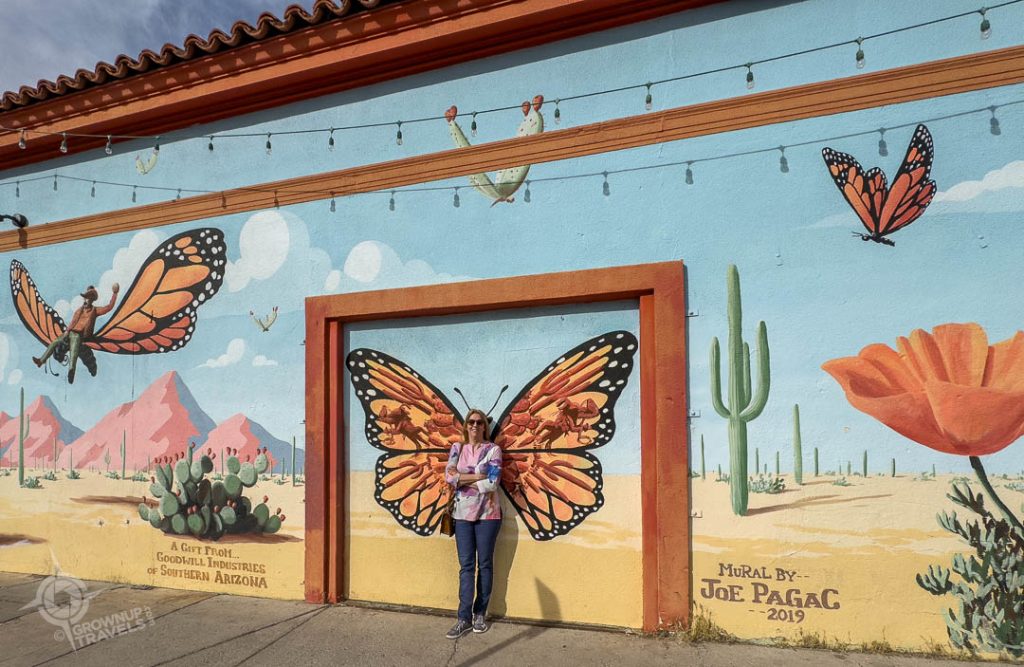
Murals for Good: This Joe Pagac piece is on the downtown Goodwill Store
Even the streetscape on 4th Avenue reflects creativity, with a few expected installations (love locks) and a few unexpected ones (like an Easter Island Moai over the entrance to The Hut bar that serves up brunch with a side of classic rock and roll).
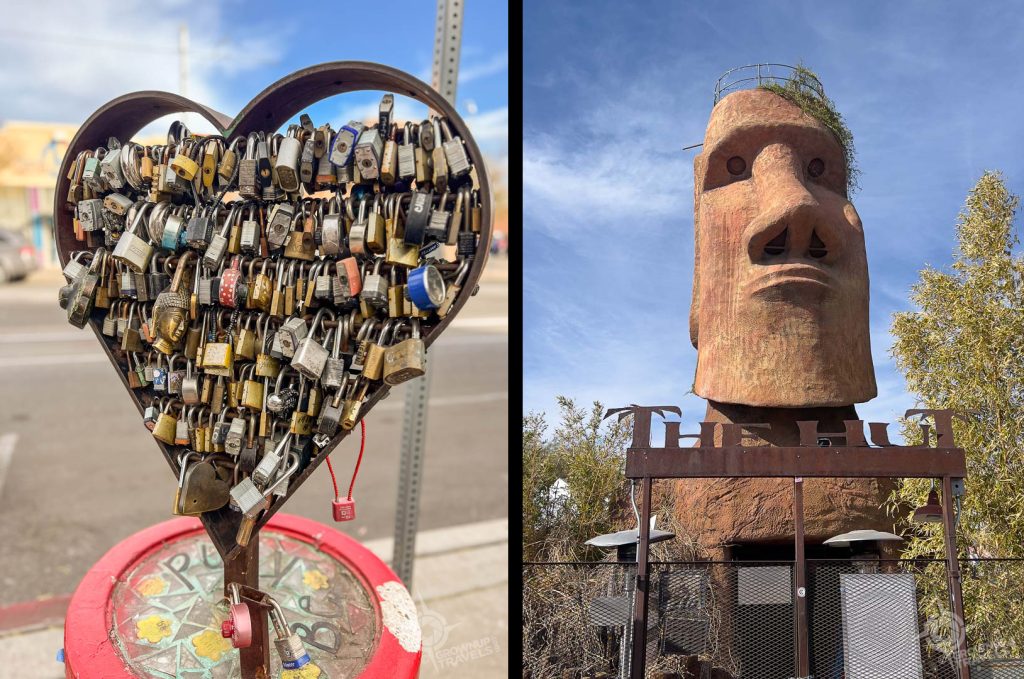
Love locks and a Moai at The Hut on 4th Avenue, Tucson
For more refined libations with a side of art, there’s also the nearby Revel Wine Bar that has its own overscale artwork on the wall that contributes to the funky modern vibe in the bar.
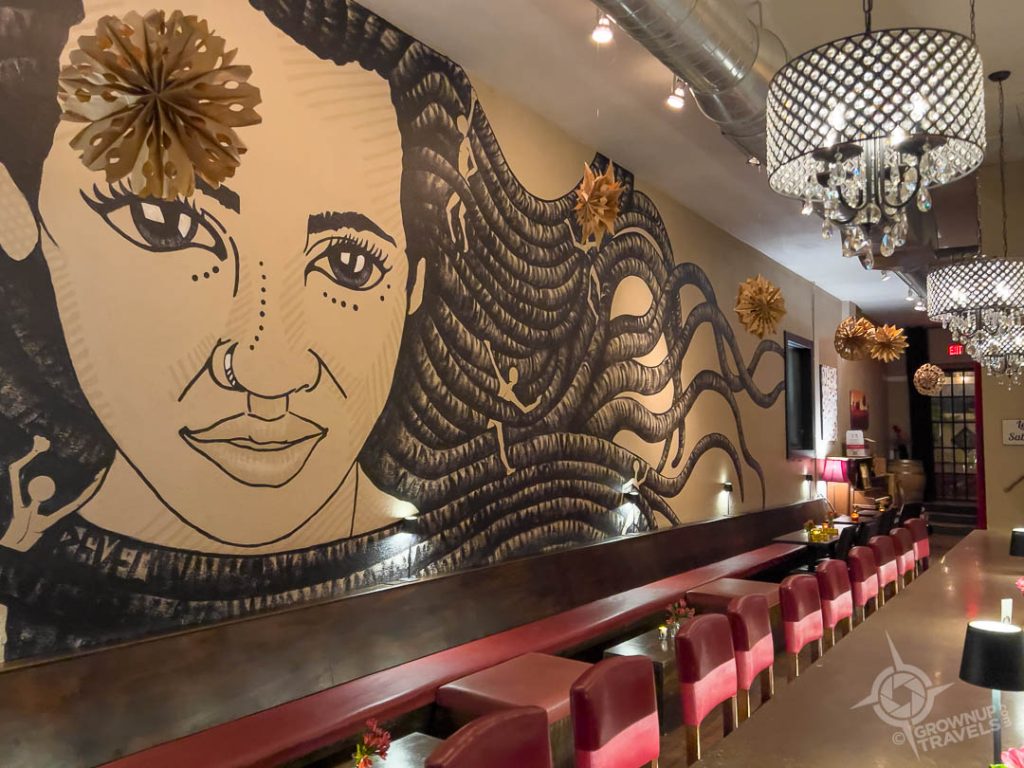
The striking mural inside Revel Wine Bar
TIP: We highly recommend Revel for a great selection of international wines by the glass or craft brews.
The DeGrazia Art Gallery
When it comes to unconventional art galleries, Tucson’s DeGrazia Gallery in the Sun certainly fits the bill, and is very much a reflection of the artist who built it, Ted DeGrazia. DeGrazia built this studio complex at the foot of the Catalina mountains after he had gained a considerable reputation for his art, and needed to create a place to live and work that provided some isolation and inspiration.
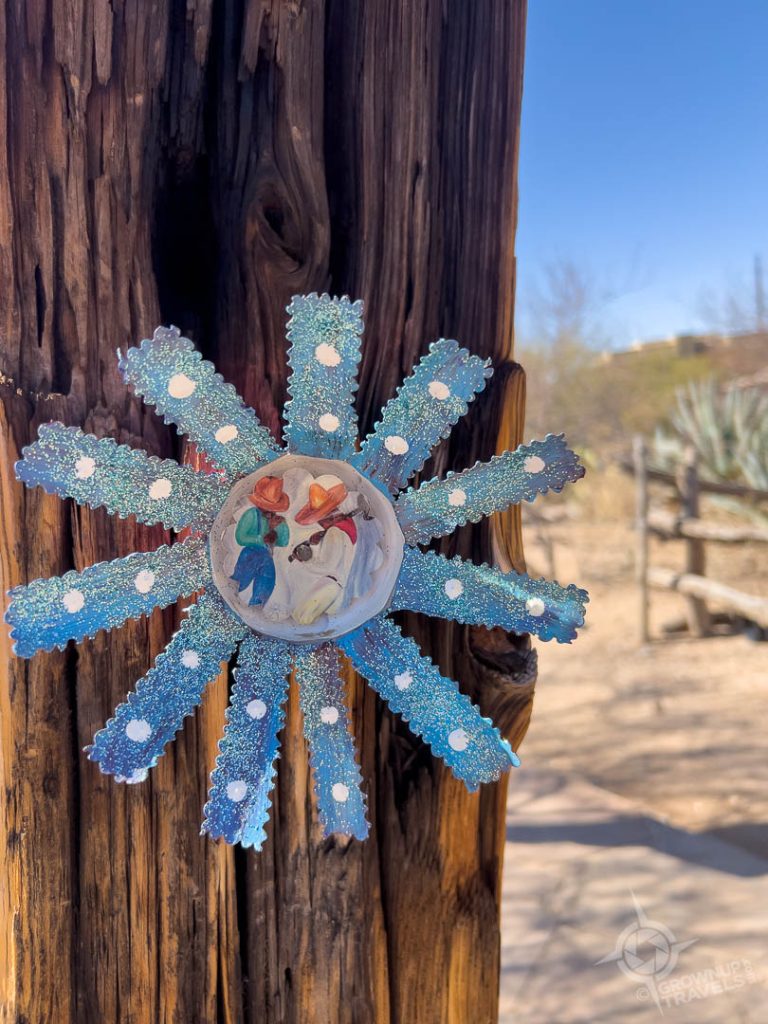
An ‘exploded’ tin can flower is one of many decorating the walkway at DeGrazia gallery Tucson
Although DeGrazia’s career path to success was a long, circuitous and often difficult one, he became a controversial figure not so much for his artwork but for something he did in 1976 after he had become a well-established and recognized artist. After 50 years of painting, DeGrazia had been hoping to leave his existing portfolio of artwork to his heirs, but the government insisted on valuing the art at its current estimated value, approximately $250,000 at the time. This would have left DeGrazia’s beneficiaries with a huge tax burden to shoulder.
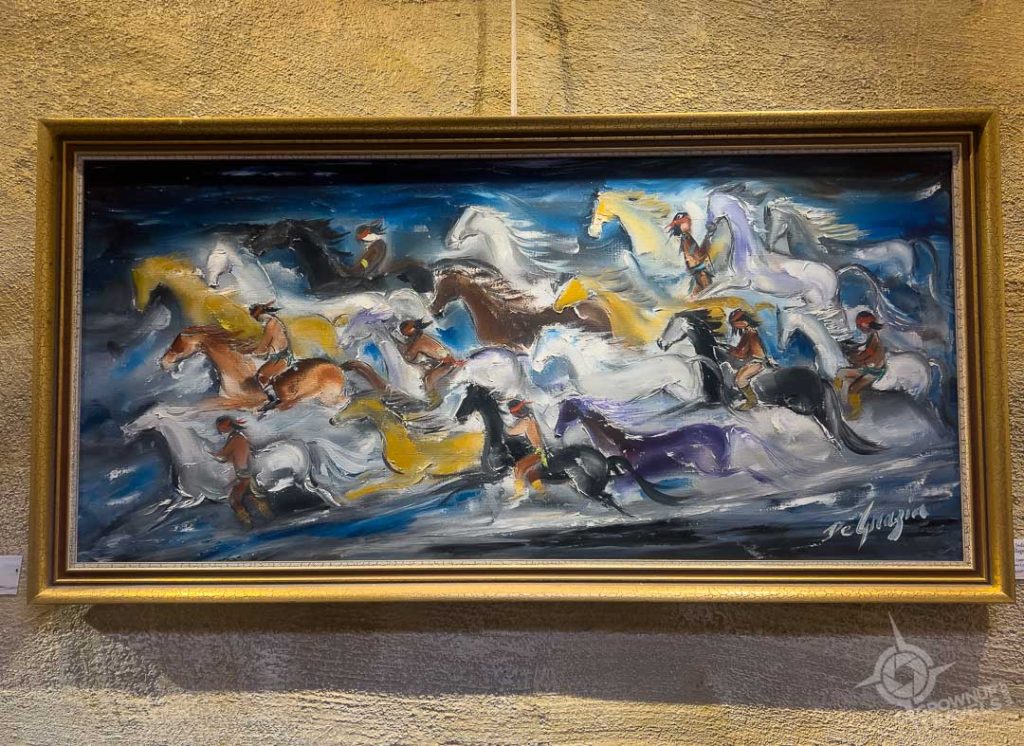
One of DeGrazia’s many horse paintings
Frustrated and angry, DeGrazia drove 100 miles to the foot of the Superstition Mountains, and as an act of protest, set the whole lot of paintings, watercolours and sketches ablaze. Some people suspect that this was as much a publicity stunt as a protest, but regardless of the motivation, it remained a painful memory for DeGrazia, who died six years later in 1982. Fortunately, his surviving works have since been collected, curated and are now on display in his former home, now the DeGrazia Gallery in the Sun.
Today, the gallery is a casual space made up of several connected rooms that display DeGrazia’s paintings, drawings and even textiles, many pieces of which reflect his love for the Native American people of the region and the myths and legends that were part of their folklore.
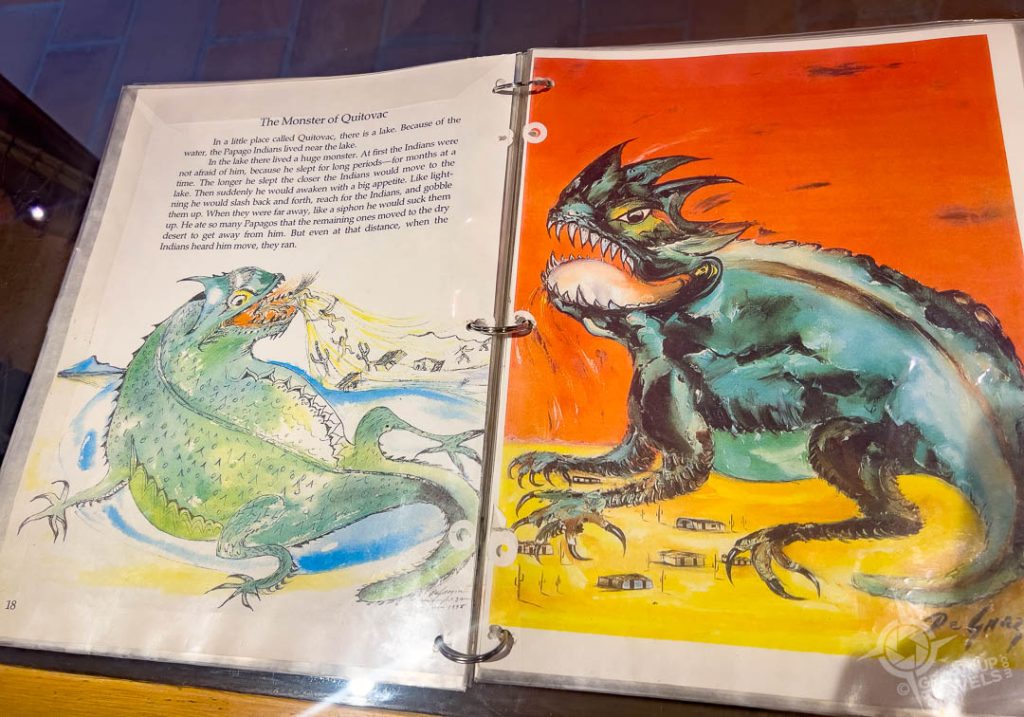
DeGrazia’s visual interpretation of local indigenous myths
Visiting the DeGrazia gallery is as much about exploring the compound as the artwork within it. Even in a region known for its adobe-style construction, the main gallery building is unusual and quirky, from the asymmetrical front doors to the hand crafted floors made from 4-inch thick cholla cactus slices that were embedded in concrete.
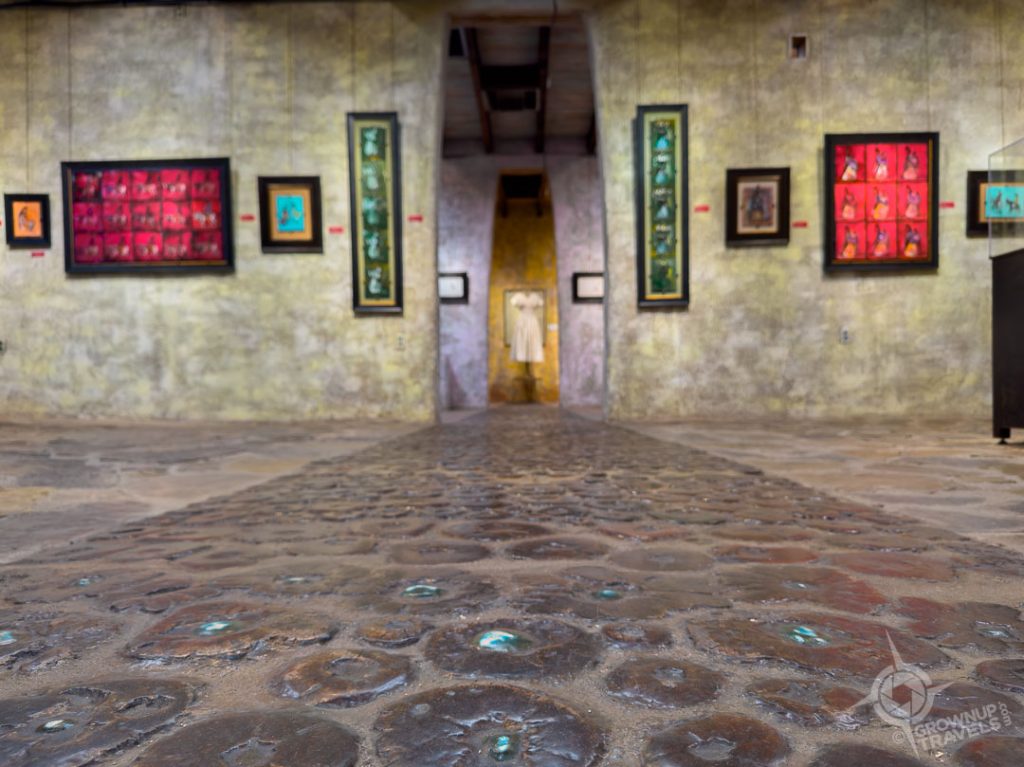
DeGrazia gallery floor made from cholla cactus slices
Outside, DeGrazia also built a chapel, the Mission in the Sun, which was often used as a marriage venue for friends of DeGrazia, many of whom were Native Americans, and features interesting murals on the walls and an open-air skylight that floods the altar with light.
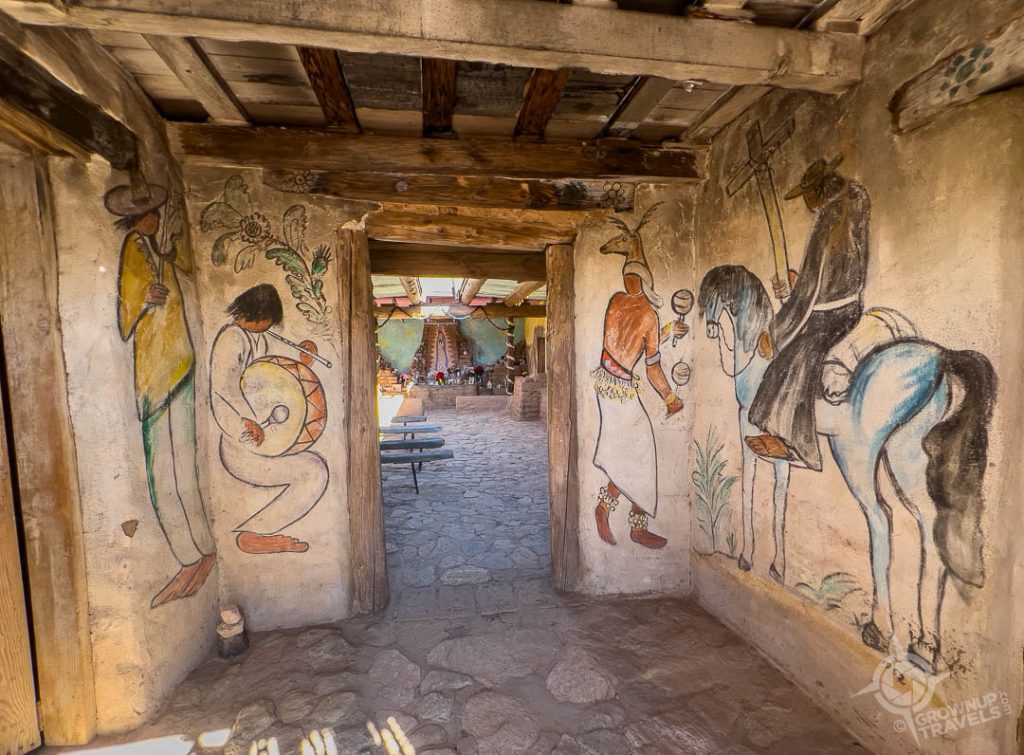
Murals in the entrance to the chapel
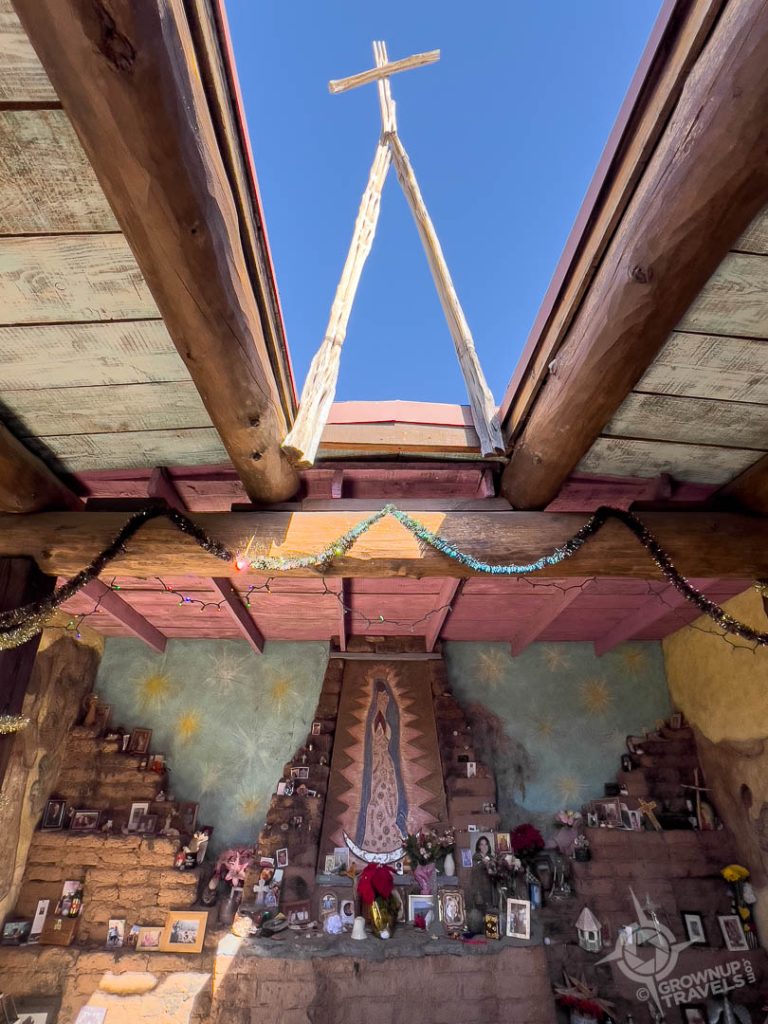
If you are looking for an unusual art gallery that is about more than just the artwork contained within it, the DeGrazia Gallery in the Sun is definitely a one-of-a-kind venue that is worth exploring both inside and out.
Tucson’s Mini Time Machine Museum
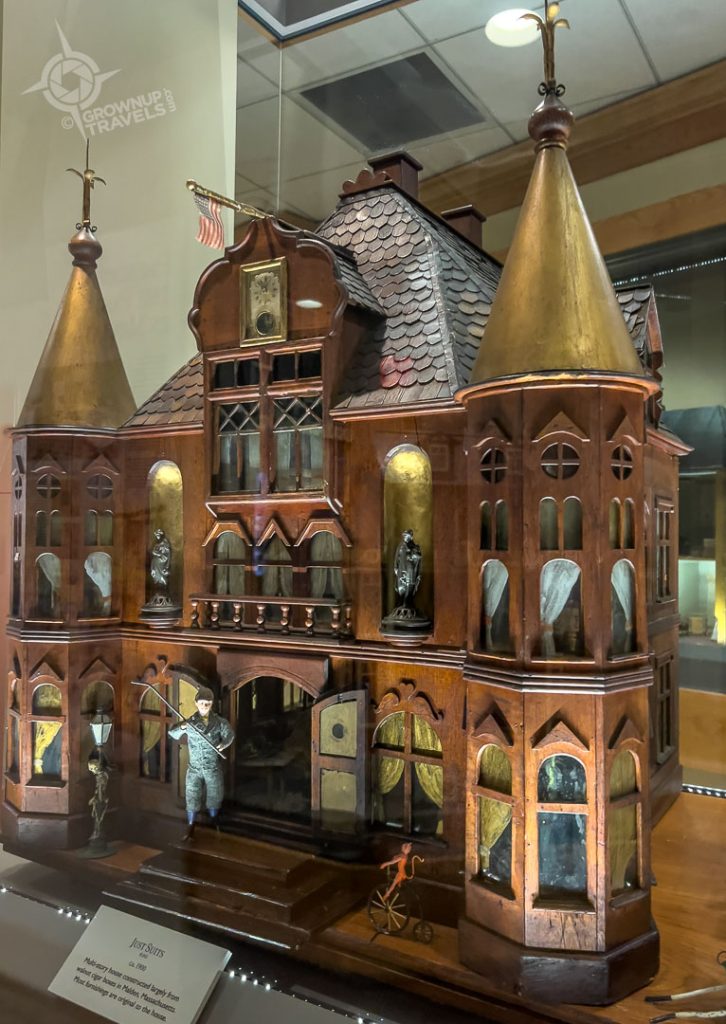
This mansion is made entirely from “Just Suits” brand wooden cigar boxes
As a huge fan of miniatures (and amateur artisan myself), I’ve enjoyed visiting some pretty impressive miniature attractions (like Little Canada in Toronto), so I wasn’t sure what to expect from this Tucson museum. I was, however, very pleasantly surprised by this large, modern, purpose-built museum that takes its artworks and subject matter as seriously as the artists do.
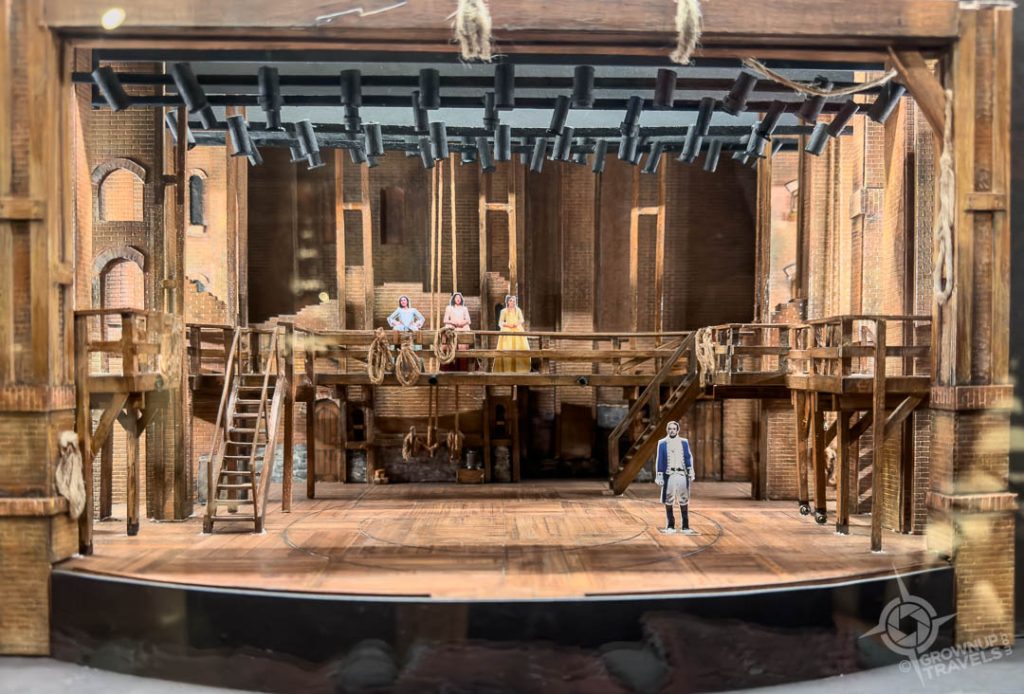
A miniature set for the Broadway musical Hamilton
There are 3 main galleries inside the Mini Museum that contain their permanent collections, focusing on different aspects of miniature crafting, with something that will appeal to everyone. The Enchanted Realm features whimsical creations that include fairy houses, haunted mansions, and even an extensive Christmas Miniature Village section.
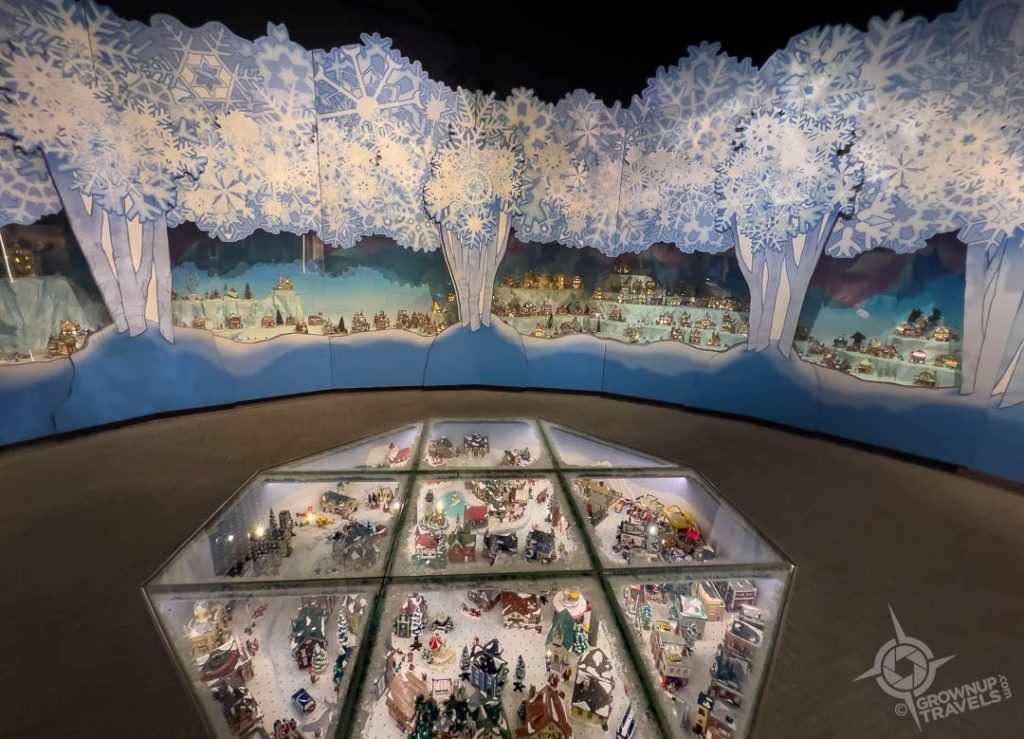
Dept 56 Snow Village exhibit at Mini Museum Tucson Arizona
The History Gallery contains vintage pieces that includes a large selection of dollhouses, as well as model ship builds.
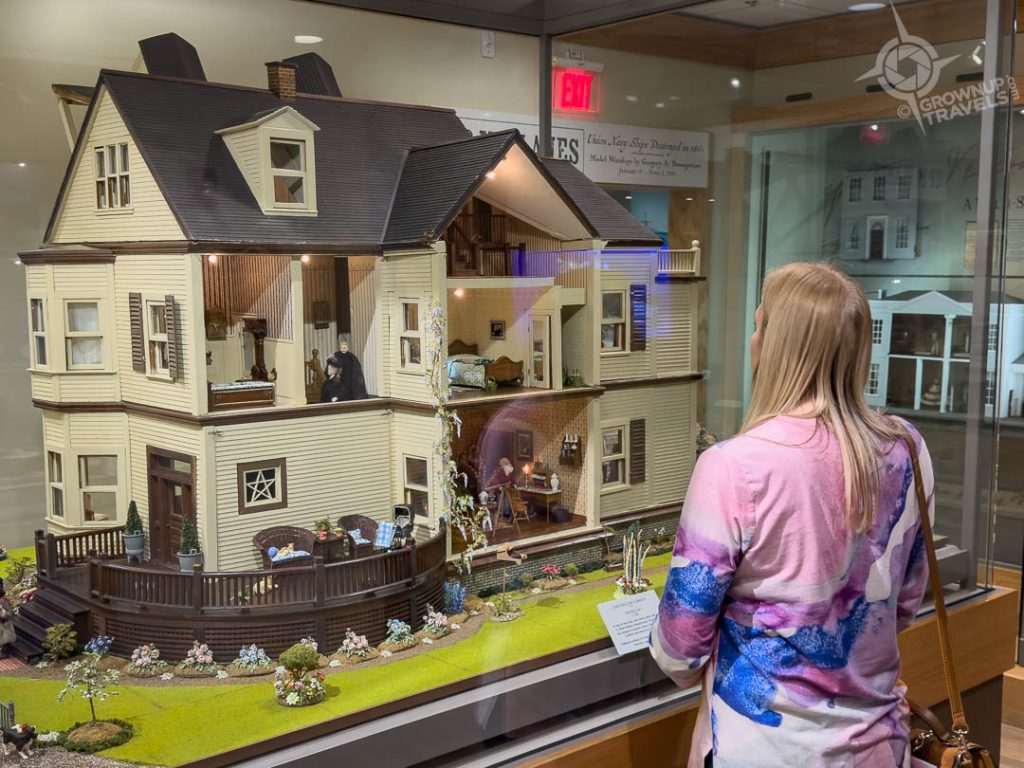
Traditional Dollhouse at the Mini Museum Tucson
The Contemporary Miniatures section contains some mind-bending miniatures sculpted by miniature artist Salavat Fidai from the graphite inside a pencil!
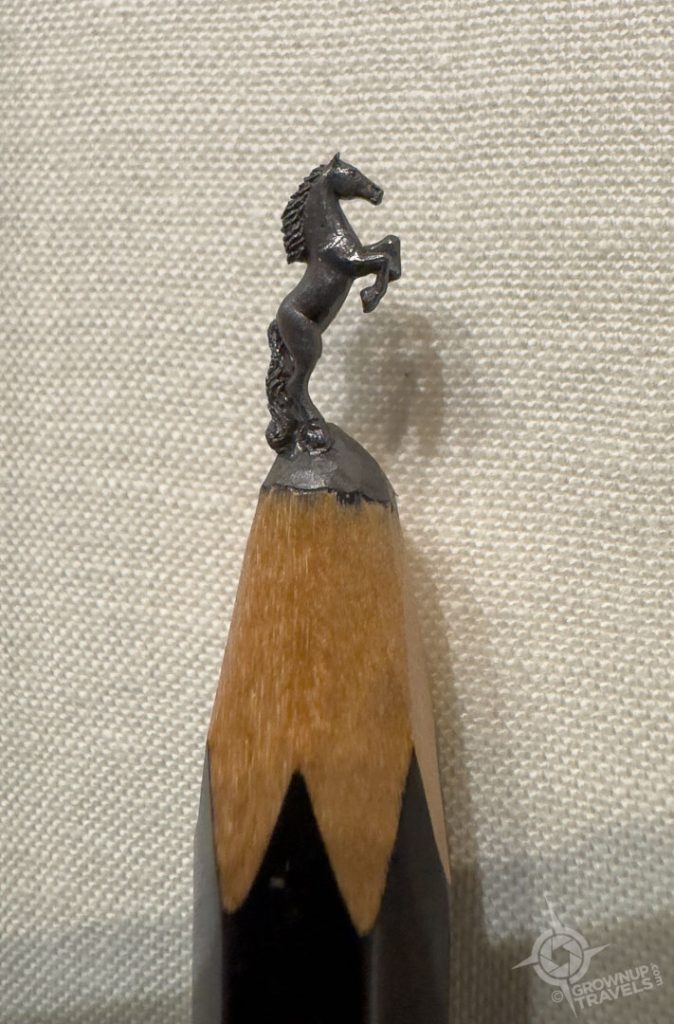
Salavat Fidai pencil micro-mini horse sculpture at Mini Museum Tucson
And then there is Château Meno, a 30-year passion project created by Charlotte Schoenbach between 1940 and 1971, and named after her husband, Meno. It features her imaginative vision of what an opulent European chateau could look like. The structure is massive and intricately detailed, featuring luxuriously gilt and mirrored rooms, inspired by a wide variety of historical mansions that Charlotte researched in depth.
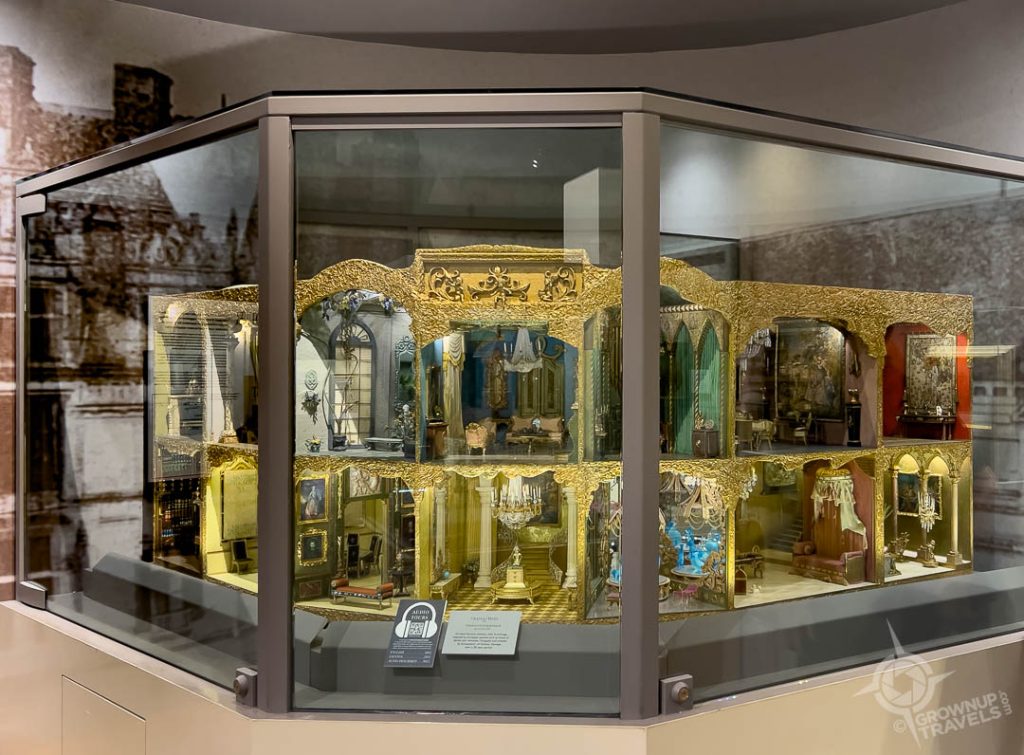
Chateau Meno, a 14-room Rococo palace
When I asked one of the Museum staff how difficult it was to have the mansion shipped to them, they told us that the donors had to cut a hole into the side of the house in order to remove the Château! (Well worth the effort, I say.)
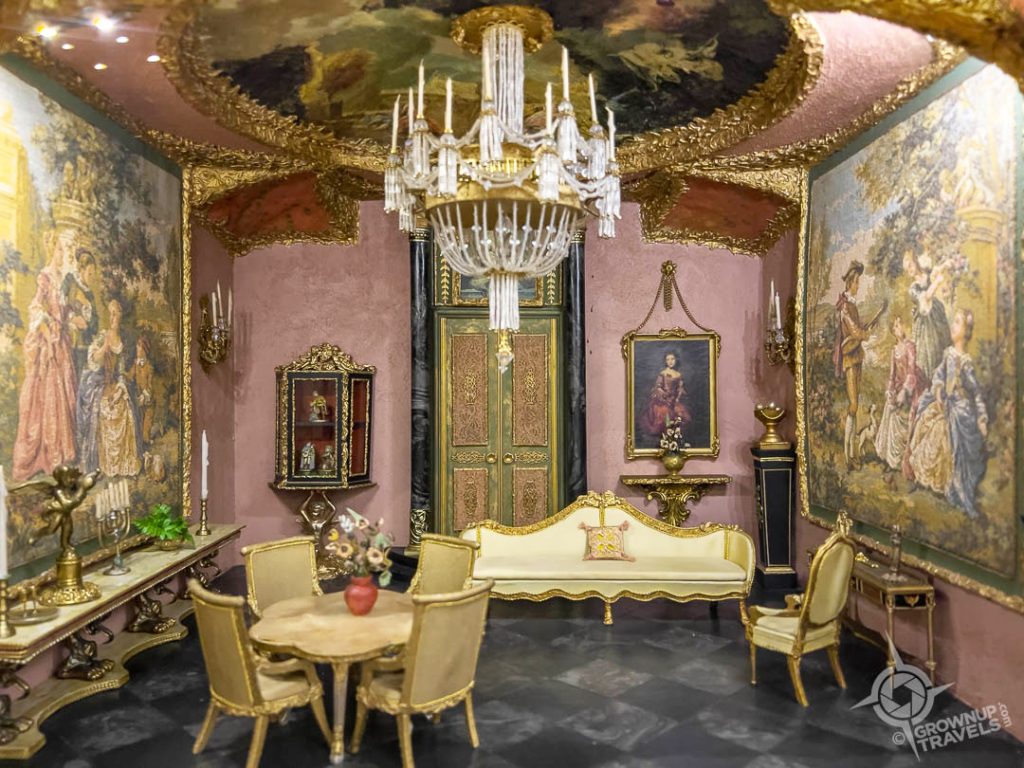
An opulent room at 1/12 scale inside Chateau Meno
TIP: In addition to their permanent Collections, the Museum hosts temporary exhibitions that change from time to time, so check the website to see what’s on during your visit.
“The Sistine Chapel of the Southwest”: San Xavier del Bac Mission
When most people think of the Missions of the southwestern United States, they probably picture a relatively austere building, albeit with nods to Spanish Colonial architectural details (think stucco walls and arches and pillars around a courtyard). But the Mission of San Xavier del Bac, just 15 minutes south of Tucson is much more elaborate, with Spanish Baroque details and elements inside and out that set it apart. The dramatic decoration on the interior, however, is its crown jewel and has earned this church the description “the Sistine Chapel of the Southwest”, not just because of the murals that adorn the walls, but the sculptural elements as well.
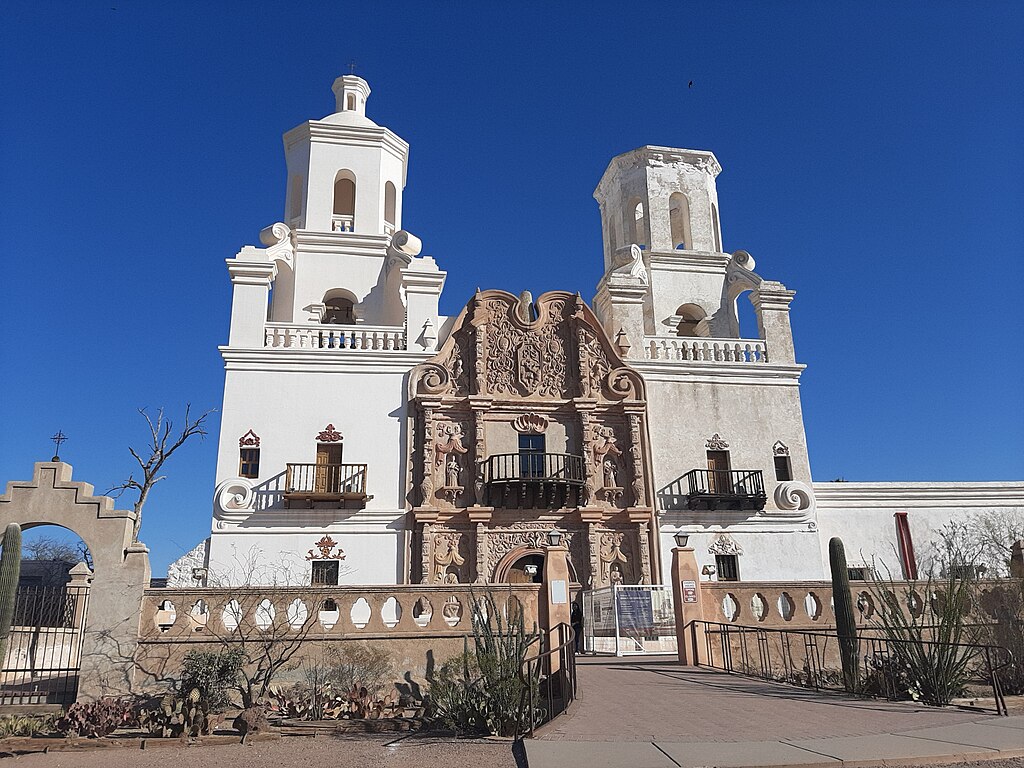
San Xavier del Bac Mission *Note: the facade is undergoing restoration in 2025 and beyond so there may be scaffolding up when you visit.
At first glance, the pristine whiteness of San Xavier’s exterior stands out in sharp contrast to its desert surroundings, which has earned the church another nickname, the ‘white dove of the desert’. The elaborately carved central Retablo Facade with its warm earth tones makes a striking contrast against these white asymmetrical white towers.
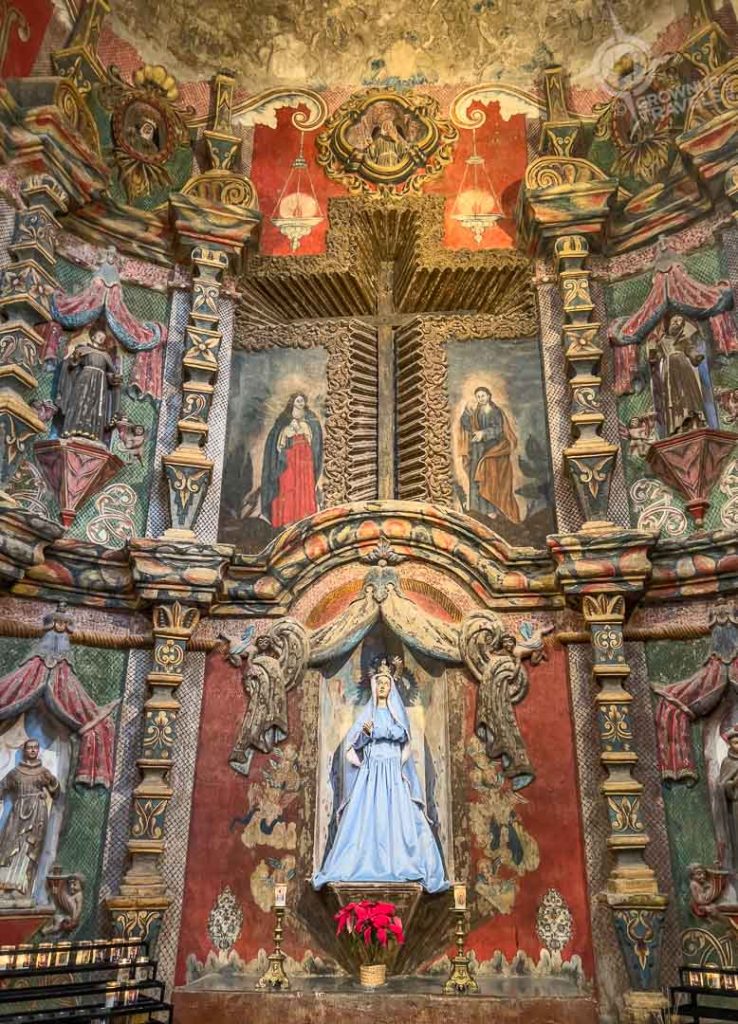
Interior decoration in San Xavier is more than a little extra!
The interior is even more impressive, however, with vibrant art covering the walls, ceilings, and side chapels, along with sculptures and gilt architectural details that fill the entire space from floor to ceiling. There are even tromp l’oeil elements, like faux doors and elaborate curtain motifs framing the paintings of the saints.
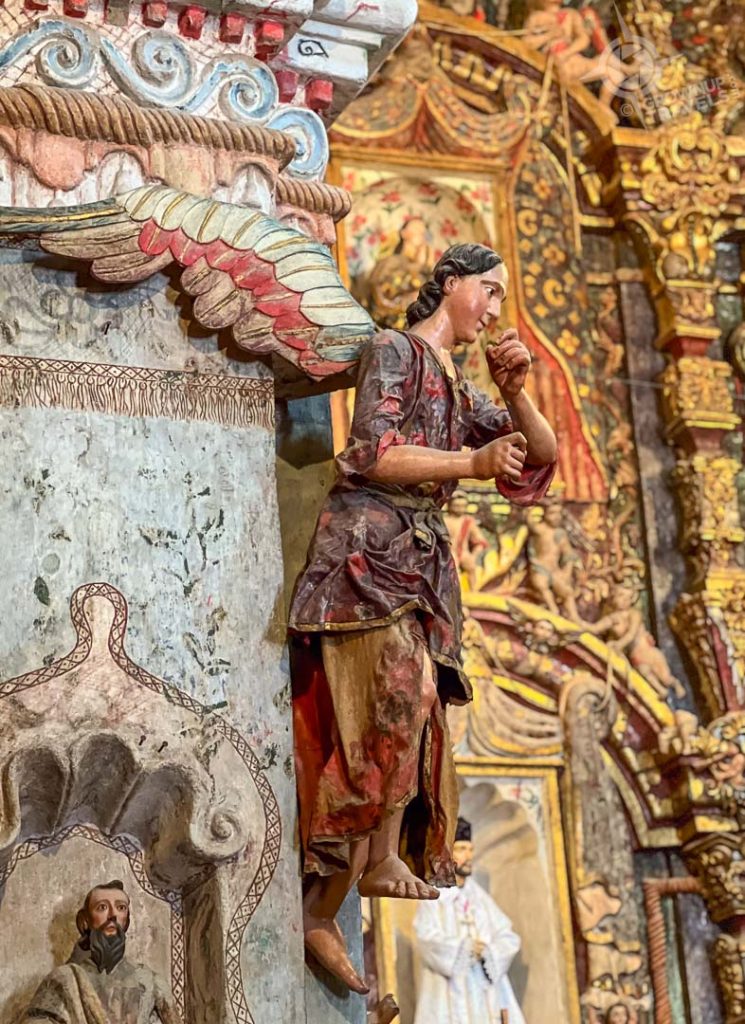
This integration of the spiritual art with the architecture may have been what inspired the comparison to the Sistine Chapel, or perhaps it is just the fact that it is such a visual feast for the eyes that you don’t know where to look to take it all in.
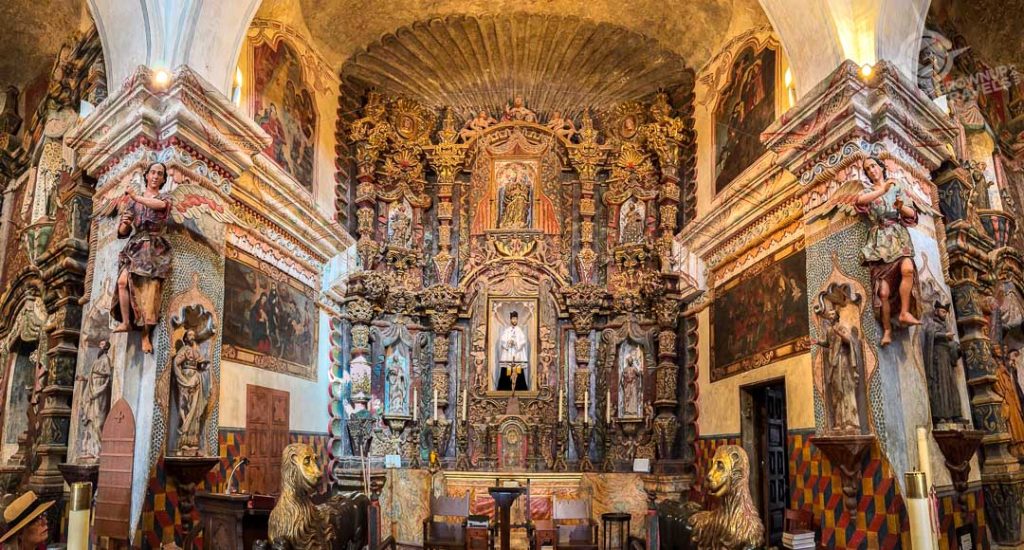
Main altar view of San Xavier del Bac with statue of founder Father Eusebio Francisco Kino at the centre
Whatever the inspiration for the comparison, Mission San Xavier del Bac has been revered as an architectural, historical and spiritual wonder since its completion in 1797. To this day it remains the oldest intact European structure in Arizona, earning it another designation as a National Historic Landmark in the United States, and all in the middle of the Arizona desert.
The Tiny Town of Tubac: an Art Mecca
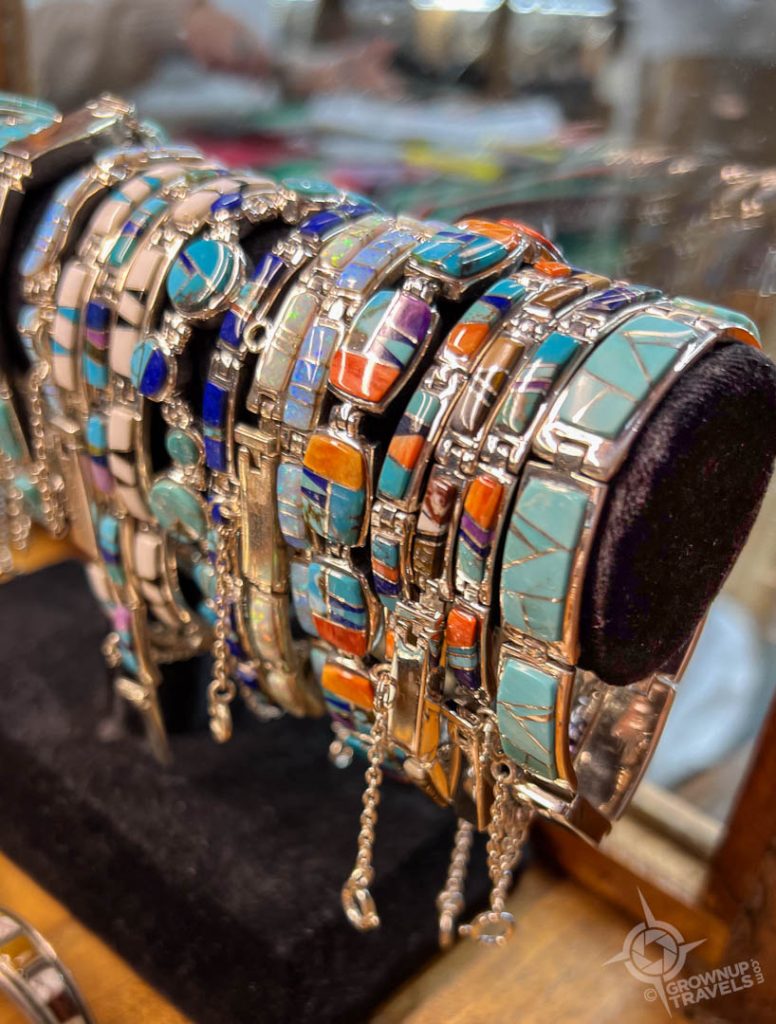
You can find vintage and modern Native American jewellery at Old Presidio Gallery, Tubac Arizona
Much of the artwork here reflects the Southwest, its landscape, people and wildlife, but this is the real deal, not the kind of souvenirs and fridge magnets you might pick up in an airport gift shop. There are contemporary art galleries, more traditional ones, working studios that provide space to up-and-coming artists, and galleries and stores that feature some of the most respected Native American artists in the U.S.
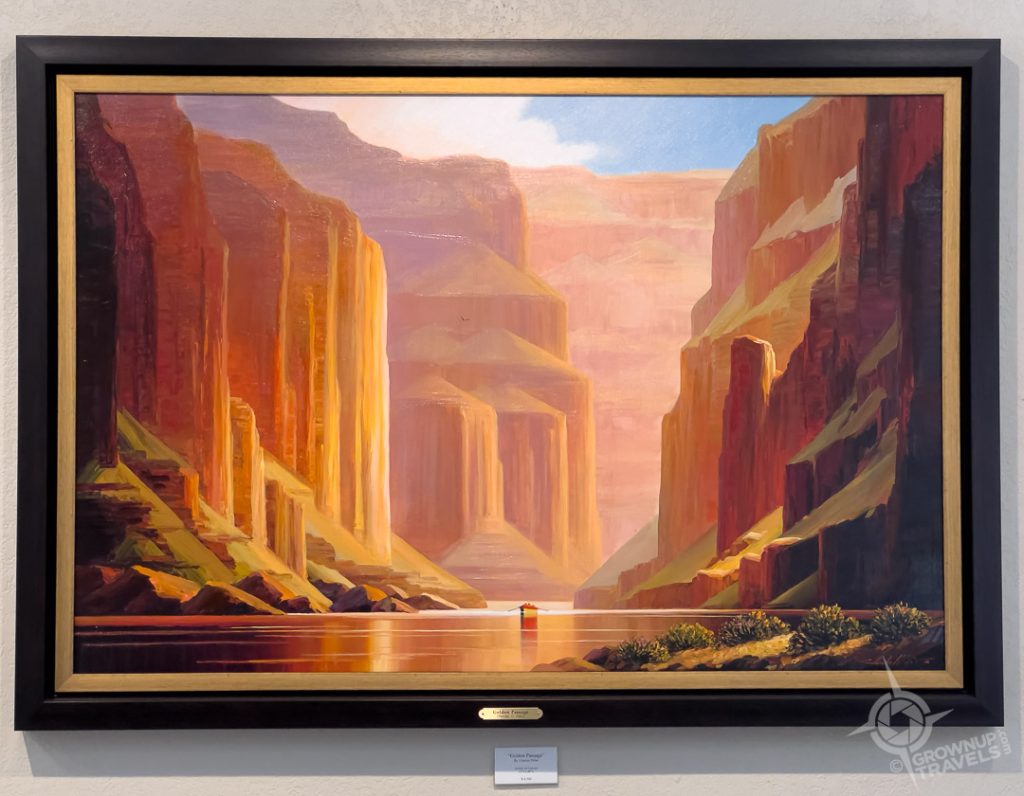
Charles Pabst “Golden Passage “painting Tubac Arizona
It was a joy to wander the streets mid-week without any big crowds, popping in and out of galleries to find whatever pieces spoke to us, and the gallery owners Henk and I spoke with were more than happy to share the biographies of the artists or talk about the individual works.
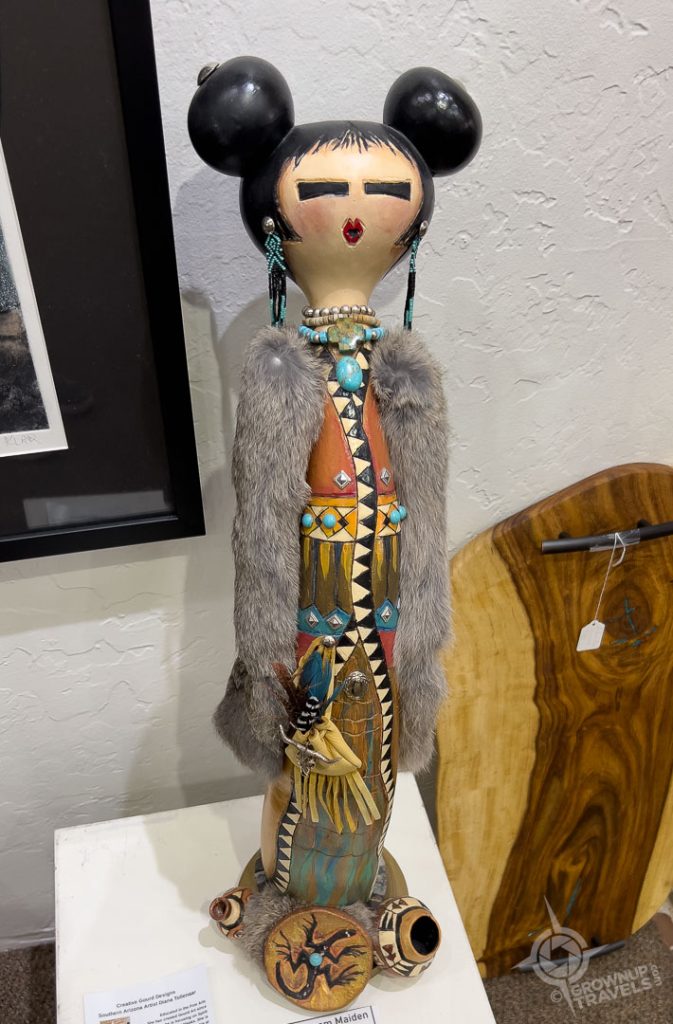
Diana Tollenar’s gourd Maiden sculpture, Cactus Wren Studios, Tubac
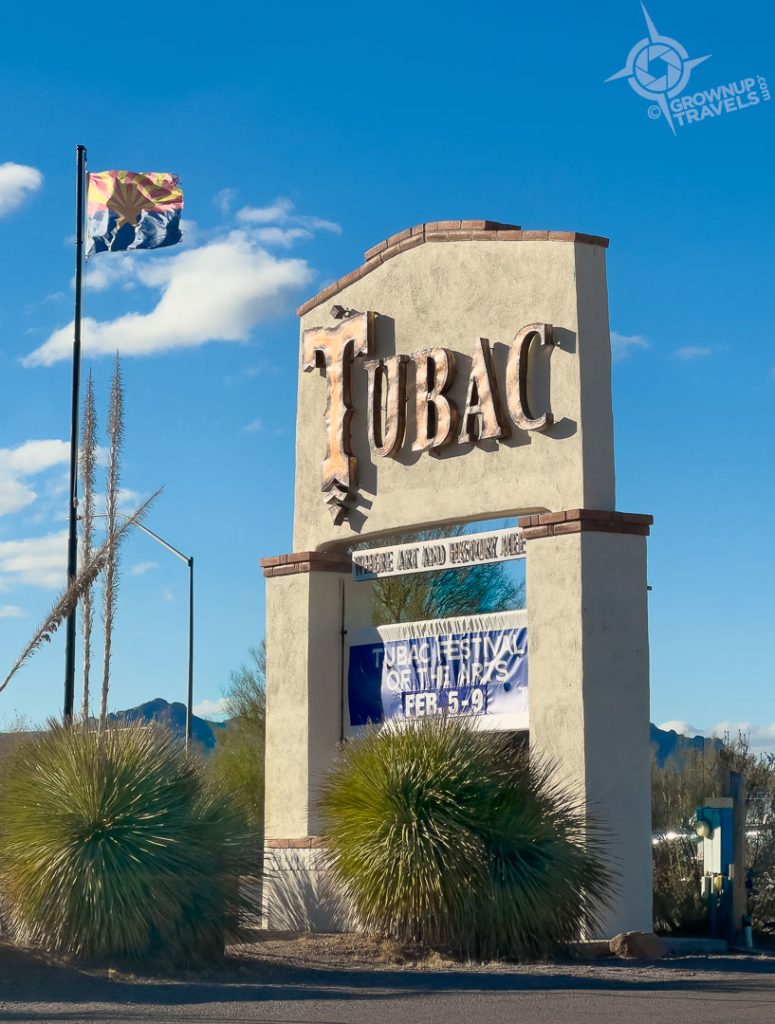
Alternately, if you time your visit for one of the many art festivals Tubac hosts throughout the year, like its annual Festival of the Arts in February, or their Art Walk in the fall, you can meet the artists in person. You’ll be in good company with tens of thousands of other art lovers and see why this tiny town has been transformed into an art mecca.
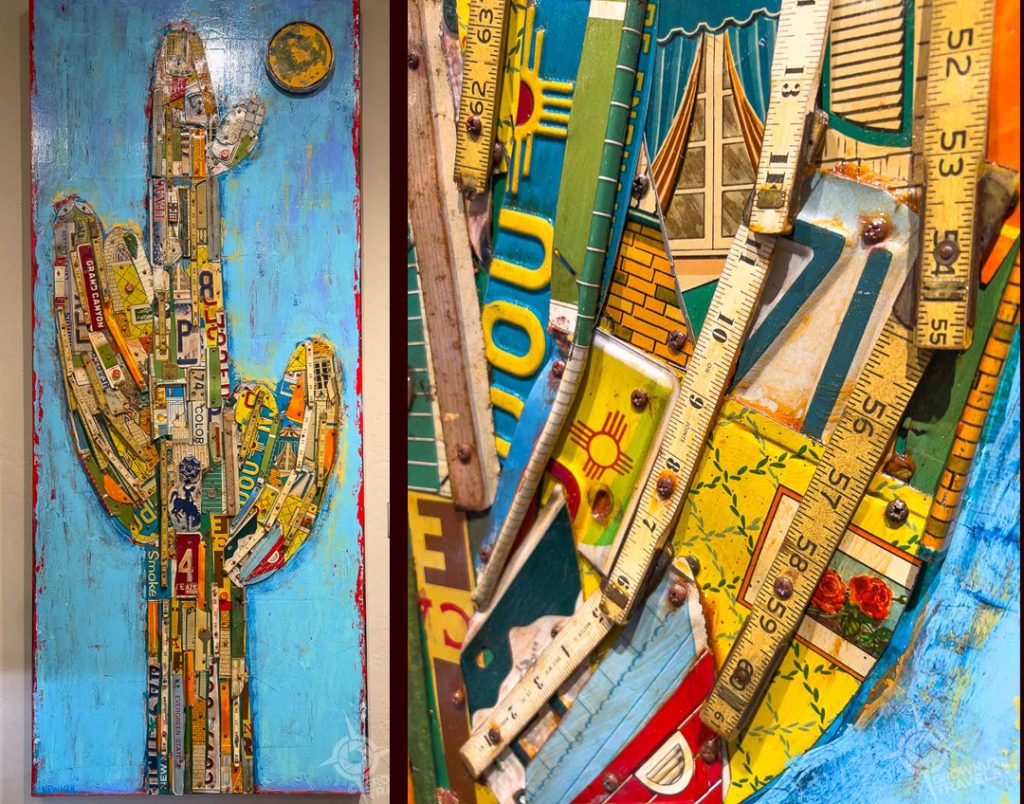
Modern cactus collage artwork at Cobalt Gallery Tubac Arizona
TIP: After strolling Tubac’s galleries, head to the nearby Tubac Golf Resort for a grown-up lunch (or have a drink sitting on one of John Wayne’s saddles at the bar – seriously, the Duke’s bum sat on these!)
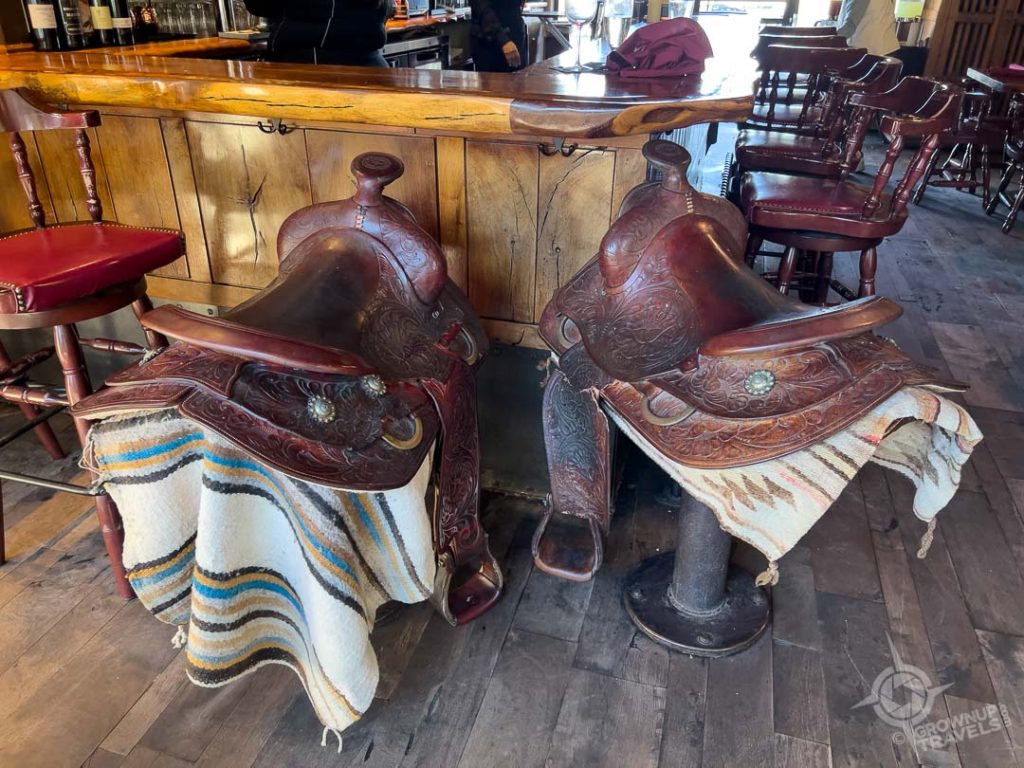
John Wayne’s saddles at the bar in Tubac’s Golf Club
Explore the Unexpected: Art in Tucson
Whether it is the venue, the style or type of art you may find, Tucson serves up more than you might expect when it comes to its art scene. Our advice for visitors looking to discover some of it: look beyond the traditional museums. Look down alleyways onto the sides of buildings, look through magnifying glasses to discover a world of art in miniature, look inside churches, and look outside the city proper. Because having a keen eye for art starts with keeping an eye open for it.

Jane is an award-winning travel writer and photographer and an accredited member of the Travel Media Association of Canada (TMAC). In their annual awards competition, TMAC named GrownupTravels.com as the Best Self-Published Travel Blog in 2025 .
She is also a member of the North American Travel Journalists Association, and a freelance travel writer contributing to both print and online publications.




Subscribe and you'll never miss an update!
Join our mailing list to receive the latest news and updates from Grownup Travels. (We keep your email STRICTLY private)
Thank you for subscribing to Grownup Travels!